
Call Us
+86 136 6007 9809
Call Us
+86 136 6007 9809

Jan. 17, 2024
Stainless steel nuts, bolts and screws are widely used in industrial machinery, electrical equipment, automotive systems, medical equipment, food-processing machinery,
energy systems, transportation equipment and other OEM assemblies where corrosion resistance and mechanical performance are important.
But selecting a stainless steel fastener requires more than choosing between “304” and “316.”
The more useful engineering question is:
What combination of mechanical load, corrosion environment, thread behavior, temperature, mating material and service requirements must the complete joint withstand?
A stainless steel fastener can have excellent corrosion resistance and still fail because of:
Incorrect preload
Thread galling
Insufficient thread engagement
Joint slip
Vibration loosening
Galvanic corrosion
Parent-material failure
Incorrect locking strategy
Incompatible surface condition
Material substitution without validation
For engineering and procurement teams, a more complete selection path is:
Application → Joint Function → Load → Fastener Property Requirement → Stainless Grade → Thread → Mating Material → Preload / Friction
→ Galling → Corrosion → Temperature → Locking → Validation → RFQ
JUXIN FASTENERS supplies stainless steel nuts, stainless steel screws, stainless steel bolts, stainless steel lock nuts, flange nuts,
stainless steel rivet nuts and drawing-based custom stainless steel fasteners for industrial OEM applications.
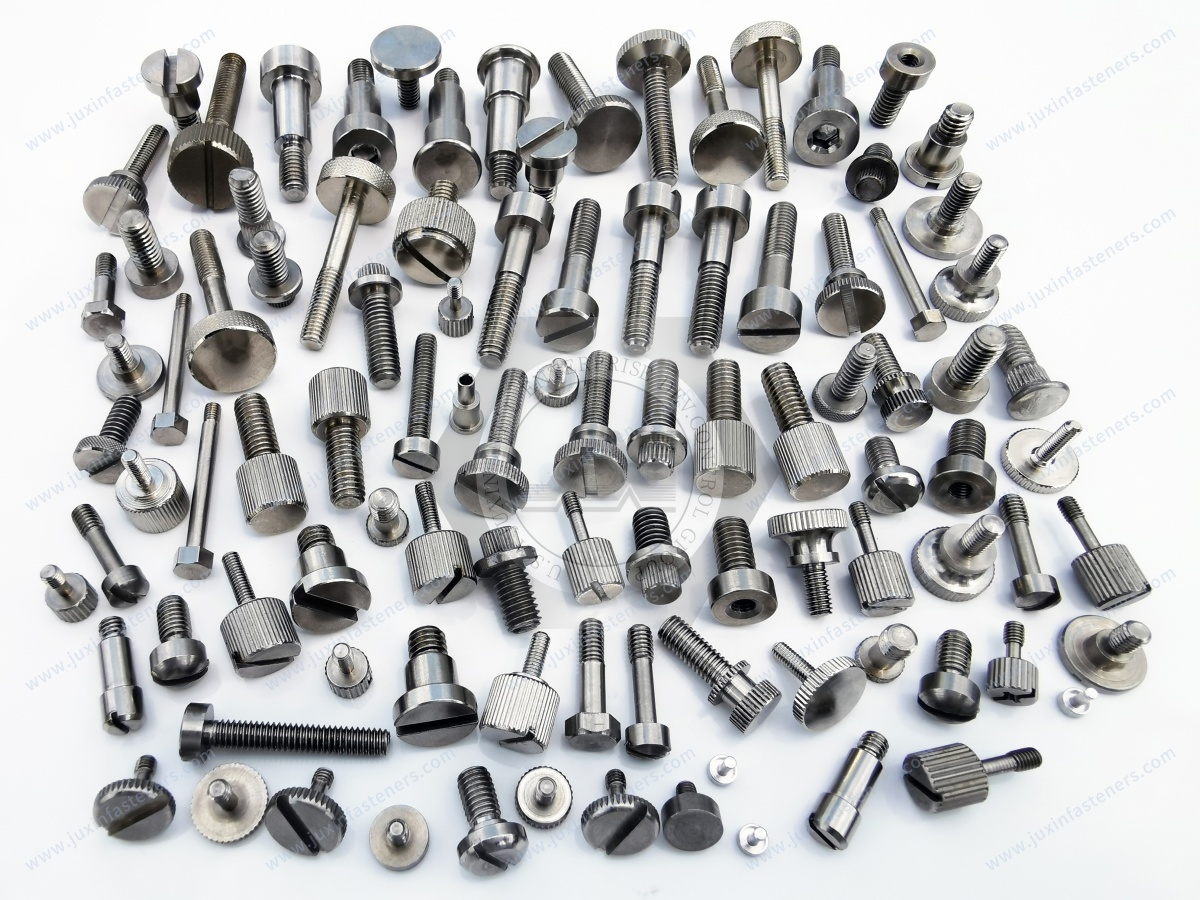
The material grade is important, but it is only one part of the joint.
Fastener performance can depend on:
Stainless steel grade
Mechanical property requirement
Thread size and pitch
Thread engagement
Mating fastener
Parent material
Clamp load
Tightening method
Friction
Surface condition
Locking method
Corrosion environment
Temperature
Vibration
Maintenance requirements
Therefore:
Stainless Grade Alone ≠ Joint Performance
304-type and 316-type austenitic stainless steels are among the most commonly considered stainless materials for industrial fasteners.
Both can provide useful corrosion resistance, but their suitability depends on the application.
304-type stainless steel can be a strong candidate for many:
Industrial equipment
Electrical equipment
Machinery
Enclosures
Automotive components
Indoor and outdoor assemblies
General OEM applications
where its mechanical and corrosion characteristics meet the specification.
316-type stainless steel contains molybdenum and generally provides improved resistance to certain chloride-containing environments compared with 304.
It may therefore be considered for suitable:
Coastal equipment
Chemical-processing equipment
Food-processing machinery
Laboratory equipment
Medical equipment
Fluid-handling systems
Industrial equipment exposed to more demanding corrosion conditions
However:
316 Stainless Steel ≠ Corrosion-Proof
and:
316 Stainless Steel ≠ Automatically Required for Marine, Medical or Outdoor Applications
The actual environment and governing specification determine suitability.
A common selection table says:
Normal Environment → 304
Harsh Environment → 316
That is convenient, but technically incomplete.
Engineers should define what “harsh” actually means.
Relevant factors can include:
Chlorides
Humidity
Chemical exposure
Temperature
Wet/dry cycling
Crevices
Cleaning chemicals
Fluid exposure
Surface contamination
Only then should the stainless grade be selected.
Procurement sometimes receives specifications that simply replace 304 with 316 because 316 is perceived as the premium material.
But if the actual failure mechanism is:
Galling
Vibration loosening
Incorrect preload
Thread stripping
Parent-sheet deformation
Poor assembly control
changing to 316 may not solve the problem.
Therefore:
Higher Material Cost ≠ Better Joint
The material upgrade should address an identified engineering requirement.
316L is a low-carbon version of 316 stainless steel and can be specified for certain fabrication, corrosion or customer-controlled requirements.
But:
316L ≠ Automatically Better Fastener
If a drawing specifies 316L, the supplier should follow the controlled material requirement.
It should not be substituted simply because “L” sounds like a higher grade.
201-type stainless steel exists in many industrial product categories, but it should not be treated simply as a cheaper equivalent to 304.
Material substitution can change:
Corrosion behavior
Chemical composition
Forming behavior
Mechanical characteristics
Customer approval status
For OEM sourcing:
Lower Material Cost ≠ Approved Material Equivalence
If the drawing specifies 304 or 316, substitution with another stainless grade should require engineering approval.
European and international stainless fastener specifications often use designations such as:
A2
A4
These designations should not be treated as nothing more than marketing synonyms for 304 and 316.
Fastener designation systems can include requirements relating to:
Stainless steel group
Material composition
Mechanical property class
Product specification
The exact applicable standard and fastener designation should be defined on the drawing or purchase specification.
This distinction is critical.
A drawing that states only:
“Stainless Steel”
may not adequately define mechanical performance.
Likewise:
“304 Stainless”
does not by itself define every mechanical property required from the finished fastener.
For controlled OEM applications, engineers should distinguish between:
Material / Stainless Grade
and
Finished Fastener Mechanical Requirement
These products interact as a threaded joint.
Provides the internal thread and transfers load from the mating bolt or screw.
Provides the external thread and typically develops tensile preload when tightened.
May assemble into:
A nut
A tapped component
A threaded insert
Another designed internal thread
The complete threaded pair should be evaluated together.
A common engineering mistake is to increase bolt strength without checking the mating thread.
The joint may still fail through:
Nut thread stripping
Internal-thread stripping
Parent-material failure
Bearing failure
Joint slip
Therefore:
Fastener Strength Must Be Evaluated as Part of the Load Path
Thread engagement controls how load is transferred through the mating threads.
Important variables include:
Fastener material
Nut material
Thread diameter
Thread pitch
Effective engagement length
Mating-component strength
More engagement can be beneficial up to the point where other joint elements become controlling.
But:
Longer Thread Engagement ≠ Unlimited Joint Strength
Depending on the customer drawing and target market, JUXIN FASTENERS can evaluate suitable:
Metric threads
UNC threads
UNF threads
Drawing-defined thread requirements
Relevant international standards may include suitable:
ISO
DIN
EN
ASME/ANSI
ASTM
SAE
depending on product, material and application.
The controlling drawing and specification should define the actual requirement.
Thread pitch affects:
Assembly behavior
Thread engagement
Adjustment
Resistance to thread damage
Available tensile-stress area
Parent-thread requirements
Neither coarse nor fine thread is universally superior.
The correct choice depends on the joint.
One of the most important threaded-joint principles is:
Torque ≠ Preload
Tightening torque is an indirect method of generating bolt preload.
A significant portion of torque is consumed by friction in:
Threads
Nut bearing surface
Screw or bolt bearing surface
This means preload can change when:
Surface condition changes
Lubrication changes
Coating changes
Material pairing changes
Supplier changes
even when the torque value remains identical.
Stainless threaded fasteners can exhibit relatively high and variable friction depending on:
Material pairing
Surface condition
Manufacturing process
Lubrication
Installation speed
This affects:
Torque-preload relationship
Assembly consistency
Galling risk
For critical joints, tightening strategy should therefore be validated with the actual production fastener system.
Galling is an important risk in stainless steel threaded assemblies.
It is a form of severe adhesive wear that can occur during tightening or removal.
Potential symptoms include:
Rapid torque increase
Rough thread movement
Thread damage
Seizure
Inability to complete tightening
Difficulty during removal
Potential contributors include:
Stainless-on-stainless material pairing
High installation speed
High contact pressure
Rough or damaged threads
Unfavorable surface condition
Lack of appropriate lubrication where lubrication is permitted
Galling risk should be considered during both design and assembly-process development.
If a stainless screw or bolt begins to seize, installation or removal torque can increase substantially.
That torque may then be transferred into:
Captive nuts
Rivet nuts
Self-clinching hardware
Thin sheet
Brackets
Housings
This can produce a secondary assembly failure.
Therefore:
Thread Galling Can Become a Joint-System Failure
Lubrication can influence stainless threaded assembly behavior and may reduce galling risk in suitable applications.
But lubrication also changes friction.
That means it can change preload at a given torque.
Therefore:
Lubrication Change ≠ Assembly-Neutral Change
If lubrication or anti-seize is introduced, the tightening specification may require revalidation.
This corrects one of the most common misconceptions in stainless fastener marketing.
A conventional stainless steel nut is not inherently vibration-proof.
Threaded joints can loosen if:
Preload is insufficient
Joint surfaces settle
Transverse movement occurs
Joint stiffness is unfavorable
Assembly control is poor
Therefore:
Corrosion-Resistant Material ≠ Anti-Loosening Mechanism
Where loosening resistance is required, engineers may consider suitable locking systems such as:
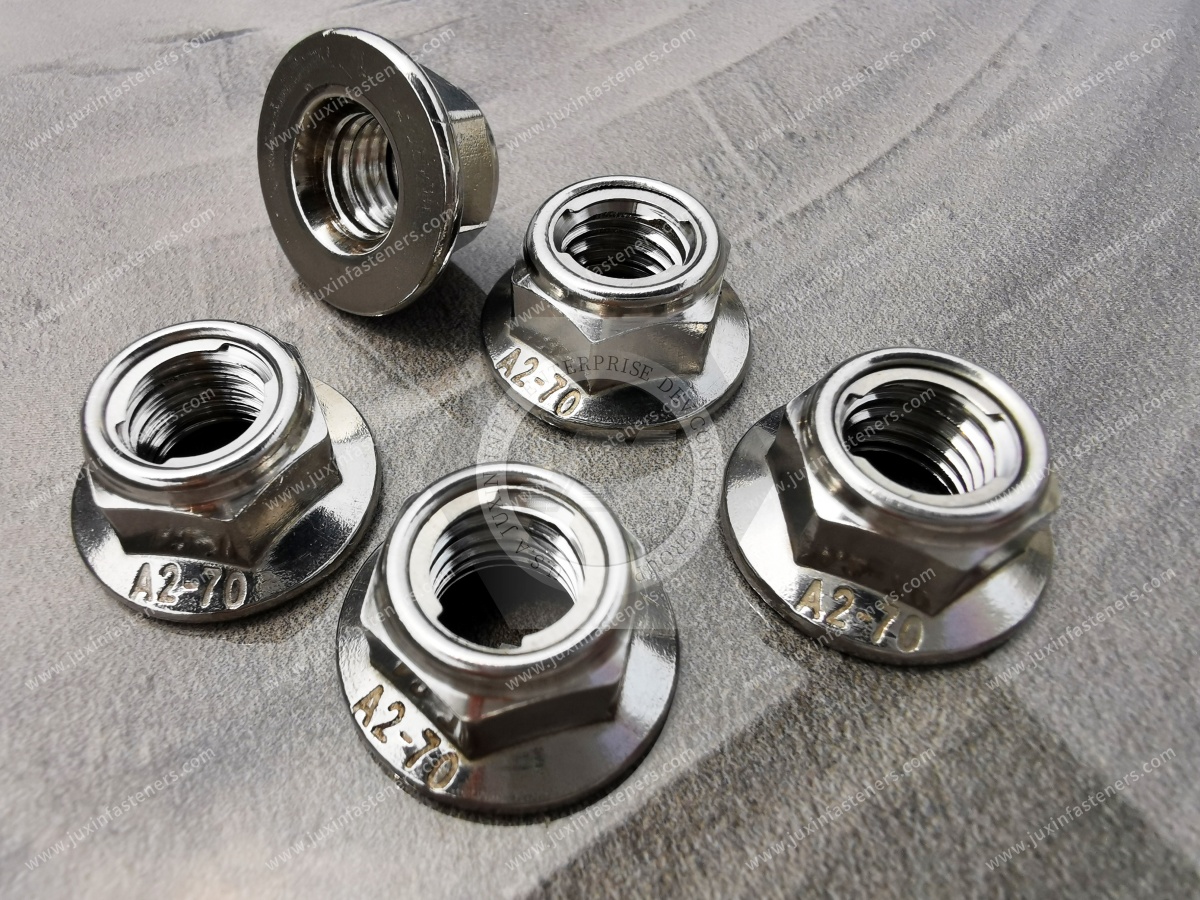
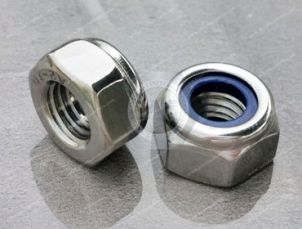
Nylon insert lock nuts
Prevailing-torque designs
Flange locking designs where appropriate
Thread-locking systems where specified
The correct method depends on:
Temperature
Vibration
Reuse
Chemical exposure
Required prevailing torque
Maintenance strategy
This distinction is essential.
A lock nut can generate resistance to rotation before the joint is fully clamped.
That resistance is prevailing torque.
The tensile force generated in the bolt after tightening is preload.
Therefore:
Prevailing Torque ≠ Preload
A locking feature does not replace correct joint tightening.
Nylon insert lock nuts can provide rotational resistance in suitable applications.
But engineers should consider:
Temperature
Chemical exposure
Reuse requirements
Installation torque
Customer specification
The nylon insert should not be assumed suitable for every high-temperature environment.
A flange nut increases the bearing area beneath the nut.
Potential benefits can include:
Load distribution
Reduced local bearing stress
Simplified assembly in suitable designs
But:
Flange Nut ≠ Automatically Locking Nut
A plain flange alone should not be confused with a dedicated anti-loosening feature.
Serrations can influence resistance to rotation in suitable assemblies.
However, they can also affect:
Mating surface
Coating
Electrical bonding
Reusability
Surface damage
The complete assembly should be considered before specifying a serrated interface.
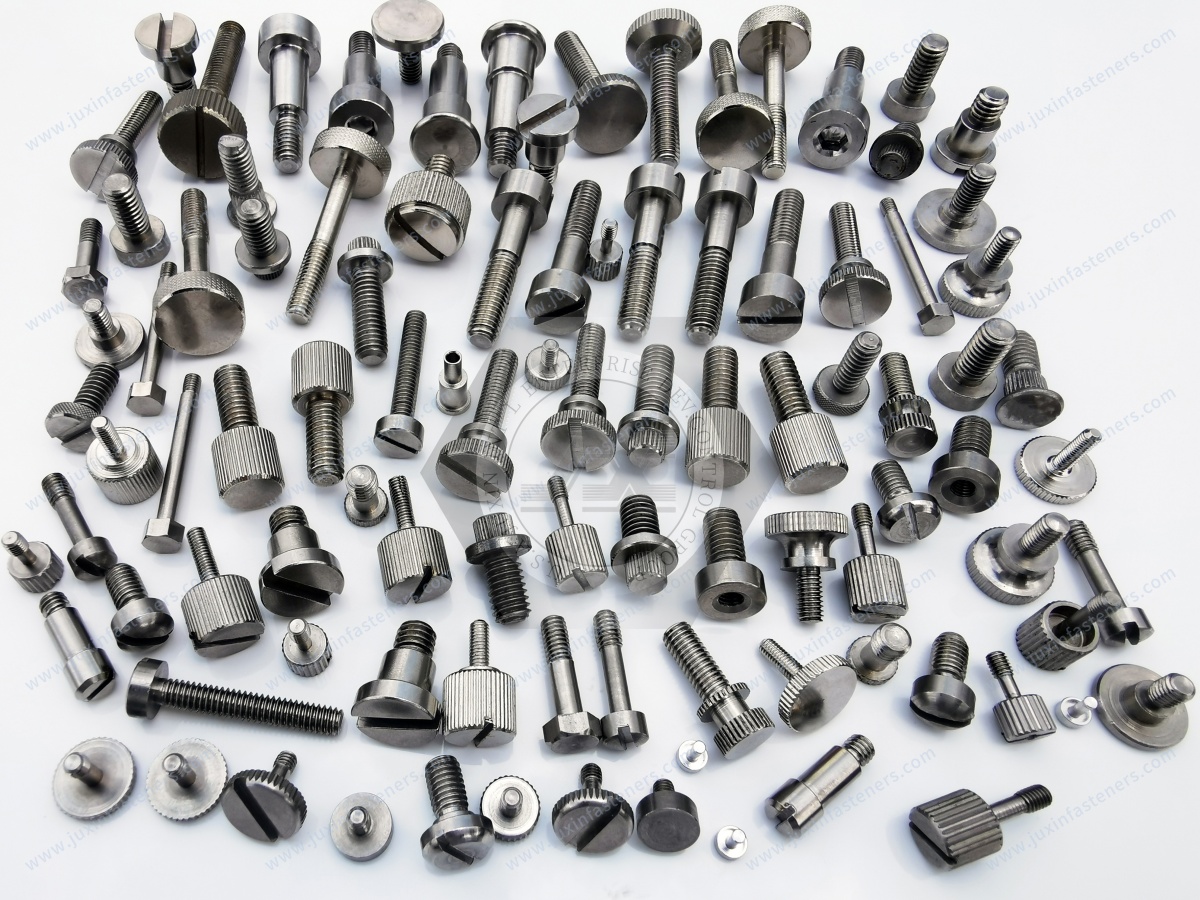
A stainless fastener can remain relatively resistant while the surrounding component corrodes.
The assembly may include:
Aluminum
Carbon steel
Copper
Coated sheet
Other stainless grades
Where dissimilar metals are electrically connected in the presence of an electrolyte, galvanic corrosion can become relevant.
Therefore:
Fastener Material Must Be Evaluated With the Parent Material
Stainless fasteners are frequently used with aluminum in:
EV equipment
Rail equipment
Electronics
Electrical enclosures
Industrial machinery
This combination can require galvanic-corrosion evaluation where moisture or electrolyte exposure exists.
Potential design considerations include:
Material pairing
Surface-area ratio
Coatings
Isolation strategy
Drainage
Environmental exposure
Using stainless steel does not automatically make the aluminum assembly corrosion-resistant.
Stainless fasteners can also be assembled with coated carbon steel.
The engineer should consider:
Coating damage
Galvanic conditions
Moisture
Bearing-surface interaction
Maintenance
Again, the assembly—not only the fastener—determines corrosion performance.
Stainless steel relies on a passive surface film for corrosion resistance.
Restricted geometries can create local environmental conditions that differ from the open surface.
Potential crevice locations can include:
Under washers
Beneath nut bearing surfaces
Tight overlapping joints
Trapped fluid regions
Therefore, grade selection should consider actual joint geometry.
Chloride-containing environments can be particularly important when selecting stainless steel.
Possible sources include:
Salt
Coastal exposure
Cleaning agents
Process fluids
Water chemistry
316-type stainless is often considered where improved chloride resistance relative to 304 is useful.
But it is not immune to chloride-related corrosion.
Terms such as:
Marine Grade Stainless
are widely used commercially but can be too vague for controlled OEM procurement.
The RFQ should preferably identify:
Material grade
Fastener specification
Mechanical requirement
Environment
Surface requirement
rather than relying on a marketing description.
The old shortcut:
High Temperature → 316
is not sufficient.
Temperature can affect:
Material strength
Creep
Oxidation
Lubrication
Locking elements
Clamp-load retention
Adjacent materials
The correct material depends on the actual temperature, duration, load and applicable specification.
Assemblies containing different materials expand and contract differently.
Thermal cycling can therefore influence:
Clamp load
Joint movement
Surface settlement
Locking behavior
This is especially relevant when stainless fasteners connect:
Aluminum
Polymers
Copper
Composite assemblies
Potential applications include suitable:
Equipment housings
Electrical assemblies
Thermal-management systems
Battery-related equipment
Interior assemblies
Corrosion-sensitive hardware
But automotive fastener selection should follow the actual drawing, mechanical requirement and OEM validation process.
A generic stainless grade should not replace a specified high-strength steel fastener merely for corrosion reasons.
Rail equipment can use stainless fasteners in suitable:
Interior equipment
Electrical equipment
Cabinets
Secondary assemblies
Equipment mounting
However, primary structural and safety-critical railway joints require the governing project/OEM specification and formal validation.
Stainless Material Alone ≠ Railway Structural Qualification
Stainless fasteners can be useful for:
Electrical cabinets
Control equipment
Outdoor electrical systems
Equipment frames
Mechanical mounting
But stainless steel should not automatically be selected for current-carrying interfaces based only on corrosion resistance.
Mechanical fastening and electrical conduction are separate design functions.
Stainless fasteners are widely used in medical and laboratory equipment.
Potential applications can include:
Diagnostic equipment
Laboratory systems
Equipment housings
Instrument assemblies
Non-implant equipment
But:
Stainless Steel ≠ Automatically Medical Grade
and:
316 Stainless Steel ≠ Automatic Medical-Device Compliance
The actual device specification, cleaning process, environment and regulatory requirements control material selection.
If a fastener is exposed to sterilization, the actual process should be defined.
Examples can involve combinations of:
Temperature
Moisture
Chemicals
Repeated cycles
Do not describe a fastener as simply “sterilization resistant” without defining the process and validation requirement.
Stainless steel is widely used in food-processing machinery because suitable grades can provide useful corrosion and cleanability characteristics.
But food-equipment selection should consider:
Cleaning chemicals
Washdown
Temperature
Crevices
Surface condition
Food-contact requirements where applicable
A stainless fastener does not automatically make an assembly hygienic.
A visually bright stainless fastener can still carry:
Processing residue
Oil
Particles
Surface contamination
If cleanliness is controlled, the requirement should be separately specified.
316-type stainless fasteners are commonly considered for chloride-containing environments.
But “marine” is not one condition.
It can include:
Coastal atmosphere
Salt spray
Splash
Intermittent wetting
Immersion
The correct material and validation depend on actual exposure.
Industrial machinery may require stainless fasteners where engineers need a combination of:
Mechanical performance
Corrosion resistance
Serviceability
Cleanliness
Environmental durability
Applications can include:
Automation equipment
Production machinery
Packaging systems
Process equipment
Instrumentation
The fastening method should still be selected based on joint function.
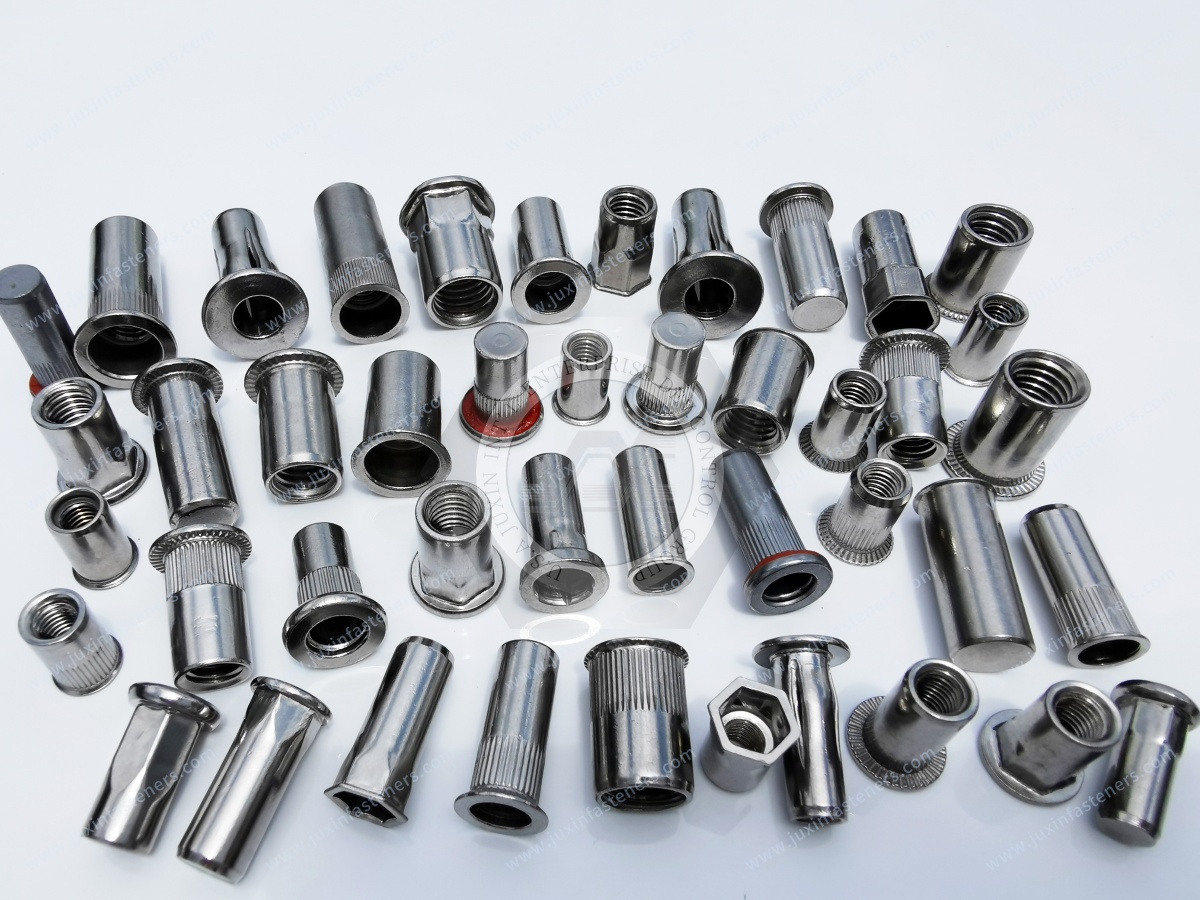
A conventional nut normally requires access to both sides of the assembly.
A rivet nut can create a reusable internal thread when access is available from only one side.
Therefore:
Dual-Side Access → Conventional Nut May Be Suitable
Blind-Side Access → Rivet Nut May Be Considered
The decision depends on sheet thickness, hole geometry, grip range, load and installation process.
Self-clinching nuts can create captive threads in suitable sheet-metal assemblies.
Selection depends on:
Sheet material
Sheet hardness
Sheet thickness
Hole size
Edge distance
Installation force
Required push-out
Required torque-out
A stainless self-clinching nut should not be substituted into any sheet simply because the sheet is stainless.
Weld nuts can provide captive threads in suitable weldable sheet-metal assemblies.
The choice between:
Conventional nut
Self-clinching nut
Rivet nut
Weld nut
depends on:
Access
Parent material
Sheet thickness
Production process
Required load
Heat input
Coating sequence
Automation
Serviceability
The best nut is the one that matches the manufacturing system.
Review:
Material pair
Surface
Lubrication
Installation speed
Thread quality
Review:
Thread engagement
Nut material
Mating fastener strength
Tightening
Review:
Preload
Joint stiffness
Vibration
Locking strategy
Review:
Mechanical property
Tensile load
Fatigue
Preload
Stress concentration
Review:
Stainless grade
Environment
Chlorides
Crevices
Mating material
Review:
Bearing area
Sheet thickness
Parent material
Washer/flange geometry
Load distribution
A correct root-cause analysis should identify the controlling failure mode before changing the fastener.
| Design Question | Why It Matters |
|---|---|
| 304 or 316? | Corrosion environment and specification differ |
| What mechanical requirement applies? | Grade alone does not define finished-fastener performance |
| What is the mating material? | Influences corrosion and load transfer |
| What preload is required? | Controls joint stability |
| How is torque controlled? | Friction affects preload |
| Is stainless-on-stainless used? | Galling may become important |
| Is vibration present? | Locking strategy may be required |
| Is temperature elevated? | Material, preload and locking features may change |
| Is maintenance required? | Serviceability and galling matter |
| Is the joint blind-access? | May require rivet nut instead of conventional nut |
| Is the thread captive in sheet metal? | Self-clinching or weld nut may be more suitable |
Before releasing a stainless steel nut, bolt or screw into production, consider:
Define joint function.
Define load path.
Define fastener type.
Define stainless grade.
Define mechanical property requirement.
Define thread.
Define thread tolerance/class where required.
Define thread engagement.
Define mating fastener/material.
Define parent material.
Define required preload.
Define tightening method.
Evaluate friction.
Evaluate galling.
Define locking requirement.
Define vibration exposure.
Define corrosion environment.
Evaluate chlorides.
Evaluate crevice conditions.
Evaluate galvanic interfaces.
Define temperature.
Evaluate thermal cycling.
Define surface condition/finish.
Define cleanliness where relevant.
Define inspection.
Define material documentation.
Define traceability where required.
Validate production-representative samples.
The validation depth should match the consequence of failure.
An RFQ stating only:
M8 Nut, 304 Stainless
may not fully define the component.
Procurement may also need:
Nut standard or drawing
Mechanical requirement
Thread requirement
Surface condition
Locking feature
Inspection
Documentation
This becomes especially important during alternative-supplier qualification.
Two suppliers can both claim “304 stainless” while differences exist in:
Mechanical properties
Thread quality
Surface condition
Geometry
Friction
Manufacturing consistency
Therefore:
Same Material Label ≠ Functional Equivalence
A component can dimensionally match the drawing and still behave differently because of:
Material condition
Mechanical properties
Thread quality
Surface condition
Friction
Manufacturing process
Supplier qualification should therefore evaluate the characteristics that control the joint.
Examples include:
304 → 316
316 → 304
Stainless → Carbon steel
Carbon steel → Stainless
304 → Lower-cost stainless grade
Each substitution can change:
Strength
Corrosion
Friction
Galling
Preload
Temperature behavior
Cost
Therefore:
Material Substitution ≠ Drop-In Functional Equivalence
Procurement should compare more than fastener unit price.
A useful model is:
Fastener Price + Assembly + Tightening Control + Locking + Inspection + Rework + Maintenance + Failure Risk + Documentation + Supply Risk
A lower-cost nut can become expensive if it creates:
Galling
Rework
Loosening
Corrosion
Assembly delays
For stainless steel nuts, bolts and screws, define:
Application
Joint function
Fastener type
2D drawing or applicable standard
Stainless grade
Mechanical property requirement
Thread
Thread class/tolerance where required
Thread engagement
Mating fastener
Parent material
Required load
Preload requirement where controlled
Tightening method
Locking requirement
Surface condition
Lubrication where applicable
Corrosion environment
Temperature
Vibration
Maintenance requirements
Inspection
Documentation
Traceability where required
Send:
2D drawing
3D model for custom parts where relevant
Applicable ISO, DIN, EN, ASTM, ASME/ANSI, SAE or customer specification
Stainless grade
Mechanical property requirement
Thread
Mating component
Parent material
Mechanical load
Tightening requirement
Locking requirement
Surface finish
Corrosion environment
Temperature
Vibration requirement
Inspection requirement
Material certification requirement
Traceability requirement
Annual volume
Order quantity
Sample quantity
Packaging requirement
For second-source projects, also identify the reason for supplier development:
Cost
Lead time
Capacity
Quality
Galling
Corrosion
Supply risk
Alternative-source qualification
JUXIN FASTENERS supports standard and drawing-based stainless steel fastening projects for industrial OEM customers.
Relevant product capabilities include:
Stainless steel nuts
Stainless steel screws
Stainless steel bolts
Stainless steel flange nuts
Stainless steel nylon insert lock nuts
Stainless steel rivet nuts
Stainless steel self-clinching fasteners
Custom stainless steel threaded components
CNC machined stainless steel parts
Related fastening technologies include:
Weld nuts
Rivet nuts
Self-clinching nuts and studs
Blind rivets
Plastic and nylon fasteners
Threaded inserts for plastic
Custom screws and bolts
CNC machined components
Depending on product geometry and volume, JUXIN FASTENERS can evaluate suitable:
Forming processes
Thread production
CNC machining
Custom tooling
Surface finishing
Drawing-based OEM production
Final manufacturability, material, mechanical requirement and process should be confirmed from the customer drawing.
Not universally. 316 generally provides improved resistance to certain chloride-containing environments, but 304 may be fully suitable for many industrial applications. Selection should follow the actual environment and specification.
No. Stainless steel is a material choice, not an anti-loosening mechanism. Vibration resistance depends on preload, joint movement and the selected locking strategy.
Galling can be influenced by stainless material pairing, surface condition, contact pressure, installation speed, thread quality and lubrication conditions.
Appropriate lubrication can reduce galling risk in suitable applications, but it also changes friction and therefore the torque-preload relationship.
The assembly process should be validated accordingly.
No. Torque is an indirect input used to generate preload. Friction strongly influences how much preload results from a given torque.
Not automatically. The change can affect friction, galling, cost and other joint behavior. Controlled applications should follow engineering approval and validation.
Yes, in suitable designs, but galvanic corrosion should be considered where moisture or another electrolyte is present.
No. Marine exposure varies from coastal atmosphere to immersion. The actual chloride, temperature, geometry and service environment should be considered.
They can be suitable for many medical and laboratory equipment applications, but stainless steel does not automatically mean medical grade or medical-device compliance.
A conventional nut usually requires access to the rear side. A rivet nut can create a reusable internal thread in suitable thin material when installation is performed from one side.
Self-clinching nuts can be useful when a captive thread is required in suitable sheet metal and sheet hardness, thickness, hole geometry and installation conditions support the clinching process.
JUXIN FASTENERS can evaluate drawing-based stainless steel nuts, screws, bolts, rivet nuts, self-clinching fasteners and custom threaded components according to material,
geometry, thread, tolerance, quantity and manufacturing feasibility.
A professional stainless fastener specification should follow:
Application → Joint Function → Load → Fastener Type → Stainless Grade → Mechanical Requirement → Thread → Mating Material
→ Preload / Friction → Galling → Locking → Corrosion → Temperature → Validation → Supplier Qualification → RFQ
The objective is not simply to choose the most corrosion-resistant stainless steel.
The objective is to create a threaded joint whose material, mechanical performance, assembly process and service environment work together.
For stainless steel nuts, bolts, screws, lock nuts, rivet nuts or custom stainless steel fasteners, send JUXIN FASTENERS your 2D drawing,
material requirement, mechanical requirement, mating material, application, environment and annual purchasing volume.
Email: info@juxinfasteners.com
Website: www.juxinfasteners.com
Use the existing indexed JUXIN FASTENERS URL when implementing these internal links:
Brass Nuts vs Stainless Steel Nuts: Engineering Material Selection Guide
Stainless Steel Screws for Medical Equipment & Devices: OEM Sourcing Guide
Stainless Steel Rivet Nuts: 304 vs 316, Selection & OEM Sourcing Guide
Stainless Steel Self-Clinching Nuts for Medical Equipment
Self-Clinching Fasteners for Sheet Metal: Engineering Selection Guide
Rivet Nuts in Aluminum Sheet: Installation, Grip Range, Spin-Out & Pull-Out
Lock Nuts for Power Distribution Boxes & Electrical Equipment
EV Fasteners & Battery Pack Fastening Solutions
Rail Transit Fasteners: Engineering & OEM Sourcing Guide
Custom Screws and Drawing-Based Fasteners
CNC Machined Components for Precision Equipment
 MORE NEWS


Oct. 13, 2026
Contact Us
Tel.:
+86 020 8621 0320
+86 020 3121 6067
E-mail:
Technical Support:
Navigation
SEND INQUIREY