Call Us
+86 136 6007 9809
Call Us
+86 136 6007 9809

Pre-Applied Adhesive Locking Fasteners: Reusability, Performance Limits, and Engineering Selection Guide
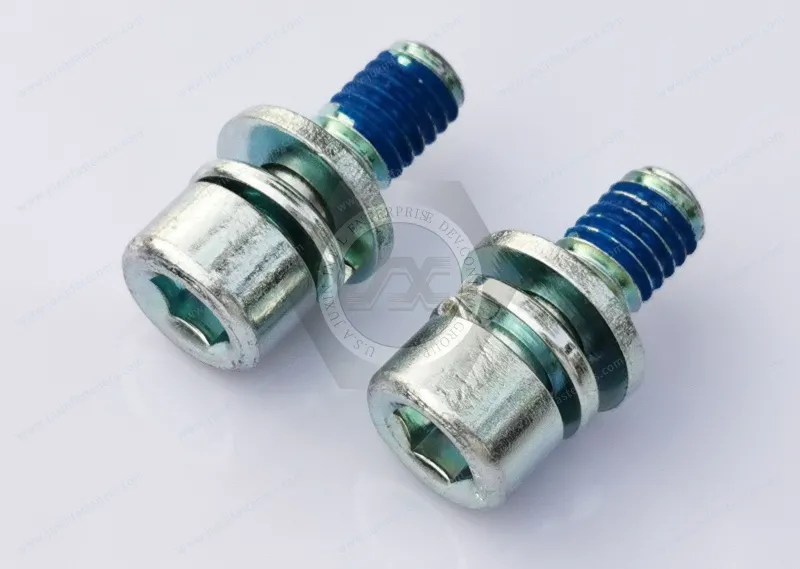
In modern industrial assembly systems, pre-applied adhesive locking bolts (pre-applied thread coating fasteners) are widely used in automotive manufacturing, heavy machinery, rail systems, and equipment exposed to vibration, thermal cycling, and dynamic loads. These industrial fastening solutions combine anti-loosening performance, sealing capability, and assembly efficiency, making them a critical component in high-reliability joint design.
Product Specification
Pre-Applied Adhesive Locking Fasteners: Reusability, Performance Limits, and Engineering Selection Guide
In modern industrial assembly systems, pre-applied adhesive locking bolts (pre-applied thread coating fasteners) are widely used in automotive manufacturing, heavy machinery, rail systems, and equipment exposed to vibration, thermal cycling, and dynamic loads. These industrial fastening solutions combine anti-loosening performance, sealing capability, and assembly efficiency, making them a critical component in high-reliability joint design.
However, one key engineering question often arises in procurement and maintenance engineering:
How many times can a pre-coated locking bolt be reused without compromising performance?
The answer depends entirely on the coating chemistry, mechanical locking mechanism, and service conditions. Understanding these limits is essential for ensuring joint safety, reducing downtime, and optimizing lifecycle cost.
1. Overview of Pre-Applied Adhesive Locking Bolt Technologies
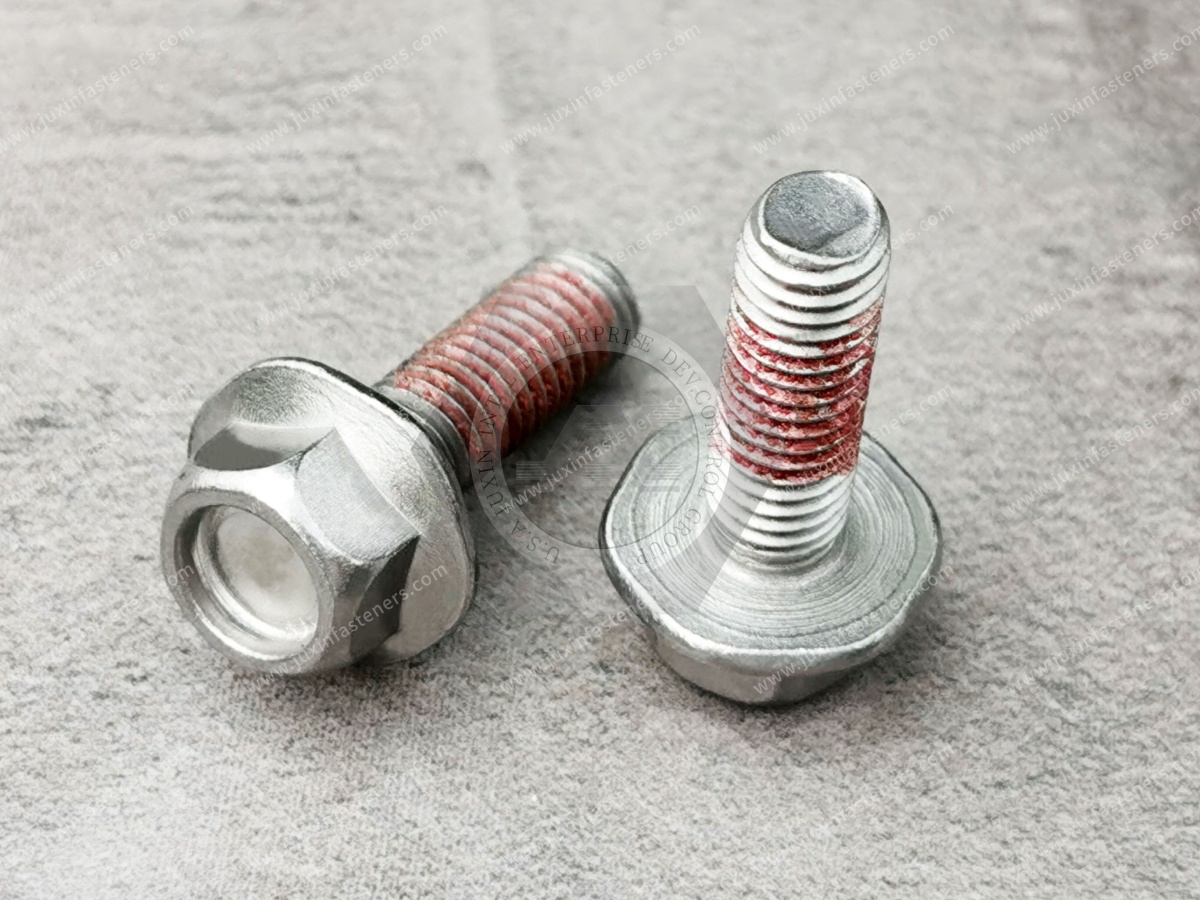
Different pre-applied thread locking coatings for bolts achieve anti-loosening and sealing through fundamentally different mechanisms. These differences directly determine their allowable reuse cycles.
1.1 Nylon-Based Physical Locking Coating (Polyamide Friction Locking)
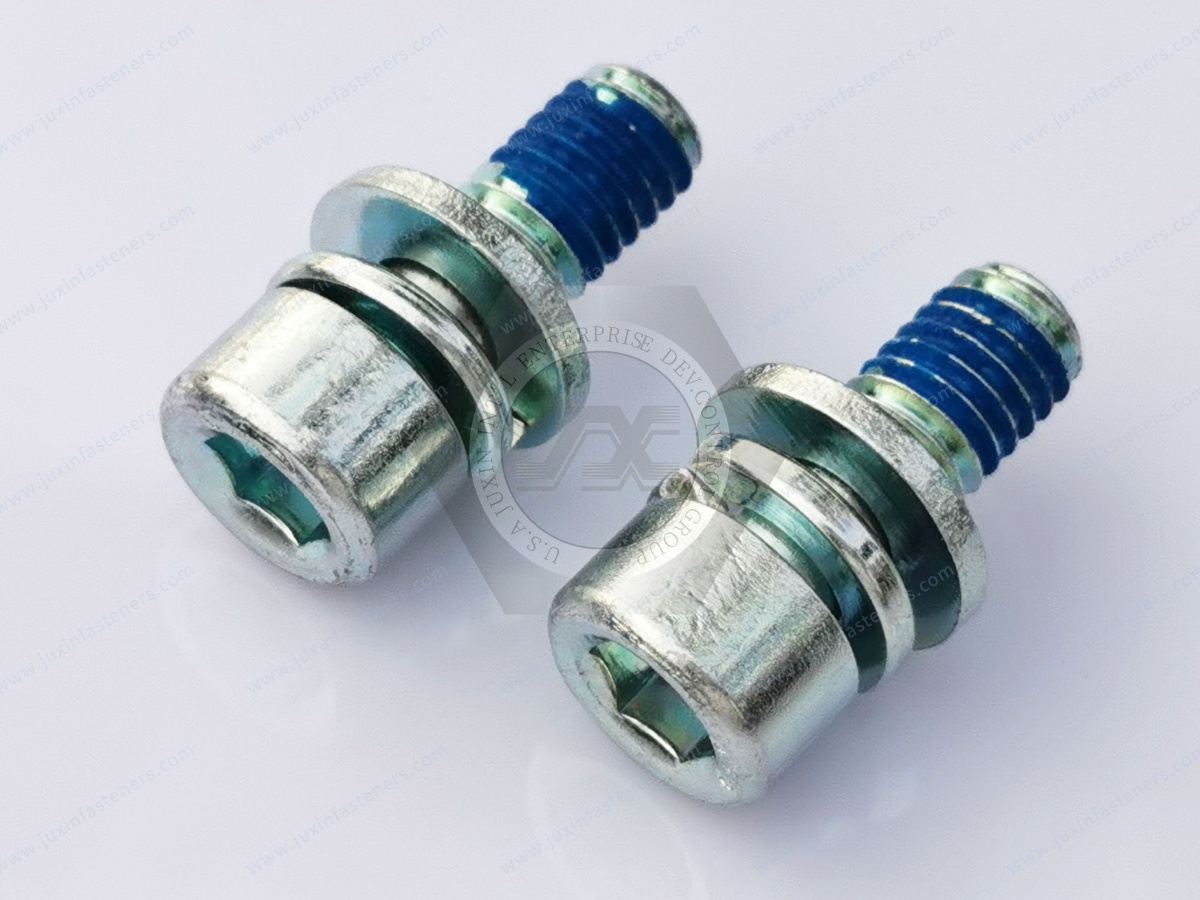
This nylon patch locking bolt technology uses thermally applied nylon powder fused onto the thread surface. During tightening, the nylon deforms plastically, increasing friction between male and female threads.
Locking mechanism:
Physical interference fit
Elastic-plastic deformation of the nylon layer
Increased thread friction resistance under vibration
This is a mechanical friction-based anti-loosening system, not a chemical bond.
Performance and reuse behavior:
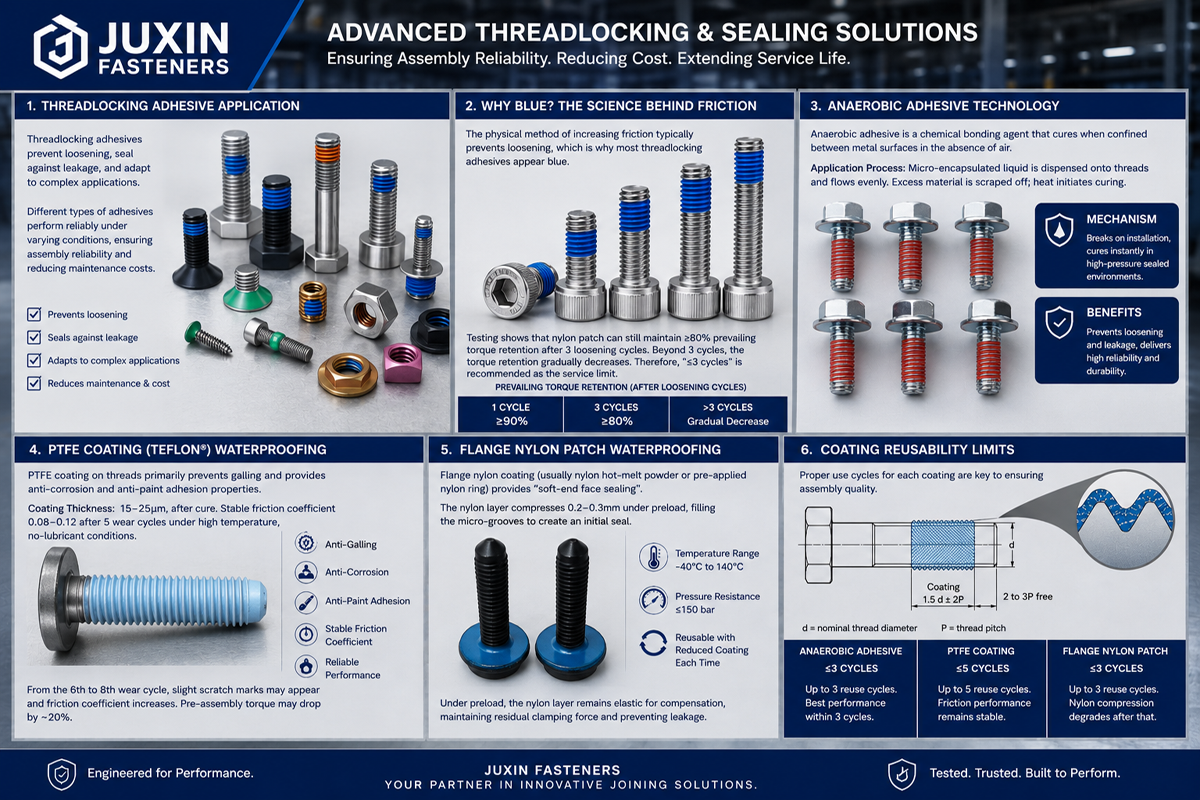
Reusability: up to 3 assembly cycles
After repeated use, the coating thickness reduces
Locking torque retention remains ≥80% within 3 uses
Beyond 3 cycles, friction stability drops significantly
Engineering recommendation:
For industrial fasteners with nylon patch coating, replacement is required after 3 disassembly cycles to ensure reliable torque retention and vibration resistance.
1.2 Micro-Encapsulated Chemical Adhesive (Threadlocking Compound)
This system uses micro-encapsulated epoxy or acrylic adhesive coatings, commonly referred to as chemical threadlocker pre-applied bolts.
Locking mechanism:
Microcapsules rupture during tightening
Resin and hardener mix and chemically cure
Forms rigid polymer bonding within the thread interface
This is a permanent chemical bonding system.
Performance characteristics:
Reusability: single-use only
Once cured and broken, the adhesive structure cannot recover
Reassembly requires the complete replacement of the bolt
Residual adhesive removal is mandatory for rework
Engineering classification:
Designed as one-time-use safety fasteners
Common in critical assemblies requiring tamper resistance and permanent locking
1.3 PTFE (Teflon) Anti-Friction Coating Fasteners
PTFE-coated bolts (polytetrafluoroethylene-coated fasteners) are primarily designed for controlled friction and anti-galling performance rather than for structural locking.
Functional purpose:
Prevent thread seizure
Reduce torque scatter
Avoid paint or coating adhesion during assembly
Stabilize the torque-tension relationship
Performance behavior:
Stable friction coefficient: ~0.08–0.12 (initial cycles)
Effective reuse: up to 5 assembly cycles
After 5 cycles:
Micro-surface wear increases
Friction coefficient gradually rises
Anti-stick performance decreases ~20%
Engineering recommendation:
For PTFE-coated industrial fastening bolts, reuse beyond 5 cycles requires inspection of the coating's integrity and validation of friction performance.
1.4 Flange Surface Nylon Sealing Coating (Face Sealing Fasteners)
This system applies nylon-based sealing material on the flange bearing surface, creating a compressive sealing interface rather than thread locking.
Sealing mechanism:
Axial preload compresses nylon layer (0.2–0.3 mm deformation)
Material flows into micro-surface irregularities
Maintains sealing under pressure and vibration
Performance characteristics:
Operating range: -40°C to 140°C, up to ~150 bar (system dependent)
Reusability: limited to 3 assembly cycles
After repeated use:
Seal thickness decreases
Contact pressure reduces
Leakage risk increases
Engineering recommendation:
For flange sealing bolts with nylon coating, replacement is required after 3 disassembly cycles or when coating thickness falls below 0.1 mm.
2. Reusability Limits of Pre-Coated Locking Bolts (Engineering Summary)
Understanding reuse limits is critical for maintaining joint reliability in industrial fastening systems.
Coating Type | Locking Mechanism | Reuse Limit | Failure Mode |
Nylon patch (thread friction coating) | Physical interference | ≤ 3 cycles | Friction degradation |
Micro-encapsulated adhesive | Chemical bonding | 1 cycle only | Bond fracture |
PTFE coating | Low-friction surface | ≤ 5 cycles | Surface wear |
Nylon flange sealing | Compressible seal | ≤ 3 cycles | Seal compression loss |
3. Engineering Implications for Industrial Fastener Design
For engineers working with industrial bolts, automotive fasteners, and vibration-resistant threaded assemblies, reuse behavior directly affects:
Torque consistency
Preload stability
Anti-loosening performance
Sealing integrity
Maintenance safety margins
Unlike standard mechanical fasteners, pre-applied thread locking fasteners rely on surface functional layers whose performance degrades with repeated assembly cycles.
4. Application Guidelines for Procurement and Maintenance Engineers
To ensure safe and cost-effective usage of pre-coated locking bolts and sealing fasteners, the following guidelines are recommended:
Always identify coating type before reuse
Never exceed manufacturer-defined reuse cycles
Inspect coating integrity visually and functionally before reassembly
Replace fasteners when:
coating thickness is visibly reduced
torque retention drops below specification
sealing leakage risk is detected
Match coating type to service condition:
vibration-heavy environments → nylon patch locking bolts
permanent joints → chemical threadlocking bolts
low-friction assembly → PTFE coated bolts
sealing flanges → nylon sealing face bolts

5. Conclusion: Reliability Comes from Controlled Reusability
The performance of pre-applied adhesive locking bolts and sealing fasteners is not defined solely by initial strength but also by how their functional coating behaves over time and during repeated assembly.
Different coating technologies provide different engineering value:
Chemical adhesive systems → maximum security, single-use
Nylon friction systems → balanced reuse and locking
PTFE systems → assembly efficiency and anti-galling
Flange sealing systems → controlled compression sealing
For modern manufacturing industries, especially automotive, rail, and heavy equipment, understanding the reuse limits of industrial fastening systems is essential to ensure safety, reduce maintenance risk, and optimize total lifecycle cost.
In engineered fastening design, reliability is not only about how strong a bolt is but also how consistently it performs throughout its entire service life.
Product Packaging
Packaging Standard
At Juxin Fasteners, we apply standardized export packaging to ensure product protection, traceability, and compliance with international logistics requirements.
1. Standard Export Packaging
Unless otherwise specified, all products will be packed according to our factory standard export packaging, which includes:
Moisture-resistant inner protection
Poly bag or small box packing as required
Reinforced export cartons
Clear labeling with part number, specification, batch number, and quantity
Palletizing for sea or air shipment when necessary
Our standard packaging is designed to ensure safe transportation, efficient warehousing, and long-distance international shipping.
2. Customized Packaging Options
We also provide customized packaging solutions according to customer requirements, including but not limited to:
Private labeling
Customized barcodes
Specific carton dimensions
Retail packaging
Special pallet configuration
Customer-specific marking and identification
So that you know, customized packaging may involve additional costs and extended lead time depending on the complexity of the requirements.
3. Compliance & Quality Assurance
All packaging processes are controlled under our ISO 9001 quality management system to ensure consistency, traceability, and product integrity throughout the supply chain.
Product Pictures
Contact Us
Tel.:
+86 020 8621 0320
+86 020 3121 6067
E-mail:
Technical Support:
Navigation
SEND INQUIREY