Call Us
+86 136 6007 9809
Call Us
+86 136 6007 9809

Purple Bolts” in Automotive Manufacturing: The Real Engineering Solution Behind Color-Coded High-Performance Fasteners
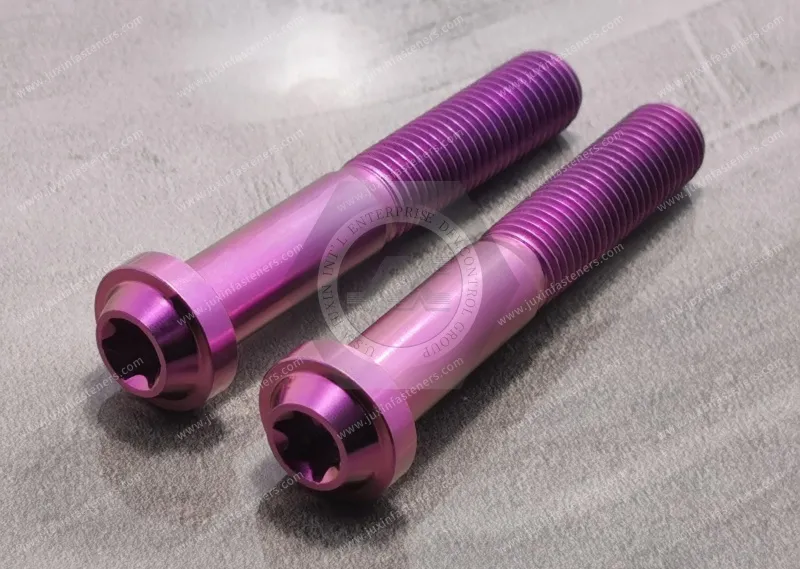
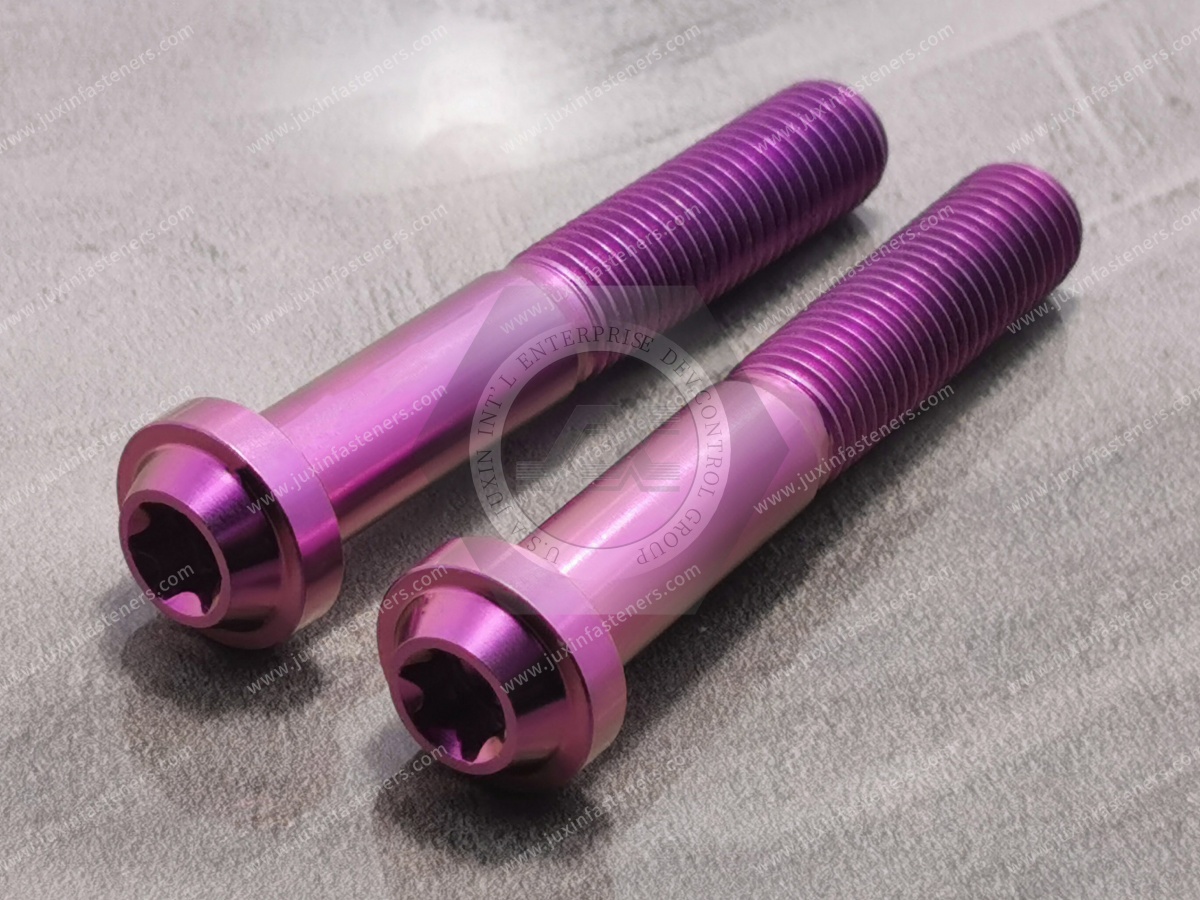
In automotive engineering discussions, a so-called “purple bolt” has become a frequently mentioned topic, especially in connection with certain Japanese OEM engine and chassis assemblies. These fasteners are often described as “special magic bolts” that never loosen or represent ultra-secret manufacturing technology.
Product Specification
Purple Bolts” in Automotive Manufacturing: The Real Engineering Solution Behind Color-Coded High-Performance Fasteners
In automotive engineering discussions, a so-called “purple bolt” has become a frequently mentioned topic, especially in connection with certain Japanese OEM engine and chassis assemblies. These fasteners are often described as “special magic bolts” that never loosen or represent ultra-secret manufacturing technology.
From an engineering standpoint, however, the reality is far more rational—and far more interesting.
The “purple bolt” is not a standardized fastener designation under ISO 898-1, DIN 933, or any international fastener classification system. Instead, it refers to a high-performance coated structural fastener system used in selected powertrain and chassis applications, where color is part of process identification and surface engineering control.
This article explains the real technical principles behind these fasteners and how modern automotive high-strength bolts, friction-controlled fasteners, and preload-critical bolting systems achieve reliability in mass production.
1. What the “Purple Bolt” Really Is in Automotive Fastener Engineering
In advanced automotive manufacturing, fasteners are often visually coded to distinguish:
Surface treatment type
Friction coefficient class
Assembly process compatibility
Traceability and quality control stage
Color is therefore not decorative—it is functional.
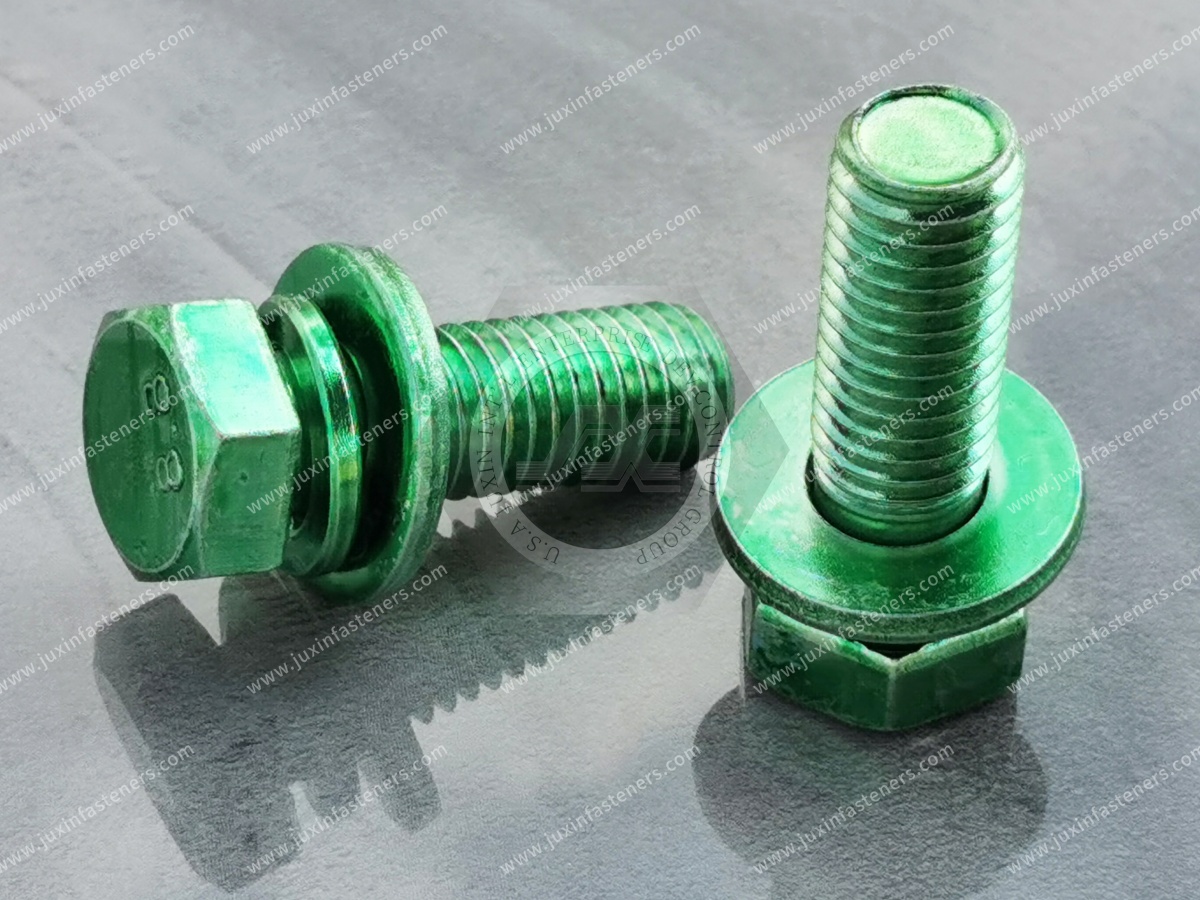
The so-called “purple bolt” typically belongs to a class of zinc-aluminum flake-coated fasteners with organic topcoat systems, designed for:
Stable friction coefficient control
Corrosion resistance
High consistency in the torque–tension relationship
In engineering terms, these are friction-controlled coated fasteners, widely used in modern vehicle powertrains and chassis joints.
2. Core Engineering Principle: Torque Is Not Preload
One of the most important truths in bolted joint design is:
Torque does not directly create preload—friction does.
In any bolted joint, applied torque is consumed by three major components:
Under-head friction
Thread friction
Axial preload generation
A simplified relationship is often represented as:
Torque = friction losses + preload work
This means that even small variations in the friction coefficient can cause large variations in the clamp load.
For example, a friction variation from 0.09 to 0.14 may lead to 30–50% preload scatter, even under identical torque settings.
This is exactly why modern automotive OEMs impose strict control over the coefficient of friction (CoF) of structural fasteners.
3. Why Coated Fasteners Like “Purple Bolts” Improve Assembly Consistency
The key engineering value of friction-controlled coatings is not “strength,” but repeatability.
A typical zinc-aluminum flake + organic topcoat system provides:
3.1 Stable friction coefficient window
Narrow CoF distribution (typical range: ~0.09–0.15)
Reduced batch-to-batch variation
Predictable torque–tension behavior
This ensures that every bolt installed with the same torque produces nearly identical preload.
3.2 Reduced assembly scatter in mass production
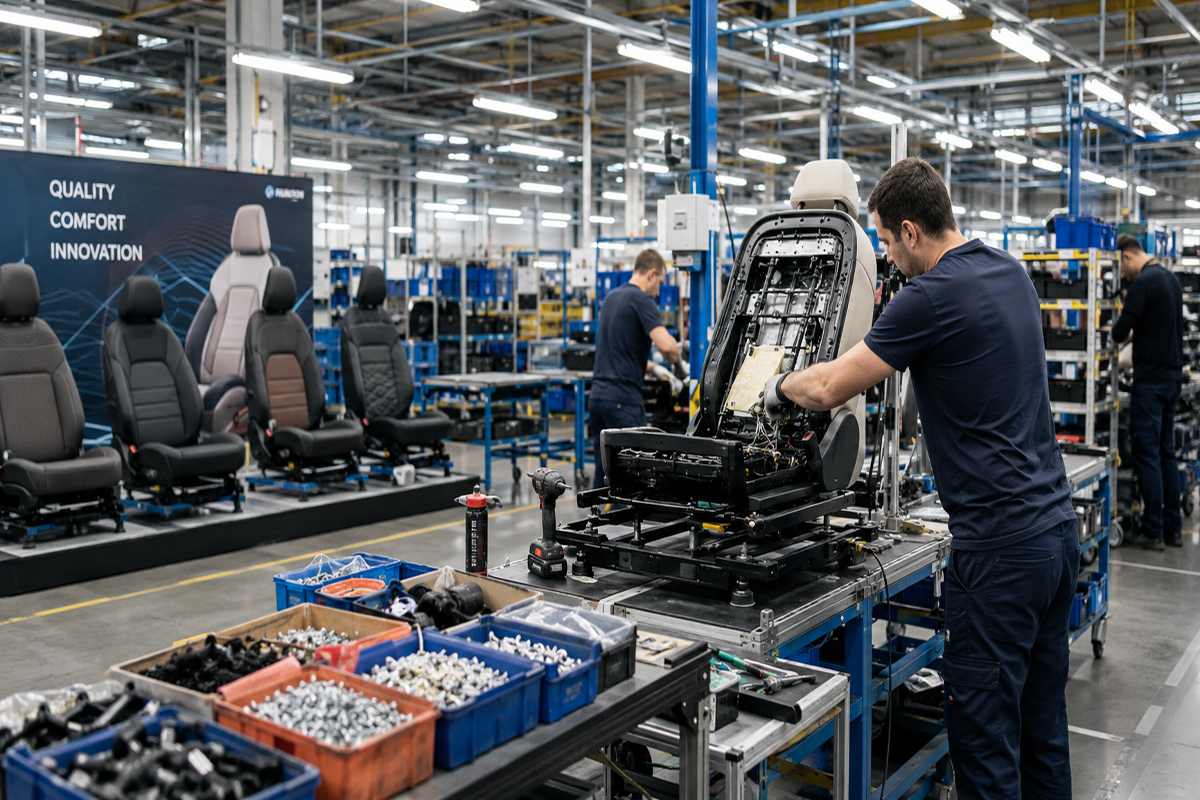
In automotive production lines, thousands of joints are tightened per vehicle. Without friction control:
Some bolts are over-tightened (yield risk)
Some are under-tightened (loose joint risk)
Coated systems dramatically reduce this dispersion, improving:
Assembly quality stability
Process capability (Cp/Cpk)
Long-term joint reliability
3.3 Improved corrosion protection without hydrogen embrittlement risk
Unlike electroplating processes, modern flake coatings:
Avoid acid pickling and hydrogen absorption
Eliminate hydrogen embrittlement risk in high-strength bolts
Provide excellent salt spray resistance (often exceeding 480–1000 hours depending on specification)
This is particularly important for ISO 898-1 property class 10.9 and 12.9 fasteners used in engine and chassis systems.
4. Why OEMs Use Color-Coded High-Performance Bolts
The color (purple or otherwise) serves a critical industrial purpose:
Manufacturing traceability and mistake-proofing (Poka-Yoke)
Color coding allows:
Immediate identification of the coating system
Prevention of wrong fastener installation
Line-side process control verification
Maintenance and service recognition
In modern automotive factories, this is part of lean manufacturing fastener control systems, not aesthetic design.
5. Are “Purple Bolts” Really Superior? Engineering Reality Check
From a technical perspective, these fasteners are not “magic bolts.”
Their performance advantage comes from:
Controlled friction coefficient consistency
Optimized coating system engineering
High-strength steel base material (ISO/DIN structural fastener grades)
Precision torque-controlled assembly processes
However, similar performance levels are now widely achievable in global automotive supply chains using:
Zinc flake coatings (ISO 10683 compliant systems)
Advanced lubrication-controlled coatings
Torque-angle tightening strategies
High-precision DC electric fastening tools
In other words, the technology is not exclusive—it is standardized engineering practice in high-end manufacturing.
6. Why Friction-Control Fasteners Are Essential in Modern Automotive Engineering
In critical joints such as:
Engine cylinder heads
Transmission housings
Suspension subframes
Wheel fastening systems
Engineers require:
High preload accuracy
Minimal relaxation over time
High fatigue resistance
Stable torque–tension conversion
Without controlled friction systems, preload scatter alone can significantly reduce fatigue life and joint reliability.
7. Engineering Insight: The Real “Secret” Behind Reliability
The real value of these fasteners is not color, branding, or myth.
It is process-controlled preload engineering:
Controlling friction = controlling preload
Controlling preload = controlling fatigue life
Controlling fatigue life = controlling safety
This is the foundation of modern bolted joint design under standards such as:
ISO 898-1 (Mechanical properties of fasteners)
DIN EN ISO 16047 (Torque/clamp force testing)
VDI 2230 (Systematic calculation of high duty bolted joints)
Conclusion: From “Purple Myth” to Engineering Reality
The so-called automotive “purple bolt” is best understood not as a special part, but as a symbol of modern fastening engineering:
Precision-controlled friction systems
High consistency in preload generation
Advanced surface engineering technology
Strict OEM-level process control
Its “magic” lies not in mystery, but in repeatability and statistical control of assembly performance.
In today’s automotive industry, this approach is no longer exceptional—it is the baseline requirement for high-performance structural bolted joints.
For engineers and procurement teams, the real focus should not be color, but:
friction coefficient stability, preload accuracy, fatigue performance, and process capability.
Because in bolted joint engineering, reliability is never accidental—it is designed, controlled, and verified.
Product Packaging
Packaging Standard
At Juxin Fasteners, we apply standardized export packaging to ensure product protection, traceability, and compliance with international logistics requirements.
1. Standard Export Packaging
Unless otherwise specified, all products will be packed according to our factory standard export packaging, which includes:
Moisture-resistant inner protection
Poly bag or small box packing as required
Reinforced export cartons
Clear labeling with part number, specification, batch number, and quantity
Palletizing for sea or air shipment when necessary
Our standard packaging is designed to ensure safe transportation, efficient warehousing, and long-distance international shipping.
2. Customized Packaging Options
We also provide customized packaging solutions according to customer requirements, including but not limited to:
Private labeling
Customized barcodes
Specific carton dimensions
Retail packaging
Special pallet configuration
Customer-specific marking and identification
So that you know, customized packaging may involve additional costs and extended lead time depending on the complexity of the requirements.
3. Compliance & Quality Assurance
All packaging processes are controlled under our ISO 9001 quality management system to ensure consistency, traceability, and product integrity throughout the supply chain.
Product Pictures
Hot Products
Contact Us
Tel.:
+86 020 8621 0320
+86 020 3121 6067
E-mail:
Technical Support:
Navigation
SEND INQUIREY