Call Us
+86 136 6007 9809
Call Us
+86 136 6007 9809

Zinc-Aluminum Coating Technology: A Chromium-Free Corrosion Protection Solution for High-Performance Fasteners
Corrosion failure remains one of the most critical threats in the lifecycle of industrial fasteners, high-strength bolts, and structural bolted joints. In applications such as automotive chassis systems, wind turbine towers, and offshore engineering structures, traditional electroplated zinc coatings are no longer sufficient to meet increasingly aggressive service environments.
Product Specification
Zinc-Aluminum Coating Technology: A Chromium-Free Corrosion Protection Solution for High-Performance Fasteners
Corrosion failure remains one of the most critical threats in the lifecycle of industrial fasteners, high-strength bolts, and structural bolted joints. In applications such as automotive chassis systems, wind turbine towers, and offshore engineering structures, traditional electroplated zinc coatings are no longer sufficient to meet increasingly aggressive service environments.
At the same time, tightening environmental regulations such as the EU RoHS Directive (2011/65/EU) and REACH compliance requirements have significantly restricted the use of hexavalent chromium-based coatings, including traditional Dacromet systems.
Against this backdrop, zinc-aluminum flake coating technology (Zinc-Aluminum Coating System) has emerged as a leading solution for chromium-free corrosion protection of high-strength fasteners.
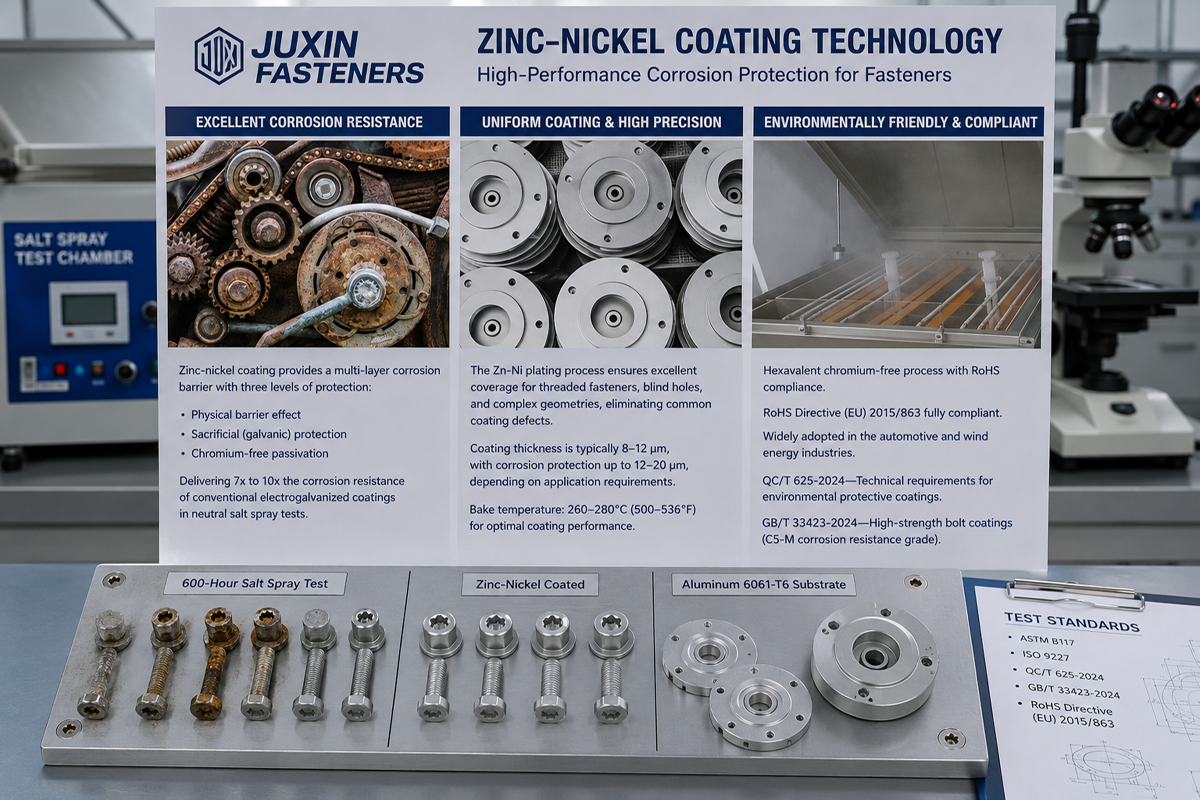
1. Corrosion Mechanism and the Need for Advanced Fastener Coatings
Corrosion in fasteners and bolted connections leads to:
Structural weakening
Loss of preload in bolted joints
Fatigue failure
Equipment downtime and safety risks
Conventional electro-galvanized coatings often fail under:
High chloride environments (marine/offshore)
Automotive underbody exposure
Wind power coastal installations
De-icing salt corrosion
The need for advanced coatings compliant with ISO 9227 neutral salt spray testing and ISO 12944 corrosion categories (C4–C5-M) has driven the development of zinc-aluminum systems.
2. Corrosion Protection Mechanism of Zinc-Aluminum Flake Coating
The zinc-aluminum coating system provides multi-layer protection through three key mechanisms:
2.1 Physical Barrier Effect
Zinc and aluminum flakes are layered in a “fish-scale structure,” forming a dense overlapping barrier that significantly extends the diffusion path of:
Oxygen
Moisture
Chloride ions
This structure provides excellent long-term protection for high-strength structural fasteners and DIN/ISO bolts.
2.2 Sacrificial Anode Protection
Zinc has a lower electrochemical potential than steel. When coating damage occurs, zinc preferentially corrodes, protecting the exposed steel substrate.
This galvanic protection mechanism is critical for:
Automotive chassis bolts
Wind turbine foundation bolts
Offshore structural fasteners
2.3 Chromium-Free Passivation System
Modern zinc-aluminum coatings use chromium-free binder systems with functional additives that stabilize aluminum flakes and enhance corrosion resistance while fully complying with:
EU RoHS Directive
REACH Substances of Very High Concern (SVHC) restrictions
3. Process Technology: Dip-Spin and Spray Coating Systems
Zinc-aluminum coatings are applied using non-electrolytic processes:
3.1 Dip-Spin Coating (Primary Industrial Method)
Ideal for bolts, nuts, washers, threaded fasteners
Ensures uniform coating on complex geometries
Eliminates common electroplating issues such as:
Hydrogen embrittlement
Hydrogen-induced cracking risk in ISO 898-1 class 10.9 / 12.9 bolts
3.2 Spray Coating
Used for large structural components
Flexible for custom engineering applications
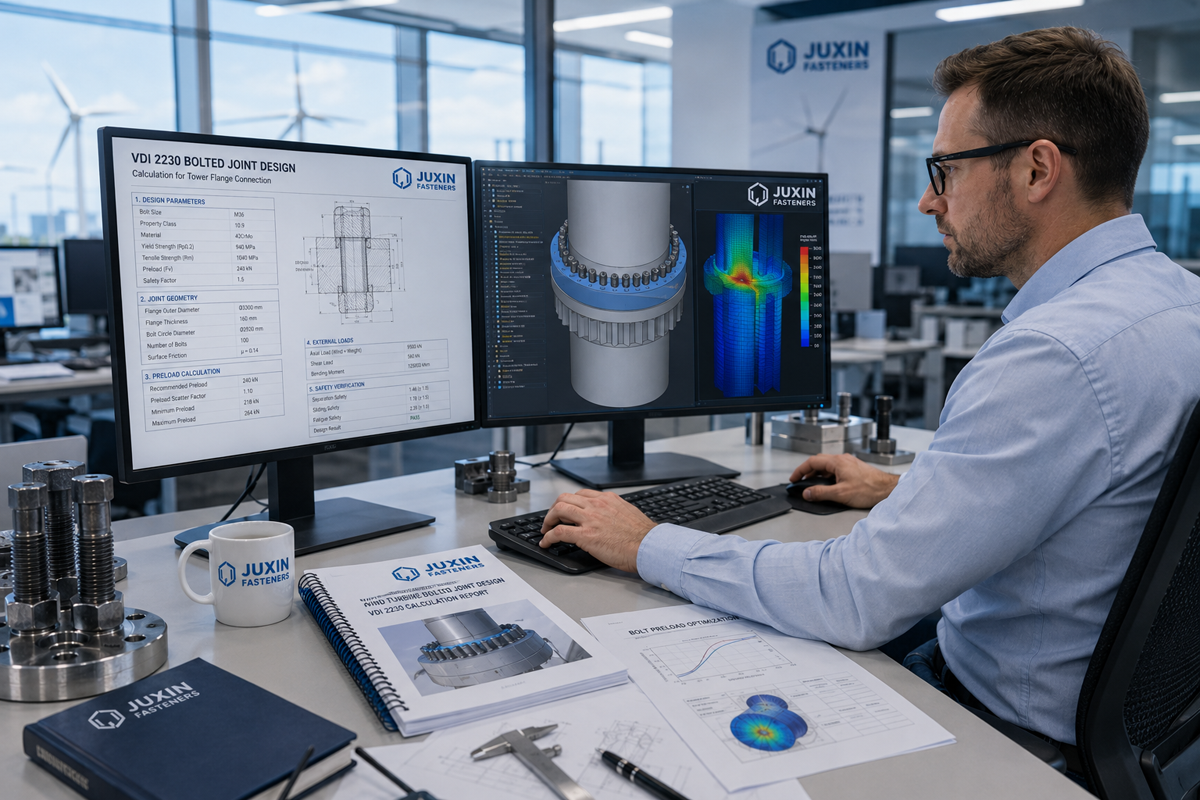
4. Coating Thickness and Thermal Curing Behavior
Typical coating thickness:
Standard applications: 8–12 μm
Heavy corrosion environments: 12–20 μm
This ensures minimal impact on thread fit for DIN 933 / DIN 931 / ISO 4014 / ISO 4017 bolts, often eliminating the need for re-tapping or rework.
Curing Temperature:
Standard range: 290–330°C
Low-temperature systems: 260–280°C
During curing, polymer binders cross-link to form a stable layered matrix that embeds zinc and aluminum flakes.
Process balance is critical:
Under-curing → poor adhesion
Over-curing → coating degradation or substrate property changes
5. Corrosion Performance Evaluation (ISO 9227 Standard)
The primary test method for corrosion resistance is:
ISO 9227 Neutral Salt Spray Test (NSS)
Solution: 5% NaCl
Temperature: 35°C
Continuous exposure
Performance benchmarks:
Standard zinc-aluminum coating: ≥720 hours without red rust
High-performance systems: 1000–1200+ hours
However, salt spray results must not be directly converted to real-world service life, as environmental conditions vary significantly.
6. Wind Power Industry Requirements (IEC & ISO Standards)
Wind energy applications follow strict corrosion requirements:
IEC 61400-6 (wind turbine structural integrity)
ISO 12944-9 (offshore corrosion protection systems)
ISO 9223 (atmospheric corrosion classification)
Typical requirement:
C5-M (marine high corrosivity category)
Salt spray resistance: ≥1200 hours
Zinc-aluminum coatings are widely used in:
Tower flange bolts
Foundation anchor bolts
Nacelle structural fasteners
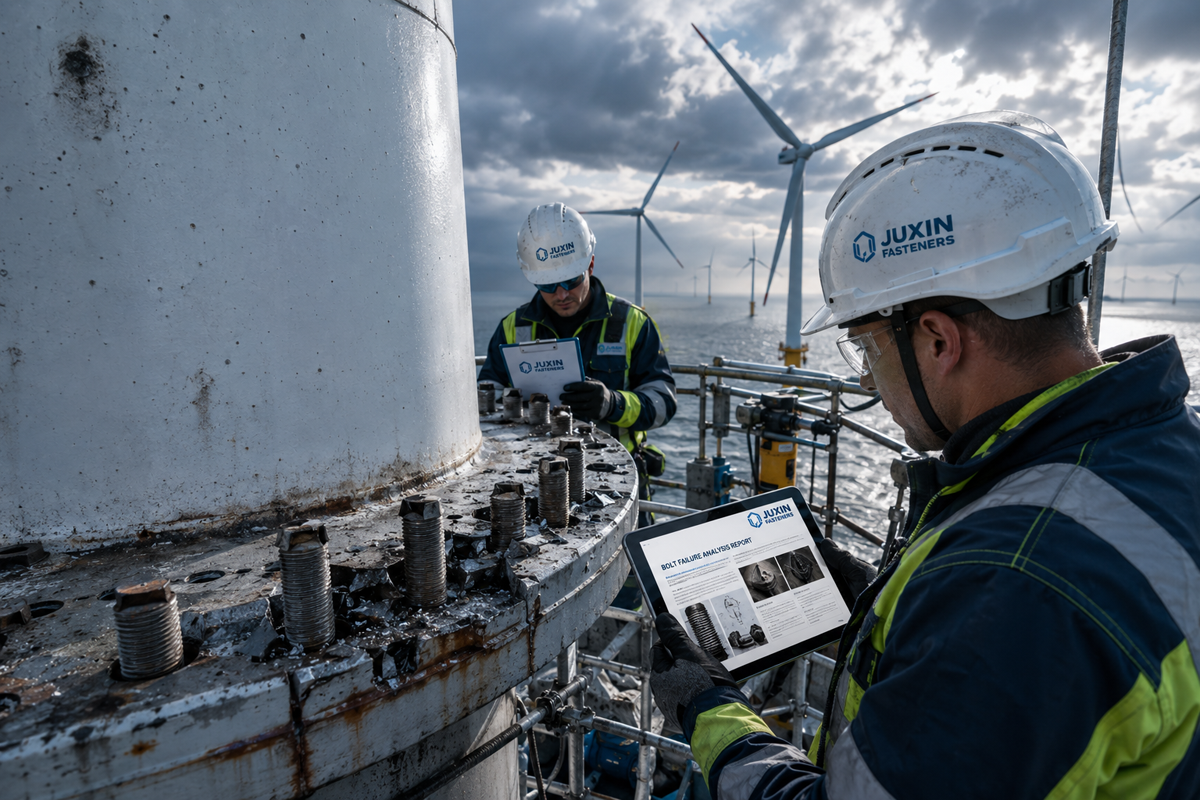
7. Comparison with Traditional Coating Systems
Electroplated Zinc (ISO 4042)
Salt spray resistance: 48–120 hours
High risk of hydrogen embrittlement
Limited offshore suitability
Hot-Dip Galvanizing (ISO 1461)
Good thickness protection
Poor thread precision control
Requires post-machining for precision fasteners
Zinc-Aluminum Coating (Chromium-Free)
7–10× corrosion resistance vs electro-galvanizing
No hydrogen embrittlement risk
Fully compliant with RoHS / REACH
Ideal for ISO 898-1 high-strength bolts
8. Application Engineering Selection Guide
Recommended by Environment:
Indoor / Low Corrosion (ISO 12944 C1–C2):
Electroplated zinc fasteners (ISO 4042)
Outdoor Structural Use (C3–C4):
Hot-dip galvanized fasteners (ISO 1461 / ASTM A153)
High Corrosion / Critical Applications (C5-M):
Zinc-aluminum flake-coated fasteners (DIN / ISO high-strength bolts)
9. Automotive Case Study: Performance Upgrade
A European OEM replaced electro-galvanized ISO 898-1 grade 10.9 chassis bolts with chromium-free, zinc-aluminum-coated fasteners.
Results:
Salt spray resistance increased from 240h → 720h+
Eliminated hydrogen embrittlement risk
Fully compliant with EU RoHS environmental requirements
Improved long-term chassis corrosion stability
10. Future Trends in Fastener Coating Technology
The evolution of industrial fastener surface engineering is moving toward:
Nano-structured zinc-nickel hybrid coatings
Ceramic-metal composite coatings
AI-driven coating thickness monitoring systems
Inline defect detection via machine vision
Smart traceable coating process control
For fastener manufacturers, building a closed-loop system covering:
Raw material verification
Process parameter control
Coating performance validation
is becoming essential for competitiveness in global OEM supply chains.
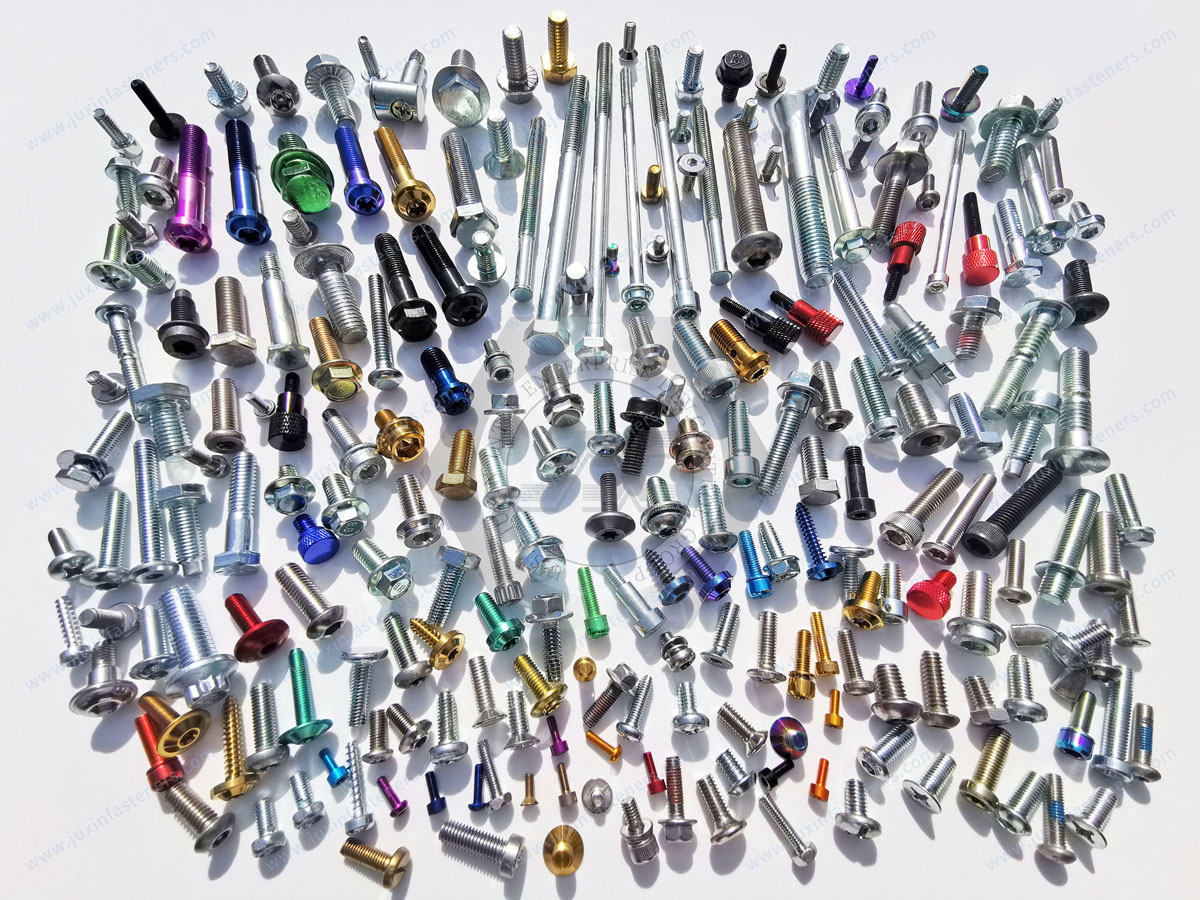
Conclusion
Chromium-free zinc-aluminum coating technology represents a major advancement in corrosion-resistant fastener engineering. It bridges the gap between performance, environmental compliance, and cost efficiency.
For engineers and procurement specialists working with:
DIN / ISO high-strength bolts
Automotive fasteners
Wind power structural bolts
Marine corrosion-resistant fasteners
Zinc-aluminum coating is increasingly becoming the preferred global solution for high-reliability bolted joints.
At JUXIN FASTENERS, advanced zinc-aluminum coating systems are integrated into production to ensure long-term durability, OEM compliance, and consistent global performance standards.
Product Packaging
Packaging Standard
At Juxin Fasteners, we apply standardized export packaging to ensure product protection, traceability, and compliance with international logistics requirements.
1. Standard Export Packaging
Unless otherwise specified, all products will be packed according to our factory standard export packaging, which includes:
Moisture-resistant inner protection
Poly bag or small box packing as required
Reinforced export cartons
Clear labeling with part number, specification, batch number, and quantity
Palletizing for sea or air shipment when necessary
Our standard packaging is designed to ensure safe transportation, efficient warehousing, and long-distance international shipping.
2. Customized Packaging Options
We also provide customized packaging solutions according to customer requirements, including but not limited to:
Private labeling
Customized barcodes
Specific carton dimensions
Retail packaging
Special pallet configuration
Customer-specific marking and identification
So that you know, customized packaging may involve additional costs and extended lead time depending on the complexity of the requirements.
3. Compliance & Quality Assurance
All packaging processes are controlled under our ISO 9001 quality management system to ensure consistency, traceability, and product integrity throughout the supply chain.
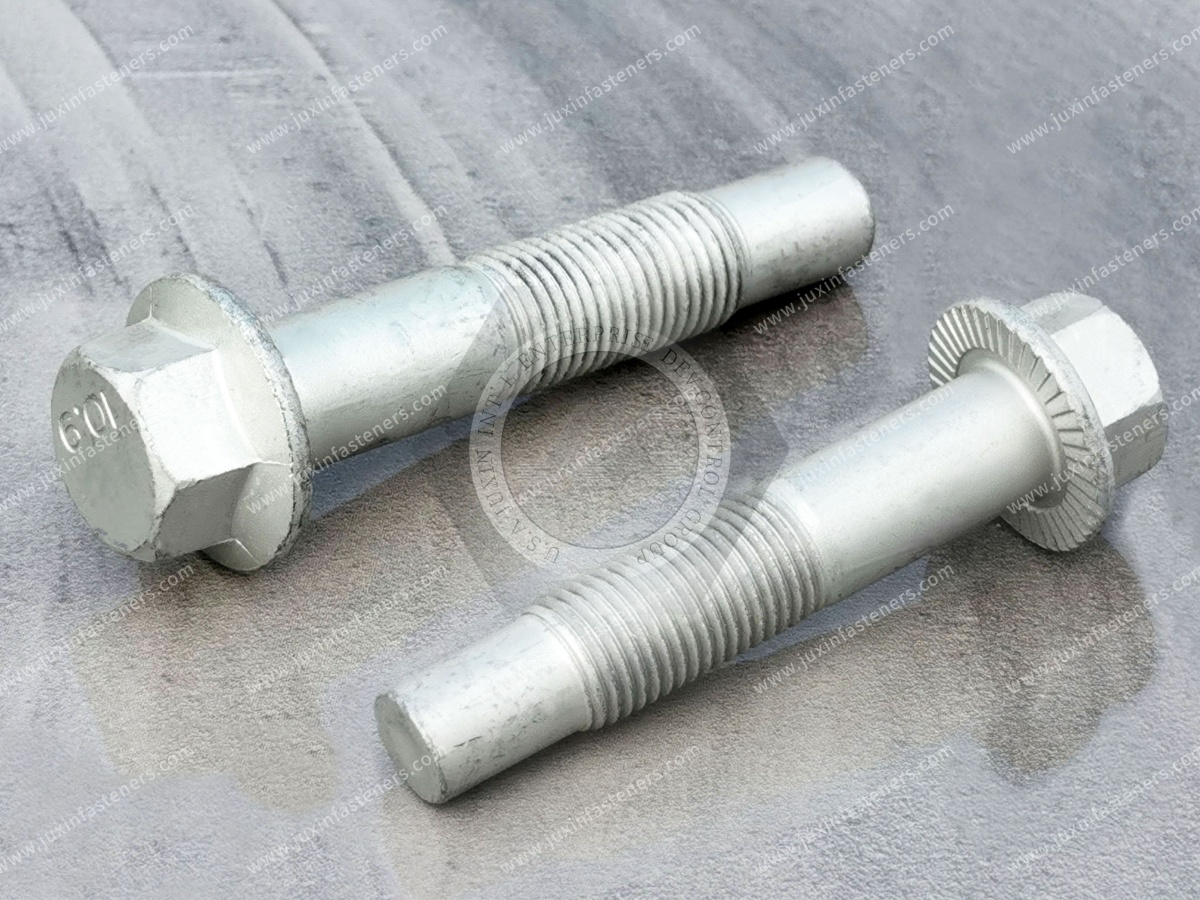
Product Pictures
Contact Us
Tel.:
+86 020 8621 0320
+86 020 3121 6067
E-mail:
Technical Support:
Navigation
SEND INQUIREY