Call Us
+86 136 6007 9809
Call Us
+86 136 6007 9809

Bolt Surface Defect Inspection: From Traditional Methods to Intelligent AI-Based Quality Control Systems
In mechanical fastening systems, bolts, screws, and studs (industrial fasteners) are critical load-bearing components. Their surface quality directly determines joint strength, fatigue resistance, and structural safety.
Industry statistics show that approximately 35% of fastening failures are related to surface defects, making systematic inspection and quality control essential in modern manufacturing.
Product Specification
Bolt Surface Defect Inspection: From Traditional Methods to Intelligent AI-Based Quality Control Systems
In mechanical fastening systems, bolts, screws, and studs (industrial fasteners) are critical load-bearing components. Their surface quality directly determines joint strength, fatigue resistance, and structural safety.
Industry statistics show that approximately 35% of fastening failures are related to surface defects, making systematic inspection and quality control essential in modern manufacturing.
Today, bolt inspection technology is evolving from traditional manual methods to AI-driven automated defect-detection systems, enabling greater reliability and traceable quality assurance.
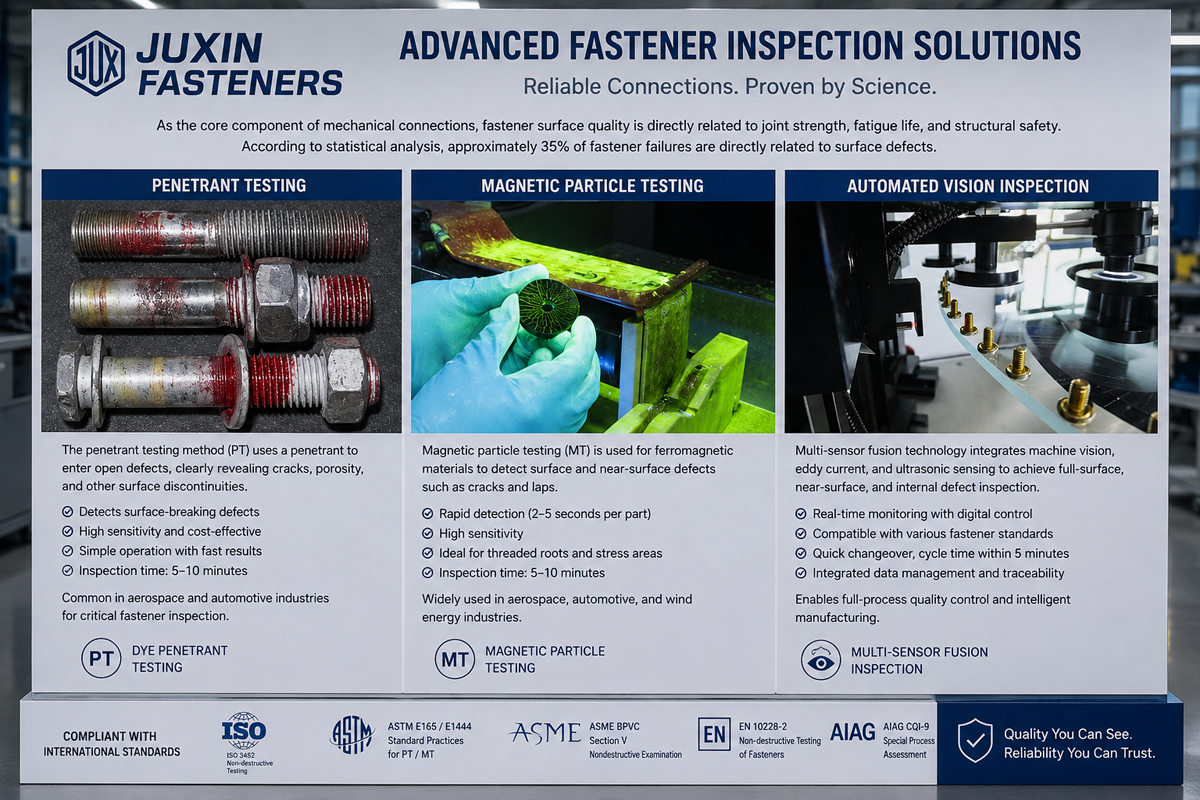
1. Classification of Bolt Surface Defects (ISO & DIN Standards)
According to ISO 6157-1 (Fasteners – Surface discontinuities – Part 1: Bolts, screws and studs) and DIN EN ISO 6157, bolt surface defects are generally divided into two categories:
1. Manufacturing-Origin Defects
Forging bursts
Surface cracks
Laps and folds
Indentations and dents
Mechanical scratches and machining marks
2. Heat Treatment & Surface Process Defects
Decarburization
Oxide scale
Quenching cracks
Plating blistering or peeling
For example, surface cracks may originate from:
Incomplete metallurgical refining
Improper metal flow during cold heading
Tool wear in thread rolling dies
Typical dent depth limits are often controlled within:
≤ 0.02d or max 0.25 mm (engineering acceptance criteria depending on application class)
2. Traditional Bolt Inspection Methods
2.1 Visual Inspection (Manual Inspection)
Visual inspection is the most basic method in fastener quality control systems.
Operators use:
5×–10× magnifiers
Industrial borescopes
Advantages:
Low cost
Simple equipment
Easy deployment
Limitations:
High subjectivity
Missed detection of micro-cracks
Limited throughput (≈ 500–1000 pcs/operator/day)
2.2 Dye Penetrant Testing (PT – ISO 3452)
Penetrant testing is widely used for detecting open surface defects.
Types:
Visible dye penetrant inspection (DPI)
Fluorescent penetrant inspection (FPI)
Features:
High sensitivity for cracks and pores
Simple operation
Low equipment cost
Limitations:
Requires surface cleaning & post-processing
Cannot detect subsurface defects
Inspection time: ~5–10 minutes per part
Applications:
Aerospace fasteners
Automotive engine connecting bolts
2.3 Magnetic Particle Testing (MT – ISO 9934)
Magnetic particle inspection is widely used for ferromagnetic fasteners.
Principle:
Leakage magnetic fields attract iron particles to defect locations.
Advantages:
Very fast (2–5 seconds per bolt)
High sensitivity
Ideal for thread root and head-to-shank transition zones
Limitations:
Only applicable to magnetic materials
Requires demagnetization after inspection
Applications:
Wind turbine bolts
Automotive high-strength bolts
Structural steel fasteners
3. Advanced Non-Destructive Testing Technologies
3.1 Machine Vision Inspection (Industrial Optical Inspection)
Modern fastener production lines widely use machine vision systems for bolt defect detection.
System configuration:
2–5 MP industrial cameras
High-intensity structured lighting
Edge detection & contour recognition algorithms
Performance:
Inspection speed: 100–300 pcs/min
Real-time inline rejection
Fully automated production integration
Limitations:
Sensitive to surface reflectivity
Thread groove detection complexity
3.2 Eddy Current Testing (ET – ISO 15549)
Eddy current inspection is based on electromagnetic induction principles.
Advantages:
No coupling agent required
Detects surface & near-surface defects (up to 2–3 mm depth)
Suitable for dry, high-speed inspection
Limitations:
Not applicable to non-conductive materials
Reduced sensitivity to complex geometries
4. Industry-Specific Inspection Requirements
Automotive Industry (ISO/TS 16949 / IATF 16949)
High-speed 100% inspection
Machine vision systems dominate
Focus: thread defects, scratches, plating issues
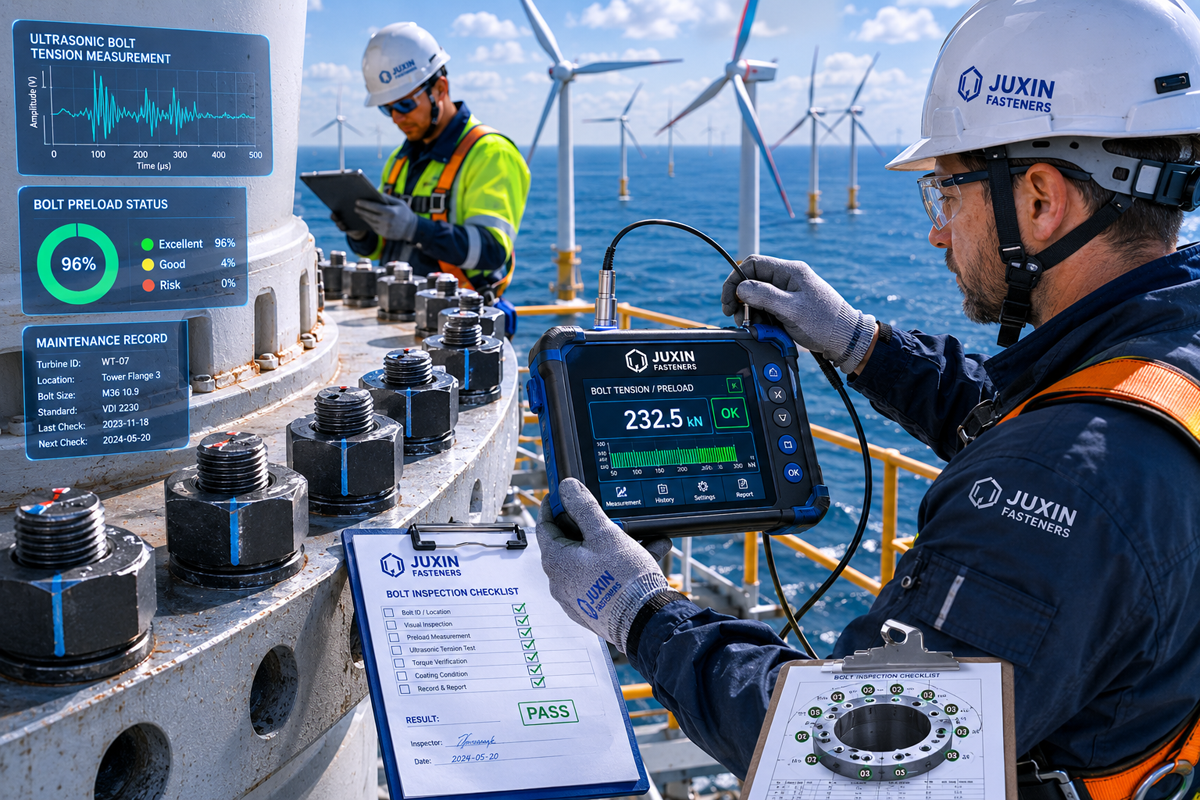
Wind Power Industry (IEC 61400-6 / EN 1090)
High reliability requirements
Magnetic + eddy current combined inspection
Minimum sampling rate: ≥10% per batch
Focus: fatigue cracks and stress concentration zones
Aerospace Industry (EN 9100 / ASTM E1417)
Zero-defect tolerance
Multi-method inspection:
Dye penetrant testing
Ultrasonic testing (UT)
Radiographic inspection (X-ray)
Inspection time: ≥10 min per component
General Industrial Equipment (ISO 9001 Quality Systems)
Cost-driven inspection strategy
Visual inspection with sampling (5–10%)
Balanced quality vs cost optimization
5. AI-Powered Bolt Defect Detection Systems
Artificial intelligence is transforming fastener quality inspection systems.
5.1 Deep Learning Models (YOLOv5 / YOLOv8)
Real-time bolt positioning
Multi-defect classification
Detection accuracy > 98% recall rate
5.2 CNN-Based Defect Recognition
Automatic feature extraction
Classification: cracks, scratches, rust, deformation
False detection rate < 0.1%
5.3 Multi-Camera High-Speed Systems
Throughput up to 700 pcs/min
Fully automated inline inspection
Smart rejection system integration
6. Future Trends in Fastener Inspection Technology
6.1 Multi-Sensor Fusion Systems
Integration of:
Machine vision
Eddy current
Ultrasonic testing
→ Enables full coverage of:
Surface defects
Near-surface defects
Internal defects
6.2 Digital Quality Management (Industry 4.0)
Real-time defect tracking
Cloud-based quality dashboards
Predictive maintenance integration
Process optimization feedback loops
6.3 Flexible Robotic Inspection Systems
Collaborative robot arms
Quick-change inspection probes
Changeover time < 5 minutes
Multi-product adaptability
7. Engineering Selection Guidelines
For field engineers and procurement teams:
Visual inspection → emergency checks & low-risk components
Dye penetrant testing (ISO 3452) → critical parts & small batch inspection
Machine vision systems → mass production quality control
Eddy current testing (ISO 15549) → metal near-surface defect detection
AI inspection systems → high-precision, high-speed industrial production
Conclusion
Bolt surface defect inspection is no longer a manual quality checkpoint—it has evolved into a data-driven, intelligent quality assurance system.
With the integration of ISO-standard non-destructive testing methods and AI-based vision systems, manufacturers can achieve:
Higher reliability
Lower failure rates
Fully traceable quality control
For modern industrial fasteners, structural bolts, and high-strength fastening systems, selecting the right inspection method is a critical engineering decision balancing:
accuracy, cost, and production efficiency.
Product Packaging
Packaging Standard
At Juxin Fasteners, we apply standardized export packaging to ensure product protection, traceability, and compliance with international logistics requirements.
1. Standard Export Packaging
Unless otherwise specified, all products will be packed according to our factory standard export packaging, which includes:
Moisture-resistant inner protection
Poly bag or small box packing as required
Reinforced export cartons
Clear labeling with part number, specification, batch number, and quantity
Palletizing for sea or air shipment when necessary
Our standard packaging is designed to ensure safe transportation, efficient warehousing, and long-distance international shipping.
2. Customized Packaging Options
We also provide customized packaging solutions according to customer requirements, including but not limited to:
Private labeling
Customized barcodes
Specific carton dimensions
Retail packaging
Special pallet configuration
Customer-specific marking and identification
So that you know, customized packaging may involve additional costs and extended lead time depending on the complexity of the requirements.
3. Compliance & Quality Assurance
All packaging processes are controlled under our ISO 9001 quality management system to ensure consistency, traceability, and product integrity throughout the supply chain.
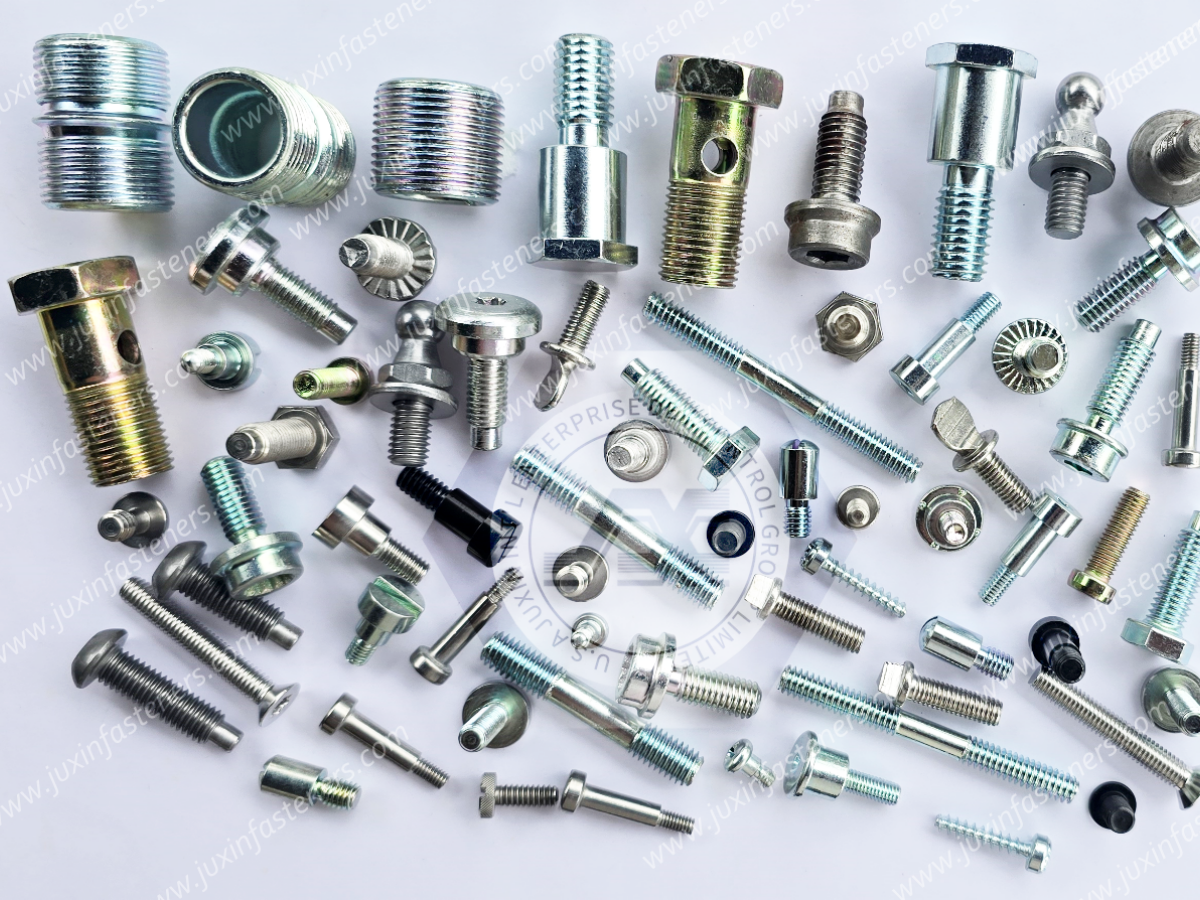
Product Pictures
Contact Us
Tel.:
+86 020 8621 0320
+86 020 3121 6067
E-mail:
Technical Support:
Navigation
SEND INQUIREY