Call Us
+86 136 6007 9809
Call Us
+86 136 6007 9809

Why Zinc-Nickel Alloy Coatings Are Widely Used in New Energy Vehicle Fasteners
Advanced Corrosion Protection Solution for Aluminum Lightweight Structures in EV Applications
As the global automotive industry accelerates toward electrification, New Energy Vehicles (NEVs) are increasingly designed with a strong focus on lightweight engineering, extended driving range, and high durability under harsh environments. One of the most critical material strategies in this transformation is the extensive use of aluminum alloys in vehicle structures, combined with high-performance automotive fasteners with advanced surface treatments.
Product Specification
Why Zinc-Nickel Alloy Coatings Are Widely Used in New Energy Vehicle Fasteners
Advanced Corrosion Protection Solution for Aluminum Lightweight Structures in EV Applications
As the global automotive industry accelerates toward electrification, New Energy Vehicles (NEVs) are increasingly designed with a strong focus on lightweight engineering, extended driving range, and high durability under harsh environments. One of the most critical material strategies in this transformation is the extensive use of aluminum alloys in vehicle structures, combined with high-performance automotive fasteners with advanced surface treatments.
Among various coating technologies, Zinc-Nickel (Zn-Ni) alloy plating for fasteners has become the preferred corrosion-protection solution in EV applications, especially when fasteners are assembled with aluminum components.
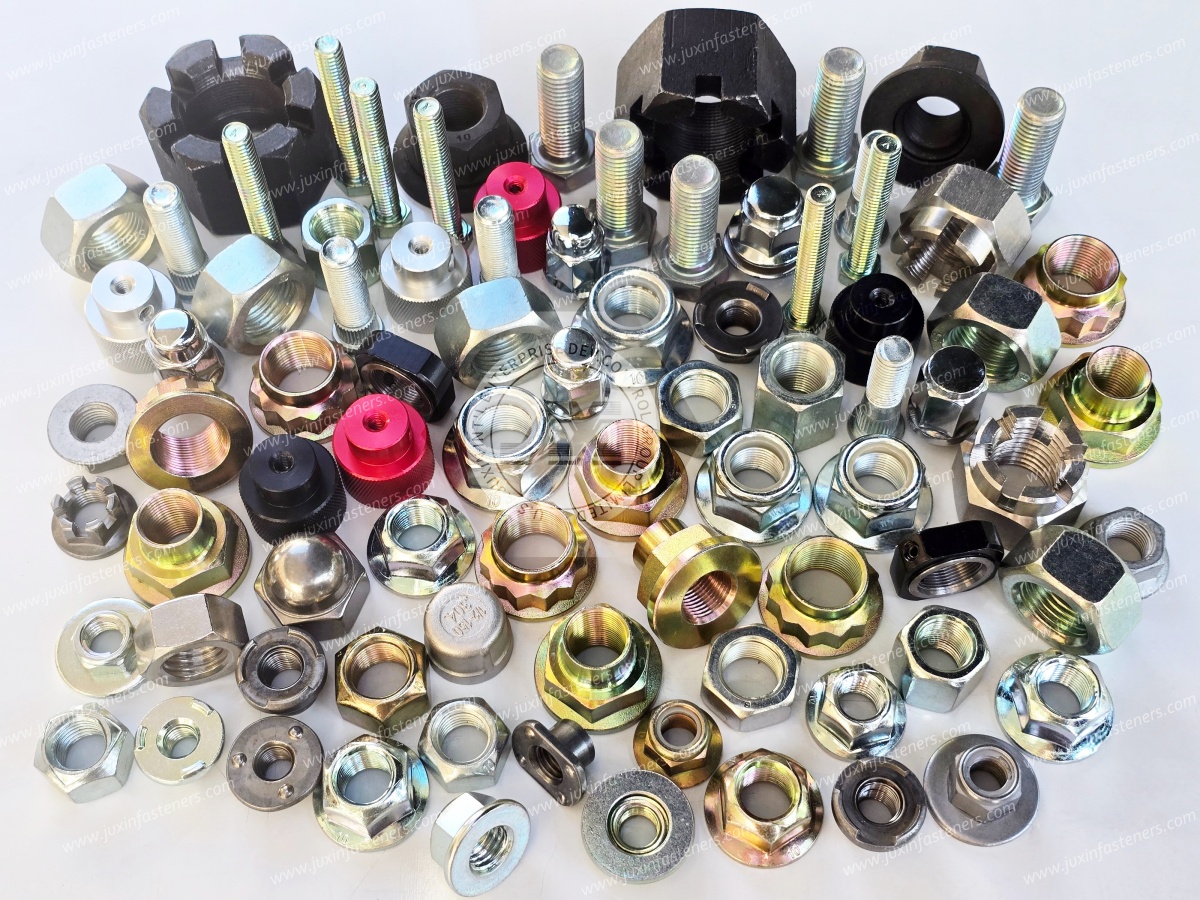
At JUXIN FASTENERS, we specialize in high-performance automotive fasteners, zinc-nickel-plated fasteners, corrosion-resistant fasteners, and EV structural connection solutions designed for demanding OEM environments.
1. Why EV Manufacturers Prefer Aluminum + Lightweight Fastener Systems
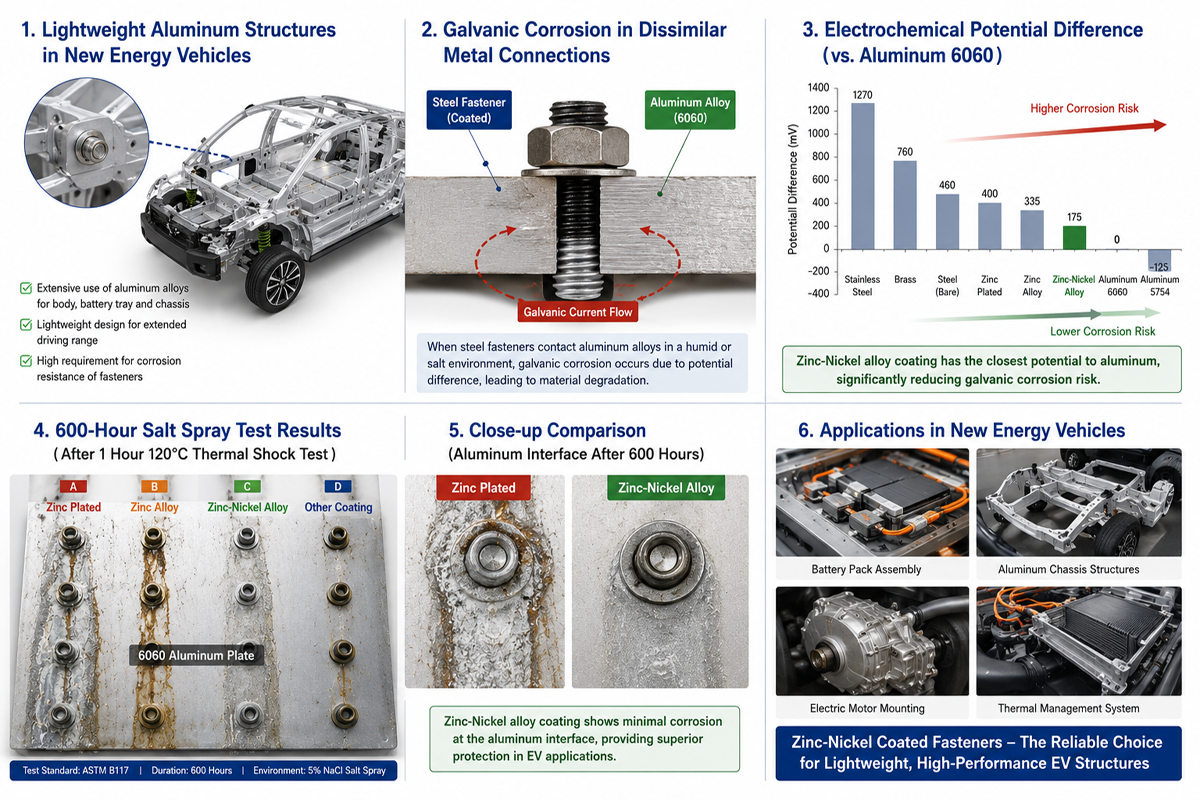
To increase driving range and improve energy efficiency, EV manufacturers are aggressively reducing vehicle weight. This leads to widespread adoption of:
Aluminum alloy body structures
Aluminum battery trays and enclosures
Aluminum chassis components
Mixed-material joining systems (steel fasteners + aluminum panels)
However, this creates a critical engineering challenge:
Galvanic corrosion between dissimilar metals (steel fasteners and aluminum alloys)
Without proper surface protection, long-term contact between aluminum and coated steel fasteners in humid or salt-rich environments can significantly reduce structural reliability.
2. Galvanic Corrosion Risk: Zinc vs Zinc-Nickel Coatings
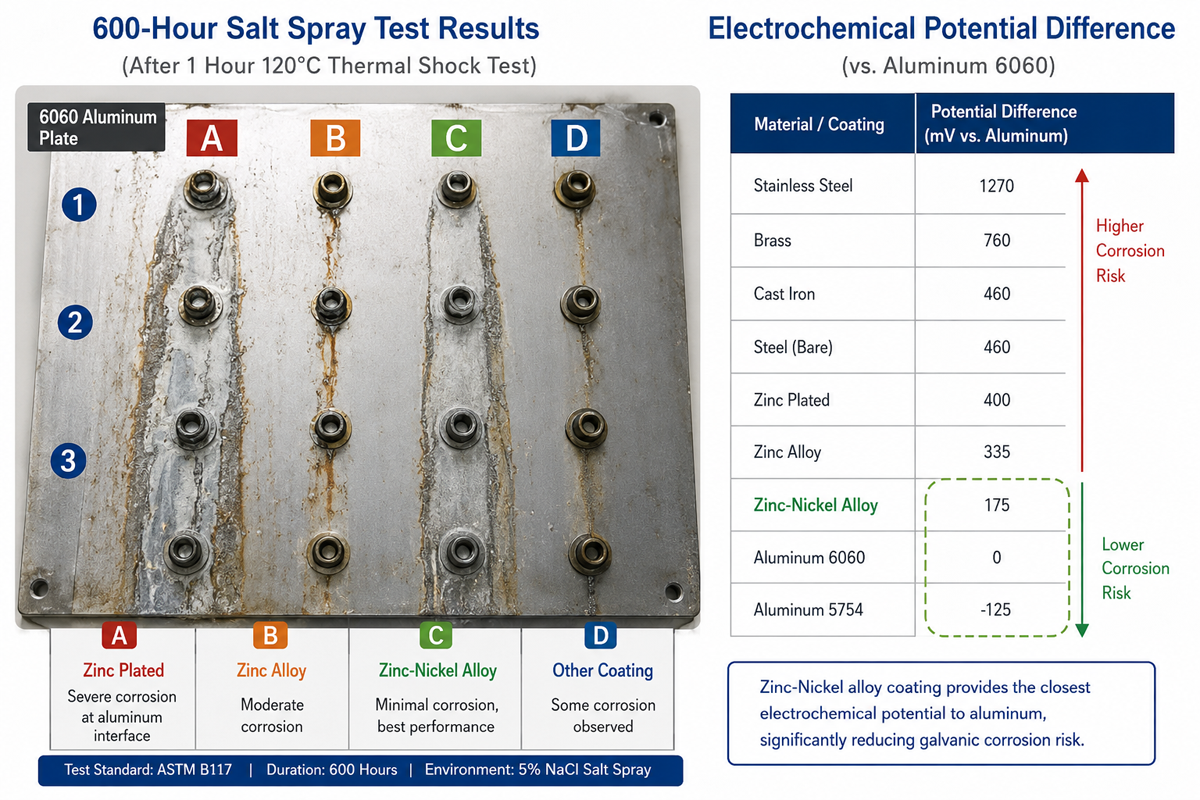
When steel fasteners are connected to aluminum alloys, corrosion behavior is driven by the electrochemical potential difference.
Key Engineering Insight:
Zinc-coated fasteners (Zn plating)
→ Larger electrochemical potential difference vs aluminum
→ Higher galvanic corrosion driving force
→ Faster corrosion propagation at the contact interface
Zinc-Nickel alloy coated fasteners (Zn-Ni plating)
→ Lower electrochemical potential difference vs aluminum
→ Reduced galvanic corrosion energy
→ Significantly improved long-term corrosion resistance
This difference is critical in lightweight EV structures, where aluminum is widely used.
In engineering terms:
The smaller the potential difference between the fastener coating and the aluminum, the lower the corrosion driving force.
This is why zinc-nickel alloy fasteners for aluminum structures are increasingly specified in EV OEM standards.
3. 600-Hour Salt Spray Test: Real Performance Comparison
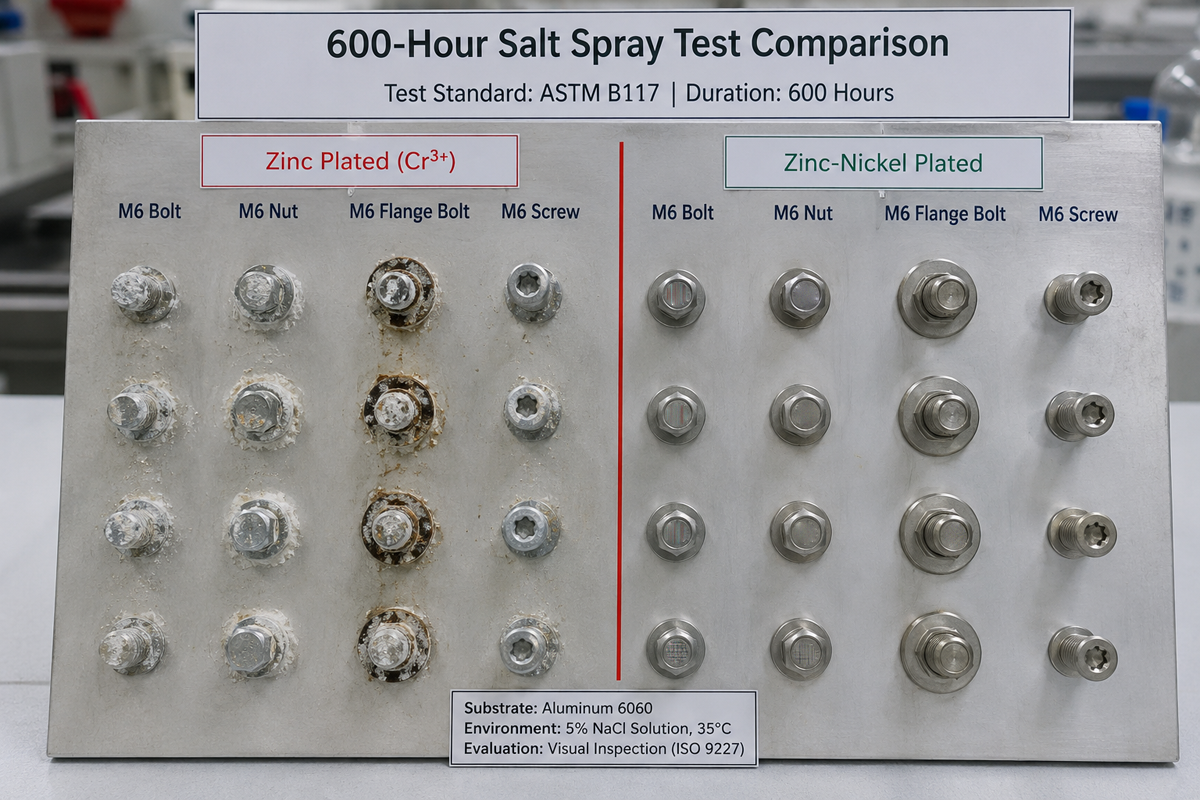
A comparative corrosion test was conducted using:
Aluminum plate: 6060 aluminum alloy
Fasteners: Four different coating systems (A, B, C, D)
Pre-treatment: 120°C thermal shock test (1 hour)
Environment: 600-hour neutral salt spray test
After testing, clear differences were observed in the corrosion behavior at the fastener-aluminum interface.
Test Result Summary:
Conventional zinc-coated fasteners:
Visible corrosion around contact areas, stronger galvanic attack
Alternative coatings:
Moderate corrosion protection, but still noticeable degradation
Zinc-Nickel alloy coated fasteners:
Minimal corrosion observed at the aluminum interface
Best overall performance in resisting galvanic corrosion
The test clearly demonstrates that Zinc-Nickel alloy fasteners provide the most stable corrosion protection when assembled with aluminum alloy panels.
4. Why Zinc-Nickel Coated Fasteners Are Ideal for New Energy Vehicles
For EV engineering and procurement teams, Zinc-Nickel coating provides multiple advantages:
4.1 Superior Corrosion Resistance
Excellent performance in salt spray environments up to 500–1000 hours
Ideal for underbody, chassis, and battery system applications
4.2 Compatible with Aluminum Lightweight Structures
Reduced galvanic corrosion risk
Better long-term stability in mixed-material assemblies
4.3 High Temperature and Humidity Stability
Suitable for EV battery compartments and thermal cycling environments
4.4 OEM-Level Reliability
Meets stringent automotive corrosion standards
Widely used in European and global EV platforms
5. Application Areas in New Energy Vehicles
Zinc-Nickel alloy-coated fasteners are widely used in:
EV battery pack assemblies
Aluminum chassis structures
Lightweight body-in-white (BIW) systems
Electric motor mounting systems
Thermal management systems
High-voltage enclosure fastening systems
These applications require high corrosion resistance, mechanical reliability, and long service life.
6. JUXIN FASTENERS EV Fastener Surface Treatment Solutions
As a professional manufacturer with over 20 years of experience in industrial fastening systems, JUXIN FASTENERS provides:
Zinc-Nickel plated automotive fasteners
High-strength EV structural fasteners
Aluminum-compatible corrosion-resistant fasteners
Custom-engineered fastening solutions for OEM projects
Our products are designed to meet the evolving demands of:
Electric vehicles, lightweight automotive structures, and high-corrosion environments
Conclusion
As New Energy Vehicles continue to evolve toward lightweight aluminum-intensive structures, the importance of advanced corrosion protection technologies becomes critical.
Compared with traditional zinc plating, Zinc-Nickel alloy fasteners offer significantly better electrochemical compatibility with aluminum, reducing the risk of galvanic corrosion and ensuring long-term structural reliability.
For EV manufacturers and Tier 1 suppliers, Zinc-Nickel coating is no longer optional—it is becoming a standard engineering requirement for high-performance automotive fastening systems.
Product Packaging
Packaging Standard
At Juxin Fasteners, we apply standardized export packaging to ensure product protection, traceability, and compliance with international logistics requirements.
1. Standard Export Packaging
Unless otherwise specified, all products will be packed according to our factory standard export packaging, which includes:
Moisture-resistant inner protection
Poly bag or small box packing as required
Reinforced export cartons
Clear labeling with part number, specification, batch number, and quantity
Palletizing for sea or air shipment when necessary
Our standard packaging is designed to ensure safe transportation, efficient warehousing, and long-distance international shipping.
2. Customized Packaging Options
We also provide customized packaging solutions according to customer requirements, including but not limited to:
Private labeling
Customized barcodes
Specific carton dimensions
Retail packaging
Special pallet configuration
Customer-specific marking and identification
So that you know, customized packaging may involve additional costs and extended lead time depending on the complexity of the requirements.
3. Compliance & Quality Assurance
All packaging processes are controlled under our ISO 9001 quality management system to ensure consistency, traceability, and product integrity throughout the supply chain.
Product Pictures
Contact Us
Tel.:
+86 020 8621 0320
+86 020 3121 6067
E-mail:
Technical Support:
Navigation
SEND INQUIREY