Call Us
+86 136 6007 9809
Call Us
+86 136 6007 9809

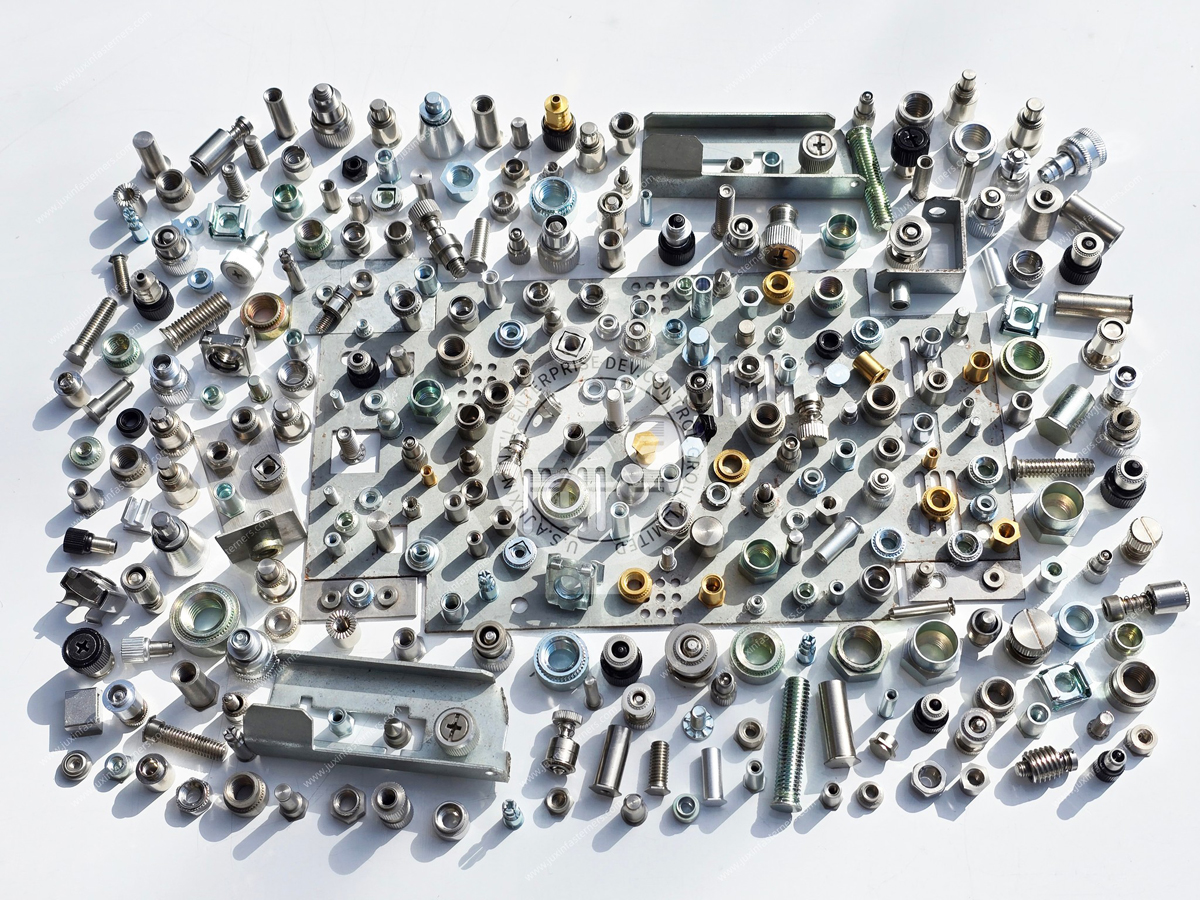
Self-clinching fasteners provide a practical method for creating permanent threaded or fastening points in sheet-metal assemblies.
Unlike conventional nuts and bolts that may require access to both sides of a panel, self-clinching fasteners are designed to be installed into prepared holes in
suitable sheet materials using controlled pressing force. Once properly installed, the fastener becomes mechanically retained in the panel.
Product Specification
Self-clinching fasteners provide a practical method for creating permanent threaded or fastening points in sheet-metal assemblies.
Unlike conventional nuts and bolts that may require access to both sides of a panel, self-clinching fasteners are designed to be installed into prepared holes in
suitable sheet materials using controlled pressing force. Once properly installed, the fastener becomes mechanically retained in the panel.
For equipment manufacturers, this can simplify assembly while providing repeatable fastening points for screws, bolts and other components.
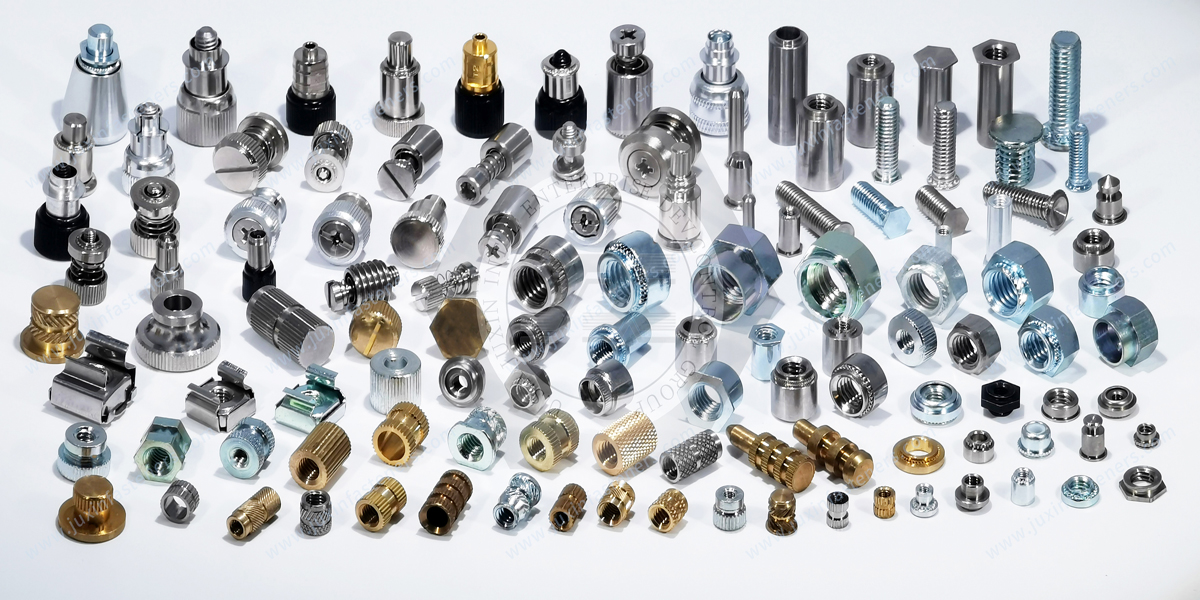
JUXIN manufactures self-clinching nuts, self-clinching studs, self-clinching screws and other custom sheet-metal fasteners for industrial OEM applications.
Our products can be manufactured according to customer drawings, material specifications, thread requirements, panel thickness and application requirements.
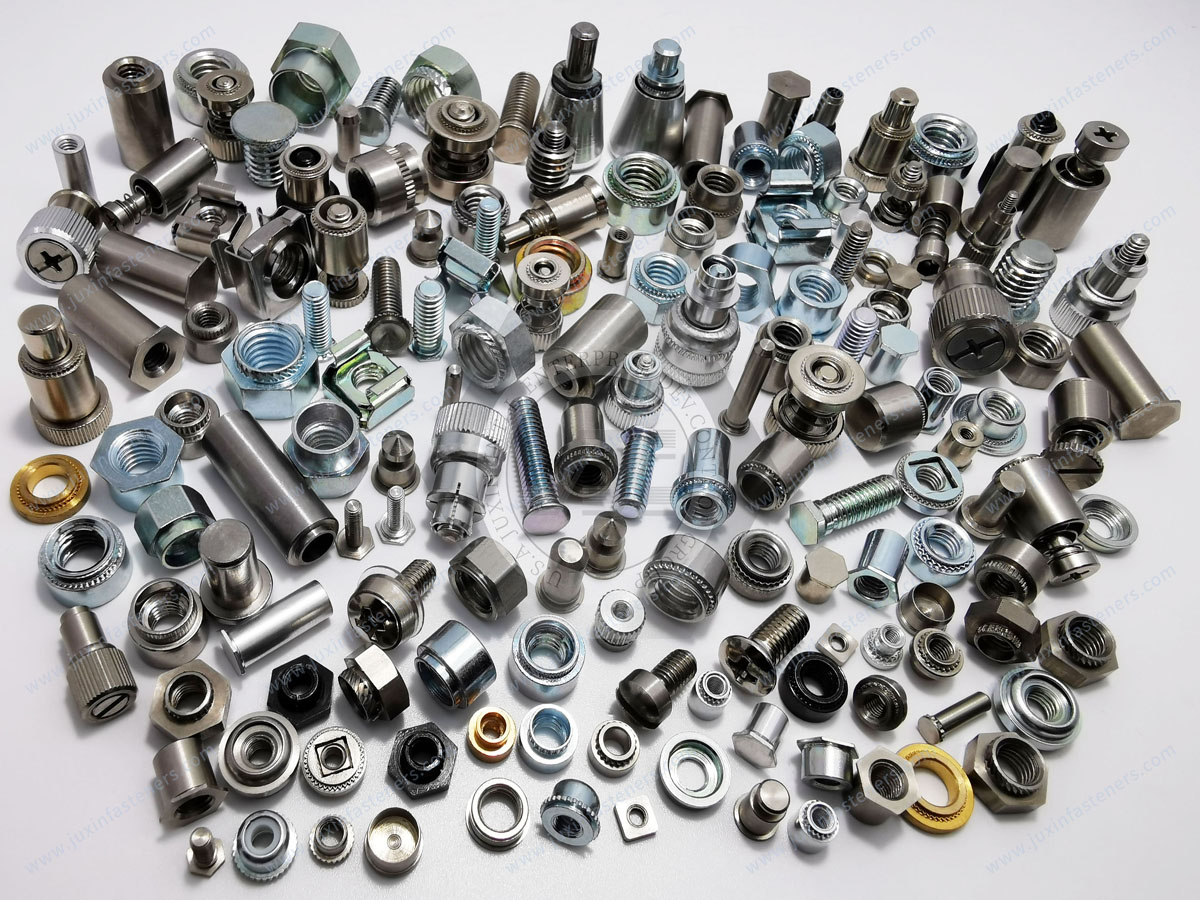
Self-clinching fasteners are mechanically installed fastening components designed to become permanently retained in suitable sheet-metal materials.
Common types include:
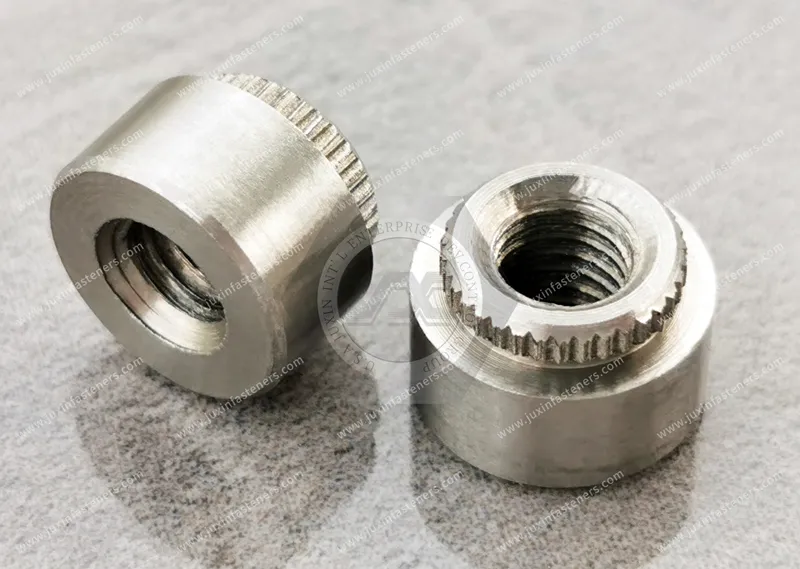
Self-clinching nuts
Self-clinching studs
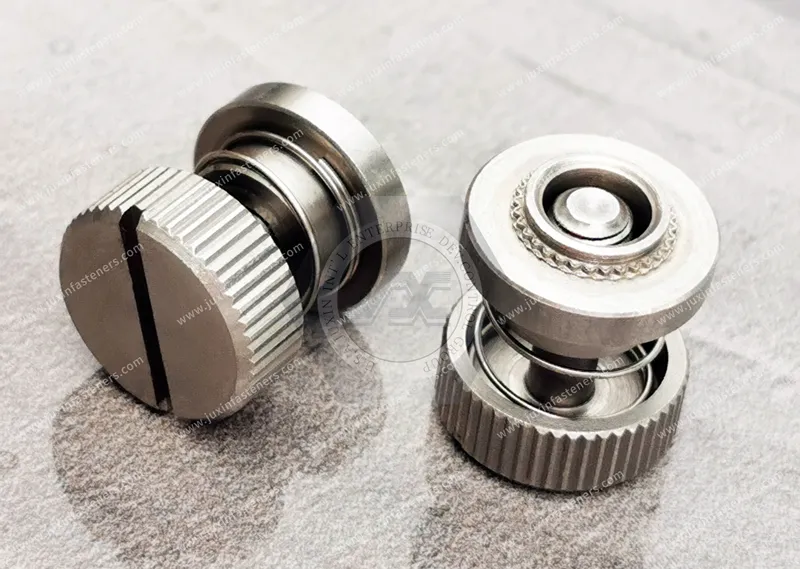
Self-clinching screws
Flush-head self-clinching fasteners
Floating self-clinching nuts
Locking self-clinching nuts
Custom self-clinching fasteners
The fastener is installed by applying the appropriate pressing force to deform or displace a portion of the sheet material around the fastener's designed retention feature.
The exact installation method depends on the fastener design, material, sheet thickness and manufacturer's specifications.
A self-clinching fastener generally consists of a specially designed retention feature and a functional threaded or unthreaded section.
During installation:
Prepared Hole → Fastener Positioning → Controlled Pressing Force → Sheet Material Displacement → Mechanical Retention → Finished Threaded Connection
The sheet material flows into the fastener's retention feature during installation.
This creates a mechanical interlock between the fastener and the panel.
Proper installation is important. Hole size, sheet thickness, material hardness, press force and installation method can all affect the final retention performance.
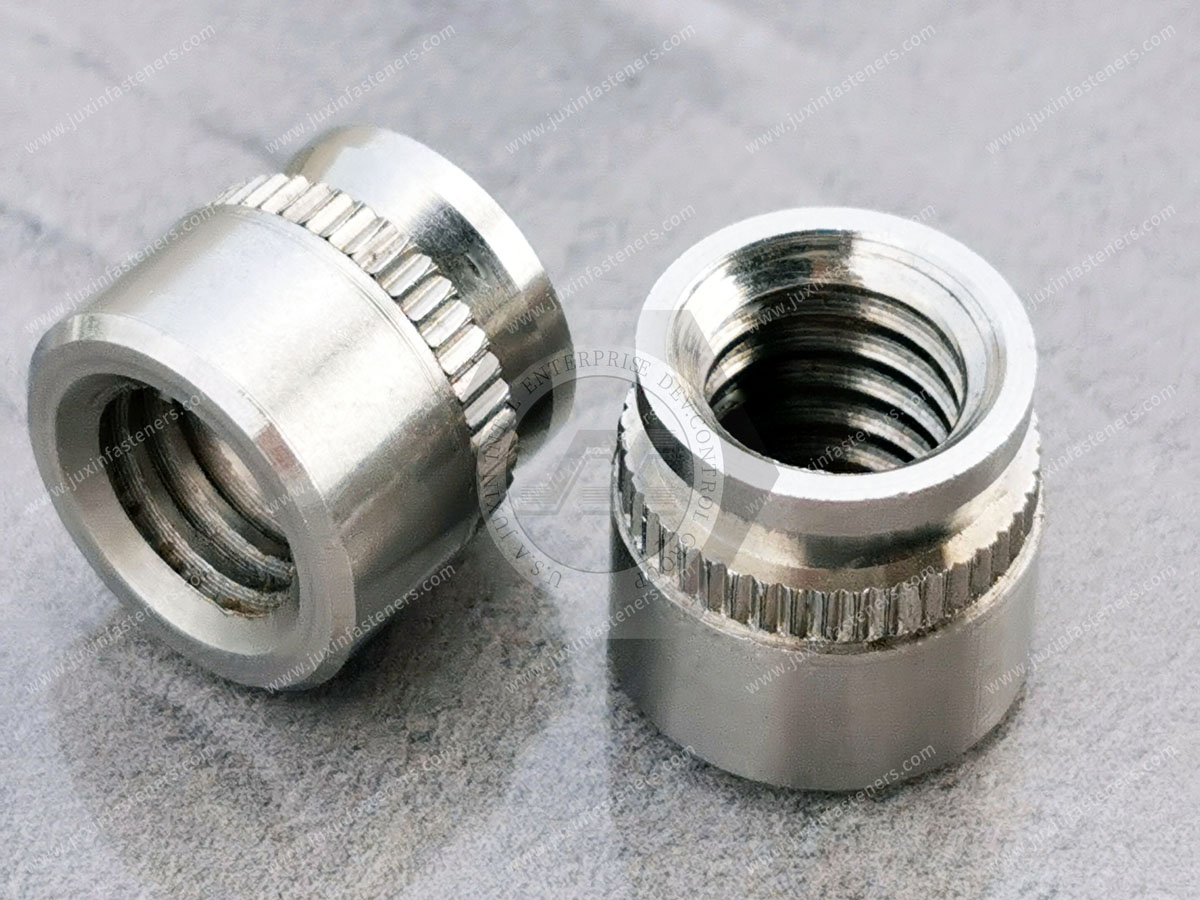
Self-clinching nuts provide permanent internal threads in suitable sheet-metal panels.
They can be used for:
Electrical enclosures
Telecom cabinets
Network equipment
Server enclosures
Industrial control cabinets
HVAC equipment
Automotive components
Rail equipment
Medical equipment
Industrial machinery
After installation, a screw or bolt can be used to assemble another component to the panel.
This can eliminate the need to hold a separate conventional nut during final assembly.
Self-clinching studs provide a permanently retained externally threaded connection.
Potential applications include:
Mounting brackets
Electrical cabinets
Electronic enclosures
Control panels
Automotive assemblies
Industrial equipment
Studs can be useful where a fixed threaded projection is required for component positioning or mounting.
The required stud length, diameter, thread specification and panel characteristics should be defined according to the equipment design.
Self-clinching screws combine a screw thread with a retention feature that allows the fastener to remain permanently attached to the panel.
They can be considered for assemblies where retaining the screw within a panel or cover can simplify installation and service.
Potential applications include:
Electronic enclosures
Access panels
Electrical equipment
Industrial cabinets
Sheet-metal assemblies
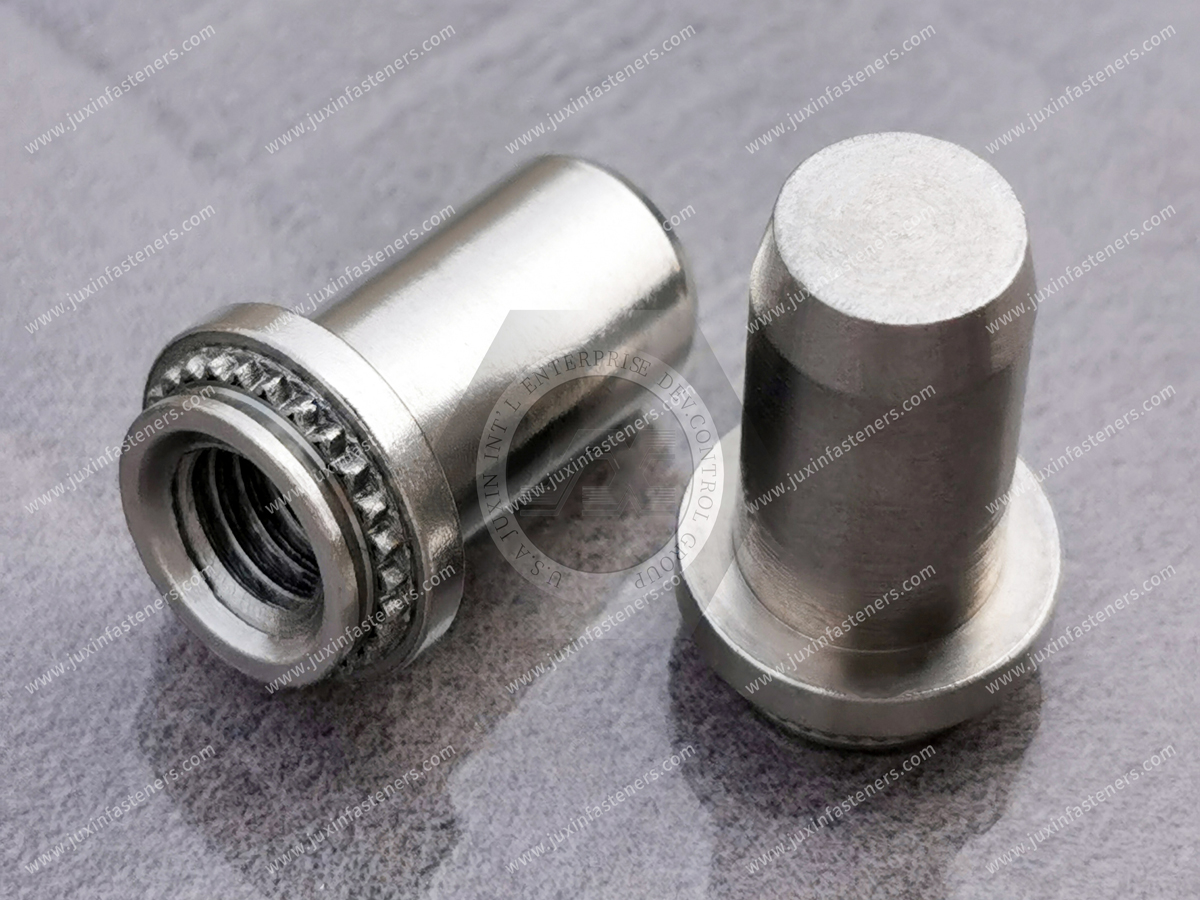
Conventional nuts and bolts can be effective for many applications, but they may require access to both sides of a panel during assembly.
Self-clinching fasteners can provide an alternative when a permanent threaded attachment point is preferred.
| Consideration | Self-Clinching Fasteners | Conventional Nuts and Bolts |
|---|---|---|
| Panel integration | Fastener becomes retained in panel | Nut remains separate |
| Assembly access | Installation may require press access | Usually requires access to both sides |
| High-volume sheet metal | Suitable applications | More assembly handling may be required |
| Repeat assembly | Thread remains integrated | Separate nut must be retained |
| Equipment enclosure | Common application | Also widely applicable |
| Installation equipment | Pressing equipment typically required | Conventional fastening tools |
The appropriate solution depends on panel construction, production process, loading and service requirements.
Self-clinching nuts and rivet nuts can both provide internal threads in sheet-metal assemblies, but their installation principles are different.
Self-clinching nuts are pressed into suitable sheet material.
They are often considered for controlled production environments where the panel material and thickness meet the fastener requirements.
Rivet nuts are mechanically expanded or collapsed within a prepared hole and can generally be installed from one side of the panel.
They can therefore be useful where rear-side access is limited.
The decision should consider:
Sheet material
Sheet thickness
Hole size
Access requirements
Production volume
Installation equipment
Required retention
Service conditions
Cost
Assembly process
There is no single fastening method that is best for every application.
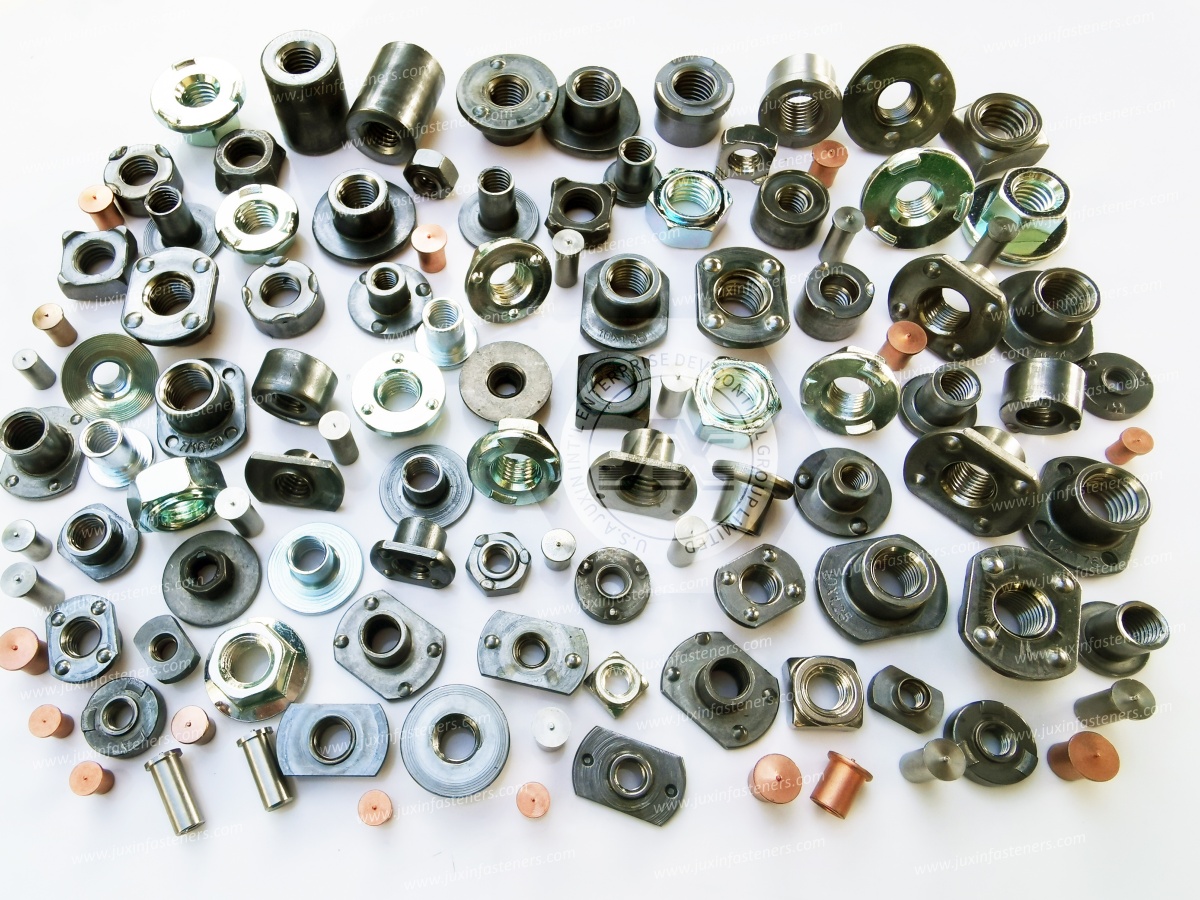
Weld nuts provide permanent threaded attachment points by welding the nut to the sheet-metal component.
Self-clinching nuts provide mechanical retention through the sheet material without requiring a welding operation.
Engineers may compare:
Installation process
Production equipment
Heat input
Panel distortion
Surface treatment
Production volume
Component positioning
Post-installation requirements
For applications where welding is undesirable or unnecessary, a self-clinching solution may be considered if the sheet material and design are suitable.
Fastener selection should begin with the panel and assembly rather than simply the desired thread size.
Important considerations include:
The panel must fall within the fastener manufacturer's recommended thickness range.
A fastener designed for a specific sheet thickness may not provide the required retention when installed in a panel that is too thin or too thick.
The panel material influences installation and retention performance.
Potential materials include:
Carbon steel
Stainless steel
Aluminum
Other suitable sheet materials
Material hardness should also be considered.
Common thread specifications can include:
Metric threads
Unified inch threads
Customer-specific thread requirements
The thread must match the mating screw or bolt.
The prepared hole should meet the specified dimensional requirement.
An oversized or undersized hole can affect installation and retention.
Self-clinching fasteners are normally installed using controlled pressing equipment.
The installation method should provide the appropriate force and support for the panel.
Engineers should evaluate the expected tensile, shear and other loads applied to the connection.
Environmental conditions may influence material and surface treatment selection.
Potential considerations include:
Humidity
Corrosion exposure
Temperature
Chemicals
Outdoor exposure
Electrical environment
Correct installation is critical to achieving the intended performance.
A typical process includes:
1. Prepare the Hole
The panel is manufactured with the specified hole diameter.
2. Position the Fastener
The fastener is placed into the prepared hole from the appropriate side.
3. Apply Controlled Press Force
A press applies force to drive the fastener into the sheet.
4. Allow the Sheet Material to Flow
The sheet material is displaced into the fastener's retention feature.
5. Verify Installation
The finished connection should be checked according to the applicable inspection requirements.
The exact installation parameters should follow the fastener manufacturer's technical requirements.
Incorrect installation can reduce fastener performance.
Potential causes include:
Incorrect hole size
Incorrect sheet thickness
Unsuitable panel material
Excessive or insufficient installation force
Incorrect installation direction
Improper press tooling
Fastener misalignment
Excessive loading
Incorrect fastener selection
For OEM applications, engineers should evaluate the complete joint rather than treating the fastener as an isolated component.
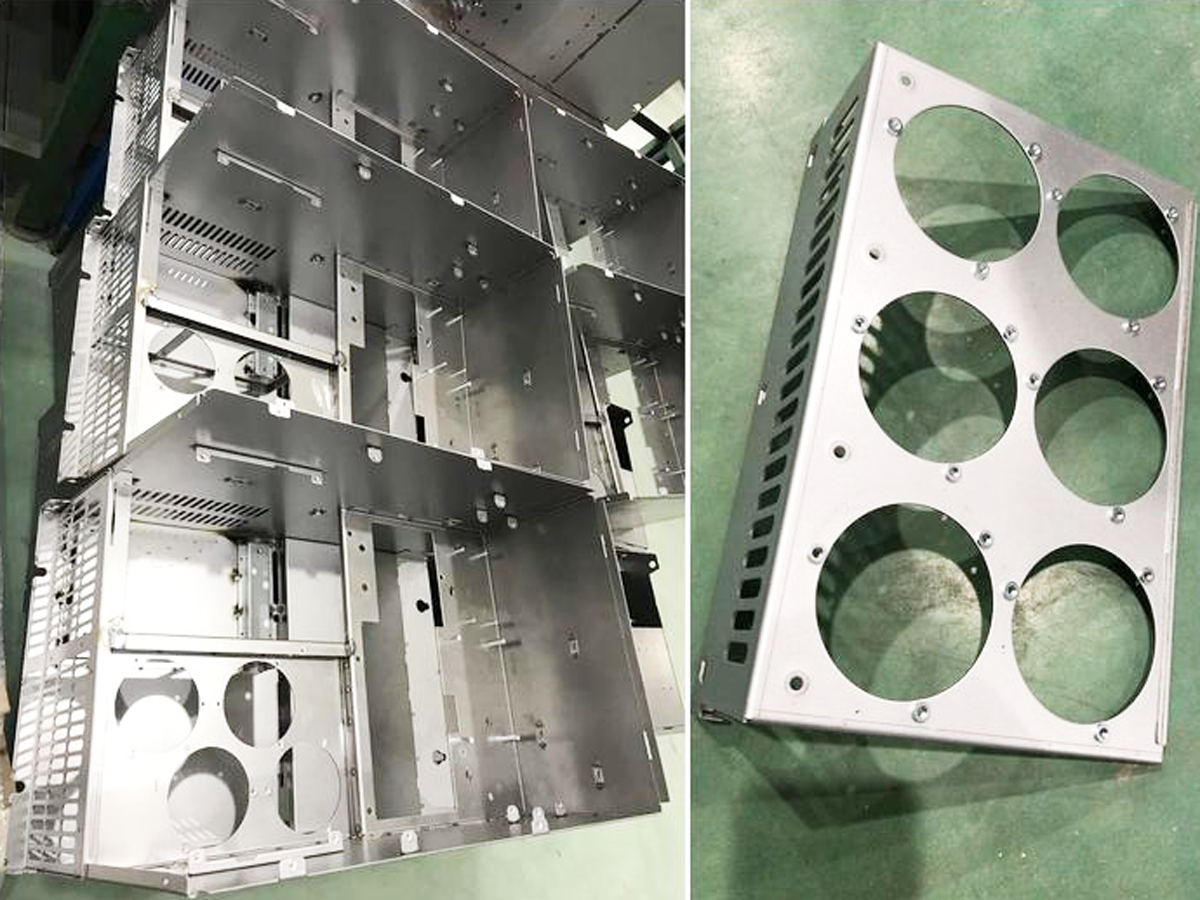
Stainless steel sheet requires particular attention during self-clinching fastener selection because material hardness can influence installation.
A fastener designed for mild steel sheet should not automatically be assumed to be suitable for stainless steel.
Engineers should verify:
Fastener material
Sheet grade
Sheet hardness
Panel thickness
Installation requirements
Required retention performance
JUXIN can evaluate stainless steel sheet applications according to customer drawings and specifications.
Aluminum sheet is widely used in applications where weight reduction and corrosion resistance are important.
Potential applications include:
Electronic equipment
Telecom equipment
Industrial automation
Automotive systems
Electrical cabinets
Lightweight enclosures
Fastener selection should account for the mechanical characteristics of the aluminum sheet and the required installation process.
Self-clinching fasteners can support many sheet-metal equipment designs.
Used to provide permanent threaded attachment points for covers, brackets and internal components.
Suitable applications can include cabinet panels, mounting brackets and electronic equipment housings.
Potential applications include server enclosures, network equipment, power equipment and sheet-metal cabinets.
Self-clinching nuts can be used in sheet-metal housings, control cabinets and removable panels.
Potential applications include equipment housings, internal brackets and precision sheet-metal assemblies.
Fasteners can support electrical cabinets, equipment enclosures and railway electronics.
Potential applications include electronic housings, battery-related equipment, brackets and sheet-metal assemblies.
Self-clinching fasteners can provide mounting points within machine housings, control cabinets and automation structures.
Potential applications include equipment enclosures, internal brackets, fixtures and precision sheet-metal assemblies.
Not every OEM application can use a standard catalog fastener.
JUXIN supports customized requirements including:
Fastener dimensions
Thread specifications
Material
Panel thickness
Head configuration
Length
Surface treatment
Packaging
Production quantity
Customers can provide engineering drawings, CAD files or physical samples for evaluation.
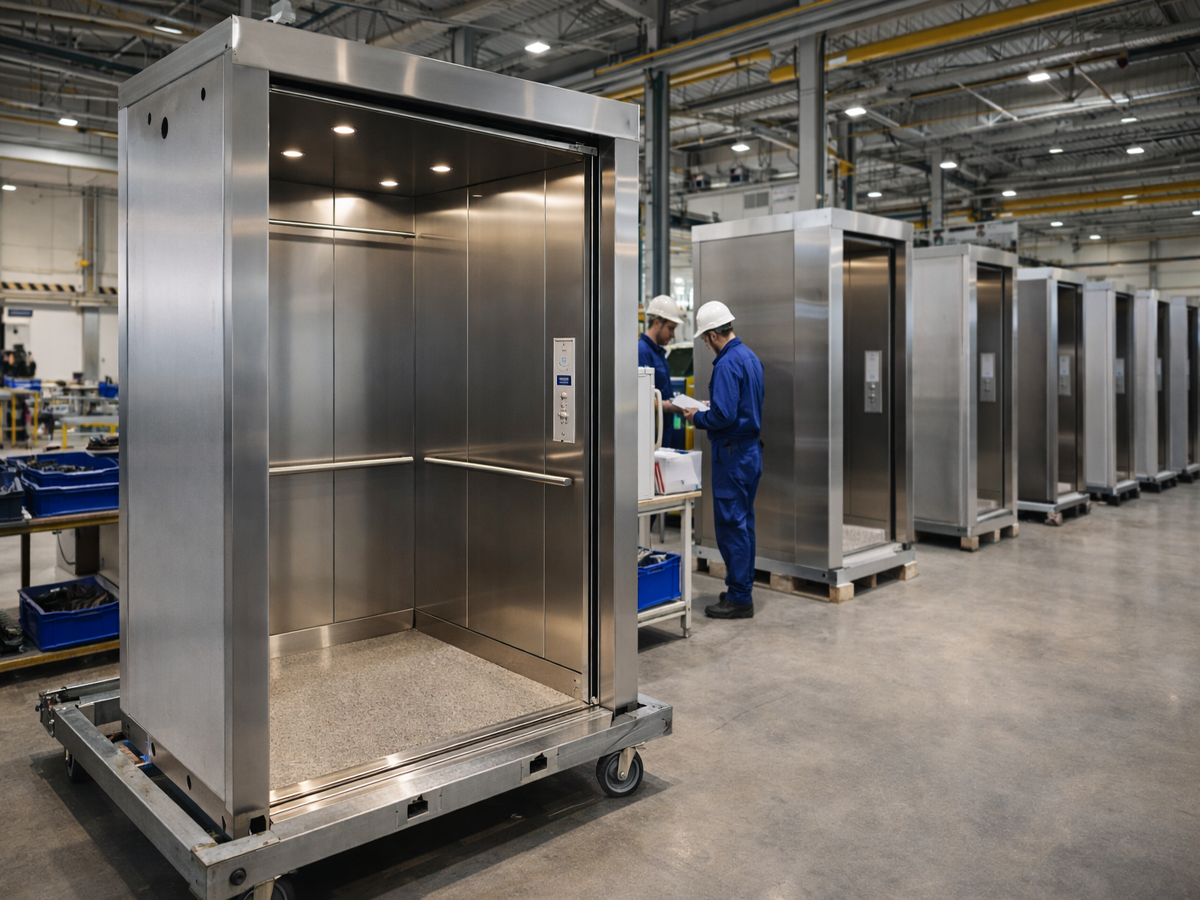
Depending on the application, self-clinching fasteners may be manufactured from materials such as:
Carbon steel
Stainless steel
Alloy steel
Aluminum
Other customer-specified materials
Surface treatments can be selected according to corrosion resistance, environmental conditions, appearance and engineering requirements.
Potential finishes may include customer-specified plating or other surface treatments.
The final material and finish should always be selected according to the actual application.
For repeat OEM production, fastener quality involves more than visual appearance.
Procurement and engineering teams may evaluate:
Thread dimensions
Overall dimensions
Material
Surface treatment
Hole compatibility
Installation performance
Retention performance
Batch consistency
Packaging
Traceability requirements
For customized components, inspection requirements should be defined before production.
Procurement managers sourcing self-clinching fasteners should evaluate both product specifications and supplier manufacturing capability.
Important sourcing considerations can include:
Material capability
Thread standards
Custom manufacturing
Production capacity
Quality control
Surface treatment
Packaging
MOQ
Lead time
Drawing management
Repeat-order capability
For OEM programs, the lowest unit price is not necessarily the lowest overall sourcing cost.
Consistent production, reliable communication and stable supply can also affect the total procurement cost.
Design engineers should define the fastening requirement early in the equipment development process.
Relevant information can include:
Sheet material
Sheet thickness
Hole diameter
Thread size
Fastener orientation
Available installation space
Required load
Assembly method
Service requirements
Surface treatment
Early consideration of the fastening method can help avoid redesign during production engineering.
JUXIN supports OEM production from engineering documentation through repeat supply.
A typical process can include:
Engineering Drawing → Technical Review → Material Confirmation → Tooling / Production Preparation → Fastener Manufacturing → Surface Treatment → Inspection → Packaging → Production Supply
This approach allows customized self-clinching fasteners to be manufactured around the customer's equipment design.
JUXIN has more than 23 years of fastener industry experience supporting international OEM and industrial applications.
Our manufacturing capabilities include:
Custom fastener manufacturing
Cold forging
Screw heading
Stamping
CNC machining
Injection molding
Surface treatment coordination
OEM production support
This manufacturing combination allows JUXIN to support self-clinching fasteners together with other mechanical components when required.
For a technical quotation, customers can provide:
Engineering drawing or CAD file
Fastener type
Thread specification
Sheet material
Sheet thickness
Required dimensions
Surface treatment
Estimated quantity
Application information
Packaging requirements
JUXIN can review the requirements and recommend a manufacturing approach based on the customer's specifications.
Self-clinching fasteners provide an effective fastening option for many sheet-metal assemblies where permanent threaded attachment points are required.
The correct solution depends on the relationship between the fastener, sheet material, panel thickness, hole design, installation method, loading and service environment.
JUXIN manufactures self-clinching nuts, self-clinching studs, self-clinching screws and customized sheet-metal fasteners for OEM applications across electrical equipment, telecom cabinets, data infrastructure, HVAC, medical equipment, rail transit, automotive, EV systems, robotics, semiconductor equipment and industrial machinery.
If your application requires a standard or customized self-clinching fastener, send your engineering drawing, CAD file or sample for evaluation.
For self-clinching fasteners and OEM sheet-metal fastening solutions:
Email: info@juxinfasteners.com
Website: www.juxinfasteners.com
JUXIN Fasteners — Custom Fastening Solutions for Industrial OEM Applications.
Product Packaging
Packaging Standard
At Juxin Fasteners, we apply standardized export packaging to ensure product protection, traceability, and compliance with international logistics requirements.
1. Standard Export Packaging
Unless otherwise specified, all products will be packed according to our factory standard export packaging, which includes:
Moisture-resistant inner protection
Poly bag or small box packing as required
Reinforced export cartons
Clear labeling with part number, specification, batch number, and quantity
Palletizing for sea or air shipment when necessary
Our standard packaging is designed to ensure safe transportation, efficient warehousing, and long-distance international shipping.
2. Customized Packaging Options
We also provide customized packaging solutions according to customer requirements, including but not limited to:
Private labeling
Customized barcodes
Specific carton dimensions
Retail packaging
Special pallet configuration
Customer-specific marking and identification
So that you know, customized packaging may involve additional costs and extended lead time depending on the complexity of the requirements.
3. Compliance & Quality Assurance
All packaging processes are controlled under our ISO 9001 quality management system to ensure consistency, traceability, and product integrity throughout the supply chain.
Product Pictures
Contact Us
Tel.:
+86 020 8621 0320
+86 020 3121 6067
E-mail:
Technical Support:
Navigation
SEND INQUIREY