Call Us
+86 136 6007 9809
Call Us
+86 136 6007 9809

Self-clinching Nut Fasteners Solutions for Rail Transit Manufacturing Industry
High-Reliability Self-Clinching Fastening Systems for High-Speed Rail, Metro & Rolling Stock Applications
In the rail transit manufacturing industry, where vehicles operate at high speeds (up to 350 km/h) and endure continuous vibration, extreme temperature variations, and corrosive environments, the reliability of every structural connection directly impacts operational safety, maintenance costs, and lifecycle performance.
Product Specification
Self-clinching Nut Fasteners Solutions for Rail Transit Manufacturing Industry
High-Reliability Self-Clinching Fastening Systems for High-Speed Rail, Metro & Rolling Stock Applications
In the rail transit manufacturing industry, where vehicles operate at high speeds (up to 350 km/h) and endure continuous vibration, extreme temperature variations, and corrosive environments, the reliability of every structural connection directly impacts operational safety, maintenance costs, and lifecycle performance.
Traditional threaded fastening systems often fail under long-term cyclic loading due to preload loss, loosening, and fatigue degradation. To solve these challenges, press-in nut fasteners (self-clinching nuts) have become a core engineering solution for rail vehicle manufacturing, offering a permanent, vibration-resistant, and maintenance-free fastening system.
1. Industry Challenges in Rail Transit Fastening Systems
Rail transit equipment—including high-speed trains, metro systems, and freight wagons—must endure millions of vibration cycles throughout their service life.
Key Engineering Pain Points:
Preload decay in traditional threaded fasteners
Structural loosening under high-frequency vibration
Fatigue failure caused by cyclic loading
Corrosion in high-humidity and salt-spray environments
Increased maintenance frequency and downtime cost
Safety risks caused by fastener failure in critical joints
These issues highlight the need for a permanent fastening technology for rail transit manufacturing, such as press-in nut fastening systems.
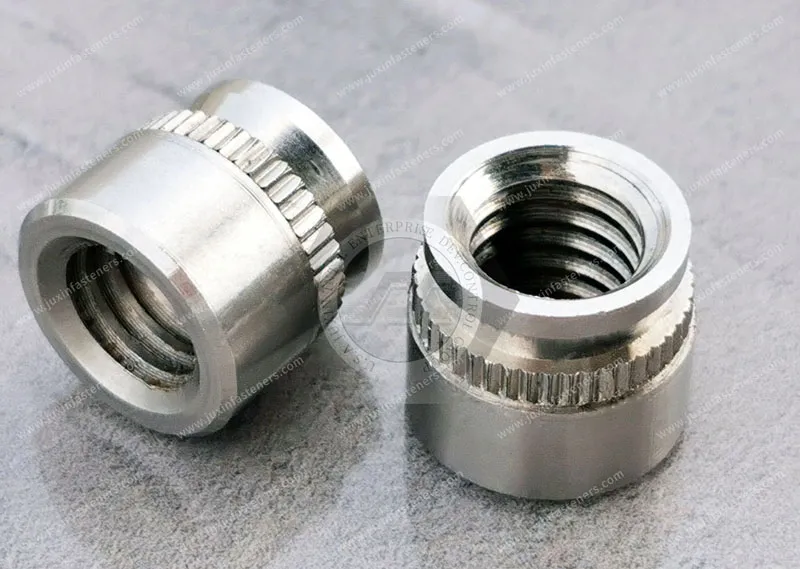
2. Technical Principle of Press-In Nut Fasteners (Self-Clinching Nuts)
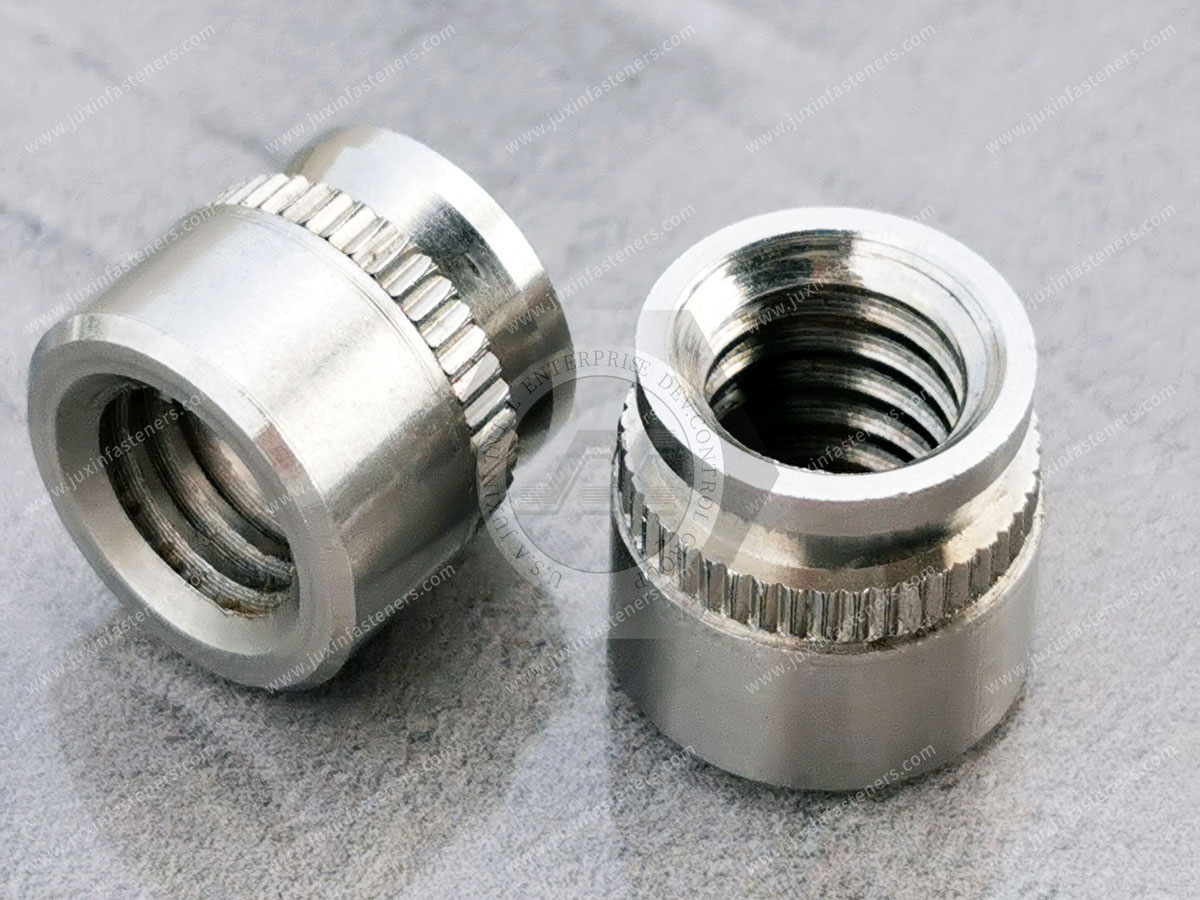
Press-in nut fasteners for rail transit applications operate via controlled plastic deformation with specialized installation equipment.
Working Mechanism:
Axial force is applied using a press or clinching tool
Serrated nut base penetrates and deforms the sheet material
A permanent mechanical interlock structure is formed
Connection becomes irreversible and vibration-resistant
Unlike traditional bolted systems, self-clinching nut fasteners do not rely on frictional preload, eliminating the main cause of loosening in dynamic rail environments.
3. Core Engineering Advantages of Press-In Nut Fasteners
3.1 Superior Vibration and Fatigue Resistance
The press-in nut fastening structure provides:
Uniform stress distribution
Reduced stress concentration
High resistance to cyclic loading and rail impact forces
This makes it ideal for high-speed rail fastening systems and metro vehicle structures.
3.2 Permanent and Maintenance-Free Connection
Once installed, self-clinching nut fasteners for rail transit:
Do not loosen under vibration
Require no re-tightening maintenance
Significantly reduce service downtime
This ensures long-term operational stability in critical rail systems.
3.3 Excellent Environmental Resistance
Because press-in nut systems do not depend on thread friction:
Corrosion resistance is significantly improved
Performance remains stable in humidity and salt-spray environments
Suitable for outdoor rail infrastructure and harsh climates
3.4 Lightweight and High-Efficiency Assembly
Rail transit press-in nut solutions enable:
Reliable fastening in thin-sheet materials
Weight optimization of vehicle body structures
High-speed automated assembly processes
Improved manufacturing consistency
4. Application Scenarios in Rail Transit Manufacturing
4.1 Carbody Structures and Interior Systems
Aluminum alloy carbody skins
Stainless steel panels
Interior mounting brackets
Self-clinching nut fasteners ensure strong threaded connections in lightweight structures while maintaining safety and rigidity.
4.2 Bogie and Load-Bearing Components
Auxiliary equipment mounting points
Cable routing systems
Structural support brackets
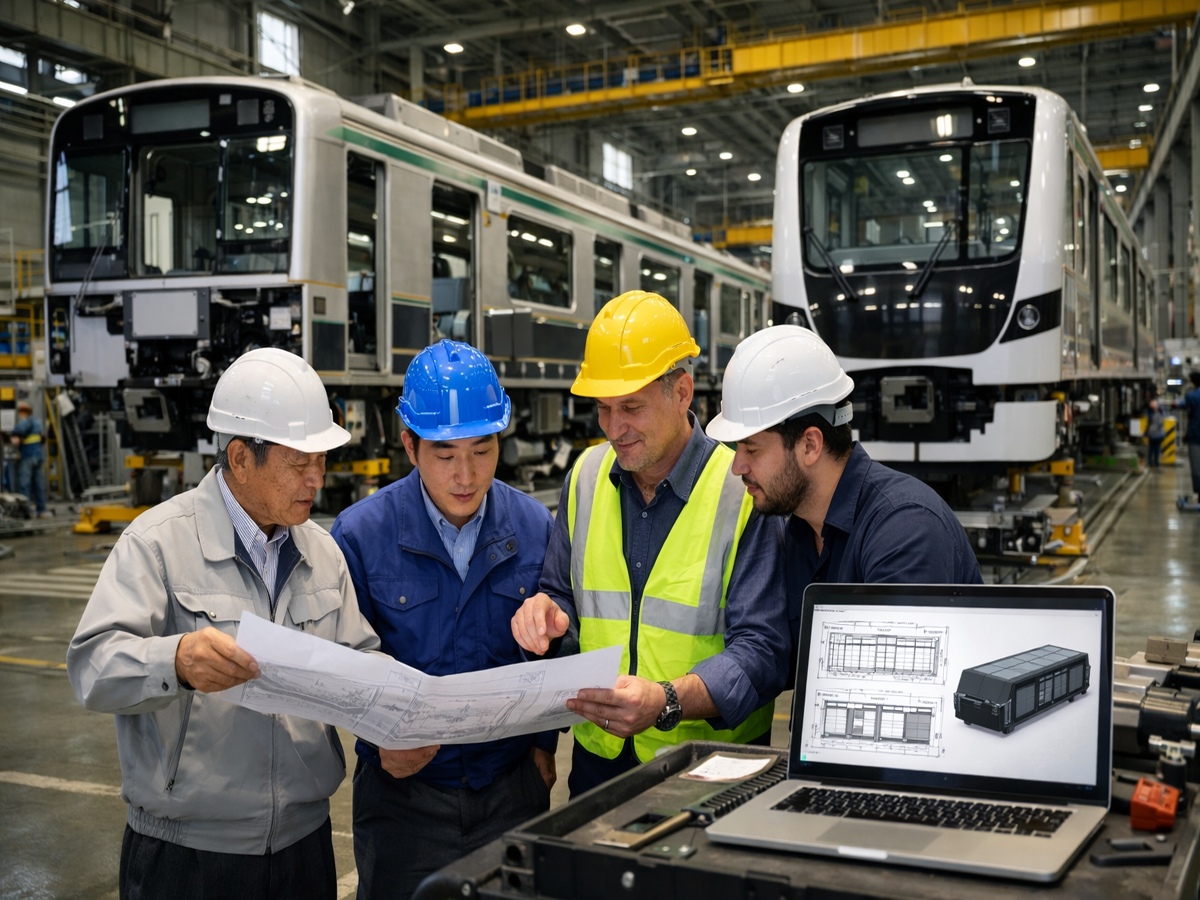
High-strength press-in nut fasteners for rail bogies ensure stability under dynamic load conditions and continuous vibration.
4.3 Electrical Cabinets and Control Systems
Control enclosures
Electrical mounting systems
Signal and wiring assemblies
These applications require corrosion-resistant self-clinching nut systems for long-term reliability.
4.4 Rail Infrastructure Applications
Subway third-rail insulation systems
Railway switch assemblies
Track-side equipment housings
Specialized anti-corrosion press-in nuts improve durability in exposed infrastructure environments.
5. Customized Engineering and Process Adaptation
Different rail transit applications require tailored press-in nut fastening solutions based on material and load conditions.
Customized Parameters Include:
Base material type (aluminum, steel, composite)
Sheet thickness tolerance
Vibration frequency and load spectrum
Clinching force and stroke control
Surface pre-treatment requirements
This ensures consistent performance across rail-transit self-clinching nut applications in mass-production environments.
6. Full Lifecycle Technical Service System
A professional rail transit press-in nut solution requires complete lifecycle engineering support.
6.1 Pre-Sales Engineering Analysis
Load condition evaluation
Vibration environment analysis
Maintenance cycle planning
Fastener selection optimization
This ensures the correct specification of self-clinching nut fasteners for rail manufacturing, minimizing installation errors.
6.2 Standardized Installation Process Control
Equipment calibration guidelines
Force and displacement monitoring standards
Base material preparation requirements
In-process quality inspection procedures
These controls guarantee consistent quality in press-in nut assembly systems.
6.3 Digital Installation and Traceability
Advanced smart clinching systems enable:
Real-time force and displacement recording
Installation curve data storage
Full lifecycle traceability of fastener joints
Quality control integration for OEM production lines
This creates a fully digitalized rail transit fastening quality management system.
6.4 After-Sales Technical Support
On-site installation guidance
Failure analysis and troubleshooting
Process optimization recommendations
Production line quality improvement support
7. Engineering Value of Press-In Nut Fastening Systems
The adoption of press-in nut fasteners in rail transit manufacturing delivers significant engineering and economic benefits:
Eliminates loosening risk in vibration environments
Extends equipment service life
Reduces maintenance and repair costs
Improves assembly efficiency in mass production
Enhances structural reliability and safety
By replacing traditional threaded connections, rail manufacturers achieve a more stable and efficient fastening architecture.
8. Future Trends in Rail Transit Fastening Technology
The evolution of self-clinching nut systems for rail transit is moving toward:
High-strength corrosion-resistant alloy materials
Smart digital installation equipment
Real-time process monitoring and AI-based quality control
Standardized fastening system design across OEM platforms
Integrated lifecycle data management systems
Future press-in nut fastening solutions will combine materials engineering, automation, and digital manufacturing to achieve higher precision and reliability.
Conclusion
In the rail transit manufacturing industry, where safety, reliability, and lifecycle performance are critical, press-in nut fasteners provide a permanent, vibration-resistant, and maintenance-free fastening solution.
Through controlled plastic deformation, optimized engineering design, and full-lifecycle technical support, self-clinching nut fastening systems for rail transit applications effectively address the challenges of vibration-induced loosening, fatigue failure, and corrosion degradation.
By adopting advanced press-in nut solutions, manufacturers can significantly improve structural integrity, reduce maintenance costs, and support the long-term development of safer, more efficient, and more intelligent rail transit systems worldwide.
Product Packaging
Packaging Standard
At Juxin Fasteners, we apply standardized export packaging to ensure product protection, traceability, and compliance with international logistics requirements.
1. Standard Export Packaging
Unless otherwise specified, all products will be packed according to our factory standard export packaging, which includes:
Moisture-resistant inner protection
Poly bag or small box packing as required
Reinforced export cartons
Clear labeling with part number, specification, batch number, and quantity
Palletizing for sea or air shipment when necessary
Our standard packaging is designed to ensure safe transportation, efficient warehousing, and long-distance international shipping.
2. Customized Packaging Options
We also provide customized packaging solutions according to customer requirements, including but not limited to:
Private labeling
Customized barcodes
Specific carton dimensions
Retail packaging
Special pallet configuration
Customer-specific marking and identification
So that you know, customized packaging may involve additional costs and extended lead time depending on the complexity of the requirements.
3. Compliance & Quality Assurance
All packaging processes are controlled under our ISO 9001 quality management system to ensure consistency, traceability, and product integrity throughout the supply chain.
Product Pictures
Contact Us
Tel.:
+86 020 8621 0320
+86 020 3121 6067
E-mail:
Technical Support:
Navigation
SEND INQUIREY