Call Us
+86 136 6007 9809
Call Us
+86 136 6007 9809

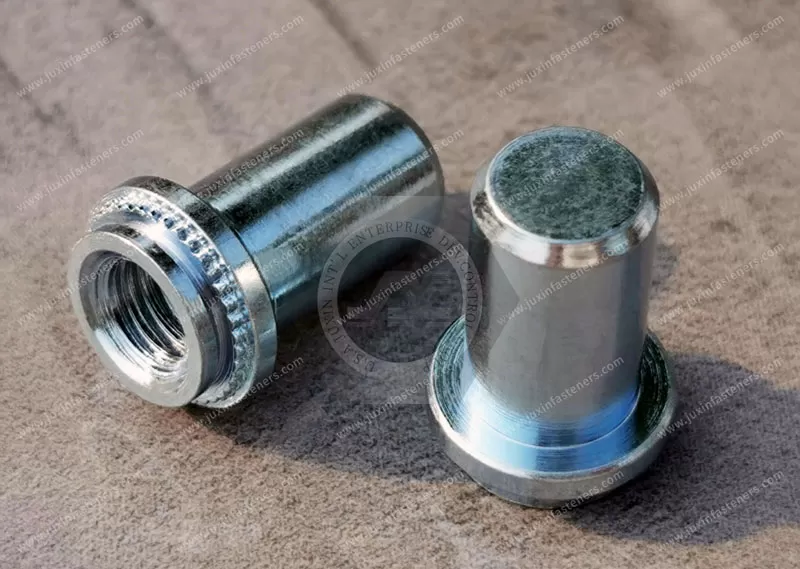
JUXIN FASTENERS supplies Type JX-B steel self-clinching blind nuts for thin sheet metal assemblies requiring secure internal threads with a closed end.
Unlike conventional through-hole clinch nuts, these blind fasteners help limit screw penetration beyond the threaded cavity and reduce the possibility of foreign matter passing through the fastener opening.
Designed for press installation into properly prepared sheet metal holes, JX-B blind nuts provide captive threaded attachment points for electronic enclosures, display mounting systems, electrical cabinets, industrial control equipment and OEM sheet metal assemblies.
Available thread options include selected metric and inch-series sizes.
Material, dimensions, installation requirements and custom specifications are reviewed against the applicable product drawing and application conditions.
For technical evaluation, drawing-based quotations and OEM sourcing inquiries, contact info@juxinfasteners.com.
Website: www.juxinfasteners.com
Product Specification
Steel Self-Clinching Blind Nuts – Type JX-B
Closed-End Threaded Fastening Solutions for Thin Sheet Metal and OEM Equipment
Product Overview
JX-B self-clinching blind nuts are captive internally threaded fasteners designed for installation into thin metal panels using controlled compressive force.
Their distinguishing feature is a closed threaded cavity that accepts a mating screw without allowing it to pass completely through the fastener.
This construction addresses an important design challenge in electronic and industrial equipment: providing a reliable mounting thread while controlling how far an assembly screw can extend toward internal components.
For OEM engineering teams, the value of a blind clinch nut is not limited to thread retention. Its closed-end geometry can also support component protection, assembly error prevention and controlled hardware selection.
For procurement and supplier-development teams, JX-B blind nuts offer a drawing-defined fastening solution suitable for repeatable sheet metal production, subject to verification of installation and performance requirements.
Product Configuration
Product family: Self-clinching blind nuts
JUXIN type: JX-B
Fastener function: Captive internal thread with a closed end
Installation method: Press-in self-clinching installation
Primary application: Thin sheet metal assemblies
Base material: Steel
Material options for engineering review: C45, C46, C20 and selected free-machining steels such as 1213, 1214 or 1215, where technically suitable
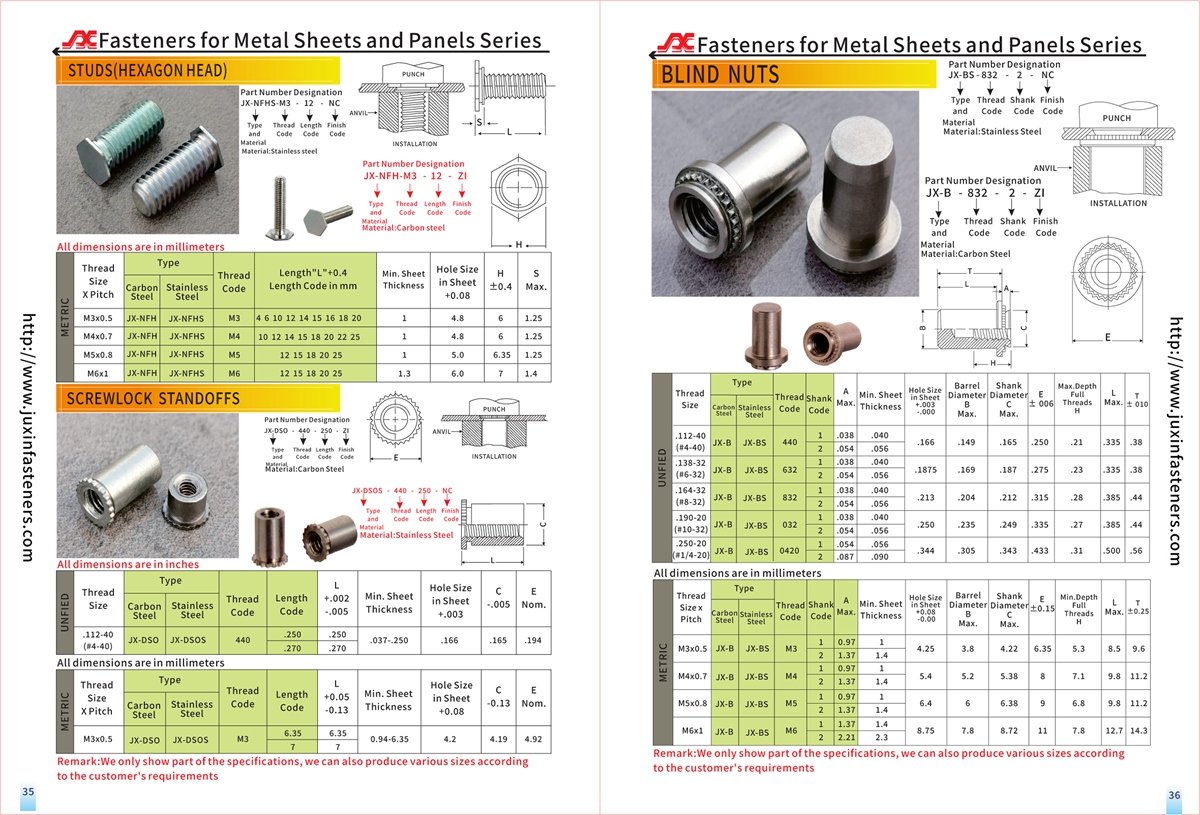
Metric thread range: M3 to M6
Inch-series thread options: Selected #4 through 1/4-inch sizes, according to the applicable drawing
Sheet thickness: Selected configurations are described for installation in sheets starting at approximately 1.0 mm (0.040 in);
the actual minimum thickness depends on the fastener size, sheet material and approved installation specification
Custom dimensions: Subject to drawing review and manufacturing feasibility
Reference documentation: Product specification sheets, PDF and CAD drawings, catalog pages 35–36
The listed materials are possible material selections, not a statement that every grade is available in every configuration. Final material, thread, dimensions and finish must be confirmed before production.
How Does a Self-Clinching Blind Nut Work?
A self-clinching blind nut is installed into a prepared hole in a metal sheet using a press and appropriately configured tooling.
During installation, the fastener's clinching features displace the surrounding sheet material. This material flows into the designed retention geometry, creating a mechanical attachment between the nut and the panel.
The result is a captive internal thread that can accept a screw during subsequent assembly or maintenance.
Unlike a blind rivet nut, the JX-B self-clinching design does not rely on collapsing a long rivet barrel behind the sheet. Its retention is established through localized sheet material displacement under controlled pressing conditions.
The installation requires access and tooling support appropriate to the self-clinching process. It should not be treated as a direct substitute for a one-sided blind rivet nut without reviewing the assembly process.
Why Choose a Closed-End Blind Nut Instead of a Through-Hole Nut?
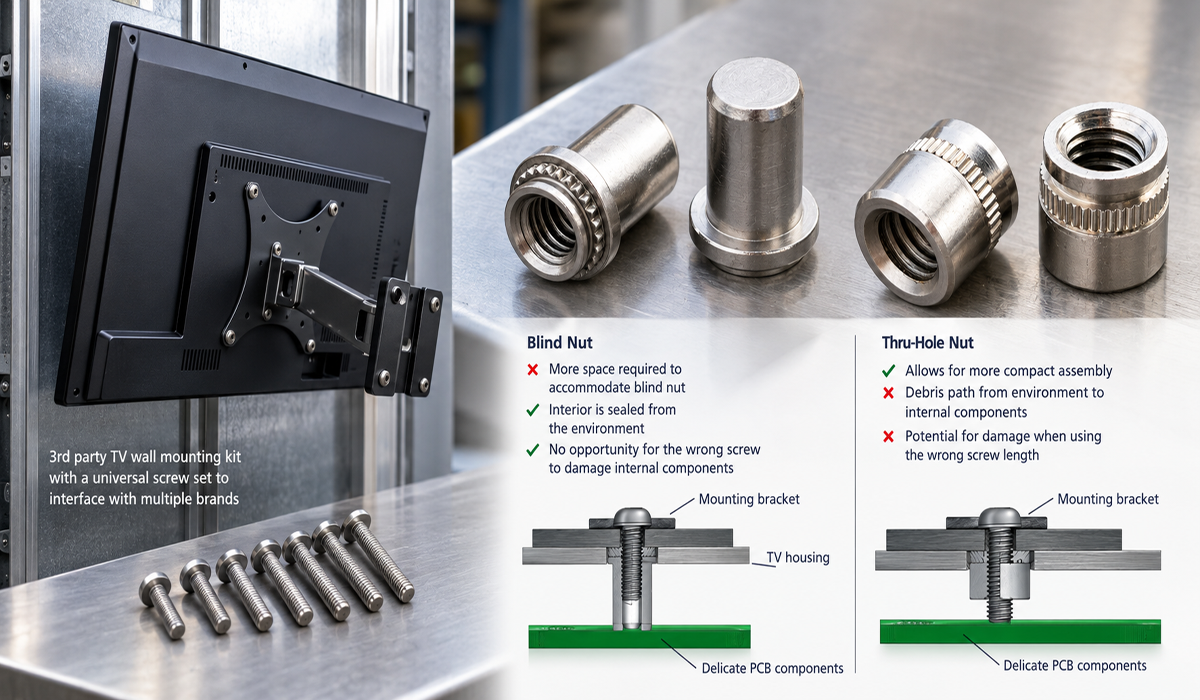
The primary engineering difference is the control of screw travel.
A through-hole nut allows a sufficiently long screw to continue beyond the threaded section.
If sensitive electronics, wiring, batteries or other components are positioned behind the mounting point, an incorrect screw length may create a risk of contact or damage.
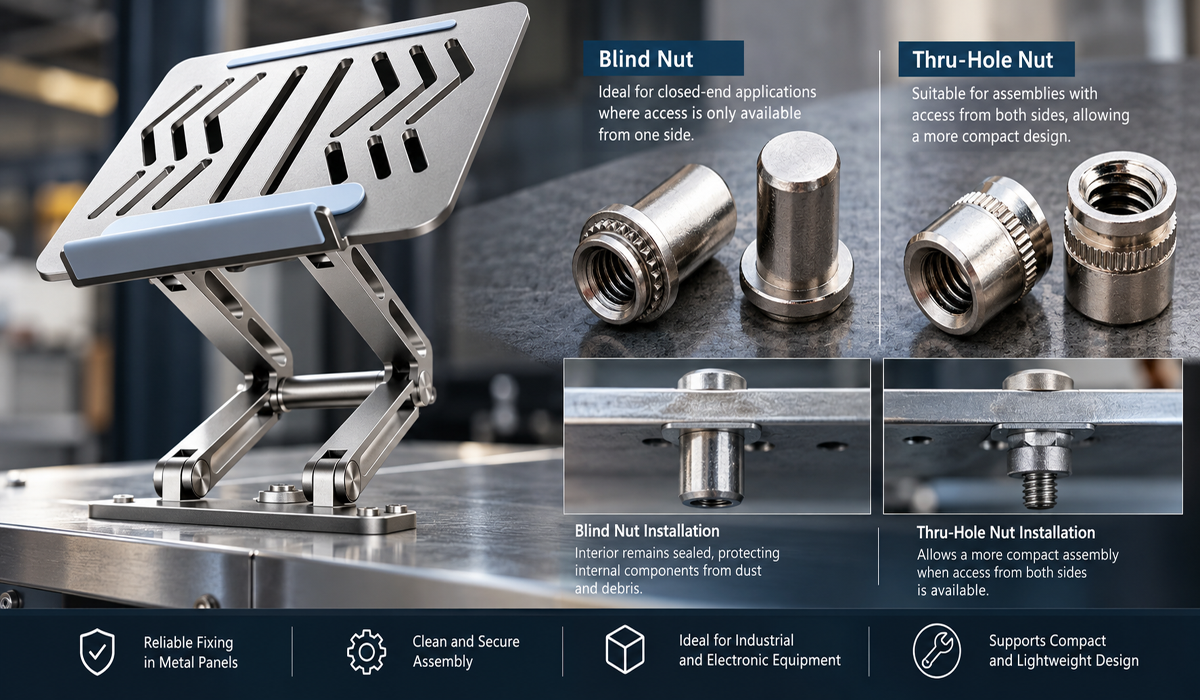
A blind nut introduces a physical end to the threaded cavity.
This can be useful when equipment is serviced by third parties or when mounting accessories may be installed using hardware that differs from the original assembly specification.
However, a blind nut does not make any screw length automatically safe.
The design engineer must still verify available thread engagement, cavity depth, screw tolerance, washer stack-up and installation torque.
A screw that bottoms out in the blind cavity before clamping the assembly may produce misleading torque readings without achieving the required joint preload.
This is a critical distinction for engineering approval and field-service reliability.
Engineering Consideration: Screw Bottoming Versus Joint Clamping
A closed-end thread protects the space beyond the nut, but it also creates a finite usable screw insertion depth.
For a reliable bolted joint, the selected screw must achieve the required thread engagement and clamping condition before its tip contacts the bottom of the blind cavity.
The engineering review should consider:
Screw length measured from the correct bearing reference
Thickness of the attached bracket or accessory
Washer and coating thickness
Minimum and maximum thread engagement
Usable internal thread depth
Blind cavity clearance
Screw-tip geometry
Tolerance accumulation across the assembly
Expected service and replacement hardware
For example, an electronics enclosure may use a JX-B blind nut to secure an external mounting bracket.
If a replacement screw is longer than intended, the blind end can limit further penetration. Nevertheless, the joint must be designed so that the specified screw clamps the bracket correctly without bottoming out.
The correct solution is to validate the complete joint stack-up, not simply to choose the longest available blind nut.
Engineering Consideration: Blind Nut Length and Packaging Space
A blind nut requires material beyond the useful internal thread to form its closed end.
Consequently, a closed-end nut may occupy more internal space than an equivalent through-hole threaded fastener.
In compact equipment, engineers should evaluate the protrusion of the nut body, clearance to adjacent components and the space required for installation tooling.
This trade-off is especially important in slim displays, industrial controllers, compact power electronics and densely packaged electrical enclosures.
A blind nut may reduce the risk of screw intrusion while still requiring a reserved internal clearance envelope.
Sheet Metal Compatibility and Installation Conditions
Self-clinching performance depends on the interaction between the fastener and the host sheet.
The sheet material must be capable of flowing into the fastener's retention features during pressing.
For each application, verify:
Sheet material and mechanical properties
Sheet hardness relative to the selected fastener
Minimum sheet thickness
Hole diameter and tolerance
Hole preparation method
Distance from the hole to the nearest sheet edge
Clearance from bends, formed features and adjacent fasteners
Press tooling alignment
Installation force and displacement
Post-installation retention performance
Hole diameter should not be selected solely from the nominal thread size. The correct mounting hole is determined by the fastener's clinching geometry and approved installation drawing.
Where practical, prepare holes before applying final surface coatings and avoid excessive burrs or deformation that could interfere with clinching.
A properly installed fastener should be evaluated for seating, thread integrity and retention rather than judged only by its external appearance.
Steel Material Selection and Surface Finish
JX-B blind nuts are offered here as steel fasteners.
Potential material choices include selected carbon steels and free-machining steel grades, subject to the mechanical properties and deformation behavior required by the specific clinching design.
Material selection should account for:
Fastener hardness
Required thread strength
Machinability and dimensional consistency
Interaction with the mounting sheet
Environmental exposure
Surface finishing requirements
Risk of corrosion between dissimilar materials
Any specified plating or protective finish should be defined separately from the base material.
Where applicable, ISO 4042 may be considered for electroplated fastener coating requirements.
Corrosion testing may be specified using ISO 9227 or ASTM B117, with acceptance criteria agreed for the actual application.
A salt-spray test result does not directly establish a product's service life.
Hydrogen embrittlement risk must also be assessed where relevant to the material condition, hardness and finishing process.
Thread Specifications and International Engineering References
Metric threads may be specified using the applicable ISO metric thread system, including ISO 261 and ISO 965 where relevant.
Inch-series threads may be specified according to the applicable ASME B1.1 requirements.
Metric and UNC/UNF threads are different thread systems and must not be treated as interchangeable.
Inch-to-metric dimensional conversions are reference values only and do not establish mechanical or threaded interchangeability.
The fastener's overall geometry and installation performance remain drawing-specific.
JX-B is a product type designation, not an assertion of blanket compliance with a universal dimensional standard.
Thread dimensions, tolerances, gauges and inspection requirements should be established in the approved purchase specification.
Industrial Applications
Consumer Electronics and Display Equipment
Blind self-clinching nuts can be used for mounting brackets, internal frames and accessory attachment points where the screw must not extend into sensitive electronics.
Potential applications include display housings, television mounting interfaces, entertainment equipment and electronic chassis.
Electrical Cabinets and Control Panels
Closed-end captive threads can support removable covers, mounting brackets and internal equipment supports while helping control screw penetration toward wiring and electrical assemblies.
Industrial Automation Equipment
Machine-control enclosures, sensor housings and compact automation assemblies may benefit from repeatable threaded mounting points in fabricated metal panels.
Telecommunications and Network Equipment
Rack-mounted devices, communication housings and electronic modules often require accessible service fasteners combined with controlled internal packaging space.
Medical and Laboratory Equipment
Where permitted by the equipment's design and regulatory requirements, blind clinch nuts may be considered for sheet metal housings that require serviceable mounting points.
Application-specific material, cleaning, corrosion and validation requirements must be separately confirmed.
Transportation and Mobility Electronics
Electronic control enclosures and auxiliary equipment housings may use closed-end fastening concepts where screw intrusion, vibration, environmental exposure and maintenance practices are relevant design considerations.
Suitability for safety-critical applications requires dedicated engineering validation.
Blind Self-Clinching Nuts Versus Alternative Fastening Solutions
Through-Hole Self-Clinching Nuts
A suitable option when internal screw projection is acceptable and maximum usable thread access is preferred.
The limitation is that longer screws may extend beyond the nut and into the equipment interior.
Blind Self-Clinching Nuts
A suitable option when the design requires captive threads with a closed end and the sheet is compatible with the clinching process.
The main trade-offs are limited insertion depth and additional space required for the closed-end body.
Blind Rivet Nuts
Often preferred when installation access is available from only one side of the panel.
They use a different mechanical setting method and should not be substituted for self-clinching nuts without reviewing hole size, grip range, installation equipment and retention requirements.
Weld Nuts
May be considered for certain structural or fabricated metal assemblies.
Welding introduces separate considerations involving heat input, distortion, surface condition, weld quality and process controls.
Threaded Inserts and Tapped Holes
These may be appropriate in thicker material or in components with sufficient parent-material thread engagement.
In thin sheet metal, direct tapping may not provide the required engagement or durability.
The best choice depends on the complete assembly rather than the thread size alone.
What Should Engineers Validate Before Releasing JX-B Blind Nuts?
The recommended engineering review includes five decision areas.
First, confirm that the closed-end feature is necessary for component protection, contamination control or controlled screw travel.
Second, verify that the host sheet material and thickness can support the intended self-clinching mechanism.
Third, calculate the screw engagement and clearance envelope to prevent premature bottoming.
Fourth, establish installation and retention acceptance criteria, including push-out, torque-out and thread performance where relevant.
Fifth, review assembly service conditions, including screw replacement, maintenance access, corrosion exposure and vibration.
These checks help prevent a common sourcing problem: selecting a blind nut by nominal thread size while overlooking the interaction between the nut body, panel and mating screw.
OEM Procurement and Supplier Qualification
For OEM purchasing managers and supplier-development engineers, a blind clinch nut should be qualified as part of the sheet metal assembly.
A complete technical purchasing specification should identify the fastener geometry, material, finish, thread requirements and installation conditions.
Depending on project requirements, supplier evaluation may include:
Drawing and revision control
Material specification confirmation
Dimensional inspection requirements
Thread gauging
Surface finish verification
Installation trial results
Push-out and torque-out test requirements
Sample approval procedures
Lot identification and traceability requirements
Packaging and corrosion-protection requirements
Engineering change notification expectations
Inspection reports and other documentation should be agreed during supplier qualification rather than assumed to accompany every order.
Custom Blind Clinch Nuts for OEM Projects
JUXIN FASTENERS can review custom blind fastener inquiries involving drawing-defined dimensions, selected materials, thread configurations and application-specific requirements.
Potential customization topics include:
Special body lengths
Alternative thread sizes
Modified internal thread depths
Material selection
Surface finish requirements
Installation geometry
OEM packaging specifications
Each request is subject to technical review, tooling feasibility and confirmation of production requirements.
Custom dimensions should not be introduced without considering how the changes affect thread engagement, clinching behavior and installation performance.
Related Fastening Solutions
For engineering comparison and product selection, explore these related JUXIN FASTENERS product categories:
Self-Clinching Nuts – for permanent threaded attachment points in compatible sheet metal
Self-Clinching Flush Nuts – for applications requiring a low-profile or flush sheet surface
Self-Clinching Standoffs – for maintaining a controlled separation between panels or circuit boards
Blind Threaded Standoffs – for closed-end internal threads combined with a spacing function
Blind Rivet Nuts – for threaded attachment where one-sided installation is required
Self-Clinching Studs – for permanent external male threads in thin metal panels
These category names are intended as contextual internal-link anchors. Link them to the corresponding verified JUXIN FASTENERS product or category pages.
Frequently Asked Questions
What is a self-clinching blind nut?
It is an internally threaded captive fastener with a closed end, installed into a compatible metal sheet by controlled pressing.
The closed end limits screw travel beyond the threaded cavity.
What is the difference between a blind nut and a blind standoff?
A blind nut primarily provides a closed-end threaded attachment. A blind standoff additionally provides a defined spacing function between components.
Their installation geometry and intended use must be compared before substitution.
Can a JX-B blind nut prevent damage from an excessively long screw?
Its closed end can limit screw penetration beyond the fastener. However, screw bottoming, inadequate clamp load and excessive installation torque remain possible. Screw length and joint design must be validated.
Can JX-B blind nuts be installed in any sheet metal?
No. Successful clinching depends on sheet material, hardness, thickness, hole geometry and the fastener's mechanical properties.
Are metric and inch-series versions interchangeable?
No. Metric and inch-series threads require matching mating hardware and the correct dimensional specification.
Can a blind self-clinching nut replace a blind rivet nut?
Not automatically. The two products use different installation and retention mechanisms. Tooling access, hole preparation and mechanical performance must be reviewed.
Can JUXIN FASTENERS supply custom dimensions?
Drawing-based custom requirements can be submitted for engineering and manufacturing feasibility review.
Request a Technical Quotation
For OEM projects, new product development, replacement part sourcing or supplier qualification, send the following information:
Required JX-B fastener size or technical drawing
Metric or inch-series thread specification
Base material and surface finish requirements
Sheet material, thickness and hardness
Mounting hole dimensions
Required thread engagement and blind cavity clearance
Installation conditions
Mechanical performance or testing requirements
Estimated annual demand and order quantities
Delivery location and project schedule
JUXIN FASTENERS can use this information to review the requested configuration and prepare a quotation based on the confirmed requirements.
Email: info@juxinfasteners.com
Website: www.juxinfasteners.com
Product Packaging
JUXIN FASTENERS provides protective packaging options for steel JX-B self-clinching blind nuts according to product size, surface finish, shipment quantity and customer requirements.
Standard packaging arrangements may include protective inner foam, outer cartons and palletized shipment.
Reference carton dimensions include 29 × 19 × 19.5 cm and 23.5 × 17.5 × 8 cm. Reference pallet dimensions are 215 × 100 × 90 cm. Actual packaging dimensions and loading arrangements depend on the confirmed order.
For OEM and industrial distribution projects, packaging requirements such as part-number identification, lot labeling, quantity separation, corrosion protection and pallet configuration can be reviewed before order confirmation.
Please specify any packaging, labeling or logistics requirements when requesting a quotation.
Email: info@juxinfasteners.com
Website: www.juxinfasteners.com
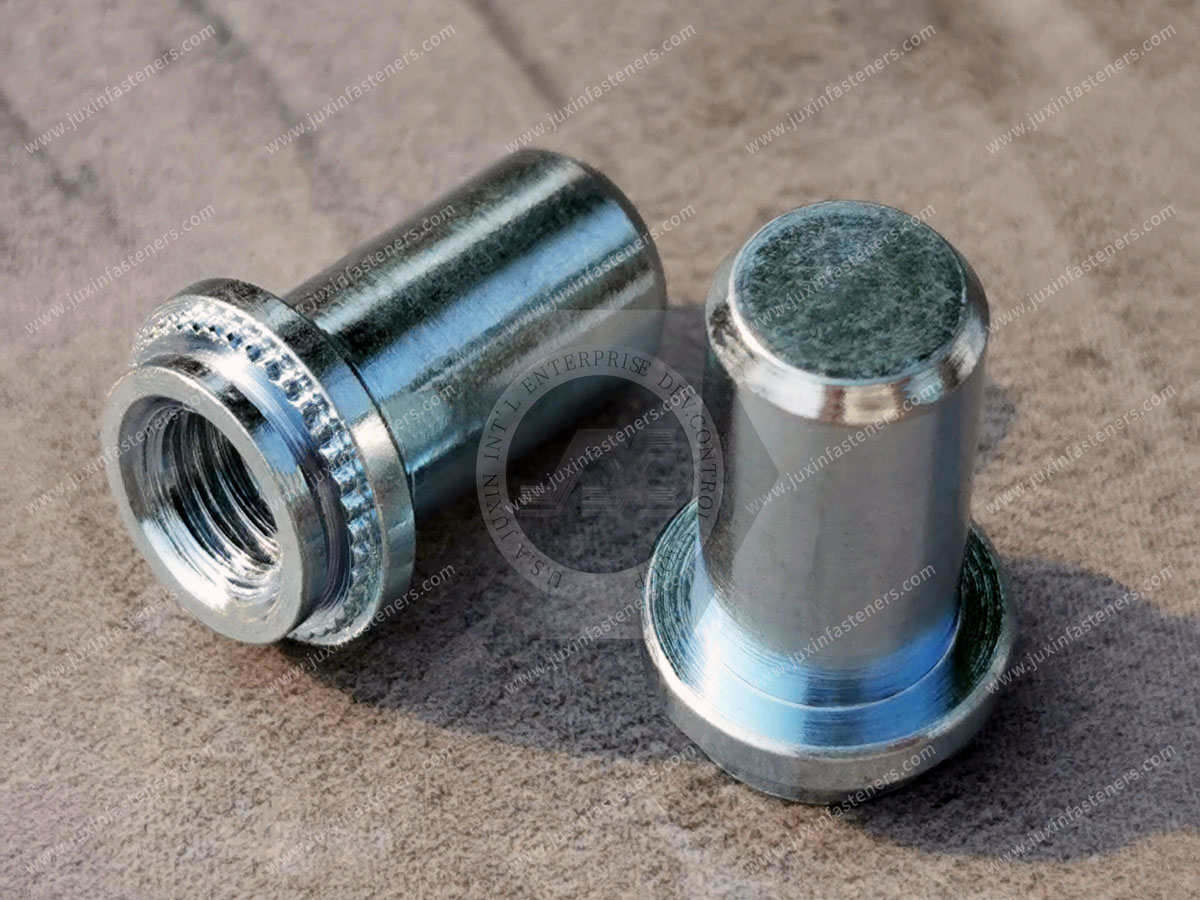
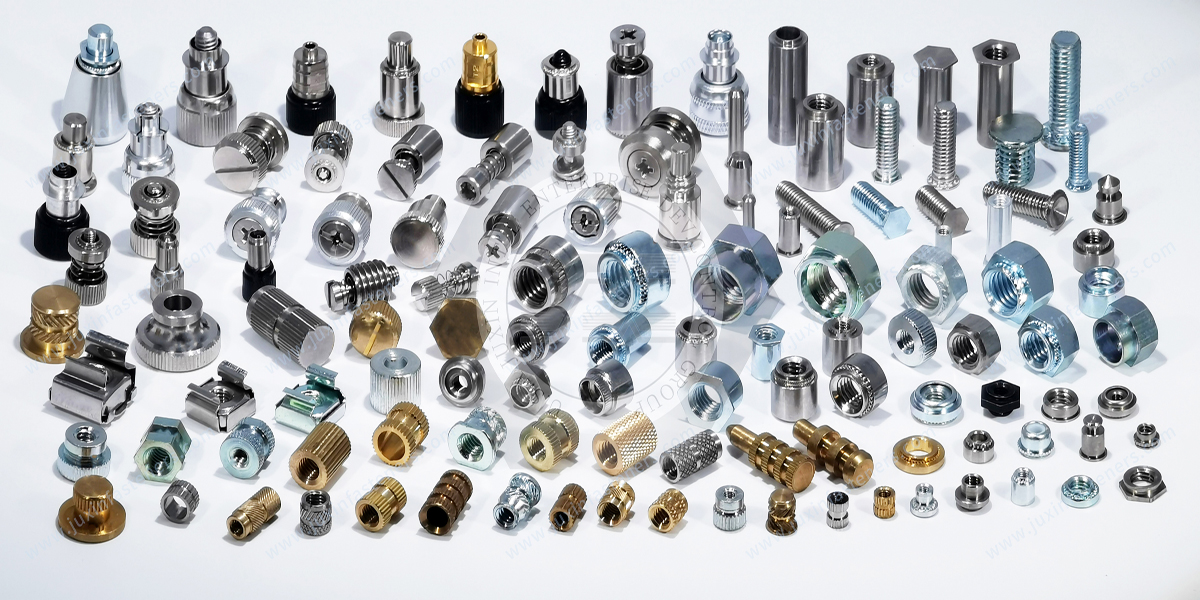
Product Pictures
Contact Us
Tel.:
+86 020 8621 0320
+86 020 3121 6067
E-mail:
Technical Support:
Navigation
SEND INQUIREY