Call Us
+86 136 6007 9809
Call Us
+86 136 6007 9809

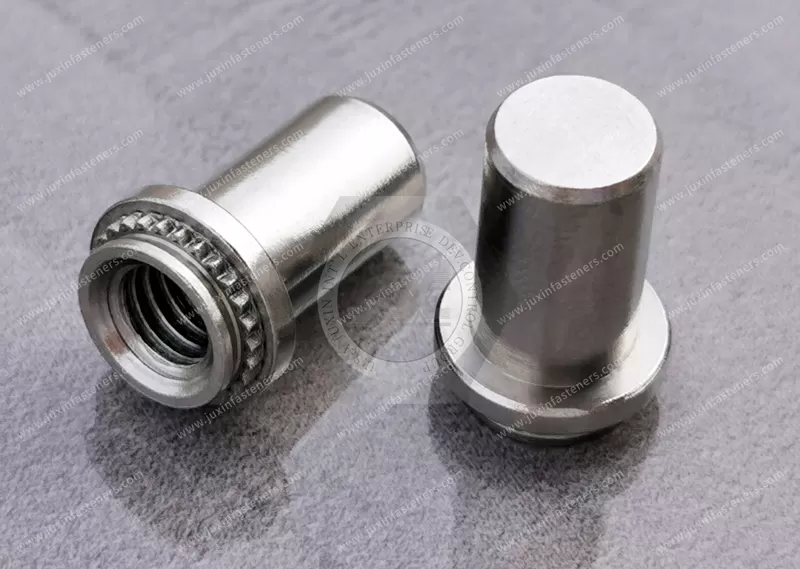
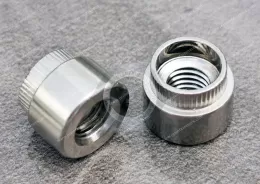
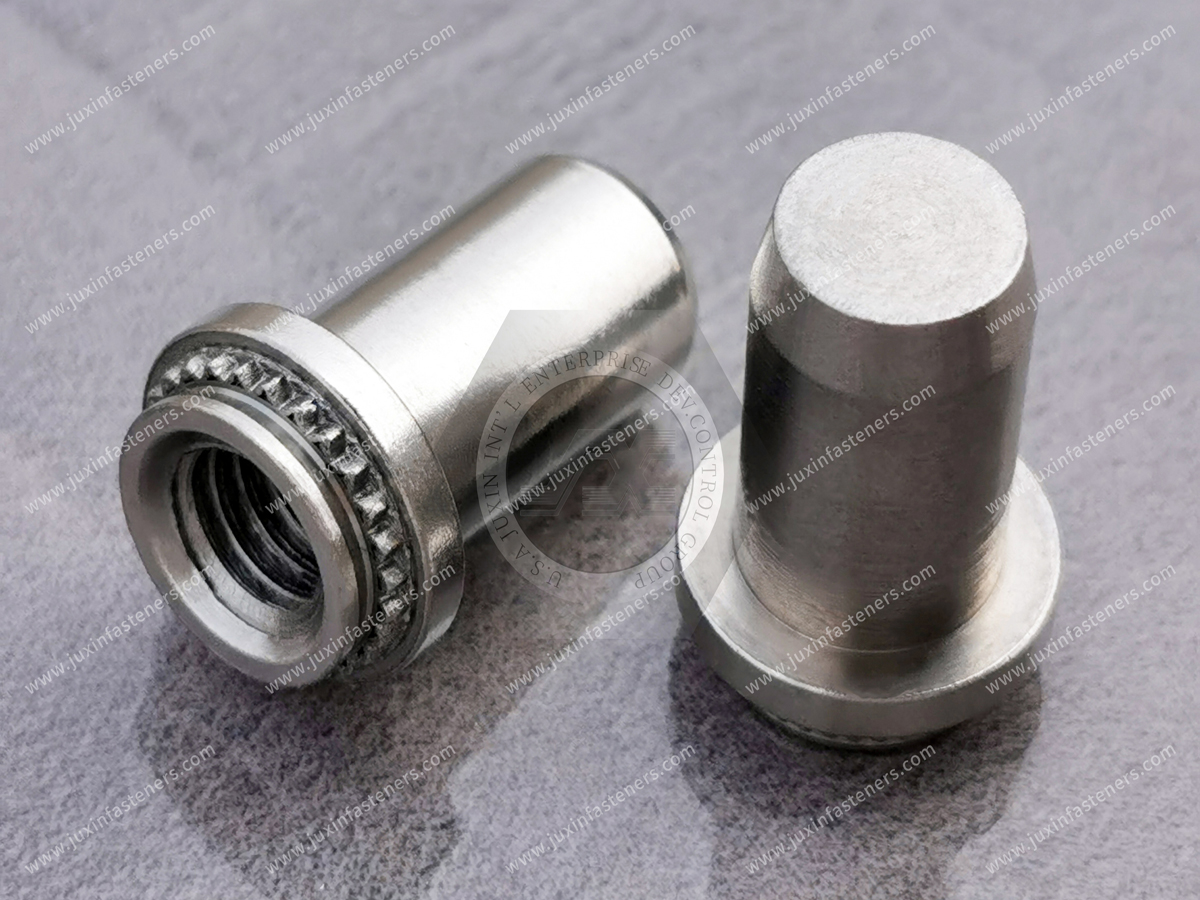
JUXIN FASTENERS supplies Type JX-BS stainless steel self-clinching blind nuts for thin sheet metal assemblies requiring permanent internal threads with a closed end.
These captive fasteners help prevent screws from extending beyond the threaded cavity and reduce the passage of foreign matter through the fastening point.
Designed for controlled press installation, JX-BS blind nuts are suitable for electronic enclosures,
display equipment, electrical cabinets, industrial control systems and other OEM assemblies where component clearance and maintenance reliability are important.
Selected metric and inch-series threads are available for technical review.
Stainless steel grade, installation dimensions, sheet compatibility and corrosion requirements should be confirmed against the approved product drawing.
For custom specifications, technical evaluation and OEM quotations, contact info@juxinfasteners.com.
Website: www.juxinfasteners.com
Product Specification
Stainless Steel Self-Clinching Blind Nuts – Type JX-BS
Closed-End Thread Protection for Thin Sheet Metal Assemblies
Product Overview
JX-BS stainless steel self-clinching blind nuts are permanently mounted internally threaded fasteners designed for thin metal panels.
Their closed-end construction provides a defined limit to screw penetration while creating a captive fastening point for equipment assembly, service and maintenance.
The primary engineering advantage is the combination of a closed threaded cavity, a press-installed retention mechanism and a stainless steel material option.
These characteristics make JX-BS blind nuts relevant to equipment manufacturers that need to control screw intrusion into densely packaged assemblies while evaluating corrosion resistance,
material compatibility and long-term service conditions.
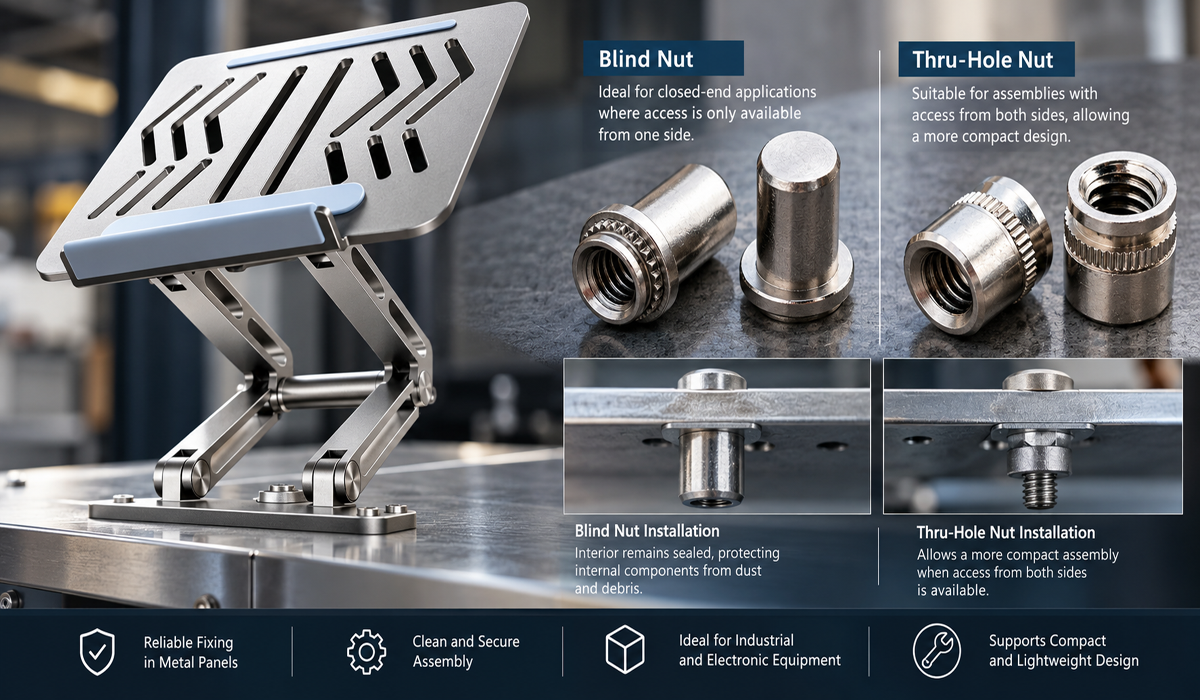
Unlike a conventional through-hole nut, the closed end prevents the mating screw from passing completely through the fastener.
However, the design must still provide adequate usable thread engagement and sufficient clearance for the specified screw.
For OEM procurement teams, JX-BS blind nuts should be evaluated as a complete fastening system involving the nut, mounting sheet, screw, installation tooling and operating environment.
Product Configuration
Product type: Stainless steel self-clinching blind nut
JUXIN designation: JX-BS
Thread configuration: Internal female thread with closed end
Installation: Controlled press-in self-clinching process
Base material: Stainless steel
Stainless steel grades for application-specific review: 302, 303, 316, 410, 420 and 430 families, subject to the required clinching characteristics and confirmed manufacturing specification
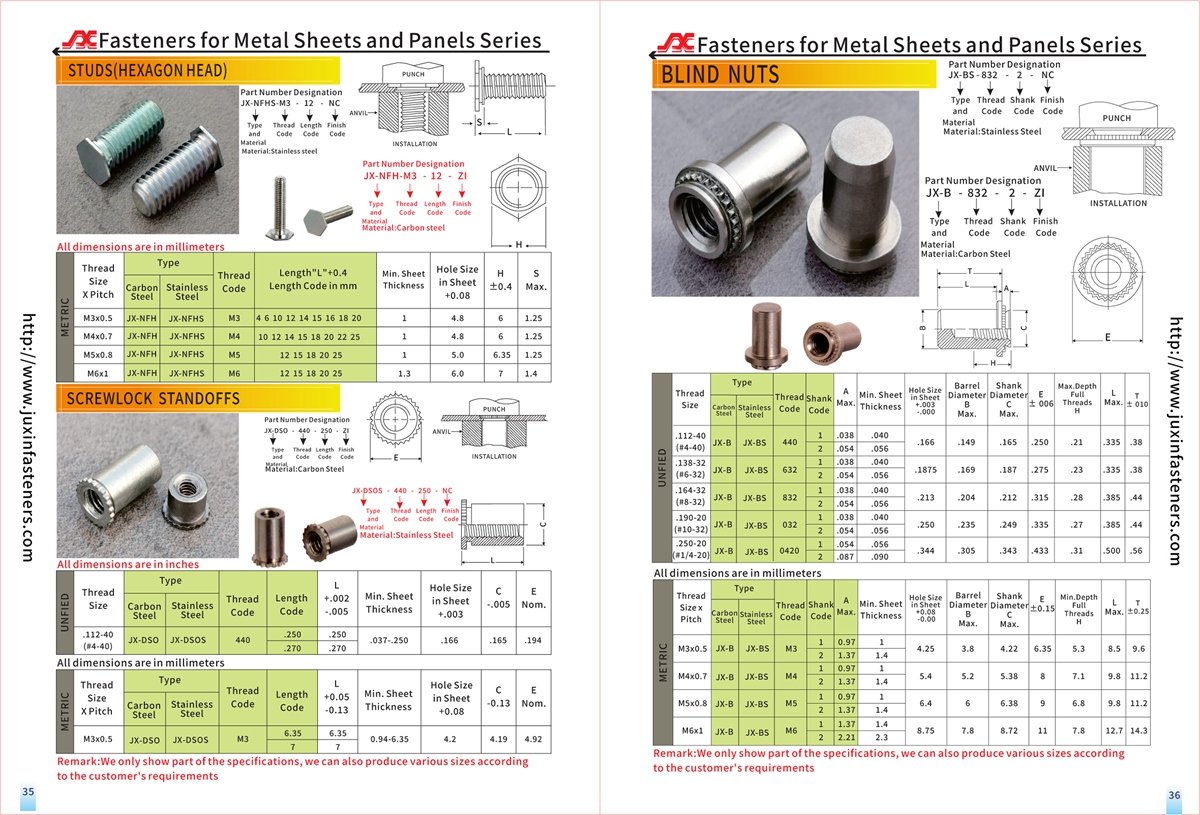
Metric thread options: M3 to M6
Inch-series thread options: Selected #4 through 1/4-inch sizes, according to the applicable product specification
Sheet thickness: Selected configurations are described for metal sheets from approximately 1.0 mm (0.040 in), subject to the specific fastener size and approved installation conditions
Dimensions: Standard catalog configurations or custom dimensions following drawing review
Technical references: Product PDF, CAD drawings and catalog pages 35–36
Not every stainless steel grade is suitable for every self-clinching configuration. Grade availability and installation compatibility must be confirmed before quotation or production.
How Stainless Steel Blind Clinch Nuts Work
A self-clinching blind nut is placed into a properly prepared hole in a compatible metal panel.
During installation, a press applies controlled compressive force through aligned tooling surfaces.
The surrounding sheet material flows into the fastener's designed clinching features, creating mechanical retention within the panel.
Once installed, the fastener provides a captive internal thread for a mating screw.
The closed end limits screw penetration beyond the threaded cavity.
Unlike a blind rivet nut, a self-clinching blind nut does not achieve retention by collapsing a tubular barrel behind the sheet.
Its installation depends on the controlled deformation of the host sheet around the fastener's retention geometry.
The process requires suitable access for pressing and support tooling.
It should not be assumed that every hand-operated press or standard rivet-nut tool can install the product correctly.
Why Choose Stainless Steel Instead of Carbon Steel?
The decision between JX-BS stainless steel blind nuts and JX-B steel blind nuts should begin with the operating environment and the mounting sheet material.
Stainless steel may be preferred where the application requires improved corrosion resistance, reduced dependence on sacrificial surface coatings or a particular material specification.
However, stainless steel is not automatically the superior choice for every self-clinching application.
The relative hardness and deformation behavior of the fastener and the host sheet directly affect installation.
A stainless steel blind nut that is too soft for the host sheet may not develop the required retention.
A fastener or installation process that is unsuitable for the sheet may also cause local distortion, cracking or incomplete seating.
Therefore, stainless steel grade selection must be coordinated with the sheet material, hardness, thickness and approved fastener design.
This is particularly important when installing stainless steel fasteners into stainless steel panels, where material hardness and clinching compatibility require careful engineering review.
Stainless Steel Grade Selection
Different stainless steel families provide different combinations of corrosion resistance, mechanical properties, machinability and hardenability.
Austenitic stainless steels, such as selected 302 and 316 grades, may be considered where corrosion resistance is an important requirement.
Free-machining stainless steels, such as selected 303 grades, offer different manufacturing characteristics but should not be treated as equivalent to 316 for corrosion resistance.
Martensitic stainless steels, including selected 410 and 420 grades, have different hardness and heat-treatment characteristics that may be relevant to the clinching design.
Ferritic stainless steels, such as selected 430 grades, provide another material option with distinct corrosion and mechanical behavior.
The actual grade must be chosen for the specific fastener geometry and mounting conditions.
Grade names in this product family are possible material references, not a guarantee that all listed grades are interchangeable or available in every size.
Where a formal material specification is required, the customer should identify the applicable ASTM, EN or other relevant international material designation on the purchase drawing.
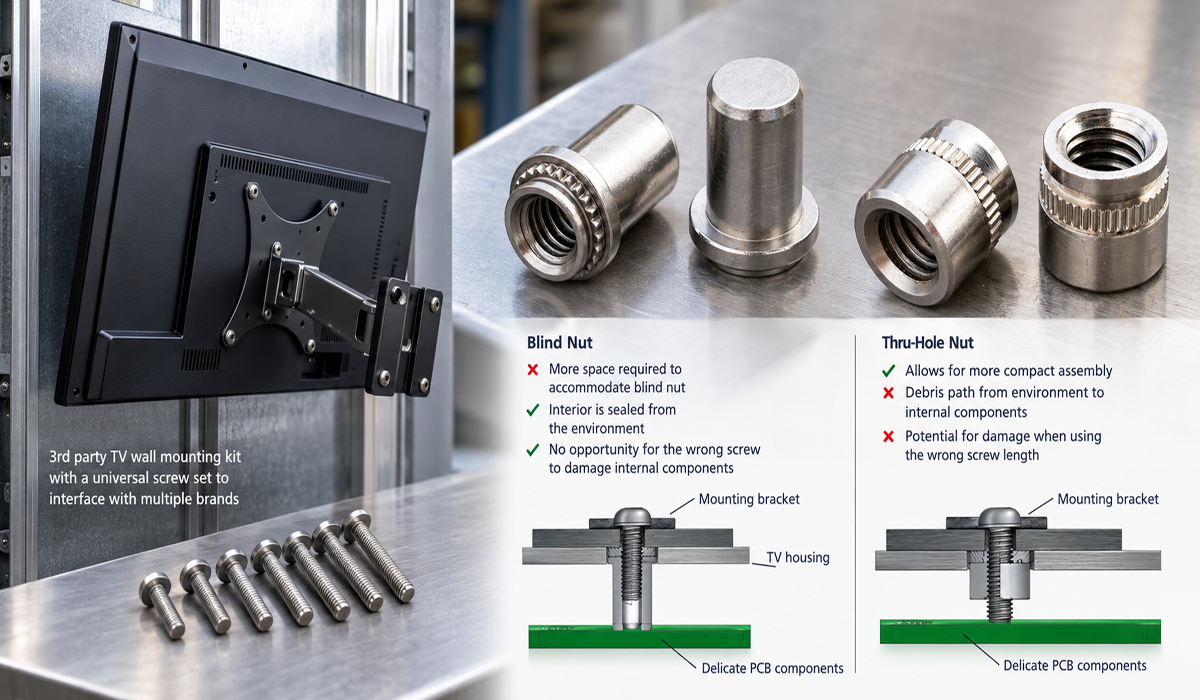
Closed-End Protection in Electronic Equipment
Electronic equipment frequently contains circuit boards, connectors, wiring, batteries or other sensitive components close to the enclosure wall.
A conventional through-hole threaded fastener can allow a screw to extend into this internal space.
This becomes particularly important when a product is installed or serviced using third-party mounting hardware.
A JX-BS blind nut provides a physical end to the threaded cavity and helps limit the screw's travel beyond the fastening point.
Potential applications include television mounting interfaces, electronic display housings, telecommunications enclosures, industrial controllers and compact electrical assemblies.
The closed-end construction can also help reduce the direct passage of loose particles through the threaded opening.
However, the blind nut alone does not establish a waterproof, airtight or dust-tight enclosure rating.
Any required sealing performance must be validated as part of the complete assembly.
Critical Engineering Consideration: Screw Bottoming
A closed-end nut protects components beyond the thread, but it also creates a maximum available screw insertion depth.
If the mating screw reaches the bottom of the cavity before the connected parts are properly clamped, the installer may observe increasing torque without obtaining the required joint preload.
This can create a hidden assembly defect.
For reliable fastening, engineers should confirm:
The nominal and tolerance limits of screw length
The thickness of the attached bracket or component
Washer and coating thickness
Available internal thread engagement
Clearance to the bottom of the blind cavity
Screw-tip geometry
Required clamping force
Specified tightening torque
Service and replacement screw requirements
The final screw selection must provide sufficient thread engagement while avoiding premature bottoming.
For equipment that may be serviced by third parties, it is also useful to document the correct replacement screw specification.
This helps prevent a protective design feature from introducing a different assembly failure.
Blind Nut Body Length and Internal Clearance
Closed-end blind nuts generally require additional material beyond the usable internal thread to form the closed cavity.
This means that body length and internal clearance can become important packaging constraints.
In compact electronics, the fastener body may project toward circuit boards, connectors, cable routes or thermal-management components.
Engineers should reserve sufficient space for the nut body and account for dimensional tolerances, vibration-related movement and maintenance access.
The design must balance the protection provided by the closed end against the internal space occupied by the fastener.
A blind nut should not be selected solely on the basis of thread size and sheet thickness.
Sheet Material and Installation Compatibility
Self-clinching performance depends on the mechanical interaction between the fastener and the mounting sheet.
The sheet must deform sufficiently during pressing to fill the designed retention features.
Before selecting JX-BS, confirm:
Sheet material
Sheet hardness
Sheet thickness
Mounting hole diameter and tolerance
Hole preparation and burr condition
Distance to sheet edges
Distance to bends and formed features
Installation tooling geometry
Press force and installation displacement
Required push-out resistance
Required torque-out resistance
Thread condition after installation
The mounting hole must be specified according to the approved fastener drawing rather than calculated directly from the nominal screw thread.
For stainless steel sheet assemblies, additional attention should be given to the hardness relationship between the fastener and the sheet.
The fact that both components are stainless steel does not establish their installation compatibility.
Minimum Sheet Thickness
The supplied product information identifies selected blind self-clinching fasteners for sheets as thin as approximately 1.0 mm (0.040 in).
This value describes a possible minimum within the product family and should not be applied to every JX-BS size or material configuration.
The approved installation drawing must establish the actual minimum sheet thickness for the selected fastener.
Thin sheets may also require additional support to control local distortion during installation.
For panels near the minimum permitted thickness, production trials and retention testing are particularly important.
Thread Systems and Dimensional Control
JX-BS blind nuts may be specified with selected metric or inch-series internal threads.
For ISO metric threads, ISO 261 and ISO 965 may be used as applicable references for thread selection and tolerances.
For unified inch-series threads, the applicable ASME B1.1 requirements may be referenced.
Metric threads and UNC/UNF threads are not interchangeable.
Any inch-to-metric dimensional conversion is for reference only and does not establish thread compatibility.
The approved product drawing should identify the required thread designation, tolerance, usable thread depth and inspection method.
Stainless Steel Corrosion Considerations
Corrosion performance depends on the stainless steel grade, surface condition, environment and contact with other materials.
Exposure to chlorides, cleaning chemicals, moisture or dissimilar metals may influence material selection.
For outdoor or chemically exposed equipment, a corrosion-resistant grade should be selected based on the actual operating conditions rather than the general term "stainless steel."
Where relevant, corrosion testing may be specified using ISO 9227 or ASTM B117, with acceptance criteria established by the project.
These laboratory methods do not directly predict service life.
Galvanic corrosion should also be considered when stainless steel blind nuts are installed into aluminum or coated metal panels, particularly in conductive wet environments.
Where the assembly requires electrical bonding or grounding, the effect of coatings, contact resistance and the complete joint design must be evaluated separately.
Mechanical Performance and Validation
The performance of a self-clinching blind nut cannot be established by material grade alone.
Important characteristics may include:
Push-out resistance
Torque-out resistance
Thread stripping resistance
Joint clamp-load capability
Resistance to installation damage
Retention after repeated assembly
Behavior under vibration and service loading
Corrosion performance where applicable
Required acceptance values should be based on the actual fastener, sheet material, sheet thickness and installation process.
Published or supplier-provided test data should not be transferred to a different panel configuration without engineering justification.
For OEM qualification, representative installation trials are preferable to relying only on nominal fastener dimensions.
Industrial Applications
Consumer Electronics and Display Systems
JX-BS blind nuts may be used in display housings, mounting interfaces and electronic chassis where controlled screw penetration helps protect internal components.
Telecommunications and Networking Equipment
Captive closed-end threads can support mounting brackets, removable covers and internal hardware in communication equipment and electronic enclosures.
Electrical Cabinets and Control Systems
Stainless steel blind nuts may be considered for metal cabinets and control housings where corrosion exposure, maintenance access and component protection are relevant.
Industrial Automation
Machine controllers, sensors and equipment housings may require repeatable threaded fastening points in fabricated panels.
Laboratory and Instrumentation Equipment
Stainless steel closed-end fasteners may be useful in instrument housings requiring defined material selection and controlled internal screw clearance.
Transportation Electronics
Auxiliary electronic modules and equipment housings may benefit from closed-end captive threads, subject to application-specific vibration, corrosion and mechanical validation.
No safety-critical suitability should be assumed without the relevant qualification requirements.
JX-BS Stainless Steel Versus JX-B Steel Blind Nuts
Both product types provide closed-end internal threads for compatible thin sheet metal assemblies.
The principal distinction is the specified fastener material.
JX-BS should be evaluated where a stainless steel material is required by the environment, product specification or corrosion-control strategy.
JX-B may be considered where the approved steel fastener and its specified surface protection satisfy the application requirements.
The decision should consider more than material cost.
Engineering teams should compare installation compatibility, retention performance, corrosion exposure, material availability, coating requirements and total assembly cost.
Neither version should be substituted for the other without confirming the approved drawing and installation performance.
Blind Self-Clinching Nuts Versus Other Fasteners
Through-Hole Self-Clinching Nuts
Provide captive threads without a closed cavity. They may be appropriate where screw projection is acceptable and usable thread access is the priority.
Blind Rivet Nuts
Provide threaded attachment using a different setting mechanism and are particularly relevant where one-sided installation access is required.
Blind Threaded Standoffs
Combine closed-end internal threads with a defined spacing function. They are not direct substitutes for blind nuts when the mounting geometry differs.
Weld Nuts
May be used in fabricated assemblies where the welding process and its effect on the panel are acceptable.
Threaded Inserts and Tapped Holes
May be suitable where the parent material provides sufficient thickness and thread engagement.
The preferred solution depends on the sheet, access, loading, screw clearance and production process.
OEM Design and Supplier Qualification
For OEM engineering teams, the first objective is to establish a reliable fastener-panel interface.
For procurement teams, the objective is to source a repeatable configuration with clear material, dimensional and quality requirements.
A complete purchasing specification should identify:
Product type and drawing revision
Stainless steel grade
Thread size and tolerance
Overall body geometry
Usable internal thread depth
Mounting sheet material and thickness
Mounting hole requirements
Installation tooling conditions
Mechanical retention requirements
Corrosion and environmental requirements
Inspection and testing criteria
Required documentation
Packaging and identification requirements
Where applicable, first-article inspection, sample approval, traceability and change-control requirements should be agreed during supplier qualification.
Documentation availability and specific test methods should be confirmed for each project.
Custom Stainless Steel Blind Nuts
JUXIN FASTENERS can review drawing-based requests for JX-BS blind nuts involving custom dimensions, selected stainless steel materials and application-specific requirements.
Possible engineering review topics include alternative body lengths, internal thread configurations, blind cavity depths, surface condition and OEM packaging.
Any modification to body length or cavity depth should be reviewed together with the mating screw, installation geometry and required retention performance.
Custom configurations are subject to feasibility review and approved technical specifications.
Related JUXIN FASTENERS Products
For product comparison and internal navigation, the following related categories may be useful:
Steel Self-Clinching Blind Nuts – Type JX-B
Self-Clinching Nuts
Self-Clinching Flush Nuts
Blind Threaded Standoffs
Self-Clinching Standoffs
Blind Rivet Nuts
Self-Clinching Studs
Use these product names as internal-link anchor text and connect them to the corresponding verified pages on the JUXIN FASTENERS website.
Frequently Asked Questions
What is a stainless steel self-clinching blind nut?
It is a stainless steel captive threaded fastener with a closed end, installed into a compatible metal sheet through a controlled self-clinching process.
What is the main advantage of a closed-end thread?
It limits screw penetration beyond the fastener and helps reduce the direct passage of foreign matter through the threaded opening.
Can JX-BS blind nuts be installed into stainless steel sheets?
Installation may be possible with a suitable fastener and sheet combination, but compatibility must be confirmed through the specified material hardness, geometry and installation testing.
Does a stainless steel blind nut provide waterproof sealing?
Not by itself. Any required ingress protection or sealing performance must be established through the complete enclosure design and appropriate testing.
How do I select the correct screw length?
The screw must provide adequate thread engagement and clamp the joint before reaching the bottom of the blind cavity. The complete assembly stack-up must be checked.
What is the difference between JX-B and JX-BS?
JX-B is the steel version and JX-BS is the stainless steel version. Material-specific installation and environmental requirements must be reviewed before substitution.
Are all stainless steel grades suitable for clinching?
No. Stainless steel grades differ in hardness, mechanical behavior, corrosion resistance and manufacturing characteristics. The selected grade must be validated for the specific application.
Can JUXIN FASTENERS review OEM custom drawings?
Yes. Customers may submit custom drawings and application requirements for technical and manufacturing feasibility review.
Request an OEM Quotation
For stainless steel self-clinching blind nuts, send your technical drawing or specification together with the following project details:
Required thread size and system
Stainless steel grade
Body dimensions and usable thread depth
Sheet material, hardness and thickness
Mounting hole specification
Mating screw details
Installation and mechanical performance requirements
Operating environment
Estimated order quantity and annual demand
Required inspection documentation
Packaging and delivery requirements
Our team can review the requested configuration and respond based on the confirmed technical and commercial requirements.
Email: info@juxinfasteners.com
Website: www.juxinfasteners.com
Product Packaging
JUXIN FASTENERS provides protective packaging arrangements for stainless steel JX-BS self-clinching blind nuts based on product dimensions, order quantity, surface condition and customer requirements.
Packaging options may include protective inner foam, outer cartons and palletized shipment.
For OEM production and industrial distribution, part-number identification, lot separation, labeling, corrosion protection and pallet arrangements can be reviewed before order confirmation.
Actual packing quantities, carton dimensions, pallet dimensions and shipment weights will be confirmed according to the approved order and logistics requirements.
Custom packaging and labeling requirements may be submitted with the RFQ.
Email: info@juxinfasteners.com
Website: www.juxinfasteners.com
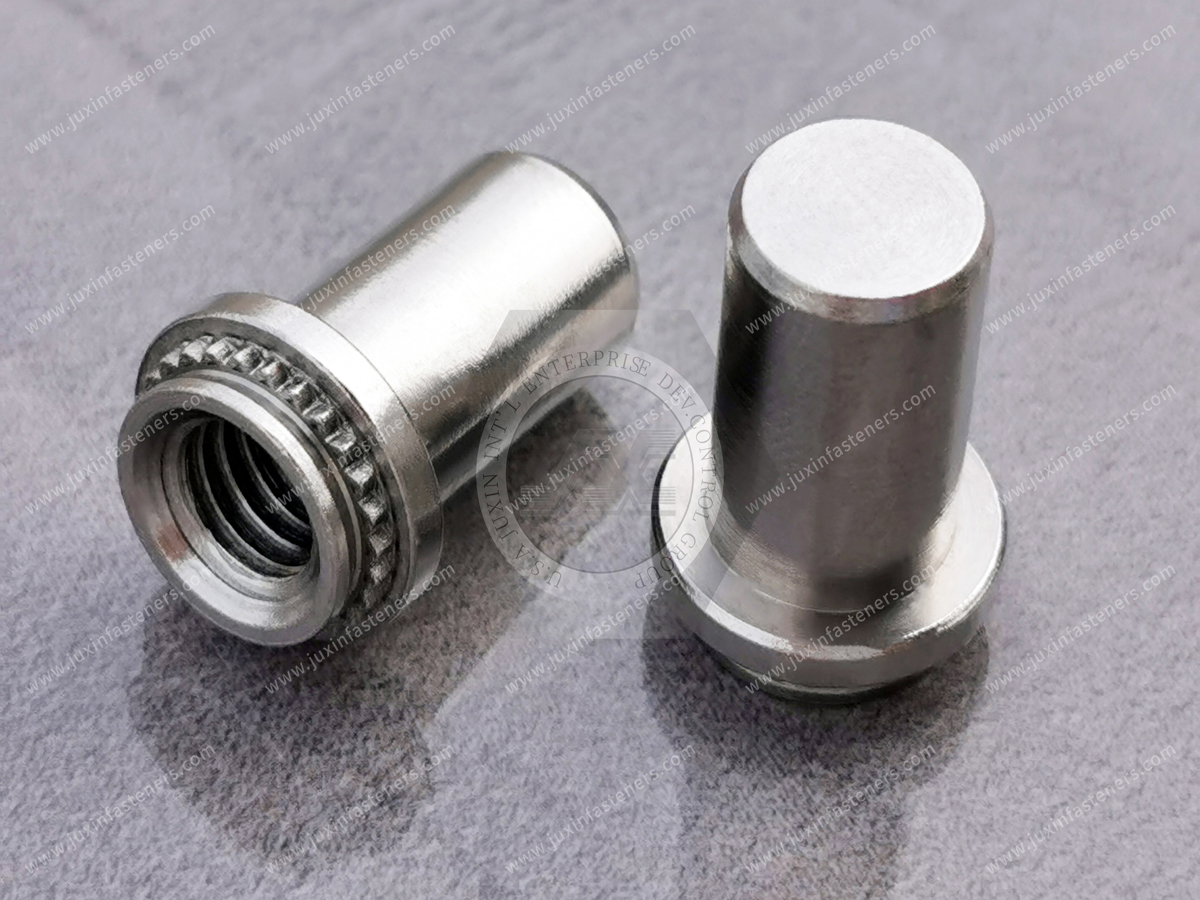
Product Pictures
Contact Us
Tel.:
+86 020 8621 0320
+86 020 3121 6067
E-mail:
Technical Support:
Navigation
SEND INQUIREY