Call Us
+86 136 6007 9809
Call Us
+86 136 6007 9809

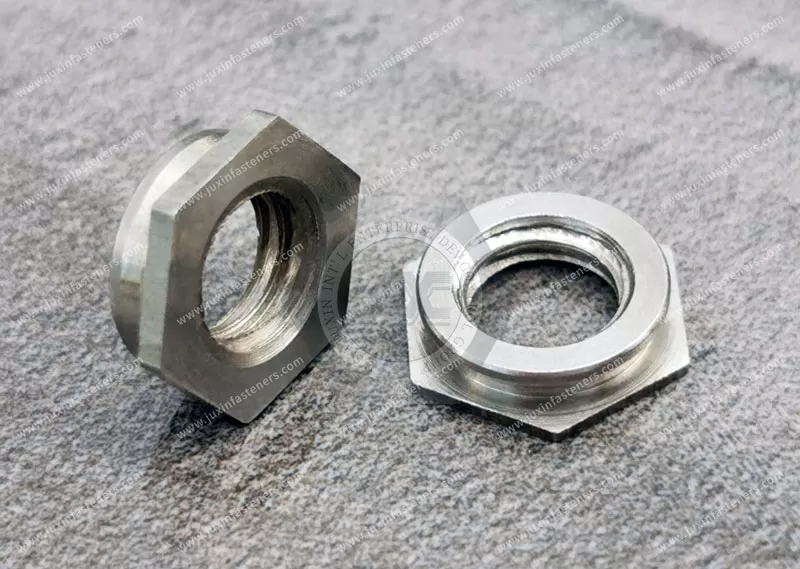
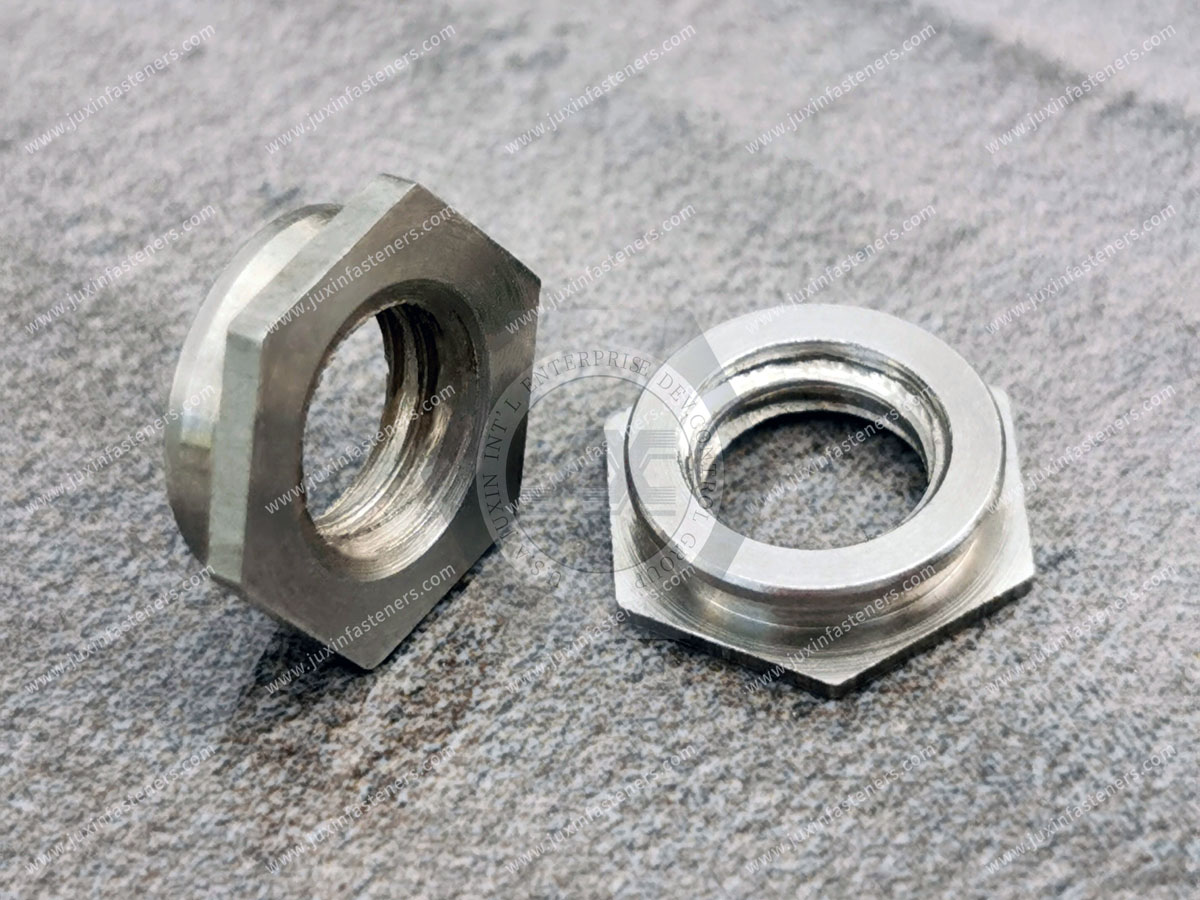
JUXIN FASTENERS supplies JX-F and JX-FS self-clinching flush nuts for thin sheet-metal assemblies requiring strong internal threads without protrusions on either panel surface. These flush-mount threaded inserts are pressed into accurately prepared holes, where the surrounding sheet material forms a mechanical interlock with the fastener.
Their compact design is suitable for electronic enclosures, telecommunications equipment, industrial control cabinets and precision sheet-metal components. Flush nuts can also be installed before bending or forming when the finished chassis would restrict access.
Product Series: JX-F and JX-FS
Product Type: Self-Clinching Flush Nuts
Material Family: Stainless Steel
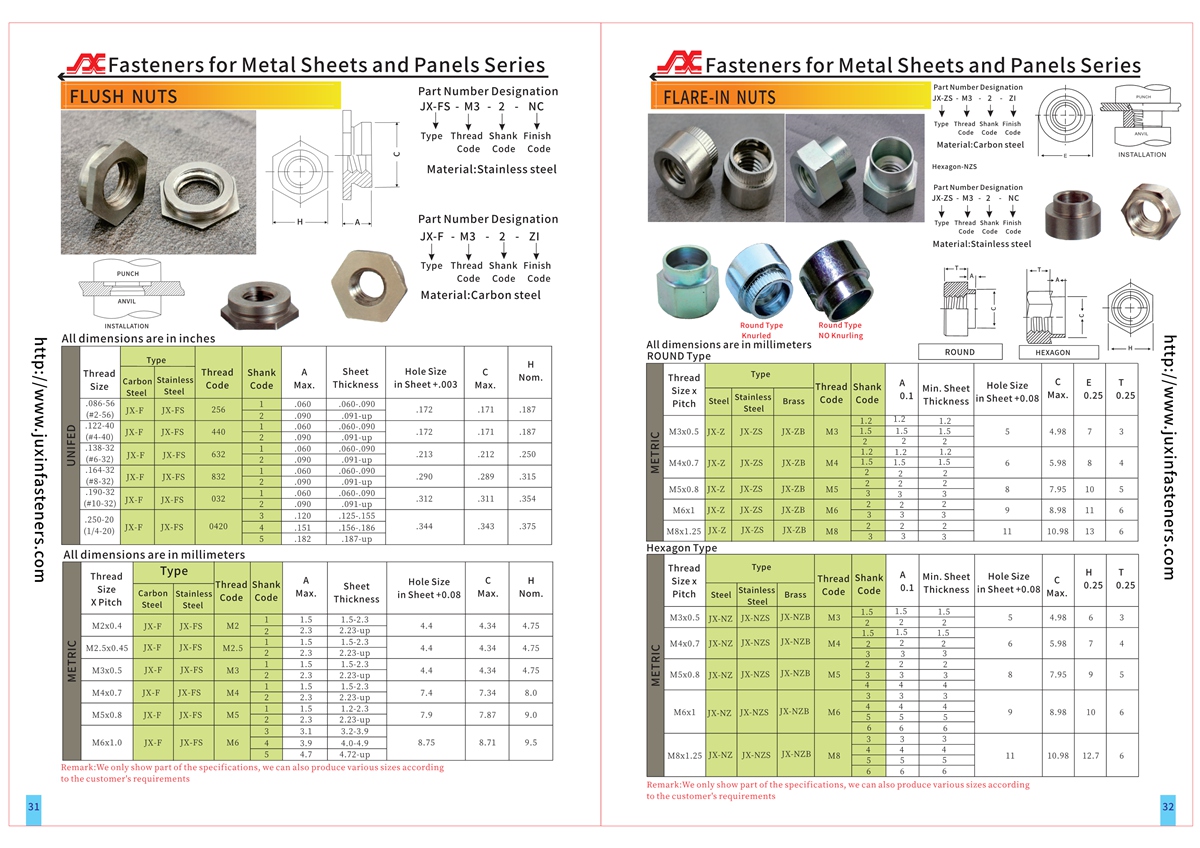
Metric Thread Range: M2–M6
Inch Thread Range: #2–1/4 inch
Minimum Sheet Thickness: 1.5 mm for applicable configurations
Installation: Controlled Press Installation
Special Dimensions: Subject to Drawing Review
Final material grade, thread designation, sheet compatibility and installation dimensions must be confirmed against the selected product drawing.
Product Specification
Self-Clinching Flush Nuts for Thin Sheet Metal and Precision OEM Assemblies
JUXIN FASTENERS supplies JX-F and JX-FS self-clinching flush nuts for industrial manufacturers that require load-bearing internal threads while maintaining smooth, unobstructed surfaces on both sides of a metal panel.
Unlike conventional self-clinching nuts, which generally project from at least one side of the mounting sheet, flush self-clinching nuts are designed to fit within the sheet thickness. When correctly selected and installed, the fastener does not create an intentional protrusion above either panel surface.
This makes flush nuts particularly useful for compact electronic enclosures, precision sheet-metal housings, sliding components, close-fitting covers and other assemblies where projecting fastener hardware would interfere with adjacent parts.
The JX-F and JX-FS series combines a threaded metal insert with a self-clinching retention design intended for installation into a compatible metal sheet using controlled pressing force.
Product Overview
Product Type: Self-Clinching Flush Nut
Alternative Names: Flush Clinch Nut, Flush-Mount Threaded Insert, Flush Self-Clinching Fastener
JUXIN Series: JX-F and JX-FS
Material Family: Stainless Steel
Metric Thread Sizes: M2 through M6
Inch Thread Sizes: Selected #2 through 1/4-inch configurations
Minimum Sheet Thickness: 1.5 mm for applicable configurations
Installation Method: Mechanical Press Installation
Mounting Hole: According to Approved Drawing
Applications: Precision Sheet Metal, Electronic Enclosures, Industrial Equipment and OEM Assemblies
Thread sizes, body dimensions, minimum sheet thickness and material availability vary by configuration. Not every combination is necessarily available in both series.
Engineering Information Gain — What Makes a Flush Nut Different?
The main engineering advantage of a self-clinching flush nut is the ability to provide an internal thread without occupying additional space beyond the mounting sheet.
Conventional self-clinching nuts provide excellent fastening solutions for many applications, but their installed bodies normally extend above one panel surface.
That projection may interfere with a sliding cover, an adjacent bracket, a closely fitted housing or another component.
A flush nut addresses this packaging problem by positioning the fastener within the thickness of the sheet.
The design objective is not merely to make the nut smaller. It is to provide usable internal threads while preserving the intended surface envelope of the finished component.
This distinction is especially important in products where the external appearance, internal clearance and mechanical fastening requirements must be satisfied simultaneously.
Double-Flush Installation and Surface Requirements
Self-clinching flush nuts are intended to remain flush with both sides of the parent sheet after correct installation.
The installation result depends on the selected fastener geometry, mounting-hole preparation, sheet thickness and press setup.
The mounting sheet must be sufficiently thick to accommodate the selected flush fastener.
The supplied product family includes configurations intended for sheets as thin as approximately 1.5 mm, equivalent to approximately 0.059 inch.
The stated minimum thickness is a product-family reference and should not be applied automatically to every thread size or fastener variant.
Where a customer drawing requires strict flushness or a specific surface tolerance, the allowable installed height must be defined and verified.
A nominally flush fastener does not automatically guarantee a particular surface-flatness tolerance.
How Self-Clinching Flush Nuts Work
The flush nut is positioned in a correctly sized mounting hole in the sheet metal.
A suitable press applies a controlled squeezing force through properly aligned installation tooling.
During installation, the surrounding sheet material plastically deforms and engages the retaining features of the fastener.
The resulting mechanical interlock resists axial displacement and rotation.
The hexagonal geometry associated with this fastener family also contributes to resistance against rotation when the intended installation conditions are achieved.
The fastener becomes a retained threaded component of the sheet-metal assembly without requiring a separate loose nut or a welded attachment.
Installation must follow the approved dimensional and tooling requirements.
Simply pressing an incorrectly sized nut into a hole does not ensure a reliable self-clinching connection.
JX-F and JX-FS Product Series
The supplied product identification includes JX-F and JX-FS.
Both series belong to the self-clinching flush fastener family.
They should be treated as separate engineering configurations until the applicable material, dimensional and performance specifications are confirmed.
The final selection must be based on the corresponding JUXIN technical drawing, including the parent-sheet requirements, thread size, body dimensions and installation geometry.
A difference in product-series designation should not be ignored during purchasing or substitution reviews.
Stainless Steel Material Selection
The supplied material information identifies stainless steel as the relevant material family.
Potential stainless steel grades referenced in the product information include 302, 303, 316, 410, 420 and 430 families.
These grades have substantially different mechanical, corrosion and manufacturing characteristics.
They should not be assumed interchangeable or available for every flush nut configuration.
Austenitic stainless steels and martensitic or ferritic stainless steels may differ in hardness, strength, corrosion behavior and forming characteristics.
For a self-clinching fastener, these differences can directly affect installation compatibility and retention performance.
The final stainless steel grade and material condition must be established by the approved drawing or purchase specification.
Engineering Information Gain — Why Sheet Hardness Matters More Than Appearance
A flush nut may look correctly installed while failing to develop the intended mechanical retention.
This can happen when the parent sheet is too hard or otherwise unsuitable for the selected clinching geometry.
Self-clinching technology depends on controlled displacement of the parent-sheet material into the fastener's retaining features.
If sufficient material flow does not occur, the fastener may have inadequate push-out or torque-out resistance.
This issue is particularly important when selecting stainless steel fasteners for stainless steel panels.
The fact that both components are stainless steel does not establish their compatibility.
Engineers should verify the permitted parent-sheet hardness, minimum thickness and installation conditions for the exact fastener series.
Where required, installation trials and mechanical retention tests should be conducted using the actual production sheet.
Metric and Inch Thread Options
The supplied flush nut range includes metric threads from M2 to M6 and selected Unified inch-thread sizes from #2 through 1/4 inch.
Metric thread requirements may reference applicable ISO 261 and ISO 965 provisions.
Unified inch threads may reference ASME B1.1.
The complete thread designation must be confirmed from the approved product drawing.
Metric and inch threads are not interchangeable.
For example, a metric thread with a similar nominal diameter to an inch-thread designation must not be substituted without checking thread pitch, thread form and mating screw compatibility.
For multinational OEM projects, the RFQ should clearly identify whether the assembly uses ISO metric or Unified inch threads.
Why Flush Nuts Are Useful Before Sheet-Metal Bending
One important advantage of flush self-clinching nuts is the possibility of installing them before subsequent bending or forming operations.
In many sheet-metal assemblies, a nut location becomes difficult or impossible to access after the enclosure is formed.
Examples include narrow chassis sections, internal mounting flanges, folded brackets and closed equipment housings.
Installing the flush nut while the sheet is still flat may provide better access for press tooling and more consistent positioning.
However, the sequence must be planned carefully.
Bending too close to an installed fastener can distort the surrounding sheet or affect retention.
The engineering drawing should identify the fastener location, nearby bend lines and required installation sequence.
The feasibility of pressing before forming must be confirmed through the actual manufacturing process.
Engineering Information Gain — Flushness, Bend Distance and Retention Are Connected
A flush nut solves a surface-clearance problem, but it introduces a local region where the sheet contains an installed mechanical insert.
That region may respond differently to subsequent forming than the surrounding unmodified sheet.
If a bend is placed too close to the installed nut, the sheet may deform around the mounting hole.
This can affect panel flatness, thread alignment and mechanical retention.
For this reason, a design should not be approved solely because the nut fits within the sheet thickness.
The fastener-to-bend distance, sheet material, bending method and assembly sequence must also be reviewed.
The approved installation drawing should define any applicable minimum distance from bends and panel edges.
Mounting-Hole Design and Preparation
Mounting-hole accuracy is essential for consistent flush nut installation.
The hole must match the dimensions and tolerances specified for the selected fastener.
Important variables include hole diameter, roundness, burr condition, edge quality and the distance to adjacent features.
An oversized hole can reduce the available material for forming the mechanical interlock.
An undersized hole can produce excessive deformation or prevent correct seating.
The sheet should be adequately supported during installation to avoid local distortion.
Where the hole is punched, the punching direction and resulting burr condition may affect installation quality.
The hole-making process should therefore be considered part of the fastener installation specification.
Installation Process
Flush self-clinching nuts are installed using suitable press equipment and correctly designed tooling.
The nut is placed in the prepared mounting hole.
The installation tooling supports the sheet and applies a controlled parallel squeezing force.
The fastener is pressed to the specified seating condition, allowing the parent-sheet material to engage its retaining geometry.
The installation should produce the required flush condition without damaging the internal thread or surrounding panel.
Hammering or uncontrolled impact is not a substitute for the specified pressing process.
For repeat-production applications, press alignment, tooling condition and installation consistency should be included in process control.
Push-Out Resistance and Torque-Out Resistance
Push-out resistance is the installed fastener's resistance to axial displacement from the parent sheet under defined test conditions.
Torque-out resistance is its resistance to rotation in the sheet.
Both characteristics are important for flush self-clinching nuts.
The installed fastener must resist rotation when a mating screw is tightened or removed.
It must also remain retained when axial loads are transferred through the threaded connection.
Actual performance depends on the fastener geometry, sheet material, sheet thickness, hole preparation and installation conditions.
No universal strength value should be assumed across the entire JX-F and JX-FS range.
Where mechanical performance is critical, the customer should define the required acceptance criteria and test conditions.
Flush Nuts vs. Standard Self-Clinching Nuts
A standard self-clinching nut is often an appropriate solution when a panel requires a strong internal thread and additional projection above one surface is acceptable.
A flush self-clinching nut is more suitable when the assembly requires the fastener to remain within the panel thickness.
The correct selection depends on available space, sheet thickness, thread size, parent-sheet material and mechanical loading.
A flush nut should not automatically be considered stronger than a conventional clinch nut.
The performance of each design must be evaluated using its actual installation conditions.
Flush Nuts vs. Tapped Sheet-Metal Holes
Directly tapping a hole in sheet metal eliminates the need for a separate insert.
However, thin sheet metal may provide limited thread engagement.
Depending on material and loading, this can increase the risk of thread stripping during tightening or repeated maintenance.
A flush nut provides a separate internally threaded component mechanically retained in the sheet.
This may be useful where the sheet alone cannot provide the required threaded engagement.
The comparison should consider panel thickness, screw size, assembly frequency, mechanical loading and total manufacturing cost.
Flush Nuts vs. Weld Nuts
Weld nuts are attached using a welding process.
Flush self-clinching nuts are installed mechanically through controlled pressing.
Self-clinching installation avoids the welding operation and its associated local heat input.
However, it requires compatible sheet material, suitable thickness and correct installation tooling.
Weld nuts may remain appropriate for applications where welding is already integrated into the manufacturing process or where the design requirements favor that attachment method.
The choice should be based on the complete joint and production requirements rather than fastener unit price alone.
Electronic Enclosures and Precision Equipment
Flush self-clinching nuts are suitable for electronic enclosures where internal and external clearances are limited.
Potential applications include computer housings, industrial controllers, compact electronic assemblies and instrumentation panels.
A flush mounting interface can help avoid interference with nearby components or covers.
The installed threaded connection also supports serviceable assembly using conventional mating screws.
Engineers should verify thread engagement, electrical requirements, component clearances and the effects of repeated maintenance.
Telecommunications and Network Equipment
Telecommunications equipment frequently combines thin metal panels with densely packaged electronic components.
Flush threaded inserts may be useful in network equipment housings, communication cabinets and internal module supports.
The absence of an intentional fastener projection can simplify the design of closely fitted panel interfaces.
Where equipment is exposed to vibration or repeated service, retention performance should be evaluated under representative conditions.
Industrial Control Cabinets and Electrical Equipment
Flush nuts can provide threaded mounting locations for control panels, equipment brackets and sheet-metal assemblies.
They may be especially useful where a projecting nut would interfere with a removable cover or adjacent enclosure component.
The engineer should account for required electrical clearances, grounding arrangements and the conductivity of the fastener material.
A metal flush nut is not an electrical insulating component.
Automotive and Transportation Equipment
Selected non-structural automotive and transportation equipment may benefit from flush self-clinching fasteners.
Potential applications include electronic housings, interior equipment brackets, instrument assemblies and compact sheet-metal components.
The application may introduce vibration, thermal cycling, corrosion exposure and repeated assembly loads.
Fastener suitability must be validated against the relevant OEM requirements.
No safety-critical approval or application-specific certification is implied.
Medical, Laboratory and Instrumentation Housings
Flush self-clinching nuts may be considered for equipment housings where smooth panel surfaces and compact mounting arrangements are important.
Material selection should account for cleaning agents, environmental exposure and equipment design requirements.
The product should not be assumed suitable for medical-device or regulated applications without the relevant customer qualification.
Corrosion Resistance and Surface Condition
Stainless steel flush nuts may provide corrosion-resistance benefits when the selected grade is appropriate for the environment.
However, corrosion performance varies by grade and service conditions.
The engineer should consider the mating screw, parent-sheet material, cleaning agents, moisture exposure and potential galvanic interactions.
Surface finish and any required treatment must be specified on the approved drawing.
The appearance of a stainless steel fastener does not establish its exact material grade or corrosion performance.
Quality and Installation Verification
For OEM programs, a practical verification plan should address the critical characteristics of the installed fastener.
These may include thread conformity, fastener dimensions, material identification, mounting-hole conformity and installed flushness.
Where required, push-out and torque-out performance should also be evaluated.
Inspection criteria should be linked to the approved drawing and actual assembly conditions.
A successful installation trial on one sheet material should not automatically be extended to a different sheet grade, thickness or hole-making process.
Engineering Information Gain — The True Cost of a Flush Nut Is the Installed Assembly Cost
Purchasing teams often compare fasteners using only the unit price.
For precision sheet-metal products, the more relevant comparison may be the total installed cost.
A flush nut may eliminate the need for a projecting nut, a welded attachment or an additional clearance feature.
It may also allow the nut to be installed before the enclosure is formed, potentially simplifying later assembly.
However, the total cost must include mounting-hole preparation, press installation, inspection, tooling and any necessary qualification work.
For repeat-production OEM programs, these factors can have a greater effect on overall manufacturing efficiency than small differences in fastener price.
OEM Supplier Qualification and Drawing Control
A complete sourcing review should verify the exact JX-F or JX-FS configuration.
The purchasing specification should identify the internal thread, fastener material, mounting-sheet material, sheet thickness and required flushness.
It should also define any applicable mechanical retention requirements, surface condition and inspection criteria.
For ongoing supply programs, the drawing revision and approved material specification should be maintained consistently.
Any proposed change to material, dimensions or manufacturing process should be reviewed for its effect on installation and performance.
Relevant International Standards
ISO 261 provides relevant metric thread combinations.
ISO 965 provides relevant metric thread tolerance requirements.
ASME B1.1 provides relevant Unified inch-thread requirements.
ISO 6508-1 and ASTM E18 provide relevant Rockwell hardness test methods.
ISO 6506-1 and ASTM E10 provide relevant Brinell hardness test methods.
The applicability of these standards depends on the selected product and customer specification.
They are engineering references rather than claims that every supplied fastener has been certified to each standard.
Frequently Asked Questions
What is a self-clinching flush nut?
A self-clinching flush nut is a threaded insert designed to be mechanically retained within a compatible metal sheet while maintaining a flush installation on both sides.
What is the difference between a flush nut and a standard clinch nut?
A flush nut is intended to remain within the panel thickness. A conventional self-clinching nut typically projects above one panel surface.
How are flush self-clinching nuts installed?
They are pressed into accurately prepared mounting holes using suitable tooling and controlled squeezing force.
Can flush nuts be installed before sheet-metal bending?
Yes, where the manufacturing process and fastener location permit. Bend distance and subsequent forming effects must be verified.
What is the minimum sheet thickness?
The supplied family includes applicable configurations for sheet thicknesses starting at approximately 1.5 mm. The exact minimum must be confirmed for the selected part.
Are flush nuts suitable for stainless steel panels?
Only when the fastener design and parent-sheet material satisfy the specified installation requirements. Stainless steel fastener material alone does not guarantee compatibility.
What prevents a flush nut from rotating?
The intended mechanical interlock and fastener geometry provide resistance to rotation when properly installed.
Can flush nuts replace welded nuts?
They may be an alternative in suitable sheet-metal applications, but the attachment method must be selected according to material compatibility, loads and manufacturing requirements.
Are metric and inch-thread versions available?
The supplied family includes M2–M6 metric sizes and selected #2–1/4-inch Unified thread configurations.
Can JUXIN supply custom flush nuts?
Customer-specific configurations may be reviewed according to approved drawings and manufacturing requirements.
Related JUXIN FASTENERS Product Categories
Standard Self-Clinching Nuts — for applications where a projecting threaded insert is acceptable.
Stainless Steel Self-Clinching Nuts — for material-specific sheet-metal fastening requirements.
Self-Clinching Standoffs — for threaded mounting points that also provide component spacing.
Blind Threaded Self-Clinching Standoffs — for closed-end threaded mounting and spacing applications.
Self-Clinching Studs — for permanent external threaded mounting points.
Blind Rivet Nuts — for threaded fastening applications with access from one side.
These product categories should be connected to the corresponding verified JUXIN FASTENERS pages to help engineers compare fastening methods and identify suitable alternatives.
Request a Technical Review or OEM Quotation
JUXIN FASTENERS supplies self-clinching flush nuts and related sheet-metal fastening products for industrial OEM manufacturers, engineering teams and global procurement organizations.
For accurate product selection and quotation, please provide the following information:
Required JX-F or JX-FS configuration.
Metric or Unified inch-thread designation.
Fastener material grade.
Parent-sheet material and thickness.
Mounting-hole dimensions.
Required installed flushness.
Push-out and torque-out requirements, if applicable.
Engineering drawing or CAD file.
Surface condition and inspection requirements.
Expected order quantity and delivery requirements.
Our team can review the requested configuration and prepare a quotation based on the confirmed technical and commercial requirements.
Email: info@juxinfasteners.com
Website: www.juxinfasteners.com
JUXIN FASTENERS — Self-Clinching Flush Nuts and Precision Sheet-Metal Fastening Solutions.
Product Packaging
Product Packaging
JUXIN FASTENERS supplies JX-F and JX-FS self-clinching flush nuts with protective packaging for industrial and OEM shipments.
The supplied packaging arrangement uses poly foam for inner protection, outer cartons and palletized packing for transportation.
Available carton dimension references include 29 × 19 × 19.5 cm and 23.5 × 17.5 × 8 cm. The supplied pallet dimension reference is 215 × 100 × 90 cm.
Actual carton selection, packing quantity and pallet arrangement depend on the confirmed fastener dimensions, order quantity and shipment requirements.
Packaging should protect internal threads, clinching features and finished surfaces from damage during handling and transportation.
For OEM purchasing programs, customer-specific labeling and packaging requirements may be reviewed before order confirmation.
Different thread sizes, material grades and product configurations should be clearly identified to reduce the risk of mixing during storage and production.
For packaging requirements and quotations, please contact:
Email: info@juxinfasteners.com
Website: www.juxinfasteners.com
Product Pictures
Contact Us
Tel.:
+86 020 8621 0320
+86 020 3121 6067
E-mail:
Technical Support:
Navigation
SEND INQUIREY