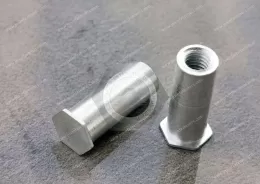
Call Us
+86 136 6007 9809
Call Us
+86 136 6007 9809

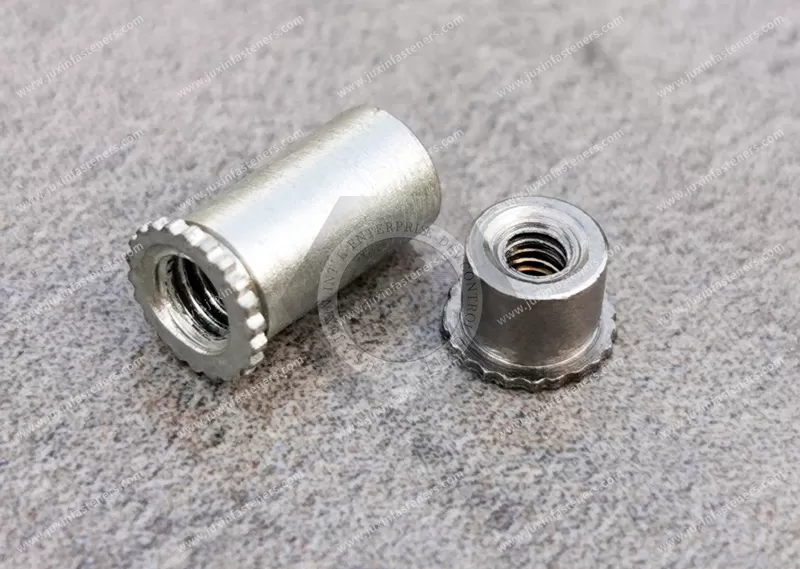
JUXIN FASTENERS supplies JX-DSO and JX-DSOS close-to-edge self-clinching screw-lock standoffs for mounting D-sub connectors and related hardware in metal panels.
These captive threaded standoffs are designed for applications where connector mounting positions are close to a sheet edge and conventional fastening arrangements may be difficult to accommodate.
They install by controlled pressing into correctly sized round holes, creating permanent mounting points in compatible sheet metal.
Stainless steel material options and special-order lengths are available for technical review.
The selected standoff must be matched to the connector hardware, panel thickness, hole geometry and installation requirements.
Product Series: JX-DSO / JX-DSOS
Product Type: Close-to-Edge Self-Clinching Screw-Lock Standoff
Material: Stainless Steel
Primary Application: D-Sub Connector Mounting
Installation: Press Clinching
Special Lengths: Available on Request, Subject to Confirmation
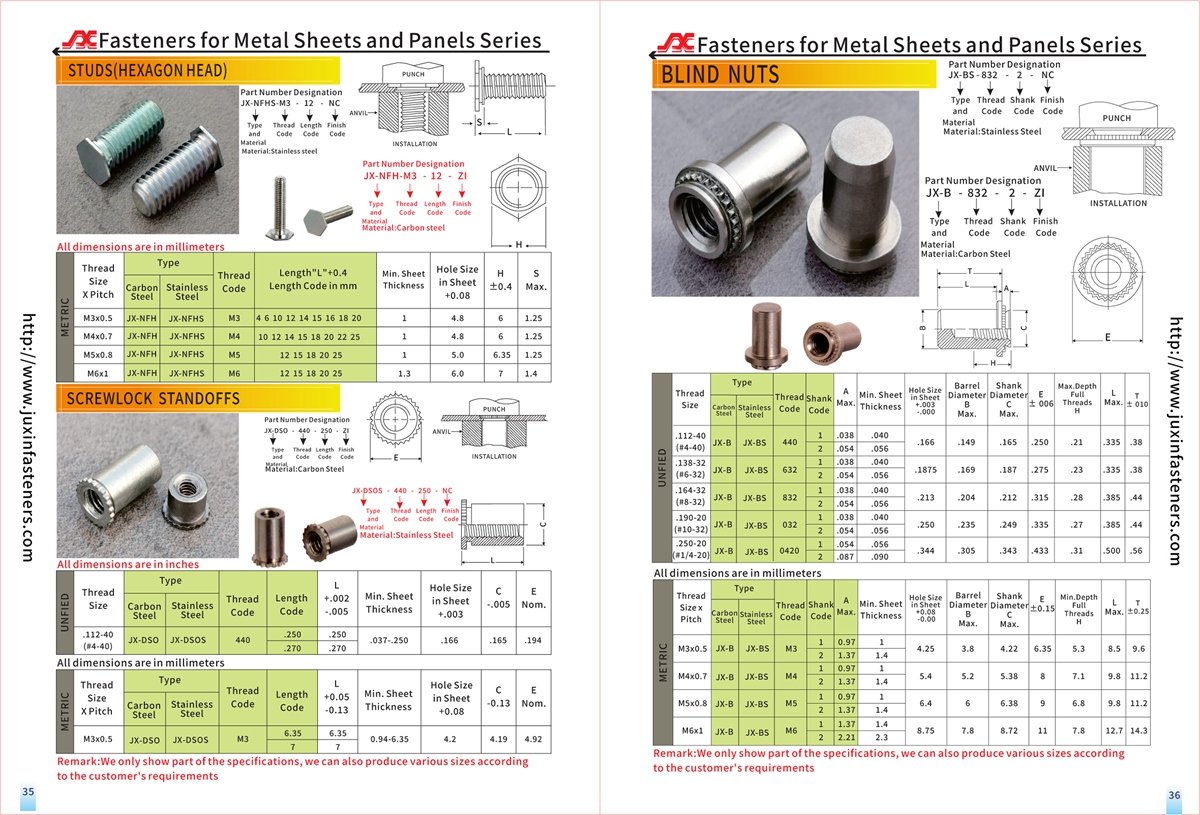
Detailed Dimensions: Refer to the Applicable PDF/CAD Specification, Pages 35–36
Product Specification
Close-to-Edge Self-Clinching Screw-Lock Standoffs for D-Sub Connector Mounting
Product Overview
JX-DSO and JX-DSOS close-to-edge self-clinching standoffs are captive mounting components developed for applications where threaded connector attachment points must be positioned near the edge of a metal panel.
Their primary application is the mounting of D-subminiature connectors, commonly called D-sub connectors, in industrial and electronic equipment.
These standoffs combine a threaded mounting function with a self-clinching attachment method.
Instead of relying on a separate loose spacer and conventional mounting hardware, the standoff is mechanically retained in the panel through a controlled press installation.
This arrangement can help simplify connector assembly, maintain defined mounting locations and reduce loose hardware handling.
JUXIN FASTENERS supplies JX-DSO and JX-DSOS products for OEM equipment manufacturers, industrial enclosure designers, electronics manufacturers and procurement teams requiring connector mounting hardware.
Product Specifications
Product Name: Close-to-Edge Self-Clinching Screw-Lock Standoff
Product Series: JX-DSO / JX-DSOS
Product Category: Self-Clinching Standoffs
Alternative Names: D-Sub Connector Clinch Standoff, Close-to-Edge Press-In Standoff, Screw-Lock Connector Standoff
Material Family: Stainless Steel
Material Grades for Review: SUS302, SUS303, SUS316, SUS410, SUS420 and SUS430
Confirmed Grade for Each Part Number: According to Approved Drawing and Material Specification
Mounting Function: Captive Threaded Connector Support
Primary Application: D-Sub Connector Panel Mounting
Installation Method: Controlled Press Clinching
Installation Hole: Round Hole According to Approved Drawing
Close-to-Edge Configuration: JX-DSO / JX-DSOS Series
Standoff Length: According to Selected Part Number or Approved Custom Drawing
Thread Dimensions: According to Selected Product Specification
Parent Sheet Thickness: According to Applicable Dimensional Table
Parent Sheet Hardness: To Be Confirmed for the Selected Fastener and Panel Material
Installation Force: According to Approved Technical Guidance
Surface Finish: According to Approved Product Specification
Dimensional Reference: Product PDF/CAD, Pages 35–36
The supplied information does not establish a universal thread size, minimum edge distance, installation force or retention rating for every JX-DSO and JX-DSOS configuration. These characteristics must be confirmed for the selected part.
What Is a Close-to-Edge Self-Clinching Standoff?
A close-to-edge self-clinching standoff is a captive threaded mounting component designed for applications where the installation hole is located relatively near a sheet-metal edge.
Conventional self-clinching fasteners require sufficient surrounding parent material to develop mechanical retention.
If a hole is positioned too close to an unsupported edge, the material may deform outward during installation.
This can affect the panel edge, fastener seating and retention performance.
Close-to-edge designs address applications with restricted edge clearance through their specific fastener geometry and installation requirements.
However, the term close-to-edge does not mean that the fastener can be installed at any distance from the panel boundary.
The permissible edge distance must be established from the applicable product drawing and installation guidance.
Why JX-DSO and JX-DSOS Are Used for D-Sub Connectors
D-sub connectors are widely used for electrical and signal connections in industrial equipment.
A typical panel-mounted connector requires controlled positioning relative to the enclosure opening.
The connector may also require threaded attachment points for mating connector hardware.
In compact panels, these mounting points can be close to the connector cutout, enclosure edge or nearby structural features.
JX-DSO and JX-DSOS standoffs provide a captive mounting solution for these arrangements.
The selected product must match the connector's mounting geometry and screw-lock interface.
Correct connector alignment is particularly important because mating hardware should engage without forcing the connector body out of position.
D-Sub Connector Mounting Applications
Common applications for this type of hardware include industrial communication ports, control-system interfaces, instrumentation connectors and equipment service ports.
D-sub connectors may be used in control cabinets, industrial computers, automation equipment and measurement systems.
The standoff helps provide a defined mechanical mounting point within the panel assembly.
Its suitability depends on the connector design, panel construction and expected service loads.
JX-DSO vs. JX-DSOS
JX-DSO and JX-DSOS are identified as close-to-edge self-clinching screw-lock standoff series.
Both are intended for compatible connector mounting applications.
The supplied information does not establish a complete dimensional or material difference between these two designations.
Therefore, they should not be described as automatically interchangeable.
For an OEM project, the correct designation should be selected using the approved dimensional table, material specification and connector assembly drawing.
Procurement teams should request confirmation of the exact part number rather than substituting one series for the other based on appearance.
Understanding the Screw-Lock Function
A screw-lock standoff provides a threaded mechanical interface used with compatible connector mounting hardware.
In a D-sub assembly, this interface may receive a mating screw or jackscrew arrangement.
The connector's mechanical mounting and electrical contact functions are related but distinct.
The standoff helps support mechanical attachment.
It does not independently establish the electrical characteristics of the connector.
Thread compatibility, mounting position and engagement depth must be checked against the connector manufacturer's requirements.
A correct thread diameter without the correct pitch or interface geometry is insufficient.
Engineering Information Gain – Connector Alignment Is a System Requirement
A D-sub connector is not mounted by its standoffs alone.
The complete assembly includes the connector shell, mounting flanges, panel opening, threaded hardware and mating connector.
If the standoff positions are inaccurate, the connector may be pulled sideways during tightening.
This can introduce unwanted loads into the connector housing or soldered connections.
A robust design should therefore control the relationship between the panel cutout and both mounting locations.
The engineering drawing should establish the relevant datums, positional tolerances and connector interface requirements.
Standoff selection and panel manufacturing must be coordinated.
This is especially important for equipment in which connectors are repeatedly connected and disconnected.
Close-to-Edge Installation Requirements
The most important distinguishing characteristic of the JX-DSO and JX-DSOS family is its suitability for close-to-edge applications.
Edge distance affects the amount of sheet material available to support the clinching operation.
When the hole is near the panel boundary, the sheet may have less material to resist deformation.
This creates a different installation condition from a stud or standoff positioned in the center of a large sheet.
Engineers must verify the minimum permissible edge distance for the selected fastener.
The applicable measurement convention should also be confirmed.
Some drawings specify the distance from the hole center to the sheet edge.
Others may describe clearance from the hole perimeter.
These measurements are not interchangeable.
The final panel drawing should use the same convention as the approved fastener specification.
Why Edge Distance Matters
Insufficient edge distance may cause visible edge bulging, local sheet distortion or incomplete material engagement.
Such effects may occur even when the standoff appears seated.
The surrounding material must be able to deform in the intended manner.
A suitable close-to-edge fastener helps address this design constraint, but it cannot compensate for every unsuitable panel geometry.
For critical applications, representative installation trials should include inspection of the panel edge and mechanical retention.
Installation Hole Preparation
JX-DSO and JX-DSOS standoffs are installed into properly sized round holes.
The hole diameter must match the selected fastener drawing.
Hole quality should be controlled during punching, drilling or another approved preparation process.
Excessive burrs, distortion or out-of-tolerance dimensions can interfere with installation.
The location of the hole relative to the connector opening and panel edge is equally important.
The panel drawing should define both hole size and positional requirements.
Do not assume that a standard clearance hole for a screw is also a suitable self-clinching installation hole.
The two functions require different engineering considerations.
Installation Method
The supplied JX-DSO and JX-DSOS information identifies press installation into properly sized round holes.
During installation, the fastener is positioned in the mounting hole and pressed using suitable tooling.
The clinching operation causes localized displacement of the parent sheet material.
The resulting mechanical engagement retains the standoff in the sheet.
The press operation must be controlled to avoid damaging the standoff or distorting the panel.
Tooling selection and installation force should follow the approved product guidance.
Recommended Installation Workflow
Verify the selected JX-DSO or JX-DSOS part number.
Confirm the connector mounting requirements.
Check the parent sheet material and thickness.
Verify the permitted edge distance.
Prepare the mounting hole to the approved dimensions.
Inspect the hole for burrs and deformation.
Position the standoff in the hole.
Support the sheet with suitable installation tooling.
Apply the specified pressing operation.
Inspect seating, alignment and surrounding panel condition.
Verify mechanical retention when required by the assembly specification.
The installation should not be treated as a generic hammer-in operation.
Tooling Access Near Panel Edges
Close-to-edge installations may create tooling-access challenges.
The press punch and support tooling must fit around the connector opening, panel edge and adjacent features.
If a flange or formed wall is too close to the mounting location, the tooling may not seat correctly.
This can cause uneven installation loads.
Engineering teams should evaluate tool clearance before finalizing the enclosure design.
The required access envelope should be considered alongside the standoff's nominal dimensions.
Engineering Information Gain – Install Before or After Panel Forming?
The installation sequence can affect production cost and quality.
Installing a self-clinching standoff while the panel is flat may simplify access for press tooling.
However, a previously installed standoff may interfere with later bending or forming operations.
Installing after forming may avoid that interference but can make the fastener location difficult to reach.
For close-to-edge connector mounting, the best sequence depends on the enclosure geometry and manufacturing process.
Engineers should evaluate both options during design development.
The preferred process is the one that maintains the required installation conditions without damaging the panel or fastener.
Parent Sheet Material Compatibility
Self-clinching requires suitable deformation of the parent sheet.
The sheet must have sufficient ductility and compatible hardness for the selected standoff.
The supplied information does not provide a universal hardness limit for JX-DSO and JX-DSOS.
Therefore, no specific Rockwell or Brinell maximum is claimed for the entire product family.
The applicable hardness requirement should be confirmed from the approved fastener specification.
Material compatibility should not be inferred solely from the fact that the sheet is described as steel, aluminum or stainless steel.
Different alloys and material conditions can behave differently during clinching.
Stainless Steel Material Selection
The supplied material references include SUS302, SUS303, SUS316, SUS410, SUS420 and SUS430.
These grades represent different stainless steel families and material characteristics.
They are not interchangeable simply because they are all stainless steels.
Austenitic, martensitic and ferritic stainless steels can differ in corrosion behavior, mechanical properties, magnetic response and manufacturing characteristics.
The actual material grade must be confirmed for the selected JX-DSO or JX-DSOS configuration.
No claim is made that every listed grade is available for every dimension or series.
Relevant international material specifications may include ASTM and EN stainless steel standards where the approved material designation and product form are applicable.
Corrosion Resistance Considerations
Stainless steel selection should be based on the intended operating environment.
Indoor industrial equipment, humid environments and outdoor installations can impose different corrosion requirements.
A material described only as stainless steel does not establish universal corrosion resistance.
The actual grade, surface condition and environmental exposure must be considered.
Where corrosion performance is important, the customer should specify the service conditions and applicable acceptance requirements.
The source information does not establish a specific salt-spray rating or environmental qualification for these products.
Standoff Length and Connector Position
Standoff length affects the mounting position and the spacing between assembled components.
For connector applications, the selected length must match the mechanical interface.
An incorrect length may prevent the connector flange from seating properly.
It may also create unwanted stress during screw tightening.
Special-order lengths are identified as available for review.
Custom dimensions should be controlled through an approved drawing.
The supplier and customer should agree on the length definition and measurement datum before production.
Thread Selection and Compatibility
The thread must match the intended connector screw-lock hardware.
Metric and Unified inch threads use different dimensional systems.
Relevant references include ISO 261 and ISO 965 for ISO metric threads.
ASME B1.1 is relevant to Unified inch screw threads.
The correct thread diameter, pitch and tolerance must be specified.
Metric and UNC or UNF threads must not be treated as interchangeable.
The supplied information does not confirm a complete thread-size range for JX-DSO and JX-DSOS.
The available thread options should therefore be checked against the dimensional table before an RFQ is finalized.
Mechanical Retention and Connector Service Loads
The installed standoff must resist the mechanical demands of the connector assembly.
Relevant loads may include screw tightening, connector insertion and removal, cable handling and vibration.
The load path depends on the connector arrangement and the surrounding panel.
The self-clinching attachment must be assessed for the actual conditions.
The supplied information does not establish numerical torque-out or pushout ratings.
Where these characteristics are critical, the project should define the required performance and verification method.
Torque-Out Resistance
Torque-out resistance is the ability of the installed standoff to resist rotation in the parent sheet.
This is important when screw-lock hardware is tightened or loosened.
Insufficient retention may allow the standoff to rotate instead of holding the connector securely.
The result depends on the standoff geometry, sheet properties, hole dimensions and installation quality.
A numerical torque-out requirement should be specified where necessary.
Pushout Resistance
Pushout resistance concerns the ability of the standoff to remain retained under an axial load tending to displace it from the sheet.
Connector installation and servicing can introduce axial forces.
The actual load direction and magnitude depend on the connector configuration.
Retention testing should use agreed conditions that reflect the intended application.
No unverified pushout capacity is assigned to the product.
Engineering Information Gain – Connector Mounting Is Not the Same as PCB Spacing
Conventional PCB standoffs are often selected primarily to maintain a fixed separation between a circuit board and a supporting structure.
D-sub screw-lock standoffs have a different primary function.
They must support the connector's mechanical mounting interface while accommodating the panel opening and mating hardware.
The key design variables include connector position, thread compatibility, edge clearance and repeated connection loads.
A generic PCB spacer may not provide the required clinching geometry or connector interface.
For this reason, JX-DSO and JX-DSOS should be evaluated as connector mounting hardware rather than simply as general-purpose spacers.
Industrial Applications
Industrial Automation Equipment
D-sub connectors are used in selected industrial automation and control systems.
Close-to-edge clinch standoffs can provide mounting points in compact equipment panels.
Engineers should verify connector alignment, panel compatibility and expected service loads.
Control Cabinets and Electrical Enclosures
Control cabinets may require panel-mounted communication and instrumentation connectors.
Captive standoffs can help reduce loose mounting hardware during assembly.
The enclosure design must provide adequate edge clearance and installation access.
Industrial Computers
Industrial computers may incorporate panel-mounted serial, control or specialized interface connectors.
JX-DSO and JX-DSOS can be evaluated where D-sub mounting geometry and sheet-metal conditions are compatible.
The mounting arrangement should accommodate repeated connector servicing.
Test and Measurement Equipment
Instrumentation housings may use D-sub connectors for signal or equipment interfaces.
Correct connector alignment is important for repeatable mating.
The standoff installation must preserve the required panel and connector geometry.
Telecommunications and Networking Equipment
Selected telecommunications systems use panel-mounted connector interfaces.
Close-to-edge fastening may be useful where internal space is limited.
The selected standoff must meet the actual connector and enclosure requirements.
Transportation Electronics
Some transportation electronics assemblies use mechanically secured panel connectors.
Where vibration or environmental exposure is significant, the complete assembly requires appropriate validation.
No transportation-specific approval is implied by the general product description.
Medical and Laboratory Equipment
Certain laboratory and medical equipment enclosures incorporate D-sub interfaces.
The standoff may be considered for compatible mechanical mounting arrangements.
Any application-specific regulatory or performance requirements must be evaluated separately.
Engineering Information Gain – Design the Panel Opening and Standoff Holes Together
A common design mistake is to complete the connector cutout first and select the mounting hardware afterward.
This can leave insufficient material between the mounting holes and the panel edge or connector opening.
The result may be an assembly that is dimensionally difficult to manufacture or mechanically unsuitable for clinching.
A better design process considers the connector opening, standoff geometry and installation tooling together.
The panel drawing should coordinate all related dimensions.
This approach can reduce redesign work and improve first-pass assembly results.
Engineering Information Gain – Repeated Connector Mating Can Affect the Fastener Selection
A connector that is installed once and rarely serviced may experience a different loading history from a connector that is frequently connected and disconnected.
Repeated handling can introduce variable axial and lateral loads.
The mechanical mounting arrangement should account for this service pattern.
Where frequent mating is expected, engineers should review connector alignment, panel stiffness and fastener retention requirements.
The standoff should not be selected solely on the basis of nominal thread size.
Alternative Mounting Solutions
Conventional Self-Clinching Standoffs
Standard self-clinching standoffs may be suitable where sufficient edge distance and installation access are available.
Close-to-edge configurations should be considered when the panel layout imposes tighter geometric constraints.
Loose Connector Jackscrew Hardware
Loose mounting hardware may be appropriate for low-volume assemblies or designs with unrestricted access.
However, it can introduce additional handling and assembly steps.
Captive standoffs may simplify repeatable production.
Welded Mounting Hardware
Welded attachments may be suitable for compatible metal panels.
They introduce welding-related process requirements and potential thermal effects.
Self-clinching avoids welding but requires suitable parent-sheet properties and press installation.
Blind Rivet Nuts
Blind rivet nuts provide internal threads using a different installation mechanism.
They may be useful where only one side of the panel is accessible.
Their dimensions and mounting characteristics must be checked against the connector requirements.
PCB Broaching and Surface-Mount Hardware
Broaching and surface-mount hardware may be relevant to PCB-based attachment points.
These technologies should not be assumed equivalent to sheet-metal self-clinching connector standoffs.
The substrate, installation process and mechanical retention mechanism differ.
Common Engineering Questions
What are JX-DSO and JX-DSOS standoffs used for?
They are primarily intended for D-sub connector mounting applications requiring captive threaded hardware near a panel edge.
What does close-to-edge mean?
It identifies a fastener configuration intended for applications with restricted edge clearance, subject to the approved minimum edge-distance requirement.
Do these standoffs install in round holes?
Yes. The supplied information specifies installation into properly sized round holes.
Are they permanently mounted?
The self-clinching process creates a mechanically retained attachment in a compatible sheet.
Can the standoff be installed in any sheet metal?
No. Material, hardness, thickness and installation geometry must be compatible with the selected product.
Are custom lengths available?
The supplied information identifies other lengths as available on special order. The final dimensions and availability require confirmation.
Are JX-DSO and JX-DSOS interchangeable?
Interchangeability has not been established. The exact configuration should be verified from the approved drawing.
What thread sizes are available?
The supplied text does not confirm the complete thread-size range. The applicable dimensional table must be consulted.
Can these products be used for ordinary PCB spacing?
The primary documented application is D-sub connector mounting. Other uses require dimensional and mechanical suitability review.
How should an OEM choose between a standard standoff and a close-to-edge standoff?
The selection should consider edge clearance, panel material, hole dimensions, connector interface and installation access.
Quality and Inspection Considerations
For OEM production, dimensional inspection should cover the characteristics that affect connector mounting and clinching performance.
These include the selected standoff dimensions, thread interface, head geometry and mounting features.
The panel should be checked for hole dimensions, thickness, edge distance and material requirements.
After installation, inspection should verify seating, alignment and visible panel condition.
Where mechanical retention is important, the inspection plan should include agreed torque-out or pushout requirements.
The acceptance criteria should be defined before production rather than assumed from a generic product description.
Relevant International Standards
ISO 261 – ISO Metric Screw Thread General Plan.
ISO 965 – ISO Metric Screw Thread Tolerances.
ASME B1.1 – Unified Inch Screw Threads, where applicable.
ISO 6508-1 – Rockwell Hardness Testing, where applicable.
ISO 6506-1 – Brinell Hardness Testing, where applicable.
ASTM E18 – Rockwell Hardness Testing, where applicable.
ASTM E10 – Brinell Hardness Testing, where applicable.
Applicable ASTM and EN material standards may be specified according to the approved stainless steel grade and product form.
These references support engineering specification and verification. They do not establish automatic certification of the JX-DSO or JX-DSOS products.
Related JUXIN FASTENERS Products
Blind Threaded Self-Clinching Standoffs JX-BSOS – For applications requiring blind internal threads and a closed-end mounting arrangement.
Blind Threaded Self-Clinching Standoffs JX-BSOA – For compatible lightweight-material configurations subject to the applicable product specification.
Through-Hole Threaded Self-Clinching Standoffs – For applications requiring through-threaded mounting points.
Flush-Head Self-Clinching Studs – For captive external threads in suitable sheet metal.
Self-Clinching Nuts – For creating permanent internal threads in compatible panels.
Blind Rivet Nuts – For suitable one-sided installation applications.
These product names can serve as contextual internal-link anchors after the corresponding JUXIN FASTENERS URLs have been verified.
OEM Procurement and Supplier Qualification
For sourcing teams, selecting a connector standoff requires more than matching a product name.
The RFQ should identify the exact series, dimensional requirements, material and thread interface.
The buyer should also provide the parent-panel material and relevant geometry.
Where close-to-edge installation is essential, the edge-distance requirement should be explicitly documented.
This helps prevent substitution with a conventional standoff that may not fit the application.
For production programs, approved drawings, revision control and agreed inspection requirements support repeatable purchasing and assembly.
RFQ Checklist for JX-DSO / JX-DSOS Standoffs
Product Series: JX-DSO or JX-DSOS
Connector Type and Mounting Drawing
Required Thread Size and Pitch
Required Standoff Length
Stainless Steel Material Grade
Panel Material and Thickness
Mounting Hole Diameter and Tolerance
Hole-to-Edge Distance
Connector Opening Geometry
Installation Tooling Constraints
Mechanical Retention Requirements
Surface Finish or Environmental Requirements
Estimated Order Quantity and Annual Demand
Required Delivery Schedule
Packaging and Labeling Requirements
Request a Quote from JUXIN FASTENERS
JUXIN FASTENERS supports industrial and OEM inquiries for JX-DSO and JX-DSOS close-to-edge self-clinching screw-lock standoffs.
Send your connector drawing, panel requirements and purchasing specifications for technical review and quotation.
Custom lengths and other special requirements can be evaluated against the applicable manufacturing and dimensional constraints.
Email: info@juxinfasteners.com
Website: www.juxinfasteners.com
JUXIN FASTENERS – Close-to-Edge Self-Clinching Standoffs for D-Sub Connector and Industrial Panel Mounting.
Product Packaging
Product Packaging
JX-DSO and JX-DSOS close-to-edge self-clinching standoffs are packaged according to the confirmed product dimensions, order quantity and shipping requirements.
Protective inner packing and outer cartons may be arranged to help protect threaded surfaces and prevent unnecessary handling damage during transportation.
Carton packing, palletization, product identification and labeling requirements should be confirmed with the order.
For OEM purchasing programs, customer-specific packaging instructions can be reviewed before shipment, including part-number identification, drawing revision and receiving requirements where applicable.
Actual packing quantities and carton dimensions are subject to the approved packing arrangement.
Email: info@juxinfasteners.com
Website: www.juxinfasteners.com
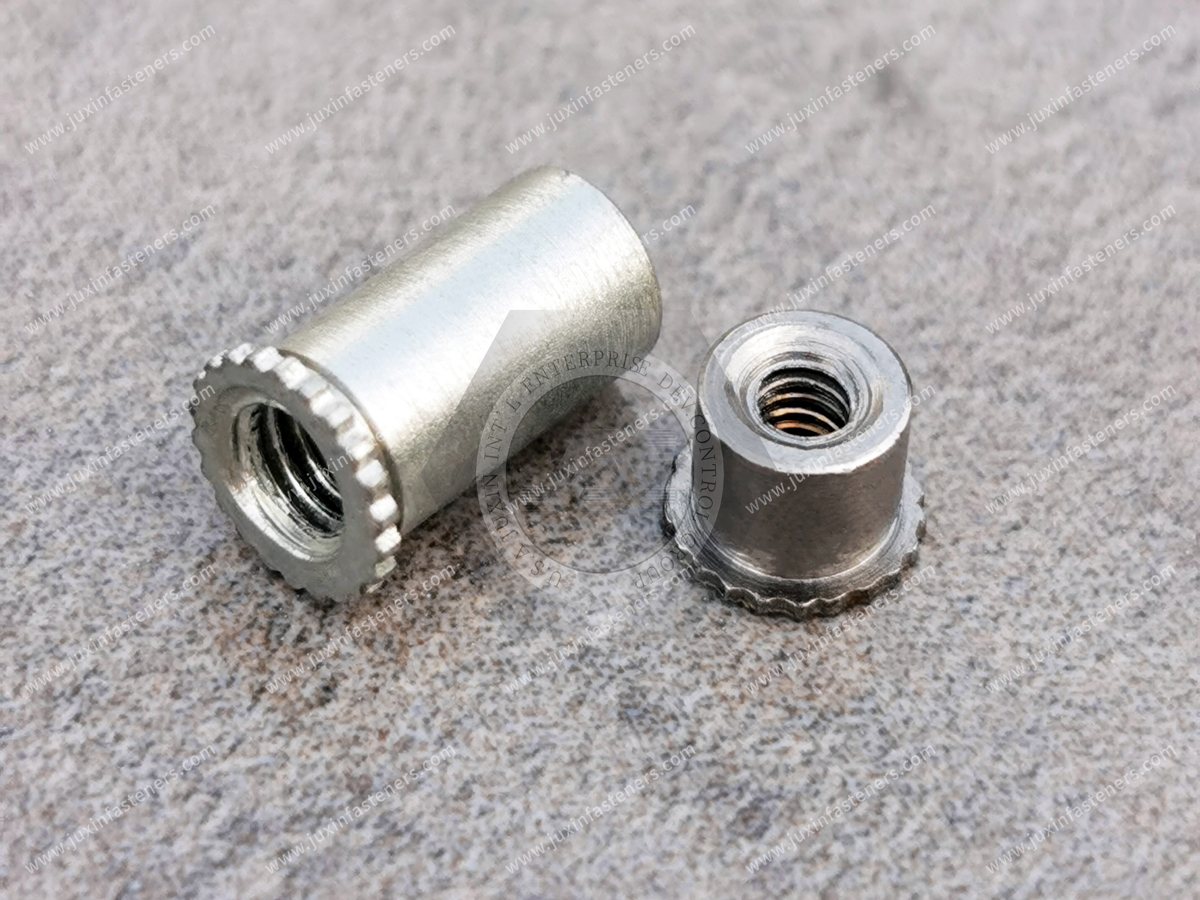
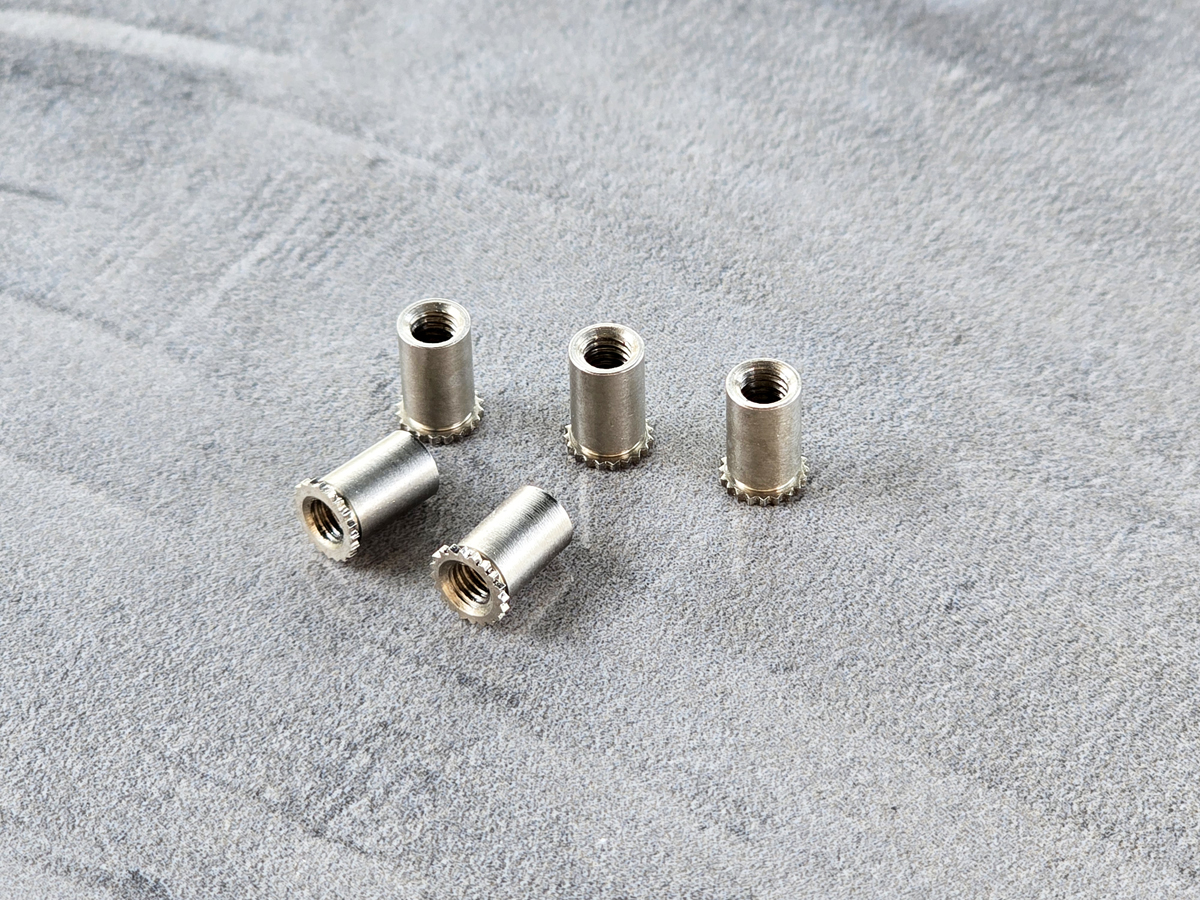
Product Pictures
Contact Us
Tel.:
+86 020 8621 0320
+86 020 3121 6067
E-mail:
Technical Support:
Navigation
SEND INQUIREY