Call Us
+86 136 6007 9809
Call Us
+86 136 6007 9809

Engineering Challenges in Special Vehicle Console Applications
Non-standard vehicle consoles are widely used in industrial, military, emergency, construction, and special-purpose vehicles. These systems require fastening solutions that maintain performance under harsh operating conditions.
Product Specification
Engineering Challenges in Special Vehicle Console Applications
Non-standard vehicle consoles are widely used in industrial, military, emergency, construction, and special-purpose vehicles. These systems require fastening solutions that maintain performance under harsh operating conditions.
Key challenges include:
Extremely limited installation space
High-frequency vibration during vehicle operation
Frequent adjustment and repeated torque loading
High positioning accuracy requirements (±0.02 mm)
Complex multi-module structural integration
Long service life under dynamic loads
Traditional fastening components often fail due to:
Loosening under vibration
Insufficient torque retention
Wear in adjustment interfaces
Poor repeatability in positioning
Assembly misalignment in compact structures
Thread Insert Nuts are designed to overcome these limitations by combining compact structural integration with high-precision mechanical locking performance.
Thread Insert Nuts Selection Strategy for Console Systems
A scientifically engineered fastening system is essential for ensuring long-term stability in operator console mechanisms.
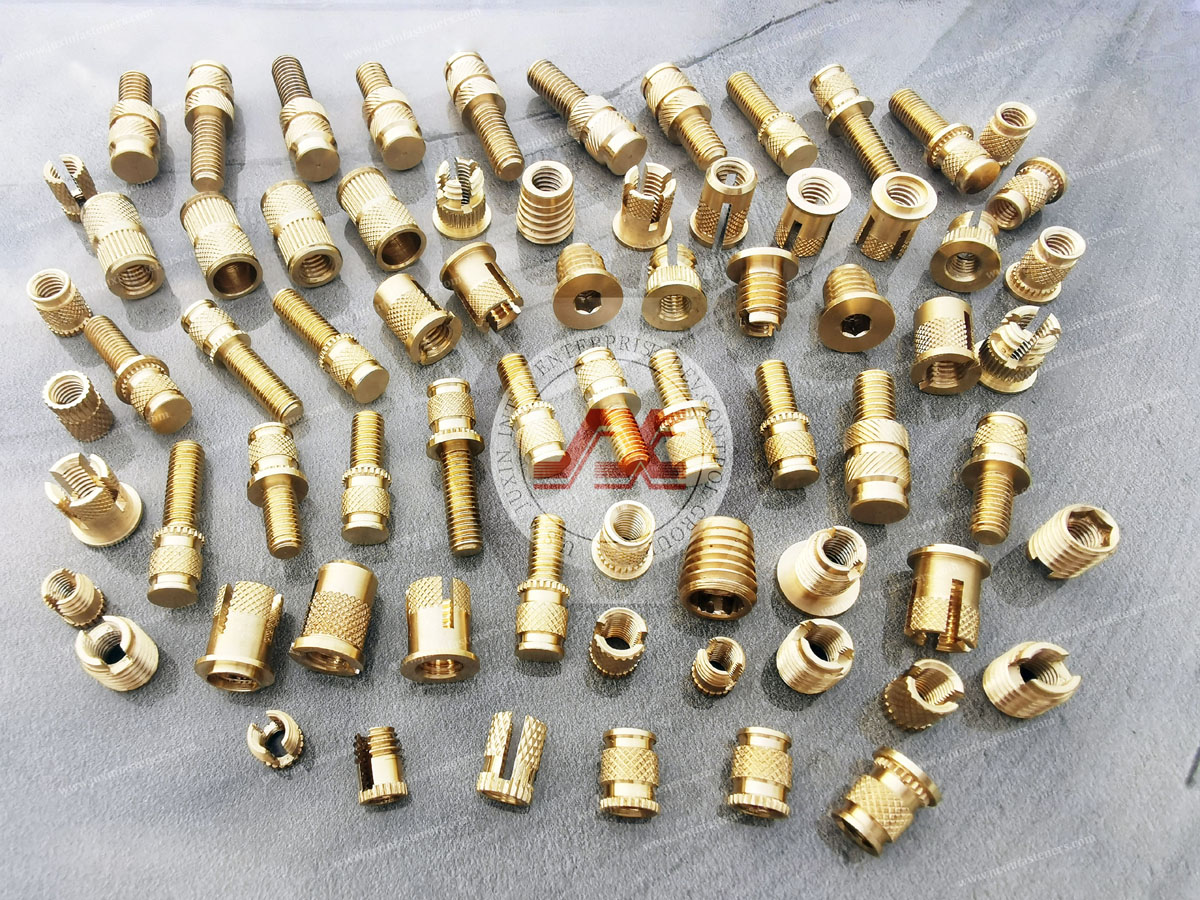
Precision Tooth Profile and Engagement Design
For high-performance console applications, Thread Insert Nuts typically adopt optimized tooth geometry to improve engagement stability and torque transmission.
Key design features include:
Involute or precision knurled tooth profiles
Optimized pressure angle (typically 30°)
High contact engagement ratio
Stable load distribution under vibration
These structural characteristics ensure smooth mechanical interaction during repeated adjustment cycles.
Compact Geometry for Space-Constrained Installations
Non-standard vehicle consoles require highly integrated fastening solutions due to limited internal space.
Recommended design parameters:
Compact outer diameter configuration
High-density tooth structure
Optimized module spacing for load distribution
Reduced axial installation footprint
This ensures Thread Insert Nuts can be integrated into tightly packed mechanical systems without compromising structural performance.
Precision Fit and Positioning Control
To meet high-accuracy console requirements, Thread Insert Nuts are designed with strict tolerance control systems.
Typical engineering standards include:
H7/h6 precision fit systems
ISO 4156 compatibility principles
Controlled clearance for smooth adjustment
Anti-backlash structural design
These tolerances ensure:
Reliable positioning accuracy
Smooth adjustment operation
Reduced mechanical play
Stable long-term assembly performance
Materials and Manufacturing Strategy for Thread Insert Nuts
The performance of Thread Insert Nuts in vehicle console systems depends heavily on material selection and advanced processing techniques.
High-Strength Alloy Structural Base
For dynamic load-bearing console systems, the base material is typically selected from:
42CrMo alloy structural steel
After quenching and tempering treatment, the material achieves:
Hardness: HRC 28–32
High impact resistance
Excellent fatigue strength
Stable dynamic load performance
This ensures structural reliability under continuous vibration and mechanical stress.
Surface Reinforcement for Wear Resistance
To improve durability in high-friction adjustment environments, surface reinforcement is critical.
A dual-material surface hardening strategy is commonly applied:
Case hardening using 20MnCr5 steel
Carburizing and quenching treatment
Hardened layer depth: 0.8–1.2 mm
Surface hardness: HRC 58–62
Benefits include:
High wear resistance
Improved anti-galling performance
Extended service life
Stable torque behavior under repeated use
Anti-Corrosion Surface Treatment
For harsh operating environments, Thread Insert Nuts require advanced protective coatings.
Typical treatment:
Manganese phosphate coating
Coating weight ≥ 15 g/m²
Performance advantages:
Improved corrosion resistance
Enhanced lubricant retention
Reduced surface friction
Increased environmental durability
Structural Optimization for Vehicle Console Applications
Nested Knurled Assembly Design
Advanced console systems often use a nested structural configuration combining:
Outer knurled shaft
Inner Thread Insert Nut
This design improves:
Load distribution efficiency
Assembly alignment stability
Vibration absorption capability
Structural rigidity of the console system
Elastic washers or flexible couplings further compensate for:
Assembly deviation
Angular misalignment (±3°)
Operational vibration
Anti-Loosening Engineering Design
To ensure long-term reliability, Thread Insert Nuts incorporate multi-layer anti-loosening strategies:
Friction-enhanced surface structures
Locking inserts (nylon or metal tabs)
Controlled preload management
Torque-angle assembly calibration
These measures ensure stable performance under continuous vibration and repeated adjustment cycles.
Lubrication System Optimization
Frequent adjustments in console systems require controlled lubrication to reduce wear.
Recommended solutions:
Micro-automatic lubrication systems
Periodic oil injection (0.2 ml / 2 hours recommended)
Polyurea-based grease (NLGI Grade 2)
Benefits:
Reduced friction coefficient
Prevention of dry wear
Improved adjustment smoothness
Extended maintenance intervals
Quality Control and Precision Inspection
Thread Insert Nuts for console systems require strict dimensional and geometric control to ensure batch consistency and assembly reliability.
Manufacturing Precision Standards
Cumulative pitch error ≤ 0.025 mm
Tooth direction tolerance ≤ 0.015 mm / 100 mm
High coaxiality control using CNC systems
Full-process traceability
Inspection Technologies
Advanced inspection systems include:
Coordinate Measuring Machine (CMM) inspection
3D geometric tolerance verification
Surface profile analysis
Batch consistency evaluation
Torque resistance testing
These systems ensure that every Thread Insert Nut meets strict engineering requirements for high-end vehicle applications.
Troubleshooting and Performance Optimization
Vibration Noise and Structural Deviation
Common issues such as abnormal noise during operation are addressed through:
Spectral vibration analysis
Tooth contact pattern inspection
Coaxiality recalibration (≤ 0.01 mm)
Optimized knurl profile adjustments
Locking Force Degradation
To prevent preload loss over time:
Enhanced anti-loosening structures
Periodic torque verification
Controlled maintenance scheduling
Improved lubrication management
Wear and Corrosion Protection
To ensure long-term reliability in harsh environments:
Improved phosphating quality
Regular cleaning protocols
Lubrication maintenance systems
Surface protection upgrades
Implementation Performance and Engineering Benefits
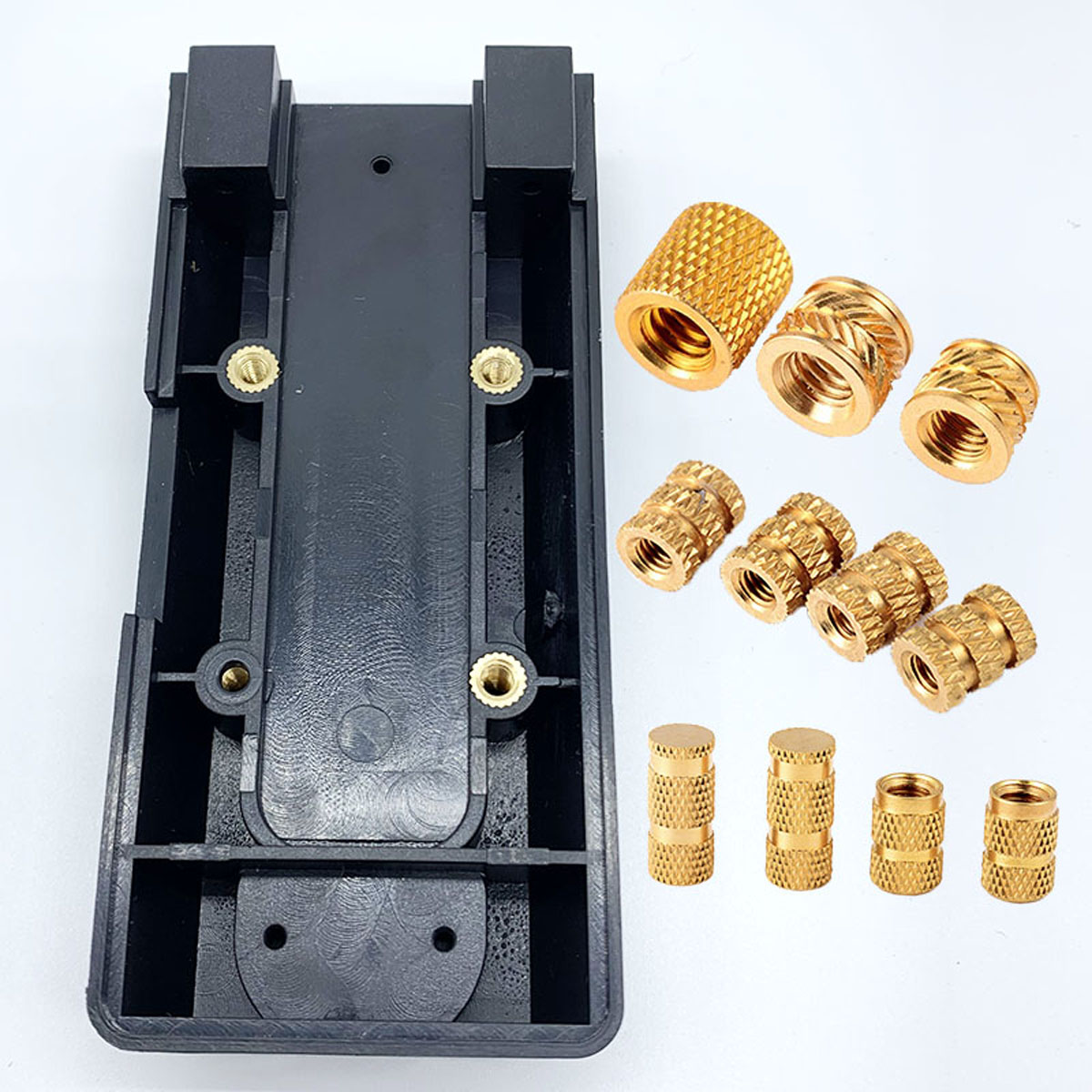
Through optimized design and precision manufacturing, Thread Insert Nuts significantly improve the performance of non-standard vehicle console systems.
Observed engineering benefits include:
Improved mechanical transmission efficiency
Increased structural rigidity
Enhanced positioning accuracy
Reduced adjustment cycle time
Extended system MTBF (Mean Time Between Failures)
Higher assembly consistency in production
These improvements provide a reliable engineering foundation for high-performance special vehicle console systems.
Custom Thread Insert Nut Manufacturing for Advanced Vehicle Systems
To meet the increasing complexity of modern special-purpose vehicle consoles, manufacturers must provide highly flexible customization capabilities.
Advanced manufacturing support includes:
Non-standard geometry customization
High-precision CNC machining
Custom knurl profile design
Material engineering optimization
Rapid prototyping and sampling
Small-batch and mass production capability
Conclusion
As non-standard specialized vehicle consoles continue evolving toward higher integration, precision control, and compact structural design, Thread Insert Nuts have become a critical fastening solution for ensuring system reliability and long-term performance.
By combining:
High-strength alloy materials
Precision machining technology
Optimized knurl structures
Advanced anti-loosening design
Strict quality control systems
Thread Insert Nuts provide a stable, repeatable, and high-precision fastening solution for modern vehicle console engineering applications, supporting the continuous development of advanced non-standard automotive systems.

Product Packaging
Packaging Standard
At Juxin Fasteners, we apply standardized export packaging to ensure product protection, traceability, and compliance with international logistics requirements.
1. Standard Export Packaging
Unless otherwise specified, all products will be packed according to our factory standard export packaging, which includes:
Moisture-resistant inner protection
Poly bag or small box packing as required
Reinforced export cartons
Clear labeling with part number, specification, batch number, and quantity
Palletizing for sea or air shipment when necessary
Our standard packaging is designed to ensure safe transportation, efficient warehousing, and long-distance international shipping.
2. Customized Packaging Options
We also provide customized packaging solutions according to customer requirements, including but not limited to:
Private labeling
Customized barcodes
Specific carton dimensions
Retail packaging
Special pallet configuration
Customer-specific marking and identification
So that you know, customized packaging may involve additional costs and extended lead time depending on the complexity of the requirements.
3. Compliance & Quality Assurance
All packaging processes are controlled under our ISO 9001 quality management system to ensure consistency, traceability, and product integrity throughout the supply chain.
Product Pictures
Hot Products
Contact Us
Tel.:
+86 020 8621 0320
+86 020 3121 6067
E-mail:
Technical Support:
Navigation
SEND INQUIREY