Call Us
+86 136 6007 9809
Call Us
+86 136 6007 9809

Electric vehicle (EV) battery systems combine battery cells, modules, enclosures, electrical protection components, structural supports and thermal-management systems into a highly integrated assembly.
As EV manufacturers increase battery energy density, charging speed and overall system efficiency, reliable mechanical fastening becomes increasingly important.
Product Specification
Electric vehicle (EV) battery systems combine battery cells, modules, enclosures, electrical protection components, structural supports and thermal-management systems into a highly integrated assembly.
As EV manufacturers increase battery energy density, charging speed and overall system efficiency, reliable mechanical fastening becomes increasingly important.
Fasteners used in EV battery assemblies must do more than simply hold components together.
They may need to provide secure threaded connections in lightweight materials, withstand repeated assembly and service, accommodate aluminum or composite structures,
and support the installation of cooling and thermal-management components.
JUXIN Fasteners provides industrial fastening and precision-machined components for EV battery systems, battery enclosures, thermal-management assemblies and related electrical components.
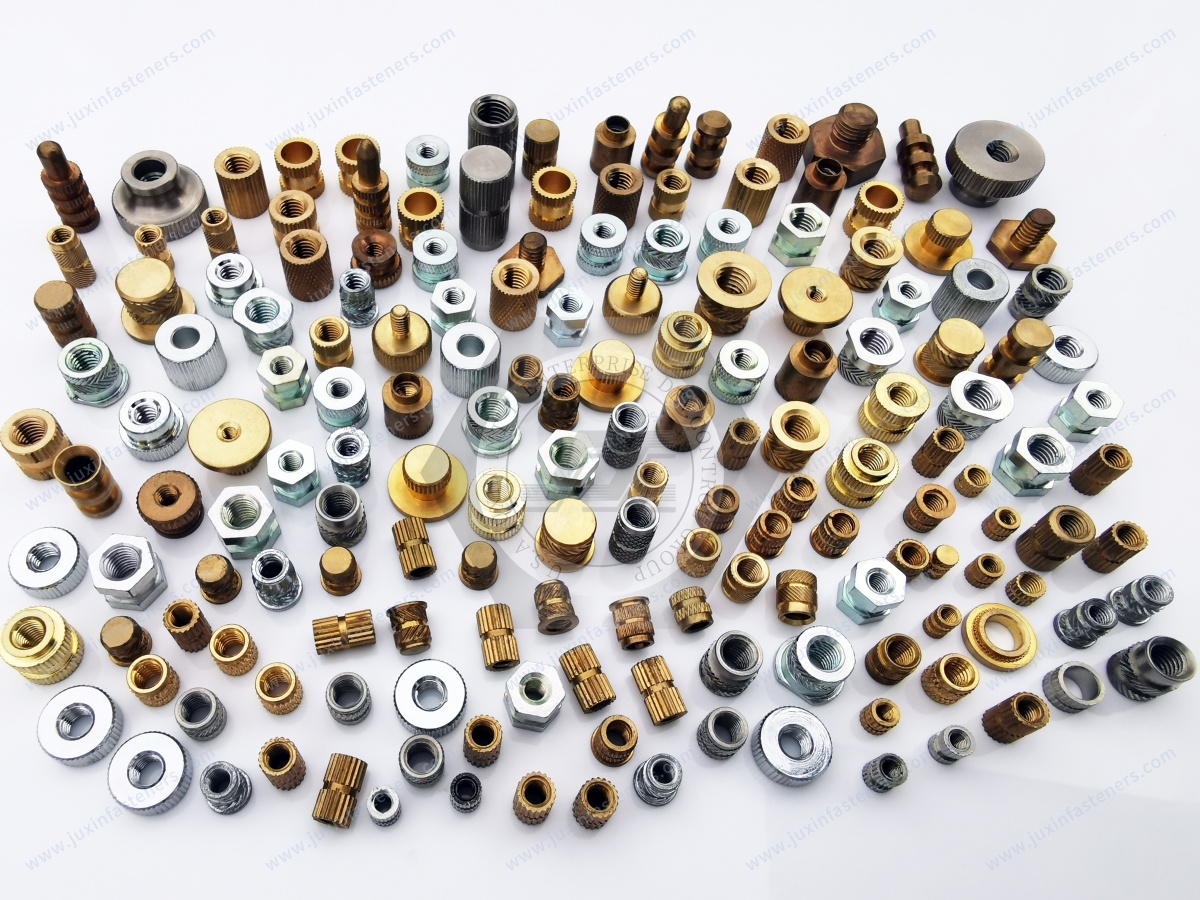
Our product range includes thread insert nuts, rivet nuts, self-clinching nuts, screws, stainless steel fasteners, locking nuts and CNC machined components for OEM and industrial applications.
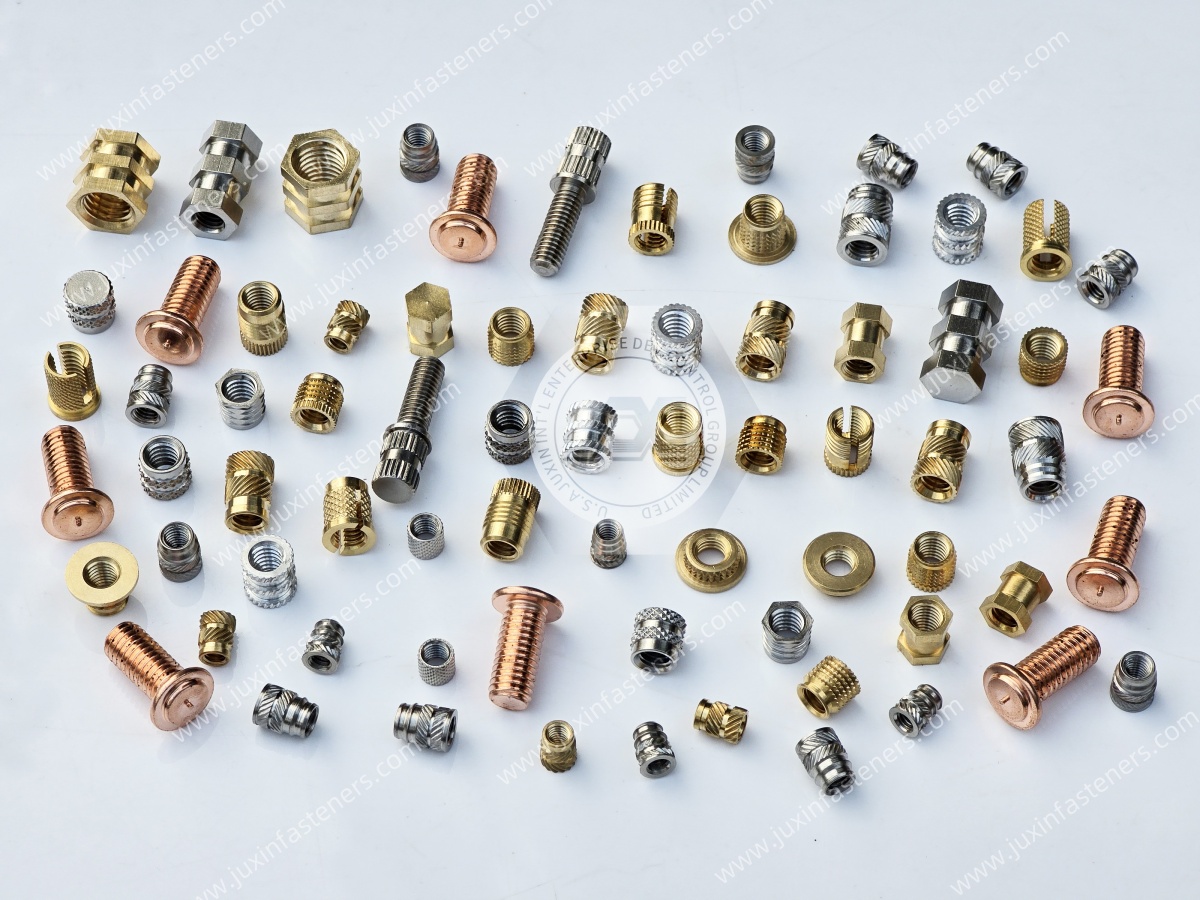
EV battery packs typically contain numerous components that require secure mechanical connections. Depending on the battery architecture and enclosure design, fastening solutions may be required for:
Battery enclosures and battery housings
Battery modules and module supports
Cooling plates and thermal plates
Cooling channels and thermal-management components
Heat sinks and thermal brackets
Internal battery supports
Battery junction box structures
Electrical covers and protective panels
Busbar and electrical-component supports
Serviceable battery components
Structural brackets and mounting assemblies
For engineering and procurement teams, the appropriate fastener depends on the substrate material, installation method, load requirements, corrosion environment, assembly frequency and available installation space.
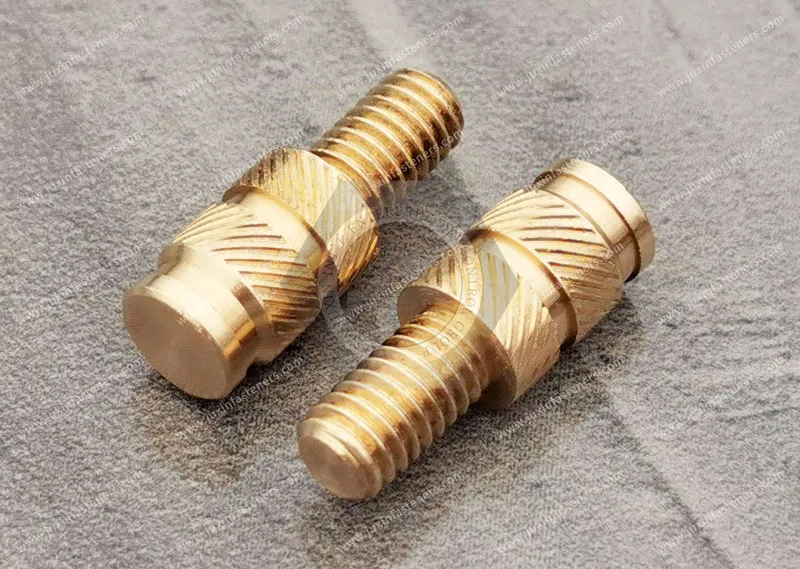
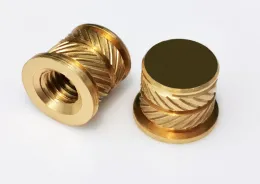
Thread insert nuts provide a durable internal thread in materials where a conventional tapped hole may not provide sufficient strength or service life.
They are particularly useful in EV battery components manufactured from aluminum, engineering plastics, composites and other lightweight materials.
By incorporating a metal threaded connection into a lightweight component, thread inserts can provide a more reliable fastening point for repeated assembly and maintenance.
Typical applications include battery covers, electronic housings, structural supports, thermal-management brackets and other components requiring a serviceable threaded connection.
Thread insert solutions are especially valuable when:
Repeated assembly and disassembly is required
Lightweight materials are used
The base material has limited thread strength
A durable metal thread is required
Space or component thickness limits conventional fastening methods
OEMs need consistent threaded mounting points
For EV battery engineering, selecting the correct insert design requires consideration of material thickness, hole geometry, installation method, thread specification and expected mechanical loads.
Rivet nuts, also known as blind rivet nuts or threaded rivet nuts, provide internal threads in thin sheet metal and other materials where access to the rear side of the component is limited.
This makes them suitable for EV battery enclosures, aluminum housings, sheet-metal covers, electrical cabinets and thermal-management brackets.
A major advantage of rivet nuts is that they can be installed from one accessible side of an assembly.
This can simplify battery enclosure manufacturing where the structure does not allow access to the backside.
Rivet nuts can be considered for applications requiring:
One-sided installation
Threaded connections in thin sheet material
Lightweight enclosure construction
Serviceable covers
Bracket attachment
Electrical component mounting
For high-volume EV production, fastener geometry and installation consistency are important considerations because fastening operations must integrate efficiently with the overall assembly process.
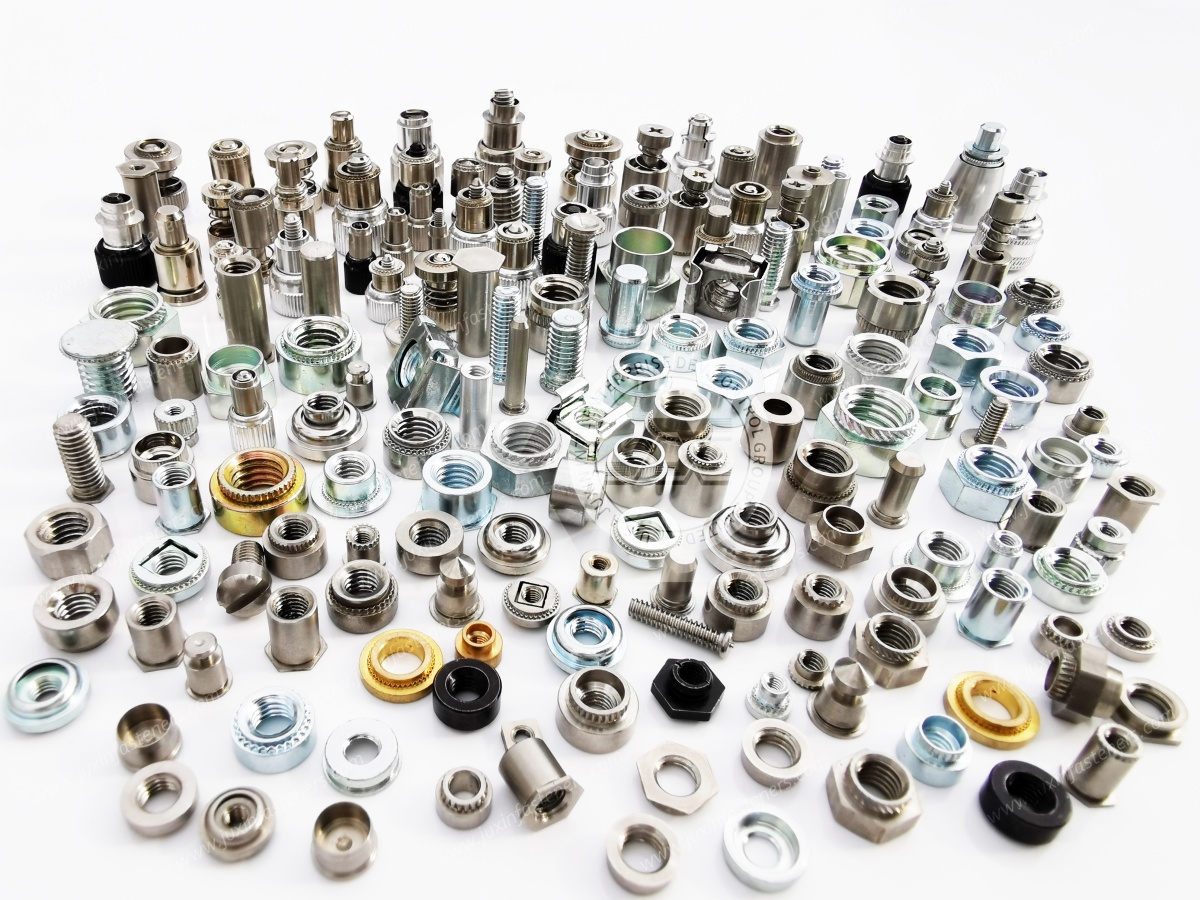
Self-clinching nuts provide permanent threaded fastening points in sheet-metal components.
During installation, the fastener is pressed into a properly prepared hole, creating a secure mechanical connection within the sheet.
Self-clinching fasteners can be used for battery enclosures, electrical covers, control boxes, brackets and other sheet-metal structures where a conventional nut may be difficult to install.
They are particularly suitable for designs where engineers want to eliminate loose nuts and simplify assembly.
Typical applications include:
Battery enclosure panels
Electrical control boxes
Battery management system housings
Protective covers
Sheet-metal brackets
Internal mounting structures
The correct self-clinching nut must be selected according to sheet thickness, material hardness, thread specification and installation requirements.
Thermal management is a critical part of modern EV battery architecture.
Battery cooling and heating systems may incorporate cooling plates, channels, heat sinks, pumps, brackets and associated components.
Mechanical fastening must maintain secure connections while accommodating the materials and operating conditions of the thermal-management assembly.
Thermal-management fasteners can be used to secure:
Battery cooling plates
Cooling channels
Heat sinks
Thermal brackets
Cooling-system supports
Pump assemblies
Thermal-management housings
Related sheet-metal components
For these applications, engineers may need to consider corrosion resistance, operating temperature, vibration, material compatibility and assembly requirements.
Where cooling components are manufactured from aluminum or other lightweight materials, suitable thread inserts, rivet nuts and specialized fastening solutions can help
create reliable attachment points without unnecessarily increasing component weight.
Stainless steel fasteners can provide corrosion-resistant fastening solutions for EV battery assemblies and associated thermal-management components.
Depending on the application, stainless steel screws, nuts and other fasteners may be considered for components exposed to moisture, condensation or demanding environmental conditions.
Material selection should be based on the complete application environment rather than corrosion resistance alone.
Engineers should evaluate mechanical requirements, galvanic compatibility, temperature, exposure conditions and the materials being joined.
JUXIN can support OEM requirements for stainless steel fasteners and other industrial fastening components according to specified dimensions, materials and technical requirements.
EV battery systems may experience vibration and repeated thermal cycling during vehicle operation.
In applications where maintaining joint integrity is important, locking nuts can provide additional resistance to unintended loosening.
Locking nuts may be used on:
Battery mounting structures
Thermal-management brackets
Electrical equipment supports
Internal battery assemblies
Automotive structural components
Equipment subjected to vibration
The appropriate locking solution depends on thread size, temperature, vibration level, installation method and service requirements.
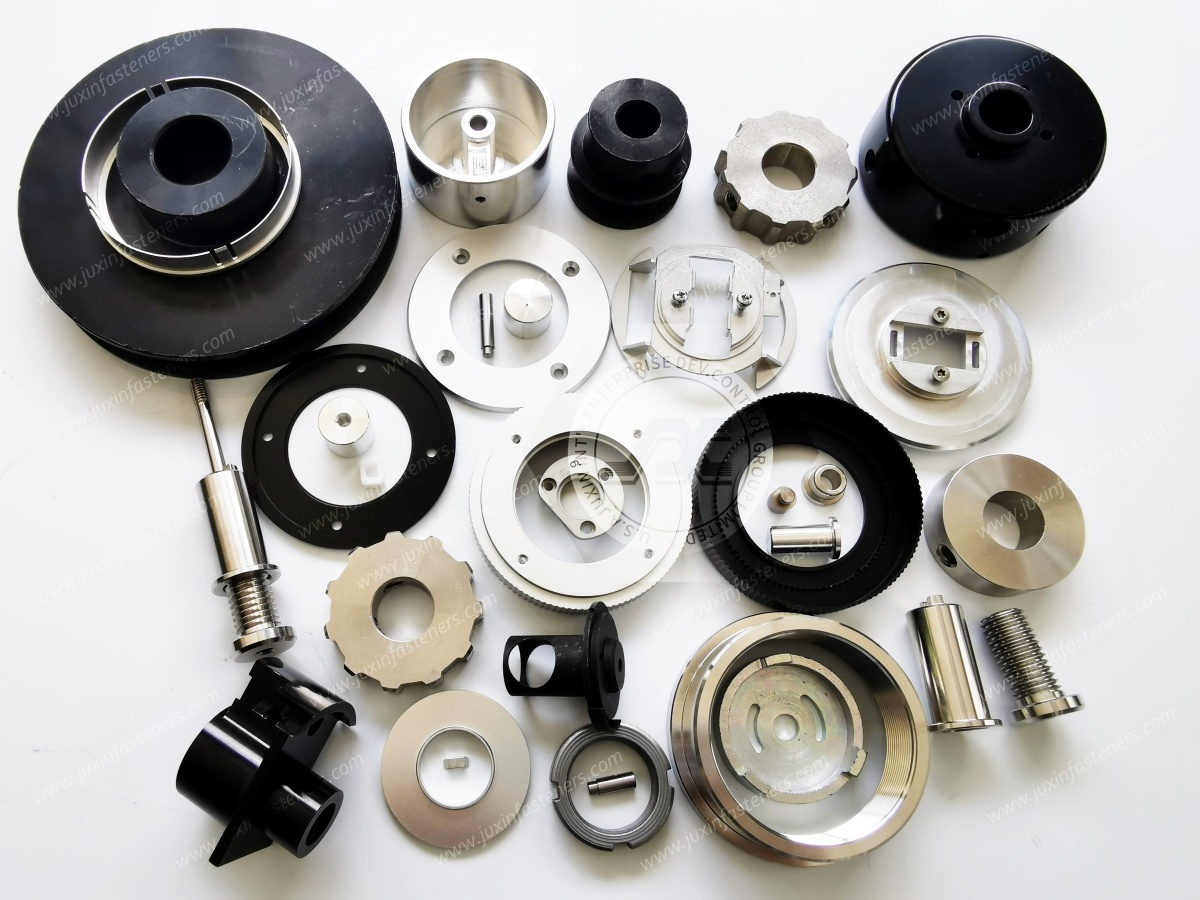
Not every battery-system connection can be solved with a standard fastener. EV battery assemblies often contain customized brackets, spacers, pins, shafts, bushings and other precision components.
CNC machined components can be manufactured to customer drawings and specific dimensional requirements for battery systems and thermal-management equipment.
Potential applications include:
Precision spacers
Mounting pins
Bushings
Customized brackets
Shafts and standoffs
Battery assembly components
Thermal-management hardware
Electrical equipment components
For OEM projects, CNC machining can complement standard fastening products and provide a complete mechanical component solution for specialized assemblies.
Selecting a fastener for an EV battery application should begin with the complete joint design rather than simply selecting a standard size.
Engineering and procurement teams should evaluate:
Determine whether the fastener will be installed into aluminum, steel, stainless steel, engineering plastic, composite material or another substrate.
Thin sheet metal and lightweight structures may require rivet nuts or self-clinching nuts rather than conventional tapped holes.
Consider the required thread size, engagement length, installation method and expected number of assembly cycles.
Battery systems can experience moisture, temperature variation, vibration and chemical exposure. Fastener material and surface treatment should be selected accordingly.
The fastening solution should be compatible with the customer's production process, tooling and available installation access.
If a battery cover or component may need to be removed during inspection or maintenance, a durable threaded connection can be preferable to a permanent fastening method.
JUXIN supplies industrial fasteners and precision components for OEM applications where engineering requirements, dimensional consistency and reliable production are important.
Our EV-related product solutions include:
Thread insert nuts
Rivet nuts
Self-clinching nuts
Screws
Stainless steel fasteners
Locking nuts
CNC machined components
Customized fastening components
We support applications across EV battery systems, battery enclosures, battery thermal management, electrical equipment, automotive electronics and industrial assemblies.
For customized components, customers can provide drawings, specifications, material requirements, surface-treatment requirements and annual usage estimates for engineering and quotation review.
For procurement teams, the right supplier must provide more than a catalog of standard fasteners.
Consistent dimensions, material control, surface treatment, production capability, quality inspection and reliable communication are important when fasteners become part of a production assembly.
JUXIN works with OEMs, manufacturers, engineering companies and industrial buyers requiring custom fasteners and precision components for EV and other demanding industrial applications.
If you are developing an EV battery enclosure, battery module, cooling system or thermal-management assembly, send us your drawing or fastener specification.
Our team can review the application and recommend a suitable manufacturing solution.
Email: info@juxinfasteners.com
JUXIN Fasteners — Industrial Fasteners and Custom Components for OEM Applications
Product Packaging
Packaging Standard
At Juxin Fasteners, we apply standardized export packaging to ensure product protection, traceability, and compliance with international logistics requirements.
1. Standard Export Packaging
Unless otherwise specified, all products will be packed according to our factory standard export packaging, which includes:
Moisture-resistant inner protection
Poly bag or small box packing as required
Reinforced export cartons
Clear labeling with part number, specification, batch number, and quantity
Palletizing for sea or air shipment when necessary
Our standard packaging is designed to ensure safe transportation, efficient warehousing, and long-distance international shipping.
2. Customized Packaging Options
We also provide customized packaging solutions according to customer requirements, including but not limited to:
Private labeling
Customized barcodes
Specific carton dimensions
Retail packaging
Special pallet configuration
Customer-specific marking and identification
So that you know, customized packaging may involve additional costs and extended lead time depending on the complexity of the requirements.
3. Compliance & Quality Assurance
All packaging processes are controlled under our ISO 9001 quality management system to ensure consistency, traceability, and product integrity throughout the supply chain.
Product Pictures

Contact Us
Tel.:
+86 020 8621 0320
+86 020 3121 6067
E-mail:
Technical Support:
Navigation
SEND INQUIREY