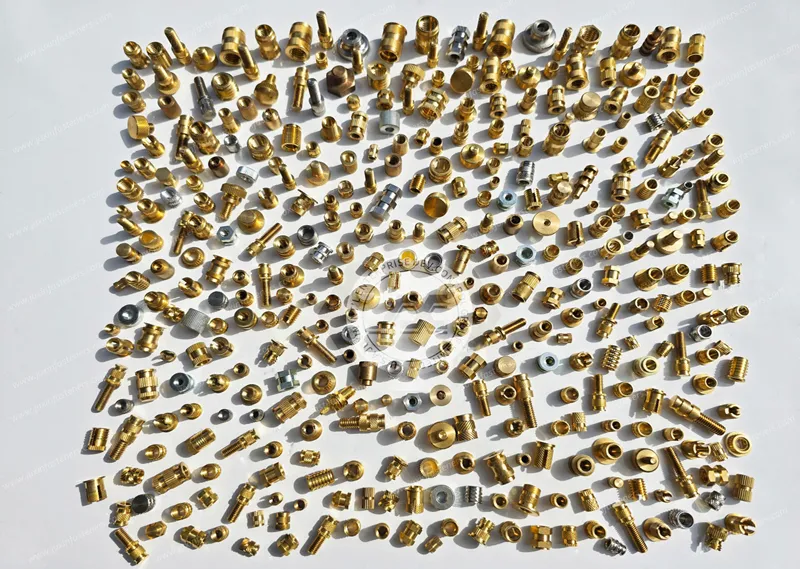
Call Us
+86 136 6007 9809
Call Us
+86 136 6007 9809

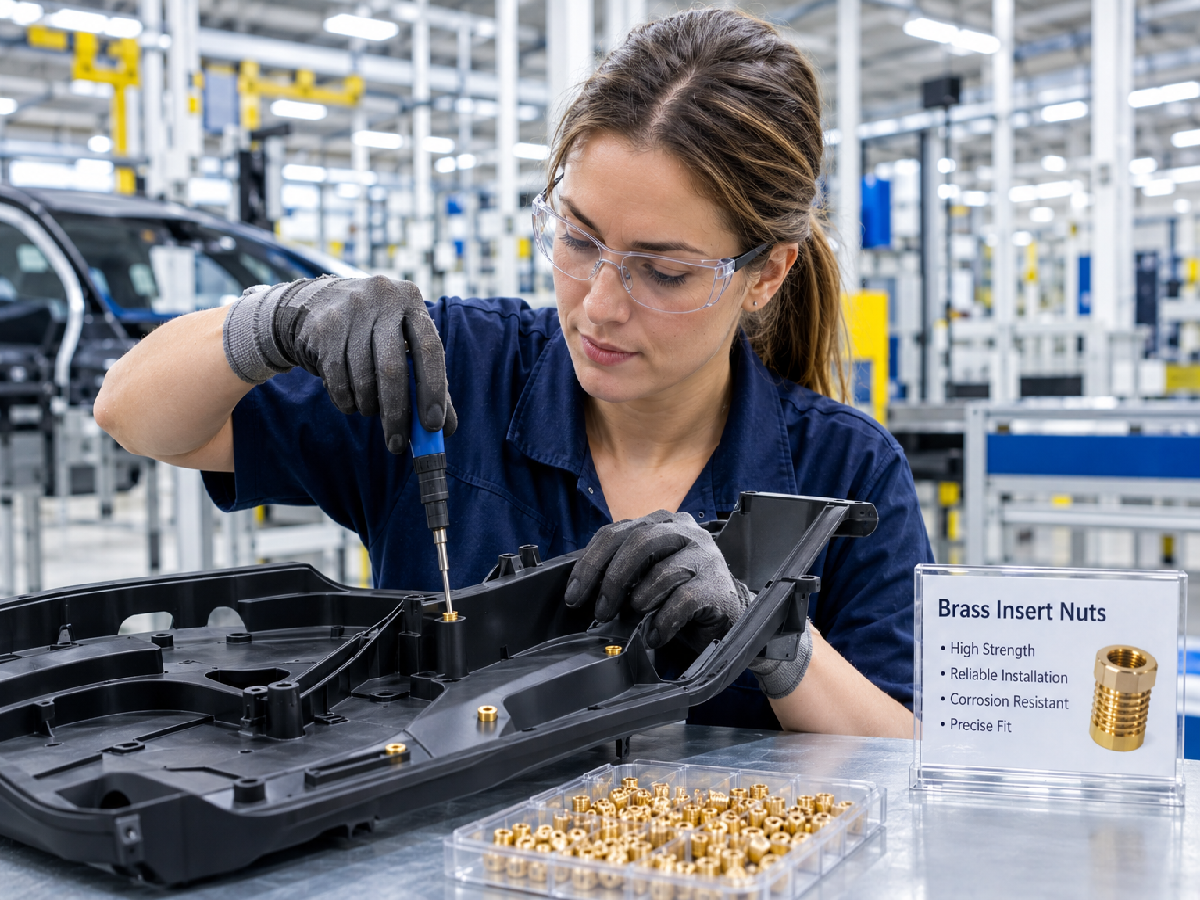
Injection-molded thermoplastic components often require durable metal threads for screws, bolts, brackets, covers, and serviceable assemblies.
Product Specification
Injection-molded thermoplastic components often require durable metal threads for screws, bolts, brackets, covers, and serviceable assemblies.
When a plastic housing needs a reusable threaded connection, brass threaded inserts, stainless steel inserts, or other metal inserts can be installed into molded plastic bosses after molding.
Two of the most widely used post-mold installation methods are heat staking and ultrasonic insertion.
But which method is better?
There is no universal answer.
The correct installation method depends on the plastic resin, boss geometry, insert design, wall thickness, required mechanical performance, production volume, automation requirements, and assembly cost.
For OEM mechanical design engineers, manufacturing engineers, sourcing managers, and procurement teams, understanding the difference between heat staking inserts and ultrasonic threaded inserts helps prevent insert retention problems and improves production efficiency.
JUXIN Fasteners supplies engineered brass inserts for thermoplastics, stainless steel threaded inserts, aluminum inserts, and custom plastic threaded inserts designed for heat staking and ultrasonic installation.
Both processes create a mechanical connection between a metal insert and a thermoplastic component, but they use different energy sources.
Heat staking uses controlled thermal energy to soften the surrounding plastic before the insert is pressed into position.
Ultrasonic insertion uses high-frequency mechanical vibration to generate localized heat at the metal-to-plastic interface.
The resulting joint depends not only on the installation machine but also on the external geometry of the insert.
Knurling, grooves, undercuts, flange geometry, pilot design, outside diameter, and insertion depth all affect how the molten or softened polymer flows around the insert.
Therefore, the installation process and insert geometry should be engineered together.
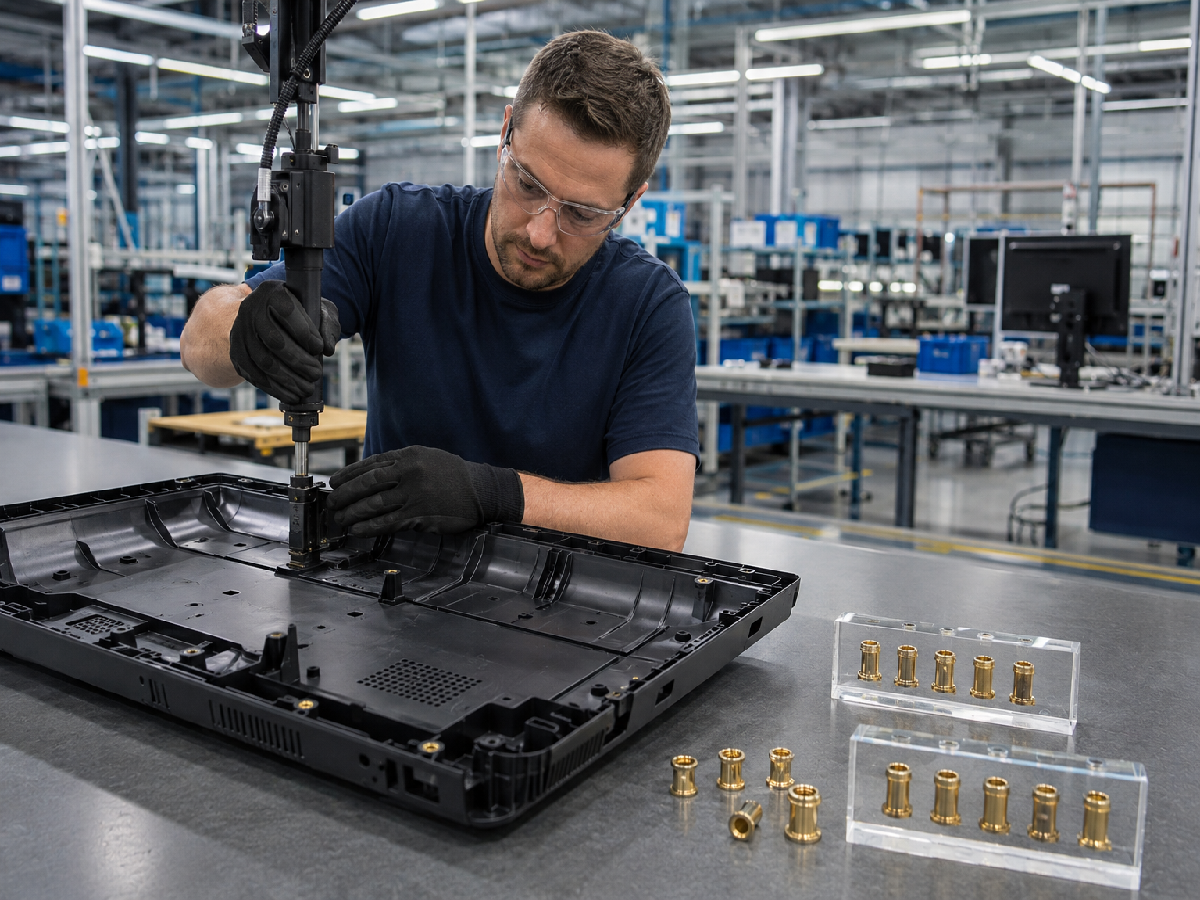
Heat staking, also called thermal insertion or heat-set insertion, uses a heated tool to transfer controlled heat into the threaded insert and surrounding thermoplastic.
A typical process is:
The metal threaded insert is positioned above the molded plastic boss.
A heated probe contacts the insert.
Heat transfers through the metal insert to the surrounding thermoplastic.
The polymer softens or melts around the external retention profile.
Controlled downward force pushes the insert into the prepared hole.
The softened resin flows around the knurls, grooves, or undercuts.
The heating tool retracts.
The polymer cools and solidifies around the insert.
The resulting mechanical interface provides resistance to rotation and axial withdrawal.
Position Insert → Apply Heat → Plastic Softens → Insert Is Pressed → Resin Flows Around Knurls → Cool & Solidify
The process parameters must be controlled carefully.
Important variables include:
Heating temperature
Heating time
Insertion speed
Insertion force
Hole diameter
Insert geometry
Plastic resin
Boss dimensions
Cooling time
An optimized process can produce a strong and repeatable connection without damaging the surrounding plastic component.
Heat staking can be used with many thermoplastic materials, including:
ABS
Polycarbonate (PC)
PC/ABS
Nylon / PA
PA66
Glass-filled Nylon
PBT
PEEK
Other engineering thermoplastics
The actual process parameters must be developed according to the resin grade and component geometry.
Because the plastic is softened through controlled thermal energy, the resin can flow around external knurls and retention features.
This can provide strong resistance to:
Pull-out
Rotation
Torque-out
Vibration-induced loosening
One major advantage for complex plastic housings is the ability to use multi-tip thermal tooling.
Multiple heat staking inserts can potentially be installed during the same machine cycle.
This can be particularly useful when a housing contains several threaded mounting points.
Heat staking can be advantageous when the plastic component contains sensitive areas where excessive localized vibration could create unwanted stress.
However, the final process must always be validated on the actual resin and component design.
Ultrasonic insertion uses high-frequency mechanical vibration delivered through an ultrasonic horn or sonotrode.
A typical process is:
The threaded insert is aligned with the molded boss.
The ultrasonic horn contacts the insert.
High-frequency vibration is transmitted into the metal insert.
Friction and mechanical energy generate localized heat at the insert-plastic interface.
The thermoplastic softens around the external knurls or grooves.
Controlled insertion force pushes the insert into the boss.
Ultrasonic energy stops.
The softened polymer rapidly solidifies around the insert.
Position Insert → Apply Ultrasonic Energy → Localized Polymer Softening → Insert Installation → Energy Stops → Rapid Solidification
The process is highly dependent on machine settings and insert geometry.
Typical parameters include:
Frequency
Amplitude
Trigger force
Insertion force
Hold time
Energy
Insertion depth
Ultrasonic equipment commonly operates at high frequencies, with industrial systems often using frequencies such as 20 kHz, 30 kHz, or 40 kHz depending on the equipment and application.
Ultrasonic insertion can provide very short cycle times, making it attractive for high-volume production.
For automated applications, rapid insertion can improve overall production throughput.
Unlike thermal insertion, ultrasonic energy can concentrate heating near the metal-to-plastic interface.
This can reduce the amount of surrounding plastic exposed to elevated temperature.
This characteristic can be useful for:
Thin-wall housings
Electronic enclosures
Compact plastic components
High-volume automated assemblies
Ultrasonic insertion can be integrated into automated production systems, including:
Robotic assembly cells
Automatic feeding systems
Rotary indexing machines
Multi-station assembly lines
For OEM programs with high annual volumes, automation can be an important factor in selecting the installation method.
The following comparison provides a practical starting point for OEM engineering and sourcing decisions.
| Engineering Factor | Heat Staking | Ultrasonic Insertion |
|---|---|---|
| Energy source | Conductive thermal energy | High-frequency mechanical vibration |
| Heating mechanism | Heated tool transfers heat through insert | Localized friction and vibration generate heat |
| Thermal affected area | Generally broader | Generally more localized |
| Installation speed | Moderate to fast | Fast |
| Automation | Highly suitable | Highly suitable |
| Multi-insert installation | Excellent with multi-tip tooling | Possible with specialized multi-head systems |
| Thin-wall plastic | Often suitable with optimized tooling | Requires careful amplitude and boss design |
| Amorphous thermoplastics | Generally suitable | Generally suitable with process optimization |
| Semi-crystalline thermoplastics | Generally suitable | Generally suitable with process optimization |
| Glass-filled plastics | Requires suitable insert geometry and process control | Requires careful consideration of filler and knurl interaction |
| Equipment investment | Typically lower to moderate | Typically moderate to higher |
| Heat concentration | More distributed | More localized |
| Process optimization | Temperature, time, force | Amplitude, energy, force, time |
| Production scalability | Excellent | Excellent |
The table should be treated as an engineering comparison rather than a universal performance guarantee.
Actual torque-out and pull-out performance must be validated using the specific insert, plastic resin, boss geometry, and installation parameters.
The correct question is not simply:
“Is heat staking better than ultrasonic insertion?”
A better engineering question is:
“Which installation method provides the required joint performance and production efficiency for this specific plastic assembly?”
Several variables should be evaluated.
The polymer is one of the most important variables.
Different plastics have different:
Melting or softening temperatures
Viscosity
Shrinkage characteristics
Stiffness
Brittleness
Thermal conductivity
Glass-fiber content
Common engineering plastics include:
ABS
PC
PC/ABS
PA6
PA66
PA66-GF30
PBT
PEEK
A process that performs well in one resin may require different parameters in another.
For this reason, the insert manufacturer should know the actual resin grade rather than only the general material family.
The plastic boss surrounding the insert must have sufficient material to support the required mechanical load.
Important dimensions include:
Boss outside diameter
Hole diameter
Boss wall thickness
Hole depth
Insert length
Distance to adjacent walls
Distance to ribs
Chamfer
Draft angle
If the boss is too thin, excessive installation force can cause cracking or deformation.
If the hole is too large, retention may be insufficient.
If the hole is too small, installation force may become excessive.
The insert and boss should therefore be designed as a complete joint.
OEM applications may have different performance requirements.
For example:
A decorative plastic cover may require only moderate retention.
An automotive electronic housing may require higher resistance to vibration and repeated screw tightening.
An industrial component may require high torque-out resistance and repeated serviceability.
Relevant performance requirements may include:
Torque-out resistance
Pull-out force
Push-out force
Installation force
Screw tightening torque
Repeated assembly cycles
Temperature cycling
Vibration resistance
The correct insert geometry should be selected according to the required performance.
Production volume can significantly influence the economics of the installation process.
For lower-volume production, a relatively simple thermal installation system may provide a practical solution.
For high-volume OEM production, both thermal and ultrasonic systems can be automated.
Ultrasonic insertion may be particularly attractive when individual inserts need to be installed rapidly.
Heat staking can be highly efficient when several inserts can be installed simultaneously using multi-tip tooling.
Therefore, cycle time should be evaluated at the complete assembly level, rather than comparing the insertion time of a single insert only.
The installation method is only one part of the system.
The external geometry of the insert determines how the plastic interacts with the metal.
Diamond or diagonal knurling can increase resistance to rotational movement by creating mechanical interlocking between the insert and polymer.
Annular grooves can increase axial retention by providing additional areas for softened plastic to flow into.
Helical profiles can provide a controlled mechanical interface between the insert and surrounding polymer.
Undercuts can provide additional mechanical anchoring where higher pull-out resistance is required.
A flange can increase the load-bearing area and help resist pull-through where the plastic component is subjected to axial loading.
A tapered pilot can improve alignment and help control the initial insertion process.
This is particularly important in automated assembly.
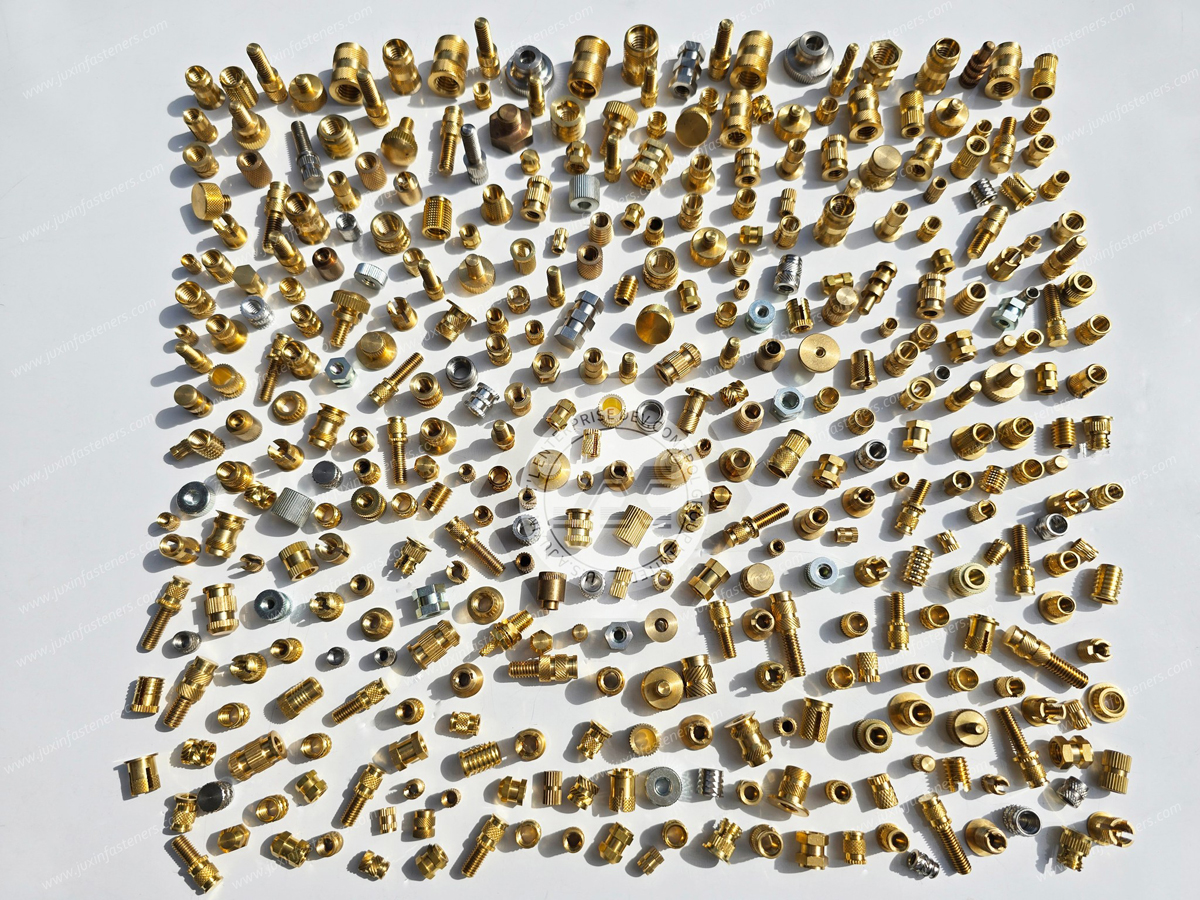
Brass is one of the most widely used materials for plastic threaded inserts.
Brass inserts for thermoplastics offer a useful combination of:
Machinability
Thread accuracy
Electrical conductivity
Thermal conductivity
Compatibility with heat installation
Cost efficiency
Custom brass inserts for plastic components can be manufactured with application-specific external profiles and internal thread specifications.
Common applications include:
Electronic housings
Electrical enclosures
Sensors
Control modules
Consumer electronics
Automotive components
Industrial equipment
Appliance housings
Depending on the application, brass grades such as C36000 or equivalent materials may be specified.
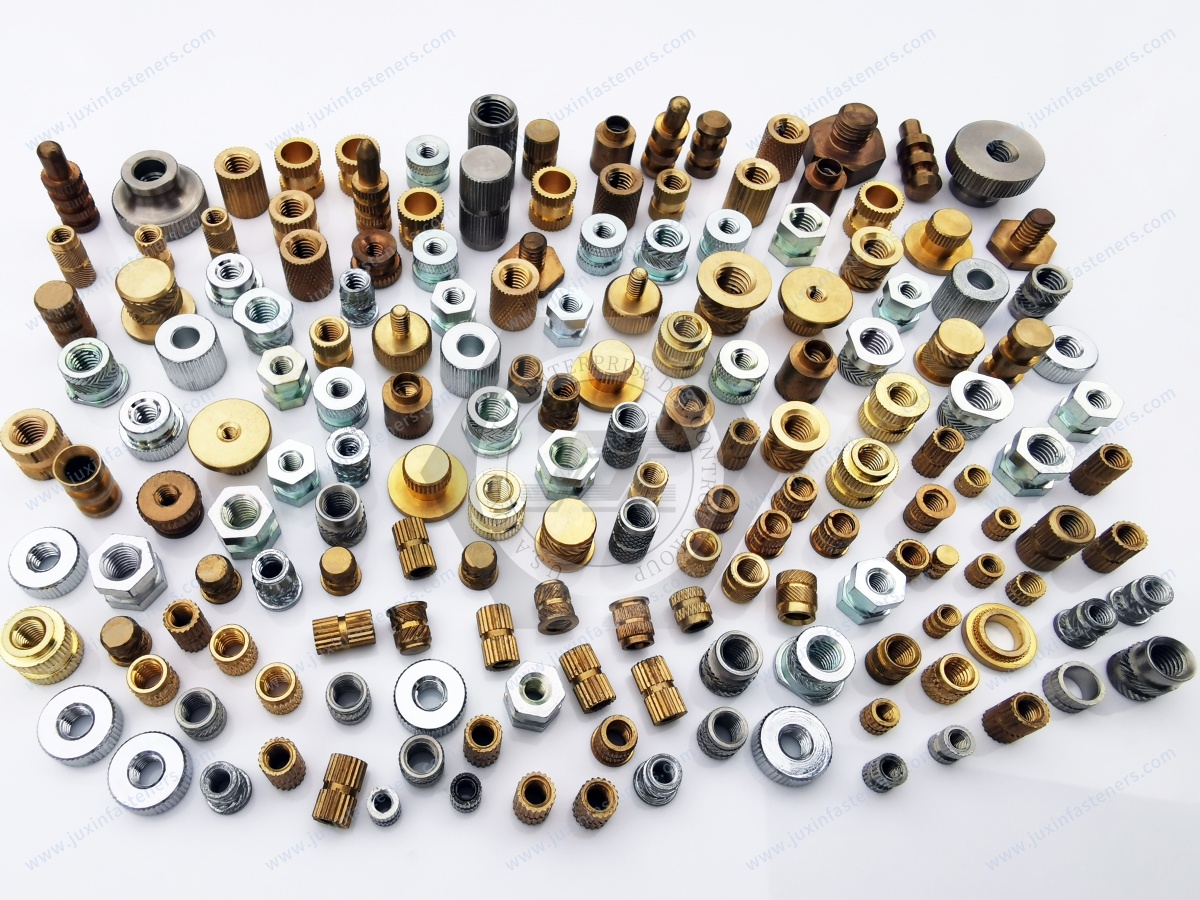
Where higher corrosion resistance or mechanical strength is required, stainless steel can be considered.
Common grades include:
SS303
SS304
SS316
Stainless steel threaded inserts may be suitable for:
Medical equipment
Laboratory instruments
Industrial machinery
Outdoor electronic equipment
Automotive components
Chemical-exposure environments
High-temperature applications
Surface treatment and material selection should be specified according to the final application requirements.
Automotive and EV components increasingly use engineered plastic housings to reduce weight and integrate electrical functions.
Potential insert applications include:
Battery management system housings
EV electronic modules
Power electronics housings
Thermal management components
Sensor housings
Interior trim
Control modules
For these applications, the insert design may need to account for vibration, temperature cycling, chemical exposure, and repeated assembly.
Plastic electronic housings often require compact, reliable metal threads.
Applications include:
Electronic control housings
PCB assemblies
Sensor modules
Electrical enclosures
Instrument housings
Network equipment
Fiber optic equipment
Control modules
Small brass ultrasonic inserts for plastic or heat-installed inserts can provide durable internal threads without requiring a metal housing.
Medical and laboratory equipment can require corrosion-resistant threaded connections and stable mechanical performance.
Potential applications include:
Diagnostic equipment
Patient monitoring equipment
Laboratory instruments
Medical device housings
Fluid handling equipment
Portable medical electronics
Stainless steel inserts can be considered when corrosion resistance and chemical exposure are important factors.
Industrial automation equipment frequently uses plastic covers, sensor housings, control modules, and protective structures.
Applications include:
Robotic equipment
PLC housings
Sensor junction boxes
Machine control panels
Industrial enclosures
End-effectors
Machine guards
For vibration-sensitive equipment, insert retention and boss design should be validated under the actual operating conditions.
HVAC and appliance components can combine plastic housings with electrical and mechanical assemblies.
Potential applications include:
Control boxes
Sensor housings
Air handling components
Appliance control modules
Compressor control components
Smart home devices
Material and installation process selection should consider temperature variation, humidity, vibration, and expected service life.
For procurement managers and sourcing engineers, providing complete application information can significantly shorten the development cycle.
A professional RFQ package should ideally include the following.
Provide a fully dimensioned 2D drawing showing:
Thread specification
Outside diameter
Overall length
Thread depth
Knurl profile
Flange dimensions
Pilot dimensions
Tolerances
Material
Surface finish
A STEP or IGES file helps the supplier understand the complete insert geometry and manufacturing requirements.
The plastic component drawing should include the boss and installation hole dimensions.
This information is particularly important for custom threaded inserts for plastic.
Specify the exact resin grade whenever possible.
For example:
ABS
PC
PC/ABS
PA66
PA66-GF30
PBT
PEEK
Clearly specify whether the intended installation method is:
Heat staking
Ultrasonic insertion
Press fitting
Molded-in installation
Where available, provide target values for:
Torque-out resistance
Pull-out force
Installation force
Screw torque
Temperature resistance
Vibration requirements
Include:
Prototype quantity
Initial order quantity
Annual estimated usage
Production forecast
Required delivery schedule
Packaging requirements
This information helps the supplier evaluate the appropriate manufacturing and supply strategy.
Before approving a supplier, mechanical and sourcing teams should evaluate more than unit price.
Ask:
The supplier should be able to manufacture the required knurling, grooves, undercuts, flange, and pilot geometry.
For custom projects, the ability to interpret 2D drawings and 3D CAD data is essential.
A capable supplier should understand the relationship between the insert, plastic resin, boss design, and installation method.
The supplier should be capable of supporting the complete development cycle from samples to volume production.
Depending on project requirements, documentation may include:
Dimensional inspection reports
Material certificates
Surface treatment documentation
RoHS documentation
REACH documentation
First Article Inspection
PPAP documentation where required
JUXIN Fasteners provides engineered threaded insert solutions for OEM plastic components and industrial assemblies.
Our product range includes:
Custom brass threaded inserts
Stainless steel threaded inserts
Aluminum threaded inserts
Heat staking inserts
Ultrasonic threaded inserts
Custom threaded bushings
Custom insert nuts
Plastic threaded inserts
Engineered threaded fasteners
We support applications where standard catalog inserts cannot meet the required dimensions, installation method, material, or mechanical performance.
JUXIN Fasteners can review:
2D engineering drawings
3D CAD files
Plastic component drawings
Resin specifications
Installation processes
Mechanical requirements
Production forecasts
The objective is to develop an insert that is compatible with the customer's complete assembly process.
Depending on part design and production requirements, manufacturing can utilize precision machining and appropriate production processes.
Inspection can include:
Dimensional inspection
Thread inspection
Optical inspection
Thread plug gauges
Visual inspection
Functional testing
Torque testing
Pull-out testing
For OEM projects, inspection and documentation requirements can be agreed during the quotation and development stage.
Neither heat staking nor ultrasonic insertion should be considered universally superior.
Heat staking can be an excellent choice when controlled thermal insertion, multi-insert tooling, and gradual polymer softening are important.
Ultrasonic insertion can be attractive when rapid localized heating, short cycle times, and automated high-volume production are priorities.
The final decision should consider:
Plastic resin
Glass-fiber content
Boss geometry
Insert geometry
Wall thickness
Required torque-out resistance
Required pull-out force
Installation force
Production volume
Automation requirements
Equipment investment
Total assembly cost
Most importantly, the insert geometry should be developed together with the installation process and plastic component design.
If you are developing an injection-molded plastic component and need a reliable threaded connection, JUXIN Fasteners can support the development of custom inserts for heat staking or ultrasonic installation.
For a technical quotation, please provide:
2D engineering drawing
3D CAD model if available
Plastic resin and grade
Boss and hole dimensions
Installation method
Required insert material
Surface treatment
Mechanical requirements
Estimated annual quantity
Our team can review the application and provide a manufacturing and sourcing solution based on your OEM requirements.
Email: info@juxinfasteners.com
Website: www.juxinfasteners.com
For related applications, explore our solutions for:
Custom Threaded Inserts
Plastic Threaded Inserts
Brass Threaded Inserts
Threaded Inserts for Automotive Components
Threaded Inserts for Electronics
Threaded Inserts for Medical Equipment
Heat-Set Inserts
Ultrasonic Inserts
Custom Threaded Bushings
JUXIN Fasteners supports global OEM customers with application-specific threaded inserts designed for reliable plastic-to-metal fastening, efficient assembly, and scalable production.
Product Packaging
Packaging Standard
At Juxin Fasteners, we apply standardized export packaging to ensure product protection, traceability, and compliance with international logistics requirements.
1. Standard Export Packaging
Unless otherwise specified, all products will be packed according to our factory standard export packaging, which includes:
Moisture-resistant inner protection
Poly bag or small box packing as required
Reinforced export cartons
Clear labeling with part number, specification, batch number, and quantity
Palletizing for sea or air shipment when necessary
Our standard packaging is designed to ensure safe transportation, efficient warehousing, and long-distance international shipping.
2. Customized Packaging Options
We also provide customized packaging solutions according to customer requirements, including but not limited to:
Private labeling
Customized barcodes
Specific carton dimensions
Retail packaging
Special pallet configuration
Customer-specific marking and identification
So that you know, customized packaging may involve additional costs and extended lead time depending on the complexity of the requirements.
3. Compliance & Quality Assurance
All packaging processes are controlled under our ISO 9001 quality management system to ensure consistency, traceability, and product integrity throughout the supply chain.
Product Pictures
Hot Products
Thread Insert Nuts for Plastics: Design, Installation, and Industrial Applications
Threaded Inserts for Telecom Cabinets and Equipment | JUXIN Fasteners
Threaded Inserts for Electronic Enclosures and Plastic Housings | JUXIN Fasteners
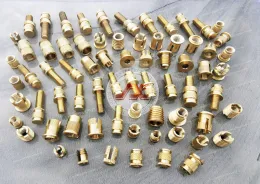
Industrial Threaded Inserts for Machinery & Automation | JUXIN Fasteners
Contact Us
Tel.:
+86 020 8621 0320
+86 020 3121 6067
E-mail:
Technical Support:
Navigation
SEND INQUIREY