Call Us
+86 136 6007 9809
Call Us
+86 136 6007 9809

Electronic products increasingly rely on plastic housings to achieve electrical insulation, lightweight construction, design flexibility, and cost-efficient manufacturing. However, plastic alone may not provide the durable internal threads required for repeated assembly, cover attachment, PCB mounting, or component fastening.
Product Specification
Electronic products increasingly rely on plastic housings to achieve electrical insulation, lightweight construction, design flexibility, and cost-efficient manufacturing.
However, plastic alone may not provide the durable internal threads required for repeated assembly, cover attachment, PCB mounting, or component fastening.
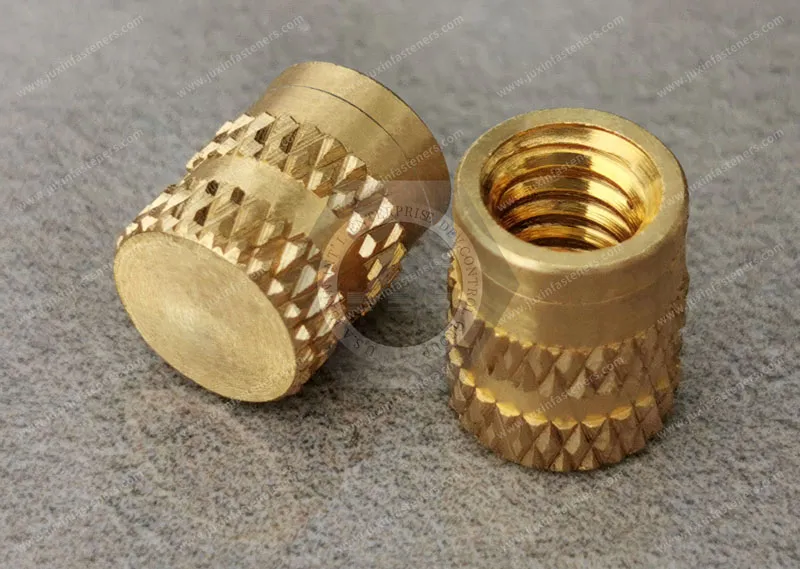
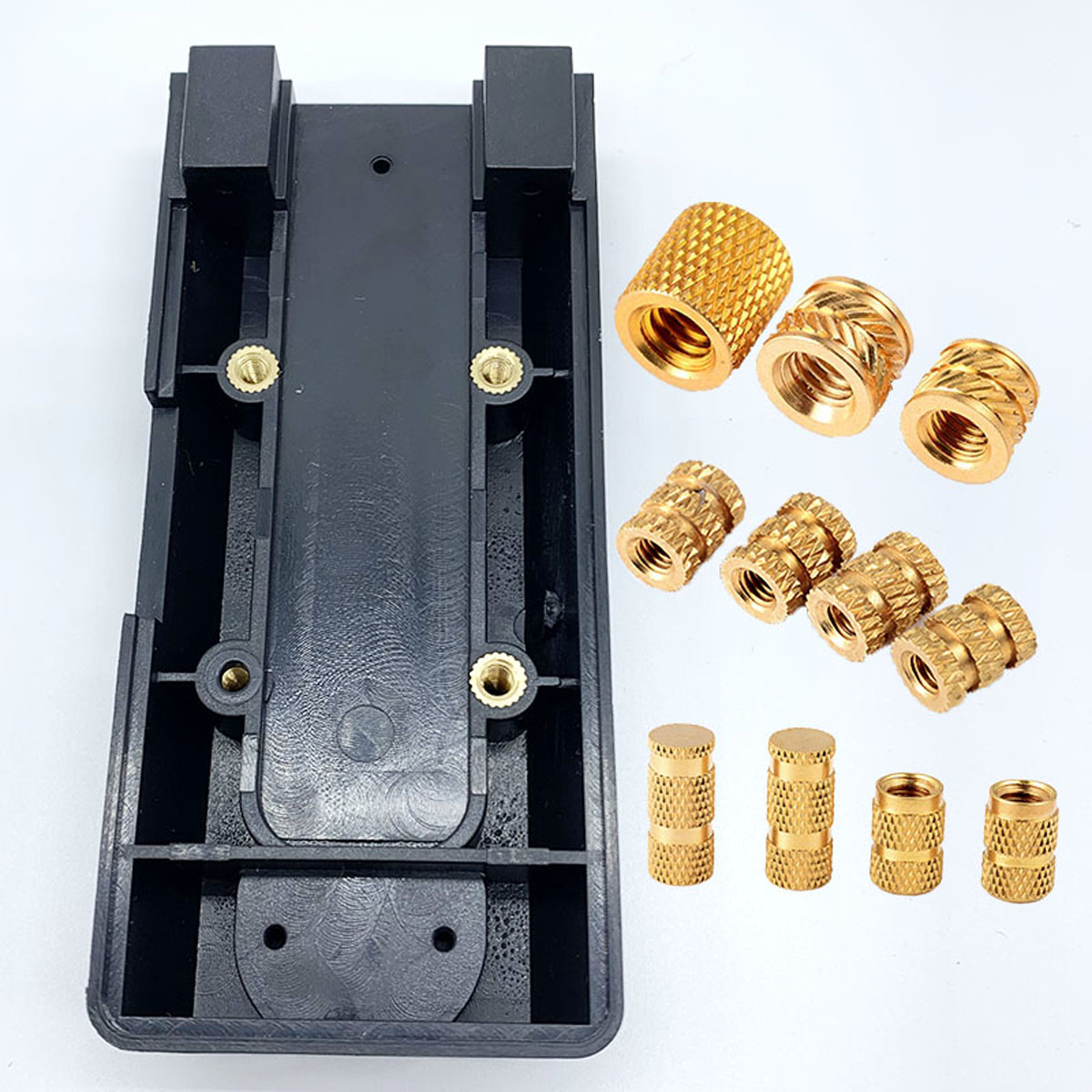
Threaded inserts for electronic enclosures provide a reliable metal fastening point inside plastic housings.
By integrating a metal threaded insert into the plastic component, engineers can create a stronger and more repeatable connection for screws and machine-threaded fasteners.
For OEMs and electronics manufacturers, the right insert design depends on the plastic material, housing geometry, boss dimensions, installation process, thread specification, assembly torque, and service environment.
JUXIN Fasteners supplies custom threaded inserts for plastic housings and electronic enclosures according to application and OEM requirements.
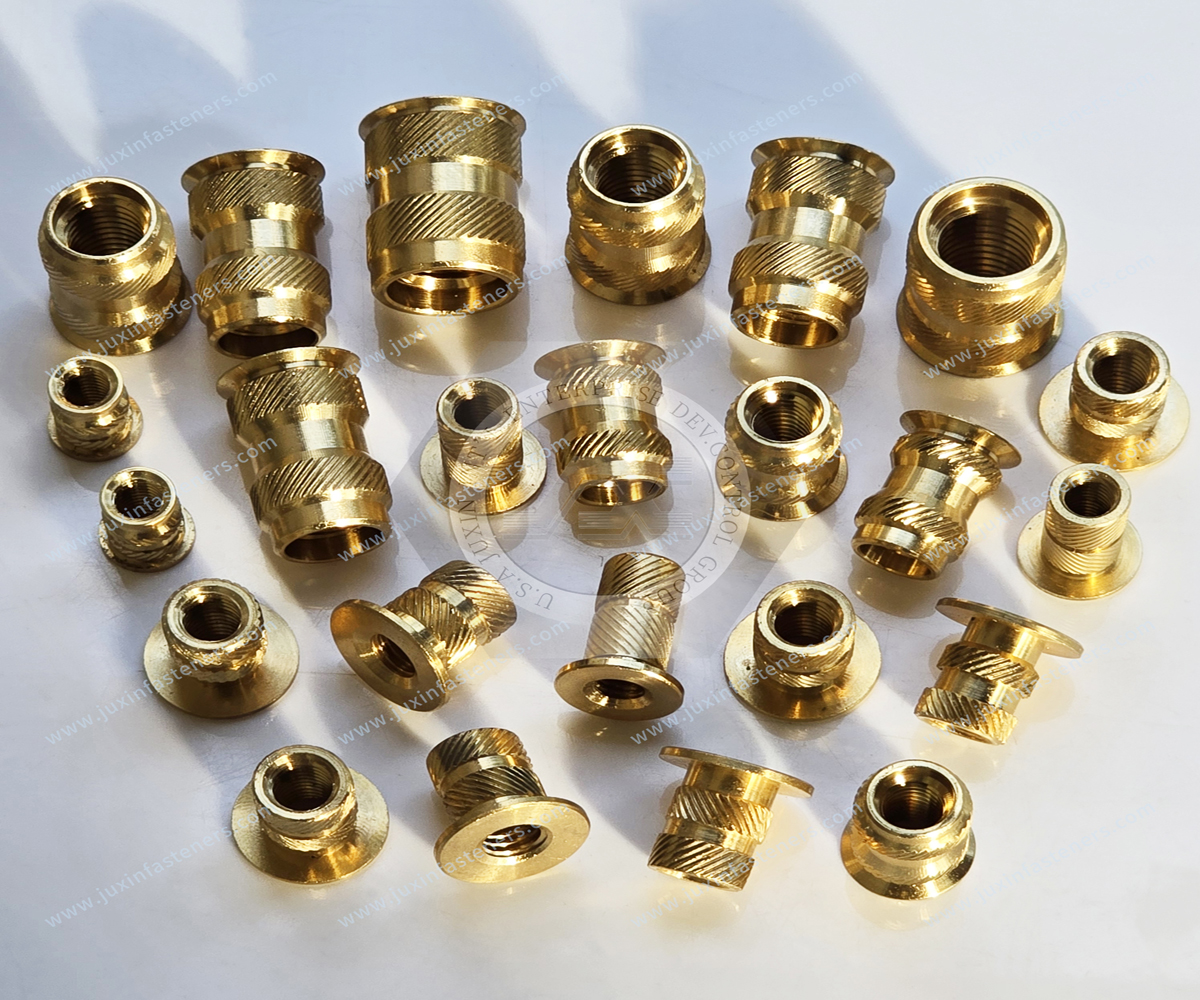
Plastic housings are widely used in electronic and electrical products, but molded plastic threads can become a limitation when assemblies require repeated fastening or controlled tightening torque.
Directly forming a thread in plastic may create several engineering concerns, including:
Thread wear during repeated assembly
Reduced thread strength
Thread deformation under tightening torque
Stress concentration around the boss
Creep or stress relaxation over time
Limited resistance to repeated screw removal and installation
A metal threaded insert for plastic creates a dedicated internal thread that can provide more consistent mechanical engagement.
This makes threaded inserts particularly useful when an electronic enclosure must be opened for maintenance, testing, component replacement, or service.
Threaded inserts can be incorporated into many types of electronic and electrical plastic housings.
Electronic housings frequently require secure mounting points for printed circuit boards.
Threaded inserts can provide metal threads for PCB standoffs, mounting screws, brackets, and internal support structures. The insert design can be selected according to the housing material and available boss geometry.
For high-volume electronics production, repeatable insert positioning and installation consistency can be especially important.
Many electronic products use removable plastic covers that must be opened during assembly or service.
Threaded inserts provide durable fastening points for cover screws without relying entirely on plastic threads.
This can be particularly useful for products requiring repeated access to internal electronics.
Electronic housings often contain brackets for:
PCBs
Connectors
Displays
Power modules
Fans
Cable guides
Sensors
Control components
A threaded insert provides a defined metal fastening point for these internal components.
Some electronic assemblies require internal or external thermal management components.
Threaded inserts can be used for mounting heat sinks, cooling brackets, fans, thermal management components, and related hardware, depending on the enclosure design.
Plastic housings may include internal cable routing and retention systems.
Threaded inserts can provide mounting points for cable clamps, cable brackets, grounding components, or other fastening hardware where a stronger threaded connection is required.
Sensors often require accurate and secure positioning inside electronic housings.
Threaded inserts can provide a repeatable mounting interface for sensors used in industrial electronics, automotive electronics, control equipment, and monitoring systems.
Industrial control systems, electrical control boxes, instrumentation, and electronic modules may use plastic housings to reduce weight and provide electrical insulation.
Plastic housing threaded inserts can support internal components and removable covers while maintaining a durable mechanical connection.
Brass threaded inserts are widely used for electronic and electrical plastic housings because brass offers a useful combination of machinability, mechanical performance, corrosion resistance, and cost efficiency.
Brass is also electrically conductive.
When the threaded insert is required to function as an electrical contact or grounding interface, its electrical conductivity may become an additional design consideration.
However, material selection should always be based on the complete application rather than assuming brass is suitable for every electronic enclosure.
Depending on the application, engineers may also consider stainless steel, aluminum, or other specified materials.
The selection should account for mechanical load, corrosion exposure, electrical requirements, temperature, installation method, and production volume.
The correct installation method depends on the plastic material, housing design, insert geometry, production process, and required production volume.
Molded-in threaded inserts are installed during the plastic injection molding process.
The insert is positioned inside the mold before plastic injection, allowing the surrounding plastic to form around the insert.
This approach can provide strong integration between the insert and plastic component and can be particularly suitable for high-volume production when the housing and insert design are developed together.
Heat staking inserts are installed after molding by applying controlled heat and pressure.
The plastic surrounding the insert is softened so that the insert can be embedded into the plastic boss.
Heat staking is commonly considered for thermoplastic housings where the production process allows controlled heating and insertion.
Ultrasonic threaded inserts use ultrasonic energy to soften the surrounding thermoplastic during installation.
This method can provide fast and repeatable installation for suitable plastic materials and production environments.
For automated or high-volume electronics manufacturing, installation consistency can be an important consideration.
Press-in threaded inserts are mechanically installed into a prepared hole or boss.
They can be suitable when the plastic housing has sufficient material strength and the component design provides the required interference and retention conditions.
The installation force and resulting boss stress should be evaluated during product development.
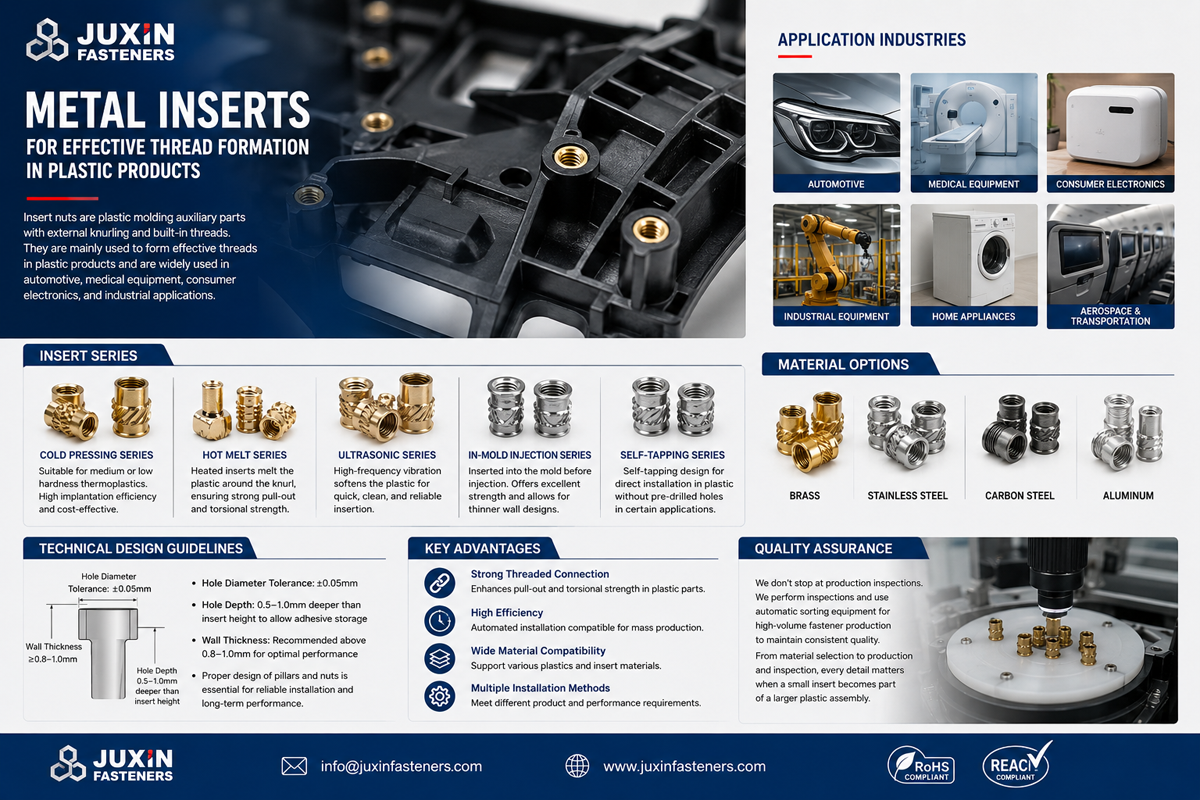
Selecting a threaded insert is not simply a matter of choosing the correct thread size.
The insert and plastic housing should be considered as a combined mechanical system.
The plastic type strongly influences insert selection and installation method.
Common engineering plastics used in electronic housings may include materials such as ABS, PC, PA, PBT, PC/ABS, and glass-filled engineering plastics.
Different materials have different characteristics in terms of stiffness, temperature resistance, creep behavior, and response to heat or ultrasonic energy.
Available wall thickness can limit the size and geometry of the insert boss.
An insert that is too large for the available plastic section may create excessive stress or require unnecessary changes to the enclosure design.
The boss surrounding the insert should provide sufficient material to support the required fastening load.
Engineers should consider:
Boss diameter
Boss height
Hole diameter
Distance from surrounding walls
Distance from adjacent features
Plastic flow and molding conditions
A properly designed boss helps distribute fastening loads and reduce localized stress in the plastic.
The internal thread must match the required screw or fastener specification.
Metric and inch thread configurations may be selected according to the target market and assembly requirements.
Thread size should also be evaluated against the available insert diameter and required mechanical performance.
Insert length affects the available thread engagement and load transfer into the plastic.
The correct length should be selected according to the enclosure geometry, boss height, expected fastening load, and installation method.
The installation process should be considered early in product development.
For example, an insert designed for heat staking may have different external geometry from an insert intended for press-in installation.
Choosing the installation method together with the insert geometry can improve production repeatability.
The final screw tightening torque should be considered when selecting the insert and designing the plastic boss.
Excessive assembly torque can transfer unnecessary stress into the surrounding plastic.
For critical applications, prototype testing and torque-out or pull-out testing can help validate the insert and housing design.
Electronic products are often produced in large quantities, making repeatability and process consistency important procurement requirements.
For high-volume production, engineers and sourcing teams may evaluate:
Dimensional consistency
Thread accuracy
Insert retention
Installation repeatability
Automated feeding compatibility
Batch-to-batch consistency
Inspection requirements
Packaging requirements
Traceability
Production capacity
Where automated assembly is used, insert geometry and packaging can also influence bowl feeding, orientation, and installation efficiency.
For OEM programs, the insert should therefore be evaluated not only as an individual component but as part of the complete housing assembly process.
Standard inserts may not always meet the requirements of a specific electronic enclosure.
A custom threaded insert can be developed around the actual housing design, including:
Plastic material
Boss dimensions
Thread specification
Insert length
External knurl or retention geometry
Installation method
Assembly torque
Service requirements
Production volume
This approach allows the insert to be designed together with the plastic component instead of treating the insert as a generic catalog part.
For OEM and supplier-development projects, providing the plastic material, drawing, 3D model, thread specification, and installation method can help the fastener supplier evaluate the application more accurately.
Threaded inserts are applicable across a wide range of electronic and electrical products.
Typical industries include:
Consumer Electronics
Plastic housings, electronic modules, displays, control interfaces, and internal mounting components.
Industrial Electronics
Control systems, instrumentation, automation equipment, sensors, and industrial electronic enclosures.
Automotive Electronics
Electronic control modules, sensors, connectors, battery-related systems, and other plastic electronic housings.
Telecommunications
Communication equipment, network devices, control modules, and equipment housings.
Medical and Laboratory Equipment
Electronic instruments, control modules, sensor assemblies, and plastic equipment housings where controlled fastening is required.
Electrical Equipment
Control boxes, electrical enclosures, terminal assemblies, power electronics, and related components.
IoT and Smart Devices
Compact electronic housings, sensor modules, gateways, monitoring devices, and connected equipment.
For procurement managers and supply chain teams, supplier selection should go beyond unit price.
A reliable threaded insert supplier for electronic enclosures should be able to support the project from prototype development through production.
Important supplier evaluation factors may include:
Engineering Support
Can the supplier review the plastic material, boss design, installation method, and thread requirements?
Manufacturing Capability
Can the supplier produce the required insert geometry, material, size range, and production volume?
Quality Control
Are dimensions, threads, surface condition, and critical characteristics consistently inspected?
Production Repeatability
Can the supplier maintain stable quality between production batches?
Packaging and Logistics
Can the inserts be supplied in packaging suitable for automated assembly and international supply chains?
Customization Capability
Can the supplier develop non-standard dimensions or external retention geometries when required?
These factors can have a significant impact on the total cost and reliability of an electronic enclosure project.
JUXIN Fasteners supplies threaded inserts for electronic enclosures, plastic housings, electrical components, and industrial electronic assemblies.
Our approach is application-focused. Instead of selecting an insert only by thread size, we consider the relationship between the insert, plastic material, housing geometry, installation process, and final assembly requirements.
Custom solutions can be developed according to OEM drawings and application requirements, including insert dimensions, thread specifications, materials, external retention features, and installation methods.
For procurement teams, supplier-development managers, and structural engineers looking for a reliable threaded insert manufacturer for plastic components, JUXIN can support projects from specification review and sampling through production supply.
If you are developing an electronic enclosure, plastic housing, sensor module, control system, or other plastic electronic component, send us your requirements.
Useful information includes:
Plastic material
Thread specification
Insert dimensions
Housing or boss dimensions
Installation method
Required assembly torque
Annual or project quantity
2D drawing or 3D model
JUXIN Fasteners can evaluate the application and recommend a suitable custom threaded insert solution for your plastic housing.
Email: info@juxinfasteners.com
Website: www.juxinfasteners.com
Product Packaging
Packaging Standard
At Juxin Fasteners, we apply standardized export packaging to ensure product protection, traceability, and compliance with international logistics requirements.
1. Standard Export Packaging
Unless otherwise specified, all products will be packed according to our factory standard export packaging, which includes:
Moisture-resistant inner protection
Poly bag or small box packing as required
Reinforced export cartons
Clear labeling with part number, specification, batch number, and quantity
Palletizing for sea or air shipment when necessary
Our standard packaging is designed to ensure safe transportation, efficient warehousing, and long-distance international shipping.
2. Customized Packaging Options
We also provide customized packaging solutions according to customer requirements, including but not limited to:
Private labeling
Customized barcodes
Specific carton dimensions
Retail packaging
Special pallet configuration
Customer-specific marking and identification
So that you know, customized packaging may involve additional costs and extended lead time depending on the complexity of the requirements.
3. Compliance & Quality Assurance
All packaging processes are controlled under our ISO 9001 quality management system to ensure consistency, traceability, and product integrity throughout the supply chain.
Product Pictures
Contact Us
Tel.:
+86 020 8621 0320
+86 020 3121 6067
E-mail:
Technical Support:
Navigation
SEND INQUIREY