Call Us
+86 136 6007 9809
Call Us
+86 136 6007 9809

Thin sheet-metal assemblies often need a reusable threaded connection in locations where holding a loose nut from the rear is inconvenient,
slow or impossible during final assembly.
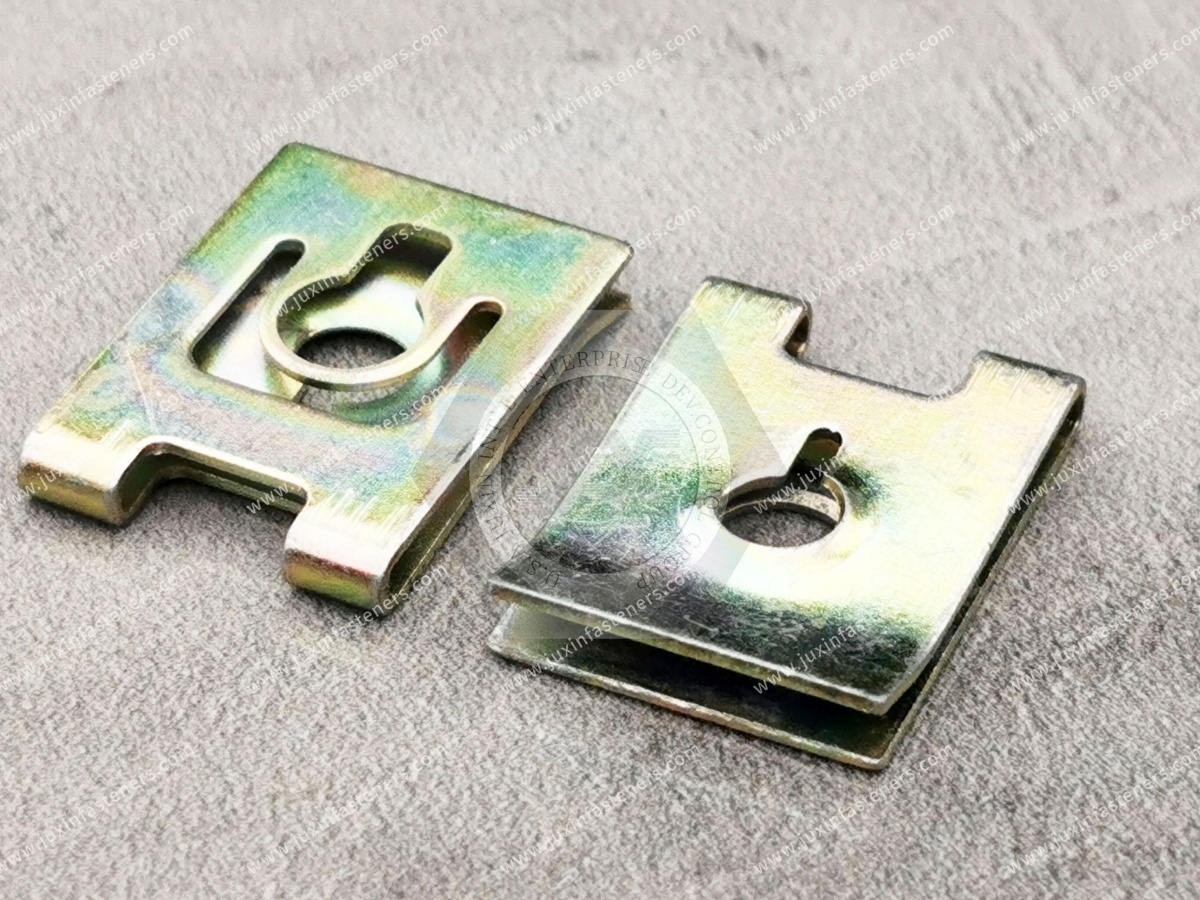
One possible solution is the clip-on threaded nut.
Product Specification
Thin sheet-metal assemblies often need a reusable threaded connection in locations where holding a loose nut from the rear is inconvenient, slow or impossible during final assembly.
One possible solution is the clip-on threaded nut.
Common industry search terms include:
U-nuts
U-nut clips
J-nuts
J-nut clips
Spring clip nuts
Speed nuts
Clip nuts
Panel nuts
Threaded spring clips
Edge-mounted threaded nuts
These names are sometimes used interchangeably in sourcing, even though the actual geometries and thread-forming mechanisms can differ significantly.
Clip-on U-nuts and J-nuts can be used in HVAC equipment, electrical enclosures, automotive assemblies, industrial machinery,
appliances, medical equipment housings and other fabricated sheet-metal products.
JUXIN FASTENERS supports drawing-based clip-on threaded fasteners and custom metal fastening components for OEM applications.
For these components, the drawing and actual panel interface are particularly important because:
Thread size alone does not define the clip nut.
Panel thickness, edge distance, reach, mounting-hole location, clip opening, screw type, material, spring behavior and assembly direction can all affect compatibility.
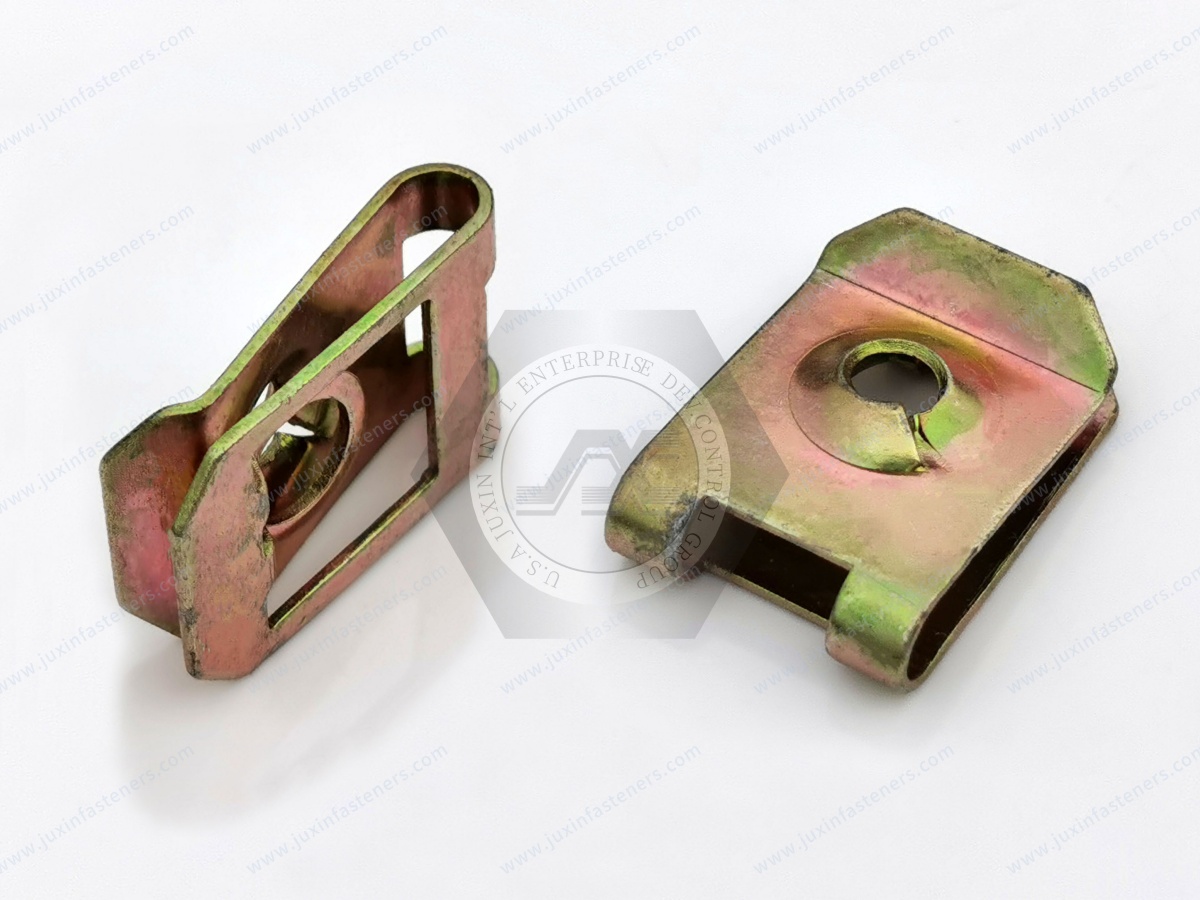
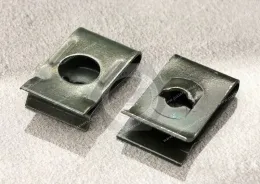
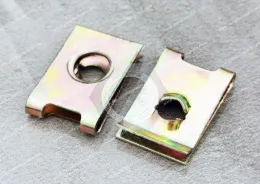
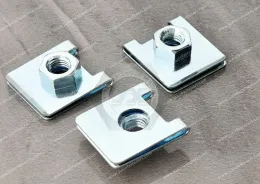
A U-nut generally uses two legs arranged around the edge of a sheet-metal panel.
The clip slides over the panel edge and positions a threaded or screw-engagement feature over a mounting hole.
Depending on the design, the threaded feature may be:
An integrated formed thread
A stamped thread impression
A separate threaded element
Another drawing-specific screw-retention geometry
The U-shaped body provides spring retention on the panel before the mating screw is installed.
This can eliminate the need for an operator to hold a conventional loose nut behind the panel.
A J-nut uses an asymmetric or J-shaped clip geometry.
It can provide a similar edge-mounted fastening function but with a different relationship between:
Panel edge
Clip legs
Thread location
Mounting hole
Installation direction
J-nut geometry can be useful where available edge access or panel geometry makes a conventional U-shaped clip less suitable.
However, the terms U-nut and J-nut are not always used consistently across industries.
For procurement:
The drawing should control the product definition, not the commercial name alone.
This is one of the biggest sourcing problems in this fastener category.
A buyer may search for:
M6 U-nut
while another supplier calls a visually similar component:
M6 clip nut
or:
M6 spring nut
or:
M6 speed nut
But these terms can describe different fastening mechanisms.
Some components contain a conventional machine thread.
Others use formed sheet-metal thread geometry intended for a specific screw.
Some clip over a panel edge.
Others engage slots or holes.
Some provide positional float.
Others establish a fixed thread location.
Therefore:
Never approve an alternate clip nut from the product name alone.
Compare the actual geometry and mating screw system.
Potential applications include:
Air-handling units
Fan housings
Equipment covers
Service panels
Filter-access panels
Control cabinets
Refrigeration equipment
Sheet-metal brackets
HVAC equipment often contains large fabricated sheet-metal structures where access panels must remain serviceable.
Clip-on fastening can provide a useful alternative where welding or permanent clinching is unnecessary.
Applications can include:
Control cabinets
Electrical boxes
Equipment covers
Access doors
Internal brackets
Cable-management components
Removable panels
Clip nuts and speed nuts are widely associated with sheet-metal and trim fastening architectures.
Potential application areas can include:
Body panels
Interior structures
Exterior trim
Lighting assemblies
Brackets
Covers
Equipment mounting
Automotive applications are particularly drawing-dependent because panel geometry, screw type, retention and installation sequence can vary significantly.
Potential equipment applications include:
Diagnostic equipment housings
Medical carts
Laboratory instruments
Service panels
Internal brackets
Electronic enclosures
The fastener itself should not automatically be described as “medical grade.”
The material, finish, cleanliness and documentation requirements should follow the actual equipment specification.
Clip-on fasteners can also be used in:
Commercial food-service equipment
Appliances
Equipment covers
Control housings
Sheet-metal frames
Service doors
The common requirement is usually fast assembly plus a retained screw-engagement point near a sheet-metal edge.
A clip nut must grip the panel.
This means panel thickness directly affects the clip interface.
If the panel is significantly thinner than intended:
Retention may be insufficient
The clip may move during assembly
Thread alignment may become inconsistent
If the panel is significantly thicker than intended:
Installation force may increase
The clip may deform
The panel surface may be damaged
The fastener may not fully seat
Therefore:
“M5 U-nut” is not a complete specification.
A more useful definition includes:
M5 thread + panel thickness + reach + panel-hole position + clip geometry.
One of the most important dimensions in an edge-mounted clip nut is the distance from the panel edge to the screw centerline.
This can be described using terms such as:
Reach
Throat depth
Edge-to-hole distance
Centerline distance
If the reach is incorrect, the thread will not align with the panel hole.
Even when:
Thread size is correct
Material is correct
Panel thickness is correct
the fastener can still be unusable.
This is why reach should be treated as a critical functional dimension.
Consider two clip nuts:
Part A: M6 thread, short reach
Part B: M6 thread, long reach
Both accept an M6 screw.
But if the panel hole is located farther from the edge, Part A cannot align with it.
From a purchasing perspective, both may appear to be “M6 U-nuts.”
From an assembly perspective, they are different products.
For replacement sourcing, procurement teams should measure the existing clip or provide a drawing rather than specifying only the thread.
This distinction is especially important.
A spring clip can provide retention to the sheet-metal panel.
That does not automatically mean it provides prevailing torque against screw loosening.
These are different engineering functions.
Describes how the clip remains attached to the panel before and during assembly.
Describes resistance to relative rotation between the screw and threaded component.
A U-nut can grip the panel securely while still using a conventional threaded relationship with the screw.
Therefore:
A spring clip nut should not automatically be marketed as a vibration-resistant lock nut.
If screw loosening under vibration is a design concern, the complete joint and locking strategy should be evaluated.
A conventional nut can provide a robust machine-thread connection but generally requires access to the rear side during assembly.
A clip nut can remain attached to the panel before the screw is inserted.
| Design Condition | Clip-On U-Nut / J-Nut | Conventional Loose Nut |
|---|---|---|
| Rear-side wrench during final assembly | Often unnecessary | Usually required |
| Pre-retention on panel | Yes | No |
| Edge installation | Strong advantage | Not inherent |
| Panel-thickness compatibility | Must be matched | Less dependent |
| Positional adjustment | Depends on design | Depends on assembly |
| Removal/replacement | Often possible | Possible |
| Special panel interface | Required | Not necessarily |
The clip nut becomes attractive when assembly access and component handling matter.
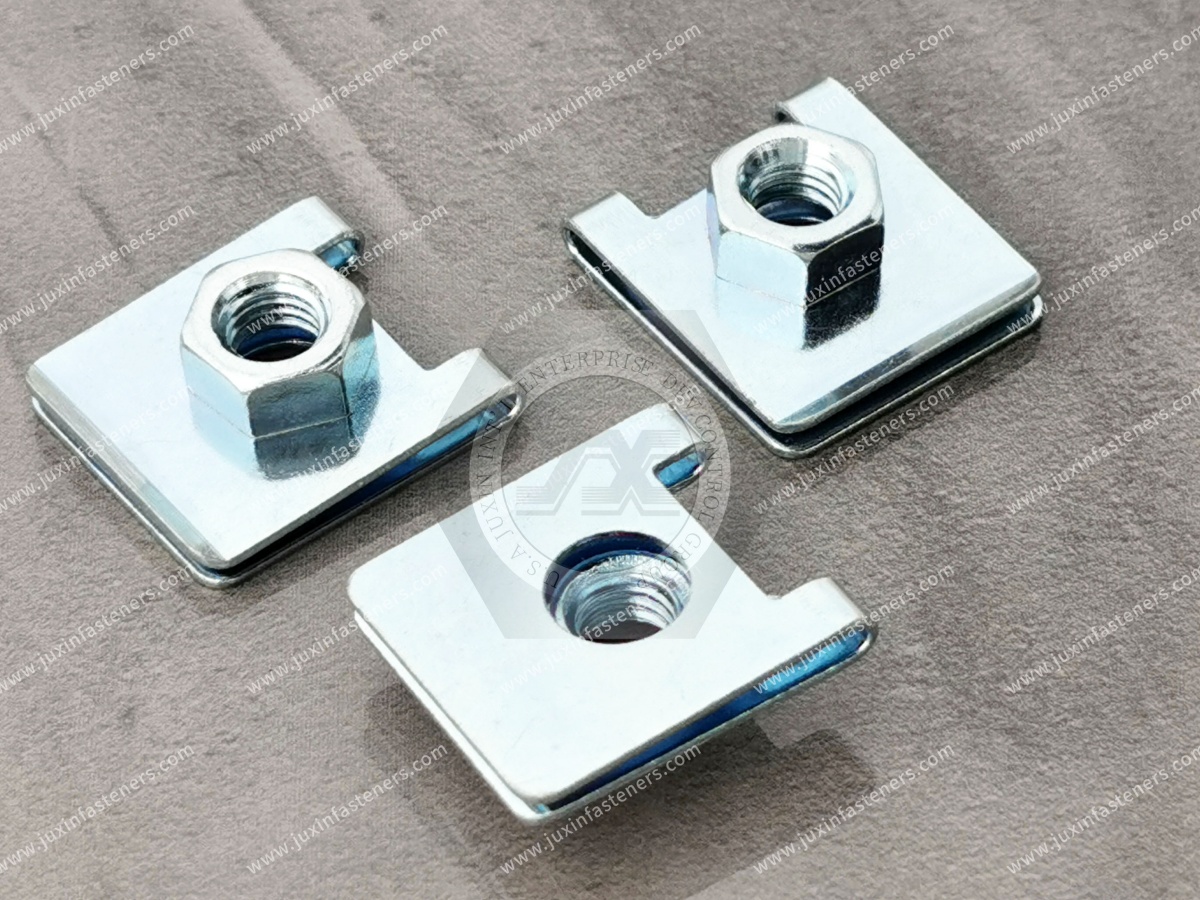
Self-clinching nuts and clip nuts both create retained threaded mounting points in sheet-metal assemblies,
but they solve different manufacturing problems.
Can be useful where:
Installation from the panel edge is available
Removability is useful
Press equipment is undesirable
Field replacement may be required
The fastening point is near an accessible edge
Can be useful where:
A permanent thread is required
Press access is available
The mounting point is away from the panel edge
The fastener is integrated during sheet-metal fabrication
A clip nut should not automatically replace a self-clinching nut.
The mounting architecture is different.
A blind rivet nut creates a permanent threaded feature from one accessible side of a sheet or closed structure.
A clip nut normally requires access to a panel edge or a compatible clip-in feature.
The mounting point is near an accessible panel edge
Removability is desirable
Fast installation is required
A clip architecture suits the panel
The mounting point is away from the edge
Only one side is accessible
A permanent threaded insert is required
The structure is closed
The correct solution follows the geometry of the sheet-metal structure.
A weld nut becomes permanently attached to the parent sheet through welding.
A clip nut requires no welding.
Clip-on hardware can be useful where:
Welding heat is undesirable
The component needs to remain replaceable
Low-volume assembly does not justify welding
The fastening point is accessible from the panel edge
Weld nuts can be preferable where:
High-volume fabricated structures already use resistance welding
Permanent integration is required
The fastening point cannot be reached by an edge clip
The joint architecture has been designed around welding
Neither technology is universally superior.
Clip nuts and rack cage nuts both use spring-retention concepts but should not be confused.
A rack cage nut typically clips into a square or shaped opening and retains a separate threaded nut element.
A U-nut or J-nut typically clips over a sheet-metal edge.
The difference affects:
Installation
Hole geometry
Available float
Panel access
Application
For server racks and modular rack systems, cage nuts may be appropriate.
For equipment covers and edge-mounted sheet-metal panels, U-nuts or J-nuts may be more appropriate.
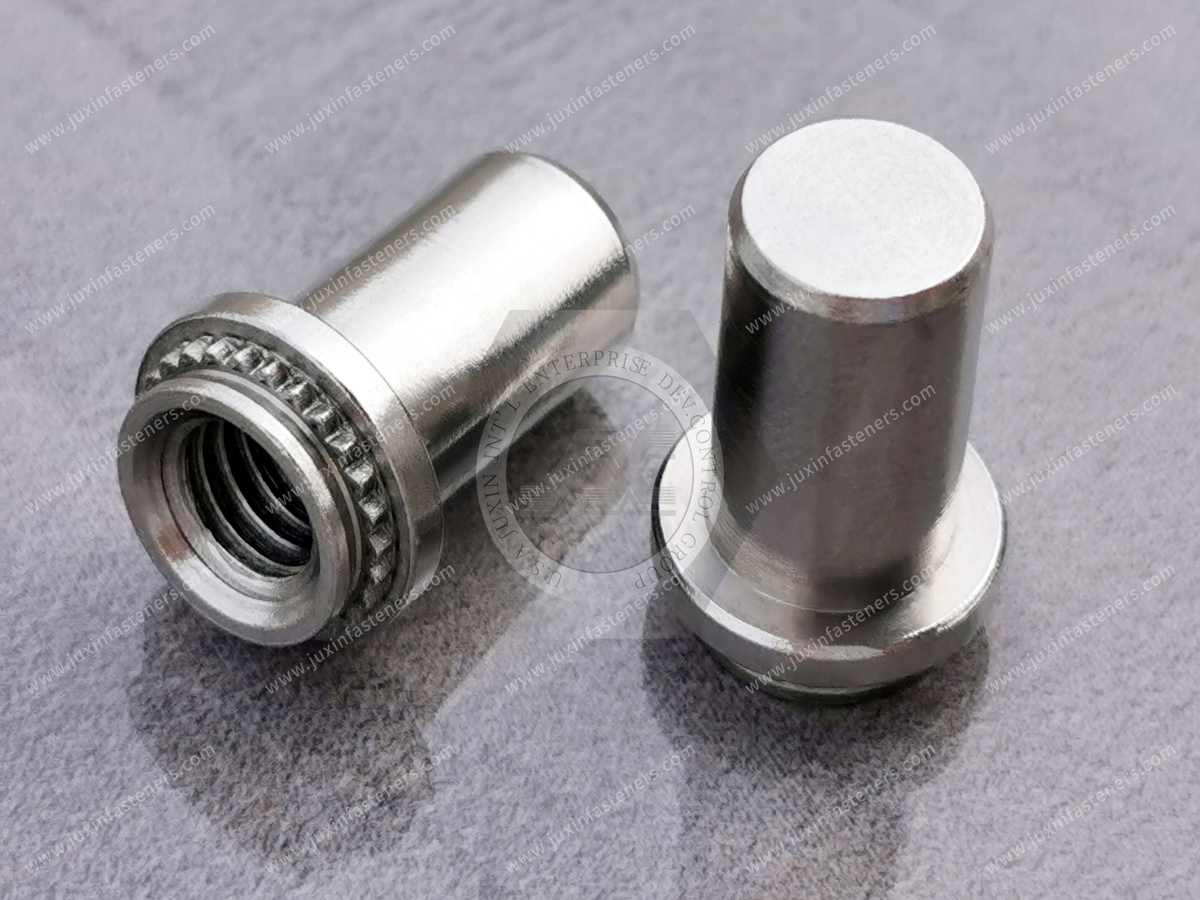
Another important distinction is the mating screw.
Some clip nuts provide a conventional internal machine thread.
Other stamped spring fasteners engage:
Sheet-metal screws
Thread-forming screws
Application-specific screws
These should not be treated as interchangeable.
Procurement teams should identify:
Screw diameter
Thread pitch
Screw type
Thread form
Required engagement
Using the wrong screw can damage the clip or create an unreliable joint.
When a clip nut is sourced separately from the screw, information can become disconnected.
The clip drawing may say:
M5
while the production line uses a screw with different geometry than originally intended.
For OEM programs, the clip nut and mating screw should be treated as a fastening pair.
When changing one component, confirm the other.
This is particularly important for stamped-thread speed nuts and application-specific screw systems.
Some clip nut designs allow limited movement between the thread position and panel.
This can help accommodate assembly tolerance.
But not every U-nut or J-nut is a floating nut.
The available movement depends on the actual geometry.
If positional adjustment is important, the drawing should define:
Nominal screw centerline
Allowed movement
Panel-hole size
Required alignment
The term “floating clip nut” should only be used when the product actually provides that function.
Before the screw is tightened, the spring clip helps retain the fastener on the panel.
After tightening, the bolted joint develops clamp load according to:
Screw
Thread
Joint geometry
Tightening torque
Friction
Mating components
The spring force that holds the clip on the sheet is not equivalent to the clamp force created by the screw.
This distinction matters when evaluating clip retention versus final joint performance.
Because U-nuts and J-nuts engage the sheet edge, the edge itself becomes part of the fastening system.
Important factors can include:
Burrs
Sharp edges
Rolled edges
Hemmed edges
Coating thickness
Paint buildup
Local deformation
A fastener validated on a clean flat edge may behave differently on a heavily coated or hemmed panel.
The panel drawing should therefore show the actual edge condition where the clip is installed.
Sheet-metal panels may be:
Zinc coated
Powder coated
Painted
E-coated
Otherwise surface treated
The coating adds thickness and changes surface friction.
For a spring clip with limited opening clearance, this can affect:
Installation force
Retention
Surface damage
Final position
If the clip is installed after coating, the final coated panel thickness may be more relevant than the bare sheet thickness.
This is an important DFM detail that is often overlooked.
HVAC and outdoor equipment may experience:
Condensation
Humidity
Temperature cycling
Outdoor exposure
Industrial contaminants
Material and coating selection should therefore follow the actual environment.
Possible options for drawing-based components may include appropriate steel, stainless steel or customer-specified surface finishes.
However, corrosion performance should not be inferred simply from coating color or material name.
If salt-spray testing such as ASTM B117 is required, the customer should define:
Coating system
Test duration
Acceptance criteria
White corrosion criteria where relevant
Red corrosion criteria where relevant
Salt-spray hours should not be treated as a direct prediction of real-world service life.
Stainless spring clips may be appropriate for certain corrosion-sensitive applications.
But specifying stainless steel introduces additional design questions:
Required stainless grade
Required spring characteristics
Formability
Thread geometry
Panel material
Galvanic compatibility
Environment
A generic statement such as “stainless U-nut” is therefore incomplete for a custom OEM project.
The actual drawing and application should control material selection.
A clip nut may be installed on:
Carbon steel
Galvanized steel
Stainless steel
Aluminum
If dissimilar metals are combined in the presence of moisture, galvanic corrosion can become a design consideration.
Risk depends on:
Material combination
Surface treatment
Exposure
Relative surface area
Electrical contact
Drainage
This can be particularly relevant in outdoor HVAC and transportation equipment.
Automotive assemblies are a major application area for clip-on sheet-metal fasteners.
Common sourcing searches can include:
Automotive U-nuts
Automotive J-nuts
Automotive speed nuts
Fender clip nuts
Body panel clip nuts
Trim screw clips
Automotive spring clips
But automotive clips are highly geometry-specific.
The correct part may depend on:
Panel thickness
Hole location
Screw type
Reach
Clip width
Installation direction
Coating
Retention requirement
For OEM and Tier supplier projects, a drawing or physical reference sample is much more useful than a generic product name.
HVAC manufacturers may use clip-on hardware for:
Access panels
Fan housings
Service covers
Electrical compartments
Equipment frames
Filter panels
The main sourcing considerations can include:
Panel thickness
Reach
Corrosion environment
Service frequency
Screw system
Retention
For frequently serviced access panels, replaceability can be one advantage of clip-on hardware compared with permanent fastening methods.
Electrical cabinets and control enclosures can require removable covers and internal brackets.
Clip nuts can provide a useful fastening architecture where:
The panel edge is accessible
Rear-side nut handling is undesirable
A removable threaded component is preferred
If electrical bonding is required, it should be treated as a separate engineering requirement.
A metal clip touching a metal panel does not automatically create a verified grounding connection.
Clip nuts may be considered for non-implant medical equipment such as:
Diagnostic equipment
Equipment carts
Laboratory instruments
Electronic housings
Service covers
However, medical equipment can have specific requirements for:
Cleaning
Material
Surface finish
Documentation
Loose-hardware management
These requirements should be defined by the OEM.
A clip nut should not be called “medical grade” merely because it is installed in medical equipment.
Many fastening discussions focus only on strength.
But for serviceable equipment, replaceability can be a valuable design feature.
If a clip nut is damaged:
It may be removable
The panel may remain usable
A replacement fastener may be installed
A permanently welded or clinched thread may require a different repair process.
This does not make clip nuts universally superior.
It means service strategy is part of fastener selection.
Before releasing a panel design, engineers should verify:
Panel material
Bare sheet thickness
Final coated thickness where relevant
Panel edge geometry
Edge-to-hole distance
Screw centerline
Clip reach
Clip opening
Thread or screw type
Installation direction
Available hand/tool access
Required retention
Required float if applicable
Surface finish
Corrosion environment
Service/removal requirement
These parameters should be considered before freezing the sheet-metal drawing.
Design engineers should begin with:
What screw system is being used?
Machine screw, sheet-metal screw or thread-forming screw?
What is the panel thickness?
Include final coating where relevant.
How far is the screw centerline from the panel edge?
This determines reach.
What is the panel-edge geometry?
Flat, bent, hemmed or otherwise formed?
Does the fastener need positional float?
Do not assume every clip nut floats.
Will the component be serviced repeatedly?
Consider retention and replaceability.
What corrosion environment applies?
Indoor enclosure, humid HVAC system, automotive or outdoor equipment?
This approach defines the fastener much more accurately than simply searching for “M6 U-nut.”
For accurate technical review, procurement teams should provide:
2D drawing
Existing sample where available
U-nut, J-nut or clip geometry
Mating screw specification
Thread size and pitch where applicable
Panel material
Panel thickness
Final coated thickness where relevant
Edge-to-hole distance
Required reach
Clip width
Surface finish
Corrosion requirement
Required retention
Required positional float where applicable
Installation direction
Prototype quantity
Annual production quantity
Packaging requirements
Inspection requirements
For replacement projects, photographs can help identify the general fastener family, but dimensional drawings or physical samples are preferable for final confirmation.
Do not compare only:
M6 + zinc plated + unit price.
Compare:
Screw compatibility
Thread geometry
Reach
Panel-thickness range
Clip opening
Overall envelope
Spring geometry
Retention
Positional movement
Material
Surface finish
Edge compatibility
Installation behavior
Drawing revision control
Sample-to-production repeatability
Two clip nuts that look almost identical can position the thread differently.
That difference can stop an assembly line.
Clip-on sheet-metal fasteners are highly geometry-dependent.
For OEM applications, drawing-based development may be appropriate where the project requires:
Special reach
Special panel thickness
Restricted installation space
Custom screw location
Special thread
Inch-series thread
Application-specific spring geometry
Custom clip width
Special retention feature
Special material
Customer-specified finish
JUXIN FASTENERS can review drawing-based U-nuts, J-nuts, spring clips and related sheet-metal fastening components according to manufacturing feasibility and application requirements.
A practical development path can follow:
Application Requirement → Panel & Screw Review → Clip Geometry Selection → Drawing Confirmation
→ Prototype / Sample → Installation Evaluation → Assembly Validation → Golden Sample Approval → Production
Testing and documentation requirements should be defined according to the customer drawing and application rather than assumed from the fastener name.
This page belongs within the sheet-metal fastening architecture.
Related solutions include:
Blind Rivet Nuts for Sheet Metal Enclosures & One-Sided Assembly — permanent reusable threads where rear access is restricted
Self-Clinching Fasteners for Telecom Cabinets & AI Data Center Enclosures — permanent press-installed threaded features
Cage Nuts for 19-Inch Server Racks & Electrical Cabinets — removable floating threads for rack mounting systems
Projection Weld Nuts for Automotive Chassis & Sheet Metal Assemblies — welded threaded features for fabricated structures
All-Metal Prevailing-Torque Lock Nuts — locking nuts where prevailing torque is specifically required
Fastening Solutions for Medical Device Housings & Laboratory Equipment — fastening architecture for serviceable medical and laboratory equipment
These pages should interlink according to the actual fastening decision:
edge access → blind access → press access → welding access → required serviceability.
If you are sourcing clip-on fastening components for:
HVAC equipment
Electrical enclosures
Automotive assemblies
Commercial equipment
Appliances
Medical equipment housings
Industrial machinery
Sheet-metal access panels
Service covers
send us your drawing or sample, mating screw specification, panel material, panel thickness,
edge-to-hole distance, required reach, surface finish and estimated quantity.
For an existing component, do not identify it only as an “M5 U-nut” or “M6 J-nut.”
The drawing or sample helps determine the actual clip geometry and screw relationship.
JUXIN FASTENERS can review drawing-based U-nuts, J-nuts, spring clip nuts,
speed nuts and custom metal clip fastening components according to the application.
JUXIN FASTENERS
Website: www.juxinfasteners.com
Engineering & RFQ: info@juxinfasteners.com
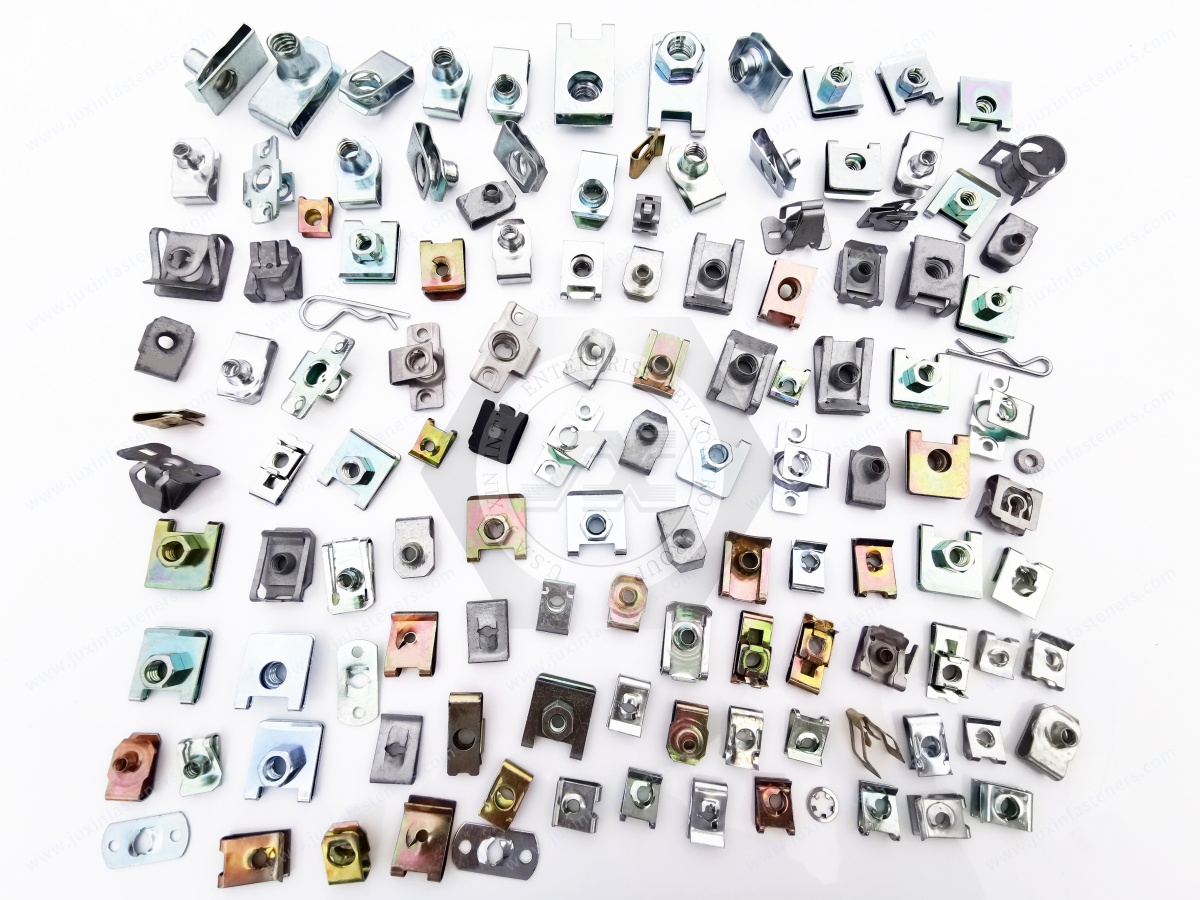
Product Packaging
Packaging Standard
At Juxin Fasteners, we apply standardized export packaging to ensure product protection, traceability, and compliance with international logistics requirements.
1. Standard Export Packaging
Unless otherwise specified, all products will be packed according to our factory standard export packaging, which includes:
Moisture-resistant inner protection
Poly bag or small box packing as required
Reinforced export cartons
Clear labeling with part number, specification, batch number, and quantity
Palletizing for sea or air shipment when necessary
Our standard packaging is designed to ensure safe transportation, efficient warehousing, and long-distance international shipping.
2. Customized Packaging Options
We also provide customized packaging solutions according to customer requirements, including but not limited to:
Private labeling
Customized barcodes
Specific carton dimensions
Retail packaging
Special pallet configuration
Customer-specific marking and identification
So that you know, customized packaging may involve additional costs and extended lead time depending on the complexity of the requirements.
3. Compliance & Quality Assurance
All packaging processes are controlled under our ISO 9001 quality management system to ensure consistency, traceability, and product integrity throughout the supply chain.
Product Pictures
Contact Us
Tel.:
+86 020 8621 0320
+86 020 3121 6067
E-mail:
Technical Support:
Navigation
SEND INQUIREY