Call Us
+86 136 6007 9809
Call Us
+86 136 6007 9809

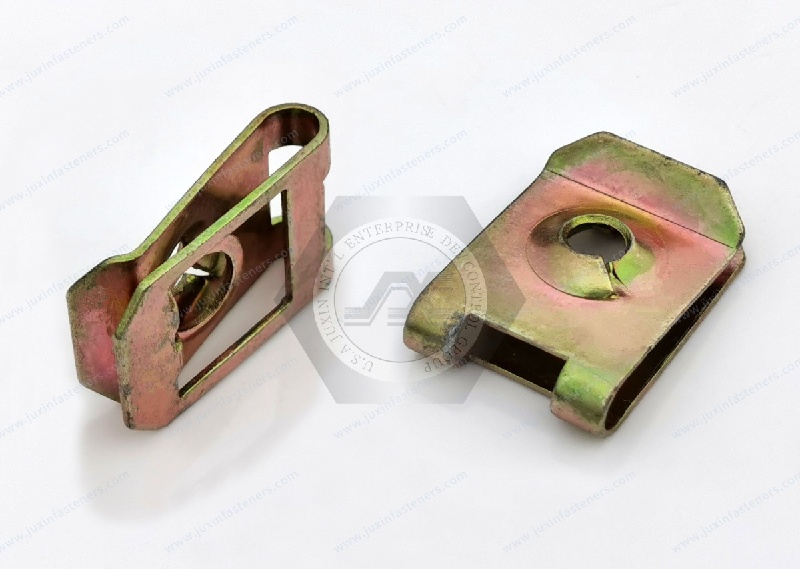
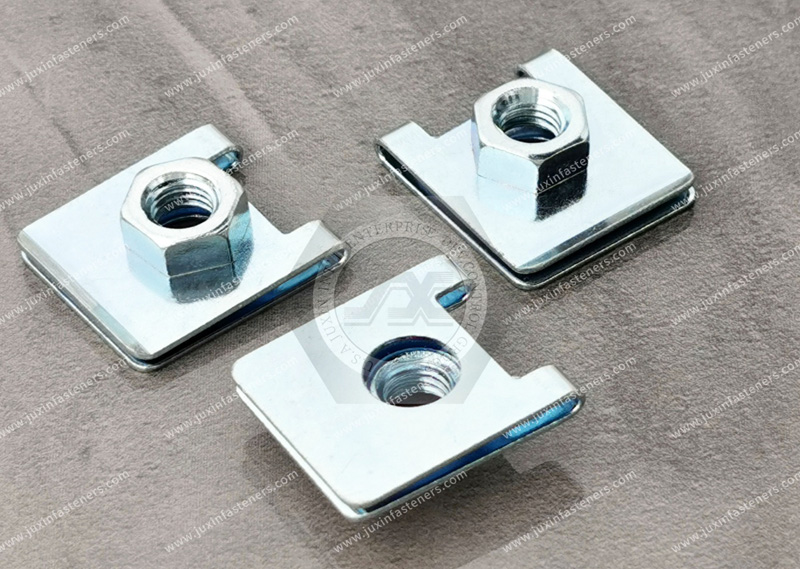
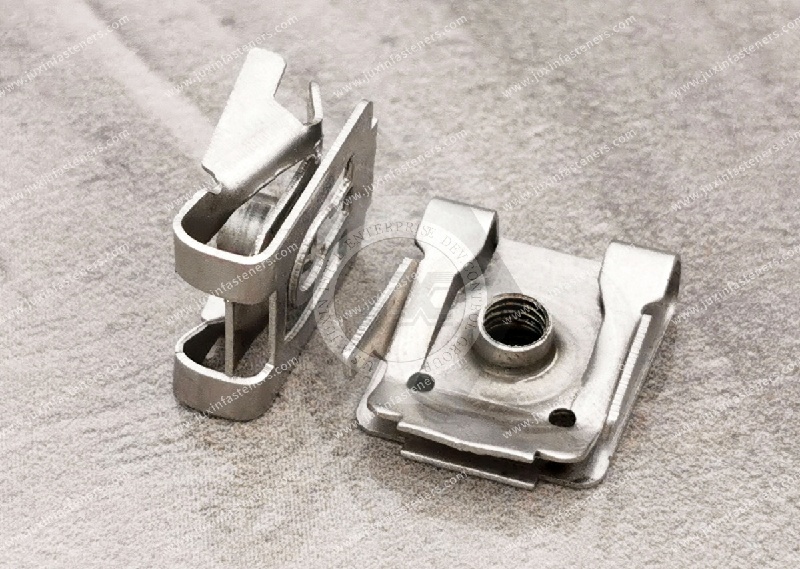
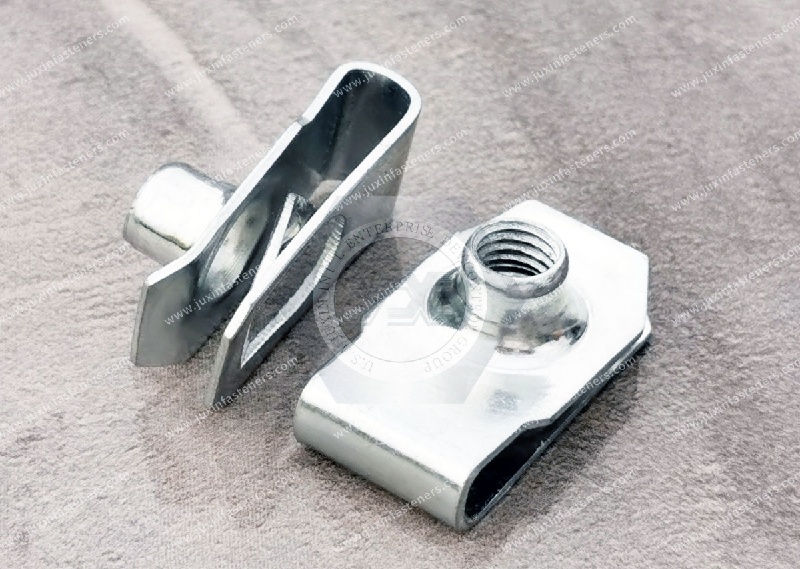
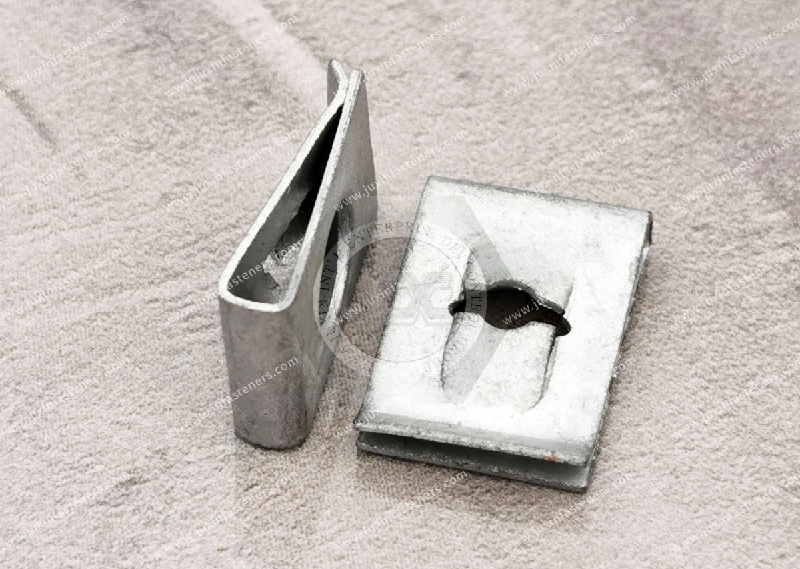
Strong-grip clip-on nuts for tapping screws provide a practical fastening point for thin-panel assemblies where a threaded connection is required without installing a conventional loose nut behind the panel.
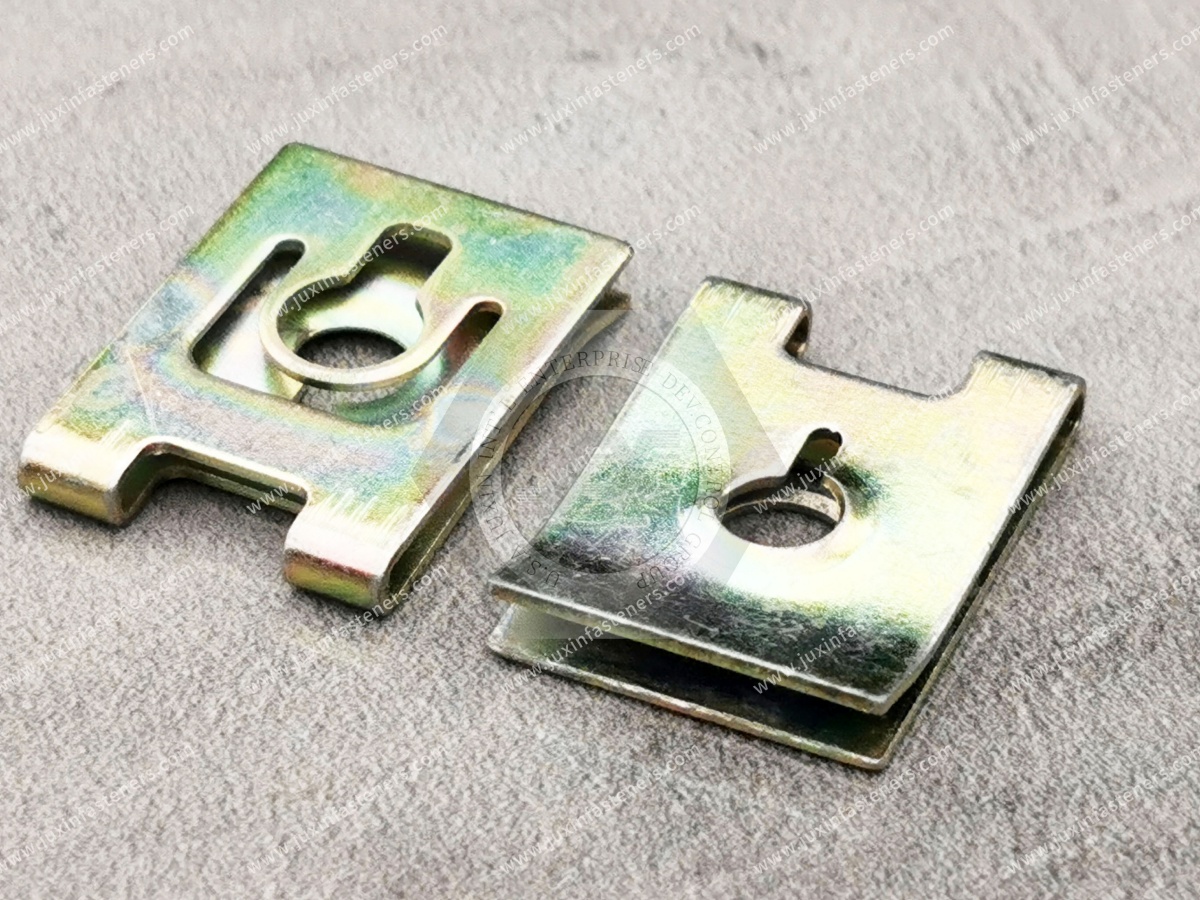
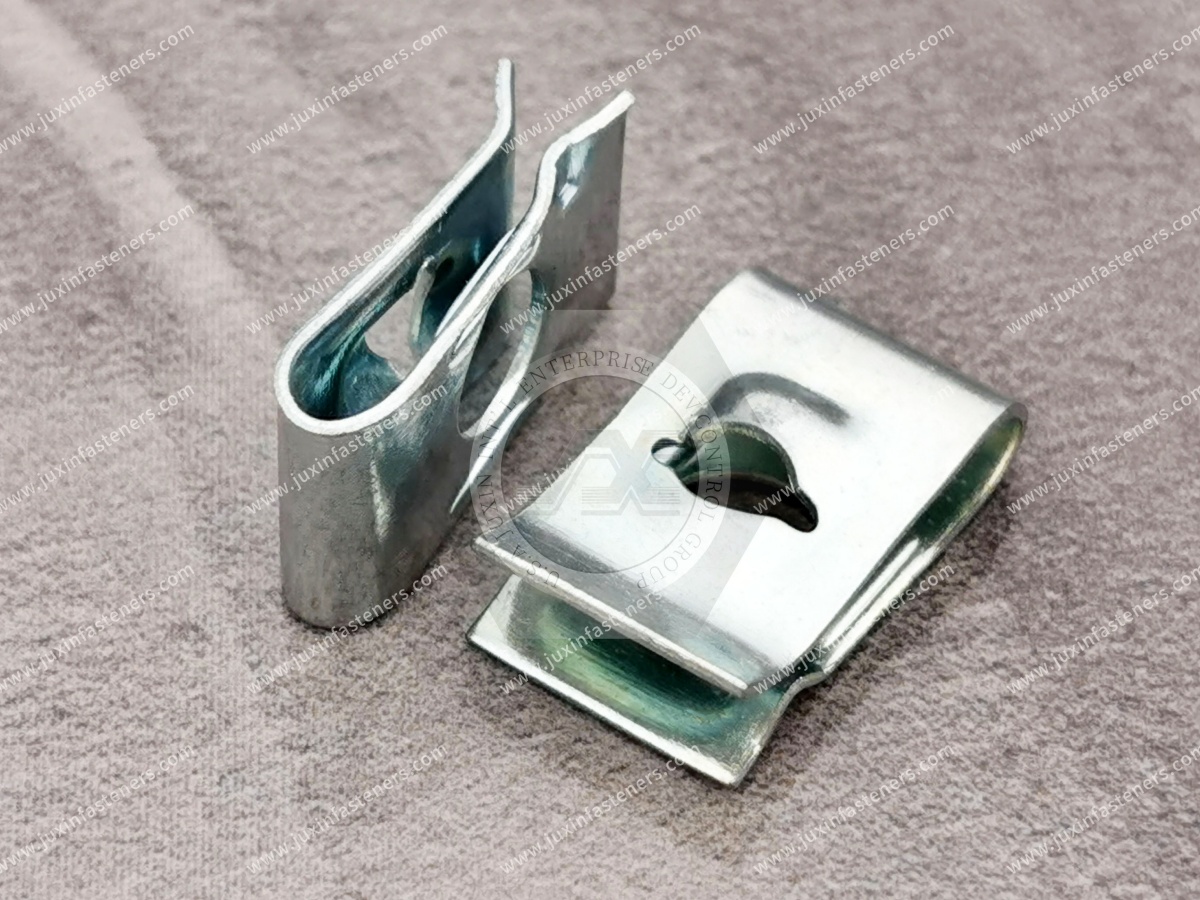
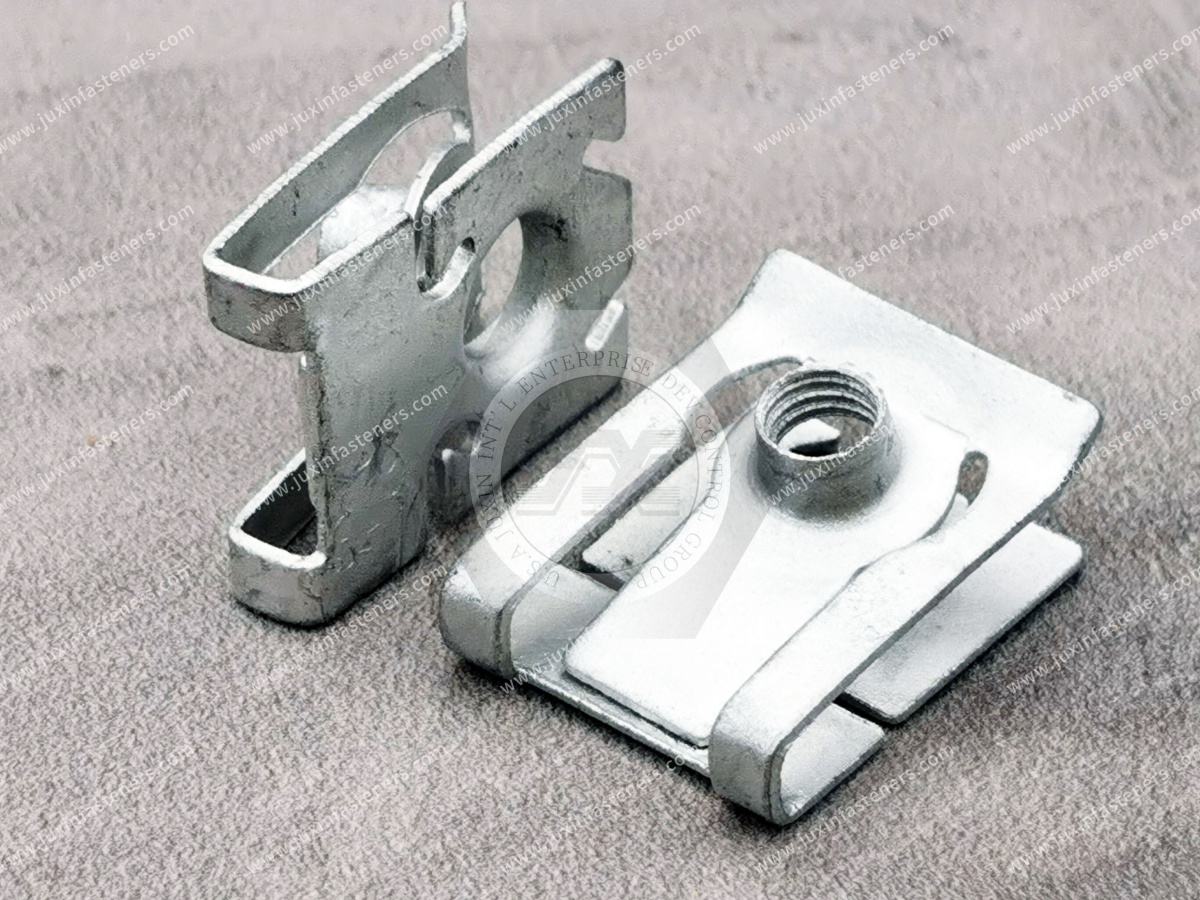
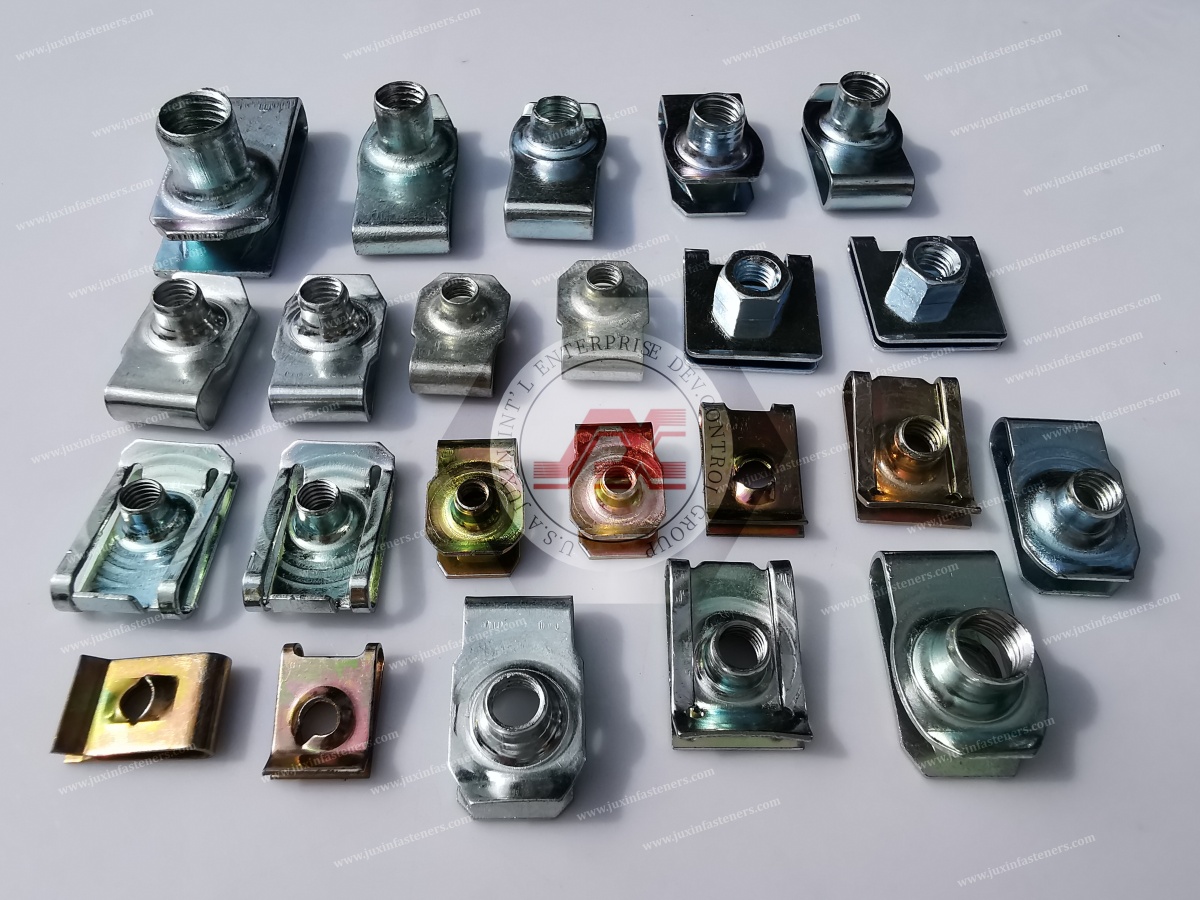
Also known as U-nuts, U-style clip-on nuts or spring clip nuts, these components attach to a panel edge or compatible panel feature and are designed for use with a specified tapping screw.
Product Specification
The U-style configuration can engage both sides of a thin panel, helping position the fastener during assembly.
However, the actual retention performance depends on the clip geometry, panel thickness, panel material, opening dimensions and installation conditions.
For automotive trim, electrical equipment, industrial housings and sheet-metal assemblies, selecting the correct clip-on nut requires more than matching the screw diameter.
Engineers and procurement teams should also confirm the tapping screw design, panel fit, surface finish, environmental exposure and required joint performance.
JUXIN FASTENERS supports OEM and industrial sourcing requirements for clip-on nuts and other fastening components.
The selected product should be reviewed against the customer’s drawing, reference sample and application requirements before approval.
Strong-grip clip-on nuts for tapping screws are spring-style panel fasteners designed to attach to a thin substrate and provide a fastening location for a compatible screw.
The clip and the screw interface have different functions:
The clip engages the panel and helps maintain the nut’s position.
The internal fastening area receives the compatible tapping screw.
The panel transfers the applied assembly forces.
The screw forms the connection with the nut’s threaded or screw-forming interface.
The term “U-nut” is used differently across supplier catalogs. Some products have a U-shaped spring configuration, while others may use a J-style or another clip arrangement.
Product naming should therefore be confirmed against the actual drawing.
Common search terms include:
Strong-grip clip-on nuts for tapping screws
U-nuts for tapping screws
U-style clip-on nuts
Spring clip nuts
Sheet metal clip nuts
Panel edge nuts
Black phosphate clip-on nuts
Clip-on fasteners for thin panels
These keywords help describe the product category, but the final selection should be based on the exact geometry and compatibility requirements.
A clip-on nut may be considered when the assembly requires a fastening point on a thin panel and a separate nut cannot easily be installed from the reverse side.
Potential advantages of this fastening approach include:
Simplified panel-edge installation
Reduced need for backside nut access
Convenient positioning before screw installation
Suitability for selected thin-panel assemblies
Potentially efficient installation in repetitive assembly operations
Availability in different clip and finish configurations
The actual benefit depends on the product and assembly design. A clip-on nut does not automatically eliminate all tooling requirements,
and the installation process should be evaluated using the actual screw, panel and production sequence.
The phrase “strong-grip” generally describes the intended panel engagement of the clip. It is not a universal mechanical rating.
The complete application may require evaluation of:
Retention during handling
Resistance to displacement during screw installation
Resistance to clip pull-off
Resistance to rotation
Screw thread engagement
Panel deformation
Joint preload
Vibration and service loads
A nut that remains attached during assembly is not automatically qualified for structural, safety-critical or severe dynamic applications.
The complete joint must be validated against its intended operating conditions.
The U-style configuration is intended to engage the panel through a spring clip arrangement. Depending on the product design, the clip may contact both sides of a thin panel or panel edge.
This geometry can help maintain the fastener’s position, but its performance depends on the relationship between the clip and the substrate.
The clip opening must be compatible with the actual panel thickness. If the opening is too large, the fastener may not retain its intended position.
If the opening is too small, installation may become difficult or cause damage to the panel or clip.
The design review should consider:
Nominal panel thickness
Thickness tolerance
Paint or coating thickness
Panel material
Clip opening
Panel edge geometry
Installation direction
Required retention during handling
The supplier should confirm the applicable panel range for the selected part rather than applying a general thickness assumption to every U-nut.
The clip holds the nut in position, while the screw and panel form the fastening joint. These functions should be assessed separately.
For example, a clip may be suitable for positioning a nut during trim assembly but may not be appropriate for an application involving high tensile loads, repeated impact or significant vibration.
The required performance should be defined in measurable terms where necessary, such as a specified retention test, displacement limit or application-level joint validation.
Correct screw compatibility is one of the most important considerations when selecting strong-grip clip-on nuts for tapping screws.
The phrase “tapping screw” can cover different screw designs and thread-forming mechanisms.
A screw intended for a particular sheet metal or plastic substrate should not automatically be assumed to be compatible with every clip-on nut.
The buyer should identify the actual screw type and fastening interface.
Relevant information may include:
Screw diameter
Thread form
Thread pitch or thread spacing, where applicable
Screw point design
Screw material and finish
Screw head style
Screw length
Panel material
Required installation method
Whether the screw cuts, forms or engages an existing thread
Some clip-on products are designed for tapping screws, while others are intended for machine screws or a particular thread configuration.
These products should not be treated as interchangeable without confirmation.
When a tapping screw is used in a sheet-metal assembly, the design should consider the screw’s interaction with the internal fastening area and the surrounding panel.
The engineer should verify:
Screw and nut compatibility
Available thread engagement
Screw insertion alignment
Potential cross-threading
Installation torque
Panel deformation
Required removal and reinstallation behavior
Specific screw sizes should only be listed when they are confirmed for the selected product. A general clip-on nut description is not sufficient evidence that every ST-size screw or metric screw will fit.
Plastic panels require additional evaluation because their mechanical behavior differs from steel or aluminum sheet.
Considerations may include:
Plastic grade
Local wall thickness
Edge strength
Creep and stress relaxation
Temperature exposure
Chemical compatibility
Repeated assembly
Risk of cracking or deformation
A clip-on nut suitable for a metal panel should not automatically be transferred to a plastic application. The product and substrate should be evaluated together.
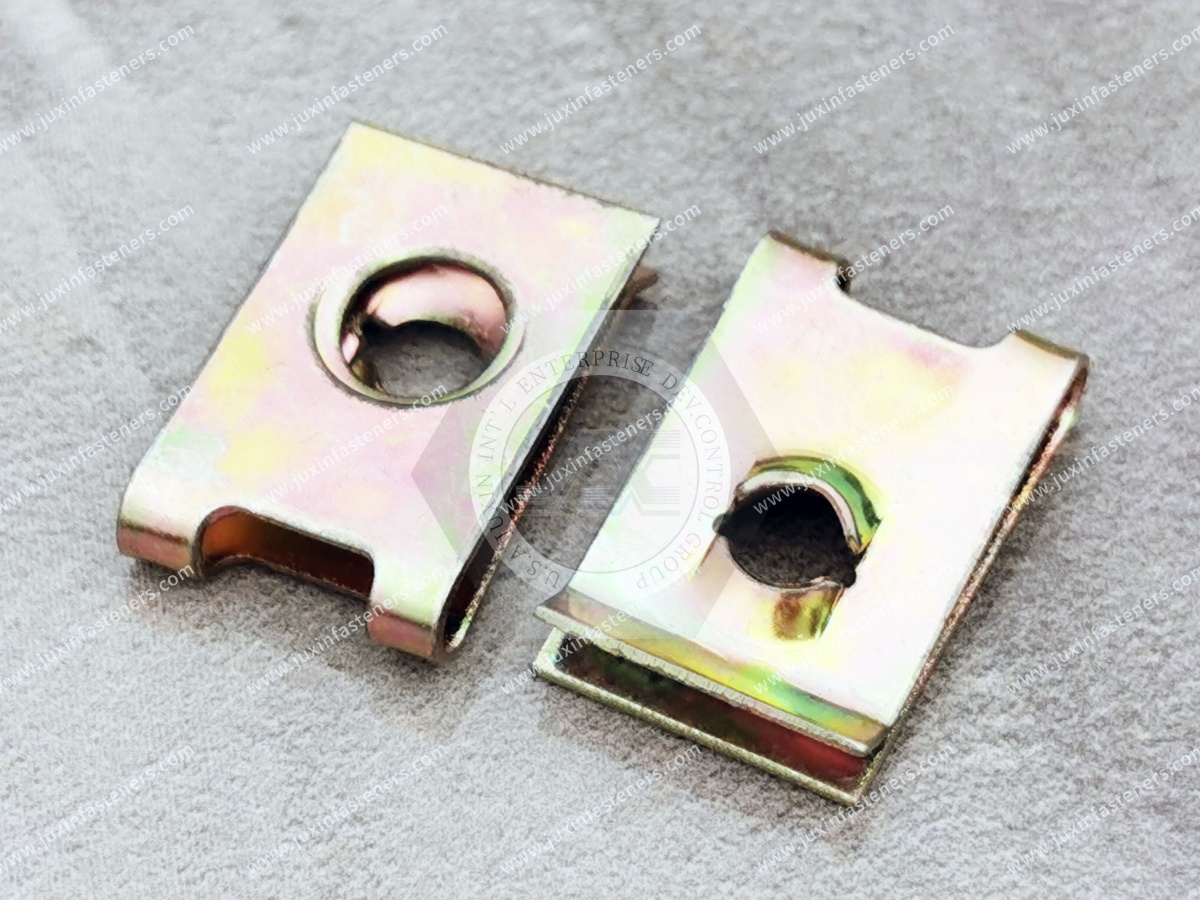
The described product uses a black phosphate coating. Black phosphate-coated steel is commonly selected where a dark appearance and the characteristics of a phosphate-based surface treatment are required.
The finish may be appropriate for selected dry or controlled environments, depending on the product specification and any additional surface treatment.
The selection of a black phosphate finish may involve:
Dark surface appearance
Surface treatment requirements
Oil retention characteristics, where applicable
Compatibility with the assembly environment
Customer appearance requirements
Storage and handling considerations
Black phosphate should not be described as equivalent to a high-performance corrosion-resistant coating for outdoor, marine or highly corrosive applications.
The phrase “mildly corrosion resistant in dry environments” is a general product description, not a complete environmental qualification.
The buyer should consider:
Humidity and condensation
Outdoor exposure
Contact with water or road contaminants
Chemical exposure
Storage conditions
Contact with dissimilar metals
Required corrosion test method
Acceptance criteria
If a specific corrosion test is required, the test method and acceptance criteria should be stated in the purchasing specification.
The result should be linked to the actual material, coating system, production part and test conditions.
A strong-grip clip-on nut should be selected with attention to the complete assembly process. The product’s performance can be affected by panel tolerances, screw alignment and installation forces.
The panel edge must provide the geometry required for the clip to seat correctly.
Review the following:
Panel edge shape
Opening dimensions
Distance from the fastening point to the edge
Clip engagement area
Nearby bends or formed features
Paint or coating buildup
Clearance for screw installation tools
A product that fits one panel design may not fit another panel with the same nominal thickness but a different edge shape.
Misalignment between the screw and the fastening interface may lead to cross-threading, component movement or damage.
The assembly process should consider:
Nut positioning
Screw alignment
Tool access
Screw insertion speed
Tightening method
Panel support
Required inspection points
Where production volume is high, sample assembly trials can help identify fit and process issues before production approval.
Installation torque should be specified only when it is supported by the actual screw, nut, coating and joint design.
Torque depends on factors including:
Thread geometry
Friction
Surface finish
Lubrication
Screw material
Panel stiffness
Required joint performance
A universal torque value should not be inferred from the nut’s product category. The customer’s engineering team should define the appropriate assembly process and acceptance criteria.
Clip-on nuts are often selected for assemblies that may experience movement, handling vibration or service vibration. However, panel retention and joint preload retention are separate engineering requirements.
For an application with vibration exposure, consider:
Clip retention on the panel
Screw and nut compatibility
Joint stiffness
Preload requirements
Panel deformation
External loading
Thermal cycling
Friction conditions
Any specified locking feature
The clip itself should not be described as a universal anti-vibration locking mechanism.
If vibration performance is important, the complete assembly should be tested using representative materials, fasteners and loading conditions.
Terms such as “vibration-resistant,” “secure,” and “strong-grip” should be supported by a defined product feature or application test when used in a technical specification.
A more reliable engineering description explains what the product is designed to do and identifies which performance requirements require validation.
This approach helps procurement teams avoid purchasing a part based on a broad marketing phrase that does not define the actual acceptance criteria.
Strong-grip clip-on nuts for tapping screws may be considered for selected light-duty and medium-duty panel fastening applications, depending on the product design and specified loads.
Potential applications include selected interior trim panels, covers, brackets and decorative assemblies.
Engineering considerations include:
Thin-panel compatibility
Clip retention during assembly
Screw access
Clearance around the fastening point
Noise and rattle considerations
Serviceability
Environmental exposure
The product should not be presented as a universal solution for structural vehicle joints or safety-critical assemblies without specific validation.
Exterior applications may involve increased exposure to moisture, temperature variation, road contaminants and corrosion.
For these applications, the buyer should confirm the coating system and required environmental performance.
A black phosphate finish should not automatically be treated as suitable for severe outdoor exposure.
Clip-on nuts may be considered for selected covers, brackets, internal panels and enclosure components.
The design review should address:
Panel material and thickness
Edge geometry
Screw compatibility
Clearance
Electrical isolation requirements
Corrosion environment
Maintenance access
A standard clip-on nut should not be represented as a grounding, bonding or EMI-shielding component unless that function is specifically designed and validated.
Selected HVAC covers, equipment housings and industrial sheet-metal assemblies may require a compact fastening point that can be installed on a panel edge.
The engineer should confirm the material, coating, service environment, screw compatibility and expected removal frequency.
For industrial machinery, the suitability of a clip-on nut depends on the panel design and application loads.
Where the assembly is exposed to high vibration, repeated impact or significant mechanical loading, the product should be reviewed as part of the complete joint rather than selected solely for its clip shape.
Clip-on nuts are one of several ways to create a fastening point on a panel. The appropriate choice depends on the panel, installation process, access requirements and required performance.
Weld nuts are attached to a suitable substrate through a welding process.
They may be considered when a fixed threaded fastening point is required and the panel and manufacturing process support welding.
Clip-on nuts may be considered when:
Welding is not preferred
The panel is already finished
A clip-mounted component is required
A non-welded assembly process is preferred
The two technologies have different installation processes and retention mechanisms.
Self-clinching nuts are installed into a suitable panel through a controlled mechanical installation process. Their suitability depends on the panel material, hole design and installation conditions.
Clip-on nuts may be considered where edge-mounted installation is more appropriate. They should not be treated as direct equivalents because their retention and installation methods differ.
For related fastening applications, review the JUXIN FASTENERS self-clinching fastener solutions.
Blind rivet nuts provide a threaded fastening point through a blind-side installation process.
They may be appropriate where backside access is unavailable and the panel design supports the installation method.
Clip-on nuts may be considered for selected edge-mounted applications where a clip-on solution is preferred.
The comparison should include:
Installation access
Panel thickness
Hole preparation
Tooling
Retention requirements
Joint loading
Assembly sequence
Serviceability
Production volume
For blind-installed threaded fastening, review the JUXIN FASTENERS blind rivet nuts engineering guide.

The material used for a clip-on nut affects its forming behavior, spring characteristics, corrosion response and suitability for the intended environment.
The exact material grade should be confirmed against the selected product drawing or customer specification.
Materials such as spring steel or stainless steel should not be listed as standard options unless they have been confirmed for the relevant product.
A sourcing specification may need to include:
Base material
Material grade, if required
Heat treatment, where applicable
Surface finish
Coating requirements
Corrosion requirements
Appearance
Restricted-substance requirements
Applicable inspection documentation
Material selection should be based on the actual design and environment rather than assuming that a higher-strength or more expensive material is always the correct choice.
Quality requirements should be agreed according to the product, application and customer purchasing specification.
Potential inspection areas include:
Dimensional verification
Clip geometry
Panel fit
Thread or screw-interface verification
Surface finish and appearance
Material documentation, where specified
Assembly evaluation
Corrosion testing, where required
The exact inspection methods and documentation available should be confirmed for the selected product and order.
No specific certification, automated inspection capability or test result should be assumed without written confirmation.
For environmental compliance, the customer should identify the applicable requirements, such as restricted substances, coating chemistry and documentation expectations.
Compliance should be confirmed for the actual material and finish supplied.
A purchasing team should avoid sourcing a clip-on nut using only the terms “U-nut” or “strong-grip.” Similar product names may represent different clip geometries, screw interfaces and panel ranges.
A complete RFQ should include the technical information needed to identify the correct product.
Product name or reference
Drawing or reference sample
Overall dimensions
Clip configuration
Panel engagement geometry
Required installation clearance
Tapping screw type
Screw diameter
Thread specification or screw designation
Screw length
Screw head style
Screw material and finish
Installation method
Torque requirements, if specified
Panel material
Nominal thickness
Thickness tolerance
Edge or opening dimensions
Surface coating or paint
Installation direction
Clearance around the fastening point
Required base material
Black phosphate finish or alternative coating
Environmental exposure
Corrosion test requirements
Appearance requirements
Compliance documentation
Prototype or production quantity
Annual usage estimate
Sample approval requirements
Inspection criteria
Packaging and labeling
Delivery requirements
Drawing revision and change-control expectations
A clear drawing or reference sample allows the supplier to distinguish between different U-style clip-on nuts, J-style clip nuts, barrel clip nuts and other panel fastening components.
Before requesting a quotation from JUXIN FASTENERS, prepare the following information where available:
Application
Industry and application
Panel or component being fastened
Installation environment
Required service and maintenance conditions
Fastener
Product reference
Clip configuration
Overall dimensions
Material and surface finish
Required thread or screw interface
Panel
Material
Thickness and tolerance
Edge shape
Opening dimensions
Coating or paint
Installation direction
Screw
Tapping screw specification
Diameter and length
Head style
Material and finish
Required installation process
Commercial Requirements
Prototype quantity
Estimated annual usage
Sample requirements
Packaging requirements
Inspection documentation
Target production schedule
Providing a 2D drawing, reference sample or application photograph can help the sourcing team evaluate product compatibility more accurately.
JUXIN FASTENERS supplies industrial fastening components for OEM and B2B sourcing requirements.
Our product range includes clip-on nuts, spring steel fasteners, self-clinching fasteners, rivet nuts, custom screws and other fastening solutions.
For strong-grip clip-on nuts used with tapping screws, product selection should be based on the actual panel geometry, screw interface, material, finish and application requirements.
Our team can review your drawing, reference part or application details to support product identification, sample evaluation and quotation.
Whether your project involves automotive trim, electrical equipment, HVAC panels, industrial housings or other thin-panel assemblies, provide the relevant specifications for a product-specific review.
Request an RFQ from JUXIN FASTENERS
Email: info@juxinfasteners.com
Website: https://www.juxinfasteners.com
Please include your tapping screw specification, panel thickness, panel material, surface finish, estimated quantity and drawing or sample information where available.
This information helps the sourcing team evaluate the application and prepare an appropriate technical and commercial response.
Product Packaging
Packaging Standard
At Juxin Fasteners, we apply standardized export packaging to ensure product protection, traceability, and compliance with international logistics requirements.
1. Standard Export Packaging
Unless otherwise specified, all products will be packed according to our factory standard export packaging, which includes:
Moisture-resistant inner protection
Poly bag or small box packing as required
Reinforced export cartons
Clear labeling with part number, specification, batch number, and quantity
Palletizing for sea or air shipment when necessary
Our standard packaging is designed to ensure safe transportation, efficient warehousing, and long-distance international shipping.
2. Customized Packaging Options
We also provide customized packaging solutions according to customer requirements, including but not limited to:
Private labeling
Customized barcodes
Specific carton dimensions
Retail packaging
Special pallet configuration
Customer-specific marking and identification
So that you know, customized packaging may involve additional costs and extended lead time depending on the complexity of the requirements.
3. Compliance & Quality Assurance
All packaging processes are controlled under our ISO 9001 quality management system to ensure consistency, traceability, and product integrity throughout the supply chain.
Product Pictures
Contact Us
Tel.:
+86 020 8621 0320
+86 020 3121 6067
E-mail:
Technical Support:
Navigation
SEND INQUIREY