Call Us
+86 136 6007 9809
Call Us
+86 136 6007 9809

How do design and manufacturing engineers successfully integrate aluminum weld fasteners into lightweight sheet metal assemblies?
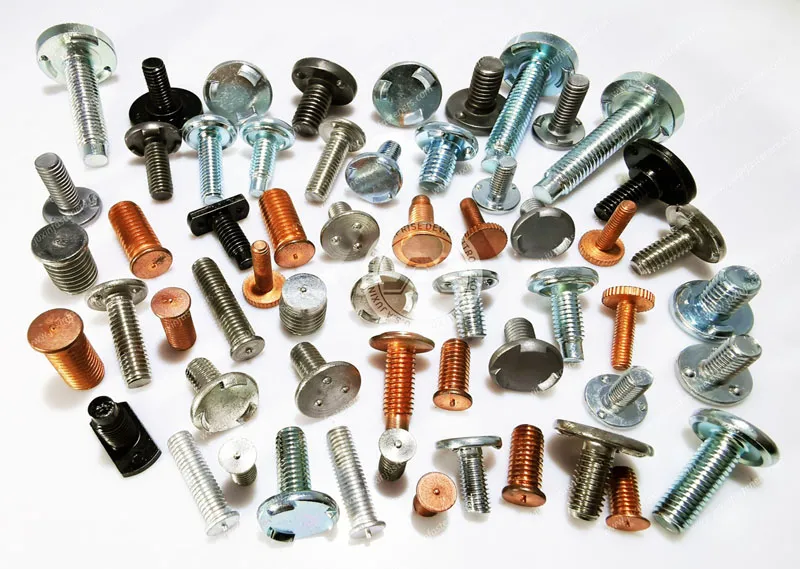
Aluminum weld fasteners are used to create threaded or stud attachment points on aluminum sheet-metal structures without adding a conventional loose nut or separate mechanical bracket.
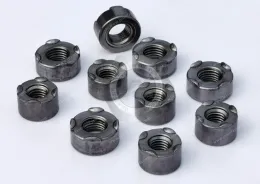
Depending on the application, the fastening system may include aluminum weld nuts, aluminum weld studs,
or other engineered fastening components designed for compatibility with the parent material and the selected joining process.
Product Specification
How do design and manufacturing engineers successfully integrate aluminum weld fasteners into lightweight sheet metal assemblies?
Aluminum weld fasteners are used to create threaded or stud attachment points on aluminum sheet-metal structures without adding a conventional loose nut or separate mechanical bracket.
Depending on the application, the fastening system may include aluminum weld nuts, aluminum weld studs,
or other engineered fastening components designed for compatibility with the parent material and the selected joining process.
The engineering challenge is more complex than simply replacing a steel weld nut with an aluminum equivalent.
Aluminum has high electrical and thermal conductivity and rapidly develops a stable aluminum oxide surface layer.
The oxide has substantially different electrical and thermal behavior from the underlying aluminum and must be considered during process development.
As a result, successful aluminum joining requires coordinated control of fastener material, parent-sheet alloy and temper, surface condition, projection or stud geometry,
electrode or welding-tool configuration, electrical energy, force, weld sequence, and downstream corrosion protection.
Depending on the fastener design and manufacturing route, applicable joining technologies may include resistance welding,
projection welding, stud-welding processes, or other application-specific methods.
The correct process must be established through engineering trials and validated against the actual fastener, aluminum alloy, sheet thickness, surface condition, equipment, and production environment.
A useful way to understand the engineering chain is:
[ Aluminum Alloy + Temper ]
            |
            v
[ Oxide Layer + Surface Condition ]
            |
            v
[ Fastener Geometry + Material Compatibility ]
            |
            v
[ Welding / Joining Process Development ]
            |
            v
[ Weld Interface + Parent Sheet Integrity ]
            |
            v
[ Corrosion / Electrical / Mechanical Validation ]
            |
            v
[ Production-Controlled OEM Assembly ]
The objective is therefore not simply to achieve a visible weld.
The objective is to create a repeatable mechanical and, where required, electrical connection whose performance remains suitable for the complete assembly and its service environment.
For automotive lightweighting, electric vehicles, battery systems, electrical equipment, industrial machinery, and other weight-sensitive structures,
aluminum fastening can reduce component mass and simplify assembly architecture. However, aluminum fasteners are not automatically interchangeable with steel fasteners.
Material compatibility, galvanic corrosion, weldability, thermal behavior, thread performance, coating requirements, and production process capability must all be evaluated together.
JUXIN FASTENERS supplies and engineers weld fasteners, self-clinching fasteners, blind rivet nuts, threaded inserts, CNC-machined fasteners, custom screws and bolts, s
tainless steel fasteners, and other engineered fastening components for OEM applications. For aluminum applications, fastener material,
geometry, joining process, and validation requirements should be established from the customer drawing and application conditions.
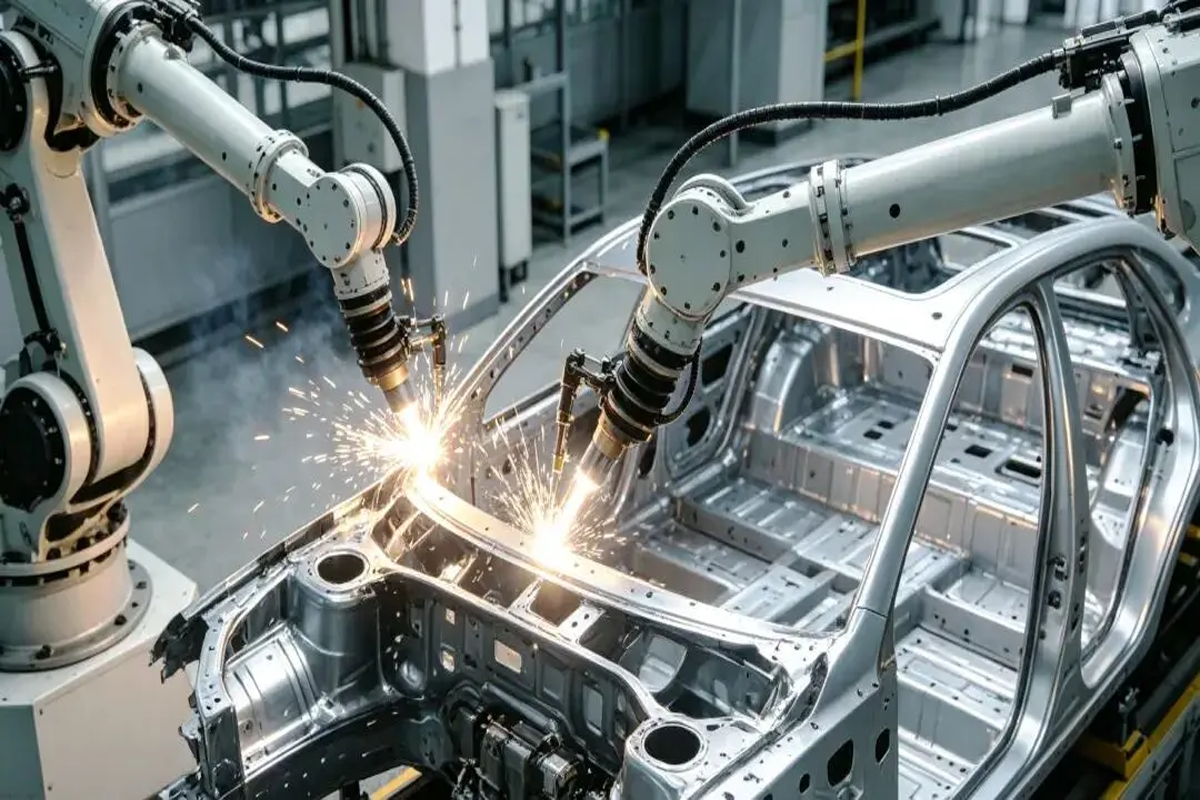
Aluminum joining introduces several engineering variables that are less pronounced in conventional low-carbon-steel resistance welding.
Understanding these variables before selecting the fastener can prevent a common sourcing mistake: choosing a nominally compatible material first and attempting to make the production welding process fit afterward.
Aluminum naturally forms a thin oxide layer when exposed to air.
This oxide is stable and electrically different from the underlying aluminum. Its melting behavior is also substantially different from that of metallic aluminum. Consequently, the surface condition of the aluminum substrate can strongly influence the initiation and repeatability of an electrical joining process.
Several physical characteristics matter simultaneously:
High electrical conductivity: Aluminum conducts electrical current efficiently, reducing the amount of localized resistance heating available at some interfaces compared with materials having higher electrical resistivity.
High thermal conductivity: Heat can be conducted away rapidly from the intended weld zone.
Stable oxide film: The oxide layer can interfere with electrical contact and metallurgical bonding if the joining process is not designed to accommodate the surface condition.
Surface contamination: Lubricants, forming residues, oxides, conversion coatings, and other contaminants can modify contact resistance and heat generation.
Alloy and temper: Aluminum alloys do not all behave identically during welding or subsequent service.
The simplified resistance-heating relationship
Q = I²Rt
is useful for understanding the process, but it should not be interpreted as a universal method for calculating a production weld schedule.
Actual heat generation and distribution depend on contact resistance, current path, electrode condition, force, geometry, material properties, weld sequence, and equipment characteristics.
The engineering objective is to establish sufficient localized energy and appropriate mechanical contact to form a sound joint without causing unacceptable expulsion, excessive deformation,
cracking, electrode damage, or degradation of the parent material.
A common misconception is that increasing welding current alone solves aluminum welding problems.
In practice, current cannot be considered independently from electrode force, contact condition, fastener geometry, surface preparation, electrical waveform, weld duration, and equipment response.
Depending on the process, engineers may evaluate:
initial contact resistance;
surface preparation;
electrode force;
current waveform;
current ramp characteristics;
weld duration;
hold period;
electrode geometry;
projection geometry;
contact pressure;
heat balance;
material thickness;
alloy condition;
and production-to-production repeatability.
The correct parameters must be established for the actual fastener and substrate combination.
Therefore, generic welding schedules should not be copied directly from one aluminum alloy or fastener geometry to another.
One of the most important issues in aluminum fastening is dissimilar-metal corrosion.
When aluminum is electrically connected to a more noble metal in the presence of an electrolyte, galvanic corrosion can occur.
The risk depends on the materials, exposed surface areas, electrical connection, environment, moisture conditions, coating system, and assembly geometry.
This is particularly important when an aluminum panel is joined to a steel fastener or steel structural component.
The engineering question should therefore be:
Is the complete material system compatible with the expected environment?
rather than:
Is the fastener material itself corrosion resistant?
Potential mitigation strategies may include:
selecting a more compatible fastener material;
applying an appropriate coating system;
introducing an engineered dielectric barrier where electrically isolated joining is acceptable;
controlling exposed dissimilar-metal interfaces;
using sealants or corrosion-protection systems where specified;
controlling moisture pathways;
and validating the completed assembly under the applicable environmental requirements.
A dielectric layer may reduce galvanic interaction, but it may not be appropriate where electrical continuity or grounding is required.
This is why galvanic corrosion mitigation and electrical bonding requirements must be evaluated together, rather than independently.
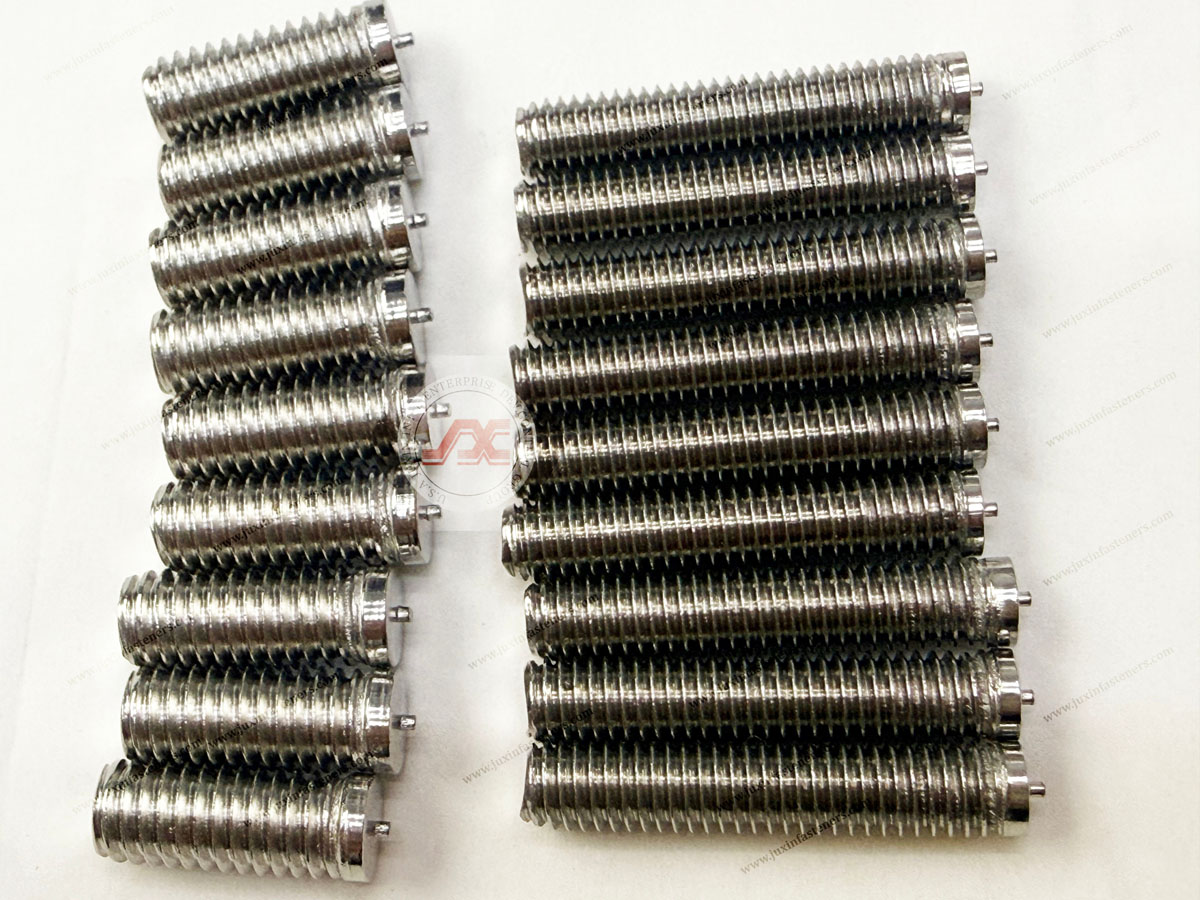
Aluminum weld fasteners have two very different search intents.
An engineer typically asks:
Will this fastening system work mechanically, metallurgically, electrically, and dimensionally in my assembly?
A procurement manager asks:
Can the supplier manufacture it consistently, document the material and process, scale production, and support our supply-chain requirements?
A strong OEM sourcing strategy must answer both questions.
Engineering teams typically evaluate:
aluminum alloy and temper;
fastener alloy and condition;
parent-sheet thickness;
surface condition;
weldability;
projection or stud geometry;
electrical and thermal characteristics;
local sheet deformation;
thread size and tolerance;
positional accuracy;
assembly loads;
vibration;
thermal cycling;
corrosion environment;
electrical continuity where applicable;
and validation test requirements.
Alloy selection should not be based solely on whether both components are labeled "aluminum."
Different aluminum alloy families can have materially different mechanical properties, conductivity, forming characteristics, corrosion behavior, and welding response.
Where post-weld heat treatment, aging, or other thermal exposure can influence mechanical properties, the complete material and process condition should be considered.
Manufacturing engineers need to determine whether the selected fastener can be integrated into the production process.
Important questions include:
Can the welding equipment accommodate the fastener geometry?
Is electrode access sufficient?
Is the fastener orientation compatible with the fixture?
Can the production system control force and electrical energy consistently?
Is the fastener geometry suitable for repeatable positioning?
Will surface contamination affect the joining process?
Does the welding sequence create unacceptable panel distortion?
Can the completed assembly pass the required mechanical and electrical tests?
Can the process remain stable at production volume?
This is where DFM for aluminum weld fasteners becomes especially important.
A fastener that performs well during laboratory trials may still require redesign if it cannot be fed, located, welded, inspected, or assembled consistently on the production line.
Procurement teams typically evaluate:
material availability;
supplier manufacturing capability;
dimensional consistency;
material traceability;
inspection documentation;
production capacity;
tooling requirements;
surface-treatment capability;
packaging;
delivery performance;
engineering support;
change-control procedures;
qualification requirements;
total cost of ownership;
and supply-chain resilience.
Material Test Reports or certificates of material composition may be required for specified projects, but they should be defined in the purchasing specification rather than assumed for every standard order.
Similarly, PPAP or other customer-specific quality documentation should be established according to the OEM program requirements.
A supplier should not be considered compliant merely because a document package exists; the documents must correspond to the actual product, process, revision, and customer requirements.
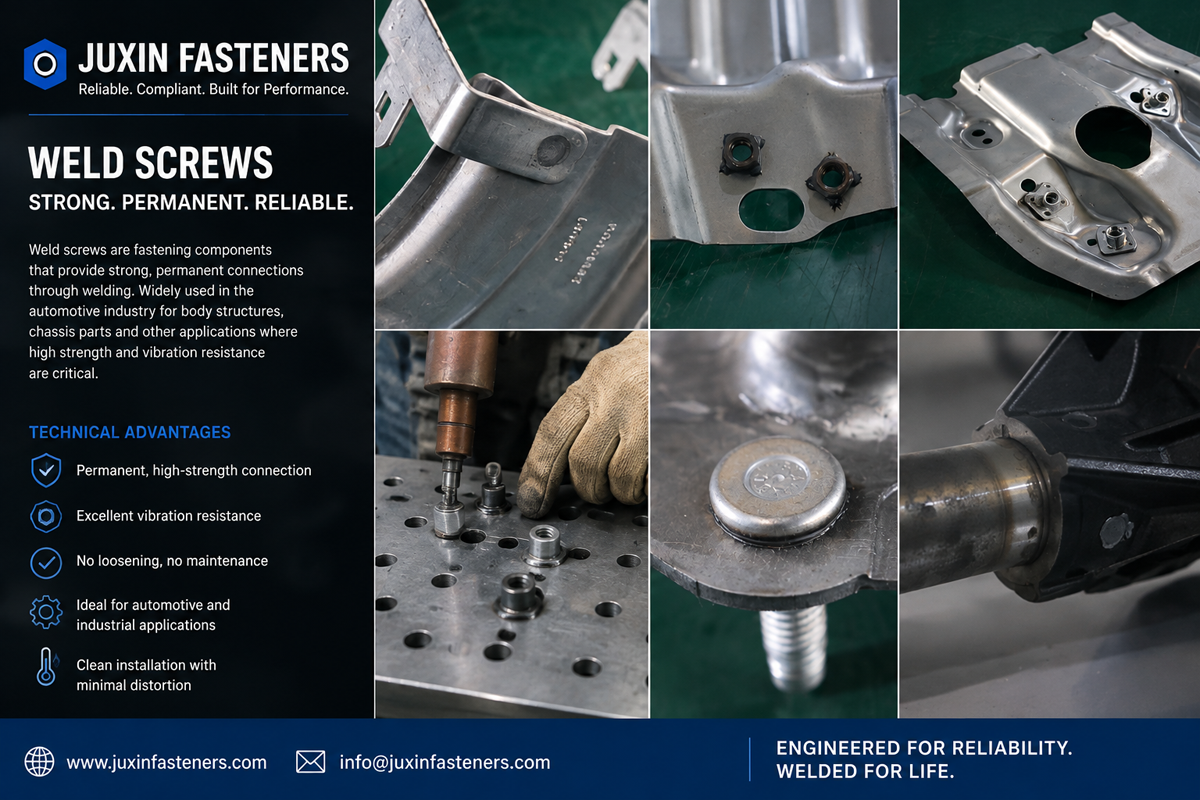
Material selection is one of the first engineering decisions that should be made.
The fastener does not necessarily have to be made from exactly the same alloy as the parent sheet.
However, material selection should consider:
mechanical compatibility;
welding behavior;
electrical conductivity;
thermal conductivity;
corrosion potential;
galvanic interaction;
forming or machining requirements;
thread performance;
operating temperature;
and downstream surface treatment.
The best material choice is therefore a system decision, not a simple same-material substitution.
5000-series and 6000-series aluminum alloys are common engineering families in automotive and industrial structures, but the exact alloy and temper must be selected according to the application.
A 5000-series sheet and a 6000-series sheet should not automatically be assumed to have identical welding behavior.
Likewise, an aluminum fastener intended for a specific welding process should not be treated as interchangeable across all aluminum alloys.
The engineering drawing or material specification should identify the required alloy or acceptable material range where material identity is functionally important.
The parent material surrounding the weld can become part of the failure path.
Possible failure mechanisms include:
weld-interface failure;
local parent-sheet deformation;
tearing around the attachment point;
fastener deformation;
thread stripping;
localized heat-affected degradation;
or failure elsewhere in the structural load path.
For this reason, a nominal fastener tensile or proof-load value does not by itself define the strength of the completed aluminum assembly.
Joint validation should reproduce the relevant loading direction and boundary conditions of the application.
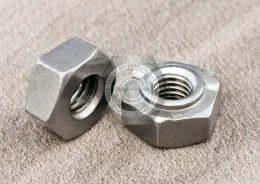
Aluminum weld nuts can provide an integrated threaded attachment point on aluminum sheet structures.
Potential applications include:
automotive interior and body structures;
lightweight brackets;
battery-system components;
electrical enclosures;
equipment housings;
HVAC and industrial sheet-metal assemblies;
and other aluminum structures requiring captive threaded attachment.
The correct weld-nut design depends on the parent sheet, welding technology, thread specification, required load path, available access, and corrosion environment.
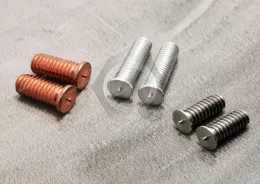
Aluminum weld studs can provide externally threaded or stud-style attachment points where the design requires a projecting fastening feature.
Potential applications include:
brackets;
clips;
cable and harness retention;
lightweight structural attachments;
thermal-management components;
electrical equipment;
and automotive body components.
Stud-welding technology must be selected according to the actual stud geometry, alloy, surface condition, substrate, and production equipment.
Capacitor-discharge and other stud-welding methods should therefore be treated as process options rather than universal solutions for every aluminum assembly.
A material designation alone does not determine whether a weld fastener will work.
Fastener geometry influences:
current path;
contact area;
local heat generation;
projection collapse;
electrode access;
fixture requirements;
load transfer;
sheet deformation;
and final fastener position.
For OEM programs, the fastener should therefore be evaluated as a complete engineered component rather than as a commodity aluminum nut or stud.
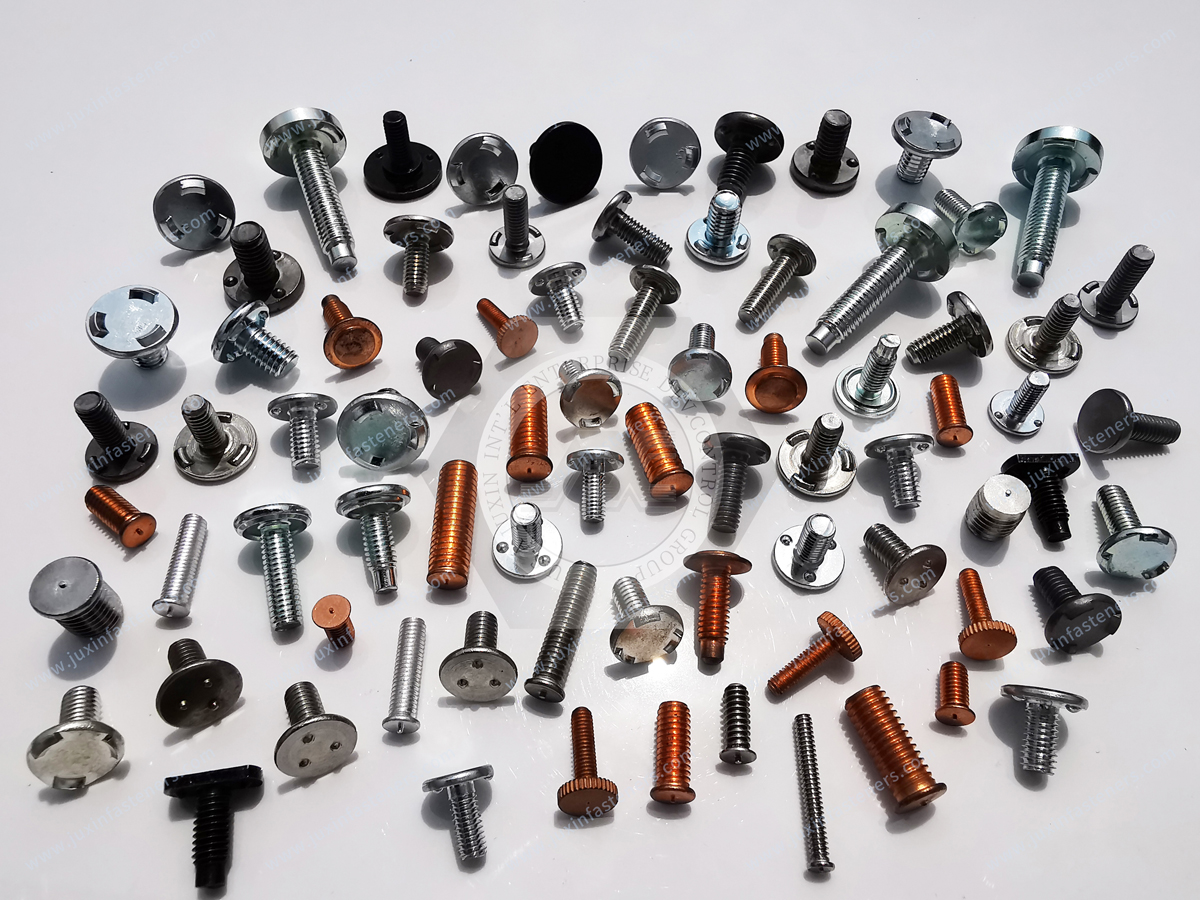
Resistance welding of aluminum requires careful process development because the combination of high conductivity, thermal conductivity,
surface oxide, and changing contact resistance can make the process sensitive to manufacturing conditions.
The production process may require control of:
electrode condition;
contact pressure;
force;
current;
waveform;
weld duration;
surface condition;
projection geometry;
cooling;
and process sequence.
The objective is not simply to maximize electrical energy.
Excessive energy can create expulsion, local overheating, electrode damage, distortion, or inconsistent weld formation.
Insufficient energy can produce incomplete bonding or insufficient mechanical attachment.
Stud welding provides another route for attaching aluminum studs to suitable aluminum substrates.
Depending on the specific technology, stud welding may use different energy delivery and arc-control methods.
The selected process must account for:
stud diameter and geometry;
base-material alloy;
surface condition;
stud-to-sheet contact;
welding equipment;
production rate;
fixture design;
and required joint performance.
"MIG stud welding," capacitor-discharge stud welding, and other joining processes should not be treated as interchangeable process labels.
The applicable technology must be matched to the actual component and production equipment.
A successful prototype weld does not automatically demonstrate production capability.
A proper validation program should consider:
Material verification
Dimensional verification
Surface-condition verification
Welding-process development
Mechanical testing
Failure-mode analysis
Positional inspection
Corrosion or environmental validation where required
Production-process repeatability
Change-control requirements
The exact test plan should be established from the customer specification, drawing, industry requirements, and actual application risk.
Steel fasteners are widely used in industrial assemblies, but direct aluminum-to-steel contact can create galvanic corrosion risk when moisture and an electrical path are present.
This does not mean steel fasteners can never be used with aluminum.
It means the complete assembly needs to be engineered.
Factors include:
relative electrochemical potential;
exposed area ratio;
moisture;
salt exposure;
temperature;
coating condition;
crevice geometry;
electrical continuity;
sealant;
drainage;
and service environment.
Some assemblies require electrical continuity.
Examples include:
grounding;
shielding;
bonding;
electrical enclosure continuity;
battery-system electrical interfaces;
and other conductive structures.
In these applications, simply inserting a dielectric barrier may solve one corrosion mechanism while creating an electrical-performance problem.
The corrosion-control strategy therefore has to be coordinated with the electrical architecture.
Surface finishes can influence:
corrosion resistance;
electrical contact;
weldability;
thread performance;
friction;
and downstream coating compatibility.
A coating that performs well against corrosion may not necessarily be suitable at a weld interface.
For related engineering considerations, see the JUXIN FASTENERS Fastener Surface Finishes & Coatings: OEM Engineering & Sourcing Guide and Fastener Corrosion Resistance & Salt Spray Testing solutions.
Aluminum is increasingly used in automotive structures where mass reduction, stiffness, corrosion performance, or packaging requirements justify the material.
Applications can include:
aluminum body structures;
closures;
brackets;
cross-members;
seat structures;
battery-related structures;
thermal-management assemblies;
and other lightweight sheet-metal components.
The correct terminology is Body-in-White (BIW), not "Body-in-Water."
Automotive engineers may evaluate:
robotic welding integration;
fixture positioning;
fastener orientation;
electrode access;
material compatibility;
corrosion protection;
positional tolerance;
assembly accessibility;
thread quality;
mechanical validation;
and downstream coating processes.
For aluminum BIW applications, fastener position can be particularly important because the completed assembly may be combined with brackets,
clips, harnesses, trim, or other components that depend on controlled attachment locations.
See the JUXIN FASTENERS Automotive Body-in-White Weld Fasteners solution for related BIW engineering and sourcing considerations.
Electric-vehicle battery systems create a demanding combination of:
lightweighting;
vibration;
thermal cycling;
electrical requirements;
corrosion exposure;
sealing architecture;
and high-volume manufacturing.
Aluminum is widely used in battery-related structures because of its favorable strength-to-weight and thermal characteristics for many applications.
However, an aluminum weld fastener does not automatically create a sealed or hermetic joint.
Where a fastener is located near:
coolant channels;
perimeter seals;
enclosure covers;
thermal-management interfaces;
or other fluid-management components,
the fastener geometry must be evaluated together with the complete sealing architecture.
An enclosure's IP rating is a property of the completed enclosure system and its defined test condition. It should not be attributed automatically to an individual weld fastener.
See the JUXIN FASTENERS EV Battery Enclosure Weld Fasteners & Sealing Guide for additional engineering considerations.
Battery assemblies may experience repeated temperature changes and mechanical vibration.
The engineering review should consider:
differential thermal expansion;
preload changes;
joint stiffness;
local sheet deformation;
fastener retention;
weld-interface durability;
mating-thread behavior;
and environmental exposure.
A weld nut prevents rotation of the nut relative to the parent sheet when the weld joint remains intact, but it does not automatically prevent the mating bolt from losing preload or loosening under every vibration condition.
Where dynamic loading is significant, the complete bolted joint should be evaluated.
Aluminum fastening is also relevant to marine, aerospace-related, transportation, and specialized industrial structures.
However, these industries often impose project-specific material, traceability, qualification, inspection, and documentation requirements.
Therefore, a supplier should not assume that a standard aluminum weld fastener is automatically qualified for an aerospace or marine structural application.
The correct approach is to define:
material requirements;
drawing requirements;
applicable standards;
inspection requirements;
environmental conditions;
joining process;
qualification testing;
traceability;
and customer-specific approval requirements.
For specialized applications, compliance must be demonstrated against the applicable specification rather than inferred from the fastener material alone.
Design-for-manufacturing is especially important when converting a steel fastening architecture to aluminum.
Before selecting the fastener, evaluate:
alloy;
temper;
thickness;
surface treatment;
forming condition;
access;
local stiffness;
hole geometry where applicable;
edge proximity;
and expected loads.
The fastener drawing should define the characteristics that affect function, including:
material;
thread;
head or flange geometry;
projection geometry;
stud length;
critical diameters;
positional requirements;
surface treatment;
and any special process requirements.
The same fastener can behave differently on different production equipment.
The engineering review should therefore include:
electrode configuration;
welding-machine capability;
force control;
electrical output;
fixture rigidity;
part positioning;
cooling;
automation;
and inspection capability.
This is an important Information Gain point:
Fastener design and welding-process design should be developed together.
Changing the fastener after production tooling is complete can be significantly more expensive than addressing weld geometry during the initial DFM review.
Mechanical validation should focus on the actual failure modes of the completed joint.
Depending on the application, testing may evaluate:
pull-out;
push-out;
tensile loading;
shear loading;
torque-out;
thread stripping;
weld-interface failure;
parent-sheet deformation;
fatigue;
vibration;
or thermal cycling.
The appropriate test method and acceptance criteria depend on the customer specification and application.
A generic pull-out value should not be presented as a universal design limit because joint capacity depends on:
fastener geometry;
weld area;
sheet thickness;
aluminum alloy;
edge distance;
local sheet stiffness;
loading direction;
fixture condition;
and failure mode.
For more detail, see the JUXIN FASTENERS Fastener Push-Out & Pull-Out Testing engineering solution.
A robust OEM quality program should cover both the incoming fastener and the completed joining process.
Depending on drawing requirements, inspection may include:
thread size;
pitch diameter;
flange dimensions;
stud diameter;
fastener height;
projection geometry;
critical positional dimensions;
perpendicularity;
and other functional characteristics.
Thread tolerance should be specified according to the applicable thread standard and drawing requirement rather than automatically assigning one tolerance class to every application.
Where specified, material documentation can provide traceability for:
alloy designation;
material condition;
chemical composition;
mechanical properties;
and supplier batch information.
The required documentation should be defined by the OEM quality plan.
Production control may include monitoring of:
force;
current;
voltage;
weld time;
equipment alarms;
electrode condition;
process settings;
and inspection results.
SPC or capability analysis can be valuable where the process is sufficiently stable and the measurement system is suitable.
It should not be treated as a substitute for basic process control or as a mandatory label for every fastening application.
An aluminum weld fastener RFQ should provide enough information for the supplier to evaluate both the component and its manufacturing process.
Recommended information includes:
2D engineering drawing
3D CAD model where available
fastener type
thread specification
critical dimensions
positional requirements
material
surface treatment
annual usage
forecast
packaging requirements
aluminum alloy
temper
sheet thickness
surface condition
coating or conversion treatment
hole or attachment geometry
joining method
resistance welding or stud-welding process
equipment constraints
electrode access
automation requirements
fixture constraints
assembly sequence
dimensional inspection
material documentation
first-article inspection
mechanical testing
corrosion testing
electrical continuity testing where applicable
PPAP or other customer-specific submission requirements
change-control requirements
Providing this information early allows the supplier to identify DFM risks before quotation and tooling decisions are finalized.
The purchase price of an aluminum weld nut or stud is only one part of the commercial decision.
A complete TCO evaluation can include:
raw material cost;
tooling;
welding-process development;
fixture modification;
production cycle impact;
inspection;
surface treatment;
packaging;
transportation;
corrosion protection;
assembly labor;
maintenance;
warranty risk;
and potential weight reduction.
For lightweight automotive and EV applications, the value of aluminum fastening may extend beyond the fastener itself because it can support a broader lightweighting strategy.
However, the economic benefit should be quantified against the actual vehicle or equipment architecture rather than assumed from material density alone.
When selecting an OEM supplier, procurement teams should evaluate more than catalog availability.
A supplier qualification review should ask:
Can the supplier manufacture the specified geometry?
Can the required aluminum material be controlled and traced?
Can the supplier support custom weld-nut or weld-stud development?
Can the supplier review the parent-sheet and joining process requirements?
Can dimensional inspection be documented?
Can prototypes be produced before mass production?
Can the supplier support customer-specific validation?
Can surface treatment requirements be controlled?
Can engineering changes be documented?
Can packaging support the customer's assembly process?
Can the supplier provide the quality documentation required by the OEM program?
For global OEM sourcing, the supplier's ability to communicate between engineering, quality, production, and procurement functions is often as important as nominal component price.
A high-quality aluminum weld fastener sourcing process can follow this path:
Application Requirement
        ↓
Aluminum Alloy + Sheet Definition
        ↓
Fastener Type Selection
        ↓
Material / Corrosion Review
        ↓
Joining Process Review
        ↓
Fastener Geometry + DFM
        ↓
Prototype / Process Validation
        ↓
Mechanical / Environmental Testing
        ↓
Dimensional + Quality Documentation
        ↓
Production Approval
        ↓
OEM Supply Program
This approach helps engineers and procurement teams avoid separating the technical and commercial decisions.
The supplier should be involved early enough to identify manufacturability issues before tooling, production fixtures, or assembly equipment are locked.
One of the most important engineering lessons is that aluminum fastening is a system-level material-selection problem.
Simply changing:
steel weld nut → aluminum weld nut
does not guarantee equivalent performance.
The engineering team should reassess:
welding process;
joint geometry;
corrosion;
electrical continuity;
thermal behavior;
mechanical loading;
thread performance;
production equipment;
inspection;
and downstream surface treatment.
Likewise, replacing a steel stud with an aluminum stud may affect stiffness, strength, conductivity, corrosion behavior, and welding response.
The correct question is therefore not:
"Can aluminum replace steel?"
It is:
"What fastening architecture provides the required mechanical, electrical, environmental, manufacturing, and commercial performance for this aluminum assembly?"
That distinction is especially important for OEM product development.
For a complete aluminum fastening development program, connect this page with the following JUXIN FASTENERS solutions:
Weld Fasteners Solutions — parent solution for weld nuts, weld studs, and engineered weld-fastening applications.
Substrate Material Compatibility for Weld Fasteners — material-selection guidance for substrate, fastener, electrical, thermal, and corrosion compatibility.
Automotive Body-in-White (BIW) Weld Fasteners — automotive lightweighting and BIW fastening considerations.
EV Battery Enclosure Weld Fasteners & Sealing Guide — battery enclosure, thermal-management, vibration, corrosion, and sealing architecture.
Fastener Surface Finishes & Coatings: OEM Engineering & Sourcing Guide — coating, corrosion, welding, thread, and downstream finishing considerations.
Fastener Corrosion Resistance & Salt Spray Testing — corrosion mechanisms and environmental validation.
Fastener Push-Out & Pull-Out Testing — mechanical joint validation and failure-mode analysis.
Fastener Vibration Loosening Prevention — dynamic joint behavior and vibration-related fastening risks.
Custom Weld Fasteners: Engineering & OEM Manufacturing — custom geometry, DFM, prototyping, and OEM development.
Fastener Procurement & RFQ Best Practices — technical RFQ preparation and supplier evaluation.
Global Fastener Procurement & RFQ Strategy — broader OEM sourcing, supplier qualification, documentation, and supply-chain strategy.
This internal-link structure creates a commercial journey from:
material selection → weld fastener design → industry application → validation → sourcing → OEM supply.
Aluminum has high electrical and thermal conductivity and forms a stable oxide layer on its surface. These characteristics influence electrical contact, heat generation, and weld formation.
The joining process therefore requires application-specific development rather than simply transferring a steel welding schedule to aluminum.
No. Compatibility depends on the aluminum alloy, temper, sheet thickness, surface condition, fastener geometry, joining technology, equipment, and required joint performance.
Not necessarily. Aluminum can support lightweighting objectives, but the correct material depends on mechanical requirements, corrosion environment, electrical requirements, welding process, cost, and overall system design.
They may be used in some engineered applications, but dissimilar-metal contact requires careful evaluation of galvanic corrosion, electrical continuity, coatings, sealing, and environmental exposure.
No. Corrosion performance depends on the complete material and surface-treatment system, environmental exposure, joint geometry, and protection strategy.
No. The weld fixes the nut relative to the parent sheet, but the mating threaded joint can still experience preload loss or self-loosening under dynamic loading.
The complete bolted joint must be evaluated when vibration is significant.
Yes, where the fastener material, joining process, corrosion strategy, mechanical requirements, electrical requirements, and sealing architecture are appropriately engineered and validated.
An individual fastener should not be treated as automatically providing an enclosure IP rating or hermetic sealing.
At minimum, provide the fastener drawing or CAD model, material requirements, thread specification, parent-sheet alloy and thickness,
surface condition, joining process, annual volume, quality requirements, testing requirements, packaging requirements, and applicable customer or industry specifications.
JUXIN FASTENERS supports custom engineered fastening-component development, including weld fasteners, according to customer drawings and application requirements. Aluminum-specific material, geometry, joining process, and validation requirements should be defined and reviewed for the individual project.
Depending on the project, documentation may include dimensional inspection records, material documentation, first-article inspection records,
process information, test reports, and customer-specific PPAP or other quality submissions where required.
The exact documentation package should be established in the RFQ, drawing, quality agreement, or customer program requirements.
Before requesting a quotation, prepare:
Fastener
Fastener type
2D drawing
3D CAD
Thread specification
Material
Surface treatment
Critical dimensions
Positional requirements
Parent Material
Aluminum alloy
Temper
Sheet thickness
Surface condition
Coating
Application environment
Joining Process
Resistance welding
Projection welding
Stud welding
Existing equipment
Electrode or tooling limitations
Automation requirements
Performance
Pull-out
Push-out
Torque-out
Tensile
Shear
Vibration
Thermal cycling
Corrosion
Electrical continuity
Commercial
Annual usage
Forecast
Prototype quantity
Production quantity
Packaging
Delivery requirements
Quality documentation
Change-control requirements
The more complete the technical package, the more accurately an OEM supplier can evaluate manufacturability and commercial cost.
JUXIN FASTENERS develops and supplies engineered fastening components for OEM and industrial applications, including:
Weld Nuts
Weld Studs
Self-Clinching Fasteners
Blind Rivet Nuts
Threaded Inserts
CNC-Machined Fasteners
Custom Screws and Bolts
Stainless Steel Fasteners
High-Strength Fasteners
Custom Engineered Fastening Components
For aluminum applications, the engineering process should begin with the actual application rather than a generic catalog substitution.
JUXIN FASTENERS can review customer drawings, material requirements, fastening geometry, application conditions, annual volumes, and quality requirements to determine an appropriate development and sourcing approach.
If your project involves aluminum weld nuts, aluminum weld studs, lightweight sheet-metal fastening, automotive aluminum BIW, EV battery structures, electrical enclosures, or other aluminum OEM assemblies, send the engineering information to the JUXIN FASTENERS team.
Please include:
2D engineering drawing;
3D CAD model where available;
aluminum alloy and temper;
sheet thickness;
surface treatment;
welding or joining process;
annual volume;
application environment;
testing requirements;
and required quality documentation.
Email: info@juxinfasteners.com
JUXIN FASTENERS — Precision Fastening Solutions Since 2003.
From material selection and fastener geometry to DFM, joining-process development, validation, quality documentation,
and OEM sourcing, our engineering approach is designed to connect the technical requirements of your fastening application with a practical commercial supply solution.
Product Packaging
Packaging Standard
At Juxin Fasteners, we apply standardized export packaging to ensure product protection, traceability, and compliance with international logistics requirements.
1. Standard Export Packaging
Unless otherwise specified, all products will be packed according to our factory standard export packaging, which includes:
Moisture-resistant inner protection
Poly bag or small box packing as required
Reinforced export cartons
Clear labeling with part number, specification, batch number, and quantity
Palletizing for sea or air shipment when necessary
Our standard packaging is designed to ensure safe transportation, efficient warehousing, and long-distance international shipping.
2. Customized Packaging Options
We also provide customized packaging solutions according to customer requirements, including but not limited to:
Private labeling
Customized barcodes
Specific carton dimensions
Retail packaging
Special pallet configuration
Customer-specific marking and identification
So that you know, customized packaging may involve additional costs and extended lead time depending on the complexity of the requirements.
3. Compliance & Quality Assurance
All packaging processes are controlled under our ISO 9001 quality management system to ensure consistency, traceability, and product integrity throughout the supply chain.
Product Pictures
Hot Products
Contact Us
Tel.:
+86 020 8621 0320
+86 020 3121 6067
E-mail:
Technical Support:
Navigation
SEND INQUIREY