Call Us
+86 136 6007 9809
Call Us
+86 136 6007 9809

How do engineers select and weld stainless steel fasteners for corrosive, hygienic, or demanding industrial environments?
Stainless steel weld fasteners—including stainless steel weld nuts, flange weld nuts, square weld nuts,
and weld studs—provide integrated attachment points for sheet-metal and fabricated assemblies where corrosion resistance, material compatibility,
cleanliness, or long-term environmental performance are important.
Product Specification
How do engineers select and weld stainless steel fasteners for corrosive, hygienic, or demanding industrial environments?
Stainless steel weld fasteners—including stainless steel weld nuts, flange weld nuts, square weld nuts,
and weld studs—provide integrated attachment points for sheet-metal and fabricated assemblies where corrosion resistance, material compatibility, cleanliness,
or long-term environmental performance are important.
Unlike plated carbon-steel fasteners, stainless steel obtains much of its corrosion resistance from the alloy itself.
Chromium in the stainless steel promotes formation of a thin, adherent passive oxide film on the surface.
However, stainless steel is not a single material, and corrosion resistance varies substantially with alloy family, composition, surface condition, fabrication history, environment, and contamination.
Common engineering families include:
Austenitic stainless steels such as 304 and 316;
Low-carbon variants such as 304L and 316L;
Martensitic stainless steels where higher hardness or strength characteristics are required;
And other stainless grades selected according to specific mechanical, corrosion, temperature, forming, or joining requirements.
The correct grade therefore depends on the actual application rather than the generic label "stainless steel."
Resistance welding of stainless steel also requires process-specific development.
Stainless steel generally has higher electrical resistivity and lower thermal conductivity than low-carbon steel.
These characteristics influence heat generation and heat dissipation during resistance welding.
At the same time, the thermal cycle must be considered because certain stainless steel grades can become susceptible to sensitization or other metallurgical changes under inappropriate welding conditions.
A useful engineering model is:
[ Stainless Steel Alloy Selection ]
              |
              v
[ Fastener Geometry + Parent Sheet ]
              |
              v
[ Surface Condition + Welding Process ]
              |
              v
[ Weld Interface + HAZ Metallurgy ]
              |
              v
[ Corrosion / Mechanical / Environmental Validation ]
              |
              v
[ Production Inspection + Traceability ]
              |
              v
[ OEM Supply & Change Control ]
The objective is not simply to select the most corrosion-resistant stainless grade.
The objective is to select a material and fastening system that satisfies the mechanical, corrosion, joining, manufacturing, inspection, and commercial requirements of the completed assembly.
JUXIN FASTENERS supplies stainless steel fasteners and engineered fastening components including
weld nuts, weld studs, self-clinching fasteners, blind rivet nuts, threaded inserts, CNC-machined fasteners, custom screws and bolts, and other OEM fastening solutions.
For stainless steel weld fasteners, final material, geometry, surface condition, welding method, and validation requirements should be established from the customer drawing and application conditions.
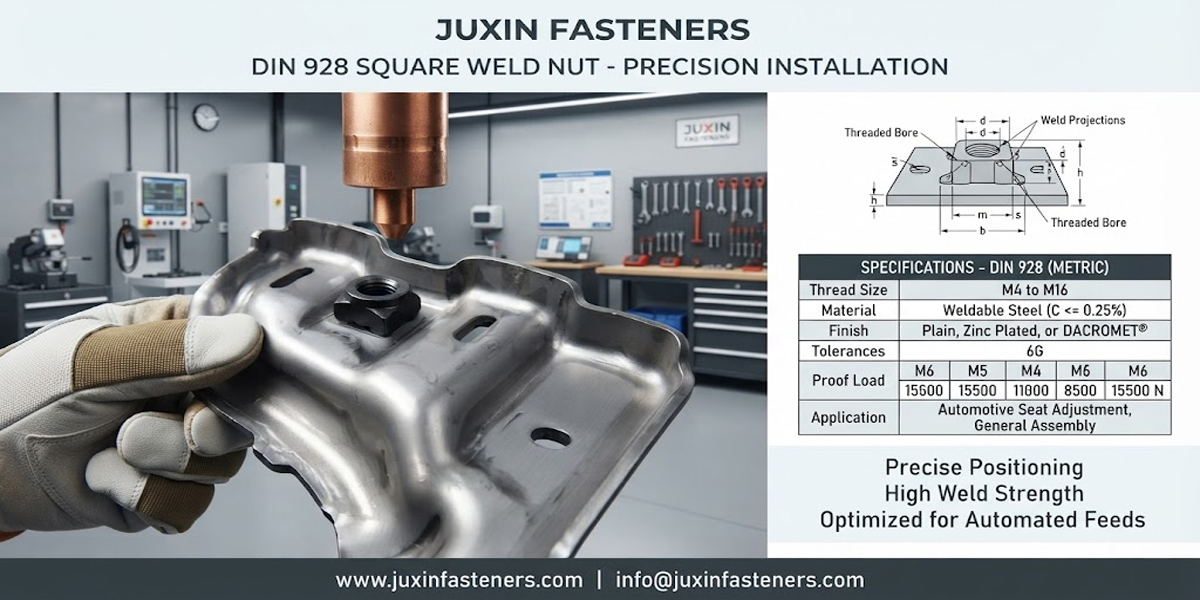
Stainless steel welding is not simply a stronger version of conventional carbon-steel welding.
The interaction between alloy chemistry, electrical resistance, thermal conductivity, surface condition, and thermal history can influence the completed joint.
This is why stainless steel weld fastener sourcing should involve both materials engineering and joining-process engineering.
The corrosion resistance of many stainless steels is associated with the formation of a chromium-rich passive surface film.
This passive film can reform after mechanical or chemical disturbance when the environment permits passivation.
However, stainless steel should not be described as automatically corrosion-proof.
Performance can be reduced by:
chloride exposure;
acidic or alkaline environments;
surface contamination;
embedded carbon steel or free iron;
rough or damaged surfaces;
crevices;
stagnant moisture;
galvanic contact;
elevated temperature;
inappropriate alloy selection;
or unfavorable fabrication conditions.
The practical engineering question is therefore:
What stainless alloy and surface condition are appropriate for this environment?
rather than:
Is stainless steel corrosion resistant?
Certain austenitic stainless steels can experience sensitization when exposed to an unfavorable thermal cycle.
At elevated temperatures, chromium can combine with carbon to form chromium carbides, particularly at grain boundaries.
This can reduce the chromium available locally for maintaining corrosion resistance and may increase susceptibility to intergranular corrosion under appropriate environmental conditions.
The exact temperature range and susceptibility depend on alloy composition, carbon content, thermal history, cooling conditions, and exposure time.
Therefore, a generic temperature band should not be treated as a universal pass/fail criterion for every stainless steel weld fastener.
Engineering mitigation can include:
selecting an appropriate stainless grade;
considering low-carbon variants such as 304L or 316L where appropriate;
controlling welding heat input and thermal exposure;
minimizing unnecessary thermal dwell;
validating the actual joint;
and selecting post-weld treatment when required by the application.
Low-carbon grades can reduce sensitization susceptibility, but they do not automatically eliminate every corrosion or welding risk.
The weld zone should be considered as a system containing:
fastener material;
parent sheet;
weld interface;
heat-affected region;
surrounding surface condition;
and the final environmental exposure.
A fastener can have excellent bulk corrosion resistance while the completed assembly develops localized corrosion because of surface contamination, crevices, galvanic interaction, or unfavorable process conditions.
This distinction is especially important in marine, chemical-processing, food-equipment, and outdoor industrial applications.
Stainless steel generally has higher electrical resistivity than low-carbon steel and lower thermal conductivity.
This influences resistance-welding behavior.
The simplified relationship:
Q = I²Rt
illustrates why electrical resistance contributes to heat generation.
However, the equation alone is not sufficient to establish a production welding schedule.
Actual heat distribution depends on:
electrical resistance;
current;
welding duration;
electrode force;
contact resistance;
fastener geometry;
sheet thickness;
alloy condition;
electrode configuration;
surface condition;
cooling;
and the complete current path.
Increasing current can increase heat generation, but excessive energy may also create:
expulsion;
excessive local heating;
electrode sticking;
electrode wear;
surface damage;
distortion;
inconsistent nugget formation;
or undesirable metallurgical changes.
Insufficient energy can result in:
incomplete fusion;
weak attachment;
inconsistent projection collapse;
or unacceptable variation between parts.
The engineering target is therefore a stable process window, not the highest possible current.
Electrode force influences electrical contact and mechanical deformation at the weld interface.
Too little force can produce unstable contact and localized heating.
Excessive force can alter projection behavior and contact conditions.
The correct force is dependent on the fastener geometry, substrate, electrode configuration, and welding system.
Consequently, generic force or current values should not be copied from another stainless steel weld-fastener application.
304 stainless steel is widely used for general-purpose corrosion-resistant applications.
It may be considered for:
industrial equipment;
enclosures;
brackets;
food-processing equipment;
architectural hardware;
automotive components;
and general sheet-metal assemblies.
However, suitability depends on the actual environment.
Chloride-rich environments can create localized corrosion risks that may make another alloy family more appropriate.
316 stainless steel contains molybdenum and is commonly selected where improved resistance to certain chloride-containing and corrosive environments is required compared with 304.
Potential applications include:
marine equipment;
chemical-processing environments;
outdoor equipment;
process machinery;
and other applications with elevated corrosion concerns.
However, 316 should not be treated as a universal solution for every aggressive environment.
Chemical concentration, temperature, exposure time, surface condition, crevices, and mechanical stress all influence actual corrosion behavior.
The "L" designation indicates a lower-carbon version within the relevant alloy family.
304L and 316L are often considered where welding-related sensitization susceptibility is an important design factor.
However, grade selection must still consider:
required mechanical properties;
fabrication process;
corrosion environment;
temperature;
surface treatment;
and applicable material specifications.
Martensitic stainless steels can provide higher hardness and strength characteristics than many austenitic grades, but their corrosion behavior, weldability, and heat-treatment requirements differ.
They should therefore not be substituted for 304 or 316 simply because they have a stainless designation.
Where a stainless weld fastener requires elevated hardness or mechanical strength, the material-selection process should evaluate:
strength + weldability + corrosion + thermal exposure + manufacturability
as one engineering decision.
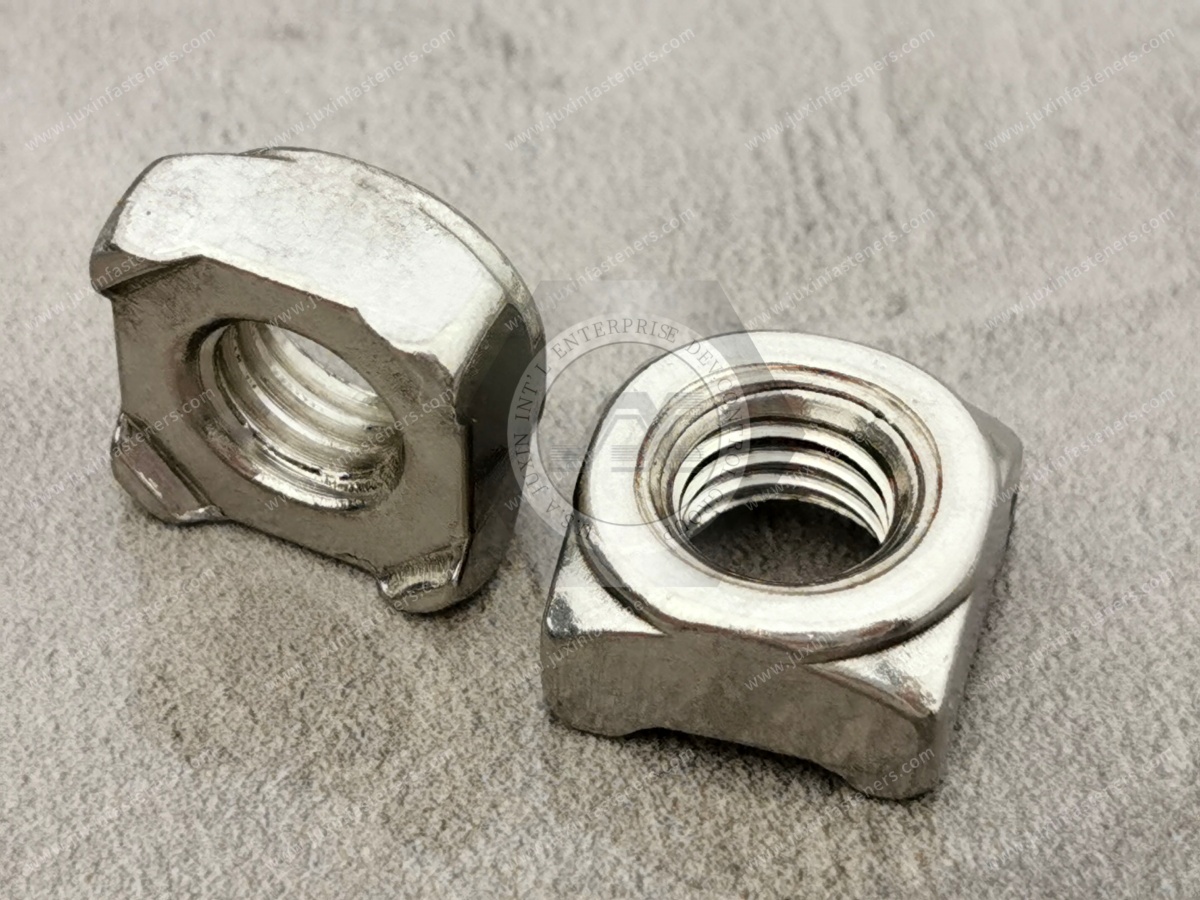
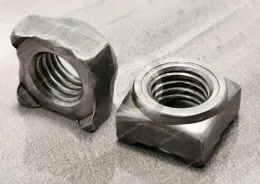
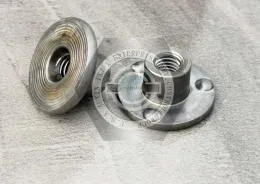
Stainless steel weld nuts provide captive internal threads directly on sheet-metal structures.
Potential configurations include:
square weld nuts;
hexagon weld nuts;
flange weld nuts;
projection weld nuts;
and custom stainless steel weld nuts.
Applications can include:
industrial equipment;
stainless steel enclosures;
food-processing machinery;
chemical-processing equipment;
marine equipment;
HVAC equipment;
transportation systems;
and specialized OEM assemblies.
The correct weld-nut geometry depends on:
parent-sheet material;
sheet thickness;
fastener alloy;
welding process;
load direction;
available access;
edge geometry;
assembly torque;
corrosion environment;
and downstream manufacturing operations.
Square and hexagon geometries can provide different positioning and anti-rotation characteristics.
However, neither geometry is universally superior.
The correct selection depends on:
welding method;
projection configuration;
panel geometry;
mating bolt;
assembly access;
load path;
and manufacturing equipment.
For OEM applications, the fastener geometry should be selected according to function rather than shape preference alone.
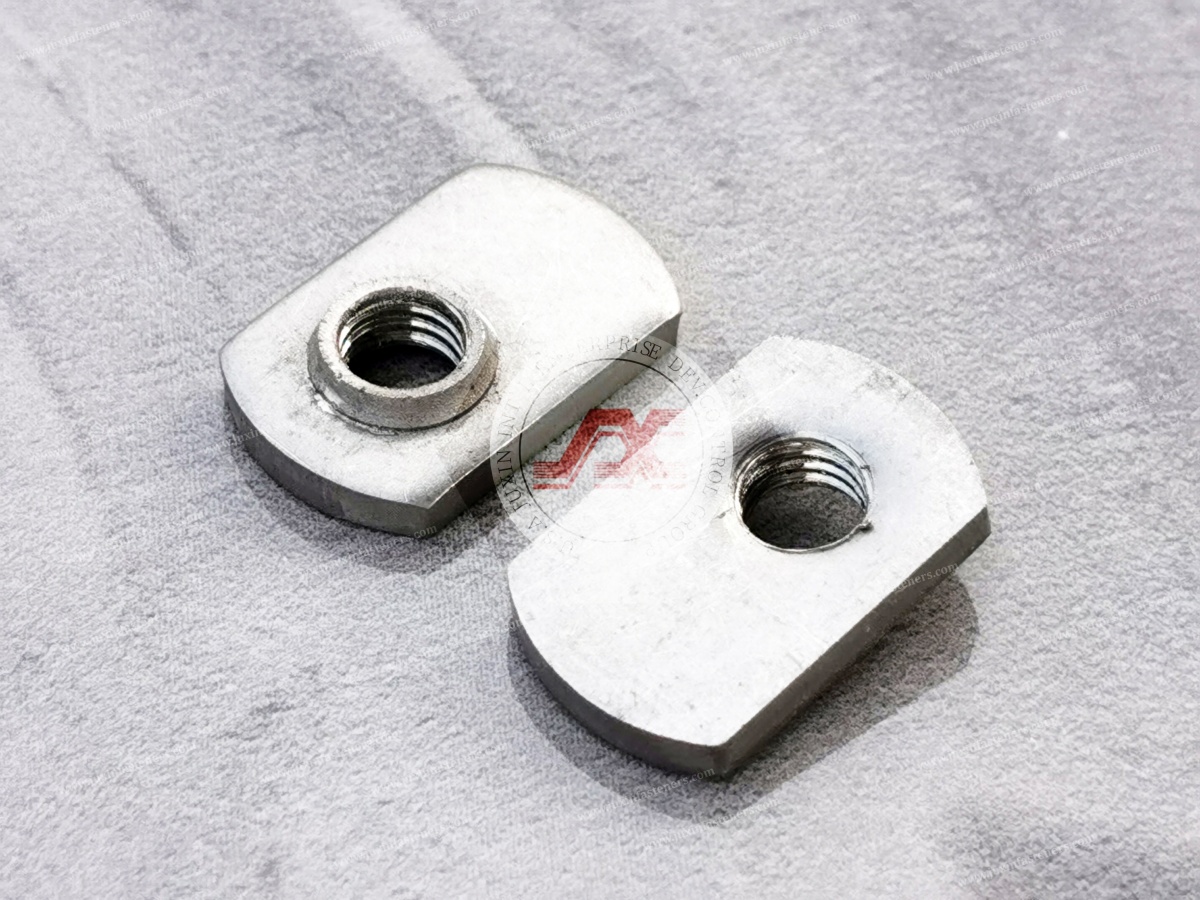
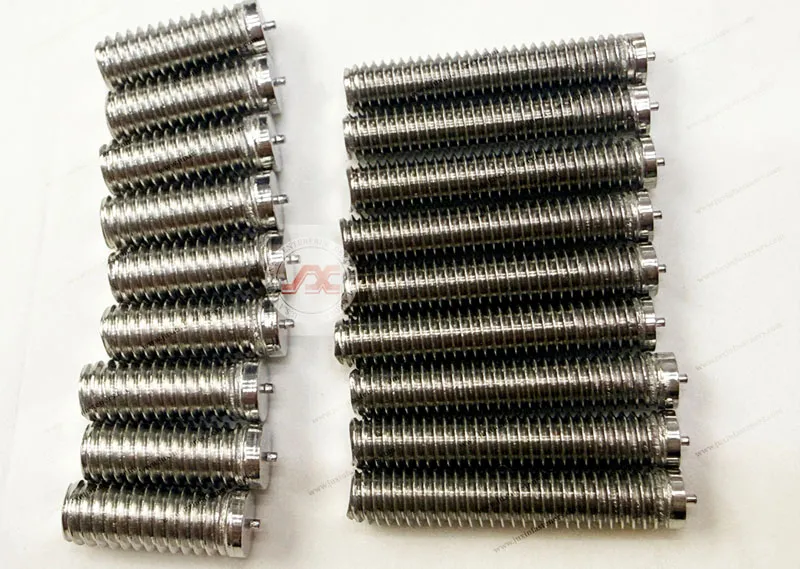
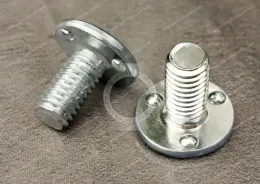
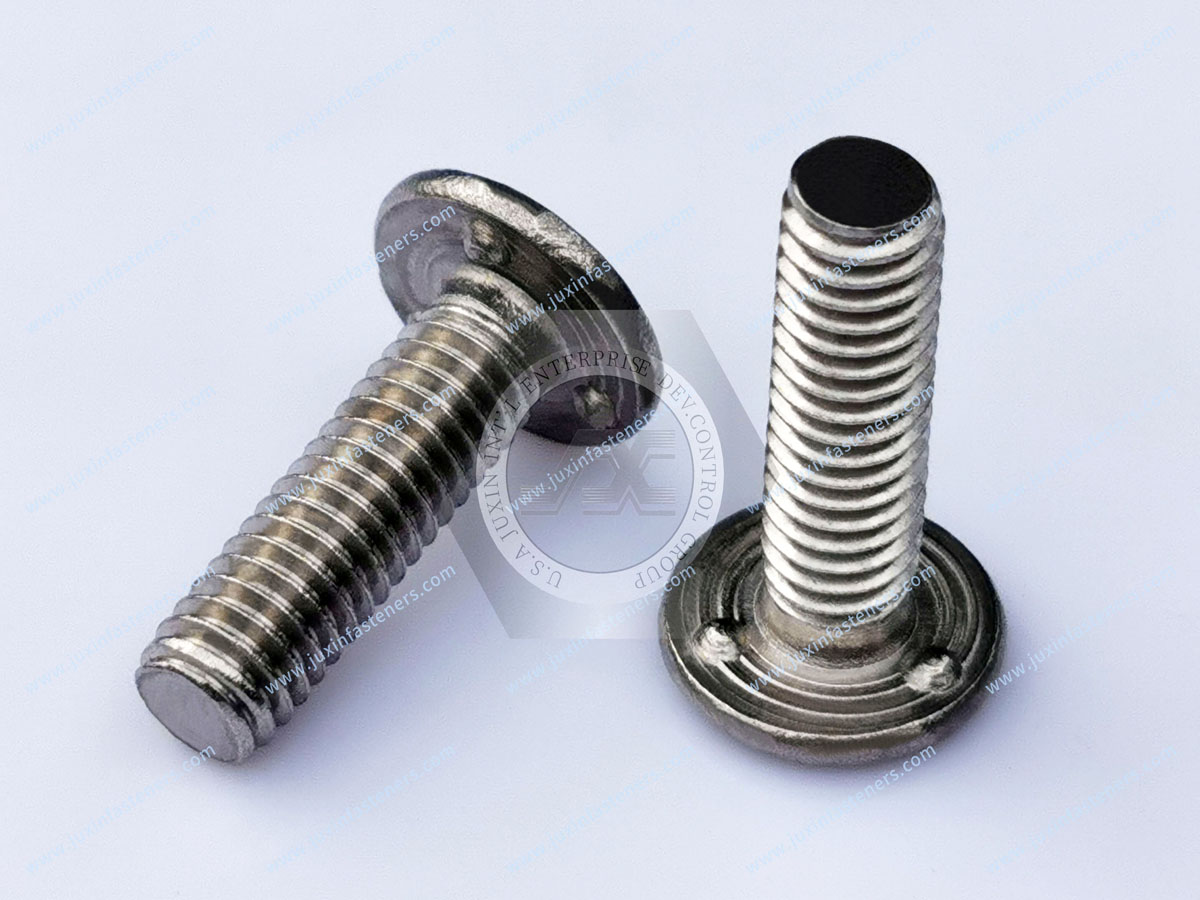
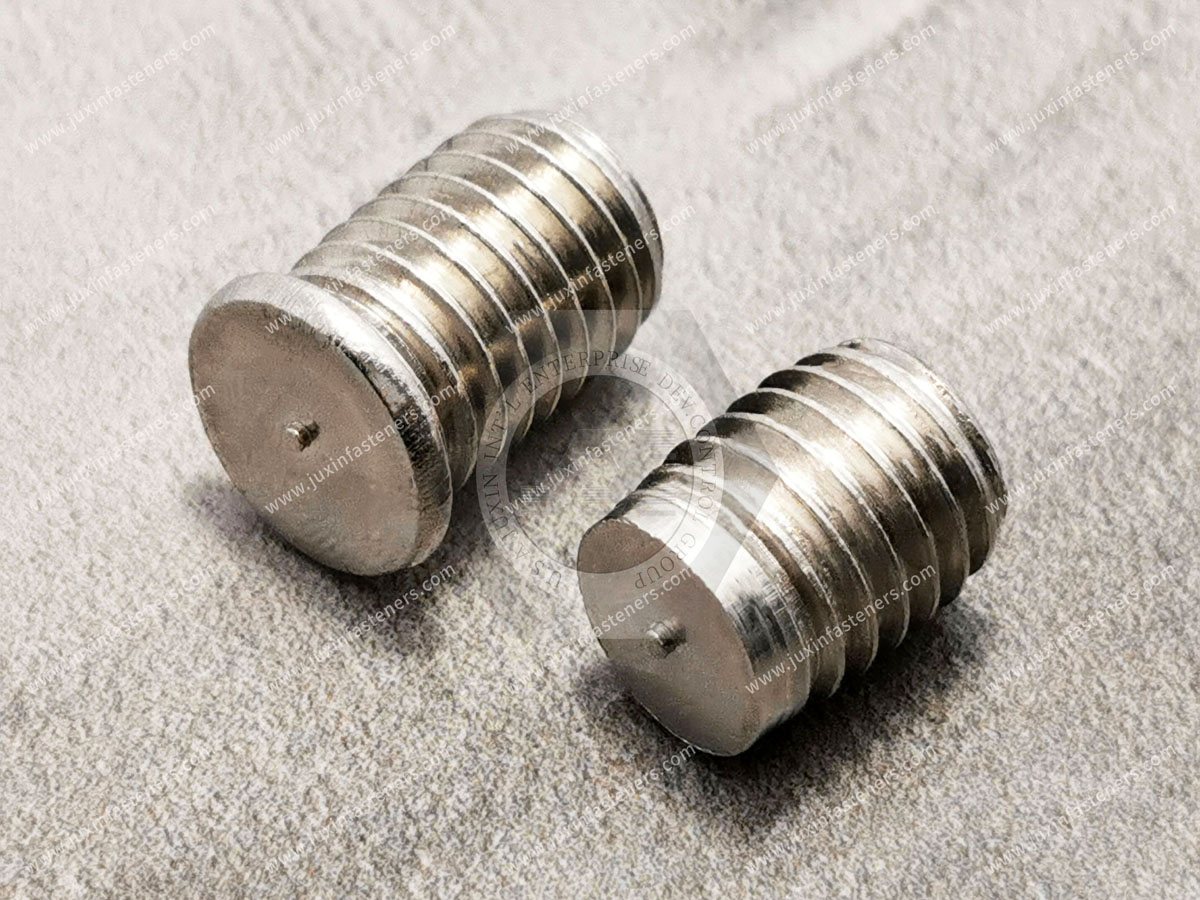
Stainless steel weld studs provide an externally projecting attachment point.
Potential applications include:
brackets;
cable and harness retention;
equipment mounting;
electrical assemblies;
enclosures;
transportation components;
marine equipment;
and industrial machinery.
The stud design must consider:
stud diameter;
length;
thread;
base geometry;
welding method;
parent material;
surface condition;
electrical requirements;
and mechanical loads.
A stud-welding process that works for one stainless grade and substrate combination may not be directly transferable to another.
Stainless steel corrosion performance can be compromised by contamination even when the underlying alloy is correctly specified.
Carbon-steel tooling, handling equipment, grinding particles, or other sources can introduce iron contamination onto stainless surfaces.
Such contamination can produce rust-like staining that may be incorrectly interpreted as failure of the stainless alloy itself.
For critical applications, manufacturing controls may include:
dedicated tooling;
controlled handling;
appropriate cleaning;
suitable abrasive media;
controlled storage;
and post-processing inspection.
Welding processes can introduce:
heat tint;
oxide residues;
surface contamination;
electrode transfer;
or other surface-condition changes.
The significance of these effects depends on the alloy and application.
Where corrosion performance is critical, the post-weld surface condition should be defined as part of the engineering specification.
Passivation is a chemical treatment intended to improve the corrosion performance of stainless steel surfaces by removing certain contaminants and promoting a more favorable passive surface condition.
Standards such as ASTM A967 define requirements and practices for chemical passivation treatments of stainless steel parts.
AMS 2700 is another specification used for passivation of corrosion-resistant steels and related aerospace applications where applicable.
These standards should be specified according to the actual project requirements rather than automatically applied to every stainless steel fastener.
Passivation cannot turn an unsuitable stainless alloy into a suitable one.
For example, selecting a grade that is not appropriate for the expected chloride environment and then applying passivation does not automatically solve the underlying material-selection problem.
The correct sequence is:
Environment
   ↓
Alloy Selection
   ↓
Manufacturing Process
   ↓
Surface Condition
   ↓
Passivation / Surface Treatment if Required
   ↓
Corrosion Validation
Passivation can be particularly relevant where the application has stringent surface-cleanliness or corrosion requirements.
The requirement should be established based on:
alloy;
manufacturing process;
machining;
welding;
surface contamination;
customer specification;
corrosion environment;
and required validation.
Stainless steel fastener selection should consider the actual corrosion mechanism.
Localized pitting can occur under suitable environmental conditions, particularly in chloride-containing environments.
This is one reason why material selection for marine and coastal applications requires more than simply specifying "stainless steel."
Crevices can retain moisture and aggressive species.
Fastener geometry, flange interfaces, overlapping sheets, washers, seals, and enclosure geometry can all influence crevice formation.
When stainless steel contacts dissimilar metals in an electrolyte, galvanic corrosion may occur depending on the material combination and assembly conditions.
The complete system should therefore be evaluated.
Potential controls include:
compatible materials;
appropriate coatings;
dielectric barriers where electrically acceptable;
sealants;
drainage;
and controlled exposure.
Certain stainless alloys and environments can be susceptible to stress-corrosion cracking.
Risk depends on:
alloy;
tensile stress;
temperature;
chloride concentration;
environment;
surface condition;
and exposure duration.
For high-consequence applications, the complete environmental and mechanical condition should be evaluated rather than relying on the stainless designation alone.
Stainless steel is frequently associated with high-temperature service, but "stainless steel" is not itself a high-temperature qualification.
Elevated temperature can influence:
yield strength;
creep;
oxidation;
corrosion;
thread performance;
preload;
thermal expansion;
and metallurgical stability.
The appropriate grade depends on the actual temperature profile and service environment.
For weld fasteners exposed to elevated temperatures, the engineering review should include:
continuous temperature;
peak temperature;
thermal cycling;
exposure duration;
atmosphere;
mechanical loading;
corrosion environment;
and required service life.
Where temperature is critical, material selection should be based on applicable material data and customer or industry requirements.
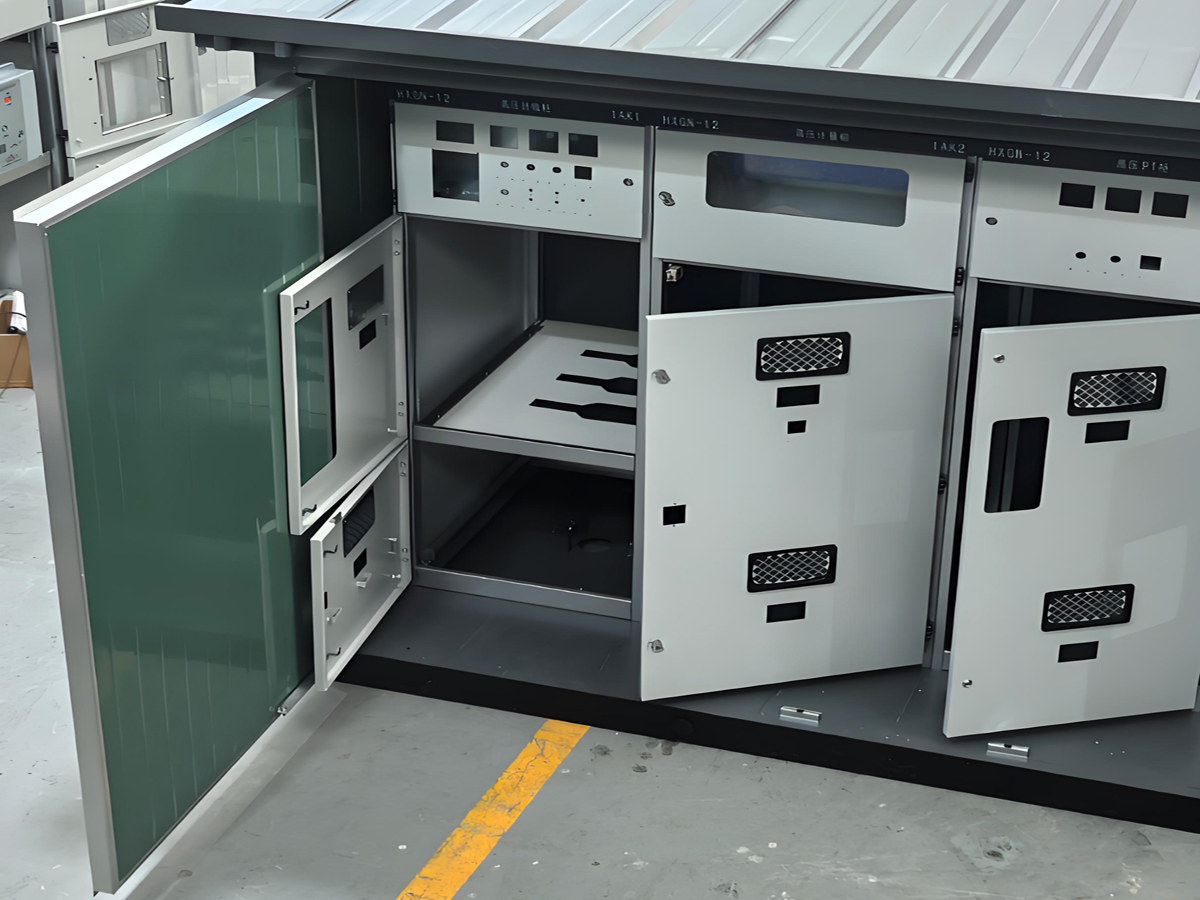
Stainless steel weld fasteners may be considered for:
marine equipment;
enclosures;
brackets;
structural accessories;
equipment supports;
and corrosion-exposed assemblies.
Chloride exposure makes alloy selection particularly important.
316-family materials may be considered for some applications, but actual suitability must be verified against the marine environment and service conditions.
Chemical-processing applications can expose fastening components to:
acids;
alkalis;
solvents;
washdown;
elevated temperatures;
and aggressive process media.
The correct stainless grade should therefore be selected based on the actual chemical environment.
A generic "corrosion-resistant stainless" specification is often insufficient for critical process equipment.
Stainless steel is widely used in food-processing equipment where cleanability, corrosion resistance, and surface condition are important.
Weld fasteners can provide integrated mounting points for:
guards;
panels;
brackets;
sensors;
equipment covers;
and support components.
However, hygiene-related requirements are application-specific. Surface finish, crevice geometry, weld quality, cleanability, and applicable customer or industry requirements should be evaluated together.
Stainless steel weld fasteners can be used where corrosion resistance, compact packaging, or specific mechanical requirements justify their use.
Potential applications include:
exhaust-related assemblies;
brackets;
underbody components;
sensor mounting;
thermal-management components;
and specialized vehicle structures.
Automotive applications may also require specific material, dimensional, validation, and supplier-quality documentation.
Stainless steel weld nuts and studs can simplify assembly of:
electrical cabinets;
control equipment;
industrial enclosures;
machine guards;
and outdoor equipment.
Where electrical grounding or bonding is required, surface treatment and contact resistance must be considered together with corrosion protection.
See the JUXIN FASTENERS Electrical Enclosure Weld Fasteners & Grounding Guide for related engineering considerations.
Corrosion resistance does not automatically determine mechanical performance.
The completed joint can fail through:
weld-interface failure;
fastener deformation;
thread stripping;
parent-sheet deformation;
local tearing;
fastener bending;
or failure elsewhere in the load path.
Depending on the application, validation may include:
pull-out;
push-out;
torque-out;
tensile loading;
shear loading;
fatigue;
vibration;
thermal cycling;
corrosion exposure;
or combined environmental testing.
Acceptance criteria should be defined by the drawing, customer specification, applicable engineering standard, or validated internal test method.
Generic strength numbers should not be used as universal design limits.
For related mechanical-validation requirements, see the JUXIN FASTENERS Fastener Push-Out & Pull-Out Testing solution.
A stainless steel weld fastener OEM program may require controls covering both component manufacturing and joining-process validation.
Depending on the drawing, inspection may include:
thread size;
pitch diameter;
flange dimensions;
nut height;
stud length;
projection geometry;
critical diameters;
positional accuracy;
perpendicularity;
and other functional dimensions.
Where required, material documentation may verify:
alloy designation;
chemical composition;
material condition;
heat or lot traceability;
and applicable mechanical properties.
An MTR should be provided when required by the customer specification or purchasing agreement rather than treated as an automatic requirement for every fastener.
Where passivation or another surface treatment is specified, documentation may include:
treatment specification;
processing information;
lot identification;
inspection results;
and applicable test records.
The exact documentation package should be established during the RFQ and quality-planning stage.
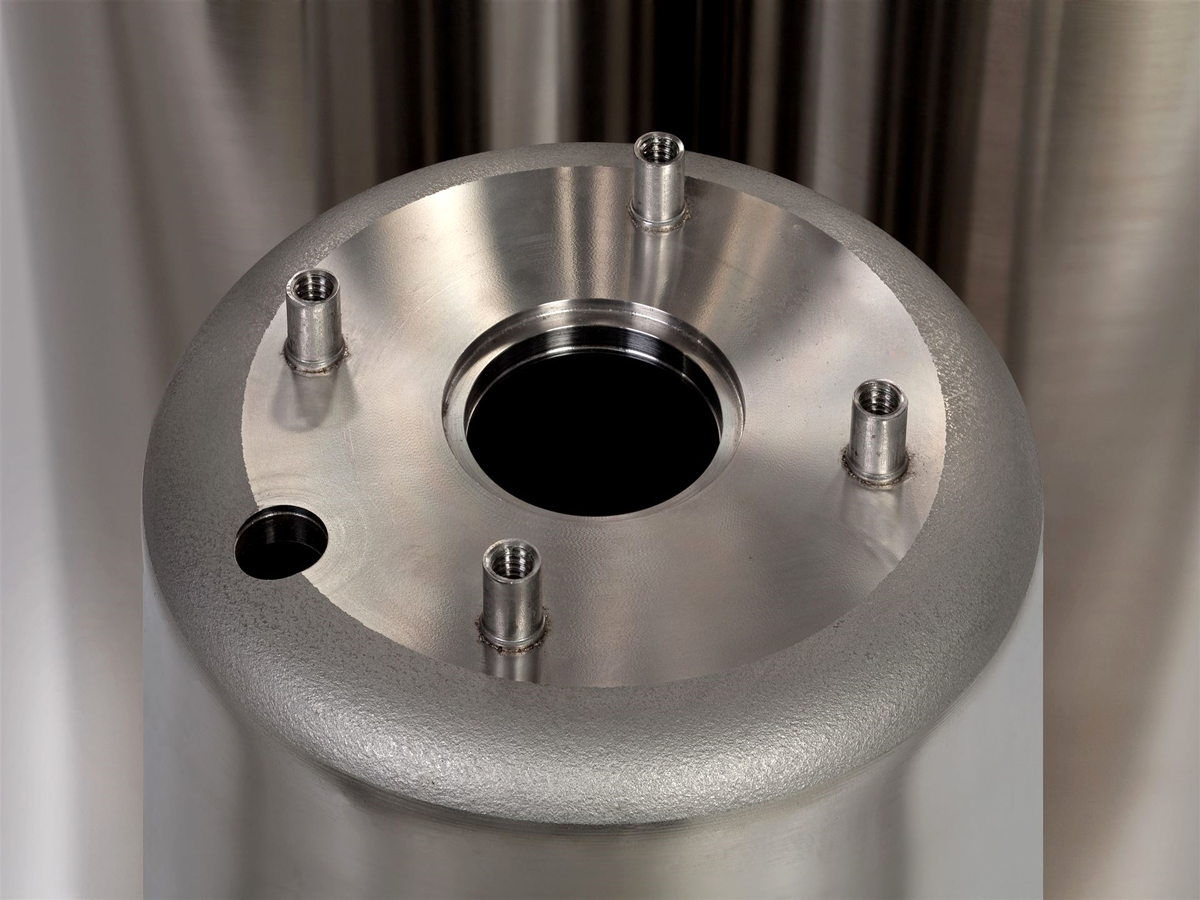
Design-for-manufacturing should begin before the fastener is released for production.
Review:
stainless grade;
sheet thickness;
surface condition;
forming condition;
hole geometry;
edge distance;
access;
local stiffness;
and downstream finishing.
Review:
alloy;
thread;
projection geometry;
flange geometry;
overall height;
orientation;
weld interface;
and surface requirements.
Review:
electrode access;
electrode configuration;
force capability;
electrical output;
cooling;
fixture;
fastener positioning;
and automation.
Consider:
cleaning;
passivation;
coating;
painting;
assembly;
corrosion exposure;
and inspection.
A common OEM mistake is to approve the fastener geometry first and evaluate surface treatment and welding compatibility later.
For stainless components, these decisions can interact strongly.
Procurement teams should compare suppliers based on the complete supply solution rather than unit price alone.
Provide:
2D engineering drawing;
3D CAD model;
fastener type;
alloy grade;
thread specification;
surface-treatment requirement;
parent-sheet material;
sheet thickness;
joining method;
application environment;
annual usage;
forecast;
packaging;
inspection requirements;
testing requirements;
and quality documentation.
Ask suppliers:
Can you manufacture the specified stainless geometry?
Can you control the required alloy?
Can material traceability be provided when required?
Can the supplier support stainless weld-fastener DFM?
Can welding-process development be supported?
Can dimensional inspection be documented?
Can passivation or specified surface treatment be controlled?
Can prototype and production requirements be supported?
Can customer-specific quality documentation be provided?
How are engineering changes controlled?
Stainless steel often has a higher raw-material cost than conventional carbon-steel fasteners.
However, the procurement decision should consider the complete lifecycle.
Potential TCO factors include:
raw material;
machining or forming;
welding-process development;
surface treatment;
corrosion protection;
inspection;
maintenance;
replacement;
downtime;
warranty exposure;
and expected service environment.
The most economical fastener is not necessarily the component with the lowest initial purchase price.
For a corrosive application, an apparently inexpensive coated carbon-steel fastener may create additional downstream requirements that change the overall economics.
Conversely, stainless steel should not be specified where its additional cost provides no meaningful engineering benefit.
One of the most useful procurement decisions is knowing when not to specify stainless steel.
Stainless steel may be unnecessary when:
the environment is mild;
a suitable coated carbon-steel solution already meets the requirement;
the application does not benefit from stainless material properties;
welding requirements favor another material system;
or the additional material cost cannot be justified.
Conversely, stainless steel may become attractive when:
corrosion exposure is significant;
coating durability is difficult to maintain;
cleaning or washdown is frequent;
chloride exposure is relevant;
surface contamination must be controlled;
or long-term corrosion performance is a major lifecycle requirement.
The correct material decision therefore compares:
environment + mechanical requirement + joining process + corrosion + lifecycle cost
rather than material price alone.
A well-structured stainless steel weld fastener project can follow:
Application Environment
        ↓
Mechanical Requirements
        ↓
Stainless Alloy Selection
        ↓
Fastener Geometry
        ↓
Parent Sheet Compatibility
        ↓
Welding Process Development
        ↓
Surface / Passivation Strategy
        ↓
Mechanical + Corrosion Validation
        ↓
Quality Documentation
        ↓
Supplier Qualification
        ↓
Production Approval
        ↓
OEM Supply Program
This structure allows engineering and procurement teams to make decisions using the same technical information.
It also reduces the risk of selecting a supplier based only on price before material, welding, inspection, and corrosion requirements are fully defined.
This page should connect naturally to the broader JUXIN FASTENERS engineering architecture:
Weld Fasteners Solutions — the parent solution covering weld nuts, weld studs, and engineered weld-fastening applications.
Substrate Material Compatibility for Weld Fasteners — material compatibility, welding, electrical, thermal, and corrosion considerations.
Fastener Surface Finishes & Coatings: OEM Engineering & Sourcing Guide — surface-treatment selection, coating compatibility, corrosion, welding, and thread considerations.
Fastener Corrosion Resistance & Salt Spray Testing — corrosion mechanisms, ASTM B117 testing, coating performance, and environmental validation.
Fastener Hydrogen Embrittlement Prevention — hydrogen-related risks associated with high-strength steel fasteners and surface-treatment processes.
Aluminum Weld Fasteners: Joining & Corrosion Engineering Guide — comparison of aluminum fastening, oxide-layer behavior, joining processes, and galvanic corrosion.
Electrical Enclosure Weld Fasteners & Grounding Guide — grounding, bonding, surface treatment, and enclosure fastening.
EV Battery Enclosure Weld Fasteners & Sealing Guide — battery enclosure fastening, vibration, thermal cycling, corrosion, and sealing architecture.
Automotive Body-in-White Weld Fasteners — automotive weld-fastener design, production, and sourcing.
Fastener Push-Out & Pull-Out Testing — mechanical joint validation and failure-mode analysis.
Fastener Vibration Loosening Prevention — dynamic joint behavior and vibration-related fastening risks.
Custom Weld Fasteners: Engineering & OEM Manufacturing — custom weld-nut and weld-stud development, DFM, and OEM engineering.
Fastener Procurement & RFQ Best Practices — preparing a technically complete fastener RFQ.
Global Fastener Procurement & RFQ Strategy — supplier qualification, TCO, quality documentation, supply-chain resilience, and OEM sourcing.
This internal-link structure creates a deliberate information and commercial pathway:
Material → Welding → Corrosion → Validation → Industry Application → RFQ → Supplier Qualification → OEM Supply
Austenitic stainless grades such as 304 and 316 families are common engineering choices for corrosion-resistant applications,
while low-carbon variants such as 304L and 316L may be considered where welding-related sensitization susceptibility is important.
The correct grade depends on the application, environment, mechanical requirements, and joining process.
No.
316 provides improved resistance to certain environments, particularly some chloride-containing conditions, but it is not universally required or universally superior for every application.
Material selection should be based on actual environmental and mechanical requirements.
It can, depending on the alloy, welding thermal cycle, surface condition, contamination, and environment.
Potential issues include sensitization, heat tint, contamination, and localized corrosion.
The actual completed joint should therefore be evaluated rather than judging corrosion performance from the base-metal designation alone.
No.
Passivation requirements depend on the alloy, manufacturing process, surface condition, customer specification, corrosion environment, and application requirements.
Where passivation is specified, standards such as ASTM A967 or AMS 2700 may be applicable depending on the project.
No.
Passivation can improve the surface condition of stainless steel, but it cannot compensate for an unsuitable alloy, severe environmental exposure, poor joint geometry, galvanic interaction, or other design problems.
Dissimilar-metal joining may be technically possible in some applications, but it requires careful evaluation of welding compatibility, metallurgical effects, corrosion, electrical behavior, and the actual joining process.
It should not be treated as an automatic material substitution.
They can be, but marine environments are demanding, particularly because of chloride exposure.
The alloy, surface condition, joint geometry, galvanic interactions, and environmental exposure should be evaluated together.
They may be suitable where the material, surface condition, weld geometry, cleanability, corrosion resistance, and applicable customer or industry requirements are satisfied.
The word "stainless" alone does not establish hygienic qualification.
Potentially, depending on the grade and service conditions.
Elevated temperature affects strength, corrosion, oxidation, thermal expansion, creep, preload, and metallurgical stability. The actual temperature profile and service requirements must be evaluated.
The RFQ should ideally include the engineering drawing, CAD model, stainless alloy, thread specification, fastener geometry, parent-sheet material and thickness, welding method, surface-treatment requirements, corrosion environment, annual volume, inspection requirements, testing requirements, packaging, and customer-specific quality documentation.
Before requesting a quotation, prepare:
Fastener
Weld nut or weld stud type
2D drawing
3D CAD
Thread specification
Stainless alloy
Surface treatment
Critical dimensions
Positional requirements
Parent Material
Stainless or dissimilar-metal substrate
Alloy grade
Sheet thickness
Surface condition
Coating
Forming condition
Joining
Resistance welding
Projection welding
Stud welding
Existing equipment
Electrode access
Fixture requirements
Automation requirements
Environment
Marine
Outdoor
Chemical
Food-processing
Automotive
Industrial
Temperature exposure
Chloride exposure
Washdown
Electrical requirements
Quality
Material traceability
Dimensional inspection
First-article inspection
Mechanical testing
Corrosion testing
Passivation requirements
Surface-condition requirements
Customer-specific quality documentation
Commercial
Prototype quantity
Annual usage
Forecast
Production quantity
Packaging
Delivery requirements
Change-control requirements
JUXIN FASTENERS supplies engineered fastening components for OEM and industrial applications, including:
Stainless Steel Fasteners
Weld Nuts
Weld Studs
Self-Clinching Fasteners
Blind Rivet Nuts
Threaded Inserts
CNC-Machined Fasteners
Custom Screws and Bolts
High-Strength Fasteners
Custom Engineered Fastening Components
For stainless steel weld-fastener applications, the engineering approach should begin with the customer's actual environment, material specification, joining process, and performance requirements.
Rather than treating stainless steel as a generic commodity material, the development process should connect:
alloy selection + fastener geometry + welding + corrosion protection + validation + procurement
into one technical and commercial workflow.
If your project requires stainless steel weld nuts, stainless steel weld studs, corrosion-resistant weld fasteners,
stainless sheet-metal fastening, marine fastening, chemical-processing hardware, food-equipment fastening, electrical enclosure hardware,
or custom OEM fastening components, send your engineering requirements to JUXIN FASTENERS.
For a faster technical evaluation, include:
2D engineering drawing;
3D CAD model where available;
required stainless alloy;
parent-sheet material;
sheet thickness;
welding or joining process;
surface-treatment or passivation requirement;
operating environment;
mechanical requirements;
annual volume;
inspection requirements;
testing requirements;
and customer-specific quality documentation.
Email: info@juxinfasteners.com
JUXIN FASTENERS — Precision Fastening Solutions Since 2003.
From stainless steel alloy selection and weld-fastener geometry to welding-process development, corrosion control, passivation, validation,
quality documentation, and OEM sourcing, JUXIN FASTENERS supports a practical engineering-to-procurement pathway for global industrial fastening programs.
Product Packaging
Packaging Standard
At Juxin Fasteners, we apply standardized export packaging to ensure product protection, traceability, and compliance with international logistics requirements.
1. Standard Export Packaging
Unless otherwise specified, all products will be packed according to our factory standard export packaging, which includes:
Moisture-resistant inner protection
Poly bag or small box packing as required
Reinforced export cartons
Clear labeling with part number, specification, batch number, and quantity
Palletizing for sea or air shipment when necessary
Our standard packaging is designed to ensure safe transportation, efficient warehousing, and long-distance international shipping.
2. Customized Packaging Options
We also provide customized packaging solutions according to customer requirements, including but not limited to:
Private labeling
Customized barcodes
Specific carton dimensions
Retail packaging
Special pallet configuration
Customer-specific marking and identification
So that you know, customized packaging may involve additional costs and extended lead time depending on the complexity of the requirements.
3. Compliance & Quality Assurance
All packaging processes are controlled under our ISO 9001 quality management system to ensure consistency, traceability, and product integrity throughout the supply chain.
Product Pictures
Contact Us
Tel.:
+86 020 8621 0320
+86 020 3121 6067
E-mail:
Technical Support:
Navigation
SEND INQUIREY