Call Us
+86 136 6007 9809
Call Us
+86 136 6007 9809

How do design engineers and procurement managers choose between electroplating and mechanical plating for industrial fasteners?
The choice between fastener electroplating and mechanical plating is not simply a choice between two methods for adding zinc.
Product Specification
How do design engineers and procurement managers choose between electroplating and mechanical plating for industrial fasteners?
The choice between fastener electroplating and mechanical plating is not simply a choice between two methods for adding zinc.
It is an engineering decision involving:
Corrosion protection
Hydrogen-embrittlement risk
Coating thickness
Thread fit
Fastener geometry
Surface appearance
Adhesion
Mechanical properties
Welding requirements
Assembly behavior
Production volume
Environmental requirements
Cost
Customer specifications
Quality-control requirements
Electroplating uses an electrochemical process to deposit metallic coatings such as zinc or zinc alloys onto the fastener surface.
It can provide controlled coating systems and is widely used for industrial fasteners.
However, electroplating processes can introduce hydrogen into susceptible steel through cathodic reactions.
For high-strength steel fasteners, this creates a hydrogen-embrittlement risk that must be managed through appropriate material selection,
pretreatment, plating controls, post-treatment, inspection, and process specifications.
ISO 4042:2022 specifically addresses electroplated coating systems for fasteners and includes requirements and recommendations intended
to minimize hydrogen-embrittlement risk. It covers zinc and zinc-alloy systems such as zinc, zinc-nickel, and zinc-iron, together with optional conversion coatings, sealants, top coats, and lubricants.
Mechanical zinc plating, in contrast, deposits zinc mechanically rather than through an electrolytic current.
ASTM B695 covers mechanically deposited zinc coatings on iron and steel and specifies requirements associated with coating thickness, appearance, adhesion, corrosion testing, and absence of hydrogen embrittlement.
Mechanical plating can therefore be attractive for certain high-strength steel applications where avoiding the hydrogen-generation mechanism associated with electroplating is an important design objective.
However, it should not be described as an absolute "zero hydrogen risk" process. The complete manufacturing route, including cleaning and pretreatment, still needs to be evaluated.
The practical engineering decision is therefore:
Select the coating process according to the fastener material, strength level, geometry, corrosion environment, assembly requirements, welding requirements, applicable standard, and customer specification.
A simplified selection path is:
Fastener Material & Strength → Hydrogen Risk Assessment → Coating Requirement → Geometry & Thread Fit → Corrosion Environment → Assembly/Welding → Applicable Standard → Supplier Process Capability
For OEM programs, the coating should be considered part of the complete fastener configuration.
A zinc-plated fastener is not simply:
Steel + Zinc
It may actually be:
Steel Substrate + Zinc Layer + Conversion Coating + Sealant/Top Coat + Lubricant + Final Inspection
Each layer can influence the final engineering performance.
JUXIN FASTENERS provides application-specific fastener surface-treatment options including zinc plating, trivalent chromium zinc plating, zinc-nickel, zinc-aluminum,
Dacromet-type systems, stainless steel passivation, and other treatments according to application requirements.
The correct coating system is selected according to the fastener substrate, mechanical requirements, corrosion environment, assembly process, and customer specification.
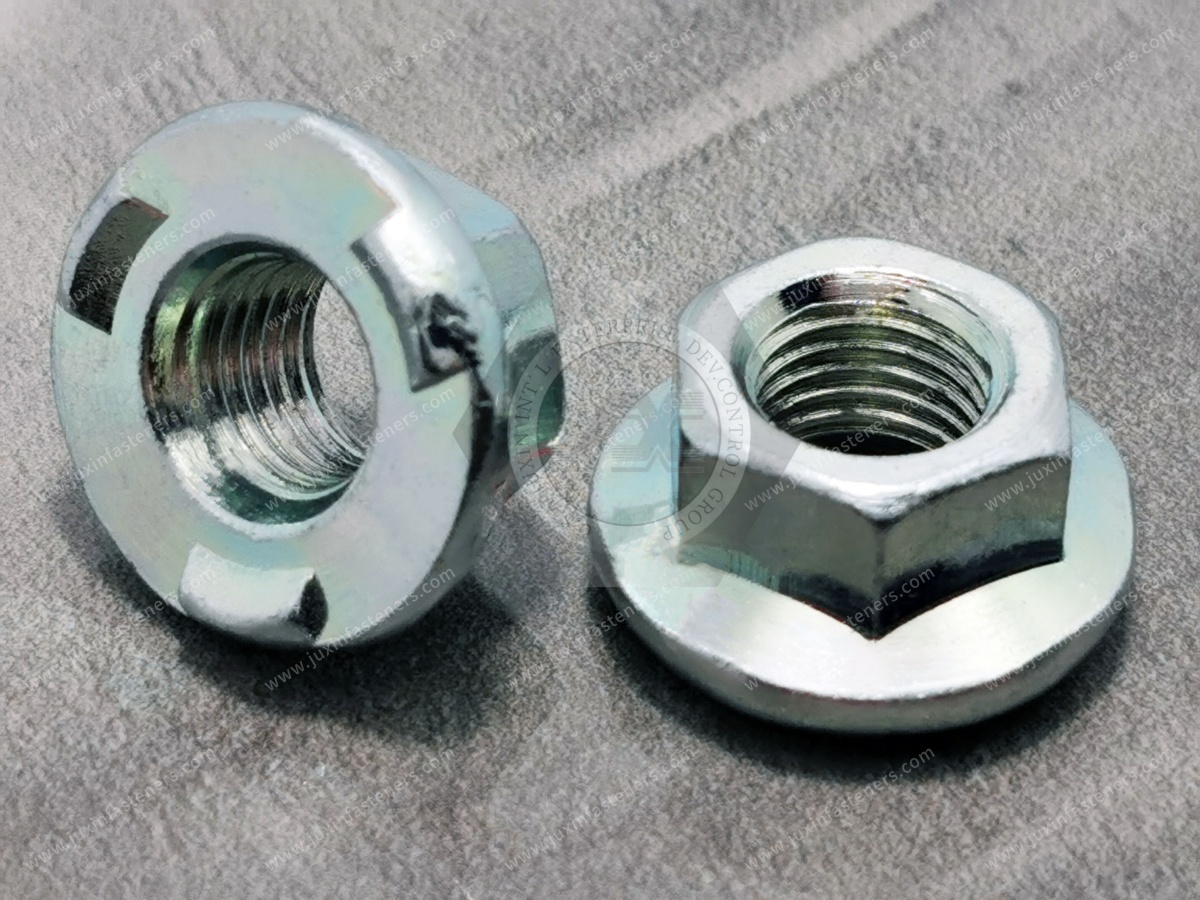
Basic fastener catalogs often compare coatings primarily by appearance or salt-spray performance.
That is not enough for engineering procurement.
A professional coating decision should consider the mechanism of deposition and the consequences of that mechanism on the fastener.
The most important differences between electroplating and mechanical zinc plating include:
| Engineering Factor | Electroplating | Mechanical Zinc Plating |
|---|---|---|
| Deposition mechanism | Electrochemical | Mechanical impact/deposition |
| Electric current | Required | Not used for zinc deposition |
| Hydrogen-generation mechanism | Present during cathodic processing | Avoids electrolytic deposition mechanism |
| High-strength steel consideration | Hydrogen risk requires control | Often considered where hydrogen-risk reduction is important |
| Coating thickness control | Process-dependent and can be tightly specified | Process-dependent and typically specified by coating class |
| Appearance | Can range from bright to controlled functional finishes | Typically metallic/satin to matte appearance |
| Thread effects | Must be controlled through coating specification | Must be controlled through coating specification |
| Complex geometry | Deposition distribution depends on current density | Impact and media access influence deposition |
| Typical zinc coating applications | Broad industrial and OEM use | Selected steel fastener applications |
| Applicable standards | ISO 4042 and applicable customer specifications | ASTM B695 and applicable customer specifications |
| Main engineering concern | Coating + hydrogen risk + dimensions | Coating + geometry + thickness + process compatibility |
This comparison immediately shows why the decision cannot be reduced to:
"Which coating gives more salt spray?"
The correct question is:
"Which coating process provides the required corrosion protection and assembly performance without creating unacceptable material, dimensional, hydrogen, welding, or supply-chain risks?"
Electroplating uses an electrolyte and electrical current to deposit metal onto the fastener.
For zinc electroplating, the fastener acts as the cathodic workpiece and zinc ions are reduced and deposited onto the surface.
Depending on the process, the coating system may include:
Zinc
Zinc-nickel
Zinc-iron
Conversion coating
Sealant
Top coat
Lubricant
ISO 4042:2022 specifically addresses these types of electroplated fastener coating systems.
Electroplating can provide useful control over coating characteristics, but deposition is influenced by:
Current density
Part geometry
Rack or barrel configuration
Bath chemistry
Agitation
Processing time
Surface preparation
Coating chemistry
Part orientation
This is important because coating distribution is not necessarily identical across the entire fastener.
Edges, recesses, thread roots, internal features, and shielded areas can respond differently to the electroplating environment.
For threaded fasteners, coating thickness can affect:
Thread fit
Assembly torque
Friction
Go/no-go gauge results
Mating thread engagement
Automated assembly
Therefore, a coating specification should be integrated with the dimensional and thread specification.
The major metallurgical concern associated with electroplating high-strength steel is hydrogen uptake.
During certain electrolytic processes, hydrogen can be generated at the cathodic surface. Some of this hydrogen may enter susceptible steel.
Under appropriate combinations of:
High material strength
Hydrogen availability
Residual or applied tensile stress
Material susceptibility
Time
delayed cracking can occur.
This is why high-strength fasteners require a more rigorous coating-process evaluation.
The correct response is not simply:
"Never electroplate high-strength fasteners."
Instead:
"Control the electroplating process and hydrogen-embrittlement risk according to the applicable fastener standard, material condition, coating specification, and customer requirements."
ISO 4042:2022 explicitly includes measures and recommendations intended to minimize hydrogen-embrittlement risk in electroplated fasteners.
Mechanical zinc plating uses mechanical energy to deposit zinc particles onto prepared steel surfaces.
The process can involve:
Cleaning
Surface preparation
Chemical promoters
Impact media
Zinc powder
Controlled tumbling
Mechanical deposition
Post-treatment
The zinc particles are mechanically deposited onto the substrate rather than being reduced onto the fastener through an electrolytic current.
ASTM B695 covers mechanically deposited zinc coatings on iron and steel and defines coating classes based on thickness. It also addresses adhesion, salt-spray corrosion resistance, appearance, thickness, and absence of hydrogen embrittlement.
The key advantage from a hydrogen-risk perspective is that mechanical deposition avoids the cathodic hydrogen-generation mechanism associated with electrolytic zinc deposition.
However, professional specifications should not claim that mechanical plating makes hydrogen risk impossible.
The complete process may include cleaning or pretreatment steps that must still be controlled.
Therefore, the correct engineering statement is:
Mechanical plating can substantially reduce the hydrogen-embrittlement concern associated specifically with electrolytic zinc deposition, but the complete manufacturing route must still be evaluated.
This distinction is especially important for high-strength steel fasteners.
This distinction is frequently missed in fastener specifications.
Mechanical zinc plating and non-electrolytically applied zinc-flake coatings are different coating technologies.
ISO 10683:2018 covers non-electrolytically applied zinc-flake coating systems for steel fasteners and explicitly states that it does not apply to mechanically applied zinc coatings.
Zinc-flake systems are often selected for high-strength fasteners where minimizing internal hydrogen-embrittlement risk is important.
Mechanical zinc plating is covered by other specifications, such as ASTM B695.
Therefore, an OEM drawing should not simply specify:
"Non-electrolytic zinc coating"
without identifying the intended coating technology.
The supplier should understand whether the customer requires:
Mechanical zinc deposition
Zinc-flake coating
Electroplated zinc
Zinc-nickel electroplating
Another coating system
These technologies should not be treated as interchangeable.
Zinc coatings primarily protect steel through a combination of barrier protection and sacrificial behavior.
When exposed to a corrosive environment, zinc can preferentially corrode relative to the underlying steel.
This provides a degree of sacrificial protection to the steel substrate.
However, the actual corrosion performance depends on the complete coating system and service environment.
Relevant variables include:
Coating thickness
Zinc or zinc-alloy chemistry
Conversion coating
Sealant
Top coat
Surface preparation
Environmental exposure
Temperature
Humidity
Salt exposure
Contact with dissimilar materials
Mechanical damage
Assembly damage
This is why coating thickness alone does not determine corrosion performance.
A coating system can also be damaged during:
Thread assembly
Press fitting
Welding
Forming
Handling
Tool contact
Transportation
The engineering evaluation should therefore consider the fastener after installation, not just the fastener as supplied.
Salt-spray testing is frequently used to compare fastener coatings.
ASTM B117 provides a controlled laboratory method for operating salt-spray apparatus and evaluating corrosion behavior under the specified test conditions.
However, salt-spray exposure should not be interpreted as a direct prediction of real-world service life.
This is an important procurement distinction.
A statement such as:
"Coating A provides 720 hours, therefore it will last twice as long as coating B"
is not a scientifically reliable way to predict field performance.
Actual service conditions can include:
Cyclic humidity
Temperature changes
Condensation
Road salt
Industrial chemicals
UV exposure
Mechanical abrasion
Stone impact
Mud
Water retention
Galvanic interaction
Therefore, salt-spray results should be treated as comparative test data under defined conditions, not as a universal service-life conversion.
For OEM procurement, the specification should identify the required test method and acceptance criteria rather than relying on marketing statements such as "high salt-spray resistance."
One of the most important Information Gain points for threaded fasteners is that coating thickness is also a dimensional engineering parameter.
Adding a coating to a thread changes the effective dimensions of the thread.
The effect depends on:
Coating thickness
Thread pitch
Thread diameter
Coating distribution
Thread class
Mating component
Surface roughness
Lubrication
A coating that satisfies a corrosion requirement but causes excessive assembly resistance can still be a poor engineering solution.
Potential consequences include:
Increased installation torque
Thread galling
Assembly interference
Gauge failure
Automated assembly problems
Reduced thread engagement
Damaged mating threads
For this reason, the coating specification should be developed together with the thread specification.
Internal threads can be especially sensitive because coating distribution is affected by geometry and process conditions.
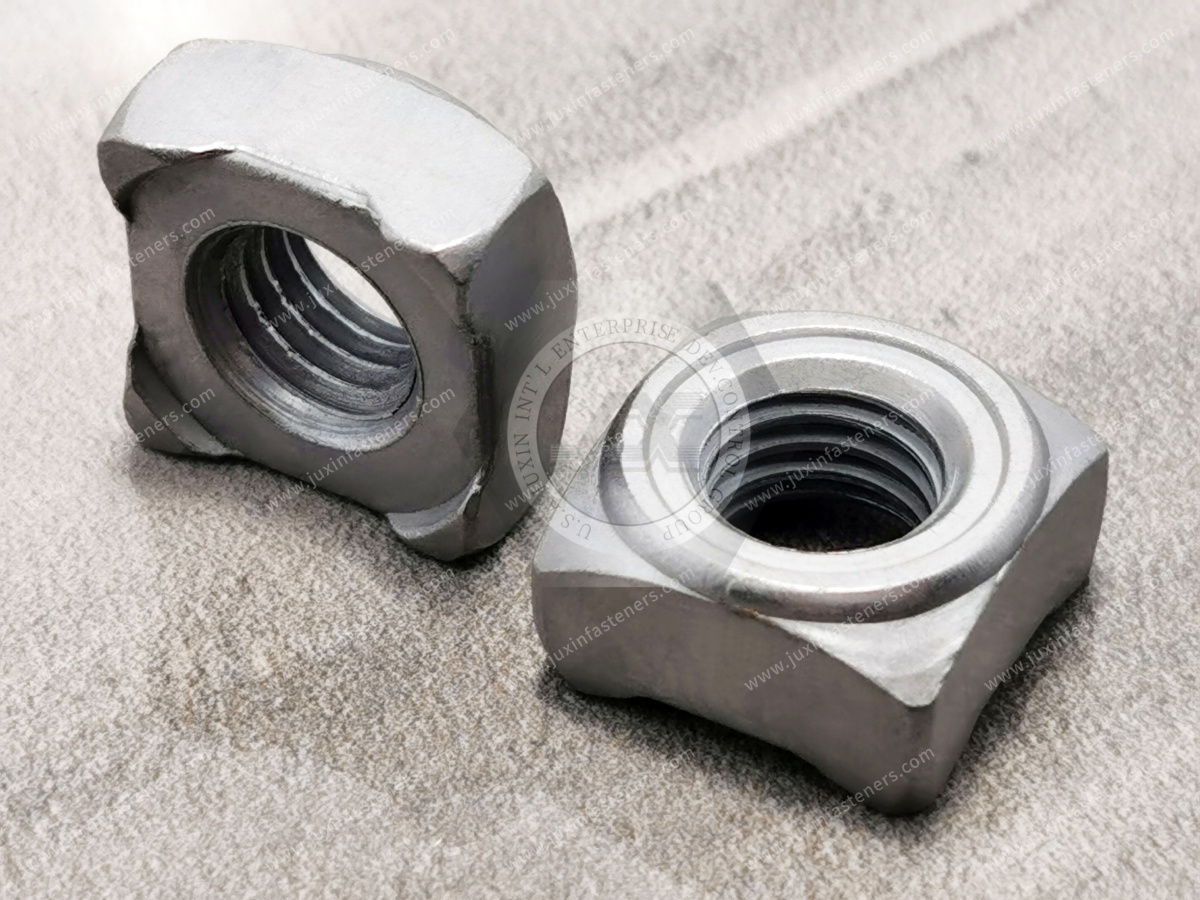
For weld nuts and other internally threaded components, engineering teams should consider:
Thread class
Coating thickness
Coating distribution
Gauge requirements
Installation torque
Mating bolt condition
Lubrication
Automated assembly
A coating specification should therefore avoid simply stating:
"Zinc plated."
A better specification identifies the required coating system, applicable standard, thickness or coating class where appropriate, thread requirements, corrosion requirement, and any customer-specific acceptance criteria.
Hydrogen embrittlement is one of the most important reasons engineers evaluate fastener coating processes carefully.
However, it should not be described as a problem caused only by electroplating.
Hydrogen-related failure can depend on:
Steel strength
Material microstructure
Hydrogen entry
Stress state
Surface treatment
Pretreatment
Plating process
Post-treatment
Service conditions
High-strength steels are generally more sensitive to hydrogen-related cracking than lower-strength materials.
This creates a risk-management sequence:
Material Strength → Hydrogen Entry → Stress → Susceptibility → Prevention → Verification
As fastener strength increases, susceptibility to hydrogen-assisted cracking can become a greater concern.
However, there is no single hardness or strength threshold that should be used as a universal substitute for the applicable standard.
The correct requirement should be taken from:
Product standard
Coating standard
Customer specification
Material condition
Fastener strength
Manufacturing process
For example, ISO 4042 contains specific requirements and recommendations addressing hydrogen-embrittlement risk for electroplated fasteners.
Where the applicable specification requires post-plating hydrogen relief treatment, the supplier must control:
Time between plating and treatment
Treatment temperature
Treatment duration
Equipment calibration
Batch traceability
Process records
The exact parameters should not be invented as universal values.
They must be determined according to the applicable standard and approved customer specification.
This is a critical difference between professional fastener engineering and generic internet content.
For high-strength fasteners, the decision should be based on risk management rather than a blanket rule.
The coating system is technically suitable
Hydrogen risk is controlled
The material condition is appropriate
The applicable standard permits the process
Post-treatment requirements are controlled
Thread dimensions are maintained
Corrosion requirements are satisfied
Customer specifications permit the coating
Hydrogen-risk reduction is a priority
Zinc mechanical deposition is acceptable
The fastener geometry is suitable
Coating thickness requirements can be achieved
Appearance is acceptable
Production volume and cost are appropriate
ASTM B695 or another agreed specification applies
High-strength steel is involved
Internal hydrogen-embrittlement risk needs to be minimized
A non-electrolytically applied coating is acceptable
The customer specification calls for a zinc-flake system
The coating system provides the required corrosion performance
ISO 10683 notes that zinc-flake coating systems are especially used for high-strength fasteners to avoid the risk of internal hydrogen embrittlement.
The key point is:
Mechanical zinc plating, zinc-flake coating, and electroplated zinc should be specified as different coating technologies.
Enterprise B2B search behavior is divided between technical engineering questions and commercial supplier-selection questions.
An engineer may search:
"electroplating vs mechanical plating hydrogen embrittlement fasteners"
A procurement manager may search:
"mechanical zinc plated fastener supplier"
A sourcing director may search:
"high-strength zinc plated fasteners OEM supplier"
A quality manager may search:
"ISO 4042 electroplated fasteners hydrogen embrittlement"
These searches represent different stages of the same commercial journey.
JUXIN FASTENERS should therefore provide information that moves the user from:
Technical Question → Coating Selection → Product Configuration → RFQ → Supplier Qualification → Production
Materials engineers and quality engineers typically focus on:
Base material
Material strength
Hardness
Hydrogen susceptibility
Coating chemistry
Coating thickness
Adhesion
Corrosion performance
Thread fit
Process control
Test methods
Lot traceability
They want to understand why a coating should be selected.
Corrosion specialists may evaluate:
Exposure environment
Zinc coating
Conversion coating
Top coat
Sealant
Galvanic interaction
Coating damage
Salt-spray results
Cyclic corrosion performance
Field exposure
Surface preparation
They are less interested in generic "hours" and more interested in whether the coating system matches the actual environment.
Procurement teams evaluate:
Unit price
Tooling
Minimum order quantity
Capacity
Lead time
Plating capacity
Quality consistency
Documentation
Supplier qualification
Customer approval
Change control
Logistics
Total cost of ownership
For high-volume OEM programs, coating consistency can be more important than achieving the lowest nominal plating cost.
Supply-chain teams should ask:
Where is the fastener manufactured?
Where is plating performed?
Is plating outsourced?
Is the plating supplier qualified?
Are coating changes controlled?
Can production be transferred?
Is there a backup process?
Can the supplier maintain the approved coating configuration?
Can compliance documentation be maintained across production?
This turns coating selection into a supply-chain risk-management decision.
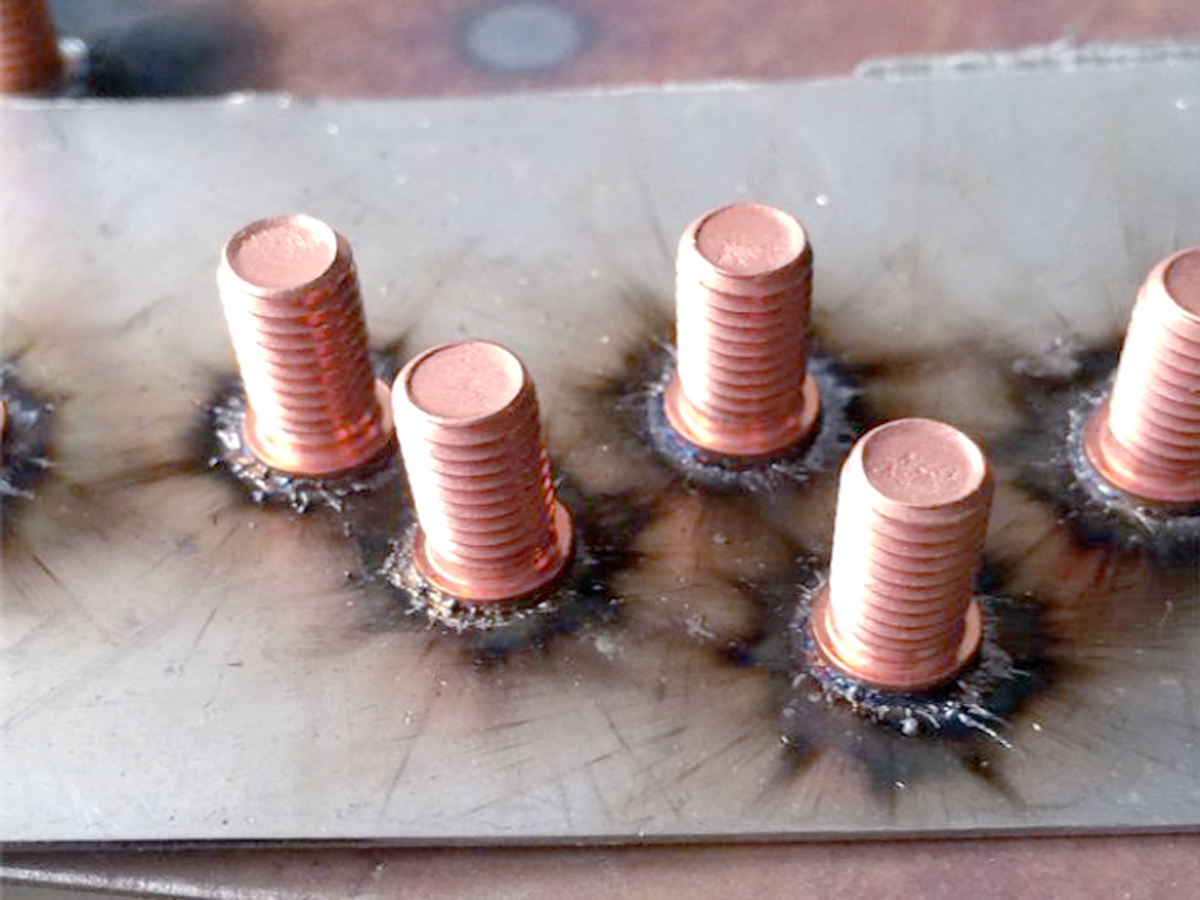
The correct surface treatment begins with the environment.
Potential priorities may include:
Basic corrosion protection
Cost
Appearance
Assembly
Availability
Additional considerations may include:
Humidity
Rain
Condensation
UV
Salt
Dirt
Temperature cycling
Additional considerations may include:
Road salt
Humidity
Temperature cycling
Customer corrosion specifications
ELV/RSL requirements
Hydrogen risk
Assembly torque
Automated installation
Additional considerations may include:
Corrosion
Electrical requirements
Material compatibility
Surface treatment
Hydrogen risk
Customer environmental requirements
Assembly process
Additional considerations may include:
Mud
Abrasion
Shock
Vibration
Outdoor exposure
Mechanical loading
This application-based approach is much more useful than choosing a coating from a catalog by appearance alone.
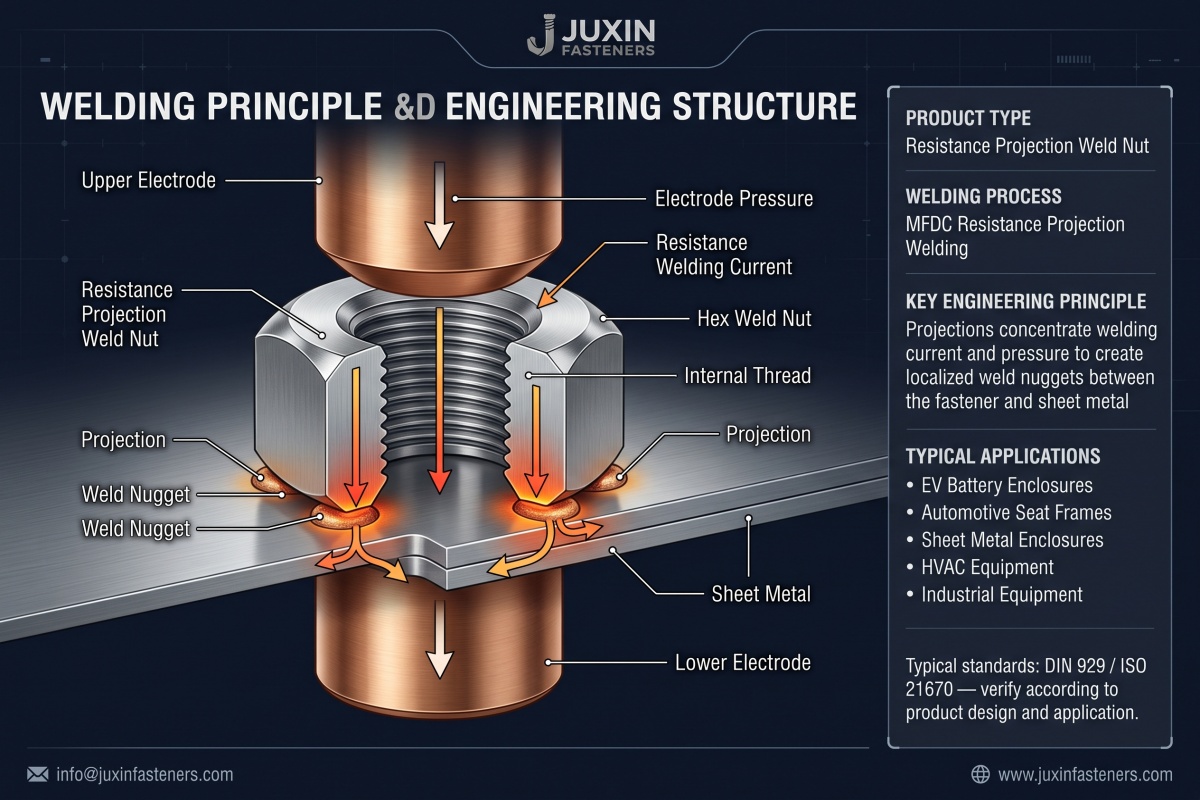
Weld fasteners require additional consideration because the surface treatment can affect the welding process.
Typical weld fasteners include:
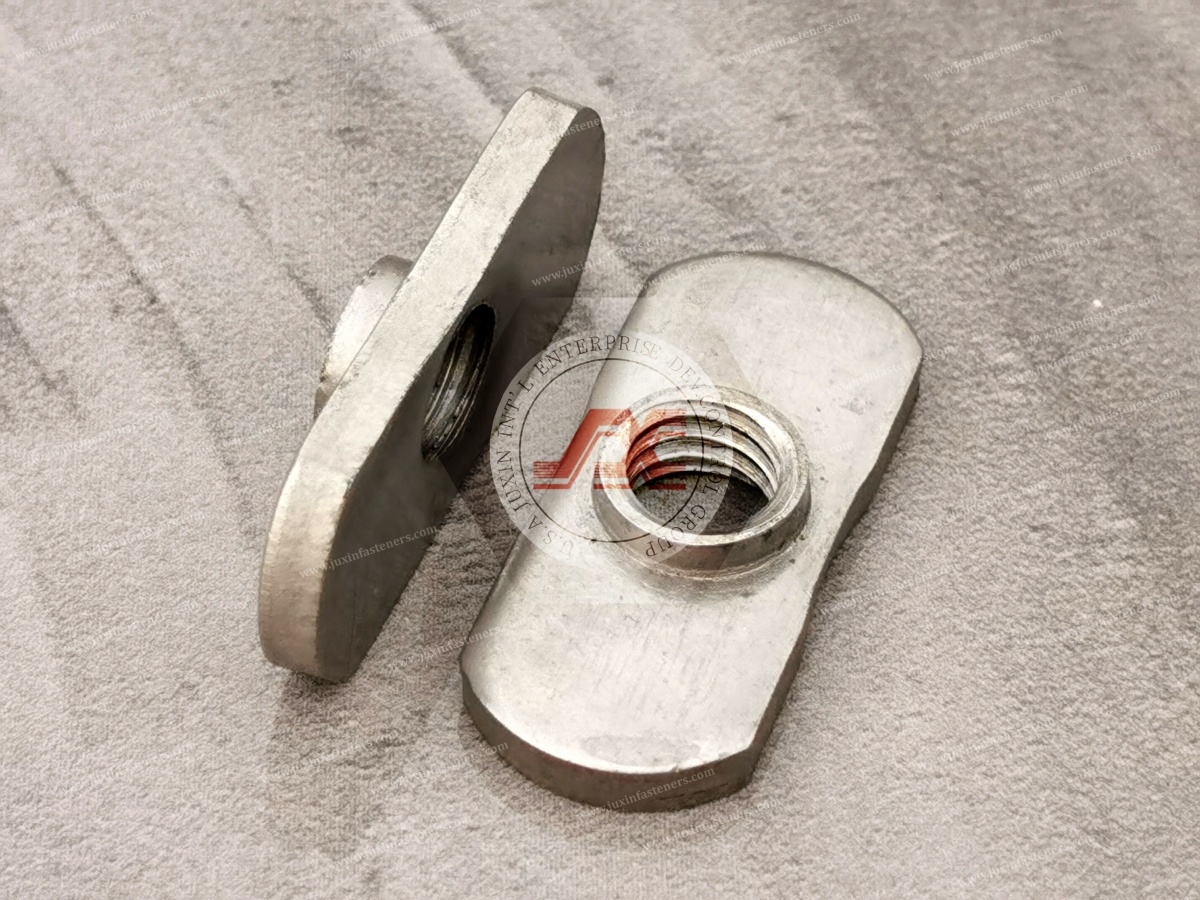
Projection weld nuts
Hex weld nuts
Square weld nuts
Flanged weld nuts
Weld studs
Weld screws
Custom weld fasteners
Resistance welding depends on electrical resistance and heat generation at the joint interface.
The basic relationship is often expressed as:
Q = I²Rt
where:
Q = heat generated
I = welding current
R = electrical resistance
t = welding time
However, this equation is only a simplified representation of the welding process.
Actual weld quality also depends on:
Electrode force
Projection geometry
Sheet thickness
Material
Surface condition
Welding current
Welding time
Electrode condition
Part alignment
Coating condition
Therefore, a heavy or unsuitable coating can affect the electrical and thermal conditions at the weld interface.
There is no universal answer.
The correct sequence depends on:
Fastener design
Coating
Welding process
Parent material
Welding equipment
Customer specification
Post-weld corrosion requirement
Some fasteners may be welded before a final corrosion-protection treatment.
Others may require a coating that is compatible with the welding process.
The supplier should therefore review the complete manufacturing sequence.
This is particularly important for automotive body assemblies and sheet-metal OEM products.
Trivalent chromium conversion systems are widely used in zinc-plated fastener applications.
However:
Trivalent chromium does not automatically equal complete RoHS compliance.
It describes the chromium chemistry used in the conversion coating.
The complete fastener still needs to be evaluated according to:
Base material
Zinc coating
Conversion coating
Sealant
Lubricant
Other substances
Customer RSL
Applicable regulation
JUXIN FASTENERS supports trivalent chromium zinc-plated fasteners for applicable OEM and industrial applications.
The coating selection can be evaluated together with:
Corrosion environment
Mechanical grade
Thread fit
Assembly
Hydrogen risk
Customer environmental requirements
This is particularly relevant for automotive, EV, electrical, telecommunications, HVAC, industrial machinery, railway, and renewable-energy applications.
Zinc-nickel is an electroplated zinc-alloy coating system that may be selected for demanding corrosion environments.
ISO 4042:2022 specifically includes zinc-nickel and zinc-iron among the electroplated coating systems addressed by the standard.
Zinc-nickel selection may involve:
Corrosion requirements
Coating thickness
Surface appearance
Friction behavior
Thread fit
Hydrogen-risk management
Automotive requirements
Environmental requirements
For high-strength steel, the same principle applies:
The coating chemistry does not remove the need for hydrogen-risk assessment.
A zinc-nickel coating should therefore be specified together with the applicable hydrogen-control requirements.
Mechanical zinc plating offers a different deposition mechanism, but coating thickness remains an important dimensional parameter.
ASTM B695 classifies mechanically deposited zinc coatings by thickness and provides requirements for the coating system.
Thickness affects:
Corrosion protection
Thread fit
Part dimensions
Assembly
Appearance
Coating cost
A thicker coating is not automatically better.
If the coating becomes too thick for the thread configuration, the fastener may become difficult to assemble.
Therefore, the correct specification should identify:
Coating Technology + Coating Class/Thickness + Thread Requirement + Corrosion Requirement + Finish Requirement
rather than simply:
"Heavy zinc coating."
Coating performance starts before the coating is applied.
Poor surface preparation can cause:
Poor adhesion
Uneven deposition
Local corrosion
Blistering
Peeling
Inconsistent appearance
Surface preparation may involve:
Cleaning
Degreasing
Rinsing
Activation
Mechanical preparation
Chemical preparation
The appropriate sequence depends on the substrate and coating technology.
For OEM procurement, this creates an important supplier-qualification question:
Does the supplier control the complete coating process or only the final plating step?
If plating is outsourced, the fastener manufacturer should still maintain control over the approved coating specification and change-management process.
A practical OEM decision matrix can be structured as follows.
The specified coating is electroplated zinc or zinc alloy
Dimensional and coating requirements can be controlled
The fastener material is compatible with the process
Hydrogen risk can be appropriately managed
The required conversion coating and top coat are available
The customer specification allows the process
Production volume supports the economics
The customer requires mechanically deposited zinc
Hydrogen-risk reduction is important
The fastener geometry is suitable
Coating thickness can meet the specification
Appearance is acceptable
The supplier has the appropriate process capability
High-strength steel is involved
A non-electrolytic coating is specified
Internal hydrogen-embrittlement risk must be minimized
The corrosion-performance requirement justifies the coating
The customer accepts the coating technology
Corrosion resistance is fundamental to the application
The mechanical design supports the selected stainless grade
Coating maintenance is undesirable
The environment justifies the material premium
This is why coating selection should always begin with the application and material, not the coating catalog.
Surface-finished fastening solutions are critical across many global industrial sectors.
Automotive chassis and suspension applications can combine:
High mechanical loading
Dynamic fatigue
Road salt
Water
Temperature cycling
High-strength fasteners
Customer-specific coating requirements
The coating system must therefore be evaluated together with:
Material strength
Hydrogen risk
Corrosion requirements
Assembly
Torque/friction
Customer specifications
Body structures may use:
Weld nuts
Weld studs
Weld screws
Self-clinching fasteners
The coating must be compatible with the welding or installation process.
JUXIN FASTENERS supports sheet-metal fastening solutions based on:
Parent material
Sheet thickness
Fastener geometry
Welding method
Coating condition
Assembly sequence
Production requirements
EV battery enclosures require careful evaluation of:
Corrosion
Electrical considerations
Coating chemistry
Hydrogen risk
Assembly
Environmental requirements
Surface treatment should be selected as part of the complete battery-enclosure fastening specification.
Heavy equipment operates in:
Mud
Rain
Dust
Salt
Vibration
Shock
Abrasive environments
Fastener coating selection should therefore consider both corrosion exposure and mechanical loading.
Wind-energy equipment may require long-term corrosion control for:
Electrical cabinets
Structural assemblies
Equipment housings
Maintenance-access components
The coating system should be selected based on actual exposure and customer specifications.
Industrial machinery commonly uses:
Weld nuts
Self-clinching nuts
Self-clinching studs
Rivet nuts
Threaded inserts
Custom fasteners
The coating selection must balance corrosion protection with assembly efficiency and cost.
Telecommunications equipment may require:
Controlled appearance
Corrosion protection
Sheet-metal compatibility
Repeated assembly
Environmental compliance
Coating selection should therefore consider both functional and aesthetic requirements.
Electrical cabinets and power equipment frequently use zinc-plated fasteners and stainless fasteners.
The correct selection depends on:
Environment
Mechanical requirement
Electrical requirement
Corrosion requirement
Customer specification
Railway equipment may require controlled:
Material
Coating
Corrosion protection
Traceability
Supplier qualification
Fasteners can be used in electrical cabinets, HVAC systems, interior structures, equipment housings, and other assemblies.
A professional fastener coating inspection program may include:
Material grade
Heat/lot identification
Mechanical properties
Surface condition
Cleaning
Surface preparation
Activation
Process control
Bath chemistry for electroplating
Current density
Process time
Mechanical deposition parameters
Media condition
Coating chemistry
Conversion coating
Sealant
Top coat
Lubricant
Hydrogen-relief treatment where applicable
Coating thickness
Adhesion
Appearance
Thread fit
Corrosion test
Hydrogen-related testing where required
Dimensional inspection
The exact inspection package should be determined by the governing specification.
A professional OEM RFQ should identify:
Part number
Drawing revision
Material
Strength/property class where applicable
Thread
Dimensions
Annual volume
Coating technology
Coating material
Coating thickness/class
Conversion coating
Sealant
Top coat
Lubricant
Appearance
Material strength
Applicable hydrogen-control standard
Pretreatment
Post-plating treatment
Test requirements
Documentation
Applicable test method
Acceptance criteria
Corrosion environment
Customer specification
RoHS where applicable
REACH requirements
ELV requirements where applicable
Customer RSL
Restricted substances
Material declarations
Coating certificate
Material certificate
Inspection report
Thickness results
Corrosion test results
Traceability
Change-control documentation
This level of specification reduces ambiguity between the buyer, fastener manufacturer, and plating supplier.
Before approving a coating supplier, OEM procurement teams should evaluate:
Can the supplier consistently produce the required coating?
Can the supplier maintain the required coating thickness without creating thread problems?
Does the supplier understand hydrogen-embrittlement risk for susceptible steel fasteners?
Can the supplier provide test results using the required method?
Can the supplier maintain traceable production records?
Will the supplier notify the customer before changing:
Plating chemistry
Conversion coating
Sealant
Lubricant
Plating location
Plating subcontractor
Process parameters
Can the supplier maintain the coating specification at production volume?
Can coating quality remain stable across multiple production lots?
These questions are especially important for automotive, EV, industrial machinery, electrical equipment, and energy-sector customers.
Unit coating price should not be the only commercial comparison.
A professional procurement analysis considers:
Part Cost + Plating Cost + Inspection + Rework Risk + Assembly Cost + Failure Risk + Documentation + Supply-Chain Risk
Electroplating may offer highly established high-volume production routes.
Mechanical plating may be commercially attractive for certain fastener geometries and strength levels.
Zinc-flake coatings may provide a different performance/cost balance for high-strength applications.
Stainless steel may have a higher material cost but eliminate the need for certain coating processes.
The correct decision depends on the total application economics.
Avoid vague drawing notes such as:
"Zinc plated."
That specification leaves too many variables open.
A professional drawing should identify, as applicable:
Base material
Fastener strength/property class
Coating technology
Coating material
Coating thickness/class
Conversion coating
Sealant/top coat
Lubrication
Corrosion requirement
Hydrogen-control requirement
Thread requirement
Appearance requirement
Applicable standard
For example:
Material: As specified
Surface Treatment: Electroplated zinc coating system according to the specified fastener coating standard
Conversion Coating: As specified
Hydrogen Control: According to applicable fastener/coating specification
Corrosion Requirement: According to specified test method and acceptance criteria
Thread: As specified, including applicable coating-related dimensional requirements
The exact specification should be agreed between engineering, procurement, and the supplier.
Salt-spray results are useful but do not directly predict service life.
Electroplated zinc, mechanically deposited zinc, zinc-nickel, and zinc-flake systems are different technologies.
Mechanical deposition avoids the electrolytic deposition mechanism, but the complete pretreatment process must still be controlled.
Electroplated fasteners can be engineered and controlled appropriately. The issue is hydrogen-embrittlement risk management.
A coating can satisfy corrosion requirements and still cause assembly problems.
A coating suitable for a conventional bolt may not be suitable for a weld nut or weld stud.
The entire fastener configuration must be evaluated.
A coating change can affect:
Dimensions
Friction
Corrosion
Hydrogen risk
Assembly
Appearance
Documentation
This article should function as part of the broader JUXIN FASTENERS knowledge architecture, connecting coating selection with fastener engineering and commercial product solutions.
For projection weld nuts, weld studs, weld screws, and custom weld fasteners, connect to the primary Weld Fasteners Solutions page.
Recommended internal-link anchor:
Weld Fasteners Solutions
Connect coating-selection research directly to the broader JUXIN FASTENERS surface-treatment solution.
Recommended internal-link anchor:
Fastener Surface Finishes & Coatings
This is a natural technical continuation for engineers evaluating electroplated high-strength fasteners.
Recommended internal-link anchor:
Fastener Hydrogen Embrittlement Prevention Guide
Coating selection cannot be separated from the strength and heat-treatment condition of the substrate.
Recommended internal-link anchor:
Fastener Heat Treatment & Core Hardness Guide
For customers investigating delayed cracking, corrosion failure, coating failure, or assembly problems.
Recommended internal-link anchor:
Fastener Failure Modes & Root Cause Analysis Guide
For weld fasteners and self-clinching fasteners, coating and material selection ultimately need to support the installed component's required performance.
Recommended internal-link anchor:
Fastener Push-Out & Pull-Out Testing Guide
This article should naturally link to JUXIN FASTENERS' dedicated technical content on trivalent chromium zinc-plated fasteners.
Recommended internal-link anchor:
Trivalent Chromium Zinc-Plated Fasteners
For automotive and EV applications involving high-strength coated fasteners, weld nuts, weld studs, and sheet-metal fastening systems.
Recommended internal-link anchor:
Automotive and EV Fastening Solutions
For customers requiring non-standard dimensions, material, coating, thread, or geometry.
Recommended internal-link anchor:
Custom Fastener Manufacturing
Before sending an RFQ for electroplated or mechanically plated fasteners, procurement and engineering teams should provide:
2D engineering drawing
3D model where available
Part number
Drawing revision
Annual volume
Forecast
Prototype quantity
Production quantity
Steel grade
Stainless steel grade where applicable
Mechanical property requirement
Hardness
Strength level
Electroplated zinc
Zinc-nickel
Zinc-iron
Mechanical zinc
Zinc-flake
Zinc-aluminum
Other coating system
Coating thickness
Conversion coating
Sealant
Top coat
Lubricant
Appearance
Thread requirements
Exposure environment
Test method
Acceptance criteria
Customer specification
Material strength
Hydrogen-control requirements
Post-treatment requirements
Testing requirements
For weld fasteners:
Parent sheet material
Sheet thickness
Welding method
Welding parameters where available
Weld performance requirements
Coating condition
Applicable RoHS requirements
REACH requirements
ELV requirements where applicable
Customer Restricted Substance List
Material declaration requirements
Providing this information allows JUXIN FASTENERS to quote the actual engineering requirement rather than simply quoting a generic plated fastener.
A professional OEM sourcing process should connect engineering, coating, quality, and procurement.
Provide:
Drawing
Material
Thread
Geometry
Application
Quantity
JUXIN FASTENERS evaluates:
Coating technology
Material compatibility
Corrosion requirement
Hydrogen risk
Thread fit
Assembly requirements
The process may include:
Forming / CNC Machining → Heat Treatment Where Required → Cleaning → Surface Treatment → Inspection → Packaging
The exact sequence depends on the product.
Samples may be evaluated for:
Dimensions
Thread fit
Coating thickness
Appearance
Corrosion performance
Mechanical performance
Welding behavior where applicable
The supplier provides the agreed documentation package.
The customer approves:
Material
Coating
Finish
Dimensions
Inspection requirements
Production is controlled against the approved configuration.
Changes to:
Material
Plating chemistry
Coating supplier
Surface-treatment process
Lubricant
Manufacturing location
should be evaluated according to the applicable customer change-control requirements.
This creates a controlled path from:
Engineering Drawing → Coating Selection → Sample → Approval → Production → Supply Chain
Electroplating deposits metal electrochemically using electrical current, while mechanical plating deposits zinc through mechanical impact and deposition processes without using an electrolytic current for the zinc deposition itself.
The difference affects hydrogen risk, coating distribution, appearance, process control, and application suitability.
Not universally.
Mechanical plating can be attractive when hydrogen-embrittlement risk associated with electrolytic deposition is a major concern.
However, the complete application must still be evaluated for coating thickness, geometry, corrosion requirements, appearance, assembly, and customer specifications.
No.
Electroplating can introduce hydrogen into susceptible steel, creating an embrittlement risk under certain conditions.
The actual risk depends on material susceptibility, process conditions, hydrogen exposure, stress, and post-treatment.
Appropriate process controls and applicable standards are used to reduce the risk.
No process should be described that way without qualification.
Mechanical zinc deposition avoids the electrolytic hydrogen-generation mechanism associated with electroplating, but the complete pretreatment and manufacturing route still needs to be controlled.
ISO 4042:2022 is a major international standard for electroplated coating systems on fasteners. It addresses zinc and zinc-alloy systems and includes requirements and recommendations related to hydrogen-embrittlement risk.
ASTM B695 covers mechanically deposited zinc coatings on iron and steel. It includes requirements related to coating thickness, adhesion, corrosion testing, appearance, and absence of hydrogen embrittlement.
No.
They are different coating technologies.
ISO 10683:2018 covers non-electrolytically applied zinc-flake coating systems and explicitly excludes mechanically applied zinc coatings from its scope.
Zinc-nickel can be applied as an electroplated zinc-alloy coating system, and ISO 4042 includes zinc-nickel among the electroplated coating systems covered by the standard.
Not necessarily.
Thickness is an important factor, but corrosion performance also depends on coating chemistry, conversion coating, sealant, substrate, environment, surface preparation, and damage during assembly.
No.
Salt-spray testing provides controlled laboratory data for evaluating coating behavior under specified test conditions.
It should not be converted directly into a universal outdoor service-life prediction.
Yes, when the coating system, material, hydrogen control, corrosion performance, assembly requirements, and customer specifications are appropriate for the application.
Potentially, depending on the application, fastener geometry, coating specification, corrosion requirements, customer approval, and production capability.
Potentially, but coating condition and welding sequence must be evaluated.
A coating can influence electrical resistance and heat generation at the weld interface, so weldability should be validated for the specific fastener, coating, parent material, and welding process.
No.
Trivalent chromium describes the chromium chemistry in a conversion coating.
Complete compliance depends on the full fastener configuration and the applicable regulatory and customer requirements.
No.
A professional OEM specification should identify the coating technology, coating material, coating thickness or class where applicable, conversion coating, corrosion requirement, thread requirement, hydrogen-control requirements, and applicable standard.
JUXIN FASTENERS can evaluate application-specific surface-treatment options including zinc plating, trivalent chromium zinc plating, zinc-nickel, zinc-aluminum, Dacromet-type systems, stainless steel passivation, and other treatments according to the customer's application and specification.
Choosing between electroplating and mechanical plating is not simply a coating-price decision.
For OEM applications, the correct solution must connect:
Fastener Material + Strength + Coating Technology + Hydrogen Risk + Corrosion Environment + Thread Fit + Assembly + Welding + Compliance + Production Control
JUXIN FASTENERS supports OEM and industrial customers with fastening solutions including:
Weld nuts
Weld studs
Weld screws
Self-clinching fasteners
Rivet nuts
Threaded inserts
Custom screws
Custom bolts
CNC-machined fasteners
High-strength fastening components
Zinc-plated fasteners
Trivalent chromium zinc-plated fasteners
Zinc-nickel coated fasteners
Other application-specific surface treatments
For projects requiring a defined electroplating system, mechanical zinc plating, high-strength hydrogen-risk control, corrosion-resistant fasteners, or customer-specific surface-treatment requirements, provide the engineering drawing and coating specification for technical review.
JUXIN FASTENERS can evaluate:
Base material
Mechanical strength
Heat treatment
Coating technology
Coating thickness
Conversion coating
Hydrogen-embrittlement risk
Corrosion requirements
Thread fit
Welding requirements
Assembly requirements
Environmental requirements
Annual production volume
Inspection and documentation requirements
Send your fastener coating specification, engineering drawing, and annual volume forecast to:
JUXIN FASTENERS
Precision Fastening Solutions Since 2003
Fastener electroplating versus mechanical plating is not a simple competition between two coating methods.
The correct choice depends on the complete engineering system.
For materials engineers, the key issue is:
How does the coating process interact with the substrate and its susceptibility to hydrogen-related failure?
For corrosion engineers, the question is:
Does the complete coating system provide the required protection under the actual service environment?
For structural and design engineers, the question is:
Will the coating maintain thread fit, assembly performance, welding compatibility, and dimensional requirements?
For procurement managers, the question is:
Can the supplier consistently manufacture the approved coating configuration at the required cost and volume?
For supply-chain managers, the question is:
Can the coating process remain controlled throughout the complete global supply chain?
The correct decision framework is therefore:
Material → Strength → Hydrogen Risk → Coating Technology → Coating Thickness → Corrosion Environment → Assembly/Welding → Compliance → Supplier Capability
Electroplating remains an important and widely used technology for industrial fasteners when properly specified and controlled.
Mechanical zinc plating can provide a valuable alternative for applications where avoiding the electrolytic hydrogen-generation mechanism is an important design consideration.
Zinc-flake systems provide another non-electrolytically applied coating route and should not be confused with mechanical zinc plating.
ISO 10683 specifically identifies zinc-flake systems as a separate coating category and notes their use on high-strength fasteners where internal hydrogen-embrittlement risk is a concern.
For OEM customers, the strongest sourcing strategy is not to ask:
"Which plating is best?"
Instead, ask:
"Which coating system is best for this material, this geometry, this assembly process, this corrosion environment, this regulatory requirement, and this production program?"
That question produces a much more reliable engineering and procurement decision.
JUXIN FASTENERS can support that evaluation from engineering drawing review through material selection, fastener manufacturing,
surface-treatment selection, sample development, quality documentation, and production sourcing.
The right coating is not the one with the strongest marketing claim. It is the one that remains technically suitable, dimensionally controlled,
environmentally appropriate, and commercially repeatable throughout the OEM product lifecycle.
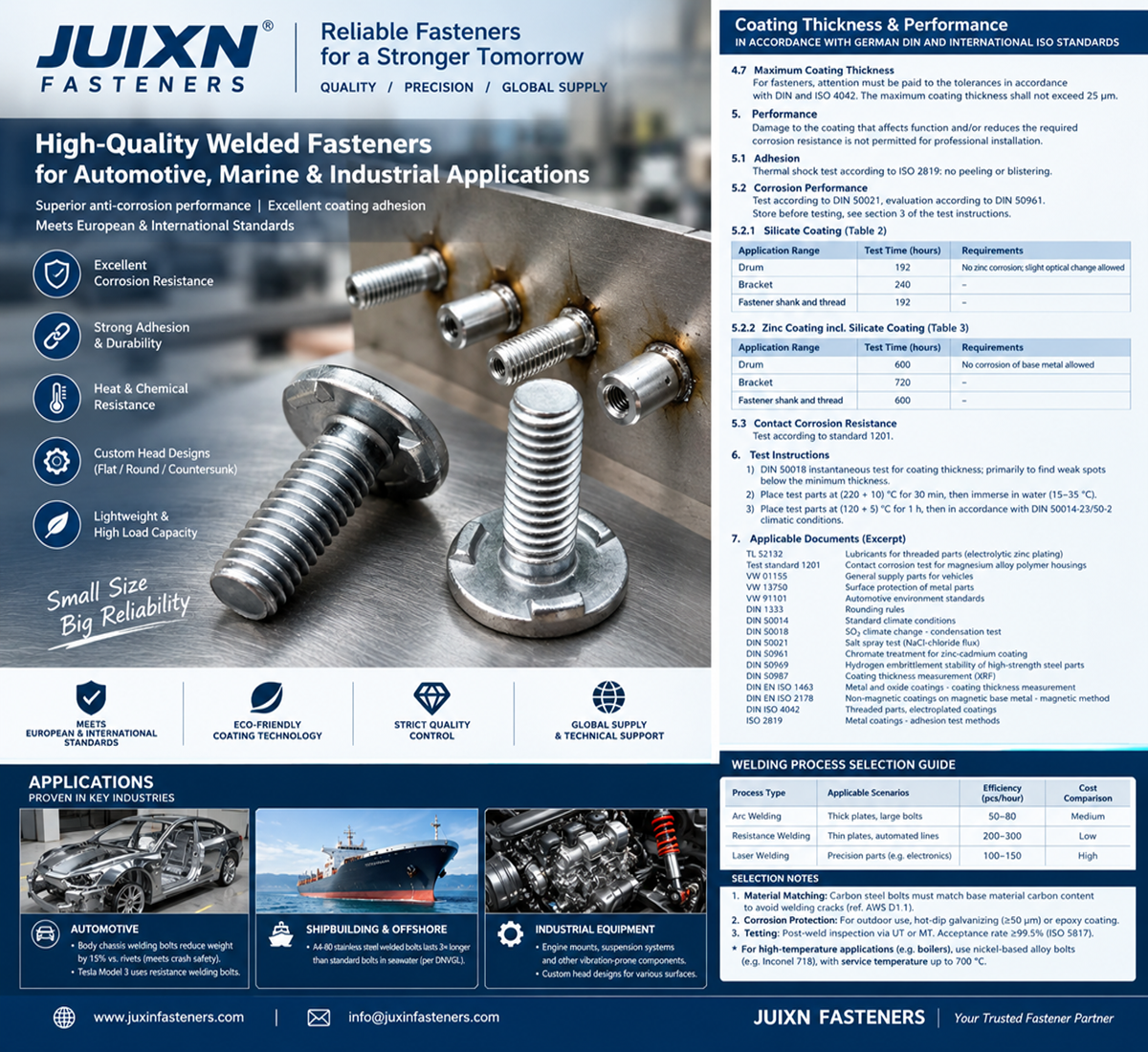
Product Packaging
Packaging Standard
At Juxin Fasteners, we apply standardized export packaging to ensure product protection, traceability, and compliance with international logistics requirements.
1. Standard Export Packaging
Unless otherwise specified, all products will be packed according to our factory standard export packaging, which includes:
Moisture-resistant inner protection
Poly bag or small box packing as required
Reinforced export cartons
Clear labeling with part number, specification, batch number, and quantity
Palletizing for sea or air shipment when necessary
Our standard packaging is designed to ensure safe transportation, efficient warehousing, and long-distance international shipping.
2. Customized Packaging Options
We also provide customized packaging solutions according to customer requirements, including but not limited to:
Private labeling
Customized barcodes
Specific carton dimensions
Retail packaging
Special pallet configuration
Customer-specific marking and identification
So that you know, customized packaging may involve additional costs and extended lead time depending on the complexity of the requirements.
3. Compliance & Quality Assurance
All packaging processes are controlled under our ISO 9001 quality management system to ensure consistency, traceability, and product integrity throughout the supply chain.
Product Pictures
Contact Us
Tel.:
+86 020 8621 0320
+86 020 3121 6067
E-mail:
Technical Support:
Navigation
SEND INQUIREY