Call Us
+86 136 6007 9809
Call Us
+86 136 6007 9809

Electrical cabinets and equipment enclosures are fundamental to AI data center infrastructure.
Product Specification
Electrical cabinets and equipment enclosures are fundamental to AI data center infrastructure.
Behind the racks and computing systems are power distribution cabinets, control panels, electrical housings, monitoring equipment, power conversion assemblies,
and other sheet-metal structures that must be assembled accurately and maintained efficiently.
Fasteners used in these enclosures must support more than basic mechanical attachment. The fastening method affects panel assembly, thread accessibility,
serviceability, manufacturing sequence, and in some applications electrical or grounding requirements.
For enclosure manufacturers, the correct fastening solution should therefore be selected from the complete product design rather than from thread size alone.
JUXIN FASTENERS supplies custom fastening components for sheet-metal enclosures, electrical equipment, data center infrastructure, and OEM applications.
Common fastening components include:
Machine screws
Custom screws
Bolts
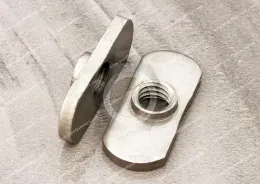
Weld nuts
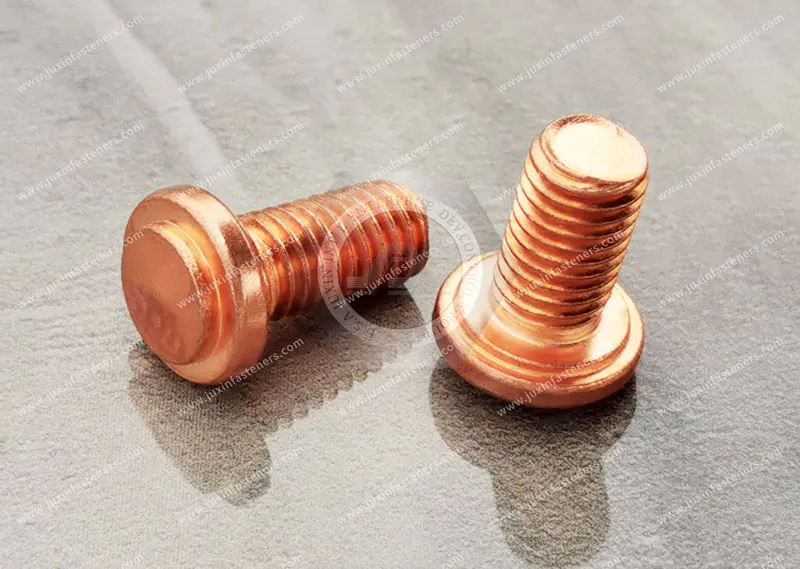
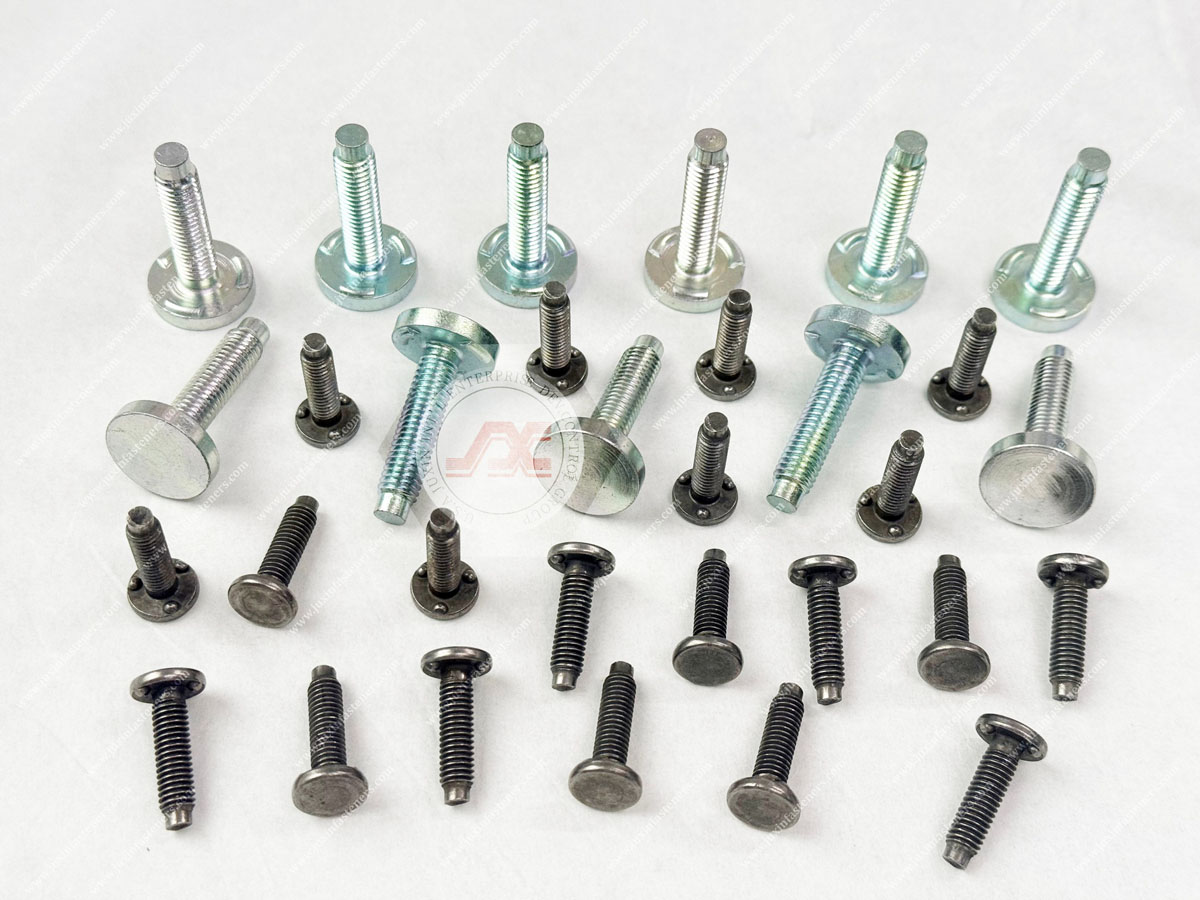
Weld studs
Self-clinching nuts
Self-clinching studs
Rivet nuts
Threaded inserts
Standoffs
Spacers
CNC machined components
Different fastening technologies solve different assembly problems.
The choice depends on whether the fastening point must be permanently integrated into the panel, installed from one side, removable, electrically conductive, electrically isolated,
or compatible with an automated manufacturing process.
Electrical cabinets frequently use formed sheet-metal panels.
If the sheet is not suitable for directly tapping a durable thread, an integrated threaded fastener may be required.
Possible solutions include:
Self-clinching nuts
Weld nuts
Rivet nuts
Threaded inserts
There is no single best solution for all sheet-metal assemblies.
The correct choice depends on the substrate and manufacturing method.
Some enclosure assemblies do not provide convenient access behind the panel.
In these situations, installation method becomes an important selection criterion.
Blind rivet nuts can be considered where one-sided installation is required.
Welded or mechanically installed fastening components may also be appropriate depending on the enclosure manufacturing process.
Service panels may need to be opened during installation, inspection, maintenance, or replacement.
A fastening solution should therefore consider:
Thread durability
Alignment
Tool accessibility
Installation consistency
Panel removal sequence
Risk of damaging the enclosure
This is one reason integrated threaded hardware can be preferable to loose nuts in certain enclosure designs.
Weld nuts provide a permanent internal thread by joining the nut to the metal substrate through an appropriate welding process.
They can be considered for:
Electrical cabinets
Power distribution enclosures
Control panels
Mounting brackets
Equipment housings
Sheet-metal support structures
Common configurations may include:
Projection weld nuts
Hexagonal weld nuts
Square weld nuts
Piloted weld nuts
Custom weld nuts
The fastener geometry should be matched to the substrate and welding process.
A pilot, projection arrangement, flange, or other feature may have a specific manufacturing purpose and should not be selected simply because it appears mechanically similar to another product.
Self-clinching nuts are mechanically installed into suitable sheet-metal substrates.
Their application can be attractive when the manufacturing process does not use welding or when localized heat input is undesirable.
Potential benefits include:
Integrated threads
Repeatable installation
No welding operation
Suitable integration into sheet-metal manufacturing
Convenient final assembly
However, self-clinching performance depends on the relationship between fastener geometry and substrate characteristics.
The panel material and thickness should therefore be specified when selecting the component.
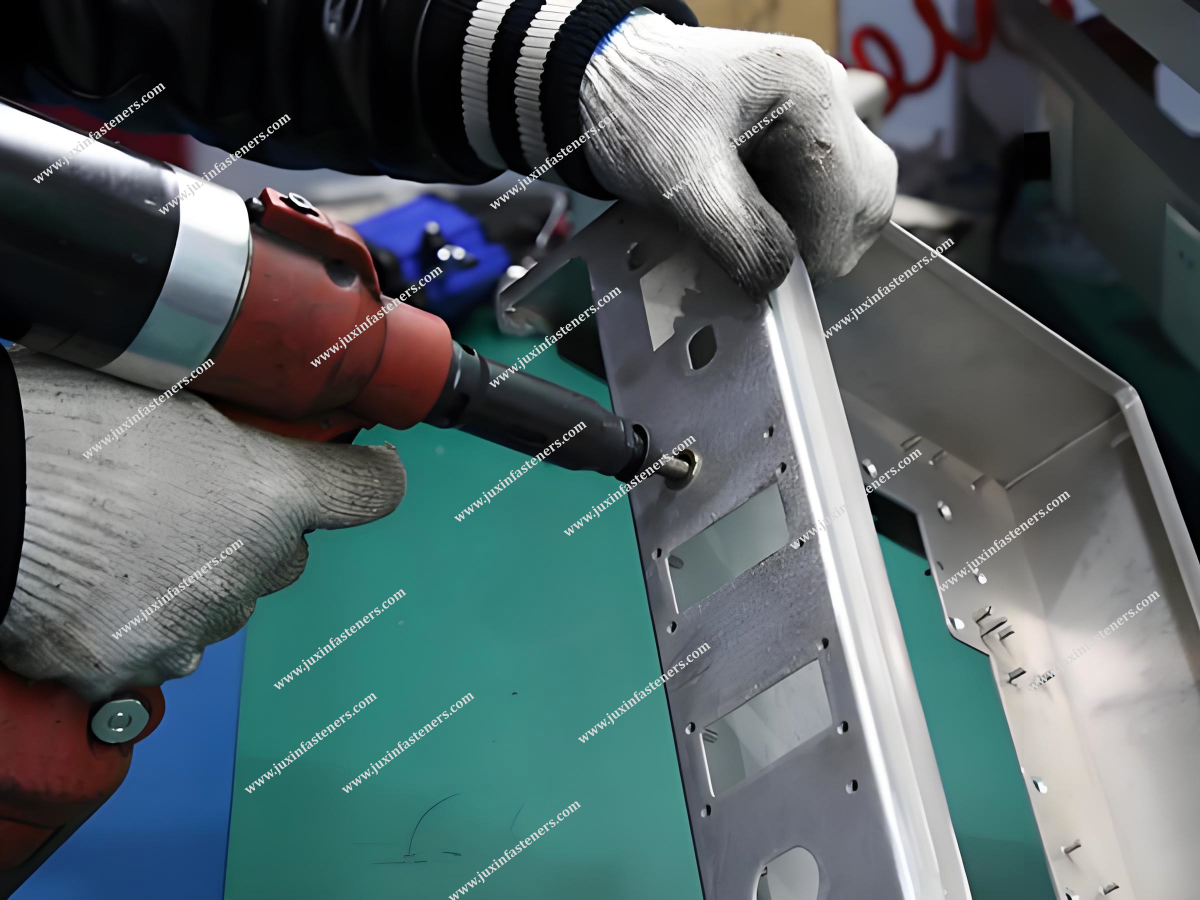
Rivet nuts are designed for installation from one side of the panel.
This can be useful when the enclosure is already formed or when the rear side is inaccessible.
Typical applications may include:
Equipment cabinets
Large enclosures
Service panels
Retrofit structures
HVAC and electrical housings
Data center infrastructure
Rivet nuts can also be useful where a threaded attachment point must be added after fabrication.
The installer should verify hole size, grip range, setting method, thread specification, and substrate suitability according to the selected rivet nut.
Fasteners around electrical systems require careful functional definition.
A fastener may be required to:
Mechanically retain a component
Maintain electrical continuity
Support a grounding connection
Remain isolated from an energized component
Position an insulating component
Secure a busbar support or bracket
These functions should be specified explicitly.
A plated metal fastener should not automatically be described as an electrical grounding component, and an insulating fastener should not automatically be assumed to provide a particular dielectric performance.
The electrical function must be validated within the complete assembly.
Enclosures may be installed in different environmental conditions.
The fastener and panel may be exposed to:
Humidity
Condensation
Cleaning environments
Outdoor air
Industrial atmosphere
Temperature cycling
Material and surface treatment should therefore be selected according to the actual environment and compatibility requirements.
When dissimilar metals are combined, engineers should also consider the potential for galvanic interaction.
The coating itself should be evaluated for:
Corrosion protection
Thread compatibility
Assembly behavior
Electrical contact requirements
Welding compatibility where applicable
A common engineering mistake is to select the fastener before defining the manufacturing sequence.
A better approach is:
Panel Design → Fastener Selection → Installation Method → Forming/Welding Sequence → Coating → Final Assembly → Service
For example, a weld nut may need to be installed before a coating operation, while a rivet nut may be installed after the enclosure has been formed.
The correct sequence depends on the product.
For an OEM electrical enclosure project, a supplier should receive:
Fastener drawing
Thread specification
Material
Surface treatment
Panel material
Panel thickness
Hole specification
Installation process
Welding process where applicable
Assembly requirements
Quantity
Inspection requirements
A drawing-based RFQ reduces the risk of receiving a nominally similar fastener that does not fit the actual manufacturing process.
Standard catalogue fasteners are not always sufficient for specialized electrical cabinets.
OEMs may need:
Modified flange geometry
Special thread configurations
Custom lengths
Custom pilot dimensions
Specific welding projections
Special materials
Specified surface treatments
Application-specific mounting features
JUXIN FASTENERS can evaluate custom fastening requirements based on drawings, samples, specifications, and production needs.
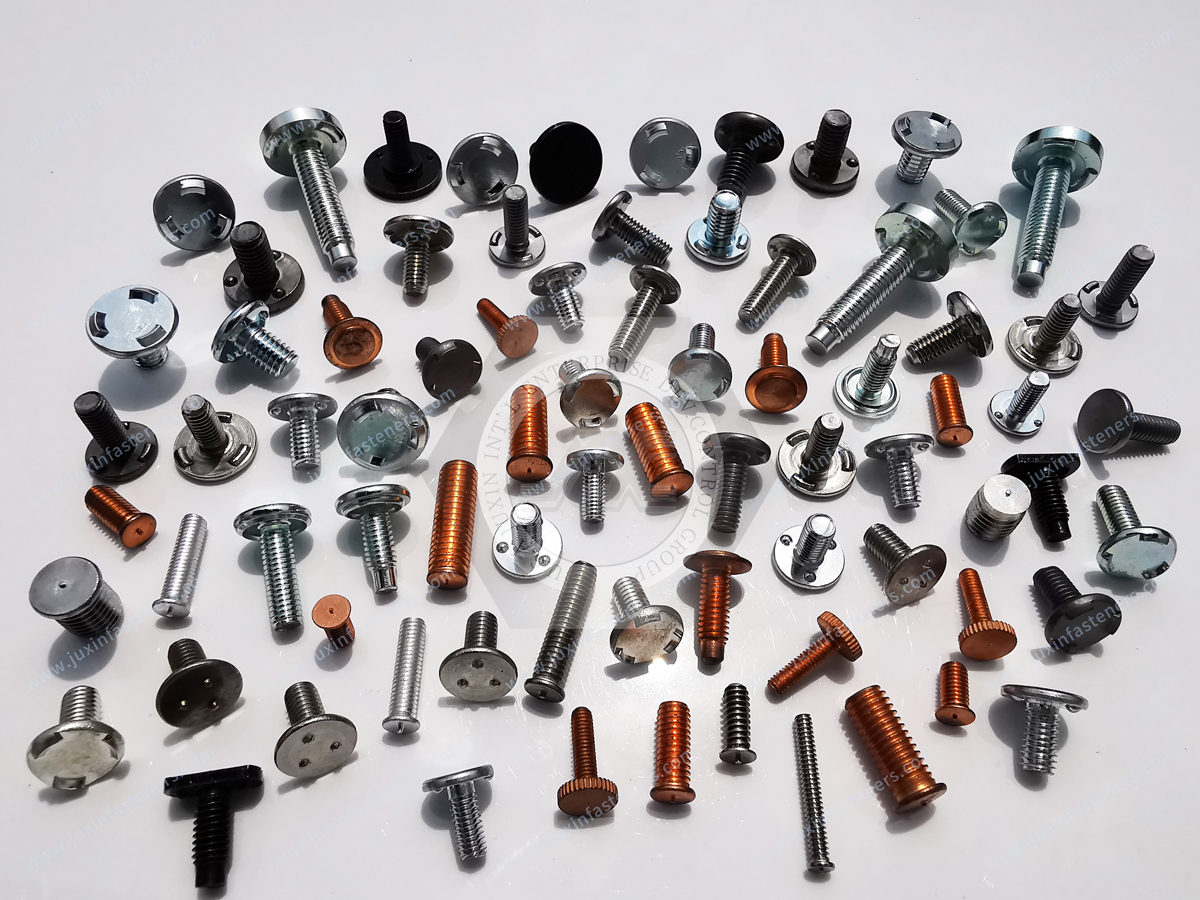
JUXIN FASTENERS manufactures fastening components for sheet-metal and industrial equipment applications, including:
Weld nuts
Weld studs
Self-clinching nuts
Self-clinching studs
Rivet nuts
Threaded inserts
Custom screws
Custom bolts
Standoffs
Spacers
CNC machined components
For AI data center electrical cabinets and power infrastructure, the objective is not simply to source a low-cost fastener.
The objective is to select a fastening system that fits the material, manufacturing process, assembly sequence, service requirements, and final application.
Send your enclosure drawing and fastening requirements to info@juxinfasteners.com for an OEM sourcing review.
JUXIN FASTENERS — Precision Fastening Solutions Since 2003.
Product Packaging
Packaging Standard
At Juxin Fasteners, we apply standardized export packaging to ensure product protection, traceability, and compliance with international logistics requirements.
1. Standard Export Packaging
Unless otherwise specified, all products will be packed according to our factory standard export packaging, which includes:
Moisture-resistant inner protection
Poly bag or small box packing as required
Reinforced export cartons
Clear labeling with part number, specification, batch number, and quantity
Palletizing for sea or air shipment when necessary
Our standard packaging is designed to ensure safe transportation, efficient warehousing, and long-distance international shipping.
2. Customized Packaging Options
We also provide customized packaging solutions according to customer requirements, including but not limited to:
Private labeling
Customized barcodes
Specific carton dimensions
Retail packaging
Special pallet configuration
Customer-specific marking and identification
So that you know, customized packaging may involve additional costs and extended lead time depending on the complexity of the requirements.
3. Compliance & Quality Assurance
All packaging processes are controlled under our ISO 9001 quality management system to ensure consistency, traceability, and product integrity throughout the supply chain.
Product Pictures
Contact Us
Tel.:
+86 020 8621 0320
+86 020 3121 6067
E-mail:
Technical Support:
Navigation
SEND INQUIREY