Call Us
+86 136 6007 9809
Call Us
+86 136 6007 9809

How can global OEMs reduce supply chain risk when sourcing industrial fasteners, weld nuts, weld studs, self-clinching fasteners, threaded inserts, and other engineered fastening components?
Fastener supply chain risk management is not simply a matter of finding a lower-cost supplier or holding more inventory.
For OEM manufacturing, the objective is to identify where a fastening component can become a supply-chain constraint, determine the consequences of that failure,
and build a qualified sourcing strategy around technical, commercial, quality, and logistics risks.
Product Specification
How can global OEMs reduce supply chain risk when sourcing industrial fasteners, weld nuts, weld studs, self-clinching fasteners, threaded inserts, and other engineered fastening components?
Fastener supply chain risk management is not simply a matter of finding a lower-cost supplier or holding more inventory.
For OEM manufacturing, the objective is to identify where a fastening component can become a supply-chain constraint, determine the consequences of that failure,
and build a qualified sourcing strategy around technical, commercial, quality, and logistics risks.
For critical industrial fasteners, a resilient sourcing strategy normally considers:
Supplier concentration and single-source exposure
Manufacturing capability and capacity
Raw-material availability
Tooling and custom-part dependency
Product qualification and change control
Quality-system maturity
Lead-time variability
Logistics and geographic exposure
Inventory and replenishment strategy
Packaging and assembly requirements
Demand variability
Alternate-supplier qualification
Total cost of ownership rather than piece-part price alone
For standard commodity fasteners, a multi-source strategy may be relatively straightforward. For custom weld nuts, weld studs, self-clinching fasteners,
threaded inserts, CNC-machined fasteners, and other engineered components, however, simply adding a second supplier does not automatically reduce risk.
The alternate supplier must be technically qualified.
The part must remain interchangeable where interchangeability is actually required.
The manufacturing process must be validated.
The supplier must understand the customer's material, welding, assembly, coating, packaging, and inspection requirements.
And the commercial supply arrangement must be capable of supporting the required production pattern.
A practical OEM risk-management model is therefore:
Supplier Concentration
        ↓
Risk Identification
        ↓
Technical & Commercial Qualification
        ↓
Primary + Qualified Alternate Strategy
        ↓
Inventory / Replenishment Planning
        ↓
Quality & Change Control
        ↓
Ongoing Supplier Performance Monitoring
        ↓
More Resilient OEM Supply Chain
This is fundamentally different from promising “zero-risk production.” No supplier strategy can eliminate every disruption.
The objective is to reduce single points of failure, improve recovery options, and make supply risk visible before it becomes a production problem.
For procurement and engineering teams, this distinction is critical.
A fastener may cost only a few cents or dollars per piece while having a much larger economic impact when its absence stops an assembly process, creates manual rework, delays shipment, or requires emergency sourcing.
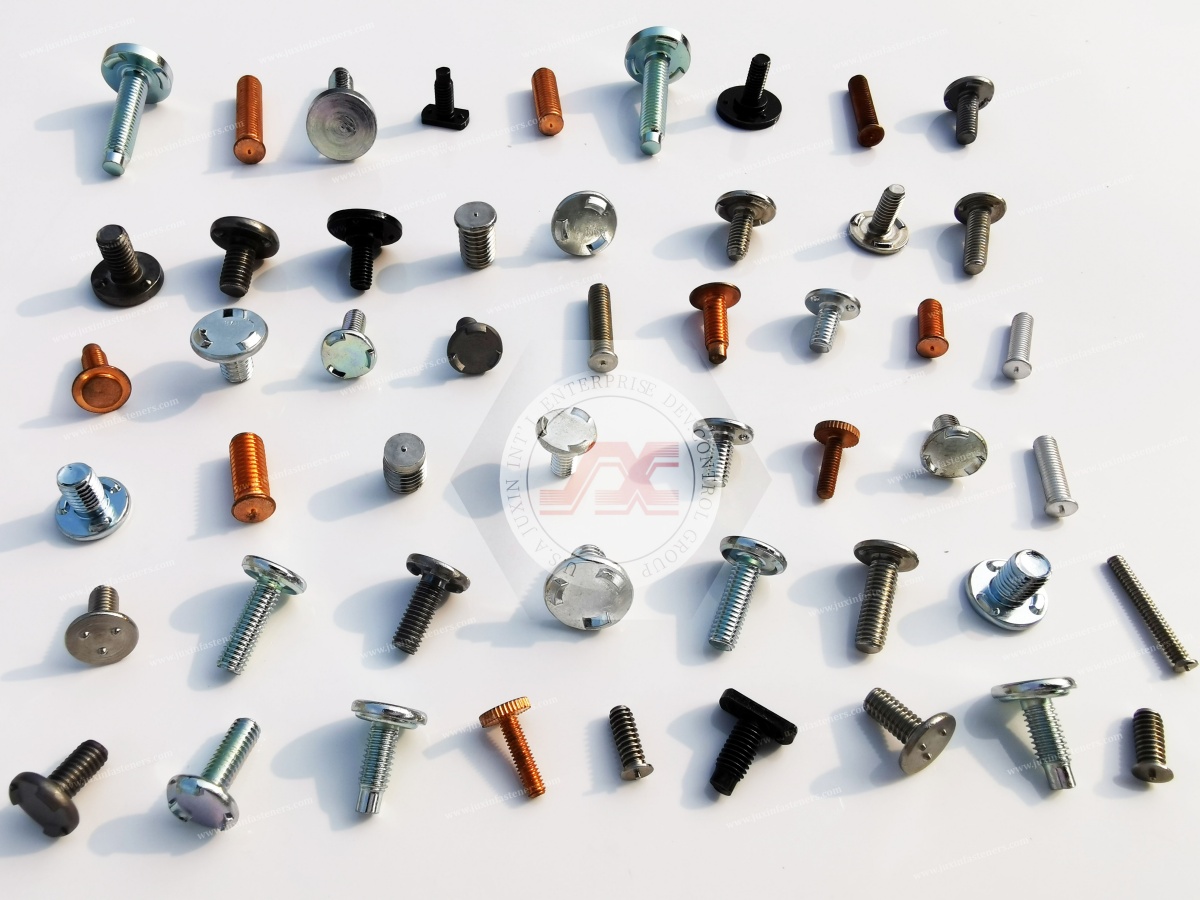
JUXIN FASTENERS supports OEM and industrial customers with engineered fastening components including weld nuts, weld studs, self-clinching fasteners,
blind rivet nuts, threaded inserts, CNC-machined fasteners, custom screws and bolts, stainless steel fasteners, high-strength fasteners, and custom engineered fastening components,
with product selection and supply arrangements developed according to application, drawing, material, process, quality, and commercial requirements.
One of the most useful distinctions in industrial procurement is separating supplier risk from part risk.
A supplier may appear financially stable and operationally capable while a specific fastener remains highly vulnerable because of its geometry, tooling, material, coating, qualification status, or manufacturing process.
Consider two different purchasing situations.
A common standardized bolt may have:
Multiple qualified suppliers
Established dimensional standards
Widely available raw materials
Low tooling dependency
Multiple distribution channels
Relatively simple substitution criteria
The sourcing risk may therefore be relatively low.
A custom projection weld nut may involve:
Dedicated forming or machining requirements
Specific projection geometry
Customer-controlled dimensions
Defined thread requirements
Particular substrate compatibility
Welding-process validation
Surface-treatment requirements
Customer-specific inspection
Dedicated packaging
Production tooling
Approved-supplier status
Even if both components have similar annual spend, their supply-chain risk profiles are completely different.
This leads to a useful procurement principle:
Do not rank fastener risk by annual purchase value alone. Rank it by production consequence, substitution difficulty, qualification time, and supply recovery options.
This is especially important for OEM components that appear inexpensive but are operationally critical.
A practical risk assessment should combine several dimensions rather than relying on one supplier score.
Ask:
Can production continue without the component?
Is there an approved substitute?
Can another fastener geometry be used without redesign?
Would manual assembly be possible?
Would the absence of the part stop an automated operation?
A low-cost weld nut can therefore have a high operational risk if it is installed at a highly automated production station and has no qualified alternative.
Standardized parts are often easier to replace than custom engineered components.
Substitution difficulty increases when the part requires:
Customer-specific geometry
Special projection configuration
Tight positional requirements
Specific thread class
Special material
Surface-treatment compatibility
Automated feeding
Welding validation
Regulatory or customer approval
Dedicated tooling
This is why procurement should identify single-source technical dependency, not simply single-source purchasing.
A second supplier is not a true risk mitigation strategy if the supplier cannot immediately manufacture an approved equivalent.
Qualification may require:
Technical drawing review
DFM evaluation
Prototype production
Dimensional inspection
Material verification
Surface-treatment review
Welding-process validation
Mechanical testing
Assembly testing
Customer approval
Production validation
Packaging approval
The exact qualification sequence depends on the product and customer requirements.
For engineered weld fasteners, qualification should therefore begin before an emergency occurs.
Dual-sourcing weld fasteners can reduce supplier concentration, but it must be implemented carefully.
The weakest version of dual sourcing is:
“We have two suppliers.”
The stronger version is:
“We have two technically qualified sources that can manufacture an approved specification and can be activated according to a defined supply-continuity plan.”
These are not equivalent.
An OEM may designate:
Primary supplier
Qualified alternate supplier
Approved emergency source
The appropriate structure depends on annual volume, production criticality, qualification requirements, tooling investment, and supply-chain economics.
Before moving volume between suppliers, procurement and engineering should verify:
Part geometry
Thread specification
Material
Mechanical requirements
Surface treatment
Weld compatibility
Functional dimensions
Packaging
Feeding characteristics
Customer-specific requirements
A supplier's statement that a part is “equivalent” is not sufficient by itself.
The engineering team should determine which characteristics are functionally critical.
A common mistake is qualifying two suppliers that both depend on:
The same upstream raw-material source
The same specialized coating source
The same tooling supplier
The same geographic logistics route
The same constrained production process
This creates apparent diversification without full supply diversification.
Procurement should therefore evaluate both direct and upstream dependencies.
Supply-chain teams often ask:
“How many pieces can the supplier produce?”
A better first question is:
“Can the supplier consistently produce the correct part to the required specification?”
Capacity without capability does not create supply resilience.
For JUXIN FASTENERS product categories, qualification may involve evaluation of:
Weld nut manufacturing
Weld stud manufacturing
Self-clinching fastener manufacturing
Blind rivet nut manufacturing
Threaded insert manufacturing
CNC-machined fastener production
Custom screw and bolt production
Stainless steel fastener production
High-strength fastener requirements
Custom engineered fastening components
The appropriate manufacturing route depends on part geometry, material, annual volume, tolerance requirements, tooling, and customer specifications.
A procurement team should not assume that every fastener requires the same manufacturing process.
Where critical characteristics are identified, supplier evaluation may include:
Process controls
Inspection methods
Measurement system suitability
Process capability analysis where appropriate
Statistical process control where appropriate
Nonconformance management
Corrective action
Lot traceability
Change control
Cpk can be useful for stable, measurable, critical characteristics, but it should not be treated as a universal supplier-quality requirement independent of the process and customer specification.
Raw materials can become a supply-chain constraint long before the finished fastener becomes unavailable.
Depending on the component, procurement may need to evaluate:
Carbon steel
Stainless steel
Aluminum
High-strength steel
Specialty material grades
Material availability
Material substitution restrictions
Heat-treatment requirements
Surface-treatment availability
Material substitution should never be treated as an administrative change when the material influences:
Strength
Weldability
Corrosion behavior
Hardness
Thread performance
Formability
Electrical behavior
Environmental performance
For an engineered fastener, changing material can effectively change the engineering product.
Where required by the customer specification or quality plan, material documentation may include appropriate material certificates or traceability records.
However, not every industrial fastener program requires the same level of material documentation.
The correct procurement approach is:
Specify the required documentation before quotation rather than assuming every supplier package is identical.
Inventory is one tool for reducing supply-chain exposure, but simply increasing stock levels is not a complete risk-management strategy.
The appropriate inventory level depends on:
Demand variability
Supplier lead time
Lead-time variability
Production criticality
Replenishment frequency
Logistics reliability
Storage cost
Obsolescence risk
Minimum order quantities
Supplier responsiveness
Customer service requirements
Safety stock should be calculated from actual demand and lead-time uncertainty rather than using an arbitrary fixed percentage.
For example, a component with highly predictable consumption and stable replenishment may require less buffer than a custom component with long qualification and production lead times.
Custom fasteners can create an unusual inventory problem.
Too little inventory creates production exposure.
Too much inventory creates:
Cash tied up in stock
Obsolescence risk
Engineering-change exposure
Packaging degradation
Storage requirements
Potential specification changes
The objective is therefore not maximum inventory.
The objective is appropriate inventory for the actual supply risk.
Kanban and Vendor Managed Inventory (VMI) can be useful for repetitive fastener consumption, but they should be designed around actual production consumption.
A Kanban system may work well where:
Consumption is repetitive
Part identification is stable
Replenishment lead time is predictable
Packaging quantities are defined
Demand visibility is available
Kanban quantities should reflect actual consumption and replenishment conditions rather than simply copying the supplier's preferred packing quantity.
VMI transfers part of the inventory-management responsibility to the supplier.
A practical VMI arrangement may require:
Consumption visibility
Replenishment rules
Inventory ownership definition
Minimum and maximum levels
Delivery frequency
Forecast communication
Exception handling
Obsolescence rules
Emergency procedures
VMI is therefore a supply-chain operating model, not simply “automatic replenishment.”
The commercial structure should be agreed before implementation.
Procurement teams should distinguish between:
Quoted lead time
and
actual lead-time performance under variable demand.
A supplier may have a short nominal lead time but experience significantly longer delivery during:
Demand surges
Tooling replacement
Raw-material shortages
Capacity constraints
Logistics disruptions
Quality holds
Engineering changes
For critical parts, procurement should therefore monitor lead-time variability rather than relying only on a single quoted number.
A useful approach is to separate:
Raw Material
      +
Tooling / Setup
      +
Manufacturing
      +
Inspection
      +
Surface Treatment
      +
Packaging
      +
Transportation
      =
Total Supply Lead Time
This makes it easier to identify where mitigation is actually possible.
For example, shortening transportation time will not solve a bottleneck caused by tooling or raw-material availability.
Quality problems are not only quality-department problems.
A nonconforming fastener can become a supply-chain disruption.
Potential consequences include:
Incoming inspection holds
Production-line sorting
Rework
Scrap
Expedited replacement
Production delays
Customer complaints
Field failures
Supplier containment
Emergency transportation
This is why supplier quality assurance should be integrated into supply-chain risk management.
Depending on the application, critical characteristics may include:
Thread dimensions
Thread class
Fastener geometry
Projection geometry
Overall dimensions
Material
Surface treatment
Weld interface
Positional characteristics
Functional fit
Mechanical performance
The customer's drawing and specification should determine which characteristics are critical.
A supplier can continue shipping parts while unintentionally increasing engineering risk through uncontrolled changes.
Potential changes include:
Raw-material source
Material grade
Manufacturing process
Tooling
Production location
Surface-treatment source
Packaging
Inspection method
Subcontracted process
For critical OEM fasteners, procurement should define a supplier-change notification and approval process appropriate to the program.
This is particularly important for custom weld fasteners because a seemingly minor manufacturing change can influence welding behavior, dimensional consistency, coating compatibility, or assembly performance.
Procurement managers typically need answers to questions such as:
Who manufactures the component?
What is the production location?
What are the normal and variable lead times?
What is the annual production capability relevant to this part?
What is the minimum order quantity?
What are the tooling requirements?
What are the payment and delivery terms?
Can the supplier support forecast-based planning?
Can the supplier support phased production?
What documentation is available?
How are quality issues handled?
How are engineering changes controlled?
Can a second qualified source be developed?
Engineering teams typically need to know:
Is the geometry suitable for the intended joint?
Is the material compatible with the substrate?
Is the thread specification correct?
Is the fastener suitable for the installation process?
Does the projection design support the intended welding process?
Will surface treatment affect welding or assembly?
Are positional tolerances compatible with downstream assembly?
What validation testing is required?
What failure modes need to be considered?
This distinction is important because a supplier can satisfy a commercial quotation request without satisfying the engineering qualification requirement.
The strongest OEM sourcing process connects both teams early.
The cheapest quotation is not necessarily the lowest-cost supply solution.
A practical TCO model can include:
Piece-Part Cost
+
Tooling
+
Freight
+
Inventory Carrying Cost
+
Incoming Inspection
+
Sorting / Rework
+
Line-Side Handling
+
Expediting
+
Qualification Cost
+
Supplier Management
+
Potential Failure Cost
=
Total Cost of Ownership
Not every program requires every category.
The purpose is to identify the costs that are relevant to the actual supply chain.
For a low-volume component, a delayed shipment may be manageable.
For a fastener installed in a high-volume automated assembly operation, the consequences may be much greater.
Procurement should therefore calculate the business consequence of shortage, not simply the purchase price of the part.
Automotive BIW programs may use:
Weld nuts
Weld studs
Other engineered weld fasteners
Supply-chain planning should consider:
High production volumes
Automated welding
Feeding requirements
Customer-specific specifications
Qualification
Surface-treatment compatibility
Production-line continuity
Automotive programs require customer-specific validation and should not rely on generic claims of interchangeability or universal qualification.
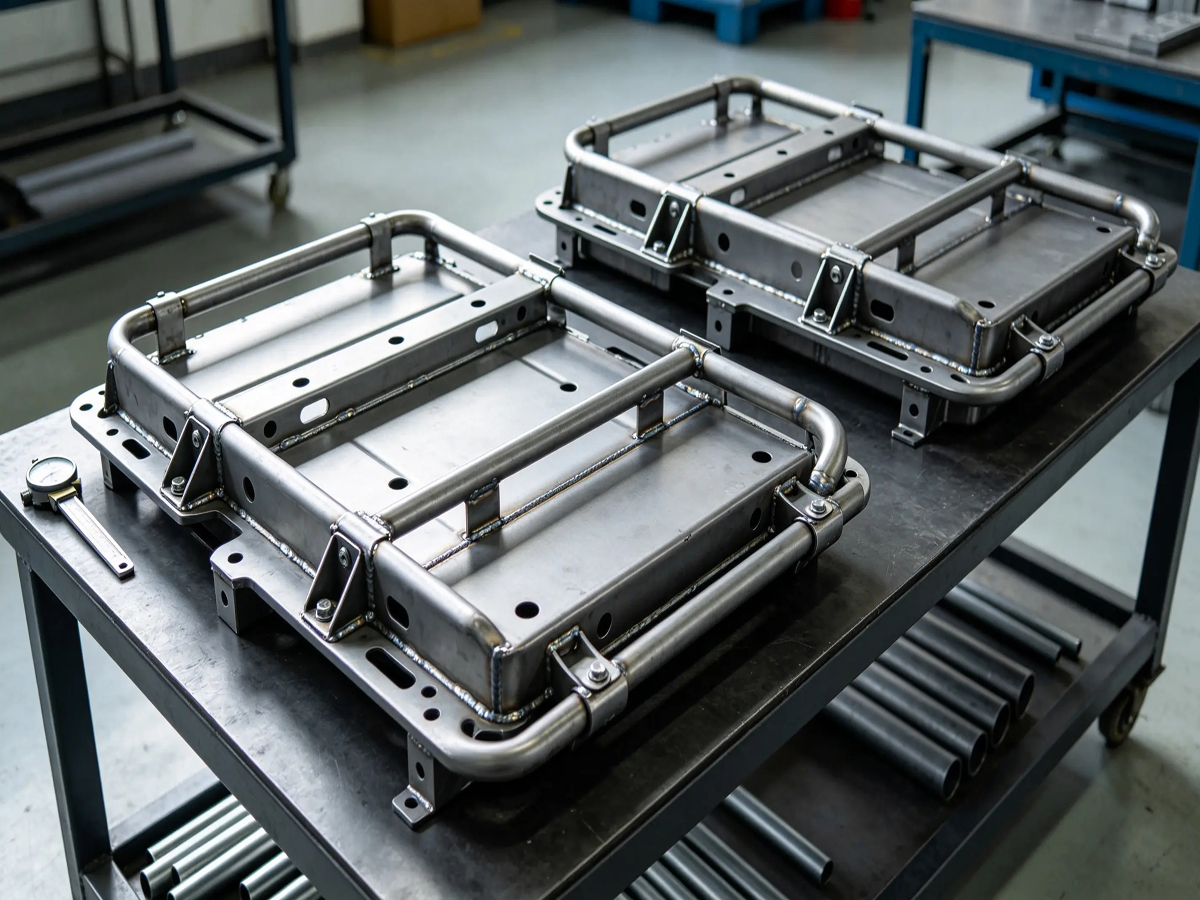
EV battery systems can require fastening solutions around:
Enclosure structures
Covers
Brackets
Cooling-system components
Electrical bonding interfaces
Supply-chain risk may increase where the fastener is tied to:
Sealing architecture
Electrical requirements
Specialized materials
Welding validation
Thermal-management components
An enclosure fastener should therefore be evaluated as part of the complete assembly rather than as an isolated commodity item.
Heavy equipment programs may experience:
Seasonal demand
Large structural components
High vibration
Corrosive environments
High production variability
Supply-chain planning should combine demand forecasting with appropriate inventory and supplier-capacity planning.
Electrical and industrial enclosure manufacturers may require:
Weld nuts
Weld studs
Self-clinching fasteners
Threaded inserts
Corrosion-conscious surface finishes
Grounding, coating, enclosure construction, and assembly requirements should be evaluated at the system level.
Industrial machinery often combines:
Custom fastening components
Different sheet-metal thicknesses
CNC-machined components
Stainless steel hardware
High-strength fastening requirements
A resilient supply strategy should therefore connect engineering specification control with procurement planning.
Custom fasteners deserve additional attention because tooling and qualification can create supplier dependency.
Before placing a large production commitment, procurement should understand:
Tooling ownership
Tooling replacement responsibility
Tooling storage
Production location
Material source
Surface-treatment route
Inspection requirements
Approved drawings
Revision control
Alternate manufacturing possibilities
Tooling can be a hidden single point of failure.
If only one supplier owns the production tooling, moving the part to another supplier may take substantially longer than expected.
For strategically important custom parts, OEM procurement teams should understand whether tooling can be transferred, reproduced, or duplicated where commercially and technically appropriate.
Fasteners do not arrive directly into the product.
They move through:
Supplier
→ Export / Transportation
→ Receiving
→ Warehouse
→ Line-Side Storage
→ Feeding / Kitting
→ Assembly
Packaging can therefore influence supply continuity.
Important considerations may include:
Part orientation
Bulk density
Interlocking risk
Moisture protection
Labeling
Lot identification
Container quantity
Returnable packaging
Automated feeder requirements
Packaging should be developed according to the customer's logistics and assembly process rather than treated as a universal standard.
For automated applications, feeder compatibility should be validated with the actual fastener geometry and equipment.
A useful supplier scorecard can include:
| Risk Area | Example Metric |
|---|---|
| Delivery | On-time delivery performance |
| Quality | Nonconformance rate |
| Responsiveness | Corrective-action response |
| Lead Time | Actual vs. quoted variability |
| Capacity | Available capacity relative to forecast |
| Engineering | Change-control performance |
| Documentation | Required documentation completeness |
| Logistics | Shipment reliability |
| Commercial | Cost stability |
| Risk | Single-source exposure |
Not every metric needs to be applied to every supplier.
The scorecard should reflect the importance and complexity of the specific fastener program.
A practical OEM workflow can be structured as follows.
Classify parts according to:
Production consequence
Technical complexity
Substitution difficulty
Annual volume
Qualification requirements
Identify:
Primary supplier
Alternate sources
Raw-material dependency
Tooling dependency
Surface-treatment dependency
Logistics routes
Review:
Drawing
Material
Thread
Geometry
Welding
Surface treatment
Assembly
Testing
Review:
Piece price
MOQ
Lead time
Capacity
Tooling cost
Freight
Inventory requirements
Possible strategies include:
Single qualified source
Primary + qualified alternate
Multi-source production
Strategic inventory
Scheduled replenishment
Kanban
VMI
Regional supply buffering
Do not consider the risk plan complete until the alternative supply route has been technically and commercially evaluated.
Supply-chain risk changes as:
Demand changes
Product designs change
Suppliers change
Logistics conditions change
Production locations change
Customer requirements change
Risk management must therefore be an ongoing process.
Before approving a strategic fastener supplier, procurement teams should ask:
Is the supplier manufacturing the specified component?
Can the supplier manufacture the required geometry?
Are material and thread requirements clearly defined?
Are welding or assembly requirements understood?
Are critical dimensions identified?
Is DFM support available?
What inspection controls are applied?
How are nonconformances managed?
What traceability is required?
What documentation is available?
How are engineering changes controlled?
What validation testing is required?
What is the realistic production lead time?
How variable is that lead time?
What raw materials are critical?
Is tooling a dependency?
Is there an alternate production route?
What inventory strategy is appropriate?
What is the MOQ?
What are the tooling costs?
What is the total landed cost?
What delivery terms are available?
Can the supplier support forecast-based planning?
What are the commercial implications of emergency orders?
A common sourcing mistake is choosing the alternate supplier entirely on quotation price.
For critical fasteners, the better question is:
How much risk does this supplier remove from the existing supply chain?
An alternate supplier may have greater strategic value if it provides:
Different geographic exposure
Different raw-material sourcing
Different manufacturing capacity
Independent tooling
Flexible production
Strong engineering support
Better responsiveness
Better logistics options
Therefore, supplier diversification should be measured by risk reduction, not supplier count.
Two suppliers with the same upstream vulnerabilities may provide less resilience than two suppliers with genuinely independent supply paths.
For OEM procurement teams, the supply-chain discussion should begin before the purchase order.
A practical commercial path is:
Engineering Drawing / BOM
        ↓
Technical Fastener Review
        ↓
DFM & Application Evaluation
        ↓
Material / Thread / Finish Confirmation
        ↓
Prototype or Qualification
        ↓
Commercial Quotation
        ↓
Supplier Qualification
        ↓
Production Approval
        ↓
Forecast / Order Planning
        ↓
Inventory / Replenishment Strategy
        ↓
Long-Term Supply Program
This approach allows engineering and procurement teams to solve technical and commercial issues together rather than discovering them after production starts.
For custom weld fasteners and other engineered components, early supplier involvement can also identify potential risks involving:
Projection geometry
Sheet-metal interface
Thread requirements
Surface treatment
Welding access
Assembly orientation
Packaging
Automated feeding
Inspection
Tooling
JUXIN FASTENERS focuses on engineered fastening solutions for industrial and OEM applications rather than treating every fastener as a generic commodity.
Our product scope includes:
Weld nuts
Weld studs
Self-clinching fasteners
Blind rivet nuts
Threaded inserts
CNC-machined fasteners
Custom screws and bolts
Stainless steel fasteners
High-strength fasteners
Custom engineered fastening components
For OEM sourcing programs, the appropriate supply model depends on the actual product, annual demand, qualification requirements, manufacturing process, logistics structure, and customer specifications.
JUXIN FASTENERS can support technical discussions around:
Fastener selection
Custom component development
DFM review
Material selection
Thread requirements
Welding applications
Surface-treatment considerations
Quality requirements
Packaging requirements
Procurement planning
Long-term OEM sourcing
The objective is not simply to quote a part.
The objective is to develop a fastening supply solution that can be evaluated by both engineering and procurement teams.
For customers evaluating supply-chain risk, the following solution areas should be considered together:
Use the Fastener Procurement & RFQ Best Practices guide when preparing technical drawings, RFQs, specifications, and supplier comparison criteria.
The Global Fastener Procurement & RFQ Strategy guide provides a broader framework for OEM sourcing, supplier qualification, TCO, inventory, and supply-chain management.
The Custom Weld Fasteners: Engineering & OEM Manufacturing solution is relevant when supplier dependency is created by custom geometry, tooling, material, welding, or application-specific requirements.
The Fastener Supplier Quality Audits & Certifications guide can be used when evaluating supplier manufacturing controls, inspection systems, traceability, change control, and quality documentation.
The Fastener Packaging & Feeder Compatibility guide is relevant where automated assembly, vibratory feeding, kitting, or line-side packaging affects supply continuity.
The Fastener Inventory Management & VMI Programs solution addresses safety stock, Kanban, VMI, replenishment, demand variability, and inventory risk.
The Fastener Failure Modes & Root Cause Analysis guide is useful when recurring quality failures create both manufacturing and supply-chain risk.
The Fastener Push-Out & Pull-Out Testing guide supports qualification and mechanical validation where joint performance is part of supplier approval.
The Fastener Surface Finishes & Coatings: OEM Engineering & Sourcing Guide should be reviewed when corrosion protection, welding, coating compatibility, thread condition, or environmental requirements influence sourcing.
No.
Dual sourcing can reduce supplier concentration, but it also creates qualification, tooling, quality, commercial, and inventory-management requirements.
For some standardized fasteners, multi-source procurement may be relatively simple.
For custom weld nuts, weld studs, self-clinching fasteners, or other engineered components, a second source may require substantial technical validation.
The correct strategy depends on production criticality and substitution difficulty.
Start with four questions:
What happens if the part is unavailable?
How difficult is substitution?
How long would qualification of an alternate supplier take?
How many independent supply routes actually exist?
This provides a more useful risk assessment than purchase value alone.
No.
Inventory can reduce exposure to short-term supply interruptions, but excessive inventory creates carrying cost and obsolescence risk.
Safety stock should reflect actual demand variability, lead-time variability, production criticality, and replenishment conditions.
It can be, particularly where consumption is repetitive and demand visibility is sufficient.
However, VMI requires clear agreements covering inventory ownership, replenishment rules, forecasts, delivery frequency, exceptions, and engineering changes.
Useful questions include:
Where is the part manufactured?
What manufacturing process is used?
What are the major raw-material dependencies?
Is dedicated tooling required?
What is the realistic production lead time?
How is capacity planned?
How are engineering changes controlled?
What quality documentation is available?
Can the supplier support forecast-based production?
What contingency options exist if demand changes?
Not necessarily.
Cpk can be valuable for stable processes and important measurable characteristics, but the appropriate statistical controls depend on the process, measurement system, customer specification, and production environment.
The objective should be effective process control, not collecting statistical metrics simply because they appear in a supplier checklist.
Not automatically.
The second supplier should demonstrate that its product meets the applicable drawing, material, thread, dimensional, functional, surface-treatment, welding, and customer requirements.
For safety-critical or highly engineered applications, formal qualification may be required.
A strong RFQ package may include:
2D engineering drawing
3D CAD model where useful
Part number
Material specification
Thread specification
Surface-treatment requirement
Application information
Welding or assembly process
Annual estimated volume
Forecast information
Prototype quantity
Production quantity
Packaging requirements
Inspection requirements
Documentation requirements
Delivery location
Commercial terms
The clearer the technical and commercial package, the easier it becomes for qualified suppliers to provide comparable quotations.
Before approving a strategic fastener supply program, verify:
Engineering
Drawing and revision are controlled
Material is specified
Thread requirements are defined
Functional dimensions are identified
Welding or assembly requirements are understood
Surface treatment is defined
Validation requirements are identified
Supplier
Manufacturing capability has been evaluated
Relevant quality controls have been reviewed
Tooling dependency is understood
Raw-material dependency is understood
Change-control process is defined
Nonconformance process is understood
Supply Chain
Lead time is understood
Lead-time variability is considered
Demand variability is considered
Inventory strategy is defined
Alternate-source strategy is evaluated
Logistics risks are identified
Packaging requirements are defined
Commercial
Piece price is compared
Total landed cost is evaluated
Tooling cost is understood
MOQ is understood
Forecast requirements are defined
Replenishment model is agreed
Emergency supply procedures are understood
Fastener supply chain risk management is ultimately a joint engineering and procurement discipline.
Procurement controls the commercial relationship.
Supply-chain teams control continuity and inventory strategy.
Engineers control technical suitability.
Quality teams control process and product conformity.
Manufacturing teams control the practical assembly environment.
The strongest OEM sourcing strategy connects all five.
For industrial fasteners, the objective is not simply to find a supplier with a competitive quotation.
It is to create a supply structure in which:
Critical parts are identified before they become shortages
Supplier dependencies are visible
Alternate sources can be qualified when necessary
Inventory is matched to actual risk
Quality controls support production continuity
Engineering changes are controlled
Logistics risks are understood
Procurement decisions reflect total cost of ownership
That is the foundation of a resilient industrial fastening supply chain.
If your organization is evaluating a new fastener supplier, developing an alternate source, redesigning a custom fastening component,
or building a more resilient OEM procurement strategy, provide the available technical and commercial information for review.
Useful information includes:
Part numbers
2D drawings
3D CAD files
Material requirements
Thread specifications
Surface-treatment requirements
Application information
Annual volume
Forecast
Prototype requirements
Production schedule
Packaging requirements
Quality documentation requirements
Delivery destination
JUXIN FASTENERS can then evaluate the fastening requirement from both an engineering and commercial sourcing perspective.
Email: info@juxinfasteners.com
JUXIN FASTENERS — Precision Fastening Solutions Since 2003.
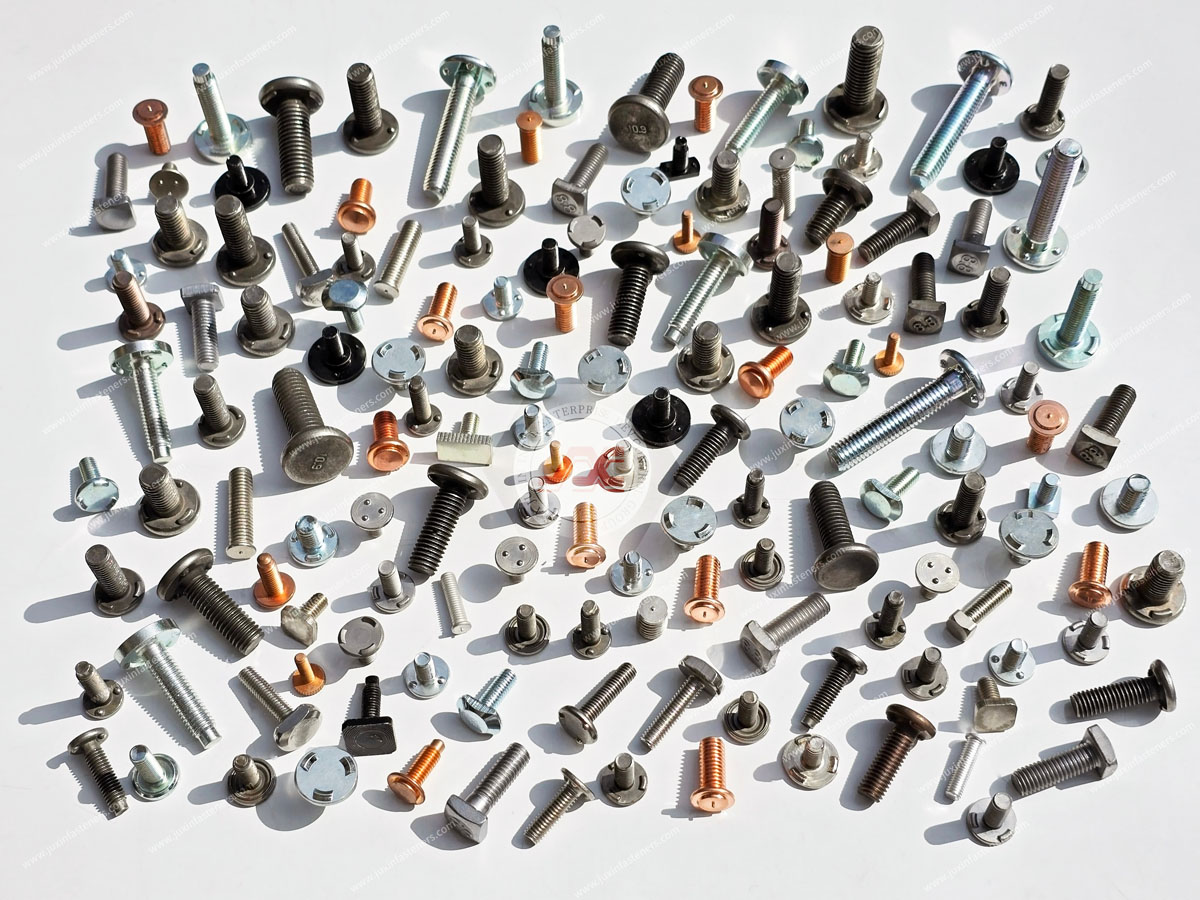
Product Packaging
Packaging Standard
At Juxin Fasteners, we apply standardized export packaging to ensure product protection, traceability, and compliance with international logistics requirements.
1. Standard Export Packaging
Unless otherwise specified, all products will be packed according to our factory standard export packaging, which includes:
Moisture-resistant inner protection
Poly bag or small box packing as required
Reinforced export cartons
Clear labeling with part number, specification, batch number, and quantity
Palletizing for sea or air shipment when necessary
Our standard packaging is designed to ensure safe transportation, efficient warehousing, and long-distance international shipping.
2. Customized Packaging Options
We also provide customized packaging solutions according to customer requirements, including but not limited to:
Private labeling
Customized barcodes
Specific carton dimensions
Retail packaging
Special pallet configuration
Customer-specific marking and identification
So that you know, customized packaging may involve additional costs and extended lead time depending on the complexity of the requirements.
3. Compliance & Quality Assurance
All packaging processes are controlled under our ISO 9001 quality management system to ensure consistency, traceability, and product integrity throughout the supply chain.
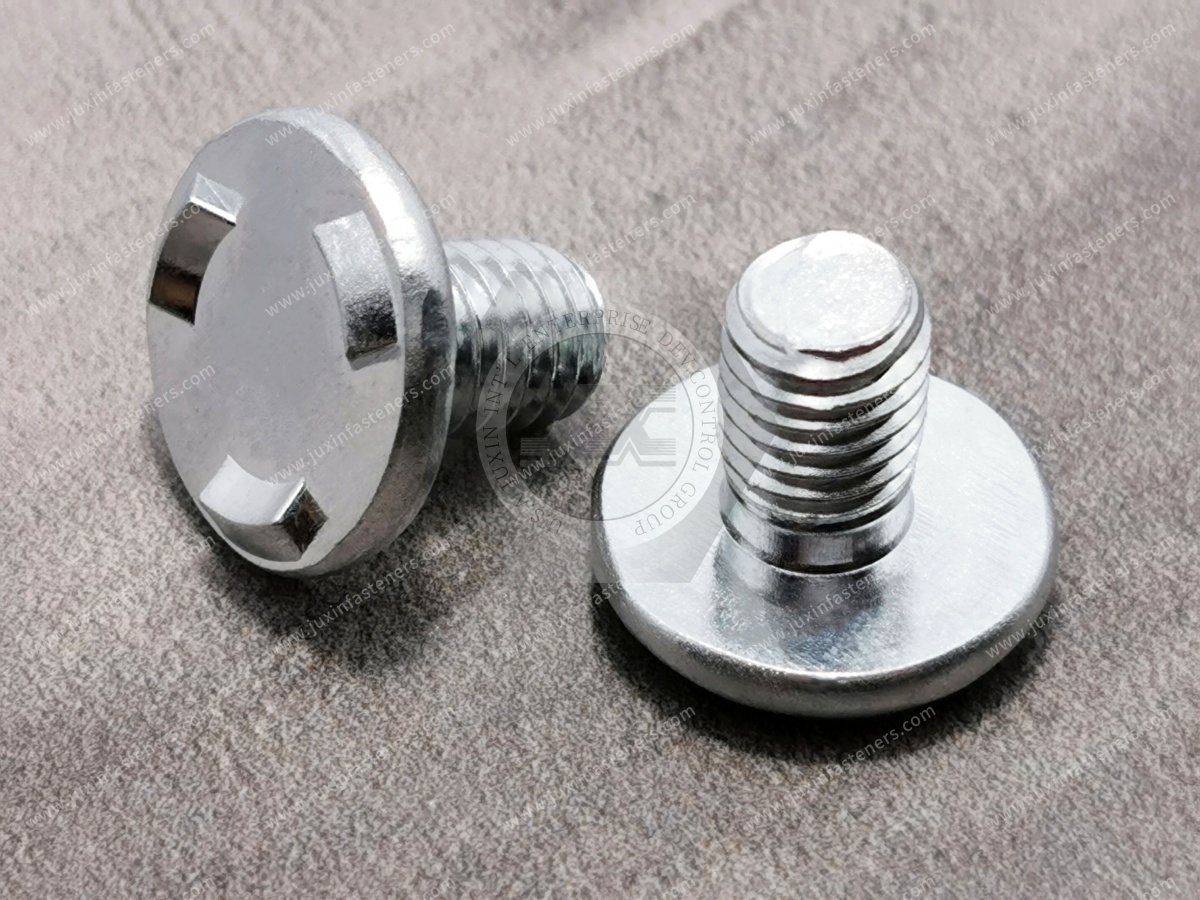
Product Pictures
Contact Us
Tel.:
+86 020 8621 0320
+86 020 3121 6067
E-mail:
Technical Support:
Navigation
SEND INQUIREY