Call Us
+86 136 6007 9809
Call Us
+86 136 6007 9809

What surface finishes and coatings are compatible with resistance weld fasteners?
The correct surface condition for a weld fastener depends on the fastener material, substrate material, welding process, welding location,
coating sequence, corrosion requirement, electrical function, and final assembly environment.
Product Specification
What surface finishes and coatings are compatible with resistance weld fasteners?
The correct surface condition for a weld fastener depends on the fastener material, substrate material, welding process, welding location,
coating sequence, corrosion requirement, electrical function, and final assembly environment.
Resistance weld fasteners may be supplied in conditions such as:
Bare or controlled steel surfaces
Light temporary corrosion-protection oils
Application-specific weld-compatible surface treatments
Specified metallic coatings
Post-weld surface treatments
Coatings applied as part of the customer's final assembly finishing process
There is no single surface finish that is universally correct for every resistance weld fastener.
For resistance projection welding, the interface between the fastener projections and the sheet must allow the electrical and thermal conditions required by the validated welding process.
Surface films, oils, oxides, plating, contamination, and other coatings can change contact resistance, heat generation, electrode behavior, weld spatter, and process stability.
The correct engineering question is therefore not simply:
“Which coating has the highest corrosion resistance?”
It is:
“Which surface condition provides the required corrosion protection while remaining compatible with the complete welding and finishing sequence?”
              [ Fastener Surface Treatment Strategy ]
                              |
              +---------------+---------------+
              |                               |
              v                               v
       [ Before Welding ]              [ After Welding ]
              |                               |
      Surface Condition                 Final Assembly
      Temporary Protection              Corrosion System
      Welding Compatibility              E-Coating
      Contact Resistance                 Powder Coating
              |                           Other Finishes
              +---------------+---------------+
                              |
                              v
                   [ Complete Process Chain ]
                              |
                              v
             Welding + Coating + Assembly + Environment
Engineers and procurement teams should align the surface-finish specification with the actual manufacturing sequence.
A coating that performs well against corrosion may not be suitable on a surface that must participate directly in resistance welding.
Conversely, a fastener that welds reliably may require additional downstream corrosion protection after welding.
JUXIN FASTENERS supports OEM and industrial sourcing programs by evaluating fastener material, surface treatment, welding requirements, and application conditions together rather than treating coating selection as an isolated purchasing decision.
One of the most important decisions in weld fastener sourcing is determining when the corrosion-protection system will be applied.
The basic sequence may be:
Fastener Manufacturing
        |
        v
Surface Condition
        |
        v
Resistance Welding
        |
        v
Assembly Finishing
        |
        v
Final Product
However, the actual sequence can vary considerably between industries and manufacturing systems.
The procurement specification should therefore define the complete process.
Bare steel or a controlled surface condition may be used where the fastener is intended to be resistance welded.
The objective is not simply to remove all surface protection.
The objective is to establish a known and repeatable interface condition that is compatible with the validated welding process.
The welding interface is affected by:
Electrical contact resistance
Surface oxides
Contamination
Oil or lubricant films
Coating composition
Coating thickness
Electrode condition
Fastener projection geometry
Sheet material
Welding parameters
For this reason, “bare steel” should not automatically be interpreted as a universal best practice.
The required condition should be defined by the fastener design and customer's welding process.
A light protective oil or temporary corrosion inhibitor may be used on some steel fasteners to reduce corrosion during:
Storage
Transportation
Handling
Production staging
However, the presence and type of surface film must be considered during resistance welding.
An oil that is acceptable for storage may not be acceptable in the same quantity or formulation at the actual welding interface.
Therefore, the relevant question is:
Is the supplied surface condition compatible with the customer's validated welding process?
Some applications may use specialized surface treatments designed to balance temporary corrosion protection with joining requirements.
These should not be described as universally weldable.
Compatibility depends on:
Coating chemistry
Coating thickness
Fastener material
Welding process
Electrode configuration
Substrate material
Production conditions
Any such treatment should be evaluated through application-specific welding trials where required.
Once the fastener has been welded into the sheet-metal assembly, the complete assembly may receive a downstream corrosion-protection process.
Possible processes include:
E-coating
Powder coating
Liquid coating
Conversion treatment
Other customer-specified corrosion-protection systems
The appropriate process depends on the industry and assembly architecture.
For example, an automotive body component may undergo a coating process after welded fasteners have already been installed.
An electrical enclosure may have a different sequence involving pretreatment, powder coating, masking, grounding interfaces, and final assembly.
A machinery component may use another corrosion-control architecture altogether.
Therefore, the phrase “post-weld coating” should be understood as a process-sequence concept rather than a single universal coating method.
Resistance welding generates heat through electrical resistance within the joint.
A simplified relationship is commonly expressed as:
Q ∝ I²Rt
where:
Q = generated heat
I = welding current
R = effective electrical resistance
t = time
The equation illustrates why surface condition matters.
If a surface layer changes the electrical contact conditions, it can alter the effective resistance distribution and therefore influence where heat is generated.
However, real resistance welding involves multiple contact interfaces and dynamic changes during the welding cycle.
The actual result depends on:
Fastener geometry
Projection design
Sheet material
Surface condition
Electrode force
Welding current
Welding time
Contact area
Material temperature
Electrode condition
Machine characteristics
Therefore, a coating should never be classified as “weldable” solely from its nominal material name.
The actual welding process must be considered.
Different surface finishes solve different problems.
The objective is to prevent oxidation during:
Manufacturing
Warehouse storage
Shipping
Assembly
Temporary protection does not necessarily provide the final corrosion resistance required by the finished product.
For exposed or environmentally demanding applications, the final corrosion system may require:
Metallic coating
Conversion coating
Organic coating
E-coating
Powder coating
Multi-layer corrosion protection
The appropriate system depends on the actual environmental exposure.
Some weld studs or fasteners may participate in grounding or electrical bonding.
In these applications, surface treatment can affect:
Electrical contact resistance
Contact stability
Corrosion of the interface
Coating continuity
Contact pressure
Long-term environmental performance
A corrosion-resistant coating is not automatically an electrically optimal contact surface.
The electrical function must therefore be evaluated separately.
For visible components, surface finish may also affect:
Color
Texture
Gloss
Uniformity
Compatibility with downstream painting
Appearance requirements should be clearly specified if they are functionally or commercially important.
Zinc-based coatings are widely used for corrosion protection on steel components.
However, the presence of zinc must be considered carefully when the fastener is intended to participate directly in resistance welding.
The relevant issues include:
Coating thickness
Coating location
Welding interface
Coating chemistry
Welding heat
Fume generation
Electrode contamination
Weld consistency
A generic statement that “all zinc plating must be avoided” would also be incorrect.
The appropriate question is whether the specific zinc-based surface condition has been evaluated for the specific welding process.
Where the fastener is welded first and coated afterward, the process sequence may avoid placing the coating directly at the original welding interface.
Where a pre-coated fastener is proposed, application-specific welding validation becomes particularly important.
Zinc-nickel systems can provide enhanced corrosion protection in applications where conventional zinc systems may not provide sufficient performance.
However, higher corrosion performance does not automatically make a coating suitable for pre-weld installation.
The procurement team should evaluate:
Whether the coating is applied before or after welding
Required coating thickness
Welding interface condition
Electrical behavior
Thermal behavior
Final corrosion requirement
Customer specifications
Environmental requirements
For weld fasteners, coating selection must remain connected to the joining process.
Some historical industrial applications have used cadmium-based coatings.
However, environmental, occupational, and regulatory considerations can restrict or eliminate their use in many modern applications.
Procurement teams should not specify legacy coatings simply because an old drawing lists them.
Before approving a surface treatment, confirm:
Current customer requirements
Applicable environmental regulations
Restricted-substance requirements
End-market requirements
Approved coating suppliers
Replacement or alternative coating options
The correct approach is to follow the applicable current specification rather than assume a historical coating remains acceptable.
E-coating, or electrocoat, is commonly used as part of corrosion-protection systems for metal assemblies.
For weld fasteners, the important issue is not simply whether the fastener is “e-coat compatible.”
The engineering team should consider:
Whether the fastener is installed before e-coating
Whether the threaded area must remain functional afterward
Whether grounding points require exposed metal
Whether coating buildup could affect thread assembly
Whether masking is required
Whether drainage or coating coverage is adequate
Whether the final corrosion requirement is achieved
The complete assembly geometry determines whether e-coating will adequately cover the fastener and surrounding joint.
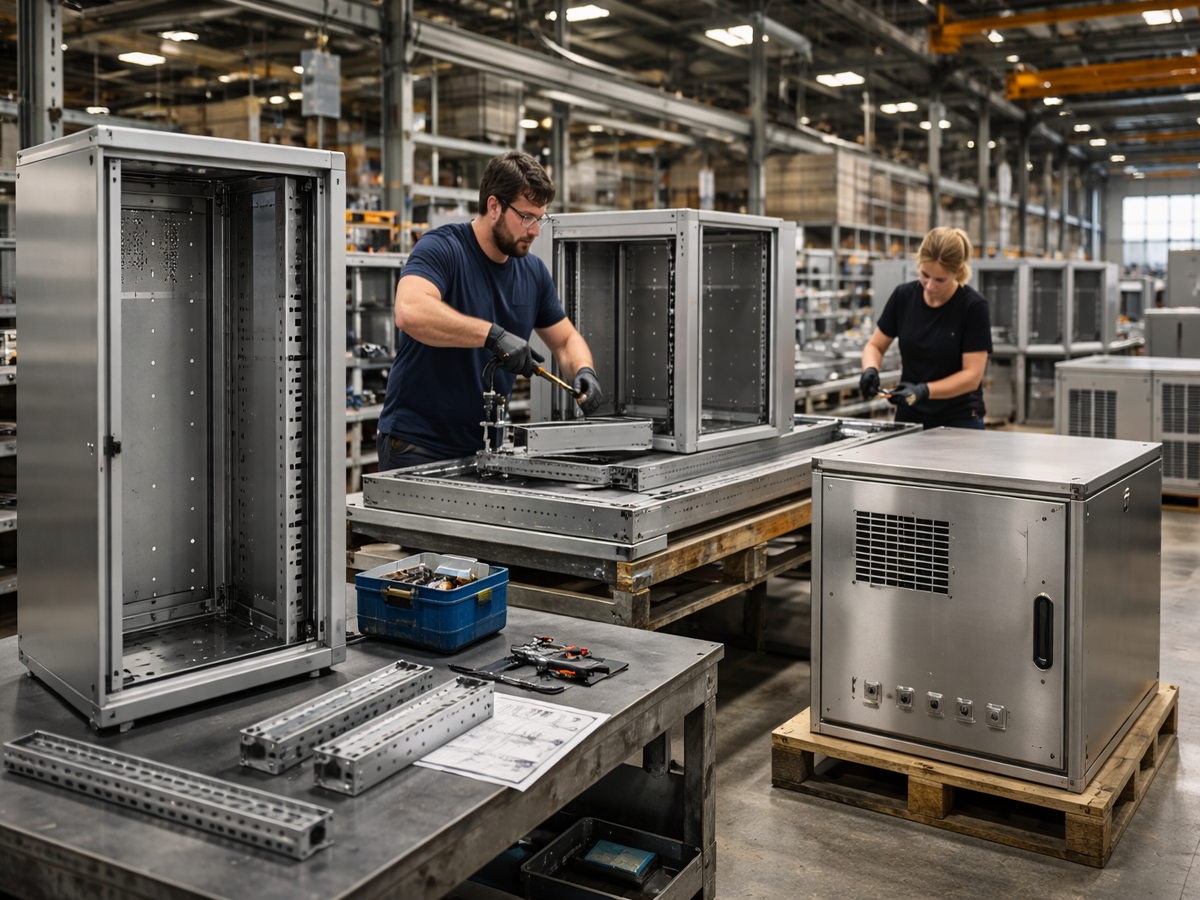
Powder coating may be used on electrical cabinets, machinery, fabricated frames, brackets, and other industrial assemblies.
For assemblies containing weld nuts, powder coating can potentially affect:
Internal thread condition
Bolt insertion
Thread clearance
Grounding points
Mating surfaces
If the internal thread must remain free of coating, the production process may require:
Masking
Plugging
Post-coating thread cleaning
Process-specific protection
The correct method depends on the customer's production process.
A weld nut should not be assumed to remain fully functional simply because it is installed before powder coating.
Salt-spray testing is often used as one method of evaluating corrosion performance.
However, salt-spray hours should never be treated as a universal measure of real-world service life.
The test result depends on:
Test method
Specimen preparation
Coating system
Substrate
Test conditions
Evaluation criteria
A customer may specify a particular test method and acceptance criterion.
Where a salt-spray requirement exists, the RFQ should clearly define:
Applicable standard
Test method
Exposure duration
Evaluation criteria
Sample configuration
Base-metal vs. red-rust criteria where applicable
Do not simply request “high salt spray hours” without defining what the result means.
Electrical grounding applications require additional consideration.
A weld stud may provide a mechanical attachment point, but the final grounding performance depends on the complete electrical path.
Factors can include:
Fastener material
Substrate material
Coating
Contact area
Contact pressure
Surface preparation
Corrosion
Joint design
Environmental exposure
A painted or powder-coated surface may electrically isolate the fastener from the substrate unless the grounding architecture deliberately provides a conductive path.
Possible engineering strategies may include:
Dedicated uncoated grounding areas
Masked contact zones
Conductive interfaces
Specified grounding hardware
Mechanical bonding features
Post-coating preparation
The correct solution depends on the electrical design and applicable requirements.
A fastener should not be described as a grounding solution solely because it is welded to a metal panel.
Surface coatings can affect electrode condition.
Depending on the coating and welding process, material from the welding interface may accumulate on electrodes or alter electrode behavior.
This can influence:
Contact conditions
Electrode life
Weld consistency
Maintenance frequency
Production stability
For high-volume resistance welding, the production team should evaluate electrode condition as part of the welding-process development.
This is another reason why fastener surface treatment and welding process should be considered together.
A useful way to select the correct finish is to start with the manufacturing sequence.
Fastener
   ↓
Resistance Welding
   ↓
Assembly
   ↓
Cleaning / Pretreatment
   ↓
E-Coating / Powder Coating / Other Finish
   ↓
Final Assembly
This approach may allow the welding interface to remain compatible with the welding process before the final corrosion-protection system is applied.
Fastener
   ↓
Surface Treatment
   ↓
Handling / Storage
   ↓
Resistance Welding
   ↓
Final Assembly
This configuration requires careful evaluation of the coating at the welding interface.
Fastener
   ↓
Application-Specific Treatment
   ↓
Controlled Storage
   ↓
Resistance Welding
   ↓
Downstream Corrosion Protection
This may be used where temporary corrosion protection and welding requirements must both be addressed.
The actual process should be established by the OEM's manufacturing engineering and quality requirements.
When designing a weld fastener, engineers should consider surface treatment from the beginning.
Material
Geometry
Thread specification
Projection design
Surface treatment
Coating location
Coating thickness where specified
Welding process
Electrode access
Substrate material
Sheet thickness
Welding interface condition
Electrode contamination risk
Process validation
E-coating
Powder coating
Painting
Conversion coating
Masking requirements
Thread protection
Grounding areas
Indoor or outdoor exposure
Moisture
Salt exposure
Chemicals
Temperature
Vibration
Corrosion requirement
Grounding
Bonding
Contact resistance
Coating isolation
Long-term contact stability
Procurement teams should ask the supplier specific questions rather than simply requesting “corrosion-resistant plating.”
Useful RFQ questions include:
What surface treatment is proposed?
Is the treatment applied before or after welding?
What standard or customer specification controls the finish?
Is coating thickness specified?
What inspection method is used?
Is the fastener intended to be welded before or after coating?
Has the proposed surface condition been evaluated for the welding process?
Could the coating affect electrode contamination?
Are application-specific weld trials required?
What corrosion requirement applies?
Is a salt-spray test specified?
What test method applies?
What is the acceptance criterion?
Is the requirement for coating corrosion or base-metal corrosion?
Does the fastener provide a grounding or bonding function?
Must the final interface remain electrically conductive?
Are uncoated contact areas required?
Is a specific electrical-resistance requirement defined?
Will the complete assembly be e-coated?
Will it be powder coated?
Must the internal thread remain clear?
Are masking or cleaning operations required?
These questions can prevent a coating specification from being selected independently of the actual manufacturing process.
Incorrect surface-finish selection can create several failure modes.
A surface layer changes the electrical contact conditions or thermal behavior.
An unsuitable surface condition can contribute to unstable welding behavior.
Coating material or surface residue may accumulate on electrodes and affect production stability.
The selected coating may not provide sufficient protection for the actual environment.
Downstream coating can enter the internal thread and interfere with assembly.
Paint or coating may isolate an intended grounding or bonding interface.
Threading, clamping, handling, or installation may damage a coating and expose the underlying material.
A surface treatment selected without considering welding and downstream finishing may create additional manufacturing steps or quality problems.
The following matrix can be used as an engineering starting point rather than a universal approval table.
| Requirement | Key Consideration | Engineering Question |
|---|---|---|
| Resistance Welding | Surface electrical condition | Is the surface compatible with the validated welding process? |
| Temporary Corrosion Protection | Storage and transportation | Is protection sufficient without compromising welding? |
| Long-Term Corrosion Protection | Environmental exposure | What coating system is required by the application? |
| Electrical Bonding | Conductive interface | Will the final contact remain electrically functional? |
| E-Coating | Downstream assembly finish | Will coating affect threads or contact areas? |
| Powder Coating | Final appearance and protection | Are masking and thread protection required? |
| Salt-Spray Validation | Corrosion testing | What standard and acceptance criterion apply? |
| Automated Welding | Process stability | Could the surface treatment affect electrodes or weld repeatability? |
The matrix should be confirmed against the customer's drawing, process specification, and validation requirements before production release.
A common procurement mistake is to write:
“Zinc plated, corrosion resistant.”
This statement is usually incomplete.
A more useful specification defines the required attributes, such as:
Coating system
Applicable standard
Coating location
Thickness where required
Color or appearance
Corrosion test requirement where applicable
Thread condition
Welding sequence
Electrical-contact requirement
Restricted-substance requirements
The supplier should then quote against the defined specification.
This reduces the risk of two suppliers quoting technically different surface treatments under the same generic term.
Surface treatment cost should be evaluated as part of the complete manufacturing process.
Potential cost elements include:
Coating cost
Pre-treatment
Masking
Thread protection
Sorting
Inspection
Welding-process adjustments
Electrode maintenance
Corrosion testing
Packaging
Rework
A more expensive coating may be justified when the application requires greater environmental durability.
However, specifying a higher-performance coating without an actual application requirement can unnecessarily increase cost.
The objective should be:
Required corrosion performance + welding compatibility + electrical function + manufacturability + commercial efficiency.
For OEM programs, procurement teams should evaluate not only the fastener manufacturer but also the surface-treatment supply chain.
Questions include:
Who performs the coating?
Is the process internal or subcontracted?
How is the coating specification controlled?
How are coating lots identified?
How is coating thickness measured where required?
What happens if the coating supplier changes?
How are coating defects handled?
Are customer-specific environmental requirements controlled?
Where surface treatment is subcontracted, the OEM should understand how the fastener supplier maintains control over that process.
Before releasing a weld fastener for production, review:
FASTENER
□ Material defined
□ Thread specification defined
□ Projection geometry defined
□ Surface treatment defined
□ Coating location defined
□ Critical dimensions defined

WELDING
□ Welding process identified
□ Substrate material identified
□ Sheet thickness identified
□ Welding interface reviewed
□ Surface condition validated
□ Electrode compatibility considered

CORROSION
□ Environmental exposure identified
□ Corrosion requirement defined
□ Applicable test method identified
□ Acceptance criteria defined
□ Downstream coating sequence reviewed

ELECTRICAL
□ Grounding function identified
□ Bonding function identified
□ Conductive interface defined
□ Coating isolation considered

ASSEMBLY
□ Thread protection considered
□ Coating buildup considered
□ Masking requirements identified
□ Final assembly process reviewed

PROCUREMENT
□ Coating specification clear
□ Supplier process identified
□ Subcontracted treatment identified
□ Inspection requirements defined
□ Traceability requirements defined
□ Customer-specific requirements included
A weld fastener is not an isolated component.
Its final performance can depend on the interaction of:
Fastener + Surface Condition + Substrate + Welding Process + Coating Sequence + Assembly + Environment
This is particularly important in automotive, electrical equipment, machinery, energy systems, and other applications where corrosion, grounding, vibration, and automated production may all be relevant.
A coating selected only from a corrosion-resistance table may not be appropriate once the welding process is considered.
Likewise, a welding-compatible surface may not provide the final corrosion protection required by the finished product.
The engineering solution must therefore consider the entire process chain.
JUXIN FASTENERS supports OEM and industrial customers in evaluating weld fasteners together with their manufacturing and application requirements.
For surface-treatment projects, the engineering discussion can include:
Fastener material
Weld nut and weld stud geometry
Projection design
Welding sequence
Surface condition
Corrosion requirements
Plating and coating requirements
Downstream finishing
Electrical bonding requirements
Thread protection
Packaging and storage
Inspection and validation
For custom weld fasteners, surface treatment should ideally be considered during the initial drawing and DFM review rather than added after manufacturing has already been finalized.
This allows the fastener design, welding process, coating sequence, and inspection requirements to be considered together.
Weld Fasteners Solutions
Projection Welding Process & DFM Joint Optimization
Substrate Material Compatibility for Weld Fasteners
Sheet Metal Thickness Guidelines for Weld Fasteners
Edge Distance & Hole Clearance Rules for Weld Fasteners
Electrical Enclosure Weld Fasteners & Grounding
EV Battery Enclosure Weld Fasteners & Sealing
Custom Weld Fasteners Engineering & Manufacturing Guide
There is no single universal best finish.
The appropriate surface condition depends on the welding process, fastener material, substrate, corrosion requirement, and manufacturing sequence.
The welding interface should be evaluated under the actual production conditions.
It depends on the specific coating system, coating thickness, welding interface, and welding process.
A zinc-plated surface should not automatically be classified as either universally suitable or universally unsuitable.
Application-specific welding evaluation is recommended when the coating participates directly in the welding interface.
Either sequence may be used depending on the application and manufacturing architecture.
In some assemblies, the fastener is welded first and the complete assembly receives downstream corrosion protection.
In other applications, a pre-treated fastener may be used.
The correct sequence must be established according to welding compatibility, corrosion requirements, electrical function, and final finishing.
Not necessarily.
E-coating coverage depends on the complete assembly geometry and coating process.
Threads, contact surfaces, drainage areas, and grounding interfaces may require special consideration.
No.
Corrosion performance depends on the complete coating system, substrate, environment, joint geometry, surface preparation, defects, handling, and applicable validation method.
The RFQ should identify the applicable test method, exposure duration, specimen configuration, and acceptance criteria.
Simply specifying a number of “salt-spray hours” without defining the test method can create ambiguity.
The electrical path must be evaluated separately from the mechanical attachment.
The design should consider coating isolation, contact area, pressure, corrosion, material compatibility, and the applicable grounding or bonding requirements.
Yes, depending on the coating process and geometry.
Coating can enter the thread or cover surfaces that must remain electrically or mechanically functional.
Masking, plugging, cleaning, or other process controls may therefore be required.
No.
A thicker coating may improve corrosion protection in some systems, but it can also affect dimensions, threads, electrical contact, welding behavior, or downstream assembly.
The coating should be specified according to the actual functional requirement.
Provide:
Fastener drawing
Material
Welding process
Welding sequence
Surface-treatment specification
Corrosion requirement
Test method where applicable
Electrical requirements where applicable
Downstream coating process
Annual volume
Packaging and storage conditions
This gives the supplier enough information to evaluate the finish as part of the complete manufacturing process.
When sourcing weld nuts, weld studs, or custom weld fasteners, do not specify surface treatment as an isolated line item.
Provide the complete application information, including:
Fastener drawing
Fastener material
Substrate material
Sheet or plate thickness
Welding process
Welding sequence
Surface-treatment requirement
Corrosion environment
Applicable test method
Electrical grounding or bonding requirements
Downstream e-coating or powder-coating process
Annual usage
Quality and traceability requirements
JUXIN FASTENERS can support OEM and industrial buyers with fastener selection, drawing review, DFM evaluation, surface-treatment coordination,
custom weld fastener manufacturing, prototype development, and production sourcing.
Contact JUXIN FASTENERS
Email: info@juxinfasteners.com
Website: www.juxinfasteners.com
JUXIN FASTENERS — Precision Fastening Solutions Since 2003.
Product Packaging
Packaging Standard
At Juxin Fasteners, we apply standardized export packaging to ensure product protection, traceability, and compliance with international logistics requirements.
1. Standard Export Packaging
Unless otherwise specified, all products will be packed according to our factory standard export packaging, which includes:
Moisture-resistant inner protection
Poly bag or small box packing as required
Reinforced export cartons
Clear labeling with part number, specification, batch number, and quantity
Palletizing for sea or air shipment when necessary
Our standard packaging is designed to ensure safe transportation, efficient warehousing, and long-distance international shipping.
2. Customized Packaging Options
We also provide customized packaging solutions according to customer requirements, including but not limited to:
Private labeling
Customized barcodes
Specific carton dimensions
Retail packaging
Special pallet configuration
Customer-specific marking and identification
So that you know, customized packaging may involve additional costs and extended lead time depending on the complexity of the requirements.
3. Compliance & Quality Assurance
All packaging processes are controlled under our ISO 9001 quality management system to ensure consistency, traceability, and product integrity throughout the supply chain.
Product Pictures
Contact Us
Tel.:
+86 020 8621 0320
+86 020 3121 6067
E-mail:
Technical Support:
Navigation
SEND INQUIREY