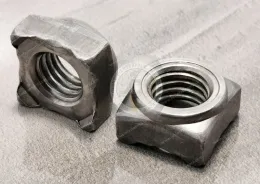
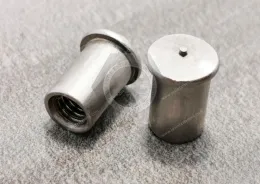
Call Us
+86 136 6007 9809
Call Us
+86 136 6007 9809

Rollover protection systems are structural assemblies used in applications where vehicle architecture requires additional protection and reinforcement around the passenger compartment or other defined structural areas.
Depending on the vehicle and design, these systems may include roll bars, roll hoops, structural cage members, reinforcement sections, mounting brackets, support plates, and related fastening interfaces.
Product Specification
Rollover protection systems are structural assemblies used in applications where vehicle architecture requires additional protection and reinforcement around the passenger compartment or other defined structural areas.
Depending on the vehicle and design, these systems may include roll bars, roll hoops, structural cage members, reinforcement sections, mounting brackets, support plates, and related fastening interfaces.
In these assemblies, the fastening component is not an isolated hardware item. Its suitability depends on how it interfaces with the surrounding structure,
how it is installed, what material it is welded or fastened to, and what loads and environmental conditions the completed joint must accommodate.
For engineers and procurement teams, this means that rollover protection system fasteners should be selected as part of the structural joint rather than simply by thread size or nominal fastener type.
Common fastening solutions can include automotive weld nuts, flange weld nuts, self-locking nuts, rivet nuts, high-strength fasteners, customer-specific bolts,
and other non-standard automotive fastening components, depending on the structure and assembly method.
JUXIN FASTENERS is an OEM-oriented supplier of customer-specific and non-standard automotive fastening components.
Components can be manufactured according to customer drawings, specifications, material requirements, surface treatment requirements, and application conditions.
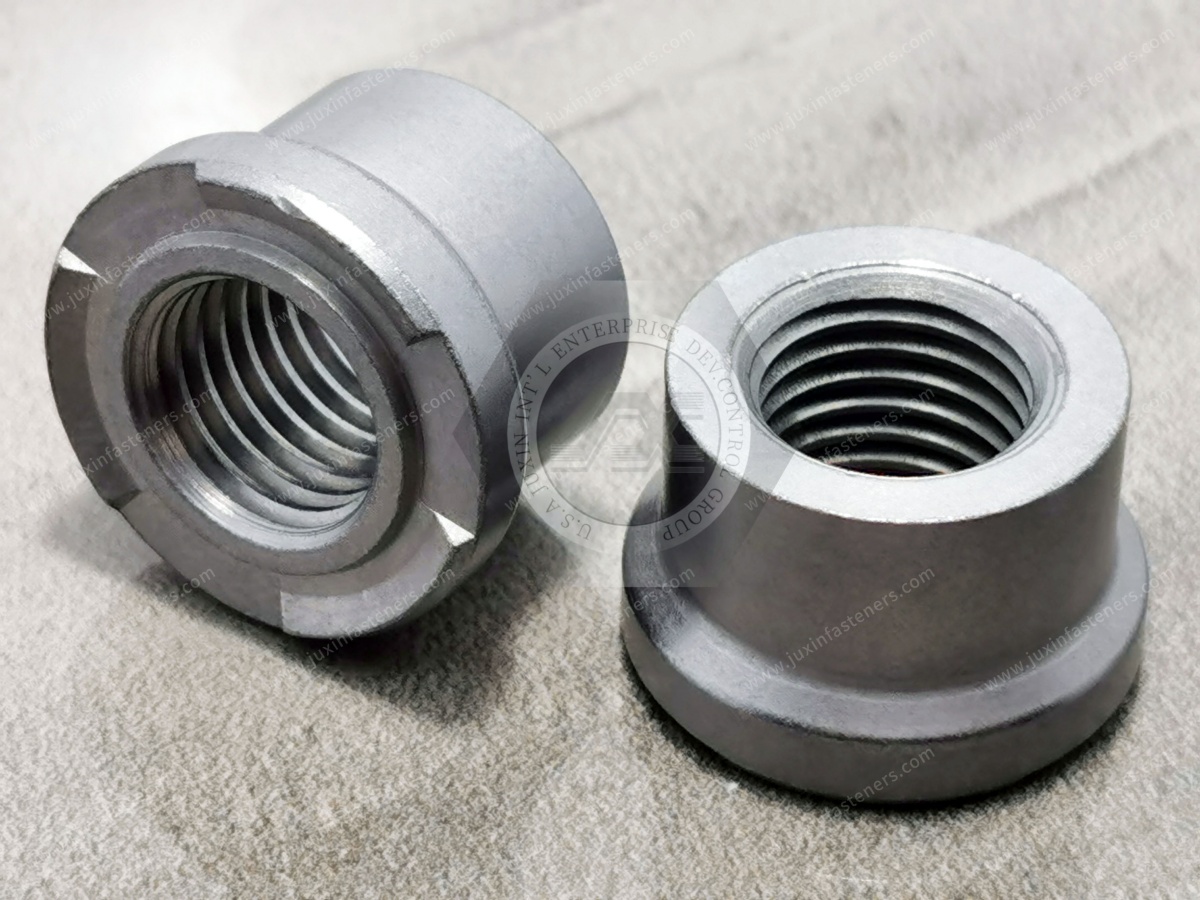
Rollover protection structures can combine tubular members, stamped components, reinforcement plates, brackets, and other structural interfaces. The fastening architecture therefore has to fit the physical and manufacturing requirements of the structure.
Vehicle structural systems can be exposed to significant loads during normal operation and during applicable vehicle-level or component-level validation.
For rollover-related structures, engineers may need to evaluate:
Load paths through structural members
Joint stiffness and deformation
Fastener thread engagement
Joint separation or movement
Local material deformation
Weld integrity
Fastener and parent-material compatibility
Dimensional consistency
Assembly torque and clamping requirements
Environmental exposure
The appropriate fastener cannot be determined from a generic statement such as "high strength" alone.
The complete joint must be evaluated according to the vehicle architecture, structural design, applicable testing requirements, and customer specifications.
A second important engineering issue is access.
Structural sections, tubular members, reinforcement assemblies, and closed or partially enclosed structures may limit access to the rear side of a joint.
A weld nut can be useful in these situations because the nut can be integrated with the structural member before the final bolt assembly stage.
Once appropriately welded and validated, the threaded interface can allow a mating bolt to be installed from the accessible side.
However, this is not an automatic advantage of every weld nut. Suitability depends on:
Available access
Weld nut geometry
Parent material
Material thickness
Projection configuration
Welding process
Assembly sequence
Bolt access
Required joint performance
This makes limited-access fastening an important part of the initial design discussion.
Automotive structures are exposed to vibration, thermal variation, road-induced movement, and repeated mechanical loading.
Where a threaded joint requires additional resistance to loosening, the fastening design may incorporate a self-locking nut, locking feature, thread-locking treatment, or another customer-specified locking method.
The correct solution depends on the joint design and assembly process.
A self-locking feature should therefore be considered as one part of the joint rather than as a universal guarantee against loosening.
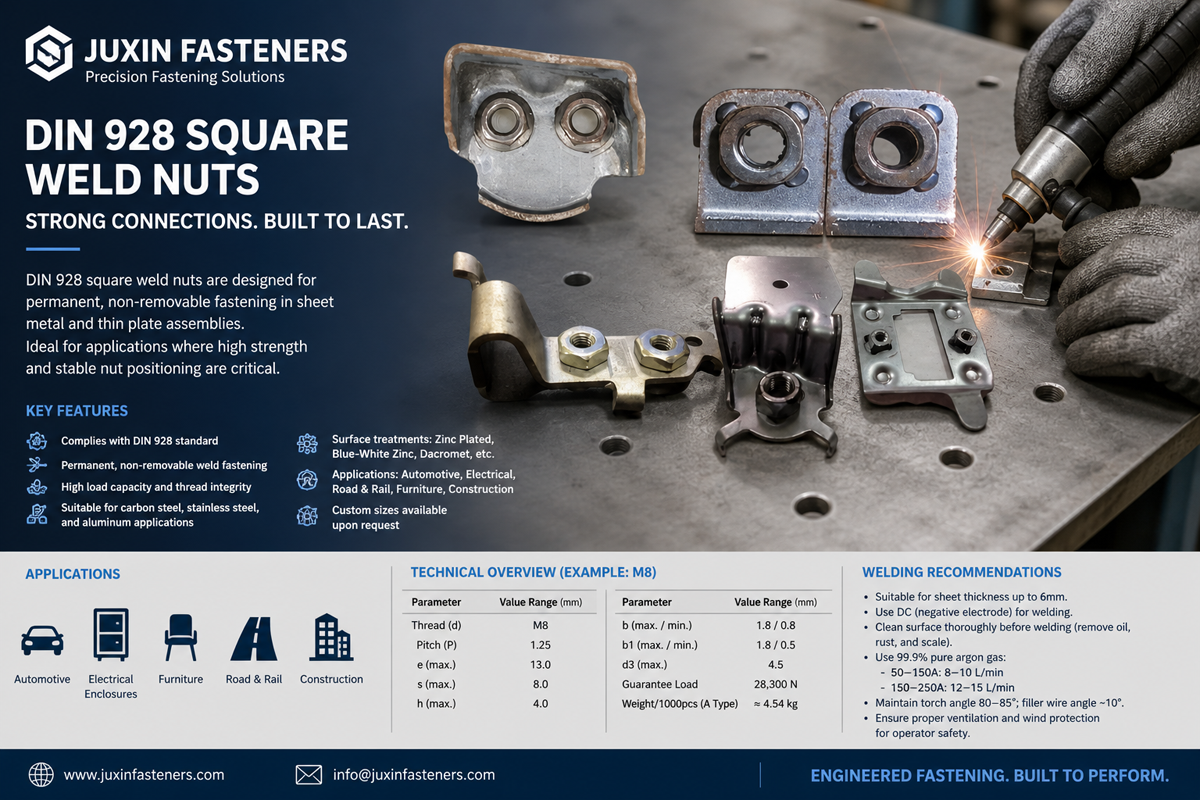
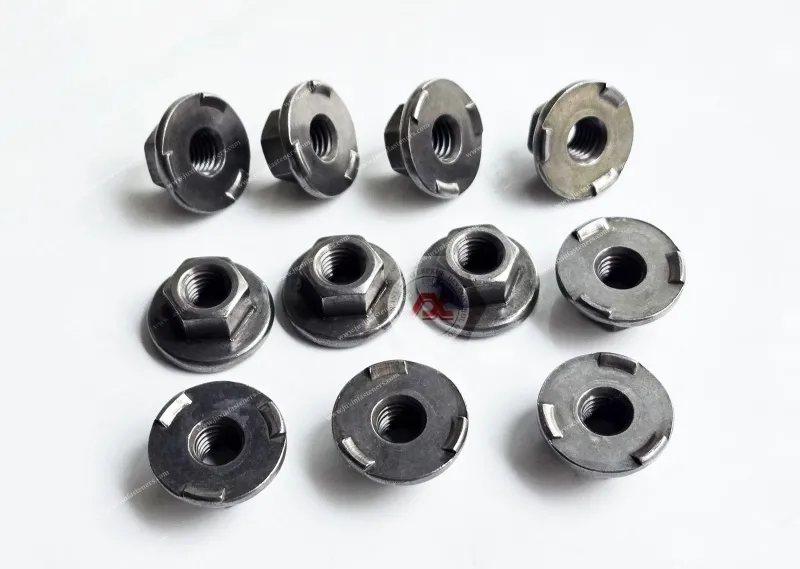
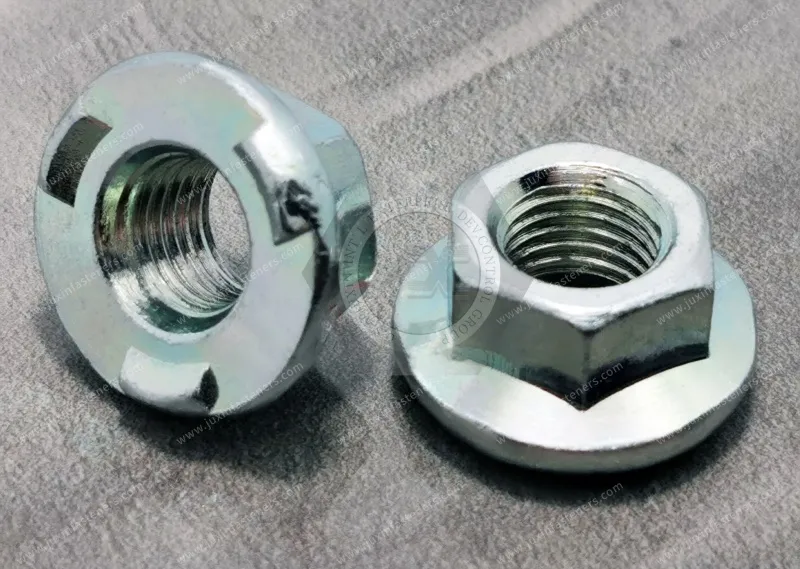
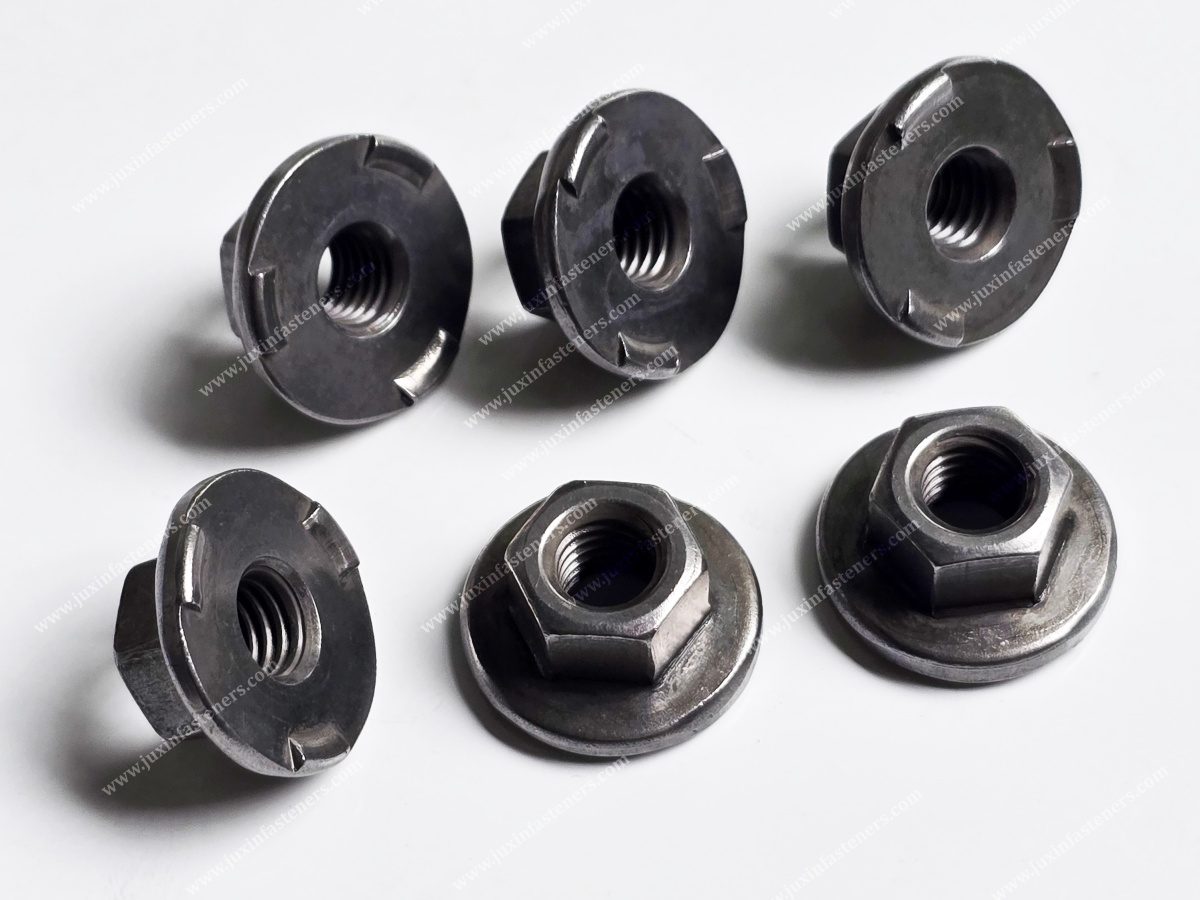
Automotive weld nuts are commonly considered when a threaded connection needs to be integrated directly into a sheet-metal or structural component.
Instead of using a loose nut during final assembly, the nut is positioned and welded to the parent component as part of the manufacturing process.
Depending on the design, weld nuts may incorporate:
Projection features
Locating features
Flanges
Anti-rotation geometry
Internal threads
Different body shapes
Customer-specific mounting geometry
The purpose is not simply to add a thread.
The weld nut becomes part of the mounting interface between the structural component and the mating fastener.
For a rollover protection application, engineers should therefore consider the complete interface:
Weld Nut → Weld Interface → Parent Material → Structural Member → Mating Bolt → Attached Component
This system-level view is more useful than specifying only "M8 weld nut" or another thread designation.
A flange weld nut incorporates an extended bearing area around the threaded body.
Depending on the application, the flange can provide a larger interface between the nut and the parent component and may influence load distribution around the threaded connection.
However, the effect of the flange depends on:
Flange diameter and geometry
Parent material thickness
Local panel geometry
Weld configuration
Bolt head or washer interface
Joint clamping conditions
Structural design
A larger flange should not automatically be interpreted as a stronger joint.
For structural applications, flange geometry should be evaluated together with the surrounding material and the complete load path.
Some rollover protection assemblies may require high-strength threaded hardware or other structural fastening components.
The relevant requirement can involve the fastener material, property class, thread geometry, locking configuration, surface treatment, and assembly conditions.
The phrase high-strength weld fasteners should therefore be treated as an application category rather than a universal performance claim.
JUXIN FASTENERS supplies customer-specific and non-standard automotive fastening components, including weld nuts, flange weld nuts, self-locking nuts,
high-strength fastening components, rivet nuts, and customer-specific screws and bolts where specified.
The actual material, property class, dimensions, and surface treatment should follow the approved customer specification.
Projection welding is an important consideration when weld nuts are integrated into metal components.
Projection features create defined contact areas between the weld nut and parent material.
During resistance welding, electrical current and heat are concentrated around these designed contact points, allowing weld nuggets to form between the components.
The final weld result depends on the complete combination of:
Weld nut projection geometry
Parent material
Parent-material thickness
Surface condition
Welding equipment
Welding current
Welding time
Electrode conditions
Welding pressure
Assembly positioning
Production process control
Therefore, a weld nut should not be specified independently from the welding process.
A useful engineering model is:
Thread + Projection Geometry + Parent Material + Material Thickness + Welding Process + Mounting Interface + Post-Weld Process + Bolt Assembly
This is one of the most important distinctions when sourcing automotive weld nuts.
Two weld nuts with the same thread size may not be interchangeable if their projection geometry, flange dimensions, parent-material requirements, or welding conditions are different.
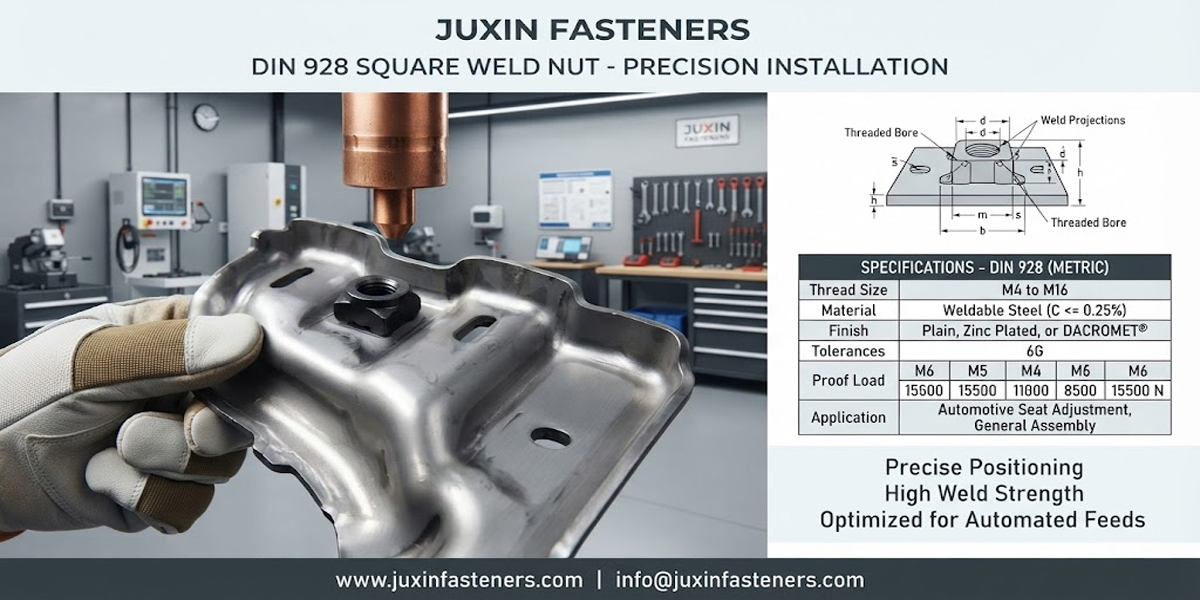
A procurement request such as:
M8 automotive weld nut
may be insufficient for production sourcing.
An OEM or Tier supplier may also need to define:
Specify:
Thread diameter
Thread pitch
Thread form
Internal thread requirement
Applicable standard where required
International standards such as DIN, ISO, SAE, or other customer-defined specifications may be relevant depending on the component.
The weld interface can include application-specific projection or locating features.
The geometry should correspond with the intended welding process and parent material.
The weld nut cannot be evaluated separately from the material to which it will be welded.
The sourcing specification should identify, where relevant:
Parent material
Material family
Material thickness
Surface condition
Coating condition before welding
The welding process and equipment can influence weld performance and production consistency.
Where the component is customer-specific, welding requirements should be reviewed as part of the component specification rather than added after production development.
The engineer should define what the weld nut is connecting.
For example:
Structural Bracket → Weld Nut → Bolt → Mating Component
or:
Reinforcement Member → Flange Weld Nut → Structural Hardware
The surrounding geometry can affect the required nut body, flange, projection, and orientation.
Automotive structures may subsequently undergo painting, e-coating, corrosion protection, cleaning, or other manufacturing processes.
The weld nut specification should therefore consider the complete process sequence.
Material selection should be based on both the weld process and the completed joint requirements.
Common material considerations can include carbon steel or alloy steel families suitable for the specified application, subject to customer requirements and welding evaluation.
The key point is that "steel weld nut" is not a complete engineering specification.
Engineers should consider:
Parent material compatibility
Weldability
Material thickness
Thread requirements
Structural requirements
Temperature exposure
Corrosion environment
Surface treatment
Welding process
Subsequent coating or painting process
Weldability depends on the combination of the weld nut material, parent material, thickness, projection design, surface condition, and welding parameters.
Claims about weld performance should therefore be supported by the applicable process and validation requirements rather than generalized across all steel grades.
Surface treatment is another area where weld-nut sourcing requires careful process planning.
A coating that is appropriate for a finished exposed fastener may not automatically be appropriate for a component that must first be resistance welded.
For weld nuts, engineers should distinguish between:
Surface condition required for welding
and
Surface treatment required for the completed assembly.
This distinction can affect the manufacturing sequence.
Depending on the design, corrosion protection may involve a specified coating or a downstream treatment applied after welding.
For exposed automotive fastening components, Zinc-Nickel Alloy may be considered where the customer specification and application environment require it.
However, the appropriate treatment depends on the complete assembly and manufacturing process.
For weld nuts specifically, the coating and pre-weld surface condition should be compatible with the specified welding process.
Where post-weld corrosion protection is required, the treatment sequence should be defined with the customer's manufacturing process.
A loose nut can work well when an assembler can physically access both sides of the joint.
That assumption changes when the structure limits rear-side access.
Examples may include:
Tubular structural members
Reinforcement sections
Enclosed brackets
Sheet-metal assemblies
Structural cage interfaces
Components installed before final body assembly
In these situations, an integrated weld nut can provide a threaded mounting point without requiring the assembler to hold a loose nut during final bolt installation.
This does not mean weld nuts are always the correct solution.
The engineer should first determine:
Can the rear side of the joint be accessed during final assembly?
If the answer is no or access is impractical, an integrated threaded solution such as a weld nut or, depending on the parent material and installation conditions, another fastening architecture may deserve evaluation.
A practical selection sequence for rollover protection system fasteners is:
Identify whether the component is used in:
Roll bar
Roll hoop
Structural cage
Reinforcement
Mounting bracket
Support structure
Roof reinforcement
Other customer-defined structural interface
Identify the components being connected.
For example:
Structural Member → Weld Nut → Bolt → Bracket
Determine whether installation requires:
Front-side access
Rear-side access
One-sided bolt installation
Pre-assembly
Weld-before-paint
Other defined assembly sequence
Possible options can include:
Weld nut
Flange weld nut
Self-locking nut
Rivet nut
Customer-specific bolt
High-strength fastener
Other application-specific component
Specify:
Thread
Nut body
Flange
Projection
Locating features
Orientation
Mounting interface
Available package space
Specify:
Fastener material
Parent material
Material thickness
Mating material
Required material compatibility
Consider:
Welding condition
Paint process
E-coating
Corrosion environment
Post-weld treatment
Customer-defined coating
Specify, where applicable:
Bolt specification
Tightening torque
Installation method
Locking requirement
Assembly sequence
Service requirements
The required validation should be established by the vehicle manufacturer or applicable customer engineering specification.
Depending on the application, this may involve dimensional inspection, weld evaluation, joint testing, environmental evaluation, or vehicle/component-level validation.
Engineering and procurement teams often evaluate the same component from different perspectives.
The key questions are usually:
Does the geometry fit the structural interface?
Is the thread specification correct?
Is the weld nut compatible with the parent material?
Is the projection configuration suitable?
Does the welding process need specific conditions?
Does the component fit the assembly sequence?
Is the surface treatment compatible with downstream processes?
What validation is required?
The questions may include:
Is the drawing clearly defined?
Can the supplier manufacture the specified geometry consistently?
Is the material specification clear?
Are surface-treatment requirements defined?
Can production quantities be supported?
Can packaging protect the component during transportation and assembly?
Is sample approval possible before production?
Can dimensional or material documentation be supplied where required?
Is change control clearly communicated?
This distinction is important because a supplier can quote a nominally correct thread size while still missing a critical projection, flange, orientation, or welding requirement.
Rollover protection fastening is one part of a broader automotive fastening ecosystem.
JUXIN FASTENERS works with customer-specific and non-standard automotive fastening requirements across different vehicle systems.
Chassis applications may involve:
Rivet nuts
Customer-specific aluminum alloy fasteners
Non-standard metal fastening components
Application-specific threaded components
Surface-treated fasteners
The engineering requirements can include corrosion exposure, moisture, road contaminants, temperature variation, vibration, mating-material compatibility, thread dimensions, torque requirements, and surface treatment.
For a broader discussion of automotive chassis fastening, see Automotive Chassis & Undercarriage Fastening: Rivet Nuts, Alloy Fasteners & OEM Sourcing Guide.
Seat assemblies can include:
Seat mounting hardware
Metal fastening components
Pins
Retainers
Pivot components
Customer-specific structural hardware
Structural seat fasteners and mechanism components should be treated differently because their joint functions and engineering requirements may differ.
For more information, see Automotive Seat Systems: Fastening Engineering, High-Strength Hardware & OEM Sourcing Guide.
Not every automotive fastening requirement is structural metal hardware.
Vehicle assemblies also use:
Automotive plastic fasteners
Nylon retainers
Trim clips
Screw-type retainers
Plastic-to-plastic fastening components
Plastic-to-metal fastening components
For a broader overview of polymer fastening solutions, see Automotive Plastic Fasteners: Types, Applications & OEM Sourcing Guide.
Rear spoiler assemblies provide another useful example of how plastic and metal components can work together.
A typical customer-specific rear spoiler fastening system may combine a Nylon Rear Spoiler Clip with an Automotive Spoiler Slide Bolt.
JUXIN FASTENERS supplies confirmed spoiler slide bolt configurations including M5 and M6, with representative M6×14 and M6×20 configurations.
Applicable configurations may use property classes 8.8 or 10.9 and finishes such as Color Zinc, Zinc-Nickel Alloy, or Black Zinc, according to customer requirements.
The slide bolt uses special head geometry to engage a mounting slot, track, or channel. The practical assembly concept can be understood as:
Slide → Position → Engage → Tighten
Any anti-rotation effect depends on the mating slot and head geometry.
This example illustrates a broader principle: automotive fastening systems can combine polymer retainers and metal fastening components rather than relying on one universal fastener type.
Standard fasteners remain useful for many automotive applications.
However, structural and application-specific assemblies can introduce requirements that are not captured by a basic catalog description.
A standard nut may define:
Thread
Material
General dimensions
But an automotive weld nut specification may additionally require:
Projection geometry
Flange configuration
Orientation
Parent-material compatibility
Welding requirements
Surface condition
Post-weld treatment
Assembly access
Customer-specific dimensions
The same principle applies to other non-standard automotive components.
When the mounting interface is application-specific, the supplier should evaluate the component from the drawing and joint architecture rather than attempting to substitute a visually similar catalog item.
A practical sourcing process can follow these stages:
Provide the latest approved drawing or CAD information whenever possible.
Specify diameter, pitch, thread form, and any applicable customer standard.
Provide the projection, locating, flange, and orientation requirements.
Specify the substrate material and thickness to which the weld nut will be attached.
Where applicable, provide the welding process and relevant production requirements.
Clarify whether the component is welded before coating or requires another defined surface-treatment sequence.
Provide the mating bolt specification, tightening requirements, locking requirements, and assembly direction.
Specify estimated annual volume, order quantity, packaging method, and delivery requirements.
Customer sample approval and dimensional or process validation can be incorporated before production release where required.
For customer-specific automotive components, changes to material, geometry, process, or surface treatment should be managed according to the customer's change-control requirements.
"M8 weld nut" does not fully define the component.
Projection geometry, flange, parent material, and welding requirements can be equally important.
The weld nut and substrate form one welded interface.
The substrate must therefore be included in the engineering evaluation.
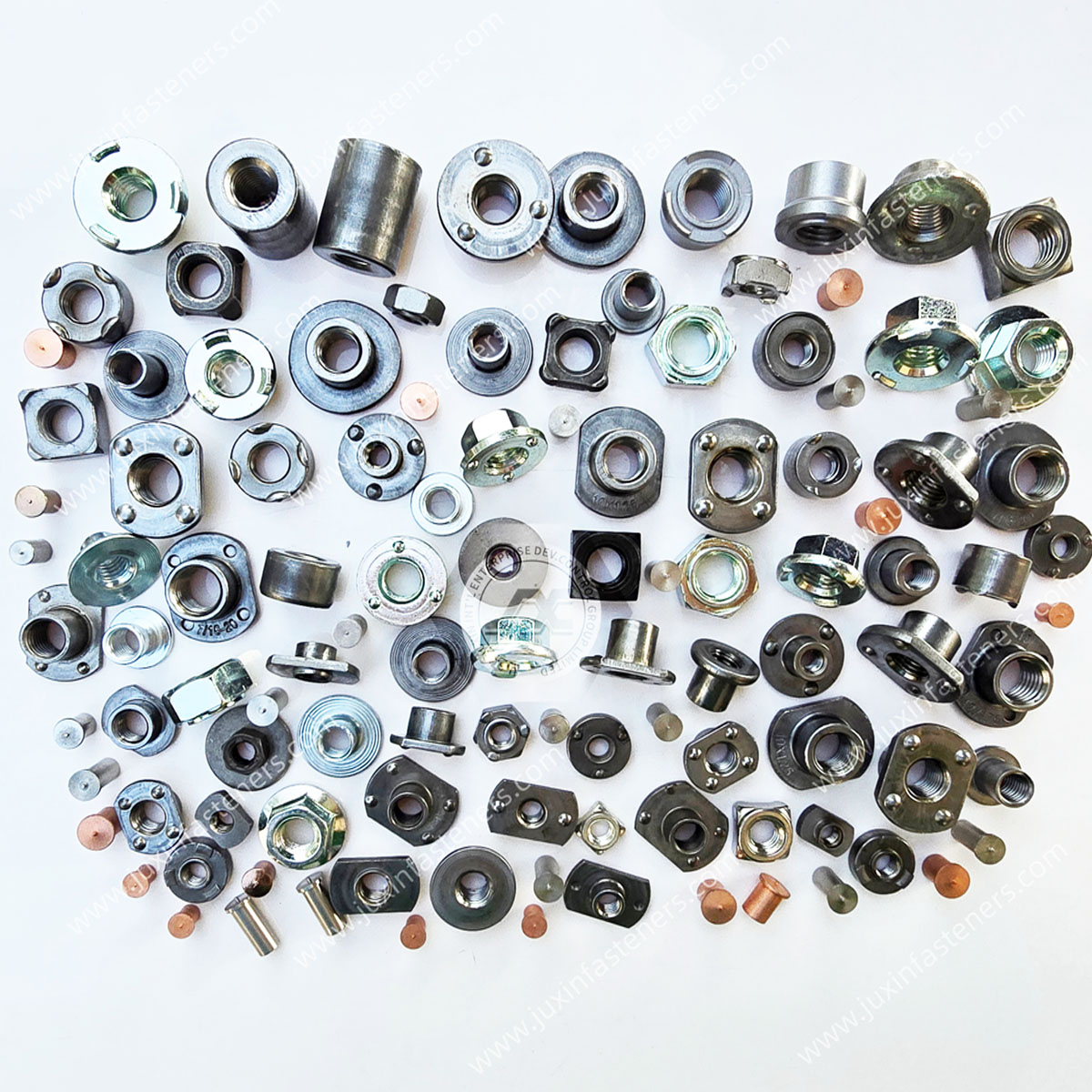
Similar-looking weld nuts may differ in projection geometry, body dimensions, flange design, and orientation.
Visual similarity does not establish interchangeability.
A finished fastener coating and a weldable surface condition are not necessarily the same requirement.
The complete process sequence should be defined first.
"High strength" is not a complete engineering requirement.
The relevant property class, material, geometry, joint design, assembly method, and validation requirements should be specified where applicable.
A weld nut, bolt, bracket, structural member, and mating component form a joint.
Engineering evaluation should consider the complete interface.
JUXIN FASTENERS supplies OEM-oriented automotive fastening components for customer-specific and non-standard applications.
Relevant product categories can include:
Automotive weld nuts
Flange weld nuts
Projection weld nuts
Square weld nuts
Weld studs
Rivet nuts
Self-locking nuts
High-strength fastening components
Customer-specific screws
Customer-specific bolts
Automotive plastic fasteners
Nylon retainers and clips
Application-specific pins and shafts
JUXIN FASTENERS manufactures customer-specific components according to customer drawings, specifications, material requirements, surface treatment requirements, and application conditions.
For rollover protection applications, the appropriate component should be defined by the actual structural interface rather than selected solely from a generic fastener category.
The most useful starting information is the engineering drawing, CAD model, component specification, or detailed joint requirement.
For an OEM or Tier supplier RFQ, the following information can significantly improve quotation accuracy:
Component Information
Weld nut type
Thread diameter and pitch
Body geometry
Flange geometry
Projection configuration
Orientation
Critical dimensions
Material Information
Weld nut material
Parent material
Parent-material thickness
Mating component material
Welding Information
Welding process
Projection requirements
Relevant welding conditions
Production sequence
Surface Treatment
Pre-weld surface condition
Post-weld coating
Corrosion-protection requirements
Paint or e-coat process requirements
Assembly Information
Mating bolt
Tightening torque
Locking requirement
Installation direction
Serviceability requirement
Commercial Information
Prototype quantity
Production quantity
Annual demand
Packaging
Delivery requirements
Documentation requirements
The more completely the joint is defined, the easier it is for the supplier to evaluate the actual component rather than quote an approximate catalog equivalent.
Depending on the vehicle architecture and structural design, fastening components can include automotive weld nuts, flange weld nuts, self-locking nuts, rivet nuts,
high-strength bolts, customer-specific screws, and other structural fastening components.
The appropriate component depends on the structural joint, mounting interface, access conditions, material, assembly method, and customer validation requirements.
A weld nut can integrate a threaded mounting point directly into a metal component.
This can be useful where a loose nut would be difficult to position or where access to the rear side of the joint is limited during final bolt installation.
Its suitability depends on weld design, parent material, welding process, assembly sequence, and validation.
Projection features create defined contact points between the weld nut and parent material during resistance welding.
Their geometry influences the welding interface and therefore needs to be considered together with the parent material, thickness, welding equipment, and process parameters.
Not automatically.
A flange changes the interface geometry and bearing area, but joint performance depends on the complete design, including flange geometry, parent material, weld configuration, bolt assembly, and load path.
Zinc-Nickel Alloy can be specified for certain automotive metal fastening components where corrosion protection requirements call for it.
For weld nuts, the surface condition must also be compatible with the welding and downstream manufacturing process.
The final treatment should therefore follow the customer-defined process sequence.
A drawing or CAD model is the preferred starting point. Important information can include thread, projection geometry, flange dimensions,
parent material and thickness, welding process, surface treatment, mating bolt, assembly requirements, quantity, and validation requirements.
JUXIN FASTENERS supplies customer-specific and non-standard automotive fastening components according to customer drawings,
specifications, material requirements, surface treatment requirements, and application conditions.
The actual weld nut configuration should be evaluated from the customer's application and approved component specification.
For an automotive rollover protection project, the most effective starting point is not simply the name of the fastener.
Define the joint first:
Structural Application → Mounting Interface → Access Condition → Welded Thread Requirement → Weld Nut Geometry → Parent Material → Welding Process → Surface Treatment → Assembly Requirement → Validation → OEM Sourcing
JUXIN FASTENERS can evaluate customer-specific and non-standard automotive fastening requirements based on the available engineering information.
For an RFQ or application review, send the drawing, CAD file, component specification, material requirement, surface-treatment requirement, quantity, and relevant assembly information to:
JUXIN FASTENERS
OEM-Oriented Supplier of Customer-Specific and Non-Standard Automotive Fastening Components
www.juxinfasteners.com
Product Packaging
Packaging Standard
At Juxin Fasteners, we apply standardized export packaging to ensure product protection, traceability, and compliance with international logistics requirements.
1. Standard Export Packaging
Unless otherwise specified, all products will be packed according to our factory standard export packaging, which includes:
Moisture-resistant inner protection
Poly bag or small box packing as required
Reinforced export cartons
Clear labeling with part number, specification, batch number, and quantity
Palletizing for sea or air shipment when necessary
Our standard packaging is designed to ensure safe transportation, efficient warehousing, and long-distance international shipping.
2. Customized Packaging Options
We also provide customized packaging solutions according to customer requirements, including but not limited to:
Private labeling
Customized barcodes
Specific carton dimensions
Retail packaging
Special pallet configuration
Customer-specific marking and identification
So that you know, customized packaging may involve additional costs and extended lead time depending on the complexity of the requirements.
3. Compliance & Quality Assurance
All packaging processes are controlled under our ISO 9001 quality management system to ensure consistency, traceability, and product integrity throughout the supply chain.
Product Pictures
Contact Us
Tel.:
+86 020 8621 0320
+86 020 3121 6067
E-mail:
Technical Support:
Navigation
SEND INQUIREY