Call Us
+86 136 6007 9809
Call Us
+86 136 6007 9809

Hex Flange Projection Weld Nuts in Mercedes Cooling Module & Engine Bay Applications (M177 Platform)
Introduction: Why Flange Projection Weld Nuts Are Critical in Modern Automotive Structures
In modern automotive manufacturing, especially within German OEM platforms such as Mercedes-Benz, BMW, and Volkswagen, structural fastening systems are designed around high automation, precision positioning, and repeatable welding performance.
Product Specification
Hex Flange Projection Weld Nuts in Mercedes Cooling Module & Engine Bay Applications (M177 Platform)
Introduction: Why Flange Projection Weld Nuts Are Critical in Modern Automotive Structures
In modern automotive manufacturing, especially within German OEM platforms such as Mercedes-Benz, BMW, and Volkswagen, structural fastening systems are designed around high automation, precision positioning, and repeatable welding performance.
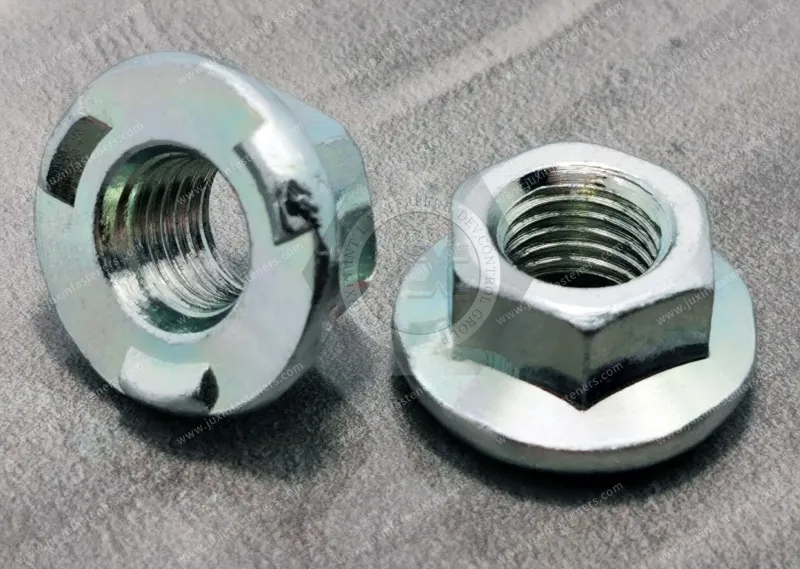
One key component widely used in these systems is the hex-flange projection-weld nut, engineered specifically for robotic resistance welding of sheet metal assemblies.
Applications such as engine bay brackets, cooling system modules, and accessory mounting structures require fasteners that ensure:
High positional accuracy in automated welding lines
Strong anti-rotation locking performance
Tolerance-friendly assembly on thin sheet metal
Stable performance under vibration and thermal cycling
This is where projection-weld nuts with a flange design become the preferred solution.
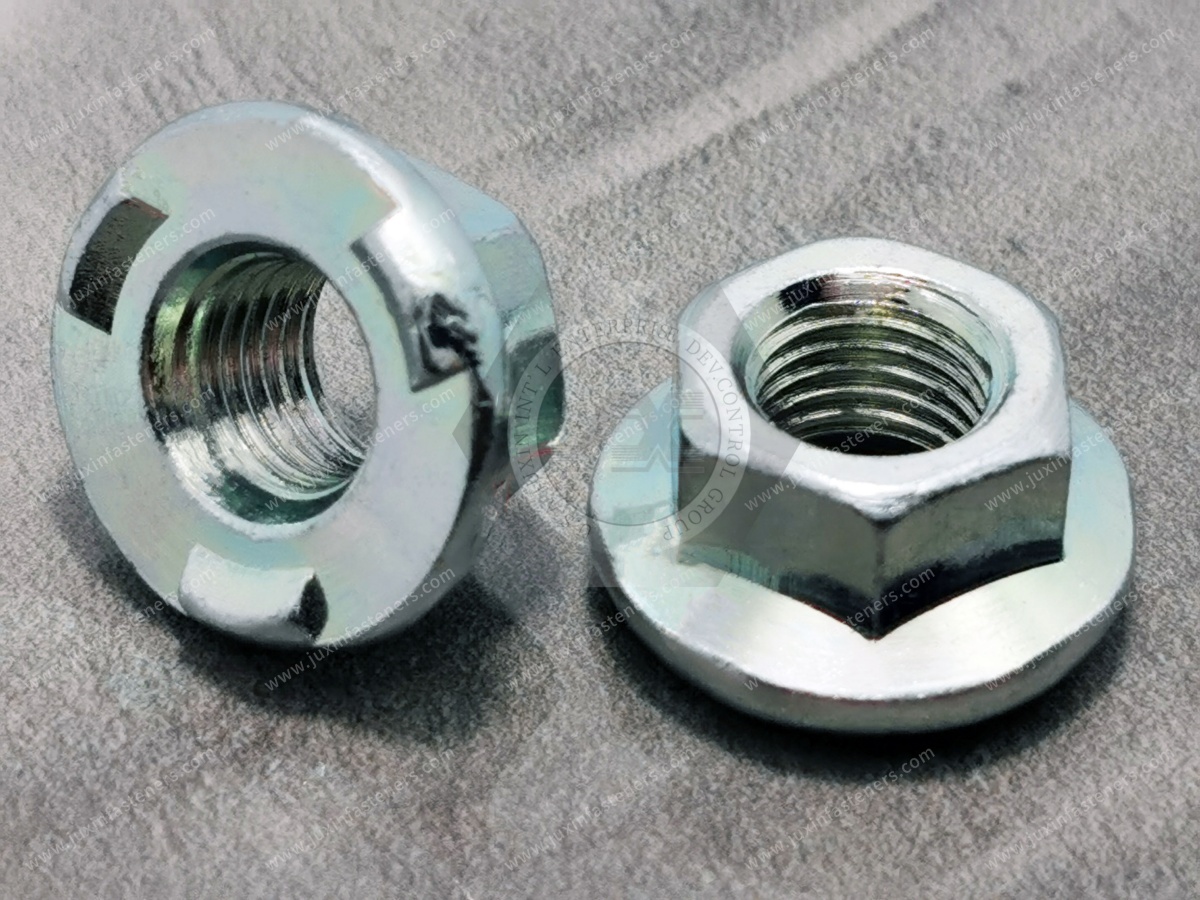
Application Insight: Mercedes M177 Engine Cooling Module & Engine Bay Structure
In high-performance engine platforms such as the Mercedes-Benz M177 engine system, the cooling module and surrounding structural assemblies feature multiple stamped-and-welded sheet-metal brackets.
Typical installation points include:
Cooling module support brackets
Radiator and intercooler mounting structures
Engine accessory fixed supports
Auxiliary frame and sub-assembly mounting points
These locations often require fasteners that can be integrated directly into thin sheet-metal structures without secondary machining or threaded tapping.
For this reason, flange-type projection weld nuts are commonly selected.
Why German OEMs Prefer Flange Projection Weld Nuts
Compared with other fastening methods (such as clinch nuts or square weld nuts), German automotive engineering systems tend to prefer round flange projection weld nuts for several technical reasons:
1. Better Robot Welding Compatibility
Flange projection design provides stable electrode contact points, making it highly suitable for automated resistance welding systems.
2. Improved Positioning Accuracy (Pilot Design)
Most flange weld nuts include a pilot feature that ensures self-centering during robotic placement and reduces the risk of misalignment.
3. Multiple Projection Points (3 or 4 Projections)
The projection points allow:
Controlled heat concentration
Strong weld penetration into sheet metal
Consistent weld quality across mass production
4. Excellent Tolerance Compensation for Sheet Metal
Automotive sheet metal parts often have dimensional variation. Flange-weld nuts offer greater forgiveness than rigid square-nut designs.
5. High Suitability for High-Vibration Environments
Engine bay and cooling systems operate under continuous vibration and thermal expansion cycles. Flange-projection weld nuts provide stable, long-term locking performance.
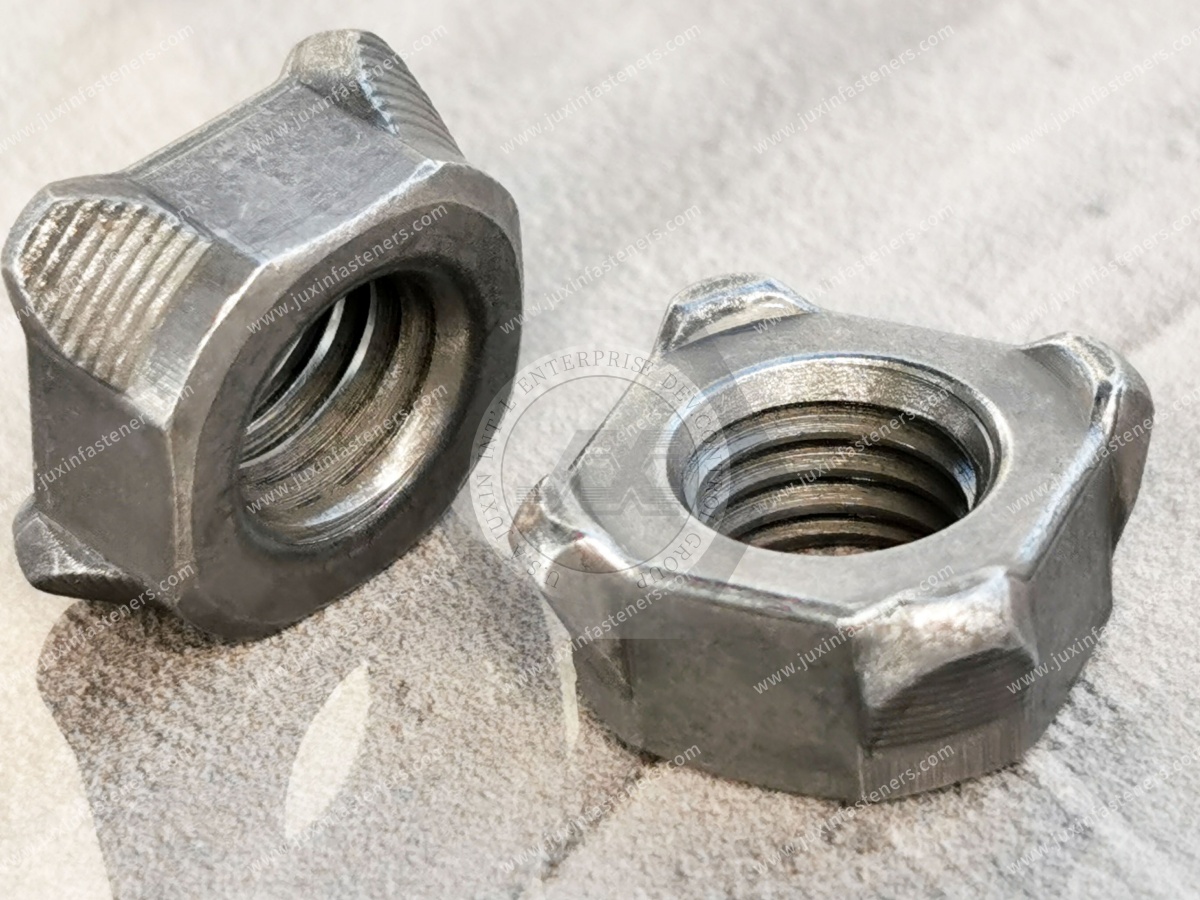
Comparison: German OEM vs Japanese OEM Welding Nut Preference
In global automotive engineering practice, different regions show different fastening preferences:
German OEMs (Mercedes, BMW, VW):
Prefer round-flange projection weld nuts with pilot alignment and multiple welding points.
Japanese OEMs (Toyota, Honda, Nissan):
More commonly adopt square weld nuts, optimized for different fixture systems and stamping line setups.
This difference is mainly driven by:
Welding automation philosophy
Fixture design standards
Historical production line compatibility
Engineering Advantages in Cooling System & Module Assembly
In applications like cooling module systems, flange projection weld nuts offer several engineering advantages:
Direct integration into stamped brackets
Eliminates tapping and secondary threading operations
Reduces assembly cost in high-volume production
Improves assembly repeatability in robotic lines
Enhances structural reliability under thermal expansion
Especially in engine bay environments like the M177 platform, these advantages become even more critical due to:
High temperature fluctuations
Continuous vibration loads
Space-constrained installation conditions
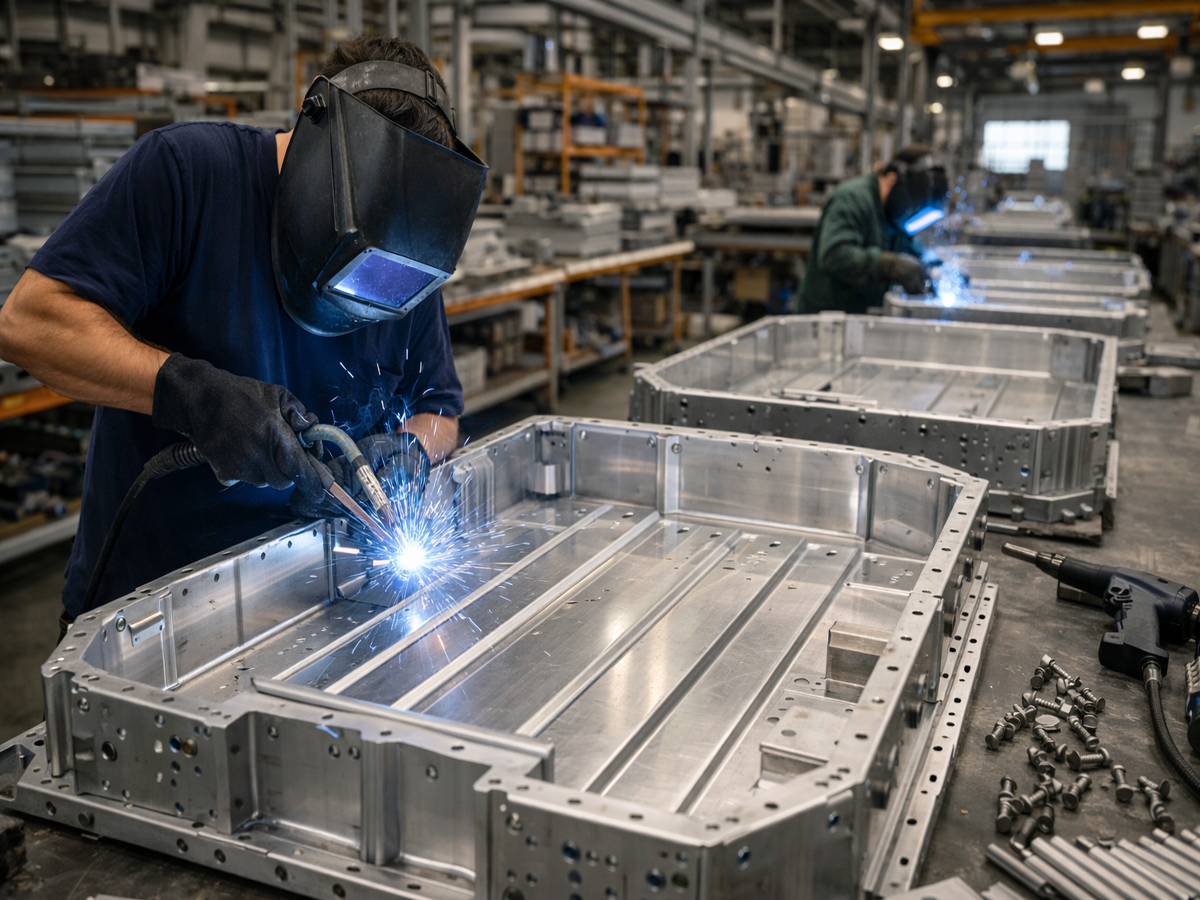
Conclusion: Why Flange Projection Weld Nuts Are Ideal for Modern OEM Platforms
As automotive manufacturing continues to evolve toward full automation and lightweight design, fastening components must support:
Robot welding compatibility
High repeatability
Structural reliability
Tolerance-friendly assembly
The hex flange projection weld nut perfectly meets these requirements, making it a standard solution in German OEM platforms such as Mercedes-Benz engine bay and cooling module assemblies.
Product Packaging
Packaging Standard
At Juxin Fasteners, we apply standardized export packaging to ensure product protection, traceability, and compliance with international logistics requirements.
1. Standard Export Packaging
Unless otherwise specified, all products will be packed according to our factory standard export packaging, which includes:
Moisture-resistant inner protection
Poly bag or small box packing as required
Reinforced export cartons
Clear labeling with part number, specification, batch number, and quantity
Palletizing for sea or air shipment when necessary
Our standard packaging is designed to ensure safe transportation, efficient warehousing, and long-distance international shipping.
2. Customized Packaging Options
We also provide customized packaging solutions according to customer requirements, including but not limited to:
Private labeling
Customized barcodes
Specific carton dimensions
Retail packaging
Special pallet configuration
Customer-specific marking and identification
So that you know, customized packaging may involve additional costs and extended lead time depending on the complexity of the requirements.
3. Compliance & Quality Assurance
All packaging processes are controlled under our ISO 9001 quality management system to ensure consistency, traceability, and product integrity throughout the supply chain.
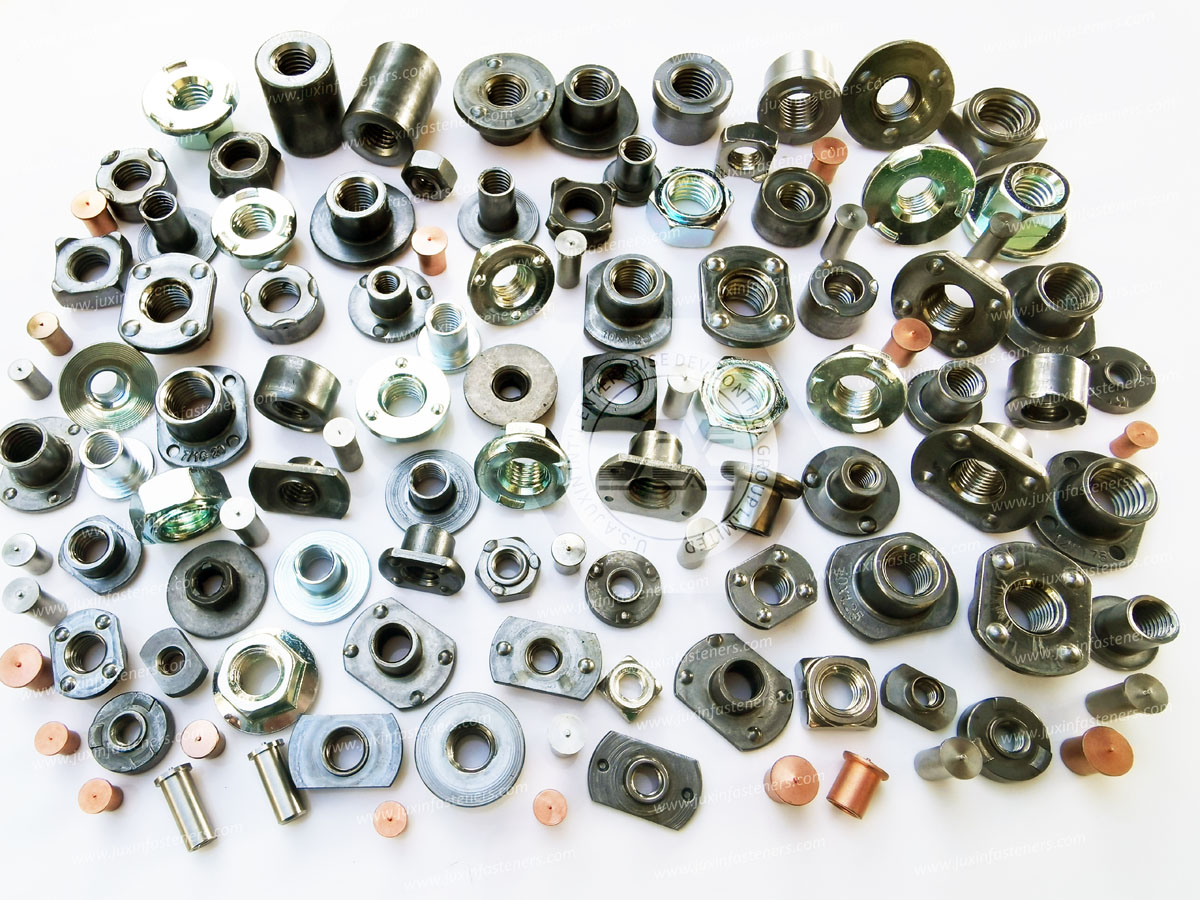
Product Pictures
Contact Us
Tel.:
+86 020 8621 0320
+86 020 3121 6067
E-mail:
Technical Support:
Navigation
SEND INQUIREY