Call Us
+86 136 6007 9809
Call Us
+86 136 6007 9809

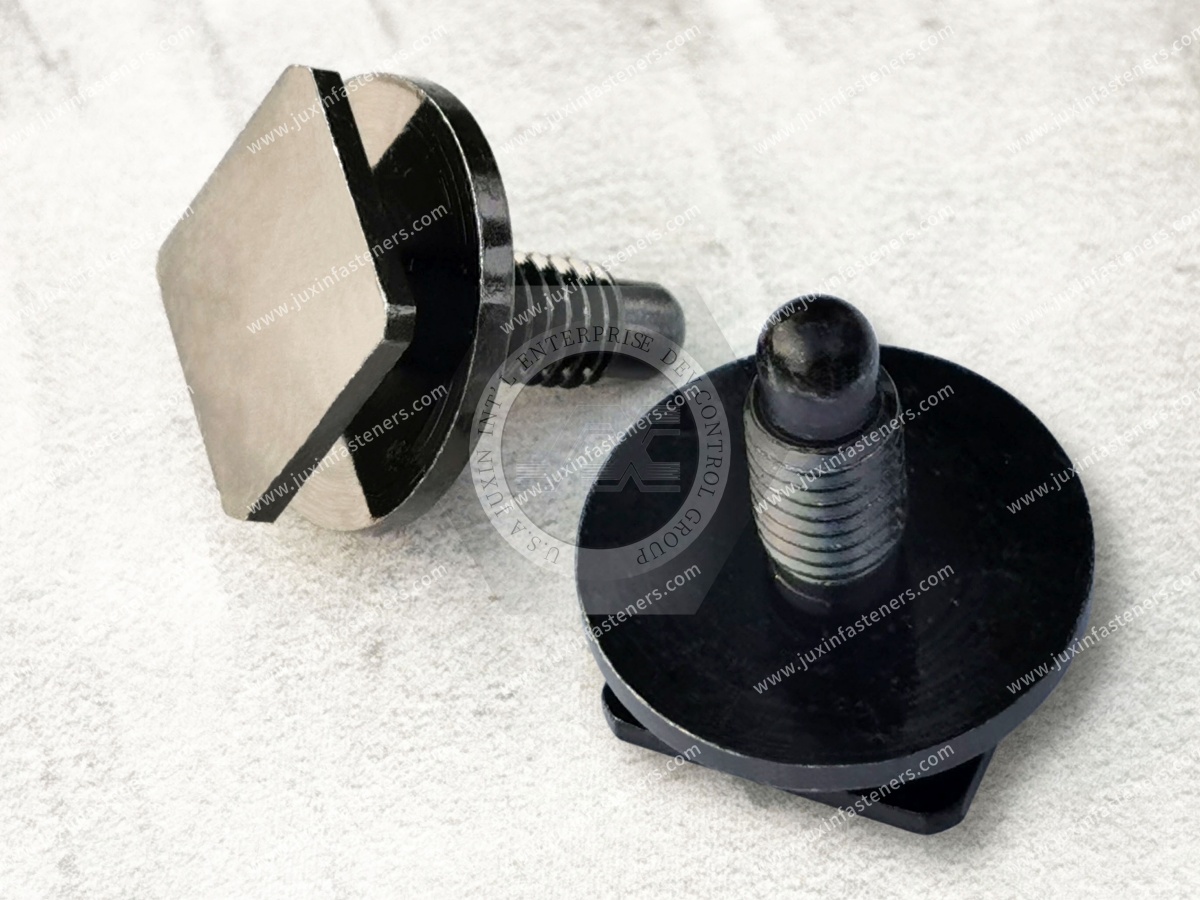
Rear spoiler assemblies require fastening components that match the geometry of the spoiler, vehicle body, mounting bracket, and assembly process.
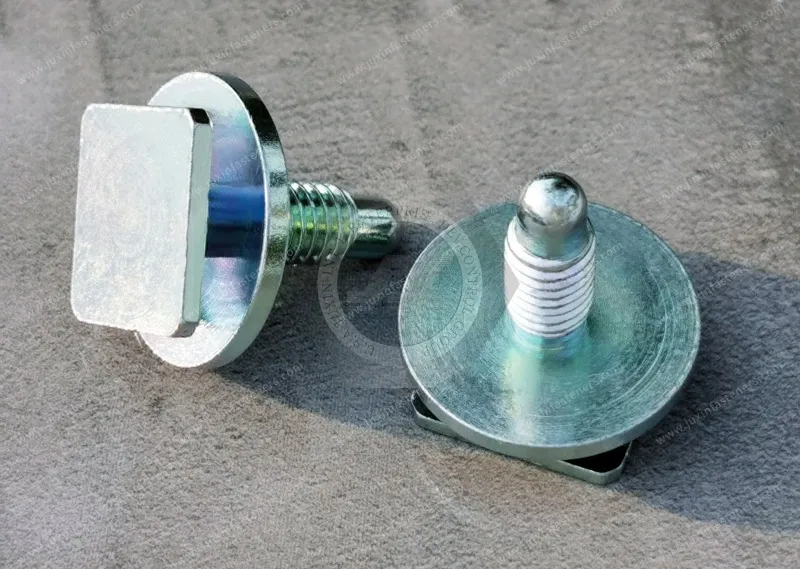
In applications where the mounting structure incorporates a slot, track, or channel, a specialized automotive spoiler slide bolt can provide a practical
fastening interface that allows the bolt to be positioned within the mounting structure before final tightening.
Product Specification
Rear spoiler assemblies require fastening components that match the geometry of the spoiler, vehicle body, mounting bracket, and assembly process.
In applications where the mounting structure incorporates a slot, track, or channel, a specialized automotive spoiler slide bolt
can provide a practical fastening interface that allows the bolt to be positioned within the mounting structure before final tightening.
JUXIN FASTENERS supplies customer-specific Spoiler Bolts, Spoiler Slide Bolts, and Automotive Spoiler Slide Bolts for OEM and industrial applications.
The component geometry, thread specification, material, property class, surface finish, and head-to-slot interface can be defined according to customer drawings, mating components, and application requirements.
Question: What is an automotive spoiler slide bolt?
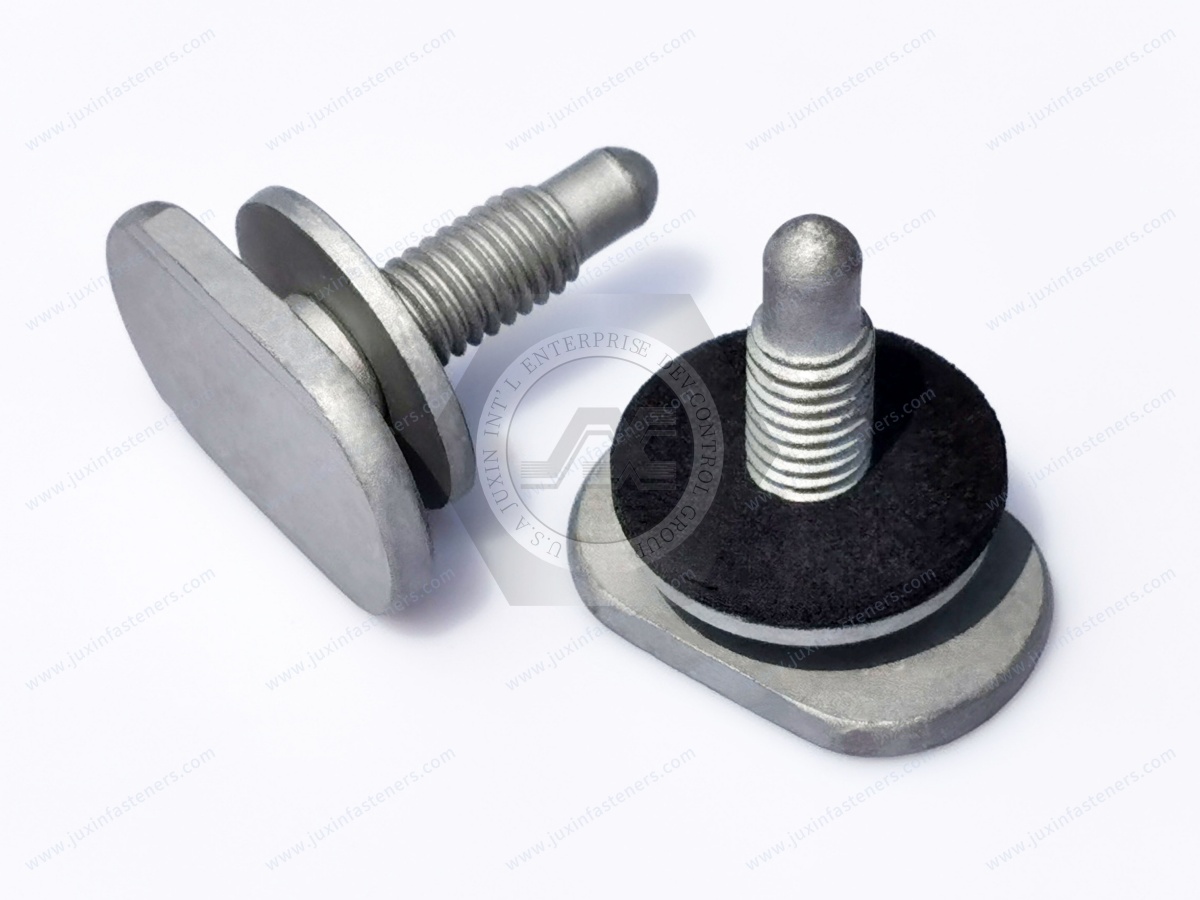
Direct Answer: An automotive spoiler slide bolt is a specialized fastening component used in rear spoiler mounting systems
where its head geometry is designed to engage a compatible mounting slot, track, or channel.
The bolt can be positioned within the mounting interface and then tightened after the spoiler and mating components are correctly aligned.
Unlike a conventional bolt that is normally positioned through a clearance hole and held by its driven head, a slide bolt uses a specific head-and-interface relationship.
The actual retention and anti-rotation behavior depend on the geometry of the bolt head and the mating slot, track, or channel.
This makes the component highly application-specific. The correct design cannot be determined from thread size alone.
The basic installation concept can be understood as:
Slide → Position → Engage → Tighten
The slide bolt is introduced into the relevant mounting slot, track, or channel.
It is then moved into the required position relative to the spoiler bracket or mating component.
Once the components are aligned, the bolt is tightened according to the customer's specified assembly requirements.
The functional relationship involves several design elements:
Head Geometry: The head must match the dimensions and shape of the mating slot, track, or channel.
Threaded Shank: The threaded portion must match the specified mating nut or threaded component.
Head-to-Thread Position: The relationship between the head and threaded section establishes how the component sits within the assembly.
Mating Interface: The mounting channel or slot determines how the slide bolt can be positioned and whether the head can resist rotation during tightening.
Assembly Access: The installation sequence depends on how the spoiler, bracket, panel, and fastening components are assembled.
The exact geometry should therefore be established from the customer's drawing, CAD data, or approved component specification.
A key engineering characteristic of an automotive spoiler slide bolt is that the head is not simply a conventional bolt head.
The head may be shaped specifically to engage a corresponding mounting feature.
For example, the relationship may involve:
Bolt Head → Mounting Slot → Bracket / Track → Threaded Shank → Nut
The head geometry can help maintain the required position of the bolt during assembly. However, anti-rotation should not be treated as a universal characteristic of every slide bolt.
Whether the head can resist rotation depends on:
Slot geometry
Head geometry
Clearance
Mating component design
Assembly direction
Tightening conditions
This is an important distinction when developing a customer-specific spoiler fastening component.
A slide bolt that looks similar externally may not be interchangeable if its head dimensions or mating interface differ.
A rear spoiler fastening joint can include several components working together:
Spoiler → Mounting Interface → Slide Bolt → Nut / Mating Thread → Vehicle Structure
Depending on the vehicle design, additional components such as washers, sealing elements, clips, brackets, or spacers may also form part of the assembly.
Engineering evaluation may consider:
Joint geometry
Clamping requirements
Contact areas
Mating material
Fastener size
Property class
Washer configuration
Panel or bracket thickness
Assembly torque
Environmental exposure
The objective is not simply to select a bolt with a particular thread size. The complete fastening interface needs to match the vehicle assembly.
For thin panels, brackets, composite components, or polymer mounting elements, load distribution and contact geometry may also need to be considered as part of the joint design.
Rear spoiler assemblies are exposed to outdoor environmental conditions. Depending on the vehicle design, the fastening interface may therefore need to account for:
Moisture
Road contamination
Temperature changes
Surface corrosion
Contact between dissimilar materials
Water paths around mounting interfaces
Where sealing is required, the sealing function should be defined by the overall joint design rather than assumed to come from the spoiler bolt itself.
Washers, gaskets, seals, or other interface components may be incorporated according to the customer's assembly requirements.
A spoiler slide bolt should therefore not automatically be described as a sealing or waterproofing component.
JUXIN FASTENERS supplies customer-specific spoiler fastening components according to application requirements.
Confirmed Automotive Spoiler Slide Bolt configurations include:
M5 and M6 thread sizes
Representative M6 × 14 and M6 × 20 configurations
Applicable property classes including 8.8 and 10.9
Color Zinc
Zinc-Nickel Alloy
Black Zinc
Certain configurations may also include a pre-applied thread-locking patch where specified.
The actual combination of thread size, length, property class, head geometry, surface finish, and other features should be established according to the customer's drawing and application requirements.
Property class should not be selected independently from the complete joint design.
For applicable JUXIN spoiler slide bolt configurations, property classes such as 8.8 and 10.9 may be specified.
These are property classes rather than hardness grades.
When selecting the appropriate configuration, engineering teams should consider:
Required joint design
Fastener dimensions
Mating components
Installation method
Tightening requirements
Material combination
Environmental conditions
Customer specifications
A higher property class should not automatically be interpreted as a universally better solution. The fastener must be matched to the complete joint.
Surface finish is another important parameter for customer-specific automotive spoiler bolts.
Available finish options may include:
Color Zinc can be specified for applications where the customer requires a zinc-based surface finish and the associated appearance and corrosion-protection characteristics.
Zinc-Nickel Alloy may be considered where enhanced corrosion protection is required for an automotive fastening application.
The suitability of the coating depends on the fastener material, mating components, environmental exposure, dimensional requirements, and customer specification.
Black Zinc may be selected where a darker surface appearance is required together with the specified surface-protection requirements.
Surface finish should therefore be treated as part of the complete engineering specification rather than as an independent cosmetic choice.
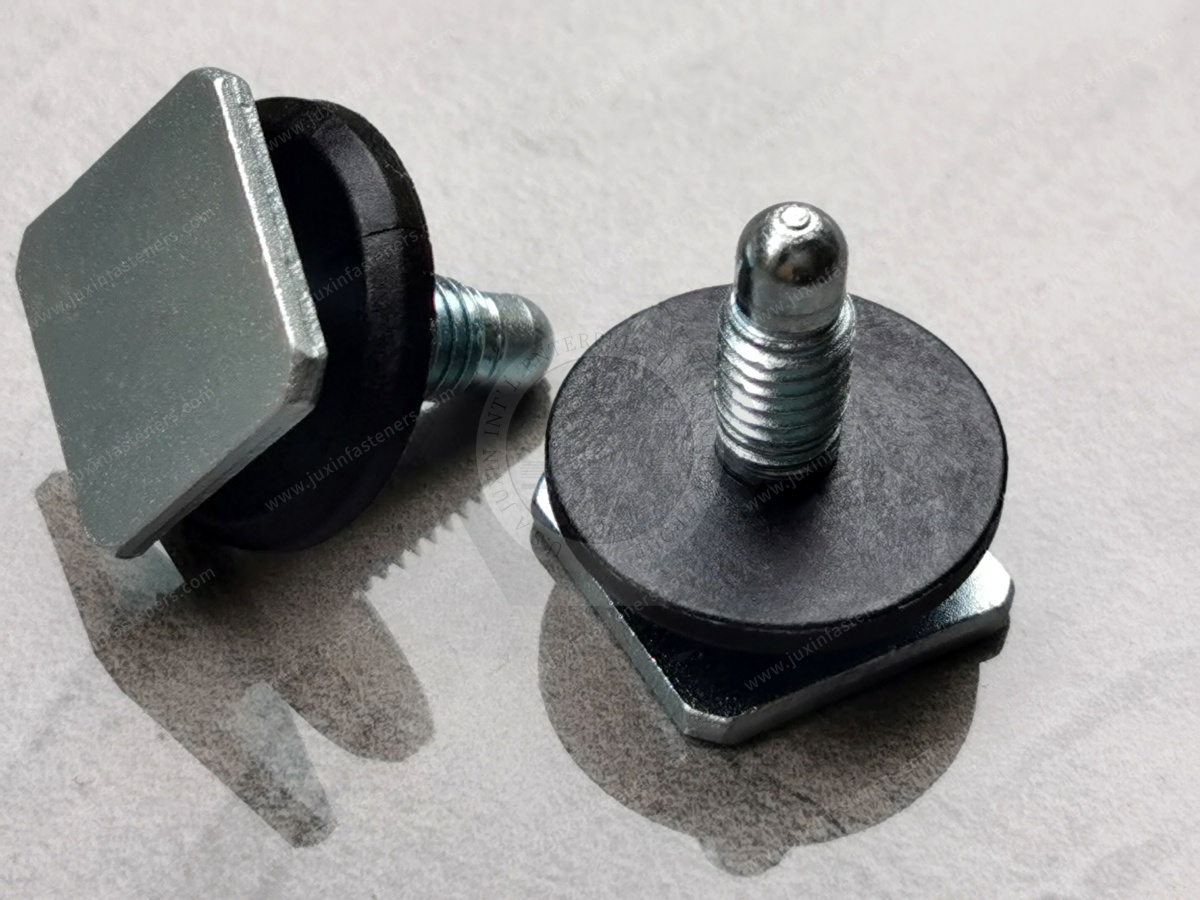
The key difference is the mounting interface.
A conventional bolt generally relies on its head and a clearance-hole arrangement.
A slide bolt is designed around a specific mating feature such as a:
Mounting slot
Track
Channel
Bracket interface
The practical comparison is:
| Feature | Conventional Bolt | Automotive Spoiler Slide Bolt |
|---|---|---|
| Primary interface | Clearance hole / conventional joint | Slot, track, or channel interface |
| Head function | Driving and clamping | Positioning and interface engagement |
| Positioning method | Through-hole placement | Sliding within compatible mounting feature |
| Anti-rotation | Depends on conventional joint design | Depends on head-to-slot geometry |
| Application | Broad fastening applications | Application-specific spoiler mounting systems |
| Design priority | Thread and head specification | Thread + head geometry + mounting interface |
This is why an Automotive Spoiler Slide Bolt should not be treated as simply another M6 bolt.
Rear spoiler assemblies may use both metal and polymer fastening components.
For example:
Nylon Rear Spoiler Clip + Automotive Spoiler Slide Bolt → Rear Spoiler Fastening System
The two components have different functions.
The Nylon Rear Spoiler Clip may provide locating, retaining, positioning, spacing, or another application-specific interface function depending on its design.
The Automotive Spoiler Slide Bolt provides the specified threaded fastening interface and engages the relevant mounting slot, track, or channel.
The two components should therefore be specified separately and then evaluated as part of the complete assembly.
This plastic-and-metal relationship is particularly useful when developing customer-specific rear spoiler fastening systems.
Many automotive fastening components are defined by the mating assembly rather than by the fastener alone.
For a customer-specific spoiler slide bolt, the engineering definition may include:
Vehicle Structure → Mounting Bracket → Slot / Channel → Bolt Head → Threaded Shank → Nut → Spoiler Assembly
Important dimensions may include:
Head length and width
Head thickness
Thread diameter
Thread pitch
Thread length
Overall length
Shoulder or transition geometry where applicable
Position of the threaded section
Mating slot dimensions
Required clearances
Surface finish
Property class
The exact dimensions should always be based on the customer's approved drawing or specification.
A bolt with the same M6 thread may still be unsuitable if the head geometry does not match the mounting channel.
Standard catalog bolts can be useful for general applications, but an automotive spoiler mounting system may require a geometry that is specific to the vehicle structure.
A customer-specific slide bolt may be required when the application includes:
A special mounting slot
A constrained assembly direction
A specific head shape
Limited installation access
A defined threaded position
A specific bracket geometry
A particular surface finish
A specified property class
Integration with a polymer or metal component
This is one reason automotive OEM sourcing often begins with a drawing or CAD model rather than simply a standard bolt description.
A practical engineering review can follow this sequence:
Confirm the head, thread, length, shoulder or transition features, and other application-specific dimensions.
Confirm the slot, track, channel, bracket, or other mating geometry.
Identify the spoiler material, bracket material, body panel, nut, washer, clip, or other mating components.
Determine how the slide bolt is inserted, positioned, retained, and tightened.
Evaluate the required clamping and fastening conditions according to the vehicle manufacturer's design.
Specify the appropriate fastener material and surface finish according to environmental and assembly requirements.
Define dimensional consistency, quantity, packaging, documentation, and other production requirements.
This approach helps connect engineering design with practical OEM sourcing.
The rear spoiler is one example of JUXIN FASTENERS' broader automotive fastening business.
Depending on the application, customer-specific fastening components may also be used in:
Wiper systems
Chassis and undercarriage systems
Shift systems
Sunroof systems
Rollover protection systems
Door systems
Seat systems
Interior trim
Exterior body assemblies
Relevant JUXIN product categories may include:
Customer-specific screws
Custom bolts
Custom nuts
Rivet nuts
Weld nuts
Stainless steel rivets
Stainless steel shoulder / step rivets
High-strength fastening components
Automotive plastic fasteners
Nylon clips and retainers
Application-specific pins and shafts
The appropriate product depends on the specific vehicle application and customer specification.
The same application-first engineering principle applies across other automotive systems.
Customer-specific wiper fastening components may include stainless steel solid rivets and stainless steel shoulder or step rivets.
The required geometry and material should match the wiper mechanism and mating components.
Chassis applications may use rivet nuts and customer-specific aluminum alloy fastening components.
For aluminum components, material selection and surface treatment may need to be considered together with corrosion exposure, vibration, temperature changes, mating materials, thread geometry, and assembly requirements.
Potential surface-treatment families can include anodizing, hard anodizing, zinc-aluminum flake coatings, electroless nickel, and functional lubricating coatings where technically appropriate.
The correct treatment depends on the specific alloy, application and customer requirements.
Customer-specific components for shifting mechanisms may include shafts, pins, rolling shafts, pivot components, sliding columns, rocker pivot shafts, and ball pins.
These are not spoiler bolts, but they demonstrate the broader range of application-specific automotive components that may require drawing-based sourcing.
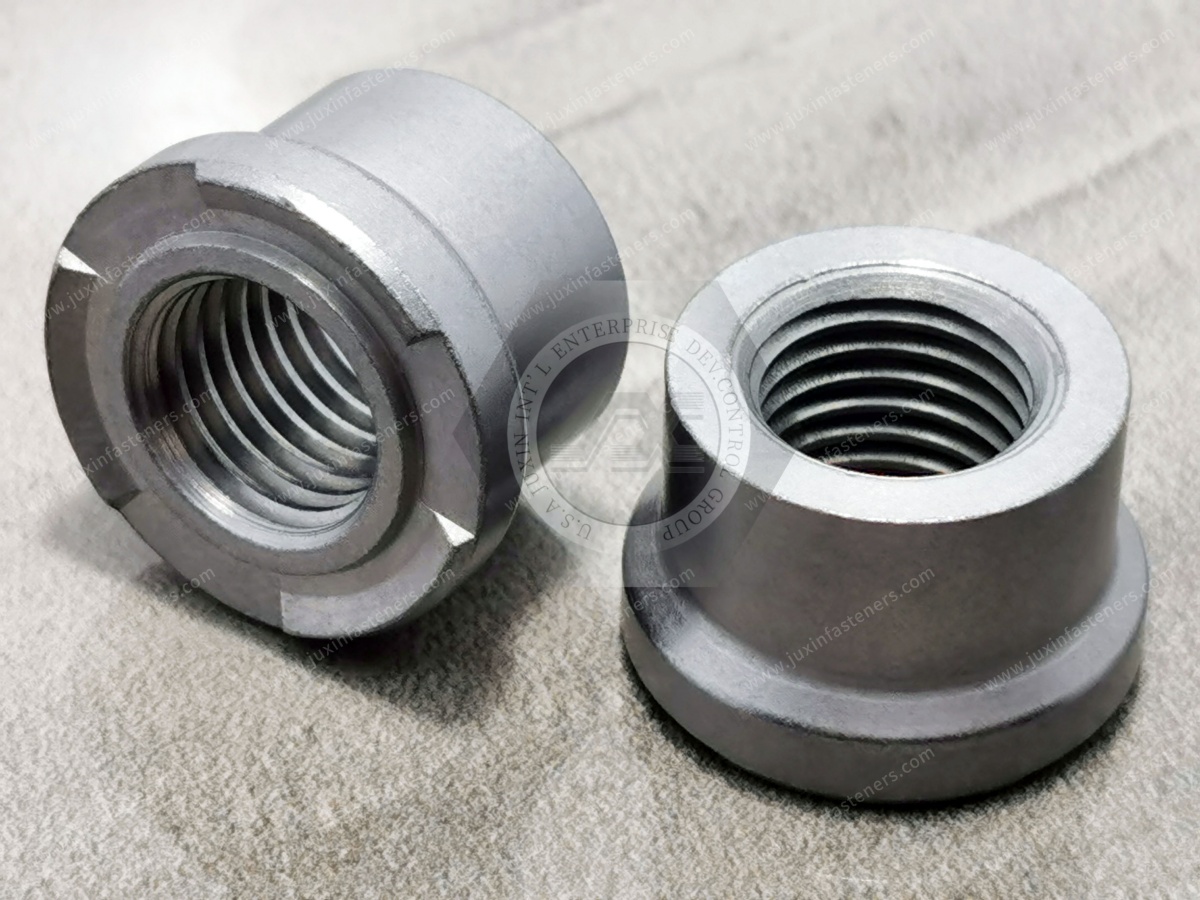
Applications may include weld nuts, rivet nuts, flange weld nuts, and metal self-locking nuts.
Selection depends on the structural interface, installation method, access conditions, material and customer specification.
A successful automotive fastening project needs both engineering and sourcing requirements to be addressed.
Automotive engineers and design engineers may focus on:
Mounting geometry
Slot or channel engagement
Thread specification
Head geometry
Joint design
Material compatibility
Property class
Surface finish
Assembly sequence
Tightening requirements
Environmental exposure
Mating components
The goal is to establish a component that fits the intended vehicle assembly.
Procurement managers and supply chain professionals may focus on:
Standard vs. customer-specific design
Drawing-based sourcing
Material specification
Surface finish
Production quantity
Sample approval
Dimensional consistency
Packaging
Documentation
Supply continuity
Supplier communication
The goal is to identify a supplier capable of consistently supplying the approved component specification.
For an RFQ or technical inquiry, useful information may include:
Engineering drawing
3D CAD model where available
Thread diameter
Thread pitch
Overall length
Thread length
Head geometry
Mounting slot or channel dimensions
Mating component information
Required property class
Material specification
Surface finish
Washer or accessory requirements
Thread-locking patch requirements where applicable
Annual or project quantity
Packaging requirements
The more clearly the mating interface is defined, the easier it is to evaluate whether the proposed slide bolt matches the intended assembly.
An M6 thread does not define the head geometry or mounting interface.
A slide bolt depends on compatibility between the head and the slot, track, or channel.
Property class is only one part of the fastening specification.
Surface finish can affect corrosion protection, dimensional requirements, appearance and assembly conditions.
Small differences in head geometry or threaded position can affect compatibility with the mating assembly.
The spoiler bolt should be evaluated together with the spoiler, bracket, panel, nut, clip and other mating components.
JUXIN FASTENERS supplies customer-specific and non-standard automotive fastening components according to customer drawings,
specifications, mating interfaces, material requirements, surface-finish requirements, and application conditions.
For rear spoiler applications, the product scope can include:
Automotive Spoiler Slide Bolts
Spoiler Bolts
Nylon Rear Spoiler Clips
Customer-specific screws
Customer-specific bolts
Customer-specific nuts
Other application-specific fastening components
The objective is not to replace every application with a standard catalog part. Instead, the fastening component is matched to the customer's actual assembly requirements.
For automotive OEM projects, the development and sourcing process can therefore begin with the customer's drawing, CAD model, component specification, or application requirements.
An Automotive Spoiler Slide Bolt is a specialized spoiler fastening component whose head geometry is designed to engage a compatible mounting slot, track, or channel before final tightening.
A Spoiler Slide Bolt is designed around a specific mounting interface such as a slot, track, or channel. Its head geometry and position within that interface are important parts of the fastening design.
JUXIN FASTENERS has confirmed M5 and M6 configurations, including representative M6×14 and M6×20 configurations, subject to the customer's required design.
Applicable JUXIN Spoiler Slide Bolt configurations can be specified with property classes 8.8 and 10.9 according to the customer and application requirements.
Depending on the application, available finish options can include Color Zinc, Zinc-Nickel Alloy, and Black Zinc.
A rear spoiler assembly can incorporate both components.
The Nylon Rear Spoiler Clip and Automotive Spoiler Slide Bolt are different components and should be evaluated according to their respective functions and the complete mounting system.
Yes. JUXIN FASTENERS supplies customer-specific Spoiler Bolts and Automotive Spoiler Slide Bolts according to customer drawings,
specifications, mating interfaces, material requirements, surface finishes, and application conditions.
If your rear spoiler application requires a customer-specific Automotive Spoiler Slide Bolt, provide the available drawing,
CAD data, mounting-interface dimensions, thread specification, material or property-class requirement, surface finish, quantity, and application information.
JUXIN FASTENERS can evaluate the specified fastening component according to the customer's requirements.
For OEM and industrial sourcing inquiries:
Email: info@juxinfasteners.com
Website: www.juxinfasteners.com
Product Packaging
Packaging Standard
At Juxin Fasteners, we apply standardized export packaging to ensure product protection, traceability, and compliance with international logistics requirements.
1. Standard Export Packaging
Unless otherwise specified, all products will be packed according to our factory standard export packaging, which includes:
Moisture-resistant inner protection
Poly bag or small box packing as required
Reinforced export cartons
Clear labeling with part number, specification, batch number, and quantity
Palletizing for sea or air shipment when necessary
Our standard packaging is designed to ensure safe transportation, efficient warehousing, and long-distance international shipping.
2. Customized Packaging Options
We also provide customized packaging solutions according to customer requirements, including but not limited to:
Private labeling
Customized barcodes
Specific carton dimensions
Retail packaging
Special pallet configuration
Customer-specific marking and identification
So that you know, customized packaging may involve additional costs and extended lead time depending on the complexity of the requirements.
3. Compliance & Quality Assurance
All packaging processes are controlled under our ISO 9001 quality management system to ensure consistency, traceability, and product integrity throughout the supply chain.
Product Pictures
Hot Products
Contact Us
Tel.:
+86 020 8621 0320
+86 020 3121 6067
E-mail:
Technical Support:
Navigation
SEND INQUIREY