Call Us
+86 136 6007 9809
Call Us
+86 136 6007 9809

Automotive sunroof and panoramic roof systems combine glass panels, rails, guides, actuators, linkages, brackets, and other mechanical components within a tightly packaged roof structure.
Product Specification
Automotive sunroof and panoramic roof systems combine glass panels, rails, guides, actuators, linkages, brackets, and other mechanical components within a tightly packaged roof structure.
Depending on the vehicle architecture, the mechanism may incorporate sliding, tilting, pivoting, lifting, or combined movements.
Components located within these mechanisms therefore need to maintain the required dimensional and positional relationship while accommodating the movement defined by the vehicle design.
For engineers, the key challenge is not simply selecting a generic fastener. It is defining the correct mechanical interface between the shaft, pin, guide, bracket, rail, linkage, or other mating component.
For procurement and supply chain teams, these components are often customer-specific rather than generic catalog hardware.
The sourcing requirement may include engineering drawings, 3D CAD data, critical dimensions, tolerances, material, surface treatment, assembly method, packaging, and production requirements.
JUXIN FASTENERS supplies customer-specific and non-standard automotive fastening and mechanical components according to approved drawings,
specified materials, surface finishes, dimensional requirements, and application conditions.
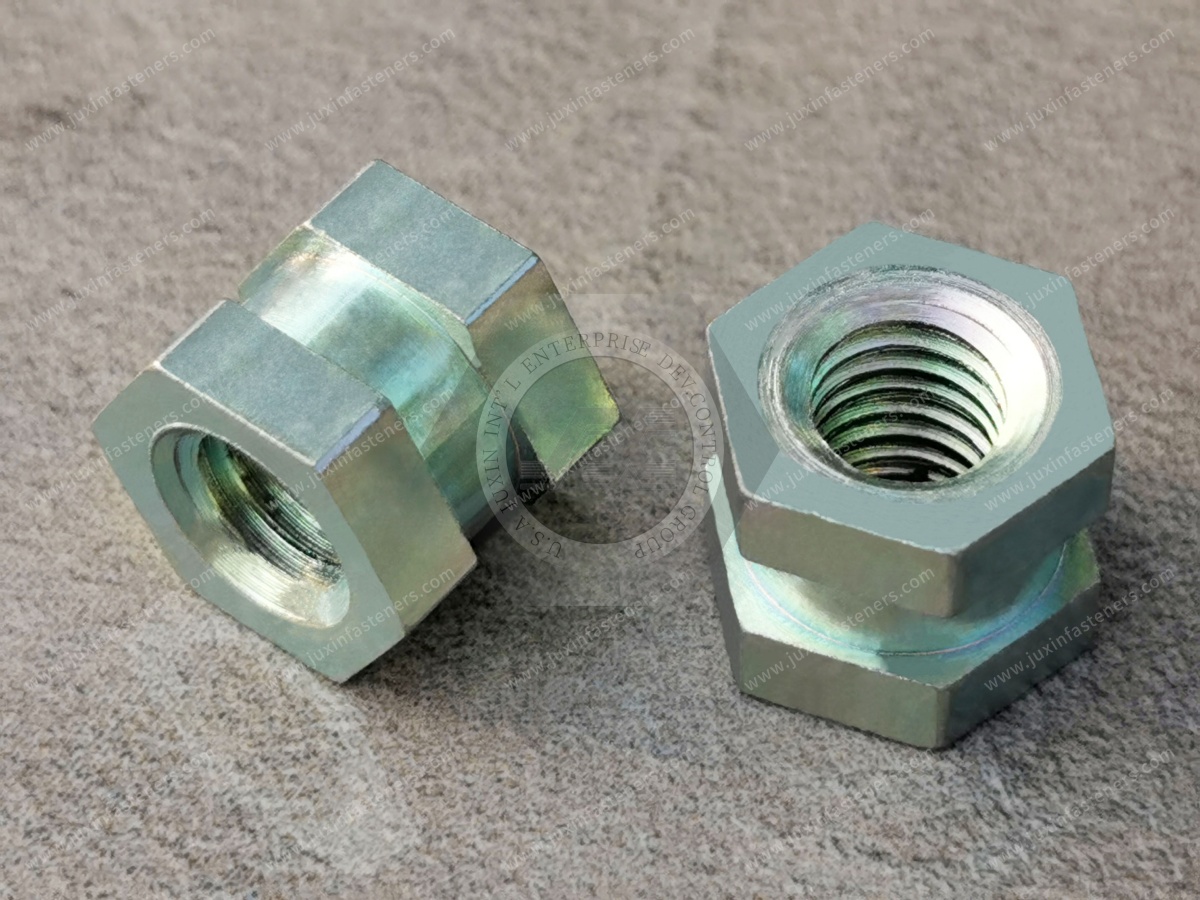
Sunroof and panoramic roof systems operate within a relatively compact roof architecture while combining mechanical movement with glass, seals, rails, guides, motors, cables, brackets, and other components.
This creates several engineering considerations for the fastening and mechanical interfaces.
Sunroof mechanisms are installed within limited roof and headliner space.
The component envelope can therefore be an important design parameter.
Depending on the application, engineers may need to consider:
Overall component height
Shaft or pin diameter
Component length
Head geometry
Retention features
Clearance to adjacent components
Rail or guide geometry
Installation access
Assembly direction
Weight considerations
A component with the correct nominal thread or diameter may still be unsuitable if its head, shoulder, length, or overall profile interferes with adjacent components.
This is why sunroof hardware is often best defined from the complete mounting interface rather than from a generic product description.
A sunroof mechanism can contain both sliding and pivoting interfaces.
A sliding interface requires the mating components to move along a defined path, while a pivot interface allows rotation around a defined axis.
These two functions can require different component geometries and different engineering considerations.
For a pivot shaft, engineers may focus on:
Diameter
Axis position
Clearance
Shoulder geometry
Retention
Surface condition
Mating material
For a sliding guide component, engineers may focus more heavily on:
Guide geometry
Contact surfaces
Clearance
Sliding direction
Surface condition
Material pairing
Lubrication
Movement range
The important Information Gain here is that “sunroof fastener” is not one engineering category.
The correct component depends first on the movement and mating interface.
Sunroof mechanisms rely on coordinated movement between multiple components.
A shaft, pin, guide, rocker, bracket, or linkage component can influence the positional relationship between mating parts.
Engineers may therefore need to evaluate:
Pivot-axis alignment
Hole position
Shaft diameter
Component length
Angular relationship
Radial clearance
Axial clearance
Guide position
Assembly variation
Tolerance stack-up
The appropriate tolerance should be based on the functional requirement.
A tighter tolerance is not automatically better if the mechanism requires clearance for movement or assembly.
Precision pivot shafts can serve as defined rotational interfaces within sunroof mechanisms.
Depending on the design, a shaft may connect a lifting mechanism, linkage, bracket, rocker, or other moving component.
The actual shaft specification can include:
Diameter
Length
Shoulder position
End geometry
Retention features
Material
Surface requirements
Dimensional tolerances
Mating-hole requirements
For example, if the shaft establishes the rotational axis of a moving component, its diameter and positional relationship with the mating hole can be more important than simply specifying a nominal shaft size.
JUXIN FASTENERS manufactures customer-specific shafts and mechanical components according to approved engineering drawings and customer-defined requirements.
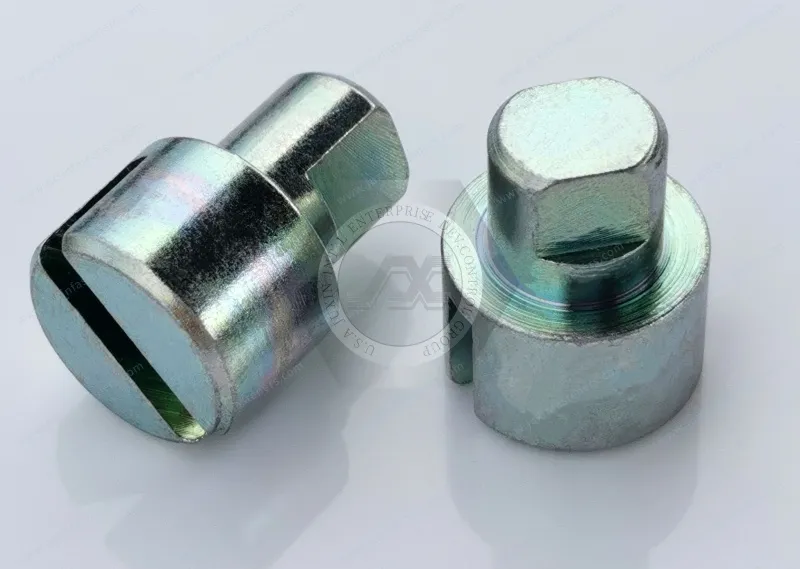
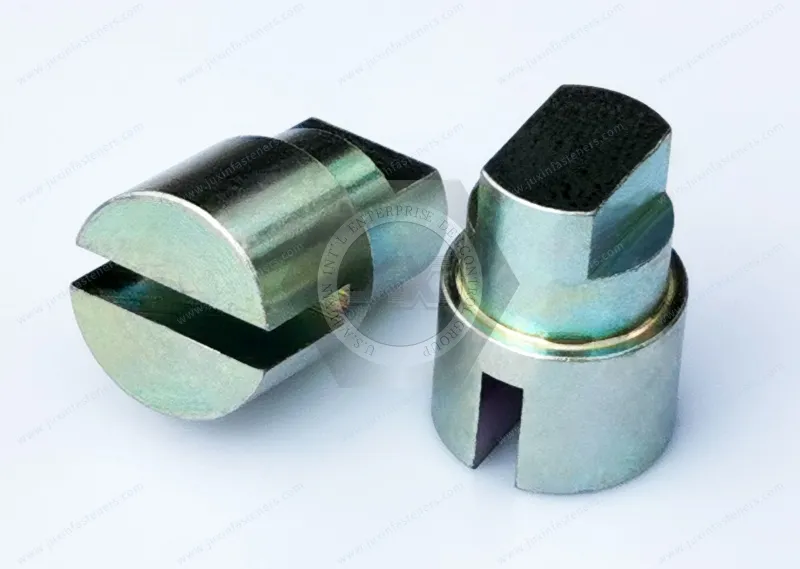
Mechanical guide pins can be used to establish or maintain the required relationship between moving and stationary components.
Depending on the mechanism, guide components may support:
Positioning
Alignment
Guided movement
Mechanical connection
Controlled movement along a defined path
The geometry should be established according to the mating rail, bracket, linkage, or other interface.
Relevant specifications can include:
Pin diameter
Overall length
Head or shoulder geometry
Contact surface
Retention method
Material
Surface treatment
Clearance
Installation method
A guide pin should therefore not be treated as interchangeable simply because another component has the same nominal diameter.
Sunroof systems may require several different application-specific mechanical components.
Depending on the architecture, these can include:
Precision pivot shafts
Pivot pins
Guide pins
Rolling shafts
Fixed pivot shafts
Swing or pivot shafts
Sliding columns
Linkage components
Retaining components
Customer-specific screws
Customer-specific bolts
Other fastening hardware
The exact terminology depends on the mechanical function and customer engineering definition.
This distinction is important when searching for or sourcing automotive sunroof system fasteners.
The required component may technically function as a fastening or mechanical component, but its specification is often determined by the movement system rather than by a standard fastener category.
Material selection should follow the functional requirements of the component and its mating interface.
Depending on the application, engineers may evaluate:
Carbon steel
Alloy steel
Stainless steel
Aluminum alloys
Other customer-specified materials
The appropriate selection can depend on:
Mechanical requirements
Mating material
Corrosion environment
Surface condition
Contact behavior
Weight considerations
Temperature exposure
Assembly method
Dimensional stability
For example, a shaft operating inside a rotational interface may have different material considerations from a static mounting screw.
Material selection should not be considered independently from the mating component.
The combination of:
Component Material + Mating Material + Contact Geometry + Surface Condition
can influence friction behavior, wear considerations, corrosion interaction, and dimensional stability.
This becomes particularly relevant where dissimilar metals are used within the same sunroof mechanism.
Sunroof components can be exposed to humidity, condensation, temperature changes, and environmental conditions transmitted through the roof structure.
Surface treatment can therefore be part of the component specification where corrosion protection, surface characteristics, or assembly behavior require consideration.
Potential surface treatment families may include:
Zinc-based coatings
Zinc-Nickel Alloy
Anodizing
Hard anodizing
Electroless nickel
Functional coatings
Lubricating or friction-control coatings
The appropriate treatment depends on the base material, application environment, mating materials, contact conditions, and customer specification.
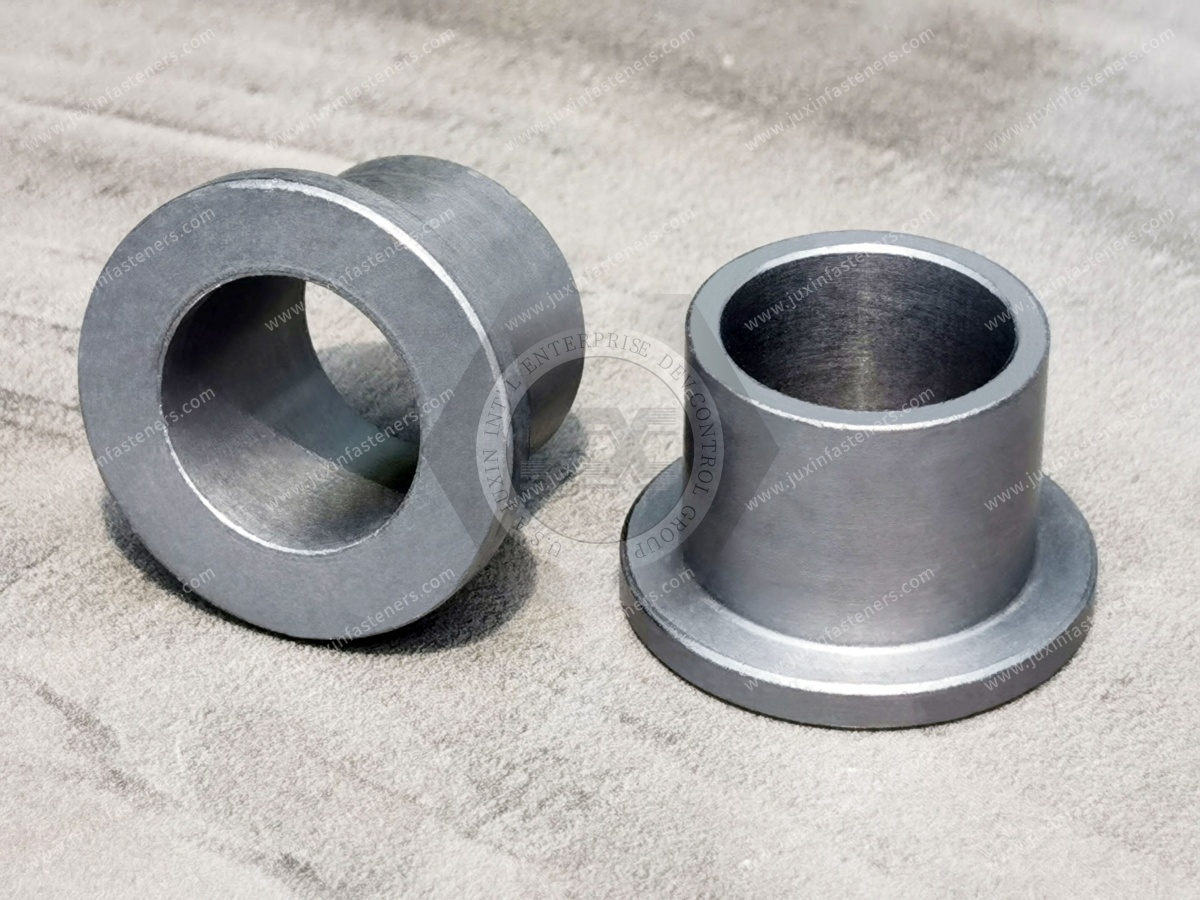
Zinc-Nickel Alloy coatings can be specified for selected steel components where corrosion protection is an important requirement.
However, coating selection should not be based solely on a generic corrosion-resistance description.
Engineers may need to consider:
Base material
Coating system
Mating material
Environmental exposure
Contact interface
Thread condition
Assembly method
Required corrosion performance
Where corrosion testing is required, the test method and acceptance criteria should follow the applicable customer or project specification.
For selected aluminum components, anodizing or hard anodizing may be considered according to the required surface characteristics.
The final specification can depend on:
Aluminum alloy
Component geometry
Mating material
Contact condition
Dimensional requirements
Wear considerations
Environmental exposure
The treatment should therefore be evaluated as part of the complete component specification.
Sliding and pivoting mechanisms require careful consideration of contact behavior.
Surface condition can influence how two components move relative to each other, particularly where components have repeated contact.
A practical engineering sequence is:
Geometry → Material Pairing → Surface Condition → Lubrication → Movement
Changing one parameter can affect the overall interface.
For example, a change in surface treatment can influence friction behavior. A change in mating material can also affect contact behavior.
This means that statements such as “low friction” or “high wear resistance” should not be treated as complete specifications.
The required surface condition should instead be established according to the actual contact interface and operating conditions.
Noise, vibration, and harshness considerations can be relevant to sunroof assemblies because the mechanism is located close to the passenger compartment.
However, fasteners and mechanical components should not automatically be described as standalone NVH solutions.
Unwanted movement or noise can involve several interacting factors, including:
Component fit
Clearance
Alignment
Contact surfaces
Retention
Material pairing
Lubrication
Structural stiffness
Assembly variation
Surrounding trim
Mechanism design
Therefore, when engineers evaluate a pivot shaft, guide pin, clip, or fastening component for a sunroof application, the correct approach is to assess its role within the complete assembly.
The component can contribute to the required mechanical interface, but NVH performance remains an application-level engineering consideration.
Sunroof systems can be located near drainage paths, seals, roof openings, and other areas where moisture management is important.
This does not mean that every sunroof fastener is a sealing component.
Instead, engineers should distinguish between:
Fastening Function
and
Water Management Function
Seals, drainage channels, gaskets, interfaces, and other dedicated components may perform water-management functions within the roof system.
Fasteners and mechanical components should be specified according to their own mechanical and environmental requirements.
For metallic components, moisture exposure may influence the required material and surface treatment.
This distinction helps avoid an important sourcing mistake: assuming that a corrosion-resistant fastener by itself provides a waterproof roof assembly.
A useful way to define an automotive sunroof component is to begin with its mechanical function.
Identify whether the component supports:
Sliding
Pivoting
Lifting
Tilting
Guiding
Locating
Retaining
Connecting
Identify the relevant:
Hole
Shaft bore
Rail
Guide
Bracket
Linkage
Rocker
Sliding track
Retention feature
Specify:
Diameter
Length
Shoulder position
Head geometry
End configuration
Retention features
Special profiles
Identify the dimensions that directly affect movement or assembly.
These may include:
Critical diameters
Hole locations
Axis positions
Clearances
Lengths
Angular relationships
Not every dimension necessarily requires the same tolerance level.
Specify the required material or material family according to the engineering design.
Where applicable, specify:
Surface finish
Coating
Heat treatment
Lubrication
Friction-related requirements
Identify:
Installation direction
Retention method
Tool access
Assembly sequence
Tightening requirements where threaded fasteners are involved
Consider:
Humidity
Moisture
Temperature variation
Corrosive exposure
Repeated movement
Contamination
Lubrication conditions
This eight-step model can help engineers and procurement teams convert a general requirement such as “custom sunroof hardware” into a manufacturable component specification.
Standard screws and bolts can be suitable for some sunroof mounting applications.
However, a pivot shaft, guide pin, sliding component, or customer-specific retaining component may require geometry that is not defined by a conventional fastener standard.
For example, a shaft may require a specific combination of:
Diameter
Length
Shoulder
End geometry
Retention
Surface condition
Mating clearance
Two components with the same nominal diameter can therefore have completely different functions.
This is why application-specific sunroof components are often better sourced from engineering drawings or CAD models.
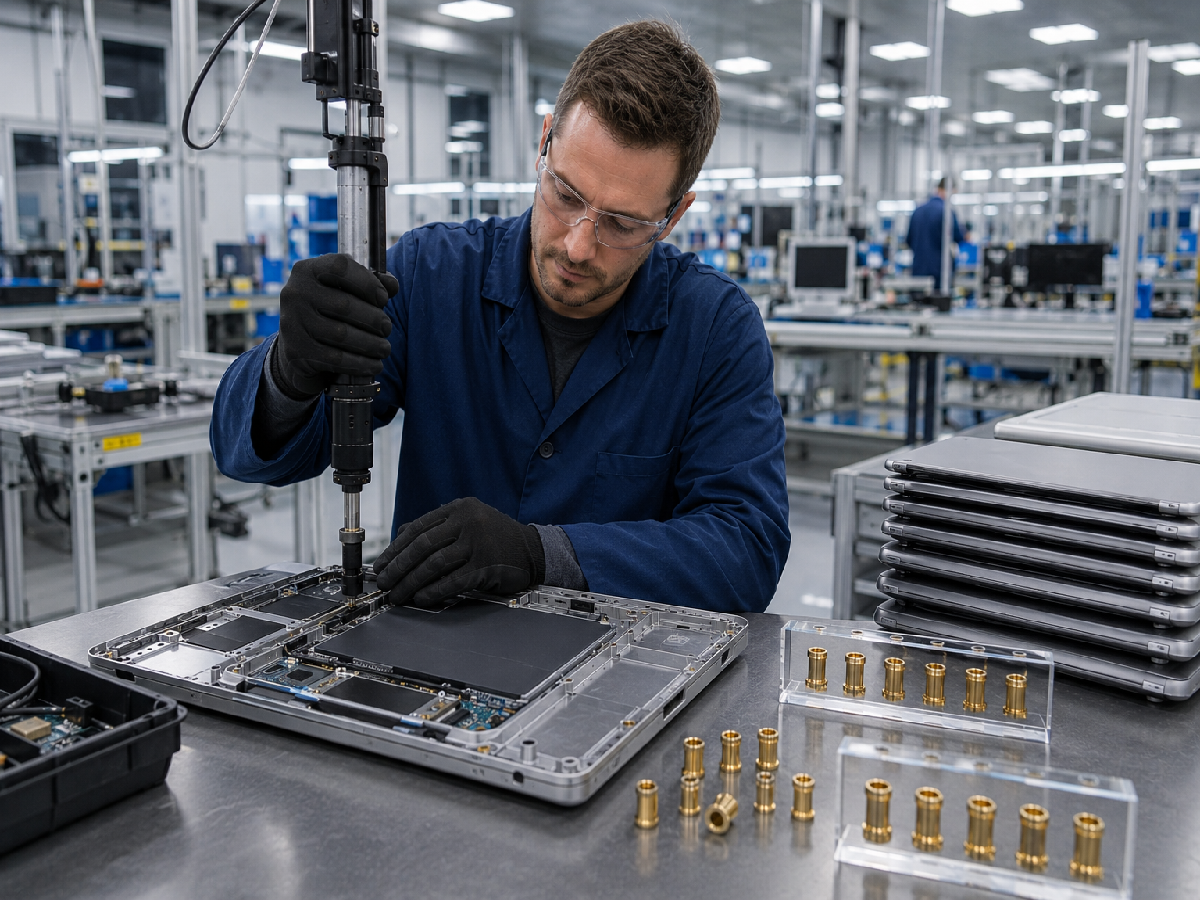
The sunroof mechanism itself may use precision metal components while surrounding roof trim and interior assemblies can incorporate polymer fastening components.
For example, headliner, overhead console, trim panels, and other interior components may use:
Push-type retainers
Trim clips
Screw-type retainers
Plastic push rivets
Other automotive plastic fasteners
These components serve different functions from the precision mechanical components inside the sunroof mechanism.
The broader vehicle therefore contains a combination of:
Precision Mechanical Components + Metal Fasteners + Plastic Retainers + Application-Specific Components
JUXIN FASTENERS supplies customer-specific plastic and metal fastening components for different automotive applications.
For the broader polymer fastening system, see the JUXIN FASTENERS guide to automotive plastic fasteners.
Sunroof systems are one application within a larger automotive fastening ecosystem.
The same vehicle can require completely different customer-specific components in different systems.
Automotive wiper mechanisms can use:
Stainless steel solid rivets
Stainless steel shoulder rivets
Step rivets
Customer-specific linkage components
These applications involve repeated mechanical movement and require consideration of pivot geometry, material, dimensional consistency, surface condition, and environmental exposure.
See the related automotive wiper system fastening solutions.
Gear-shifting mechanisms can incorporate:
Shift shafts
Shift pins
Rolling shafts
Fixed pivot shafts
Swing or pivot shafts
Shift sliding columns
Rocker pivot shafts
Ball pins
These components are defined primarily by their mechanical interfaces and movement requirements.
See the related automotive shift system fastening solutions.
Chassis and undercarriage applications may use:
Rivet nuts
Aluminum alloy fasteners
Customer-specific bolts
Weld nuts
Self-locking nuts
Other application-specific fastening components
Material compatibility, environmental exposure, surface treatment, thread geometry, and assembly requirements can influence the specification.
Engineering and procurement teams may evaluate the same sunroof component from different perspectives.
Automotive engineers and mechanical designers may focus on:
Kinematic alignment
Critical dimensions
Tolerance relationships
Pivot or sliding geometry
Mating interfaces
Material pairing
Surface condition
Clearance
Retention
Assembly method
Environmental exposure
For these users, a CAD model and complete dimensional specification are often more useful than a generic product description.
Procurement managers and supply chain teams may focus on:
Drawing compliance
Material control
Dimensional consistency
Surface treatment
Sample approval
Production consistency
Packaging
Documentation
Quantity
Forecast
Long-term supply coordination
For customer-specific sunroof components, procurement should evaluate both technical suitability and supply capability.
When sourcing automotive sunroof system fasteners, pivot shafts, guide pins, or other custom components, the following information can provide a strong starting point.
Provide:
Component geometry
Critical dimensions
Tolerances
Mating interfaces
Surface requirements
Material
Special features
Identify whether the component is used for:
Pivoting
Sliding
Guiding
Positioning
Retaining
Connecting
Other mechanical functions
This helps suppliers understand the actual function rather than relying on a generic product name.
Specify the required material or material family where already defined.
If the material is open for evaluation, provide the functional and environmental requirements.
Specify:
Coating
Anodizing
Surface finish
Heat treatment where required
Lubrication
Friction-control requirements where applicable
Provide:
Installation method
Assembly direction
Retention method
Tool access
Tightening requirements for threaded components
Lubrication requirements where applicable
Procurement teams should also define:
Sample quantity
Production quantity
Forecast
Packaging
Labeling
Inspection requirements
Documentation
Delivery requirements
“Sunroof pin” or “sunroof fastener” does not define the complete engineering requirement.
The actual interface and function are more important.
Two pivot pins may share the same nominal diameter but differ in length, shoulder geometry, retention, material, or surface condition.
Friction depends on the complete interface.
Material pairing, surface condition, lubrication, geometry, contact pressure, and operating conditions may all influence movement.
A corrosion-resistant coating can protect a fastener against specified environmental exposure, but it does not make the entire sunroof assembly waterproof.
Water management remains a system-level function involving seals, drainage paths, interfaces, and other components.
The correct tolerance depends on the function of the interface.
A pivot or sliding mechanism requires the appropriate clearance and dimensional relationship, not simply the smallest possible tolerance.
A change in material or surface treatment can affect friction, dimensions, corrosion interaction, and assembly behavior.
Such changes should be evaluated against the approved engineering requirements.
Application-specific shafts, pins, guide components, and mechanical hardware are often defined by customer drawings or CAD data.
A visually similar standard component should not automatically be considered interchangeable.
JUXIN FASTENERS is an OEM-oriented supplier of customer-specific and non-standard automotive fastening and mechanical components.
For automotive sunroof and panoramic roof applications, the component scope can include:
Precision pivot shafts
Pivot pins
Mechanical guide pins
Rolling shafts
Fixed pivot shafts
Swing or pivot shafts
Sliding columns
Customer-specific screws
Customer-specific bolts
Retaining components
Other application-specific fastening and mechanical components
JUXIN FASTENERS manufactures customer-specific components according to approved drawings, specified materials, surface treatments, dimensional requirements, and application conditions.
The actual component specification is established according to the customer's mating interface and functional requirements.
This approach is particularly relevant for OEM and Tier-level sourcing where a component may form part of a larger roof mechanism rather than function as an independent standard fastener.
For a custom sunroof shaft, pivot pin, guide pin, sliding component, or related fastening component, provide:
Engineering drawing
3D CAD model where available
Part number
Critical dimensions
Dimensional tolerances
Mating-hole information
Rail or guide interface
Material
Surface treatment
Surface finish requirement where specified
Heat treatment requirement where specified
Retention method
Assembly method
Lubrication requirement where applicable
Application description
Sample quantity
Expected production volume
Packaging requirements
Inspection requirements
Documentation requirements
If the component is already in production, an approved reference sample or existing production information may also help establish the intended configuration, subject to the customer's requirements.
What components are commonly used in automotive sunroof systems?
Automotive sunroof and panoramic roof mechanisms can use precision pivot shafts, pivot pins, guide pins, rolling shafts, sliding components, retaining hardware, screws, bolts,
and other customer-specific mechanical components. The exact components depend on the roof mechanism and its mating interfaces.
What is a precision pivot shaft used for in a sunroof mechanism?
A precision pivot shaft can establish a defined rotational interface for a moving component such as a linkage, rocker, lifting mechanism, or bracket.
Its required diameter, length, shoulder geometry, clearance, retention, and surface condition depend on the specific mechanism.
What are mechanical guide pins used for in automotive sunroof systems?
Mechanical guide pins can help establish positioning or controlled movement between mating components. Their geometry and retention method depend on the guide,
rail, bracket, linkage, or other interface used in the specific sunroof mechanism.
Why are custom sunroof components often specified from drawings or CAD models?
Sunroof shafts, pins, guide components, and retaining hardware can have application-specific diameters, lengths, shoulders, profiles, tolerances, and mating interfaces.
A generic product name or nominal diameter does not fully define these requirements.
How should engineers evaluate friction in sunroof sliding and pivot interfaces?
Engineers should consider the complete interface, including geometry, material pairing, surface condition, lubrication, contact conditions, and movement.
Friction should be treated as an application-level engineering parameter rather than as a property of one component alone.
Can surface treatment affect automotive sunroof component performance?
Yes. Surface treatment can influence corrosion protection, surface condition, friction behavior, wear considerations, and dimensional characteristics.
The appropriate treatment should be selected according to the component material, mating interface, environment, and customer specification.
Can Zinc-Nickel Alloy be used for automotive sunroof components?
Zinc-Nickel Alloy coatings can be specified for selected steel components where corrosion protection is required.
Suitability depends on the base material, application environment, mating materials, coating specification, and customer-defined requirements.
Do sunroof fasteners provide the waterproofing function?
Not necessarily. Fasteners and mechanical components perform their specified mechanical functions, while water management typically involves seals, drainage channels,
gaskets, interfaces, and other dedicated system components. Corrosion protection of the fastener should therefore not be confused with waterproofing of the complete roof assembly.
What information should an OEM provide when sourcing custom sunroof shafts and pins?
A drawing or 3D CAD model, critical dimensions and tolerances, mating interface, material, surface treatment, assembly method, application conditions, quantity, packaging,
and documentation requirements provide a useful starting point for supplier evaluation.
Can JUXIN FASTENERS manufacture custom automotive sunroof components?
JUXIN FASTENERS supplies customer-specific pivot shafts, pivot pins, guide pins, sliding components, screws, bolts,
and other automotive fastening or mechanical components according to approved drawings, specified materials, surface treatments, dimensional requirements, and application conditions.
For automotive sunroof and panoramic roof projects requiring custom pivot shafts, guide pins, sliding components, fastening hardware,
or other non-standard mechanical components, provide the relevant drawing or CAD data together with the material, surface treatment, application, and production requirements.
JUXIN FASTENERS supplies customer-specific and non-standard automotive components for OEM and industrial applications.
Email: info@juxinfasteners.com
Website: www.juxinfasteners.com
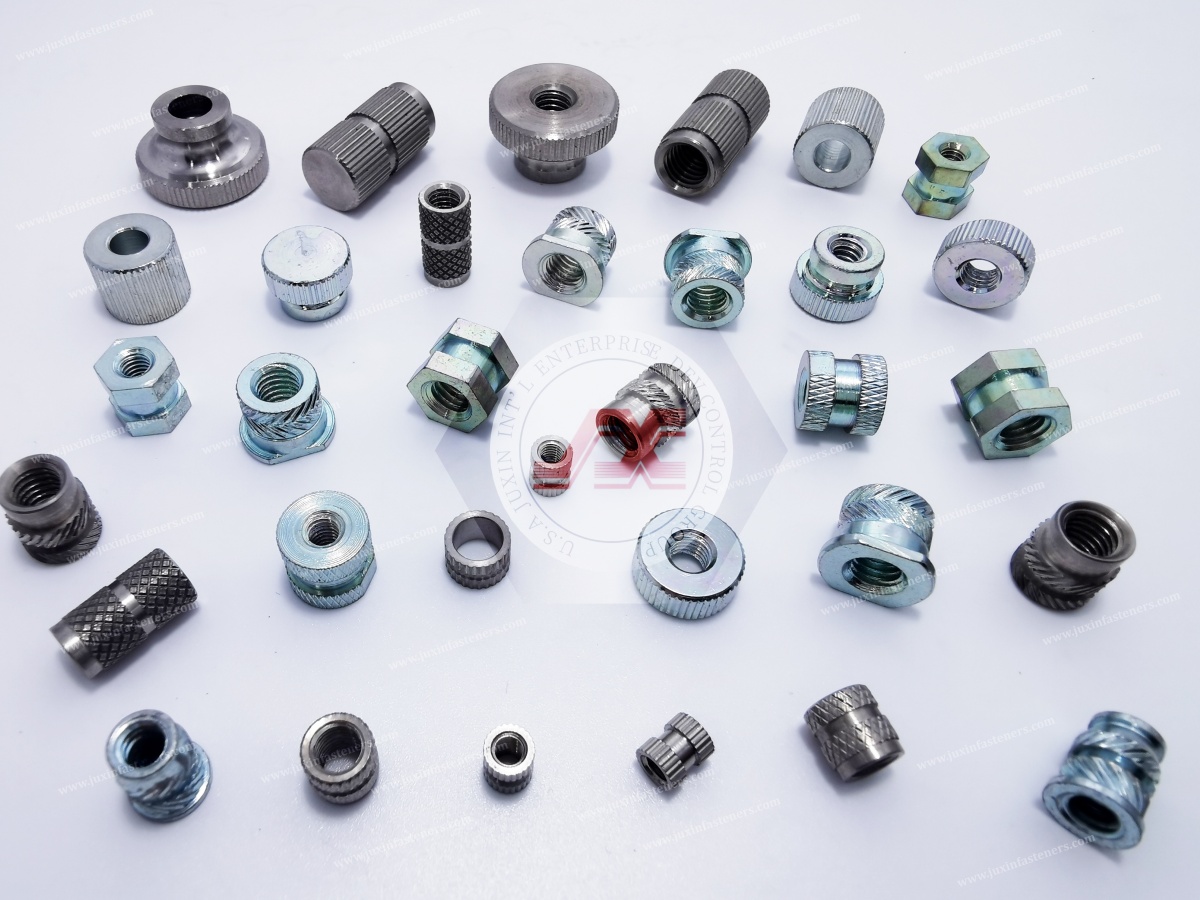
Product Packaging
Packaging Standard
At Juxin Fasteners, we apply standardized export packaging to ensure product protection, traceability, and compliance with international logistics requirements.
1. Standard Export Packaging
Unless otherwise specified, all products will be packed according to our factory standard export packaging, which includes:
Moisture-resistant inner protection
Poly bag or small box packing as required
Reinforced export cartons
Clear labeling with part number, specification, batch number, and quantity
Palletizing for sea or air shipment when necessary
Our standard packaging is designed to ensure safe transportation, efficient warehousing, and long-distance international shipping.
2. Customized Packaging Options
We also provide customized packaging solutions according to customer requirements, including but not limited to:
Private labeling
Customized barcodes
Specific carton dimensions
Retail packaging
Special pallet configuration
Customer-specific marking and identification
So that you know, customized packaging may involve additional costs and extended lead time depending on the complexity of the requirements.
3. Compliance & Quality Assurance
All packaging processes are controlled under our ISO 9001 quality management system to ensure consistency, traceability, and product integrity throughout the supply chain.
Product Pictures
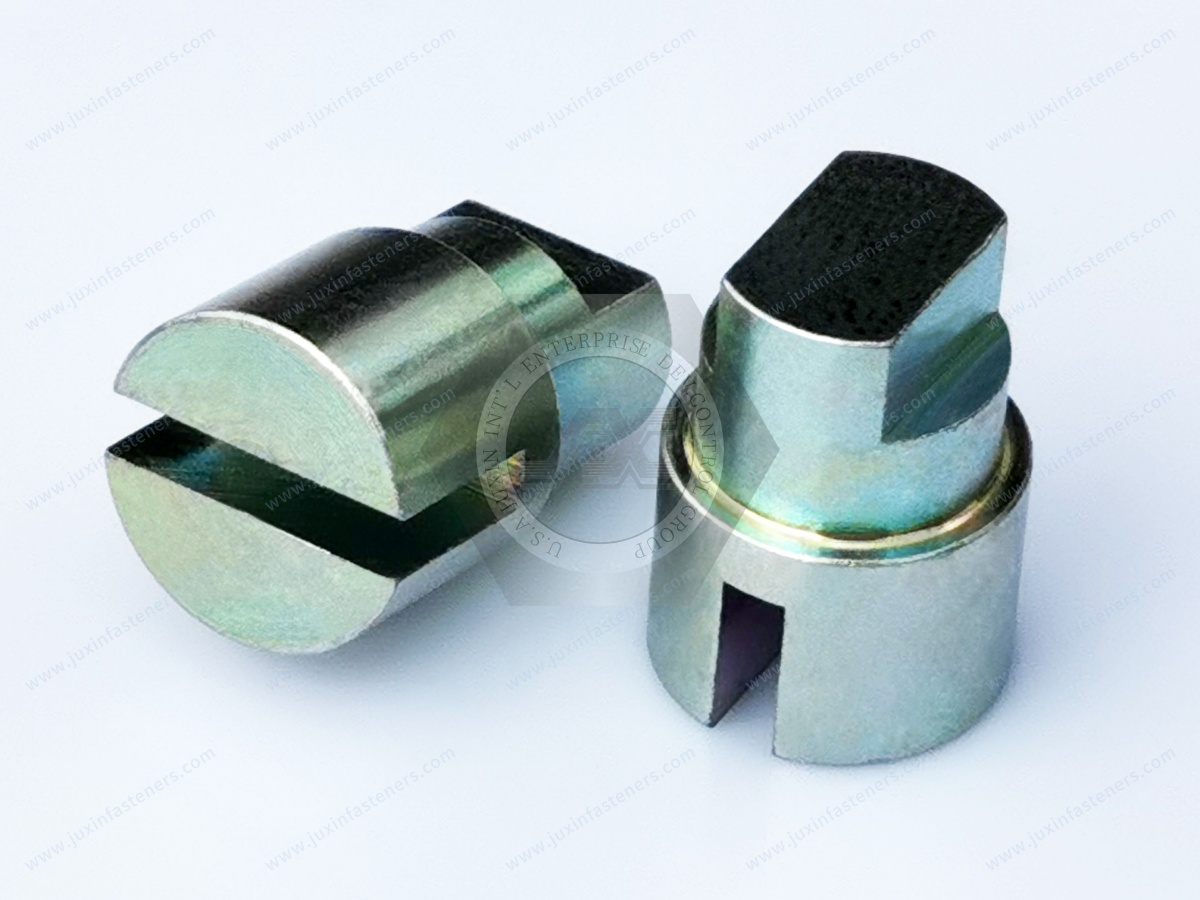
Hot Products
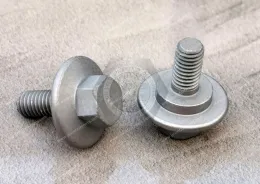
Custom Automotive Nuts and Washers: Design, Selection & OEM Sourcing
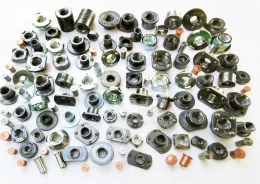
EV Fastening System Solutions: High-Strength Fasteners for Aluminum Lightweight Structures
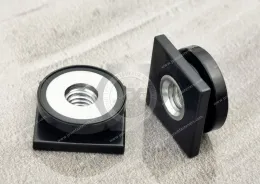
Automotive Fastener Sourcing & Specification Guide for OEM Buyers
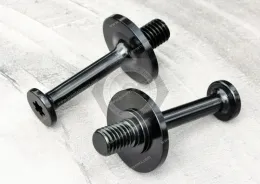
Automotive Seat Systems: Fastening Engineering, High-Strength Hardware & OEM Sourcing Guide
Contact Us
Tel.:
+86 020 8621 0320
+86 020 3121 6067
E-mail:
Technical Support:
Navigation
SEND INQUIREY