Call Us
+86 136 6007 9809
Call Us
+86 136 6007 9809

Automotive door systems are among the most frequently operated and serviced assemblies in a vehicle.
A typical door architecture can combine structural sheet metal, inner door modules, window mechanisms, electronic components, wiring, trim panels, brackets, seals, and service-access components within a relatively compact package.
Product Specification
Automotive door systems are among the most frequently operated and serviced assemblies in a vehicle.
A typical door architecture can combine structural sheet metal, inner door modules, window mechanisms, electronic components,
wiring, trim panels, brackets, seals, and service-access components within a relatively compact package.
Fasteners used in these areas therefore perform different functions.
A door card may use plastic retainers or screw-type retainers, while an electronic module, bracket, or mechanical component may require a customer-specific metal screw,
bolt, nut, rivet nut, weld nut, pin, or another application-specific fastening component.
For engineers, the correct selection is not simply a matter of finding an “automotive door clip.”
The more useful starting point is the relationship between the mating components, mounting interface, retention or clamping function,
fastener geometry, material, installation method, and environmental conditions.
For procurement and supply chain teams, the next challenge is converting those engineering requirements into a controlled component specification that can be sourced consistently throughout the vehicle program.
JUXIN FASTENERS manufactures customer-specific and non-standard automotive fastening components according to customer specifications, approved drawings,
material requirements, surface-finish requirements, and application conditions.
Automotive doors combine repeated operation with tight packaging, multiple material combinations, and different functional zones.
Fastening requirements can therefore vary considerably between the structural door module, interior trim, electronic components, and exterior interfaces.
Design and structural engineers should evaluate the fastening requirement according to the specific joint rather than treating the complete door assembly as one fastening environment.
Door closing introduces transient mechanical loading into the door assembly.
The actual loading experienced by an individual fastener depends on the joint structure, component mass, mounting position, joint stiffness, fastener geometry, and assembly conditions.
Fastener selection should therefore consider more than nominal thread size or head style.
Relevant engineering factors may include:
Joint geometry
Fastener position
Clamping or retention function
Mating material
Panel thickness
Thread engagement
Mounting-hole geometry
Fastener stiffness and geometry
Installation method
Repeated service conditions
A component suitable for an interior trim panel may not be appropriate for a bracket or mechanical module simply because both components are located inside the same vehicle door.
The appropriate fastener architecture depends on the specific joint and its functional requirements.
Door trim panels and other interior components can be sensitive to relative movement between mating parts.
Fastener selection can therefore form part of the broader joint design used to manage panel fit, movement, and unwanted noise.
For example, an automotive door card clip may need to provide a defined retention interface while also allowing practical installation and, where required, service removal.
NVH-related behavior should not be treated as an inherent guarantee of a particular clip. It can be influenced by the complete assembly, including:
Panel geometry
Fastener retention
Mating materials
Contact interfaces
Local stiffness
Assembly conditions
Dimensional variation
Adjacent components
This distinction is important when engineers evaluate automotive door trim retainers and clips.
For a broader review of automotive plastic fastener types and applications, see Automotive Plastic Fasteners: Types, Applications & OEM Sourcing Guide.
Some areas within a vehicle door can experience moisture, condensation, water run-off, or road spray depending on the door architecture, sealing arrangement, and drainage design.
Fasteners located in different zones may therefore require different material and surface-finish considerations.
A polymer retainer and a metal fastening component do not necessarily require the same environmental strategy.
Engineers may need to evaluate:
Moisture exposure
Temperature changes
Chemical contact
Corrosion requirements
Dissimilar-material interaction
Surface treatment
Dimensional behavior
Service conditions
Environmental requirements should be defined according to the actual component location and application rather than applied as a generic specification to every door fastener.
There is no single fastener type suitable for every automotive door assembly.
Depending on the design, door systems can use:
Plastic retainers
Door trim clips
Screw-type retainers
Door card clips
Custom screws
Custom bolts
Nuts
Rivet nuts
Weld nuts
Pins
Spacers
Other customer-specific fastening components
The important engineering question is what the fastener must accomplish within the joint.
Automotive screw-type retainers provide a screw-receiving interface for mounting components to panels, brackets, or other vehicle structures.
Depending on the design, a screw-type retainer may incorporate:
An internal thread
A thread-forming interface
A screw-receiving sleeve
A flange
A snap-in feature
An expandable body
An anti-rotation feature
A pre-positioning or captive feature
Not every screw-type retainer uses the same retention mechanism.
The engineering question is therefore not simply whether a retainer accepts a screw, but how the retainer interfaces with the mounting panel and how the screw interacts with the retainer.
For a detailed discussion of this component category, see Automotive Screw-Type Retainers: Engineering, Thread Integration & OEM Sourcing Guide.

Door trim retainers are commonly used to secure interior trim panels to the underlying door structure.
Depending on the application, a door card clip may use:
Push-in retention
Snap-fit engagement
Ribbed or barbed retention
Flange engagement
Hook-type geometry
Panel-hole engagement
Application-specific retention features
The actual geometry must correspond to the mounting hole, panel thickness, mating trim component, and required installation direction.
A visually similar clip is not necessarily interchangeable with the original customer-specific component.
This is particularly important for OEM programs where the mounting interface is defined by vehicle-specific panel geometry.
For additional information about automotive trim clips and moulding retainers, see Automotive Trim & Moulding Clips: Engineering, Retention & OEM Sourcing Guide.
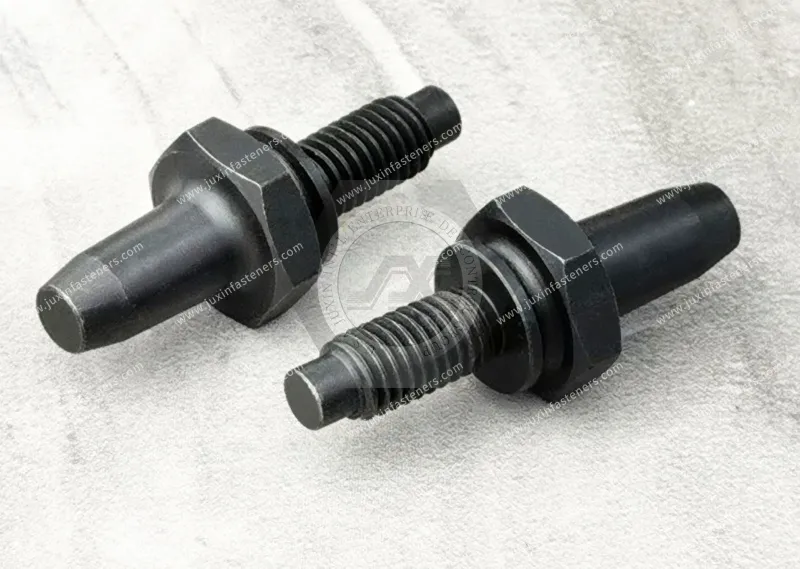
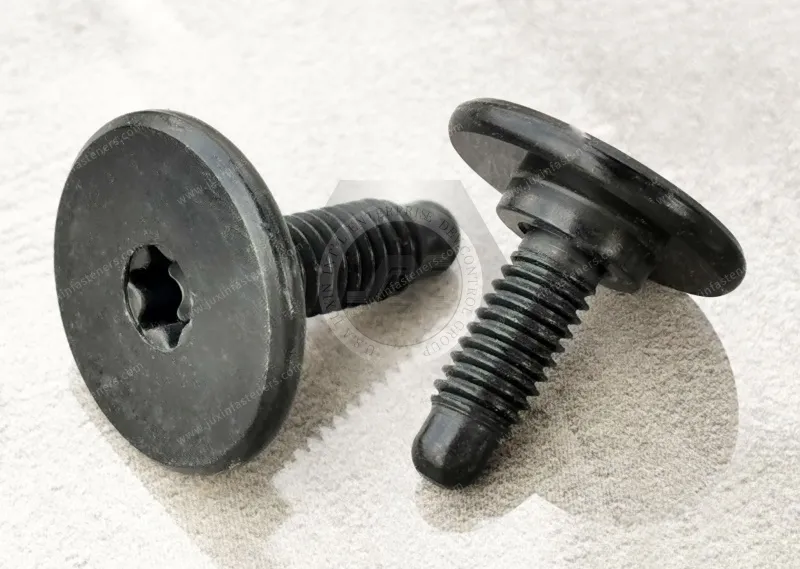
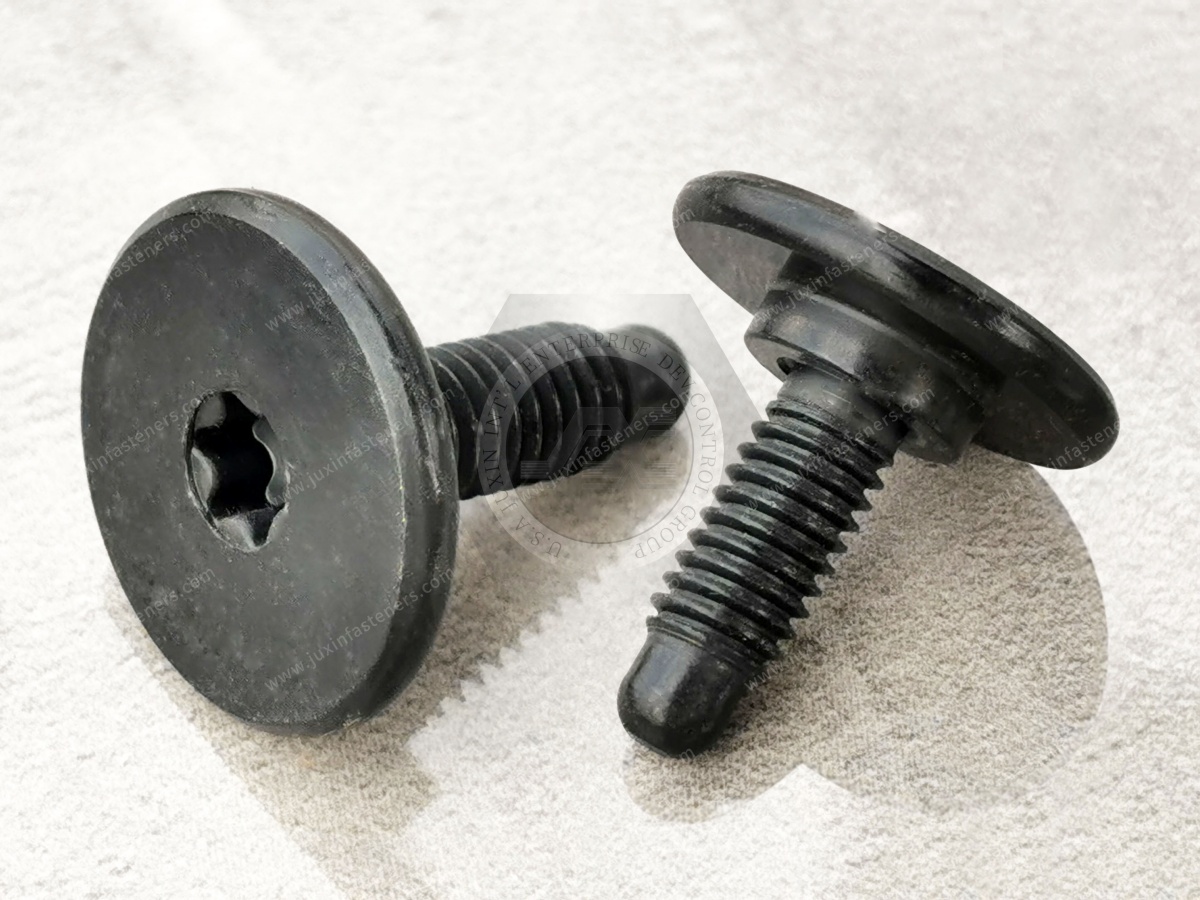
Metal fasteners may be required where a door assembly includes brackets, mechanisms, electronic modules, structural interfaces, or other components requiring a threaded mechanical joint.
Depending on the application, customer-specific screws, bolts, nuts, rivet nuts, weld nuts, or other fastening components may be appropriate.
The required specification can include:
Thread size and pitch
Overall length
Head geometry
Under-head geometry
Material
Property class where applicable
Surface finish
Thread engagement
Installation method
Assembly torque requirements
Mating component
Environmental exposure
The correct component is determined by the joint requirement rather than by the generic category “door screw.”
One of the most useful ways to approach automotive door fastening is to reverse the normal sourcing question.
Instead of asking:
“Which door clip should we use?”
the engineering team can define:
Mating Components → Mounting Interface → Retention Function → Fastener Geometry → Material → Installation → Environment
This creates a more useful bridge between engineering design and procurement.
Determine whether the joint connects:
Plastic trim to metal
Plastic to plastic
Metal bracket to sheet metal
Electronic module to a mounting bracket
Trim panel to an inner door panel
A service-access component to a door structure
Different material combinations can require different fastening approaches.
Important interface information may include:
Hole diameter
Slot geometry
Panel thickness
Bracket thickness
Grip range
Thread specification
Available installation direction
Clearance around the fastener
For plastic clips, the mounting-hole and panel relationship is particularly important.
For screw retainers, the relationship between the retainer, mounting panel, screw, and mating component should be evaluated as a complete joint.
The component may be required primarily for:
Positioning
Retention
Clamping
Spacing
Alignment
Threaded attachment
Serviceable attachment
Bracket mounting
Module mounting
A fastener that is suitable for positioning a trim panel is not automatically suitable for a joint requiring a threaded mechanical interface.
Common polymer families used in automotive fastening applications can include Nylon/PA, POM/Acetal, and PP, depending on the design and application.
Material selection may depend on:
Mechanical behavior
Temperature exposure
Moisture exposure
Chemical environment
Dimensional stability
Mating material
Installation requirements
Required service conditions
For metal components, the material and applicable property class should be specified according to the actual engineering requirement.
For a broader material-selection framework, see How to Select Automotive Plastic Fasteners for Body, Trim and Interior Applications.
Installation method can influence fastener geometry and joint behavior.
Possible installation approaches include:
Push-in installation
Snap-fit installation
Screw installation
Thread-forming installation
Press-in installation
Application-specific assembly methods
The installation direction and available assembly space should be considered before finalizing the component design.
Automotive door modules often contain components that may require service or replacement.
For these locations, the fastener may need to balance retention during normal operation with practical removal during service.
A component intended for repeated service should therefore be evaluated differently from a component intended primarily for permanent assembly.
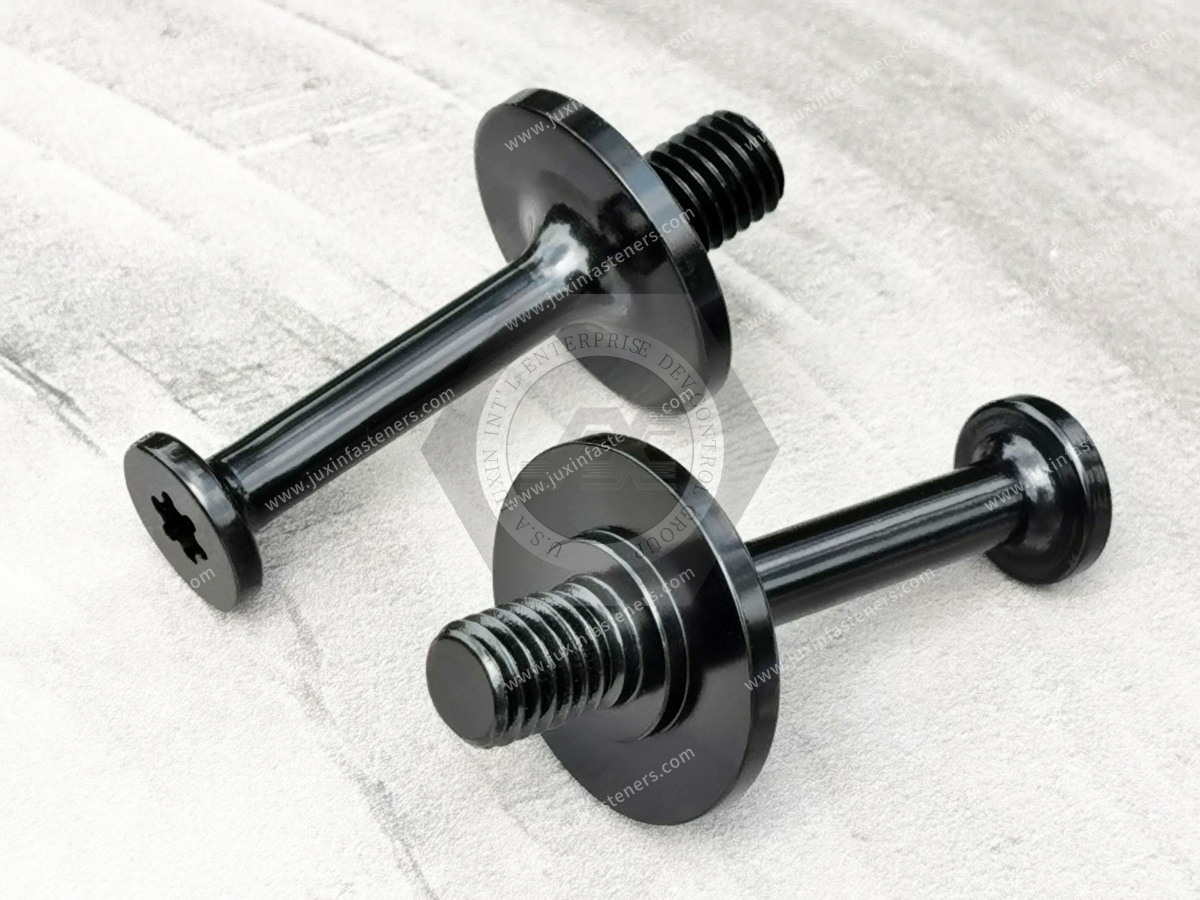
Screw-type retainers can be useful where a threaded connection is required but the surrounding door structure does not provide a conventional threaded hole.
A typical assembly concept can be represented as:
Install Retainer → Position Mating Component → Engage Screw → Tighten
The actual mechanism varies according to the retainer design.
For metal-to-polymer thread interfaces, engineers should distinguish between:
Pre-formed internal threads
Thread-forming interfaces
Threaded inserts
Application-specific screw-receiving features
Thread engagement, screw geometry, polymer selection, installation speed, lubrication or surface condition, temperature,
and repeated assembly cycles can all influence the behavior of a threaded polymer interface.
For this reason, the screw and retainer should be evaluated as a mating system rather than as two independent catalog components.
Door trim panels can use a range of plastic fastening architectures.
A suitable automotive plastic retainer may need to accommodate:
Mounting-hole geometry
Panel thickness
Grip range
Head or flange geometry
Retention structure
Installation direction
Removal requirements
Polymer characteristics
For example, a push-type retainer may use an expandable or engaging structure, while another trim clip may rely on a snap-fit or hook-type interface.
The selection should be based on the actual mating geometry.
JUXIN FASTENERS supplies customer-specific automotive plastic fasteners and retainers according to customer-defined specifications rather than treating visually similar components as automatically interchangeable.
Door modules can combine structural brackets, mechanical mechanisms, electronic components, wiring interfaces, trim elements, and access features.
This creates different fastening requirements within the same door.
For example:
A trim panel may use plastic retainers.
An access panel may use screw-type retainers.
A bracket may require a customer-specific metal screw or bolt.
A mounting location without an existing thread may use a rivet nut or another threaded fastening solution.
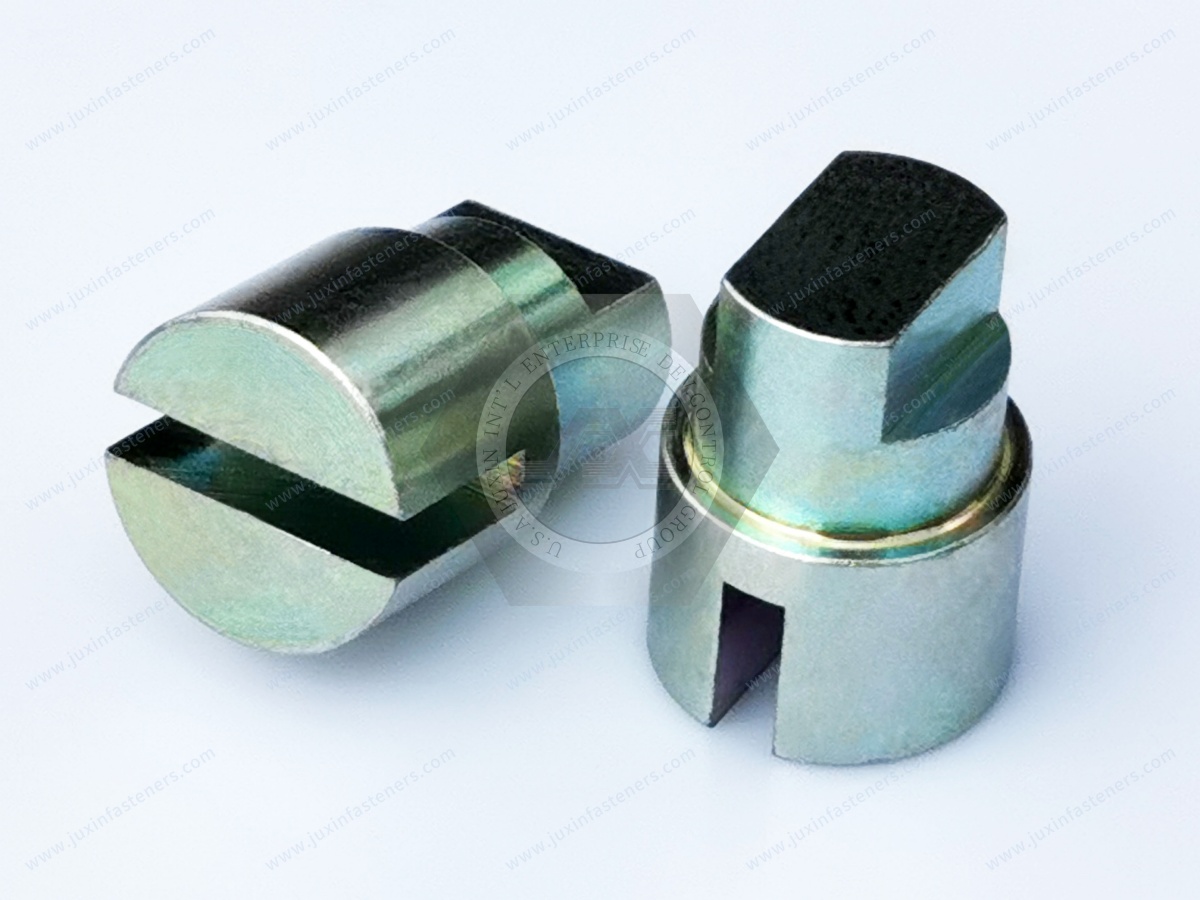
A specialized mechanism may require a customer-specific pin or shaft.
The correct solution should therefore be selected according to the function and interface of each individual mounting location.
This application-specific approach is particularly important for OEM programs where the same vehicle door may contain multiple fastening architectures.
One important sourcing consideration is the mating-material combination.
A plastic trim panel attached to a metal door structure may use a plastic retainer, screw-type retainer, or metal fastening component depending on the joint.
The engineer should evaluate the interaction between the polymer component, metal substrate, mounting hole, and fastener geometry.
Plastic-to-plastic assemblies can require different considerations because both mating components may have different stiffness, dimensional behavior, and installation characteristics.
A fastener designed for a metal panel should not automatically be transferred to a polymer mounting interface without engineering evaluation.
This is one reason customer-specific fastener development can be more appropriate than selecting a visually similar standard part.
Material selection for automotive door fasteners should follow the actual operating environment and joint design.
Nylon can be considered for automotive plastic retainers, clips, and other polymer fastening components where its material characteristics are compatible with the application.
Moisture absorption, dimensional behavior, temperature exposure, chemical environment, and mechanical requirements should be evaluated for the specified grade and application.
POM may be considered for application-specific components where dimensional behavior, friction characteristics, or mechanical properties make it appropriate.
The suitability of a particular grade depends on the customer's application requirements.
PP can be considered for selected automotive plastic fastening applications where its material characteristics align with the required function and environment.
Metal fastener material selection may involve carbon steel, stainless steel, aluminum alloys, or other customer-specified materials depending on the application.
For metal components exposed to moisture or corrosion-sensitive environments, surface treatment can become an important part of the specification.
Zinc-Nickel Alloy coatings may be specified for certain automotive metal fasteners where the customer requires a particular corrosion-protection system.
However, coating performance should be evaluated according to the specified coating system, substrate, application environment, mating materials, and customer validation requirements.
It should not be treated as a universal solution for every automotive door fastener.
Depending on the customer specification and component material, surface-treatment requirements may include other coating or finishing systems.
The final specification should be based on:
Base Material + Mating Material + Environment + Thread Geometry + Assembly Method + Surface-Finish Requirement
This combination is more meaningful than selecting a coating based only on the vehicle application name.
Automotive door systems contain multiple subassemblies that may require different fastening solutions.
Door modules can include mechanical and electronic components mounted to the inner door structure.
Fastener selection may depend on:
Bracket geometry
Mounting-hole configuration
Component mass
Available assembly space
Thread requirement
Installation direction
Serviceability
Door cards and interior trim commonly require plastic retainers, clips, screw-type retainers, and other application-specific fastening components.
Here the emphasis may be on:
Panel fit
Retention
Mounting-hole compatibility
Installation consistency
Service access
Component positioning
Modern door assemblies can contain switches, sensors, speakers, control modules, wiring components, and other electronics.
The fastener should therefore be evaluated in relation to the mounting interface of the electronic component rather than selected solely by nominal thread size or head style.
Automotive door systems can contain both relatively protected interior areas and locations exposed to moisture or changing environmental conditions.
Engineers should therefore identify the actual exposure zone before specifying the material or finish.
Relevant considerations may include:
Moisture exposure
Condensation
Road spray
Temperature changes
Contact with other materials
Chemical exposure
Corrosion requirements
Interior or exterior location
Service conditions
The appropriate solution may be different for a plastic door card clip, a metal bracket fastener, and a fastener located in a moisture-exposed door cavity.
This is why environmental requirements should be connected directly to the component specification rather than treated as a general property of all automotive door fasteners.
Automotive door systems are one part of a much broader fastening ecosystem.
JUXIN FASTENERS also works with customer-specific fastening requirements across different vehicle systems.
Application-specific components can include stainless steel solid rivets, stainless steel shoulder rivets, stainless steel step rivets, and other customer-specific linkage fastening components.
For more information, see Automotive Wiper Systems: Fastening Engineering, Stainless Steel Rivets & OEM Sourcing.
Applications can include rivet nuts, customer-specific aluminum alloy fasteners, and other application-specific metal fastening components.
Depending on the environment, engineering considerations can include moisture, road exposure, salt, temperature cycling, mating materials, thread dimensions, friction, torque, and surface treatment.
See Automotive Chassis & Undercarriage Fastening: Rivet Nuts, Alloy Fasteners & OEM Sourcing Guide for the broader chassis application.
Application-specific components can include:
Shift shafts
Shift pins
Rolling shafts
Fixed pivot shafts
Swing or pivot shafts
Shift sliding columns
Rocker pivot shafts
Ball pins
These components are selected according to the mechanism and mating geometry rather than treated as generic threaded fasteners.
Sunroof and panoramic roof mechanisms can use customer-specific shafts, pins, pivot components, guide components, and other mechanical fastening components.
For more information about this application, see Automotive Sunroof Systems: Fastening Engineering, Precision Shafts & OEM Sourcing Guide.
Depending on the design, applications may include weld nuts, rivet nuts, flange weld nuts, and metal self-locking nuts.
The required specification must be established by the vehicle or component design and applicable validation requirements.
Rear spoiler assemblies provide a useful example of plastic and metal fastening working together.
A Nylon Rear Spoiler Clip may provide locating, retaining, positioning, spacing, or fastening-interface functions depending on the design.
A metal Automotive Spoiler Slide Bolt can use a special head geometry that engages a mounting slot, track, or channel.
Confirmed JUXIN FASTENERS configurations include M5 and M6 applications, with representative M6 × 14 and M6 × 20 configurations.
Applicable configurations can include property classes 8.8 and 10.9 and surface finishes such as Color Zinc, Zinc-Nickel Alloy, and Black Zinc.
Certain configurations may also use a pre-applied thread-locking patch where specified.
The assembly concept can be described as:
Slide → Position → Engage → Tighten
Whether the head geometry provides an anti-rotation effect depends on the mating slot and component design.
For the complete application relationship, see Automotive Rear Spoiler Fastening Components: Spoiler Bolts and Rear Spoiler Clips.
For the plastic component, see Rear Spoiler Clips: Automotive Applications, Functions & Sourcing Considerations.
For the metal component, see Automotive Spoiler Slide Bolts: Engineering, Mounting Design & OEM Sourcing Guide.
This example illustrates why automotive fastening should be considered as a system of mating components rather than as isolated hardware.
For an automotive door system, the following sequence can help engineers define the component:
Identify the mating components
Define the mounting interface
Measure or specify the mounting hole or slot
Define panel and bracket thickness
Determine grip range where applicable
Define the retention or clamping function
Specify the thread interface where applicable
Select the material
Define surface treatment where required
Define installation direction and assembly method
Consider environmental exposure
Consider serviceability
Define inspection and dimensional requirements
Prepare the customer drawing or CAD package
This sequence helps connect engineering requirements to an actual production component.
For broader plastic fastener selection criteria across automotive body, trim, and interior applications, see How to Select Automotive Plastic Fasteners for Body, Trim and Interior Applications.
Engineering teams generally need to establish whether the fastener is compatible with the actual joint.
Relevant information may include:
CAD geometry
Mounting-hole dimensions
Panel thickness
Mating component geometry
Thread specification
Material
Retention mechanism
Installation direction
Assembly requirements
Environmental conditions
Applicable validation requirements
The objective is to ensure that the selected component fits the intended joint architecture.
Procurement teams must then translate the engineering requirement into a sourcing specification.
Important considerations can include:
Approved drawing revision
Material specification
Surface finish
Dimensional requirements
Packaging
Production quantity
Sample approval
Documentation requirements
Change-control expectations
Supplier communication
Long-term production consistency
The supplier selection process should therefore consider both technical fit and the ability to maintain the approved component specification throughout production.
A practical sourcing workflow can follow this sequence:
Application Definition → Drawing / CAD Review → Fastener Function → Material Selection → Surface Treatment → Sample Evaluation → Specification Confirmation → Production → Quality and Change Control
For an RFQ involving automotive door system fasteners, useful information includes:
Engineering drawing
3D CAD model where available
Fastener type or existing reference
Mounting-hole dimensions
Slot geometry where applicable
Panel thickness
Grip range
Thread specification
Material
Required property class where applicable
Surface finish
Assembly method
Installation torque requirements where applicable
Annual or project quantity
Packaging requirements
Required documentation
Application environment
If the existing component is available, photographs and physical samples can also help clarify geometry, especially when the original drawing is incomplete.
Two door clips may look similar but have different mounting-hole requirements, grip ranges, retention mechanisms, or panel interfaces.
A specification such as “M6 screw” does not define head geometry, length, material, property class, finish, or application interface.
The fastener should be evaluated together with the panel, bracket, trim component, and installation method.
Plastic and metal fasteners have different material characteristics and should be selected according to the actual joint requirement.
Where the mounting geometry is vehicle-specific, a standard catalog component may not provide the required fit or function.
A change in polymer, metal substrate, or surface treatment can affect dimensional behavior, mating conditions, corrosion behavior, or assembly characteristics.
For production automotive programs, material and finish changes should therefore follow the customer's specification and applicable change-control process.
JUXIN FASTENERS is an OEM-oriented supplier of customer-specific and non-standard automotive fastening components.
For door system applications, the product scope can include:
Automotive screw-type retainers
Door trim retainers
Door card clips
Plastic automotive fasteners
Nylon retainers
Customer-specific screws
Customer-specific bolts
Nuts
Rivet nuts
Weld nuts
Pins
Other application-specific fastening components
JUXIN FASTENERS manufactures components according to customer specifications, approved drawings, material requirements, surface-finish requirements, and application conditions.
The actual component design is established according to the customer's mating geometry and assembly requirements.
This approach is particularly relevant when a door system requires a non-standard component rather than a generic catalog fastener.
JUXIN FASTENERS' automotive fastening scope also extends beyond plastic clips. Depending on the application, customer-specific metal fastening components,
high-strength fasteners, rivet nuts, weld nuts, pins, shafts, and other application-specific components may form part of the same vehicle fastening program.
The key sourcing principle is:
Application → Engineering Requirement → Customer-Specific Component → Specification → OEM Sourcing
For faster technical evaluation, OEM buyers and sourcing teams should provide as much of the following information as available.
Door module, door card, trim, electronic module, bracket, access panel, or other application.
Customer-approved drawing or 3D CAD model.
Hole diameter, slot geometry, panel thickness, grip range, or threaded interface.
Required polymer or metal material and applicable grade where specified.
Retention, positioning, spacing, clamping, threaded attachment, or other defined function.
Required finish or coating system where applicable.
Push-in, snap-fit, screw installation, press-in, or other assembly method.
Prototype, trial, annual demand, or production quantity.
Bulk, tray, bag, kit, or customer-specific packaging requirements.
Required inspection, material, dimensional, or other production documentation.
Providing these details allows the supplier to evaluate the component as an engineering part rather than simply quoting a visually similar fastener.
Automotive door systems can use screw-type retainers, door trim retainers, door card clips, plastic fasteners, customer-specific screws,
bolts, nuts, rivet nuts, weld nuts, pins, and other application-specific fastening components.
The appropriate type depends on the mounting interface, joint function, material combination, and assembly requirements.
Screw-type retainers can provide a screw-receiving interface where a threaded attachment is required within a panel or mounting structure.
The actual design may use a pre-formed thread, thread-forming interface, snap-in feature, expandable structure, flange, or other application-specific geometry.
Engineers should consider the mounting-hole geometry, panel thickness, grip range, retention mechanism, mating trim component, installation direction, material, and service requirements.
A visually similar clip should not be assumed to be interchangeable without checking the mating interface.
Metal fasteners can be specified by thread size, pitch, length, head geometry, material, applicable property class, surface finish, installation method, and application requirements.
For customer-specific components, the engineering drawing and mating geometry remain important parts of the specification.
A customer-specific component may be appropriate when the mounting interface, retention geometry, head configuration, material, dimensions, or assembly method does not correspond to a suitable standard component.
Yes. JUXIN FASTENERS manufactures customer-specific and non-standard automotive fastening components according to customer specifications,
approved drawings, material requirements, surface-finish requirements, and application conditions.
The product scope can include automotive screw retainers, trim clips, plastic fasteners, custom screws, bolts, nuts, rivet nuts, weld nuts, pins, and other application-specific components.
If your automotive door project requires a custom door screw, door card clip, screw-type retainer, trim retainer, metal fastening component,
or other non-standard automotive fastener, JUXIN FASTENERS can evaluate the requirement based on the customer drawing, CAD data, material specification, mounting interface, and application conditions.
For an RFQ or technical evaluation, please provide the available drawing or CAD file together with the required material, mounting dimensions, finish, quantity, and assembly requirements.
JUXIN FASTENERS
Email: info@juxinfasteners.com
Website: www.juxinfasteners.com
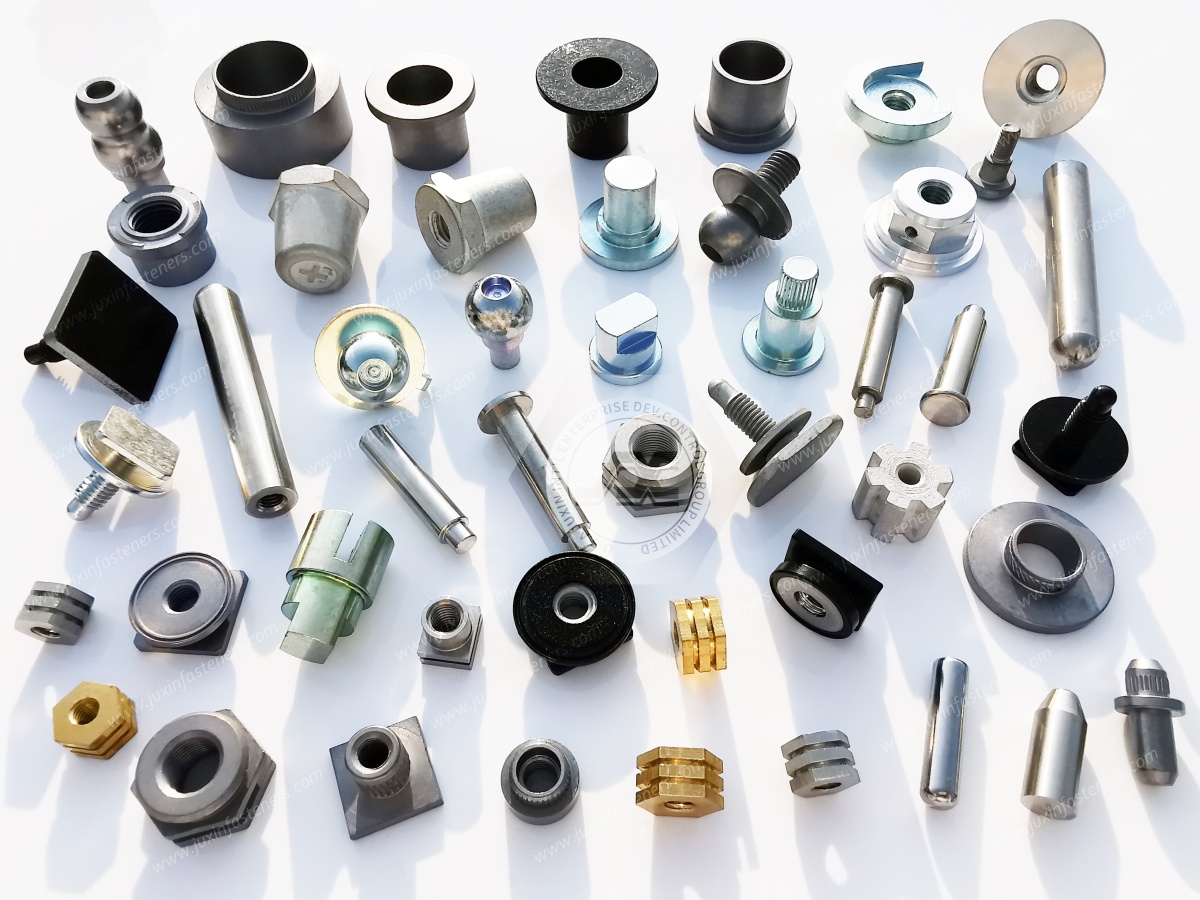
Product Packaging
Packaging Standard
At Juxin Fasteners, we apply standardized export packaging to ensure product protection, traceability, and compliance with international logistics requirements.
1. Standard Export Packaging
Unless otherwise specified, all products will be packed according to our factory standard export packaging, which includes:
Moisture-resistant inner protection
Poly bag or small box packing as required
Reinforced export cartons
Clear labeling with part number, specification, batch number, and quantity
Palletizing for sea or air shipment when necessary
Our standard packaging is designed to ensure safe transportation, efficient warehousing, and long-distance international shipping.
2. Customized Packaging Options
We also provide customized packaging solutions according to customer requirements, including but not limited to:
Private labeling
Customized barcodes
Specific carton dimensions
Retail packaging
Special pallet configuration
Customer-specific marking and identification
So that you know, customized packaging may involve additional costs and extended lead time depending on the complexity of the requirements.
3. Compliance & Quality Assurance
All packaging processes are controlled under our ISO 9001 quality management system to ensure consistency, traceability, and product integrity throughout the supply chain.
Product Pictures
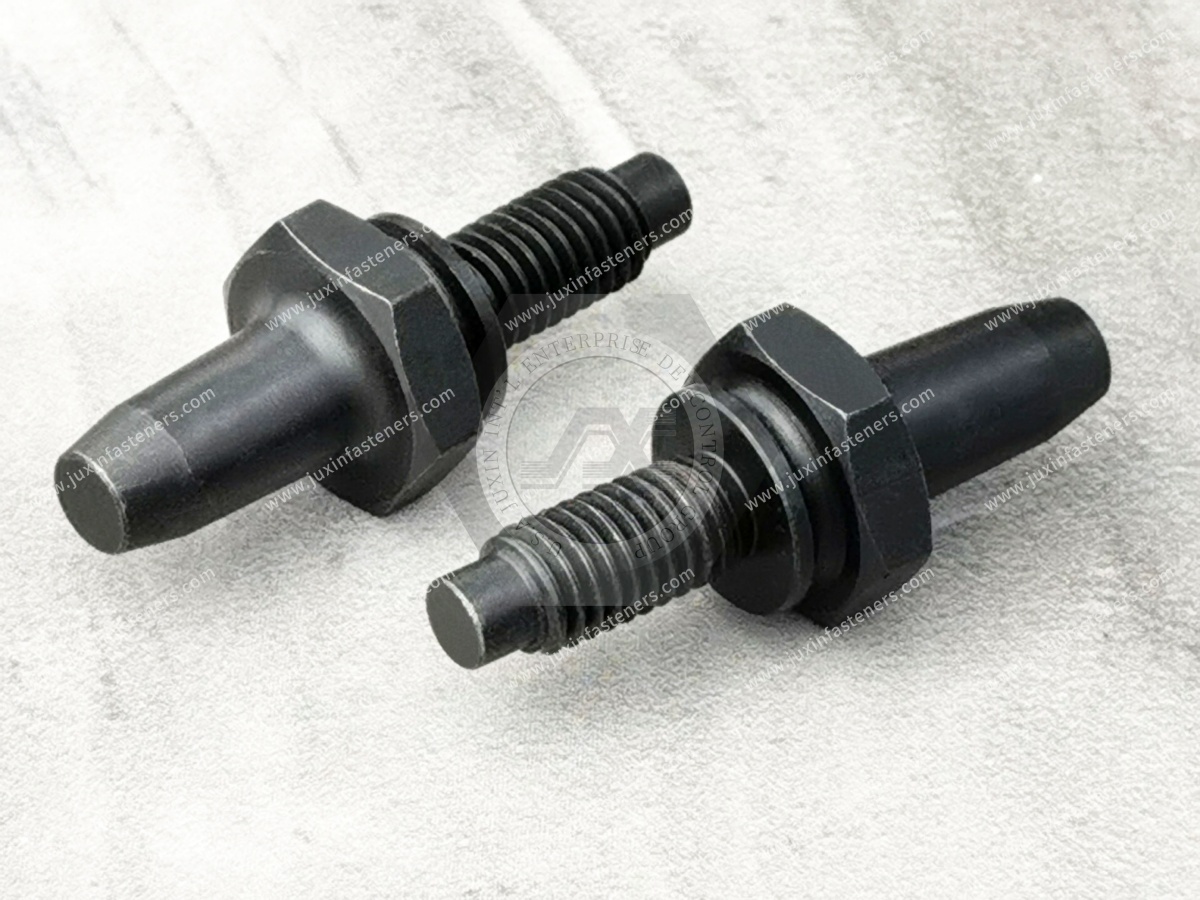
Hot Products
Automotive Screw-Type Retainers: Engineering, Thread Integration & OEM Sourcing Guide
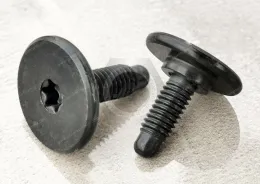
Push-Type Retainers for Automotive Applications: Engineering & Sourcing Guide
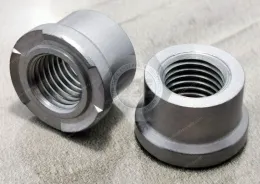
Automotive Spoiler Slide Bolts: Engineering, Mounting Design & OEM Sourcing Guide
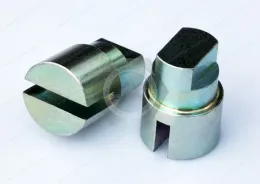
Automotive Sunroof Systems: Fastening Engineering, Precision Shafts & OEM Sourcing Guide
Contact Us
Tel.:
+86 020 8621 0320
+86 020 3121 6067
E-mail:
Technical Support:
Navigation
SEND INQUIREY