Call Us
+86 136 6007 9809
Call Us
+86 136 6007 9809

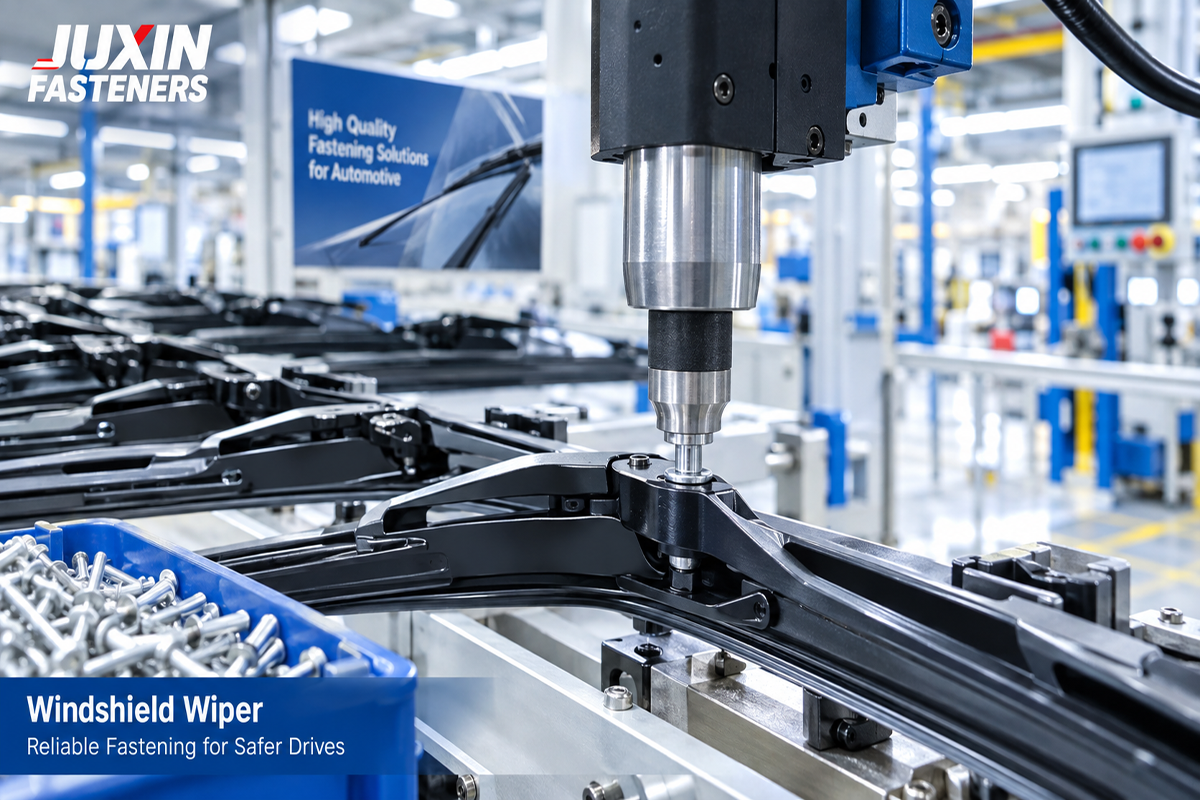
Automotive wiper systems convert motor-driven rotation into controlled sweeping movement through a combination of linkage arms,
drive components, pivot interfaces, and fastening components.
Within these mechanisms, the fastener is not simply a standard hardware item. Its geometry, material, dimensional relationship with mating components,
and assembly method can form an important part of the overall joint design.
Product Specification
Automotive wiper systems convert motor-driven rotation into controlled sweeping movement through a combination of linkage arms, drive components, pivot interfaces, and fastening components. Within these mechanisms, the fastener is not simply a standard hardware item. Its geometry, material, dimensional relationship with mating components, and assembly method can form an important part of the overall joint design.
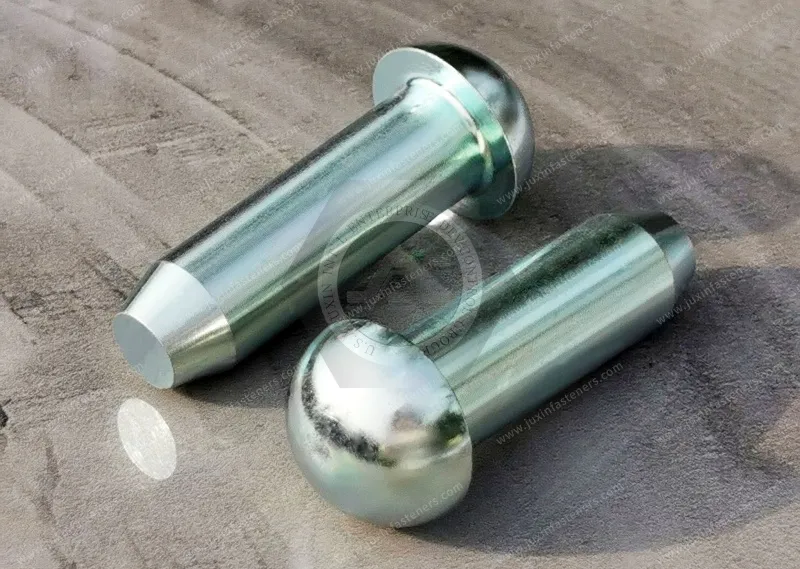
For this reason, automotive wiper system fasteners are often application-specific components rather than generic screws or bolts. Depending on the mechanism, stainless steel solid rivets, shoulder rivets, step rivets, and other customer-specific fastening components may be specified for linkage and pivot connections.
JUXIN FASTENERS manufactures customer-specific and non-standard automotive fastening components according to customer drawings, approved specifications, material requirements, and application conditions.
Automotive wiper mechanisms can use specialized rivets and other fastening components at linkage connections and pivot interfaces.
Stainless steel solid rivets and stainless steel shoulder or step rivets are particularly relevant where the joint requires a defined mechanical interface between a fastener and a moving linkage component.
The appropriate component depends on the actual joint design.
Key engineering variables include:
Mating component geometry
Rivet shank and shoulder dimensions
Mounting-hole geometry
Required joint retention
Rotational or pivoting movement
Material compatibility
Environmental exposure
Assembly method
Dimensional consistency
Customer-defined production and quality requirements
The important sourcing principle is therefore:
Wiper System → Joint Function → Mating Geometry → Fastener Geometry → Material → Assembly Method
This sequence is more useful than selecting a rivet from a generic size list.
A wiper mechanism is a kinematic system. The wiper motor provides rotational input, while linkage components transfer and convert that movement into the required motion of the wiper arms.
Fastening components within these joints should therefore be evaluated according to the function of the individual connection.
Wiper linkages operate through repeated directional movement. Fastener selection may therefore need to consider the relationship between the rivet,
linkage arm, mating hole, and joint geometry over the expected operating conditions.
For a pivoting connection, excessive clearance may affect the movement of the linkage, while insufficient clearance may interfere with the intended movement or assembly condition.
The correct dimensional relationship is application-specific and should be established from the customer's engineering requirements.
Wiper mechanisms are commonly located around the vehicle cowl and may be exposed to moisture, condensation, road contaminants, and changing environmental conditions.
Material selection and surface condition can therefore become important considerations.
For stainless steel components, the specific alloy should be selected according to the customer's material specification and
the actual application environment rather than assuming that every stainless steel grade provides the same performance.
The interaction between the rivet and linkage component is an important part of the overall joint design.
Engineers may need to evaluate:
Hole diameter
Shank diameter
Shoulder diameter
Shoulder length
Overall rivet length
Axial positioning
Radial clearance
Mating component thickness
Rivet forming or setting requirements
These dimensions should be considered together rather than independently.
A change in one feature can affect the relationship between the rivet and the mating linkage component.
Stainless steel solid rivets can be used in customer-specific automotive linkage and connection applications where a mechanically formed permanent joint is required.
Unlike a threaded fastener, a solid rivet is installed and retained through a forming or setting process defined by the assembly design.
For wiper applications, relevant engineering considerations may include:
Rivet material specification
Shank diameter
Shank length
Head configuration
Mating-hole dimensions
Setting condition
Joint geometry
Required retention characteristics
Environmental exposure
Dimensional consistency
The rivet should be specified together with the mating components and assembly process.
JUXIN FASTENERS manufactures customer-specific stainless steel solid rivets according to approved drawings and material requirements.
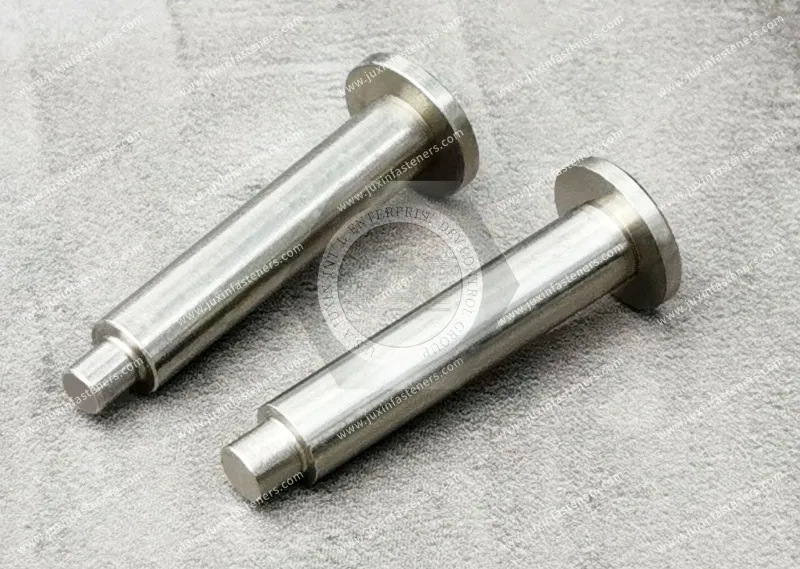
A shoulder rivet or step rivet incorporates a change in diameter along the body of the component.
Depending on the application, this geometry can establish a defined interface between the fastener and a mating linkage component.
This is particularly relevant when a joint combines fastening and positional requirements.
For example, a shoulder or stepped section may establish the relationship between:
Rivet → Linkage Arm → Pivot Interface → Mating Component
The exact function of the shoulder depends on the drawing and joint design.
Engineering evaluation may include:
Shoulder diameter
Shoulder length
Shank diameter
Transition geometry
Overall length
Head geometry
Mating-hole dimensions
Rotational clearance
Axial positioning
Material specification
Assembly method
JUXIN FASTENERS manufactures customer-specific stainless steel shoulder and step rivets according to customer specifications and approved engineering drawings.
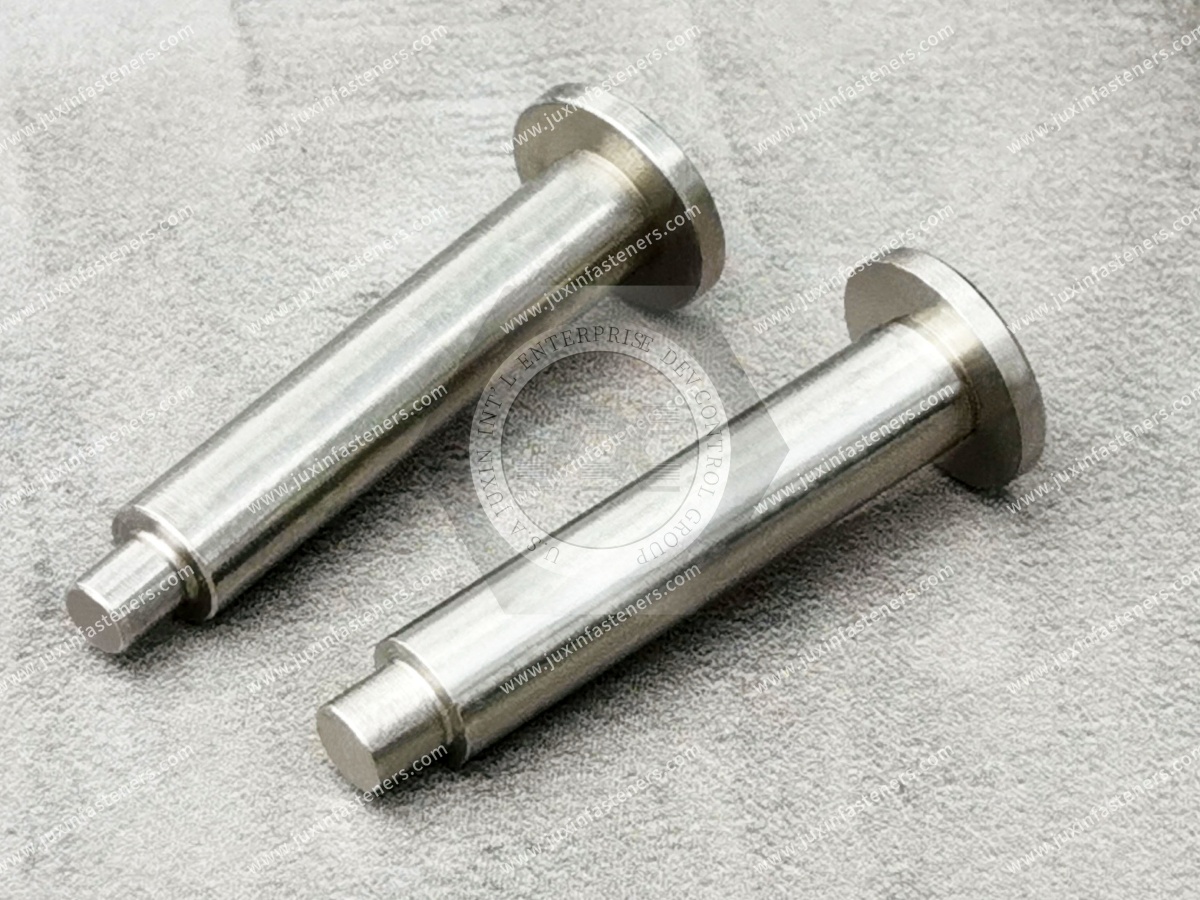
One of the most important sourcing considerations for non-standard wiper rivets is that nominal diameter alone does not define the component.
Two rivets with similar overall dimensions can behave differently if their shoulder geometry, shank length, head configuration, or mating interface differs.
For wiper linkage applications, engineers should consider the complete geometry:
Head → Shoulder / Step → Shank → Mating Hole → Linkage Component → Joint Assembly
This provides a more reliable specification framework than simply requesting a "stainless steel rivet."
When developing a custom wiper rivet, the most useful information for a supplier is often not just the rivet dimensions.
A stronger technical data package connects the fastener to its mating components.
For example:
Identify the linkage component.
Identify the mounting or pivot hole.
Define the required rivet interface.
Define the material specification.
Define the assembly or setting method.
Define the environmental requirements.
Define the required production quantity and quality documentation.
This joint-level approach can reduce ambiguity during RFQ evaluation and engineering review.
Stainless steel is a relevant material family for wiper-system fastening components where the application requires a specified combination of material characteristics and environmental resistance.
However, "stainless steel" is not a complete material specification.
The customer may define:
Stainless steel alloy or grade
Mechanical requirements
Surface condition
Corrosion-related requirements
Dimensional requirements
Assembly requirements
Applicable international standards
Where a material standard is required, the applicable ISO, EN, ASTM, SAE, or other customer-specified standard should be identified in the engineering documentation.
JUXIN FASTENERS does not treat one stainless steel grade as universally suitable for every wiper application. Material selection should be matched to the actual joint design and operating environment.
For custom rivets, the installation method should be considered during component development.
Depending on the customer's production system, assembly may involve a specified riveting, forming, pressing, or other mechanical joining process.
The assembly method can affect the required:
Shank length
Rivet geometry
Head configuration
Forming allowance
Mating-hole dimensions
Final joint condition
Production consistency
For this reason, an RFQ for a custom wiper rivet should ideally include the customer's intended assembly method or relevant production requirements.
The fastener and assembly process should be evaluated as one system.
The same component is evaluated differently by engineering and procurement teams.
Design and structural engineers are typically concerned with:
Mating geometry
Joint function
Pivot or linkage movement
Hole and shank relationship
Shoulder dimensions
Material compatibility
Environmental exposure
Assembly method
Dimensional tolerance requirements
Service and application conditions
Their primary question is:
Will this component correctly interface with the surrounding mechanism?
Sourcing managers and supply chain teams typically need to evaluate:
Standard vs. non-standard construction
Customer-specific drawing requirements
Material availability
Production consistency
Quantity requirements
Packaging
Documentation
Traceability where required
Sample approval
Change-control expectations
Long-term supply requirements
Their primary question is:
Can the supplier consistently provide the approved component at the required commercial and supply-chain conditions?
A successful OEM sourcing process needs to satisfy both perspectives.
Automotive wiper systems are one part of a broader vehicle fastening ecosystem.
JUXIN FASTENERS approaches automotive fastening from an application-specific component perspective.
The required product is determined by the vehicle system, mating components, mechanical function, material, geometry, assembly method, and customer specification.
The following application map illustrates how different automotive systems can require different types of customer-specific fastening components.
Application: Windshield wiper mechanisms and linkage assemblies
Relevant components:
Stainless steel solid rivets
Stainless steel shoulder rivets
Stainless steel step rivets
Customer-specific linkage fastening components
Typical engineering focus:
Pivot interface
Linkage geometry
Repeated movement
Mating-hole relationship
Material selection
Assembly method
Environmental exposure
This is the primary application covered in this article.
Application: Chassis, underbody, and related vehicle structures and assemblies
Relevant components may include:
Rivet nuts
Customer-specific aluminum alloy fasteners
Other application-specific metal fastening components
Engineering evaluation may include corrosion exposure, mud and water exposure, salt environment, temperature cycling, vibration, mating materials, thread dimensions, friction, torque requirements, and surface treatment.
Depending on the customer specification, surface-treatment families may include anodizing, hard anodizing, zinc-aluminum flake coatings such as GEOMET where specified, electroless nickel, or functional/lubricating coatings.
The correct combination should be established according to the material, mating components, assembly requirements, and operating environment.
Application: Gear-shifting and selector mechanisms
Relevant application-specific components may include:
Shift shafts
Shift pins
Rolling shafts
Fixed pivot shafts
Swing or pivot shafts
Shift sliding columns
Rocker pivot shafts
Ball pins
These components should be classified according to their mechanical function rather than being generically described as screws or retainers.
Engineering considerations can include rotational movement, sliding interfaces, dimensional relationships, surface condition, material compatibility, and assembly requirements.
Application: Sunroof mechanisms and moving assemblies
Relevant components may include:
Customer-specific shafts
Pins
Pivot components
Mechanical fastening components
For moving sunroof mechanisms, the relationship between the component geometry and mating assembly can be particularly important.
The required dimensions, material, surface condition, and assembly method should be defined according to the customer engineering package.
Application: Vehicle structural fastening interfaces and related assemblies
Relevant components may include:
Weld nuts
Rivet nuts
Flange weld nuts
Metal self-locking nuts
Other customer-specific fastening components
The appropriate component depends on the structural design, mating material, thread requirements, installation method, and customer-defined engineering specifications.
Safety-related applications require evaluation against the customer's applicable design, validation, and regulatory requirements. Fastener selection alone should not be presented as a crash-performance guarantee.
Application: Door modules, instrument panels, interior trim, access panels, and related assemblies
Relevant components may include:
Plastic retainers
Screw-type retainers
Customer-specific screws
Plastic fastening components
Other non-standard automotive fasteners
These applications may involve plastic-to-plastic or plastic-to-metal interfaces.
Engineers may need to consider mounting-hole geometry, panel thickness, thread engagement, retention mechanism, installation direction, material compatibility, and serviceability.
Application: Seat structures and related vehicle assemblies
Relevant components may include:
Metal fastening components
Pins
Retainers
Seat mounting components
Other application-specific hardware
Depending on the design, engineers may evaluate material, geometry, dimensional consistency, corrosion protection, assembly requirements, and customer-defined performance criteria.
Any safety or structural validation remains application- and customer-specific.
Application: Rear spoiler mounting and fastening systems
Relevant components include:
Nylon Rear Spoiler Clip
Automotive Spoiler Slide Bolt
Other customer-specific fastening components where required
The plastic and metal components can form part of the same fastening system.
The Automotive Spoiler Slide Bolt uses application-specific head geometry that can engage a mounting slot, track, or channel. Depending on the mating geometry, the engagement may also help resist rotation.
Confirmed JUXIN configurations include M5 and M6 applications, with examples such as M6 × 14 and M6 × 20.
Applicable configurations may include property classes 8.8 and 10.9, with finishes such as Color Zinc, Zinc-Nickel Alloy, and Black Zinc where specified.
Certain configurations may also use a pre-applied thread-locking patch where required by the customer specification.
The corresponding Nylon Rear Spoiler Clip may provide locating, retaining, positioning, spacing, or fastening-interface functions depending on the actual design.
This is an important example of the JUXIN approach:
Automotive Application → Plastic Component + Metal Fastener → Mating Geometry → Assembly Requirement → Customer-Specific Solution
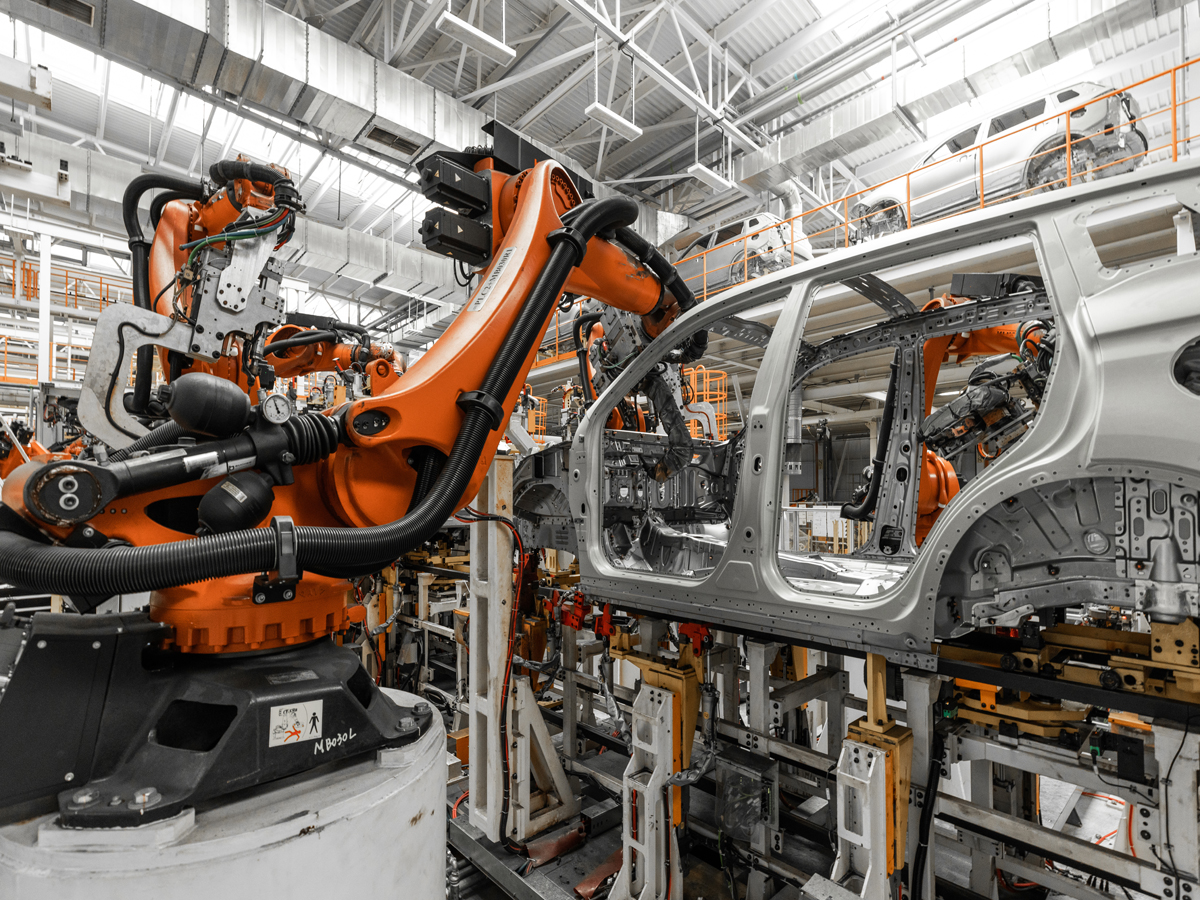
Many automotive fastening requirements cannot be fully defined by a standard catalog description.
A customer-specific wiper rivet may combine:
Special shank dimensions
Shoulder or stepped geometry
Customer-defined head geometry
Specific stainless steel material
Non-standard overall length
Application-specific dimensional requirements
Defined assembly conditions
These components should be treated as engineered parts rather than commodity hardware.
JUXIN FASTENERS focuses on customer-specific and non-standard fastening components for OEM and industrial applications.
The component geometry and material are established according to the customer's approved technical requirements.
The same application-first method used for wiper rivets can be applied across different automotive components.
A practical engineering sequence is:
1. Identify the Vehicle Application
Wiper, chassis, shift, sunroof, rollover protection, door, seat, rear spoiler, interior trim, or another vehicle system.
2. Identify the Joint or Mechanical Function
Pivoting, retaining, positioning, joining, spacing, threaded attachment, panel retention, or another customer-defined function.
3. Identify the Mating Components
Sheet metal, linkage arm, polymer component, bracket, shaft, panel, housing, or structural component.
4. Define the Fastener Geometry
Diameter, length, shoulder, head, thread, slot engagement, retention features, or other application-specific geometry.
5. Define Material and Surface Treatment
Material selection should follow the customer's mechanical, environmental, corrosion, dimensional, and assembly requirements.
6. Define the Assembly Method
Riveting, forming, pressing, threading, clipping, insertion, or another specified installation method.
7. Define the Supply Requirement
Prototype quantity, production volume, packaging, documentation, inspection requirements, sample approval, and change-control requirements where applicable.
This framework helps engineers and procurement teams evaluate the complete fastening requirement instead of selecting hardware based only on a product name.
A well-prepared RFQ can improve the supplier's ability to evaluate a custom automotive rivet.
Where available, provide:
2D engineering drawing
3D CAD model
Rivet material specification
Stainless steel grade or applicable material standard
Overall length
Shank diameter
Shoulder diameter
Shoulder length
Head geometry
Mating-hole dimensions
Linkage component thickness
Assembly or riveting method
Required dimensional tolerances
Application environment
Annual or project quantity
Prototype requirements
Production packaging requirements
Required inspection or documentation
Applicable customer specifications
If some information is not yet finalized, the supplier can identify the missing technical parameters during quotation and engineering review.
A diameter does not fully describe a shoulder or step rivet.
The complete geometry and mating interface should be reviewed.
Different stainless steel materials have different characteristics.
The required material should be identified according to the customer's application and technical specification.
The same nominal rivet size may not be suitable for different installation processes.
The supplier should understand how the component will be assembled.
Non-standard geometry often requires drawing-based evaluation.
A generic catalog substitute should not be assumed to be interchangeable.
For linkage and pivot applications, the fastener should be considered together with the hole, linkage arm, mating component, and assembly process.
Material should not be selected simply because a particular stainless steel alloy is commonly used.
The engineering team should first understand the joint, environment, mating materials, assembly method, and customer requirements.
JUXIN FASTENERS is an OEM-oriented supplier of customer-specific, non-standard, and application-specific automotive fastening components.
Our automotive product scope includes customer-specific components such as:
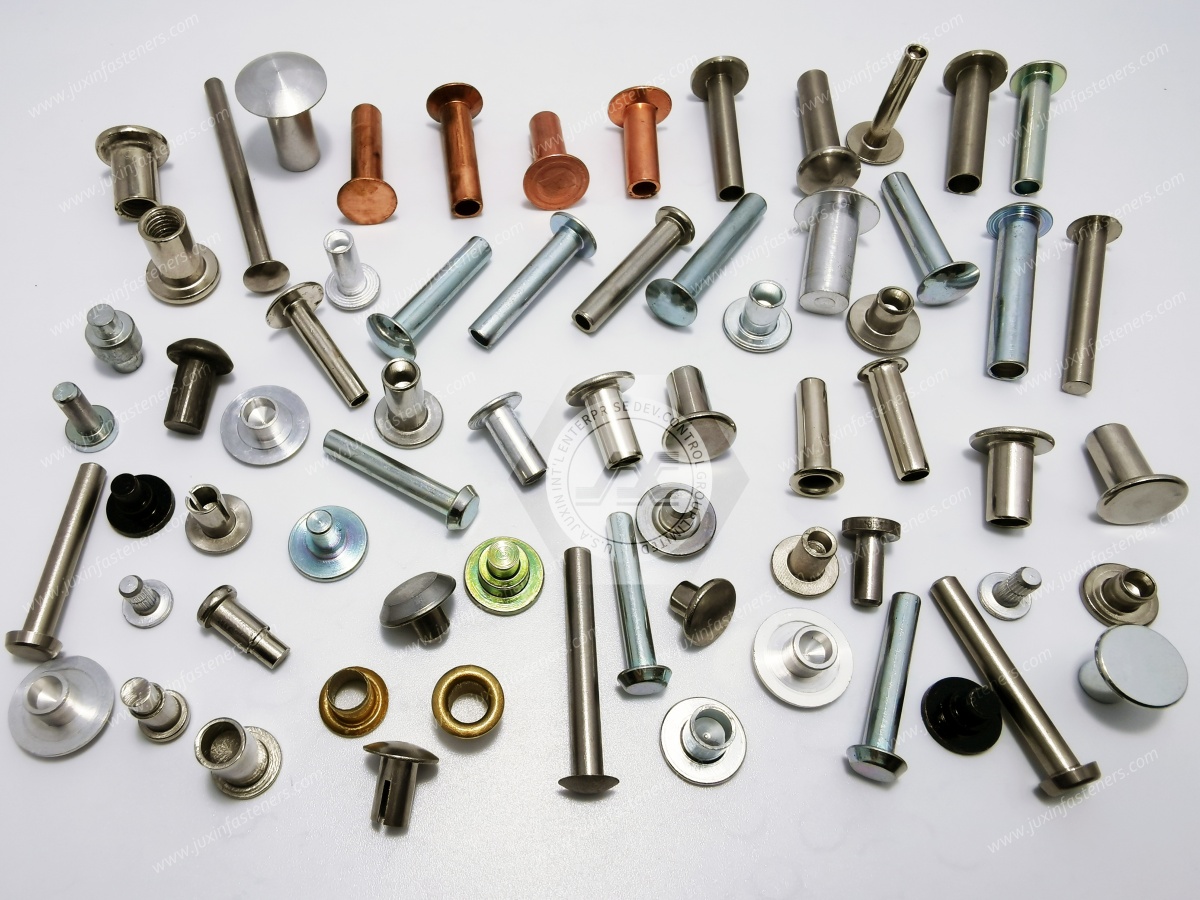
Stainless steel solid rivets
Stainless steel shoulder rivets
Stainless steel step rivets
Automotive wiper linkage fastening components
Non-standard automotive screws
Automotive bolts
Nuts and self-locking nuts
Rivet nuts
Weld nuts
Plastic retainers and clips
Nylon automotive fastening components
Automotive spoiler slide bolts
Application-specific pins and shafts
Other customer-defined fastening components
Components are manufactured according to customer specifications, approved drawings, material requirements, and application conditions.
The important distinction is that JUXIN FASTENERS does not approach automotive sourcing only as a catalog hardware transaction.
The starting point can be the vehicle application, mating components, drawing, CAD model, or specific engineering problem, followed by identification of the appropriate fastening component and production requirements.
For automotive wiper systems, the most effective starting point is usually the complete drawing or CAD model together with the mating component and assembly requirements.
This allows the fastener to be evaluated as part of the actual mechanical system rather than as an isolated hardware item.
Automotive wiper systems can use customer-specific fastening components such as stainless steel solid rivets, shoulder rivets, and step rivets for linkage and pivot connections.
The actual component depends on the mechanism, mating geometry, material, and assembly requirements.
Stainless steel can be selected for automotive wiper fastening components when the application requires a specified combination of material characteristics and resistance to environmental exposure.
The appropriate stainless steel grade should be determined from the customer's engineering requirements.
A shoulder rivet incorporates a defined shoulder section that can establish a controlled interface with a mating linkage or pivot component. Its exact function depends on the joint geometry and customer drawing.
A solid rivet generally has a continuous shank intended for mechanical setting, while a shoulder rivet incorporates a larger or otherwise defined section along its body.
Shoulder geometry can be used to establish a specific relationship with the mating component.
No. Wiper linkage components can require customer-specific dimensions and geometries.
A custom rivet may be defined by the linkage design, mounting hole, shoulder dimensions, material, head geometry, and assembly process.
A useful RFQ should include the engineering drawing or CAD model, material specification, rivet dimensions, mating-hole information, linkage component details,
assembly method, application conditions, quantity, packaging requirements, and applicable quality or documentation requirements.
Yes. JUXIN FASTENERS supplies customer-specific and non-standard fastening components for automotive applications including wiper systems, chassis and undercarriage assemblies,
gear-shifting mechanisms, sunroof systems, rollover protection structures, door and interior assemblies, seat-related applications, and rear spoiler systems.
Yes. JUXIN FASTENERS manufactures customer-specific stainless steel solid rivets, shoulder rivets, step rivets,
and other non-standard automotive fastening components according to approved customer specifications, drawings, material requirements, and application conditions.
If you are sourcing automotive wiper system fasteners, wiper linkage rivets, stainless steel solid rivets, stainless steel shoulder rivets, step rivets,
or other customer-specific automotive fastening components, send JUXIN FASTENERS your drawing,
CAD data, material requirements, mating-component information, assembly requirements, and expected production quantity.
A drawing-based review can help establish the relevant geometry, material, assembly, and sourcing requirements for the application.
JUXIN FASTENERS
Email: info@juxinfasteners.com
Website: www.juxinfasteners.com
Product Packaging
Packaging Standard
At Juxin Fasteners, we apply standardized export packaging to ensure product protection, traceability, and compliance with international logistics requirements.
1. Standard Export Packaging
Unless otherwise specified, all products will be packed according to our factory standard export packaging, which includes:
Moisture-resistant inner protection
Poly bag or small box packing as required
Reinforced export cartons
Clear labeling with part number, specification, batch number, and quantity
Palletizing for sea or air shipment when necessary
Our standard packaging is designed to ensure safe transportation, efficient warehousing, and long-distance international shipping.
2. Customized Packaging Options
We also provide customized packaging solutions according to customer requirements, including but not limited to:
Private labeling
Customized barcodes
Specific carton dimensions
Retail packaging
Special pallet configuration
Customer-specific marking and identification
So that you know, customized packaging may involve additional costs and extended lead time depending on the complexity of the requirements.
3. Compliance & Quality Assurance
All packaging processes are controlled under our ISO 9001 quality management system to ensure consistency, traceability, and product integrity throughout the supply chain.
Product Pictures

Hot Products
Automotive Fastener Sourcing & Specification Guide for OEM Buyers
Custom Automotive Screws and Bolts: Design, Specification & OEM Sourcing Guide
Automotive Sunroof Systems: Fastening Engineering, Precision Shafts & OEM Sourcing Guide
Custom Automotive Nuts and Washers: Design, Selection & OEM Sourcing
Contact Us
Tel.:
+86 020 8621 0320
+86 020 3121 6067
E-mail:
Technical Support:
Navigation
SEND INQUIREY