Call Us
+86 136 6007 9809
Call Us
+86 136 6007 9809

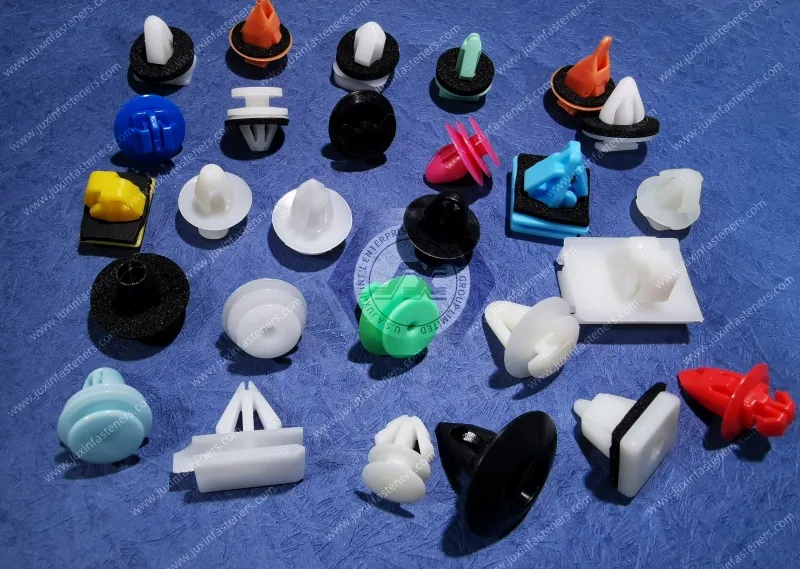
Vehicle assembly uses a wide range of polymer fastening components to secure, position, align, space, and route interior and exterior vehicle components.
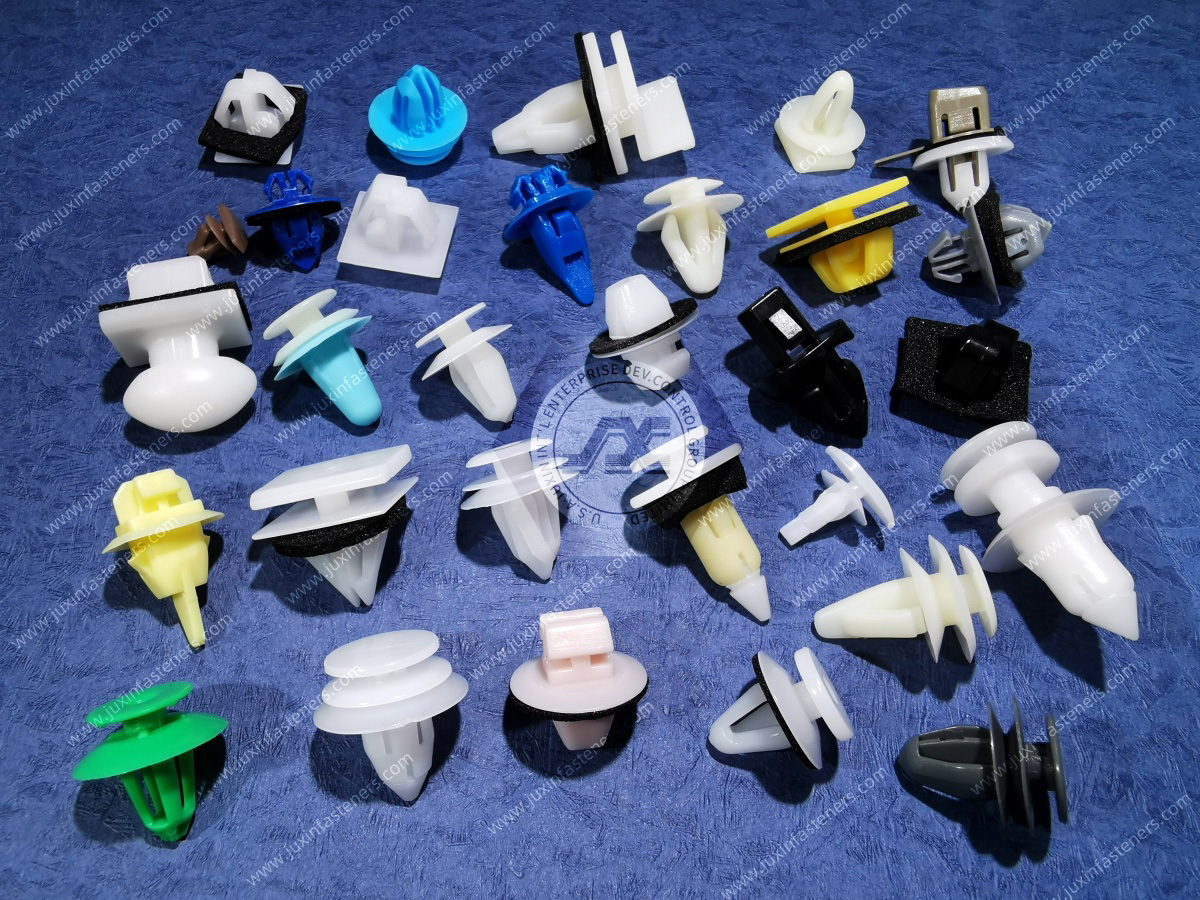
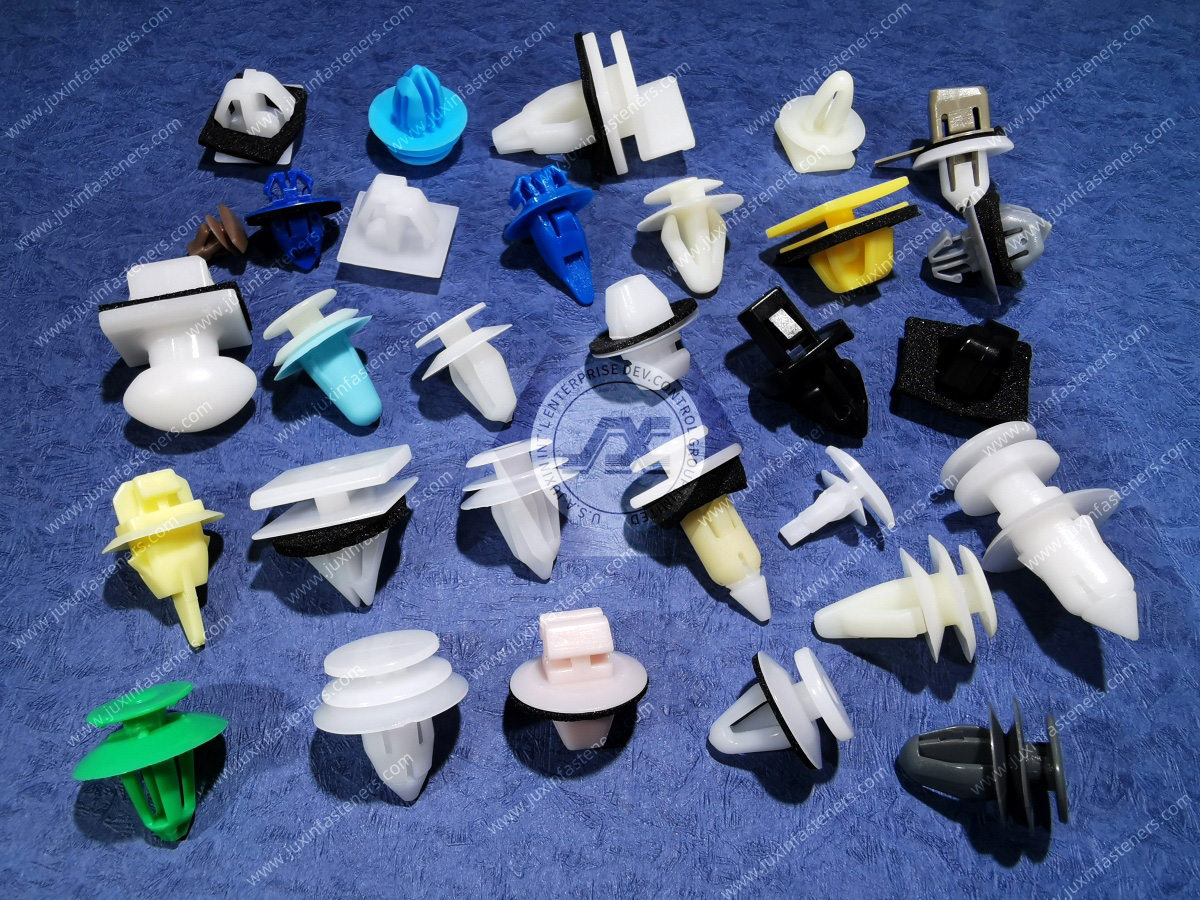
These components are commonly described as automotive plastic clips, automotive retainers, plastic fastening clips, panel retaining clips, trim clips, or other application-specific fasteners.
Product Specification
Vehicle assembly uses a wide range of polymer fastening components to secure, position, align, space, and route interior and exterior vehicle components.
These components are commonly described as automotive plastic clips, automotive retainers, plastic fastening clips, panel retaining clips, trim clips, or other application-specific fasteners.
Although the terms "retainer" and "clip" are sometimes used interchangeably, their actual engineering function depends on the component geometry, mating interface,
installation method, and required retention or positioning behavior.
For engineers and procurement teams, the important question is therefore not only what a component is called, but how it interacts with the mounting hole, panel, bracket, trim component, or other mating structure.
JUXIN FASTENERS manufactures customer-specific automotive plastic retainers and clips according to approved drawings, material requirements, mating conditions, and application requirements.
In automotive manufacturing, terminology can vary between vehicle manufacturers, component suppliers, engineering drawings, and regional markets.
A component described as a "clip" in one application may be described as a "retainer" in another.
For engineering and sourcing purposes, the more useful distinction is the function and retention mechanism of the component.
Automotive plastic retainers are generally used to retain, position, or secure a component relative to a defined mounting interface.
Depending on the design, a retainer may incorporate features such as locking barbs, flexible legs, expandable sections, ribs, hooks, pins, or other retention structures.
The required retention behavior depends on the application. Some retainers are intended primarily to hold trim or panels in position,
while others may also provide locating, spacing, routing, or fastening-interface functions.
The actual retention capability depends on the fastener geometry, polymer grade, mounting-hole geometry, panel characteristics, and assembly conditions.
Automotive plastic clips are a broad product category that can include components used for positioning, retaining, aligning, attaching, routing, or supporting vehicle components.
Depending on the design, clips may use push-in, snap-fit, edge-engagement, ribbed, barbed, or other mechanical retention principles.
Some automotive plastic clips are intended for rapid installation during vehicle assembly, while others may be designed around specific service or removal requirements.
Therefore, a clip should not automatically be classified as a low-load component, and a retainer should not automatically be assumed to carry structural loads.
The correct classification depends on the customer's engineering requirements and the actual mating interface.
These components are developed and manufactured against the customer's specified design and application requirements rather than treated as universal aftermarket replacement parts.
The functionality of automotive plastic clips and retainers is strongly influenced by their head geometry, shaft or leg profile, retention features, and interaction with the mounting substrate.
Several common structural approaches include:
Expandable push pins generally incorporate a center pin, split shaft, flexible legs, or another expansion mechanism.
During installation, the center element may expand the retention section so that it engages the mounting hole or substrate.
The exact installation sequence and retention behavior depend on the specific design.
For OEM applications, engineers may need to evaluate the relationship between the push pin, mounting-hole geometry, panel thickness, installation direction, and required retention performance.
Ribbed or barbed shafts use flexible ribs, fins, barbs, or similar features to engage the internal surface of a mounting hole.
These features can deform during installation and then provide mechanical engagement with the mating interface.
The actual performance depends on factors including:
Fastener geometry
Polymer characteristics
Mounting-hole dimensions
Hole tolerance
Substrate material
Panel thickness
Installation conditions
A ribbed or barbed clip should therefore be selected according to the complete mounting interface rather than by appearance alone.
Snap-fit automotive clips may use flexible cantilever features, hooks, flanges, or other engagement structures to attach to a panel edge, bracket, trim profile, or dedicated mating feature.
These designs can be useful where the assembly process requires a defined push-to-install or snap engagement.
The suitability of the design depends on the mating geometry, material behavior, installation sequence, service requirements, and required retention characteristics.
JUXIN FASTENERS manufactures customer-specific plastic retainers and clips according to approved designs and specified application requirements.
Automotive plastic retainers and clips can perform different functions across interior, exterior, electrical, and trim assemblies.
The same general clip category may also have substantially different geometry depending on the vehicle system in which it is used.
Interior trim applications may include headliners, pillar covers, instrument panel components, dashboard trim, console components, door trim, and other interior panels.
In these applications, automotive plastic clips may be used for:
Panel retention
Component positioning
Assembly alignment
Controlled spacing
Attachment to mounting holes or brackets
Supporting serviceable trim assemblies
The required design depends on panel construction, mounting-hole geometry, trim profile, installation direction, and service requirements.
Where unwanted movement or noise is a concern, the fastener design may also need to be evaluated together with panel fit, mating interfaces,
material behavior, and assembly conditions rather than attributing the result to the clip alone.
Door panels and related access components can use plastic fastening clips to connect trim components with the underlying mounting structure.
The clip may provide the required mechanical engagement between the trim panel and its mating interface while allowing the assembly process to meet defined installation requirements.
Important design inputs can include:
Mounting-hole dimensions
Panel thickness
Mating component geometry
Installation direction
Retention requirements
Service or removal requirements
For high-volume vehicle assembly, repeatable installation behavior is an important part of the overall fastener specification.
Exterior vehicle components may use plastic clips or retainers for trim, garnish, panel-related components, and other application-specific assemblies.
Depending on the vehicle design, these components may be exposed to temperature changes, moisture, road conditions, chemicals, or other environmental factors.
The appropriate fastener design and polymer material should therefore be evaluated against the actual application environment.
Specialized metal fastening components may also be used within the same assembly.
For example, a rear spoiler system can combine a Rear Spoiler Clip with a Spoiler Bolt or Slide Bolt depending on the mounting architecture.
Material selection is an important part of automotive plastic fastener design because polymer behavior can influence flexibility,
dimensional stability, retention characteristics, and performance under application-specific conditions.
Depending on the customer specification and application, engineering thermoplastics may include:
Nylon, including PA6 and PA66 grades, may be considered for applications requiring a combination of mechanical properties, flexibility, and resistance to repeated assembly or service conditions.
However, Nylon is moisture-sensitive, and moisture absorption can influence dimensional and mechanical behavior.
For applications with tight dimensional requirements or significant environmental exposure, the selected grade and operating conditions should therefore be evaluated carefully.
POM, commonly referred to as Acetal, may be considered where dimensional stability, rigidity, low-friction behavior, or other application-specific characteristics are relevant.
Its suitability depends on the actual component design, mating materials, environment, and production requirements.
Polypropylene may be considered for applications where its flexibility, chemical characteristics, density, or other material properties are compatible with the intended fastening function.
The selected grade should be matched to the application's mechanical, environmental, assembly, and production requirements.
There is no universal polymer that is suitable for every automotive plastic clip or retainer.
Material selection may consider:
Mechanical requirements
Flexibility and retention behavior
Dimensional stability
Moisture exposure
Temperature conditions
Chemical or environmental exposure
Mating materials
Installation method
Service requirements
Production requirements
For example, a polymer that performs well in one interior trim application may not be the appropriate choice for an exterior application with different environmental conditions.
JUXIN FASTENERS manufactures components using polymer materials and grades specified in the approved customer data package.
When designing or sourcing custom automotive plastic retainers and clips, engineering teams should evaluate the complete joint or mounting interface rather than focusing only on the visible head shape of the fastener.
A practical evaluation can be organized around five connected elements:
Fastener Geometry → Mounting Interface → Mating Components → Installation Method → Required Function
This relationship provides a more reliable basis for product selection than searching by a generic clip name alone.
Critical parameters reviewed during an engineering or sourcing process may include:
Customer engineering drawings or 3D CAD data
Mounting-hole dimensions and geometric tolerances
Substrate panel thickness and material
Mating component geometry
Required retention or positioning function
Installation direction and assembly sequence
Required insertion and extraction force parameters, where specified
Polymer family or material grade
Environmental exposure criteria
Temperature requirements
Target production quantities
Packaging specifications
One of the most common sourcing mistakes is treating a plastic clip as an independent component.
In reality, many automotive plastic retainers are part of a larger interface involving the fastener, mounting hole, panel, bracket, and mating component.
A change in hole diameter, panel thickness, substrate material, or installation direction can affect whether the same clip remains suitable.
For this reason, an OEM buyer should provide the relevant mounting-interface information whenever possible.
Two automotive plastic clips can look almost identical while having different:
Shaft geometry
Head dimensions
Retention features
Mounting-hole requirements
Panel thickness ranges
Installation directions
Polymer materials
Service requirements
This is particularly important when replacing an existing component or evaluating an alternative supplier.
The correct question is not simply:
"Does this clip look the same?"
It is:
"Does this clip match the specified mounting interface and required assembly function?"
JUXIN FASTENERS works with customers to review drawings, specifications, material requirements, mating interfaces, and application conditions for customer-specific automotive fastening components.
JUXIN FASTENERS manufactures automotive plastic retainers and clips according to customer specifications and approved application requirements.
Customer-specific projects may involve:
Custom plastic retainers
Automotive plastic clips
Interior trim clips
Panel retaining clips
Push-type retainers
Wire harness and cable clips
Application-specific plastic fastening components
Other customer-specific polymer fastening parts
The required component geometry and material are established according to the customer's technical documentation and intended application.
For OEM and industrial sourcing, this approach is particularly relevant when an existing catalog product does not match the required mounting interface, panel thickness, retention geometry, or assembly method.
Automotive plastic clips and retainers can be further evaluated according to the application area.
Interior trim clips are commonly associated with components such as door trim, pillar trim, dashboards, consoles, headliners, and other interior panels.
The appropriate design depends on the panel construction, mounting interface, trim geometry, and required installation and service conditions.
Panel retaining clips are used where a plastic or polymer component needs to be retained relative to a panel, bracket, or other mounting structure.
The retention mechanism may include push-in, snap-fit, ribbed, barbed, or other geometry depending on the application.
Wire harness and cable clips provide attachment and routing functions for electrical wiring and cables.
Their geometry may be designed to engage a hole, edge, bracket, panel, or another mounting structure.
Selection can depend on cable dimensions, routing requirements, attachment location, installation direction, and surrounding clearance.
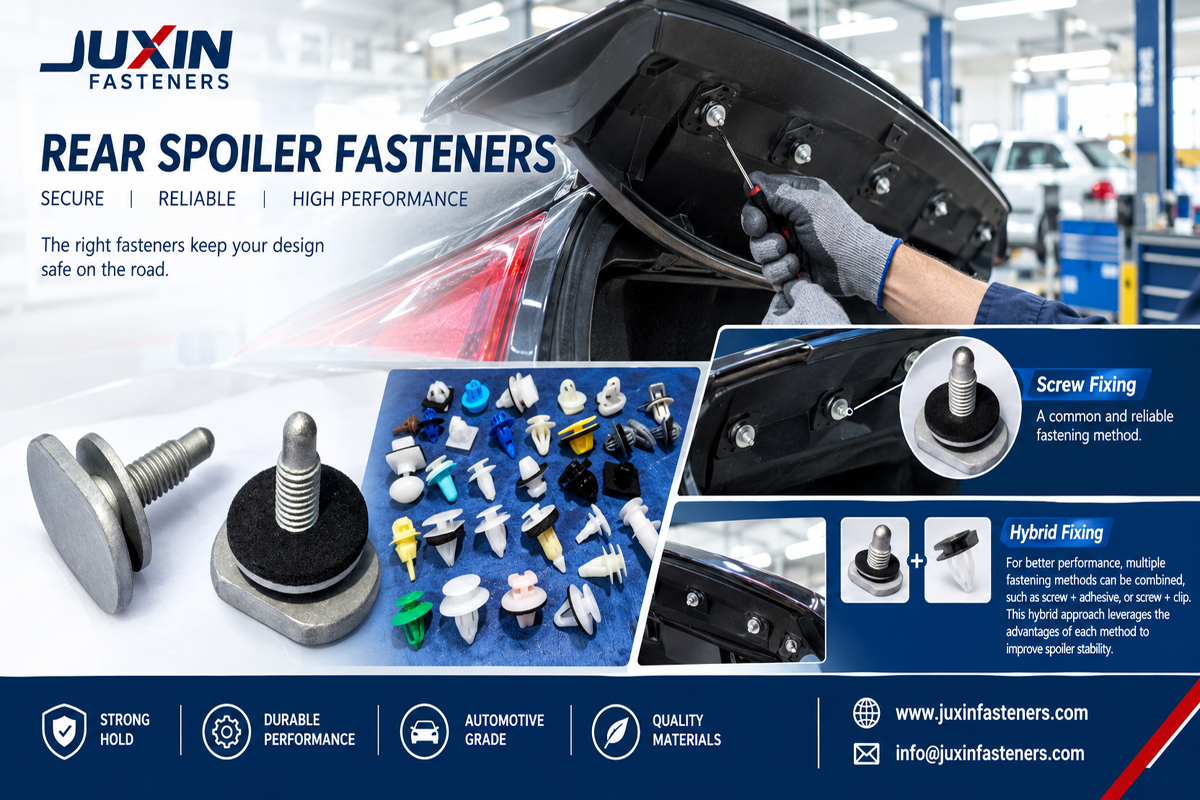
Rear spoiler clips are a more application-specific category of automotive plastic fastening component.
A Rear Spoiler Clip may provide locating, retaining, positioning, spacing, or fastening-interface support depending on the spoiler assembly design.
Because rear spoiler systems may also use metal fastening components, the plastic clip should be evaluated as part of the complete mounting system rather than as an isolated generic clip.
For more information, see the dedicated JUXIN FASTENERS guide on Rear Spoiler Clips and the related Spoiler Bolt and Slide Bolt solution.
For a custom automotive plastic fastener project, clear technical information can significantly improve the accuracy of supplier evaluation.
Depending on the project, useful information may include:
2D engineering drawing
3D CAD data
Mounting-hole dimensions
Hole tolerance requirements
Panel or substrate thickness
Substrate material
Mating component information
Required retention or positioning function
Installation direction
Assembly method
Polymer family or material grade
Temperature and environmental requirements
Service or removal requirements
Target production quantities
Packaging requirements
If a physical sample is available, it may also help clarify the component geometry and mating relationship.
However, the physical sample should be considered together with the approved engineering documentation. Final production requirements should be based on the customer's approved technical data.
For procurement managers and supply chain teams, selecting an automotive plastic clip supplier involves more than comparing unit price.
The supplier should be able to work from the customer's actual technical requirements and maintain consistency with the approved component specification.
Relevant evaluation factors may include:
Can the supplier understand and work from customer engineering drawings, CAD data, material requirements, and mounting-interface information?
Can the supplier produce the component using the polymer family or grade specified by the customer?
Can the supplier work according to the relevant dimensions, tolerances, and mating-interface requirements defined in the approved documentation?
Does the supplier understand whether the component is being used for retention, positioning, spacing, routing, alignment, or another defined function?
Can the supplier work with the customer's required quantities, packaging configuration, labeling, and other supply-chain requirements?
For ongoing OEM programs, clear communication regarding specifications, samples, production requirements, and any proposed changes is important for maintaining consistency with the approved component.
These factors help procurement teams evaluate automotive plastic clip suppliers based on the complete supply requirement rather than unit price alone.
Catalog automotive plastic clips can be useful for product identification and initial design research.
However, a standard catalog component may not match the exact geometry or assembly requirements of a particular vehicle application.
Differences may occur in:
Mounting-hole diameter
Panel thickness
Retention geometry
Head profile
Mating component
Installation direction
Material
Environmental requirements
Service requirements
For OEM applications, a customer-specific component may therefore be more appropriate when the required geometry or material falls outside the range of standard catalog products.
JUXIN FASTENERS manufactures customer-specific automotive plastic retainers and clips according to approved customer specifications and application requirements.
An important engineering principle is that automotive plastic clips should not always be evaluated as isolated products.
A vehicle assembly may combine several fastening components to achieve different functions.
For example:
Plastic Clip → Positioning / Retention
Metal Bolt → Threaded Fastening
Panel / Bracket → Mounting Interface
Trim / Spoiler / Component → Mating Part
This system-level view can help engineers identify which component is responsible for retention, positioning, spacing, threaded fastening, or another assembly function.
In a rear spoiler application, for example, a Rear Spoiler Clip and a Spoiler Bolt may serve different but complementary functions within the same mounting arrangement.
This is also why simply replacing one clip with another visually similar component may not provide the same assembly result.
JUXIN FASTENERS supplies customer-specific automotive plastic fastening components for OEM and industrial applications.
The product scope can include automotive plastic clips, retainers, interior trim clips, panel retaining clips, wire routing clips, and other application-specific polymer fastening components.
For each project, the component specification can be established according to the customer's approved drawing,
CAD data, material requirements, mounting interface, mating geometry, assembly method, and application conditions.
This allows engineering and procurement teams to evaluate the actual fastening requirement rather than relying only on generic product terminology.
For automotive plastic clips and retainers that require customer-specific geometry or material requirements, customers can provide the relevant technical documentation for review.
What is the difference between an automotive plastic retainer and a clip?
The terms can overlap in automotive applications. In practical engineering use, a retainer generally describes a component whose defined function includes
retaining or securing a mating component, while "clip" is a broader term that can include components used for retention, positioning, alignment, attachment, spacing, or routing.
The actual function depends on the specific design.
Where are automotive plastic retainers and clips used?
They can be used throughout vehicle assemblies, including interior trim, door panels, dashboards, pillar trim, headliners,
exterior garnish, body-related components, wire harness routing, and application-specific assemblies such as rear spoilers.
What are the common types of automotive plastic clips?
Common designs include push-type retainers, expandable push pins, ribbed or barbed clips, snap-fit clips, edge clips, trim and moulding clips, screw grommets,
and wire harness or cable clips. The exact terminology and structure vary by application.
What materials are used to manufacture automotive plastic clips?
Depending on the application and customer specification, materials may include Nylon / PA6 / PA66, POM / Acetal, PP, and other specified engineering polymers.
The final material and grade should be selected according to the required mechanical, dimensional, environmental, assembly, and production conditions.
Are automotive plastic clips universal?
No. Automotive plastic clips are often application-specific. Mounting-hole dimensions, panel thickness, mating geometry, retention features, installation direction,
material, and environmental conditions can all affect whether a particular clip is suitable.
Why is mounting-hole geometry important when selecting a plastic retainer?
The mounting hole is part of the fastening interface. Its dimensions, tolerance, shape, location, substrate material, and panel thickness can influence installation and retention behavior.
A clip should therefore be evaluated together with the mating interface.
Can automotive plastic clips be custom manufactured?
Yes. Customer-specific automotive plastic retainers and clips can be manufactured according to approved drawings, CAD data, material requirements, mating geometry, and application conditions.
What should OEM buyers provide when sourcing custom automotive plastic retainers?
Useful information can include engineering drawings, 3D CAD data, mounting-hole dimensions, panel thickness, substrate material, mating component information,
required retention or positioning function, installation method, material requirements, environmental conditions, production quantities, and packaging requirements.
Can JUXIN FASTENERS manufacture custom automotive plastic retainers and clips?
Yes. JUXIN FASTENERS manufactures customer-specific automotive plastic retainers, clips, and other polymer fastening components according to approved drawings, material requirements, and application conditions.
For a custom automotive plastic clip or retainer project, JUXIN FASTENERS can review the customer's engineering drawings, CAD data, mounting interfaces,
material requirements, application conditions, and production requirements.
If you are sourcing automotive plastic clips, automotive retainers, interior trim clips, panel retaining clips, push-type retainers,
or other customer-specific plastic fastening components, send the relevant technical information to info@juxinfasteners.com.
You can also visit www.juxinfasteners.com to discuss customer-specific automotive plastic fastening requirements.
Product Packaging
Packaging Standard
At Juxin Fasteners, we apply standardized export packaging to ensure product protection, traceability, and compliance with international logistics requirements.
1. Standard Export Packaging
Unless otherwise specified, all products will be packed according to our factory standard export packaging, which includes:
Moisture-resistant inner protection
Poly bag or small box packing as required
Reinforced export cartons
Clear labeling with part number, specification, batch number, and quantity
Palletizing for sea or air shipment when necessary
Our standard packaging is designed to ensure safe transportation, efficient warehousing, and long-distance international shipping.
2. Customized Packaging Options
We also provide customized packaging solutions according to customer requirements, including but not limited to:
Private labeling
Customized barcodes
Specific carton dimensions
Retail packaging
Special pallet configuration
Customer-specific marking and identification
So that you know, customized packaging may involve additional costs and extended lead time depending on the complexity of the requirements.
3. Compliance & Quality Assurance
All packaging processes are controlled under our ISO 9001 quality management system to ensure consistency, traceability, and product integrity throughout the supply chain.
Product Pictures

Hot Products
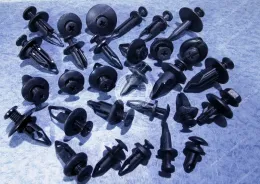
Automotive Plastic Fastener Design: Hole Size, Retention & Mating Geometry
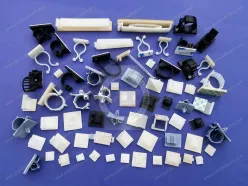
Automotive Trim & Moulding Clips: Engineering, Retention & OEM Sourcing Guide
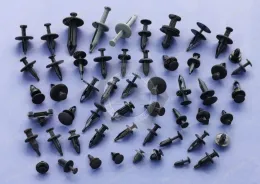
Plastic Push Rivets for Automotive Body Panels: Engineering & Sourcing Guide
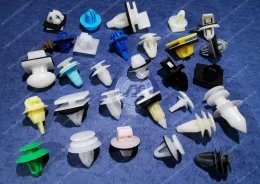
Nylon vs Other Plastics for Automotive Retainers: Engineering Performance Guide
Contact Us
Tel.:
+86 020 8621 0320
+86 020 3121 6067
E-mail:
Technical Support:
Navigation
SEND INQUIREY