Call Us
+86 136 6007 9809
Call Us
+86 136 6007 9809

Automotive body panels, wheel-arch liners, underbody shielding, trim components, and other vehicle assemblies often require fastening methods
that support efficient installation while matching the geometry and material of the surrounding components.
Product Specification
Automotive body panels, wheel-arch liners, underbody shielding, trim components, and other vehicle assemblies often require fastening methods
that support efficient installation while matching the geometry and material of the surrounding components.
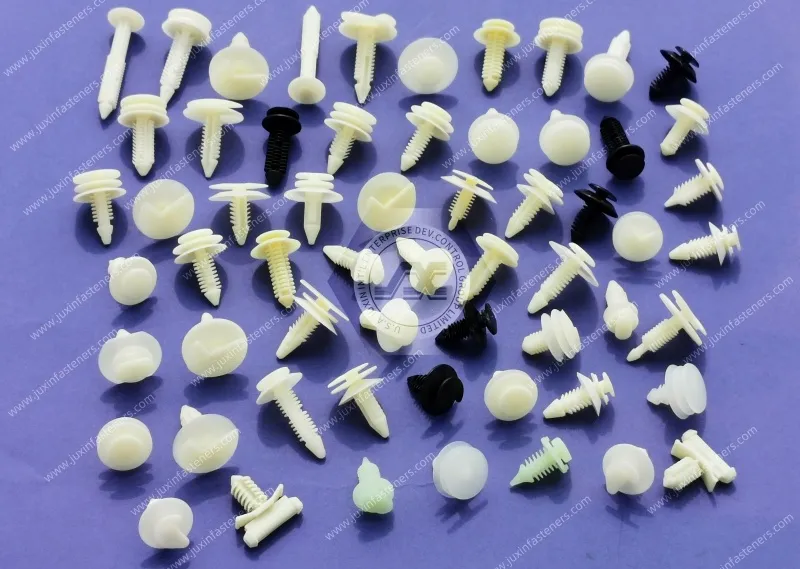
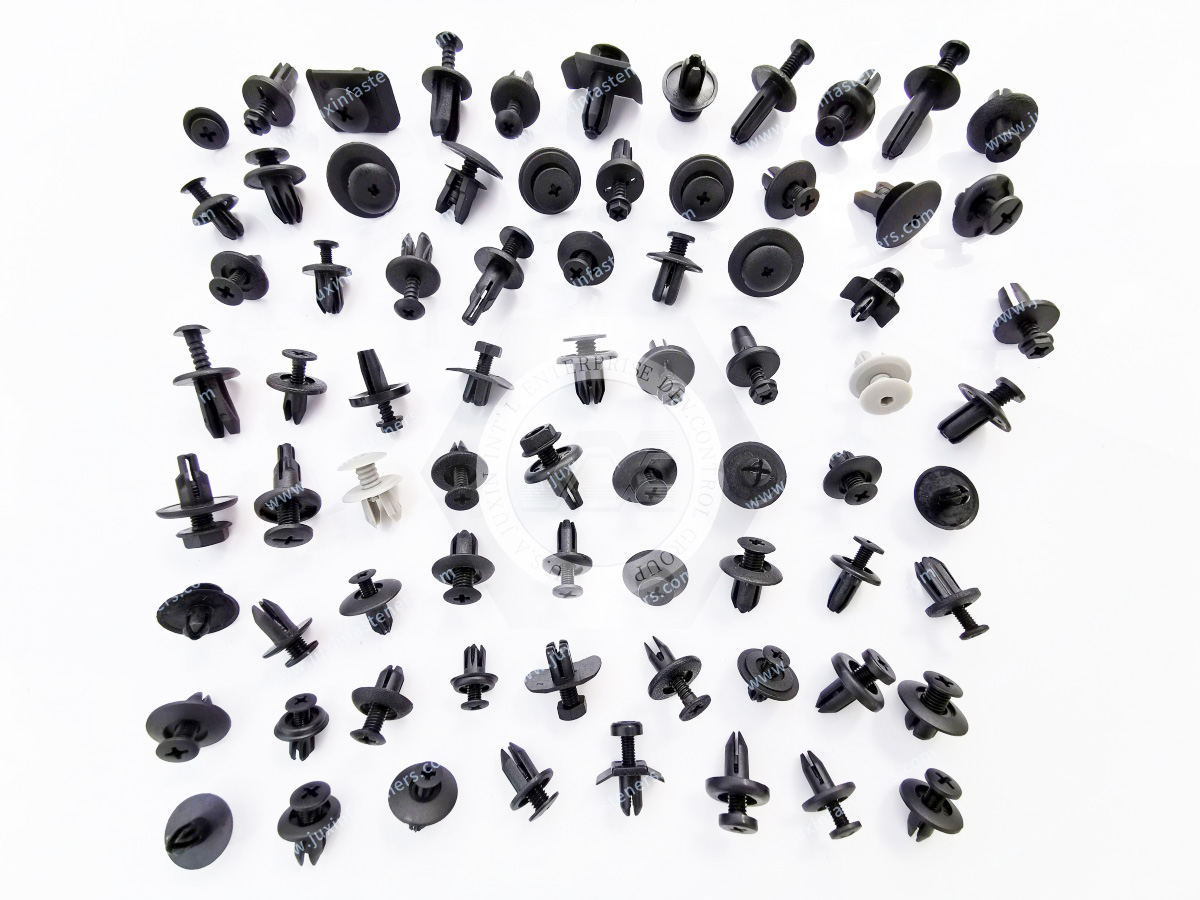
Among polymer fastening components, plastic push rivets are commonly considered for applications where the fastener is installed by pressing a pin, stem, or central element into an expandable body.
The engineering suitability of a plastic push rivet depends on more than the fastener itself.
The mounting-hole geometry, panel thickness, retention mechanism, installation method, polymer selection, mating components,
and application environment all influence whether a particular design is appropriate.
JUXIN FASTENERS manufactures customer-specific plastic push rivets, automotive plastic fasteners, non-standard screws,
bolts, nuts, and other fastening components according to customer drawings, material requirements, approved specifications, and application conditions.
Question: What are automotive plastic push rivets?
Direct Answer: Plastic push rivets are polymer fastening components that typically use an expandable body, center pin, stem,
or related retention feature to secure a panel or component through a mounting hole.
Depending on the design, they may be used in one-sided or restricted-access installation environments.
Unlike conventional metal blind rivets, which generally rely on deformation of a metal rivet body to form the joint,
many plastic push-rivet designs use the interaction between a center pin or stem and an expandable plastic body.
During installation, the central element moves into or through the fastener body.
This can cause part of the shank or retention structure to expand or engage with the surrounding mounting interface.
The resulting retention depends on the specific geometry of the fastener and its relationship with the mating panel or component.
For this reason, a plastic push rivet should not be treated simply as a generic replacement for a metal rivet or another type of automotive retainer.
The fastener, mounting hole, panel thickness, and installation method should be evaluated as one fastening system.
The basic installation sequence can be understood as:
Align → Insert → Engage → Retain
The exact mechanism varies according to the product design.
The fastener is aligned with the mounting hole and the components being joined.
Correct alignment can be important because the head, shank, expansion features, and mating hole must work together as intended.
The fastener body is inserted into the mounting interface.
The required insertion force depends on the fastener geometry, material, hole condition, panel thickness, and installation process.
A center pin, stem, or other locking feature is moved into its specified position.
Depending on the design, this action may expand the fastener body, engage retention features, or change the geometry of the fastener within the mounting hole.
After installation, the expanded or engaged structure provides mechanical retention between the fastener and the mating component.
The final retention characteristics are application-specific and should be evaluated against the customer's design requirements.
This mechanism makes plastic push rivets particularly relevant where assembly speed, access limitations, component weight, and polymer compatibility are important considerations.
The performance of a plastic push rivet is strongly influenced by the relationship between its structural geometry and the mounting interface.
Common design approaches include:
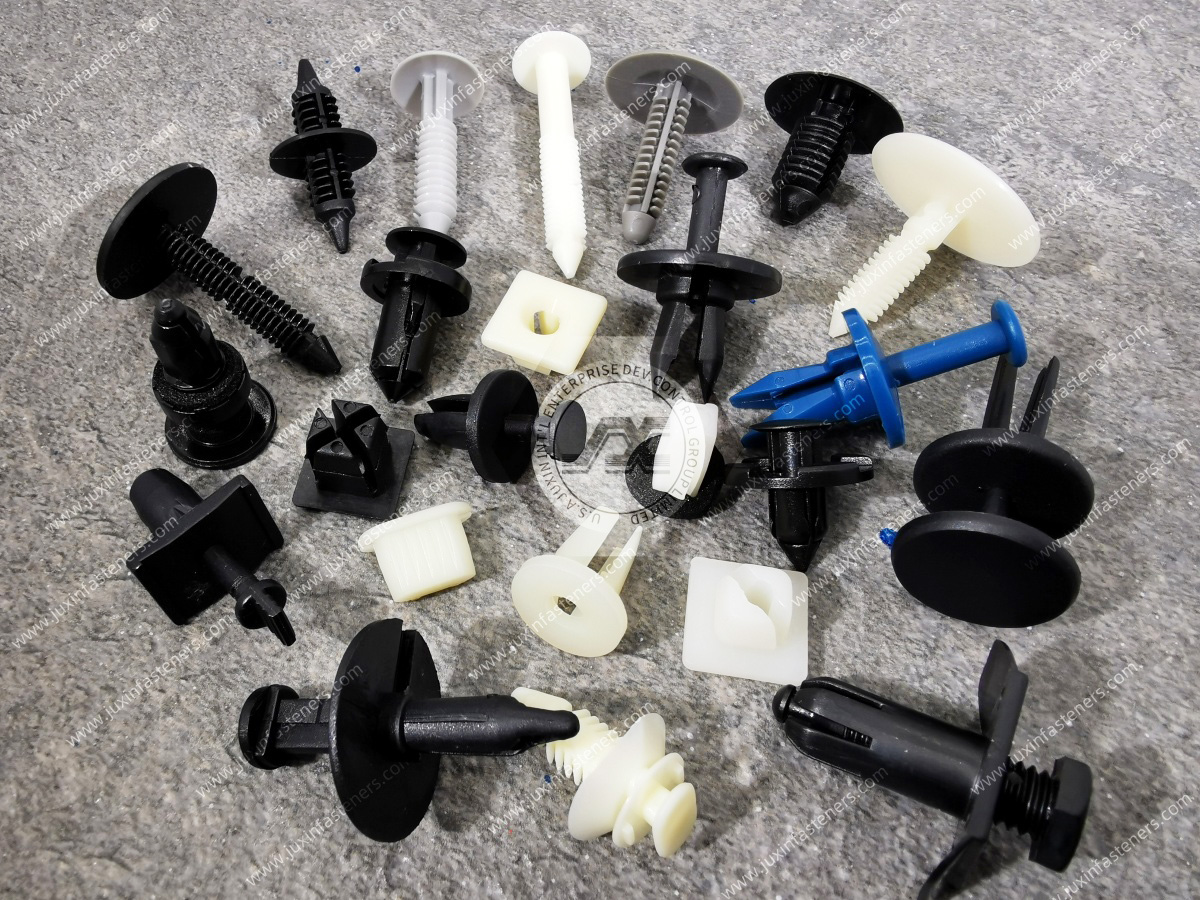
Some plastic push rivets use a split or segmented shank that can flex outward during installation.
As the center element moves into the body, the segmented sections may expand against the surrounding mounting hole.
This configuration can be considered when the application requires retention within a defined panel thickness and mounting-hole geometry.
Other designs use ribs, barbs, or similar features along the fastener body.
These features engage with the mounting interface and can provide resistance to extraction after installation.
The effectiveness of this geometry depends on the relationship between the retention features, hole dimensions, panel material, panel thickness, and fastener material.
A separate or integrated center pin can control the expansion or locking action.
The position of the pin after installation can be an important part of the retention mechanism, particularly where the customer has defined an installation sequence or service requirement.
A low-profile head may be considered where clearance, appearance, adjacent-component interference, or surface requirements influence the fastening design.
For exterior automotive components, head geometry should be evaluated together with the surrounding surface and mating structure rather than selected independently.
A plastic push rivet cannot be specified correctly by fastener diameter alone.
Two of the most important interface variables are the mounting-hole geometry and panel thickness.
The mounting hole may have a specified diameter, shape, tolerance, or other geometric requirement.
The relationship between the hole and the fastener body influences insertion, retention, and final positioning.
If the hole is too small, installation may require excessive force or create unwanted stress on the fastener or substrate.
If the hole is too large, the intended retention mechanism may not engage as designed.
For OEM applications, the relevant hole specification should therefore be reviewed together with the fastener drawing rather than treated as an independent dimension.
Panel thickness can affect how far the fastener body extends through the substrate and where its retention features engage.
A plastic push rivet intended for one panel thickness range should not automatically be assumed to fit another panel configuration.
For assemblies containing multiple layers, engineers may also need to consider:
Total material stack-up
Individual panel thicknesses
Hole alignment
Fastener head clearance
Retention-feature position
Installation direction
Access for service or removal
Mating-component geometry
The correct grip range is therefore a joint-design consideration.
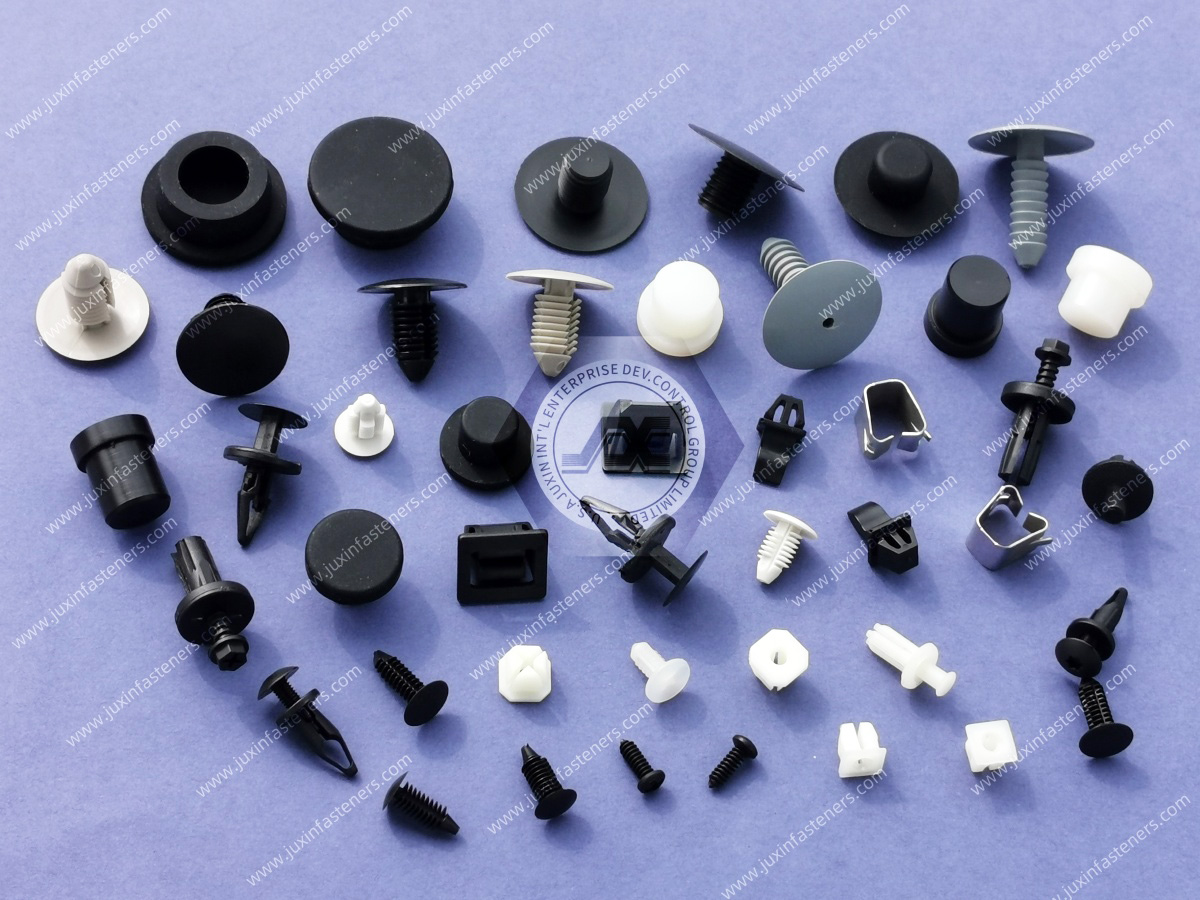
Plastic push rivets are only one part of the broader automotive fastening landscape.
Different applications may call for different retention mechanisms.
For example:
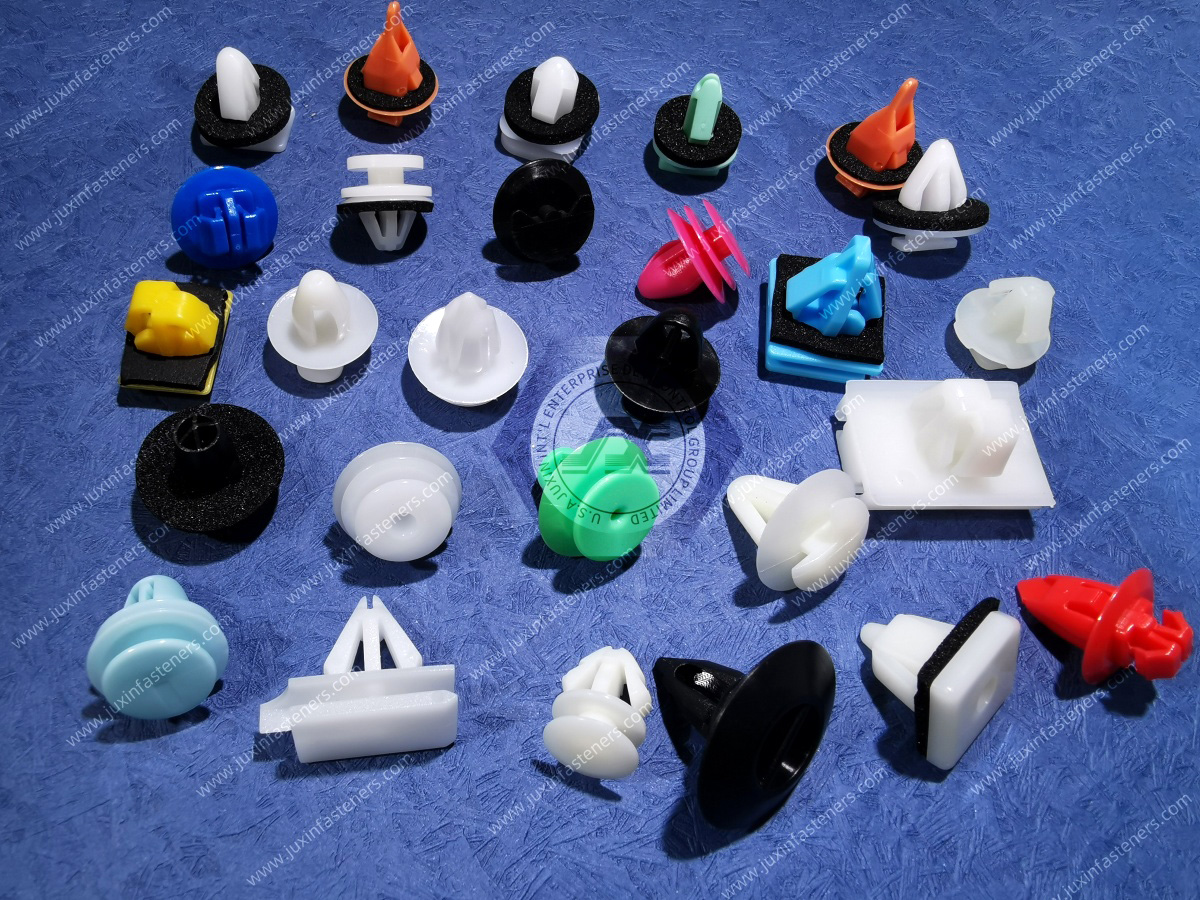
Push-Type Retainers may use an expansion pin or similar mechanism for panel retention.
Trim Clips may use snap-fit or engagement features to position and retain interior or exterior trim.
Screw Grommets provide a threaded interface for screw installation into a plastic or sheet-material mounting structure.
Fir Tree Clips use flexible barbed structures to engage a mounting hole.
Edge Clips engage a panel or flange edge according to the specific clip geometry.
Wire Harness Clips are designed around cable or harness routing and retention requirements.
Metal Screws, Bolts and Nuts may be required where higher mechanical requirements, threaded joints, or specific assembly conditions apply.
The selection should therefore start with the required joint function rather than the name of the fastener.
A practical selection sequence is:
Application → Function → Mounting Interface → Geometry → Material → Installation → Environment → Supply
First identify where the fastener will be installed.
Potential automotive applications include:
Exterior body panels
Bumper-related components
Wheel-arch liners
Underbody shielding
Interior trim
Door panels and access components
Protective covers
Brackets and secondary panels
Other customer-specific vehicle assemblies
The application determines the type of mechanical and environmental requirements that need to be considered.
The fastener may be required primarily for:
Panel retention
Component positioning
Assembly alignment
Spacing
Attachment of a trim or protective component
Supporting a defined fastening interface
Not every plastic push rivet is intended to perform the same function.
A design that is suitable for retaining a lightweight trim component should not automatically be transferred to a structurally demanding joint.
The fastener should be matched to:
Mounting-hole dimensions
Hole tolerance
Panel thickness
Material stack-up
Mating component
Installation direction
Required clearance
This interface information is often more important than simply selecting a catalog part based on nominal diameter.
For production applications, installation behavior can be as important as final retention.
If the installation force is too high for the assembly process, it may affect operator ergonomics, automated installation, or the surrounding component.
If it is too low, the fastener may not engage the intended retention mechanism correctly.
The appropriate insertion force is therefore application-specific.
Extraction performance is influenced by fastener geometry, polymer characteristics, hole dimensions, substrate material, and installation condition.
Where the customer has a defined extraction or pull-out requirement, that requirement should be included in the engineering specification.
The retention mechanism should correspond to the actual mounting interface.
For example, a ribbed shaft, expandable leg, or center-pin mechanism may behave differently depending on the thickness and material of the mating panel.
Some automotive joints may experience forces acting laterally across the fastening interface.
Plastic push rivet suitability for such applications should be evaluated based on the complete joint design rather than assuming a universal shear-resistance value.
The surrounding panel, hole geometry, fastener material, and load path can all influence joint behavior.
Material selection is another important part of plastic push-rivet design.
Different polymer families can provide different combinations of stiffness, flexibility, dimensional stability, environmental resistance, and processing characteristics.
Common material families considered for automotive plastic fasteners include:
Nylon, including PA6 and PA66 families, is commonly considered for applications requiring a balance of mechanical properties and flexibility.
However, nylon can absorb moisture, and moisture exposure can influence dimensional and mechanical behavior.
The appropriate grade should therefore be selected according to the actual application and customer specification.
POM, also known as Acetal, may be considered where dimensional stability, rigidity, low-friction behavior, or other material characteristics are relevant to the application.
The suitability depends on the specific design and operating environment.
PP may be considered for applications where its flexibility, chemical-resistance characteristics, or other specified properties match the requirements of the assembly.
The appropriate polymer grade should be established from the customer's material requirements and application conditions.
Material selection should consider:
Mechanical requirements
Flexibility requirements
Dimensional stability
Temperature conditions
Moisture exposure
Chemical exposure
Installation method
Mating materials
Required service conditions
Customer material specifications
JUXIN FASTENERS manufactures customer-specific components using materials and grades specified or approved for the relevant project.
Plastic push rivets can be considered for a range of exterior and semi-exposed automotive assemblies when the fastener design and polymer are appropriate for the application.
Examples may include:
Wheel-arch liners can contain multiple mounting points and may require fasteners that accommodate the geometry and thickness of the surrounding components.
Underbody components may use plastic retainers and push-rivet-type fasteners where the joint design permits polymer fastening.
Environmental exposure should be evaluated as part of material and fastener selection.
Certain bumper-related trim, liners, shields, and secondary components may use push-type plastic fastening components.
The fastener should be selected according to the specific mounting interface rather than assuming that one push-rivet design fits all bumper applications.
Exterior trim and body-related components may use plastic retainers where the required retention mechanism, clearance, material, and installation method are compatible with the assembly.
The application requirements determine whether a plastic push rivet, another plastic retainer, or a metal fastening component is more appropriate.
Plastic push rivets are also relevant to interior vehicle assemblies.
Potential applications include:
Interior trim panels
Cabin lining
Access covers
Decorative panels
Protective interior components
Dashboard-related secondary components
Door trim components
For interior applications, engineers may consider installation force, retention, panel movement, serviceability, dimensional stability, and interaction with adjacent components.
Unwanted movement or noise can have multiple causes, so a plastic fastener should not be described as universally preventing these issues. The fastener is one part of the complete assembly design.
Automotive fastening is not divided into a simple "plastic versus metal" choice.
A single vehicle assembly can contain polymer clips, plastic retainers, steel fasteners, specialty bolts, nuts, and customer-specific components.
This is particularly important when evaluating JUXIN FASTENERS as an automotive fastening supplier.
For example, a rear spoiler assembly may incorporate a Nylon Rear Spoiler Clip together with a metal Automotive Spoiler Slide Bolt.
The plastic and metal components perform different functions within the fastening system and should not be treated as interchangeable products.
The Automotive Spoiler Slide Bolt is a specific metal fastening component with confirmed M5 and M6 configurations.
Representative M6 configurations include M6 × 14 and M6 × 20, with property classes such as 8.8 and 10.9 available for the specified product configuration.
Depending on the application, finishes can include Color Zinc, Zinc-Nickel Alloy, or Black Zinc. Certain configurations may also have a pre-applied thread-locking patch where specified.
Its special head geometry is intended to engage with a compatible mounting slot, track, or channel. The basic installation concept can be described as:
Slide → Position → Engage → Tighten
The actual anti-rotation behavior depends on the mating geometry of the head and mounting interface.
This illustrates why automotive fastening should be evaluated as a system of components rather than as isolated catalog products.
JUXIN FASTENERS' automotive fastening scope also extends beyond plastic clips and retainers.
Customer-specific fastening components may be used across vehicle systems such as:
Sunroof assemblies can contain application-specific screws, bolts, nuts, clips, and other fastening components matched to the mechanical and installation requirements of the system.
Wiper mechanisms may require customer-specific fastening components designed around the geometry and assembly requirements of the relevant mechanism.
Chassis-related applications can involve high-strength fasteners, non-standard screws and bolts, nuts, and other application-specific components.
The appropriate strength class, material, and surface finish should be established from the customer's engineering requirements.
Shift mechanisms can use customer-specific fastening components where thread configuration, geometry, installation, and dimensional requirements are defined by the assembly.
Rollover protection and related structural assemblies may involve fastening requirements that are substantially different from those of plastic trim components.
Where high-strength fasteners are specified, the applicable material, strength class, geometry, surface treatment, and validation requirements should be defined by the customer's engineering documentation.
Rear spoiler assemblies can combine plastic and metal components, including Nylon Rear Spoiler Clips and Automotive Spoiler Slide Bolts.
This is a useful example of how a vehicle application can require different fastening technologies within the same assembly.
Doors can contain numerous customer-specific fastening components for trim, brackets, mechanisms, access panels, and structural interfaces.
The appropriate fastener depends on the function and mating structure.
Seat assemblies may require application-specific screws, bolts, nuts, and other fastening components, including high-strength fasteners where specified by the customer's engineering requirements.
These examples also show why an automotive fastener supplier should not be evaluated only by the number of standard plastic clips listed in a catalog.
Not every automotive application can use plastic fastening components.
Where the joint requires a metal fastener with specified mechanical properties, JUXIN FASTENERS can manufacture customer-specific screws, bolts,
nuts, and other metal fastening components according to the applicable customer requirements.
High-strength fasteners may be specified for applications where the customer's engineering design requires a particular strength or property class.
However, strength classes should always be tied to the specific product and customer specification rather than generalized across an entire product range.
Surface finish is another application-specific consideration.
Zinc-Nickel Alloy is one surface-finish option used for specified automotive fastening applications where the customer requires a particular coating system.
The suitability of a Zinc-Nickel Alloy finish depends on the substrate, coating specification, environmental conditions, dimensional requirements, and customer validation criteria.
JUXIN FASTENERS should therefore evaluate the specified finish together with the complete component requirement rather than treating the coating as an independent purchasing decision.
A successful automotive fastening project requires both engineering and procurement requirements to be considered.
Engineers may focus on:
Fastener geometry
Mounting-hole dimensions
Panel thickness
Retention mechanism
Installation direction
Insertion requirements
Extraction requirements
Material selection
Temperature conditions
Environmental exposure
Mating components
CAD compatibility
Assembly requirements
For plastic push rivets, the key question is not simply:
"Does this clip fit the hole?"
A more useful engineering question is:
"Does the complete fastener and mounting interface provide the required fit, installation behavior, retention, and service performance for this application?"
Procurement and sourcing teams may focus on:
Customer-specific specifications
Production consistency
Dimensional consistency
Material requirements
Surface finish
Production quantities
Packaging
Documentation
Supply continuity
Commercial terms
Supplier communication
Change-control requirements where applicable
The engineering and commercial requirements should be aligned before production specifications are finalized.
When sourcing plastic push rivets for an automotive project, providing complete technical information can reduce ambiguity during quotation and sample evaluation.
A useful sourcing package may include:
Provide the latest approved drawing or CAD model showing the required geometry.
Specify the relevant mounting-hole dimensions, tolerances, panel thickness, material stack-up, and mating components.
Identify the required polymer family or grade where already specified.
If material selection remains open, provide the application conditions that the supplier needs to consider.
Define the intended installation method and any relevant insertion or assembly requirements.
Where applicable, specify extraction, pull-out, shear, or other joint-performance requirements established by the customer's engineering team.
Identify relevant temperature, moisture, chemical, UV, or other environmental exposure requirements where they affect material or component selection.
For metal fasteners in the same project, specify the required material and surface finish, such as Zinc-Nickel Alloy, where applicable.
Provide estimated production quantities, packaging requirements, labeling requirements, and any customer-specific documentation requirements.
This information helps the supplier evaluate the actual component requirement rather than quoting against an incomplete product description.
Several common mistakes can create problems during automotive plastic fastener selection.
A fastener may have the correct nominal diameter but still be unsuitable because its retention geometry or grip range does not match the assembly.
The same push rivet cannot automatically be used across different material thicknesses.
A catalog part may look similar to an existing component but have different head geometry, retention features, material, or installation characteristics.
Selecting Nylon, POM, or PP only because the material name appears familiar does not establish application suitability.
The fastener and mounting hole should be evaluated together.
Plastic push rivets, high-strength bolts, Zinc-Nickel Alloy fasteners, and customer-specific nuts may belong to the same automotive program but have very different engineering requirements.
Each component should retain its own material, strength, finish, and dimensional specification.
JUXIN FASTENERS manufactures customer-specific automotive fastening components according to approved drawings, specifications, material requirements, and application conditions.
The product scope can include:
Plastic push rivets
Automotive plastic retainers
Nylon clips
Nylon Rear Spoiler Clips
Automotive Spoiler Slide Bolts
Custom screws
Custom bolts
Custom nuts
High-strength fastening components
Zinc-Nickel Alloy finished fasteners
Other non-standard automotive fastening components
These products can support different vehicle applications, including body panels, trim, sunroof systems, wiper systems, chassis and undercarriage assemblies,
shift systems, rollover protection structures, rear spoiler systems, doors, seats, and other customer-specific vehicle components.
For each project, the final product configuration should be established from the applicable customer drawings, specifications, material requirements, application conditions, and production requirements.
For a quotation or technical evaluation, buyers should consider providing:
Part drawing
3D CAD model where available
Mounting-hole diameter and tolerance
Panel thickness or material stack-up
Fastener material or preferred polymer
Installation method
Retention requirements
Environmental conditions
Annual or project quantity
Packaging requirements
Labeling or documentation requirements
Required surface finish for metal components where applicable
Target application and mating components
For customer-specific automotive components, the more clearly the mating interface and application requirements are defined, the easier it is to evaluate the appropriate fastening configuration.
An automotive plastic push rivet is a polymer fastening component that typically uses an expandable body, center pin, stem, or related retention structure to secure a panel or component through a mounting hole.
Depending on the design, a center pin or stem engages with the fastener body and can expand or lock its retention structure within the mounting interface.
The exact mechanism depends on the product geometry.
They can be suitable for certain body-panel, trim, liner, shielding, and related applications when the fastener geometry, material, mounting hole, panel thickness,
and environmental requirements are compatible with the application.
Common polymer families considered for automotive plastic fastening components include Nylon/PA, POM/Acetal, and PP.
The appropriate grade depends on the customer's mechanical, dimensional, environmental, and assembly requirements.
The terminology can overlap in the automotive market. A plastic push rivet generally refers to a particular fastener design using a push-in or center-pin retention mechanism,
while push-type retainer is a broader functional category. The actual geometry and retention mechanism should be reviewed rather than relying only on terminology.
Yes. Automotive assemblies can contain both plastic and metal fastening components.
For example, a rear spoiler assembly may use a Nylon Rear Spoiler Clip together with an Automotive Spoiler Slide Bolt, with each component serving a different function within the assembly.
No. JUXIN FASTENERS supplies customer-specific plastic and metal fastening components, including plastic push rivets, nylon clips, custom screws, bolts, nuts, high-strength fasteners,
and specified surface-finish options such as Zinc-Nickel Alloy.
The most useful information includes the engineering drawing or CAD model, mounting-hole dimensions, panel thickness, material requirements,
installation method, retention requirements, environmental conditions, production quantity, and packaging requirements.
Yes. JUXIN FASTENERS manufactures customer-specific and non-standard automotive fastening components according to approved drawings, material requirements, application conditions, and project specifications.
Plastic push rivets are one component category within a much broader automotive fastening system.
For automotive OEM programs, the right solution may be a plastic push rivet, nylon clip, custom screw, non-standard nut, high-strength bolt,
Zinc-Nickel Alloy finished fastener, or a combination of different fastening components within the same vehicle assembly.
JUXIN FASTENERS works with customer-specific drawings and specifications across automotive applications including body panels,
sunroof systems, wiper systems, chassis, shift systems, rollover protection structures, rear spoilers, doors, seats, and other vehicle assemblies.
For plastic push rivets or other customer-specific automotive fastening components, send the relevant drawing, CAD data, material requirements,
mounting-interface information, quantity, and application requirements to info@juxinfasteners.com or visit www.juxinfasteners.com.
Product Packaging
Packaging Standard
At Juxin Fasteners, we apply standardized export packaging to ensure product protection, traceability, and compliance with international logistics requirements.
1. Standard Export Packaging
Unless otherwise specified, all products will be packed according to our factory standard export packaging, which includes:
Moisture-resistant inner protection
Poly bag or small box packing as required
Reinforced export cartons
Clear labeling with part number, specification, batch number, and quantity
Palletizing for sea or air shipment when necessary
Our standard packaging is designed to ensure safe transportation, efficient warehousing, and long-distance international shipping.
2. Customized Packaging Options
We also provide customized packaging solutions according to customer requirements, including but not limited to:
Private labeling
Customized barcodes
Specific carton dimensions
Retail packaging
Special pallet configuration
Customer-specific marking and identification
So that you know, customized packaging may involve additional costs and extended lead time depending on the complexity of the requirements.
3. Compliance & Quality Assurance
All packaging processes are controlled under our ISO 9001 quality management system to ensure consistency, traceability, and product integrity throughout the supply chain.
Product Pictures
Hot Products
Nylon vs Other Plastics for Automotive Retainers: Engineering Performance Guide
Automotive Trim & Moulding Clips: Engineering, Retention & OEM Sourcing Guide
Automotive Plastic Retainers and Clips: Types, Functions & Applications
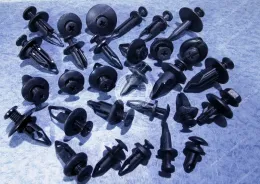
Automotive Plastic Fastener Design: Hole Size, Retention & Mating Geometry
Contact Us
Tel.:
+86 020 8621 0320
+86 020 3121 6067
E-mail:
Technical Support:
Navigation
SEND INQUIREY