Call Us
+86 136 6007 9809
Call Us
+86 136 6007 9809

Selecting a polymer for an automotive retainer is an engineering decision rather than simply a material-price decision.
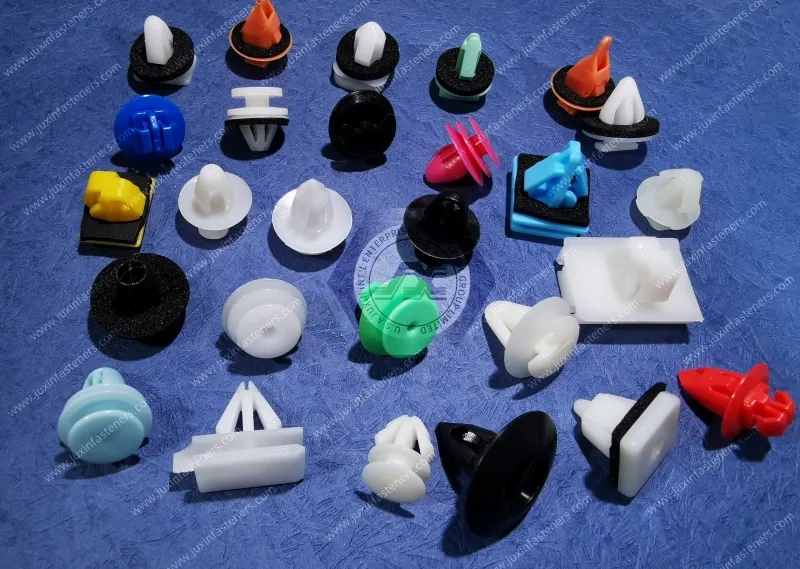
Automotive plastic retainers, clips, push-type fasteners, trim clips, cable clips, and other polymer fastening components can experience repeated installation,
mechanical deflection, temperature variation, moisture exposure, chemical contact, and dimensional changes.
Product Specification
Selecting a polymer for an automotive retainer is an engineering decision rather than simply a material-price decision.
Automotive plastic retainers, clips, push-type fasteners, trim clips, cable clips, and other polymer fastening components can experience repeated installation,
mechanical deflection, temperature variation, moisture exposure, chemical contact, and dimensional changes.
For this reason, Nylon, POM, PP, and other engineering plastics should be evaluated against the actual fastening function, geometry, environment, and assembly requirements.
A material that performs well in one retainer design may not be the appropriate choice for another design made from the same polymer family.
The practical selection sequence is:
Fastener Function → Environment → Polymer Behavior → Fastener Geometry → Mounting Interface → Tolerance → Assembly Method → Application Validation
JUXIN FASTENERS supplies customer-specific and non-standard automotive plastic fastening components according to customer drawings, material requirements, specifications, and application conditions.
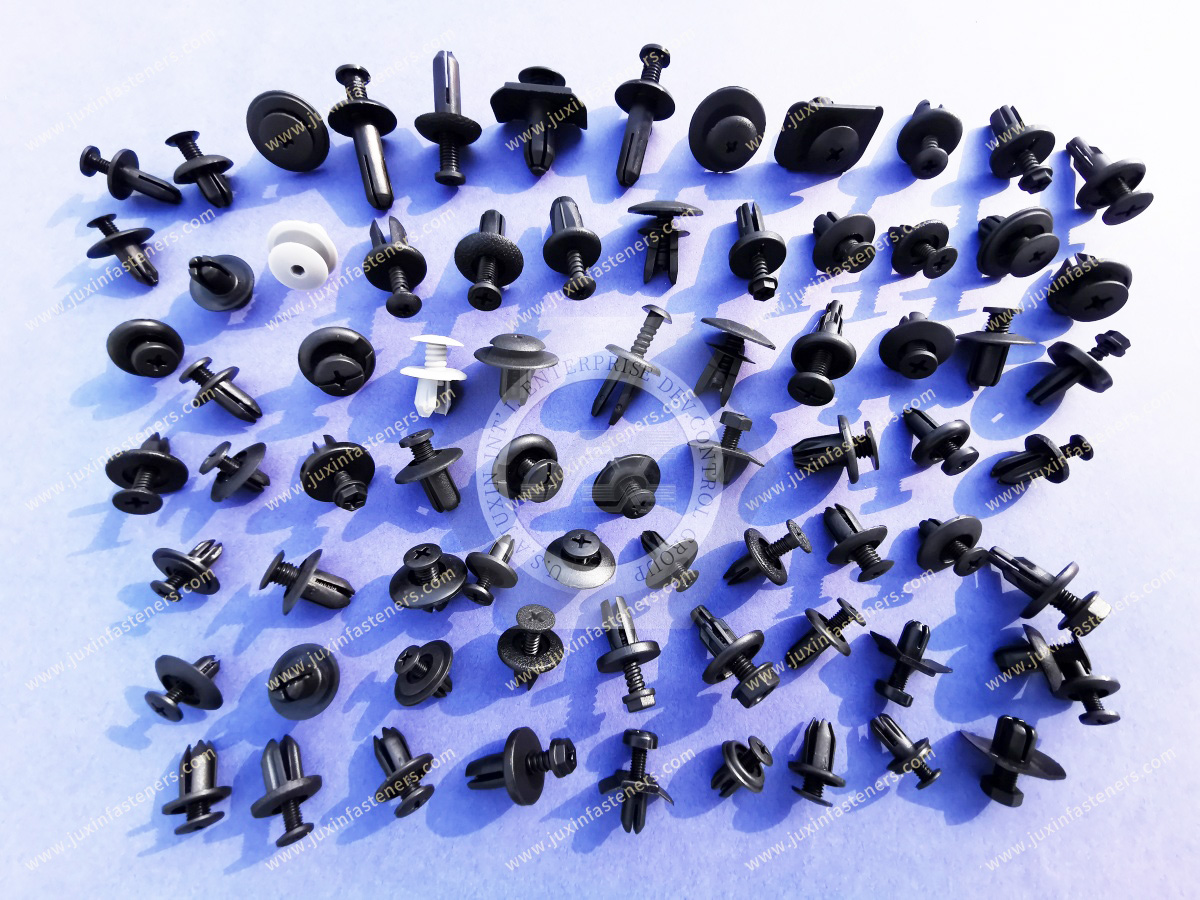
Plastic fasteners behave differently from conventional metal fasteners.
Their performance depends not only on the nominal polymer family but also on molecular structure, material grade, moisture condition, temperature, part geometry, processing condition, and the way the component is loaded.
For automotive retainers, engineers may need to evaluate:
Elastic recovery
Stiffness
Tensile and flexural behavior
Impact behavior
Moisture absorption
Dimensional stability
Creep
Stress relaxation
Thermal behavior
Chemical compatibility
Repeated assembly and removal
Retention geometry
Surface condition
This is why selecting a polymer from a material name alone can be misleading.
For example, "PA66 retainer" identifies a polymer family, but it does not fully define how the finished component will behave.
The final performance also depends on the geometry of the retention arms, wall thickness, mounting-hole condition, panel thickness, installation direction, and environmental conditions.
Many automotive plastic retainers depend on controlled elastic deformation.
During installation, a retention arm, rib, barb, hook, or other flexible feature may deflect as it passes through or engages with a mounting interface.
After installation, the feature can return toward its original position and establish retention.
This behavior depends on both material and geometry.
Engineers should therefore consider:
Polymer stiffness
Retention-feature thickness
Deflection distance
Root geometry
Radius transitions
Contact area
Hole geometry
Installation speed
Temperature
Moisture condition
A polymer with relatively high stiffness is not automatically better for every snap-fit design.
If the geometry requires substantial deflection, excessive stiffness may increase assembly effort or local stress.
Conversely, a highly flexible material may not provide the required retention behavior.
The correct solution is therefore the combination of:
Material + Geometry + Deflection + Mating Interface
Automotive retainers do not operate in a laboratory environment.
Depending on location, a plastic fastener may experience:
Temperature variation
Moisture
Condensation
Cleaning agents
Automotive fluids
UV exposure
Dust and contaminants
Vibration
Repeated mechanical movement
The importance of each condition depends on where the component is installed.
An interior trim retainer may have a very different environmental requirement from an exterior body-panel clip or an underbody component.
Therefore, polymer selection should begin with the application environment rather than with a generic ranking of materials.
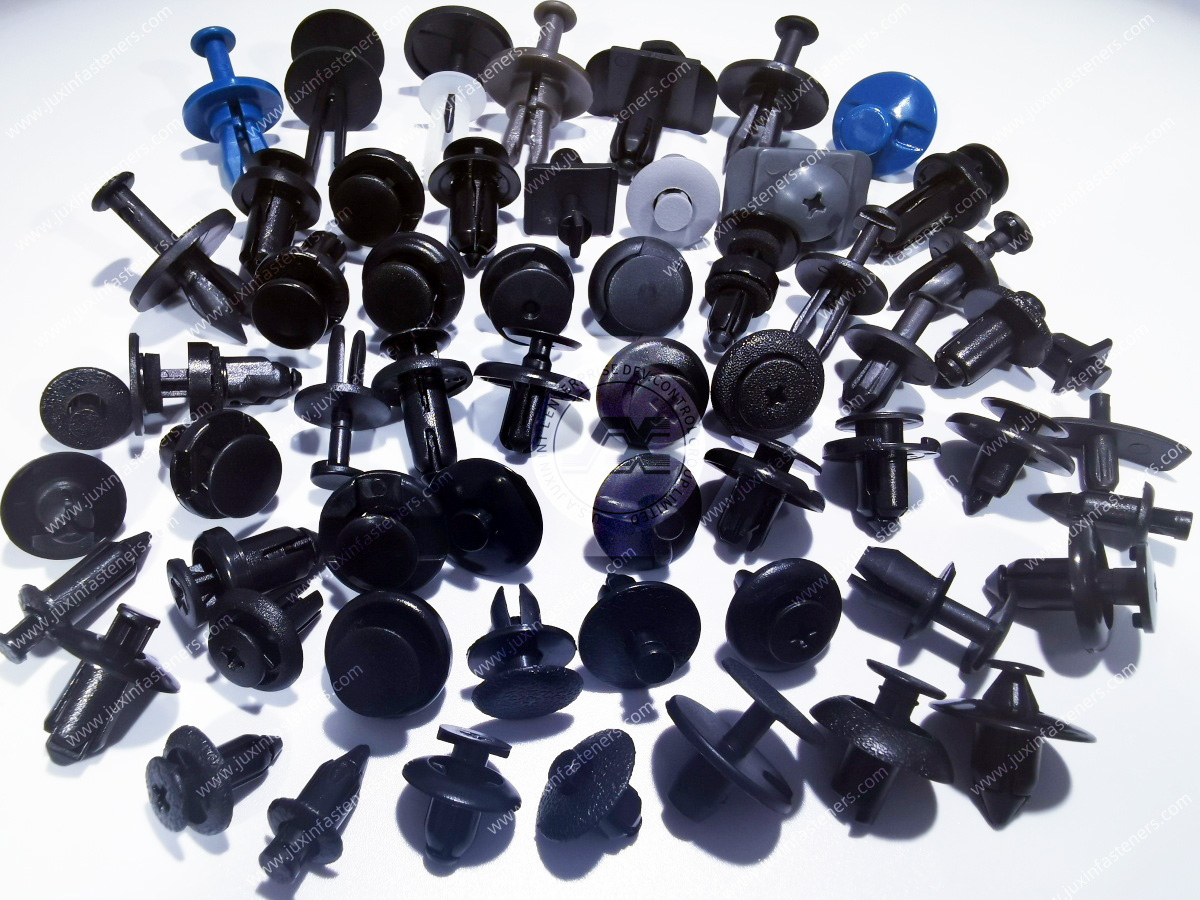
Nylon, including PA6 and PA66 families, requires particular attention to moisture.
Polyamide materials can absorb moisture from their surrounding environment.
This can influence:
Dimensions
Stiffness
Flexibility
Impact behavior
Mechanical response
Assembly behavior
The actual effect depends on the polymer grade, component geometry, moisture condition, temperature, and exposure history.
This creates an important distinction for nylon automotive retainers.
A nylon retainer should not be evaluated only in its dry material condition if the finished component will experience significant moisture exposure.
The engineer may need to consider the expected conditioning state when defining dimensional and functional requirements.
Suppose a nylon retainer operates in a relatively close mounting interface.
Changes in material condition can influence the dimensional relationship between:
Retainer Body ↔ Mounting Hole ↔ Panel
Therefore, dimensional stability should be evaluated together with the actual hole tolerance and retention geometry.
This is one reason why a nominally correct CAD fit does not necessarily establish production suitability.
Creep and stress relaxation are important considerations for polymer components that remain under sustained deformation or load.
Creep describes time-dependent deformation under sustained stress.
Stress relaxation describes a reduction in stress over time when a material remains at a defined deformation.
Their importance depends on the function of the retainer.
For a simple locating component, long-term clamping-force retention may not be the primary requirement.
For a component that continuously maintains a defined interference or clamping condition, long-term polymer behavior may become more important.
Engineers should therefore define the functional role first:
Locating
Retaining
Spacing
Clamping
Routing
Supporting
Serviceable attachment
This provides a more useful basis for material selection than simply asking which polymer has the highest strength.
Automotive assemblies can experience repeated temperature changes.
Plastic and metal materials do not necessarily expand or contract at the same rate.
This creates a differential thermal expansion consideration when a polymer retainer is installed into:
Steel
Aluminum
Another polymer
Composite material
Multi-layer assemblies
The effect depends on the materials, geometry, temperature range, mounting interface, and required retention function.
For plastic-to-metal joints, engineers should consider whether dimensional changes could influence:
Hole fit
Retention
Panel movement
Installation
Extraction
Long-term positioning
The appropriate solution may involve material selection, flexible geometry, clearance, or another interface design.
Nylon, POM, and PP are frequently considered for different automotive plastic components.
However, they should not be treated as interchangeable materials.
Nylon can be considered for automotive retainers where a combination of mechanical performance, flexibility, and elastic behavior is required.
Potential considerations include:
Mechanical strength
Stiffness
Elastic recovery
Impact behavior
Repeated deflection
Moisture absorption
Temperature behavior
Chemical exposure
PA6 and PA66 are related polymer families, but they should not automatically be treated as identical materials.
The exact material grade and formulation can influence the final properties of the component.
For this reason, a customer specification should identify the required material family and grade where the material is already established.
POM, commonly referred to as acetal, can be considered where dimensional behavior, rigidity, and friction characteristics are important.
Potential considerations include:
Rigidity
Dimensional stability
Friction behavior
Wear considerations
Moisture behavior
Snap-fit geometry
Moving interfaces
POM can be useful for certain precision or moving interfaces, but its suitability still depends on the actual component geometry and application environment.
A POM clip should not automatically be considered a better version of a Nylon clip.
It may simply be better suited to a different engineering requirement.
PP can be considered where flexibility, low moisture absorption, and chemical resistance characteristics align with the application.
Potential applications may include selected clips, retainers, flexible components, and other polymer fastening interfaces.
However, material suitability depends on the specific grade, geometry, temperature exposure, mechanical requirement, and assembly condition.
The statement "PP is flexible" is therefore not sufficient to establish whether a particular PP fastener design is appropriate.
The most useful comparison is not "which material is strongest?"
Instead, engineers should ask:
| Engineering Requirement | Nylon / PA6 / PA66 | POM / Acetal | PP |
|---|---|---|---|
| Mechanical performance | Can be suitable for demanding retainer designs | Can provide useful rigidity | Often considered where lower mechanical demand is acceptable |
| Elastic deformation | Suitable for many snap-fit designs | Depends strongly on geometry | Can be useful for flexible designs |
| Moisture absorption | Important consideration | Generally less moisture-sensitive than Nylon | Low moisture absorption |
| Dimensional stability | Requires moisture and temperature consideration | Often attractive for dimensional-control applications | Depends on grade and geometry |
| Friction behavior | Application-dependent | Often considered where low friction is useful | Application-dependent |
| Creep / stress relaxation | Must be evaluated for sustained loading | Must be evaluated | Must be evaluated |
| Chemical compatibility | Application-specific | Application-specific | Can be useful in selected chemical environments |
| Thermal behavior | Grade and geometry dependent | Grade and geometry dependent | Grade and geometry dependent |
| Best selection method | Function + environment + geometry | Function + environment + geometry | Function + environment + geometry |
This table should not be interpreted as a universal ranking.
The correct material depends on the customer-defined application.
One of the most important principles in automotive plastic fastener design is:
Material selection and geometry selection must be made together.
Consider two retainers made from the same Nylon grade.
Retainer A may have:
Thick retention arms
Small deflection
Large contact area
A relatively rigid mounting interface
Retainer B may have:
Thin flexible arms
Greater deflection
Smaller contact points
A different mounting-hole condition
Although the polymer family is identical, their assembly behavior can be significantly different because the geometry changes how the material is loaded.
Therefore:
Polymer Grade ≠ Finished Fastener Performance
A more complete model is:
Polymer Grade + Geometry + Dimensions + Mating Interface + Environment + Assembly Method
This is a key consideration when evaluating customer-specific automotive plastic retainers.
Material selection should be connected to the mounting hole.
The hole determines how the retention feature interacts with the substrate.
Important variables include:
Hole diameter
Hole shape
Hole tolerance
Edge condition
Panel thickness
Panel material
Installation direction
For example, a retainer with flexible barbs may behave differently when installed into:
A tight metal hole
A larger stamped hole
A molded polymer opening
A slotted interface
The same plastic material may therefore require different fastener geometry for different mounting interfaces.
For a deeper discussion of plastic fastener design, see Automotive Plastic Fastener Design: Hole Size, Retention & Mating Geometry.
Panel thickness is one of the most important variables when selecting an automotive retainer.
The fastener must engage the actual substrate within its intended grip range.
Engineers should consider:
Minimum panel thickness
Maximum panel thickness
Nominal thickness
Thickness tolerance
Multiple stacked layers
Retention-feature position
Head or flange geometry
A retainer that fits the hole but does not match the panel thickness may not provide the intended retention behavior.
This is why a complete fastener specification should include both:
Mounting Hole
and
Panel Thickness / Grip Range
rather than only the nominal fastener diameter.
Different retention mechanisms impose different demands on the polymer.
Push-type retainers can use expanding bodies, flexible legs, pins, barbs, or other retention structures.
Material selection should consider the required deformation during installation and the resulting retention function.
For more information, see Push-Type Retainers for Automotive Applications: Engineering & Sourcing Guide.
Snap-fit designs rely on controlled deflection.
The engineer should evaluate:
Deflection distance
Feature thickness
Root geometry
Material stiffness
Repeated installation
Temperature condition
Trim clips may use hooks, ribs, barbs, flanges, or other mating features.
Their suitability depends heavily on the relationship between the clip and the trim/panel geometry.
Some plastic retainers incorporate a screw-receiving interface.
These designs introduce additional considerations such as:
Screw geometry
Thread engagement
Polymer condition
Installation torque
Serviceability
Local stress
Material selection therefore cannot be separated from the final fastening mechanism.
Automotive polymer components may encounter different chemicals depending on their location.
Potential exposures can include:
Cleaning agents
Lubricants
Automotive fluids
Adhesive residues
Manufacturing chemicals
Environmental contaminants
Chemical resistance is polymer- and grade-specific.
Therefore, "chemical resistant" should not be treated as a universal material claim.
For an OEM project, the relevant chemical exposure should be identified and evaluated against the proposed polymer grade.
Nylon can be considered when the application requires a combination of:
Mechanical performance
Elastic deformation
Retention
Snap-fit behavior
Impact behavior
Repeated installation considerations
Nylon can be especially useful when the fastener design depends on controlled elastic deformation.
However, moisture exposure, dimensional requirements, temperature, and chemical compatibility should be included in the evaluation.
POM may be considered when the application places greater emphasis on:
Dimensional behavior
Rigidity
Friction characteristics
Sliding interfaces
Moving components
Specific wear considerations
The actual suitability still depends on the material grade and component geometry.
PP can be evaluated where the application benefits from:
Flexibility
Low moisture absorption
Specific chemical resistance
Lightweight polymer construction
Suitable hinge or flexible geometry
However, temperature and mechanical requirements should be checked against the specified PP grade.
The fact that an application is lightweight does not automatically mean that plastic is the appropriate fastening material.
A metal component may be more appropriate where the application requires characteristics that the selected polymer cannot provide within the available geometry and environmental conditions.
Potential reasons for evaluating metal include:
Higher mechanical requirements
Sustained loading
Temperature exposure
Threaded structural connection
Surface treatment requirements
Specific dimensional requirements
Assembly requirements
Long-term deformation considerations
Automotive fastening systems can therefore combine polymer and metal components.
The objective is not to replace metal with plastic everywhere.
The objective is to select the appropriate material for the actual fastening function.
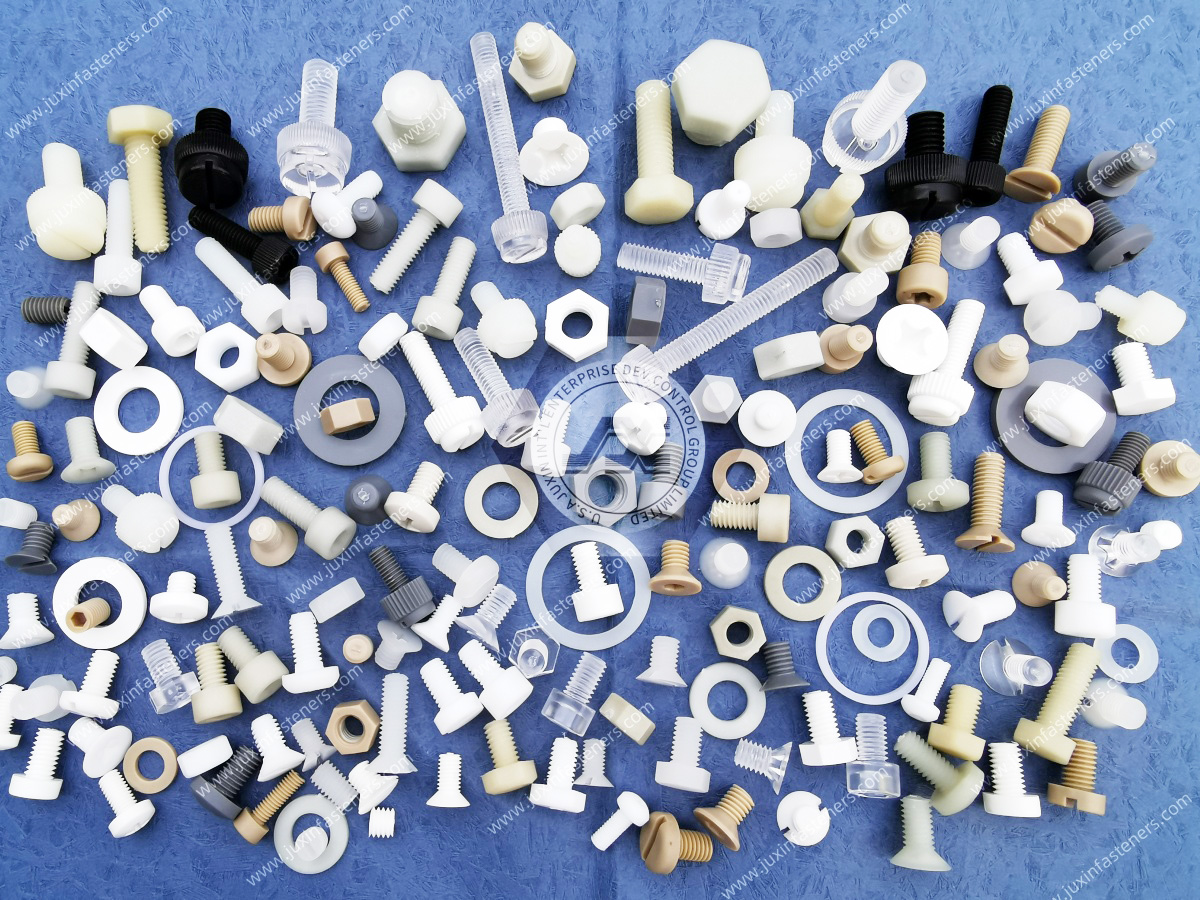
Modern vehicle assemblies frequently combine different fastening technologies.
A single vehicle can use:
Nylon retainers
Plastic trim clips
Push-type retainers
Screw-type retainers
Metal screws
Bolts
Nuts
Rivet nuts
Weld nuts
Pins
Shafts
High-strength fastening components
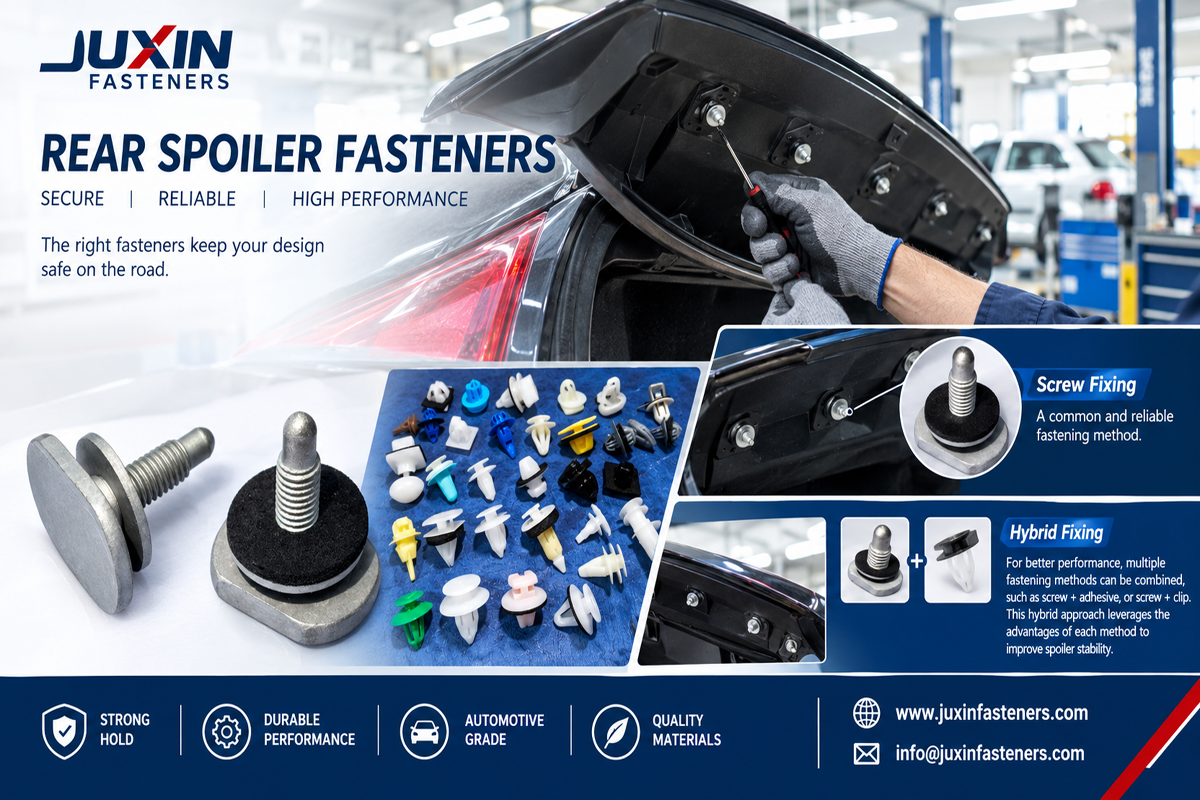
For example, a rear spoiler assembly may combine a Nylon Rear Spoiler Clip with an Automotive Spoiler Slide Bolt.
JUXIN FASTENERS supplies confirmed spoiler slide bolt configurations including M5 and M6, with representative M6 × 14 and M6 × 20 configurations.
Applicable configurations may use property classes 8.8 or 10.9 and specified finishes such as Color Zinc, Zinc-Nickel Alloy, or Black Zinc, according to customer requirements.
The slide bolt uses special head geometry to engage a mounting slot, track, or channel.
The basic assembly concept can be understood as:
Slide → Position → Engage → Tighten
Any anti-rotation effect depends on the mating geometry.
This example demonstrates why material selection should be based on the complete fastening system rather than an assumption that every automotive fastening component should use the same polymer.
The same material-selection principles can be applied across different automotive systems.
Plastic retainers and clips may be used for:
Door trim
Instrument panels
Center consoles
Garnish panels
Access covers
The main considerations can include retention, installation, serviceability, appearance, and dimensional fit.
Plastic clips and retainers may be used for:
Exterior mouldings
Body trim
Spoiler assemblies
Panel attachments
Wheel-arch components
Environmental exposure becomes increasingly important depending on vehicle location.
Plastic fastening components can also be used around:
Electrical cabinets
Electronic modules
Wiring systems
Sensors
Instrumentation
Communication equipment
Control assemblies
Material selection may involve additional considerations related to electrical insulation, temperature, chemical exposure, and enclosure geometry where applicable.
Sunroof mechanisms can include plastic and metal components around:
Guides
Retainers
Sliding interfaces
Mounting brackets
Mechanical linkages
Material selection should account for movement, dimensional stability, environmental exposure, and the specific mating interface.
Metal fastening components are more prominent in chassis and undercarriage applications, where environmental exposure, threaded interfaces,
surface treatment, and application-specific structural requirements may be important.
For more information, see the broader Automotive Chassis & Undercarriage Fastening: Rivet Nuts, Alloy Fasteners & OEM Sourcing Guide.
Material selection affects both engineering and sourcing.
Engineers may focus on:
Polymer grade
Mechanical behavior
Elastic recovery
Moisture conditioning
Creep
Stress relaxation
Thermal behavior
Chemical compatibility
Dimensional stability
Retention geometry
Hole tolerance
Panel thickness
Assembly requirements
The engineering question is:
Does the selected polymer and geometry provide the required function across the defined application conditions?
Procurement and supply-chain teams may focus on:
Exact material specification
Resin grade
Color requirement
Material availability
Dimensional consistency
Documentation
Packaging
Production quantity
Delivery requirements
Supplier communication
Change control
The procurement question is:
Can the specified material and component be sourced consistently according to the approved engineering requirement?
These two perspectives should be connected early in the project.
A material substitution that looks commercially attractive may require engineering review if the polymer grade changes.
Likewise, an engineering specification that does not clearly identify the required polymer grade can create procurement ambiguity.
When the polymer has already been selected, the customer specification should ideally identify the relevant material requirements.
This can include:
Polymer family
Material grade
Required color
Applicable material specification
Environmental requirements
Dimensional requirements
Functional requirements
Special additives or formulation requirements where specified
Where the material has not yet been finalized, the customer can provide the functional requirements and application environment for material-selection evaluation.
This distinction is important.
"PA66" is a material family.
It does not necessarily identify every characteristic of the finished component.
The exact grade and formulation should follow the approved engineering specification.
When sourcing nylon automotive retainers or other polymer fastening components, a structured RFQ can reduce ambiguity.
Identify where the component is used:
Interior
Exterior
Door
Dashboard
Trim
Spoiler
Electrical assembly
Other vehicle system
Specify whether the component is primarily:
Retaining
Locating
Positioning
Spacing
Clamping
Routing
Serviceable fastening
Provide:
Mounting hole
Slot
Panel
Bracket
Mating plastic component
Other interface
Specify the relevant thickness range and grip requirement.
Specify:
Nylon / PA6 / PA66
POM
PP
Other customer-defined polymer
Exact material grade where required
Provide relevant:
Temperature
Moisture
Chemical exposure
UV exposure where applicable
Vibration
Repeated movement
Specify:
Installation direction
Installation method
Insertion force where required
Extraction force where required
Service/removal requirements
Provide:
Prototype quantity
Production quantity
Estimated annual demand
Packaging requirements
A customer drawing or 3D CAD model is the most useful starting point for a customer-specific component.
"Use Nylon" is not a complete engineering requirement.
The engineer should first identify what the component actually does.
Higher nominal strength does not automatically mean better retainer performance.
Elastic recovery, geometry, moisture behavior, temperature, creep, and assembly requirements may be equally important.
Nylon's moisture behavior can influence dimensions and mechanical response.
The expected environmental condition should therefore be considered.
A polymer cannot be evaluated independently from the fastener geometry.
Wall thickness, retention-arm geometry, deflection, and contact area can materially influence the finished component's behavior.
The actual joint includes:
Fastener + Hole + Panel + Mating Component
The complete dimensional range should be considered.
PA6 and PA66 belong to the Nylon family but are not automatically interchangeable.
The specified grade should follow the customer's approved material requirement.
Two clips made from the same polymer may still have completely different:
Hole requirements
Grip ranges
Retention mechanisms
Installation directions
Panel interfaces
Material similarity does not establish component interchangeability.
JUXIN FASTENERS is an OEM-oriented supplier of customer-specific and non-standard automotive fastening components.
Relevant product categories include:
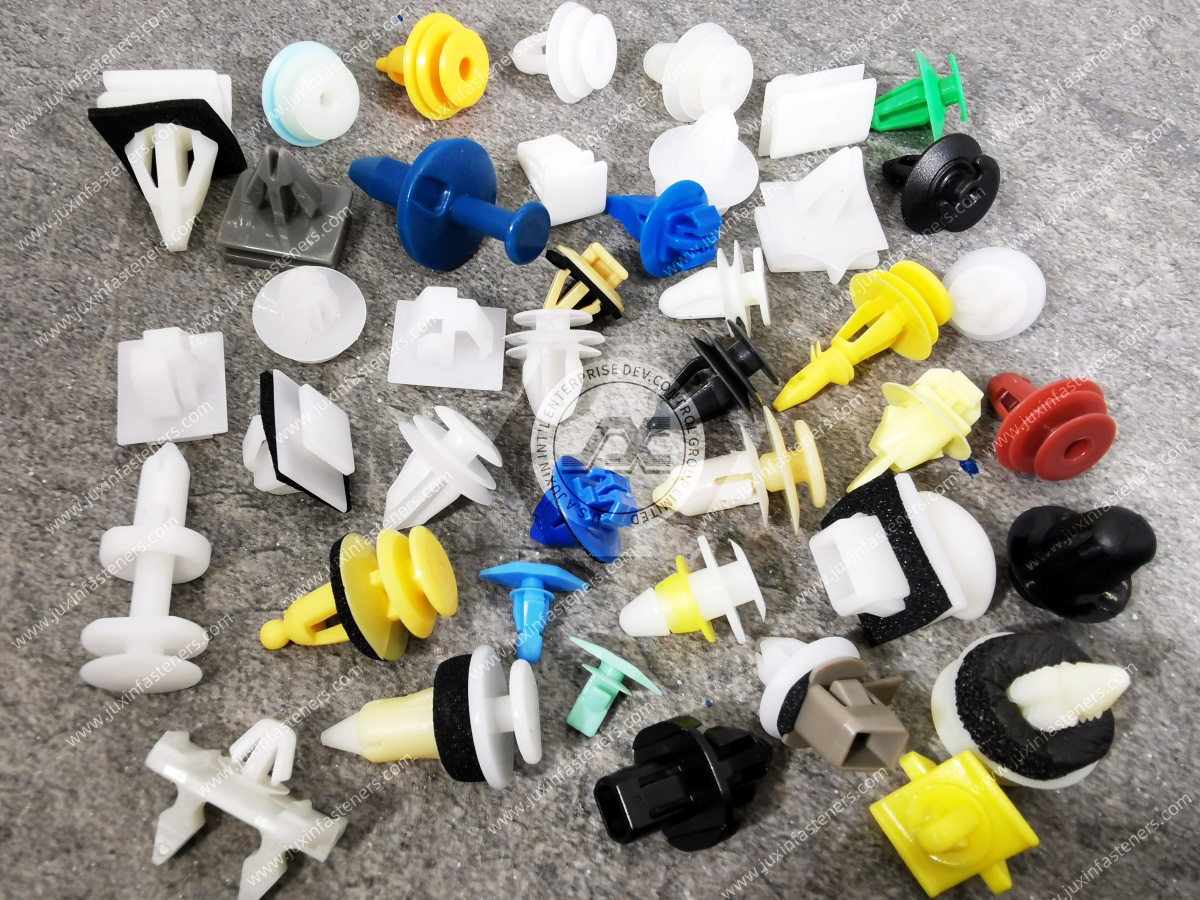
Automotive plastic fasteners
Nylon retainers
Automotive plastic clips
Push-type retainers
Trim and moulding clips
Screw-type retainers
Nylon Rear Spoiler Clips
Automotive Spoiler Slide Bolts
Customer-specific screws
Customer-specific bolts
Nuts
Rivet nuts
Weld nuts
High-strength fastening components
Application-specific pins and shafts
JUXIN FASTENERS manufactures customer-specific components according to customer drawings, material requirements, specifications, and application conditions.
For polymer fasteners, the applicable material should be established together with the component geometry and mating interface.
This is particularly important when the application involves tight mounting tolerances, repeated installation, temperature variation, moisture exposure, or long-term retention requirements.
When comparing Nylon, POM, PP, or another polymer, engineers can use the following sequence:
1. What is the fastener function?
Retention, locating, spacing, clamping, routing, or serviceable fastening?
2. What is the environment?
Temperature, moisture, chemicals, UV, vibration, or repeated movement?
3. What is the mating material?
Steel, aluminum, plastic, composite, or another material?
4. What is the mounting geometry?
Hole, slot, flange, edge, molded feature, or another interface?
5. What is the panel thickness?
Define the complete relevant thickness range.
6. What retention mechanism is required?
Push, snap-fit, barb, rib, flange, screw-receiving, or another mechanism?
7. What polymer behavior is required?
Stiffness, flexibility, dimensional stability, moisture behavior, creep resistance, or chemical compatibility?
8. What tolerance is acceptable?
Evaluate the fastener and mating components as one dimensional system.
9. What assembly behavior is required?
Insertion, retention, extraction, serviceability, and installation direction?
10. What customer validation is required?
Define the applicable dimensional, functional, environmental, or assembly validation according to the project specification.
This model is more useful than simply asking:
"Is Nylon better than POM?"
The correct question is:
"Which polymer and geometry provide the required fastening function for this specific automotive interface?"
Nylon can provide a useful combination of mechanical performance, flexibility, elastic behavior, and impact characteristics for many retainer designs.
However, moisture, temperature, geometry, and application conditions should also be considered.
PA6 and PA66 are different polyamide families with different material characteristics.
They should not automatically be treated as interchangeable. The specific grade should follow the customer engineering specification.
Nylon can absorb moisture, which can influence dimensions, stiffness, flexibility, and mechanical response.
The effect depends on the polymer grade, geometry, moisture condition, and temperature.
POM may be considered where rigidity, dimensional behavior, friction characteristics, or specific moving-interface requirements are important.
The actual suitability depends on the complete component design and environment.
PP can be evaluated where flexibility, low moisture absorption, and suitable chemical-resistance characteristics align with the application.
The required grade and operating conditions should be considered.
No. Material selection depends on the fastening function, environment, geometry, mating materials, tolerance, installation method, and long-term requirements.
Material is important, but it is only one part of the system. Geometry, mounting-hole size, panel thickness, retention mechanism, tolerance,
installation method, and environmental conditions also influence the finished component.
Useful information includes the drawing or CAD model, mounting-hole dimensions, panel thickness, grip range, retention function, polymer family and grade,
environmental conditions, assembly requirements, quantity, and packaging requirements.
JUXIN FASTENERS supplies customer-specific and non-standard automotive plastic fastening components according to customer drawings, material requirements,
specifications, and application conditions. The applicable polymer grade and component geometry should be established according to the customer's approved engineering requirements.
The right polymer is not selected by material name alone.
For an automotive retainer or plastic clip, the complete engineering relationship should be considered:
Function → Environment → Polymer → Geometry → Mounting Hole → Panel Thickness → Grip Range → Tolerance → Assembly → Validation
If your project requires a nylon automotive retainer, PA6 or PA66 plastic fastener, POM component, PP clip, push-type retainer, trim clip, or other customer-specific polymer fastening component, provide the available engineering information.
Useful starting information includes:
Customer drawing or 3D CAD
Mounting-hole dimensions
Hole tolerance
Panel thickness
Grip range
Retention mechanism
Polymer family and grade
Color requirement
Environmental conditions
Installation method
Quantity
Packaging requirements
JUXIN FASTENERS can evaluate customer-specific and non-standard automotive fastening requirements based on the available engineering specification.
JUXIN FASTENERS
OEM-Oriented Supplier of Customer-Specific and Non-Standard Automotive Fastening Components
Product Packaging
Packaging Standard
At Juxin Fasteners, we apply standardized export packaging to ensure product protection, traceability, and compliance with international logistics requirements.
1. Standard Export Packaging
Unless otherwise specified, all products will be packed according to our factory standard export packaging, which includes:
Moisture-resistant inner protection
Poly bag or small box packing as required
Reinforced export cartons
Clear labeling with part number, specification, batch number, and quantity
Palletizing for sea or air shipment when necessary
Our standard packaging is designed to ensure safe transportation, efficient warehousing, and long-distance international shipping.
2. Customized Packaging Options
We also provide customized packaging solutions according to customer requirements, including but not limited to:
Private labeling
Customized barcodes
Specific carton dimensions
Retail packaging
Special pallet configuration
Customer-specific marking and identification
So that you know, customized packaging may involve additional costs and extended lead time depending on the complexity of the requirements.
3. Compliance & Quality Assurance
All packaging processes are controlled under our ISO 9001 quality management system to ensure consistency, traceability, and product integrity throughout the supply chain.
Product Pictures
Hot Products
Plastic Push Rivets for Automotive Body Panels: Engineering & Sourcing Guide
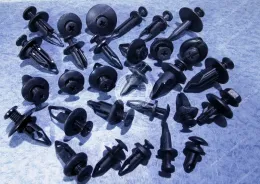
Automotive Plastic Fastener Design: Hole Size, Retention & Mating Geometry
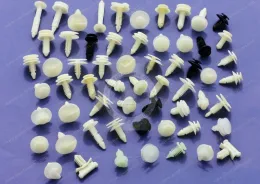
Automotive Plastic Retainers and Clips: Types, Functions & Applications
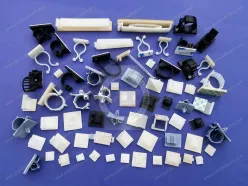
Automotive Trim & Moulding Clips: Engineering, Retention & OEM Sourcing Guide
Contact Us
Tel.:
+86 020 8621 0320
+86 020 3121 6067
E-mail:
Technical Support:
Navigation
SEND INQUIREY