Call Us
+86 136 6007 9809
Call Us
+86 136 6007 9809

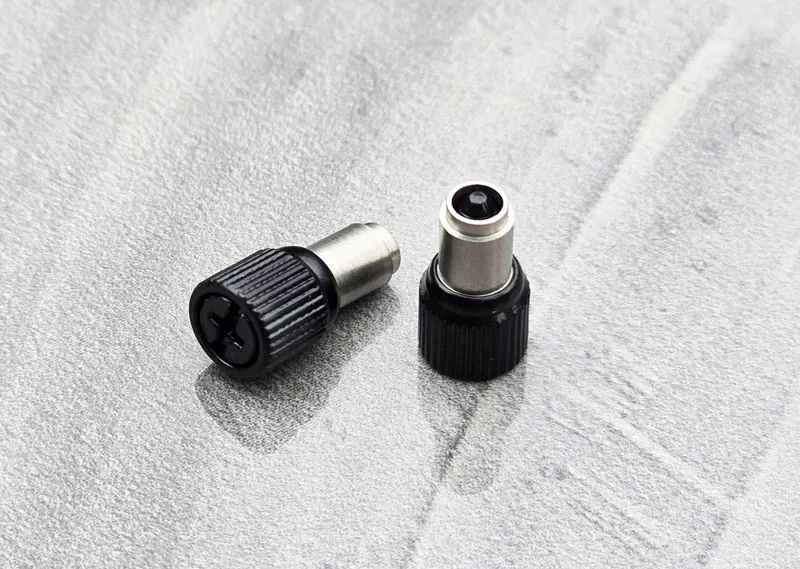
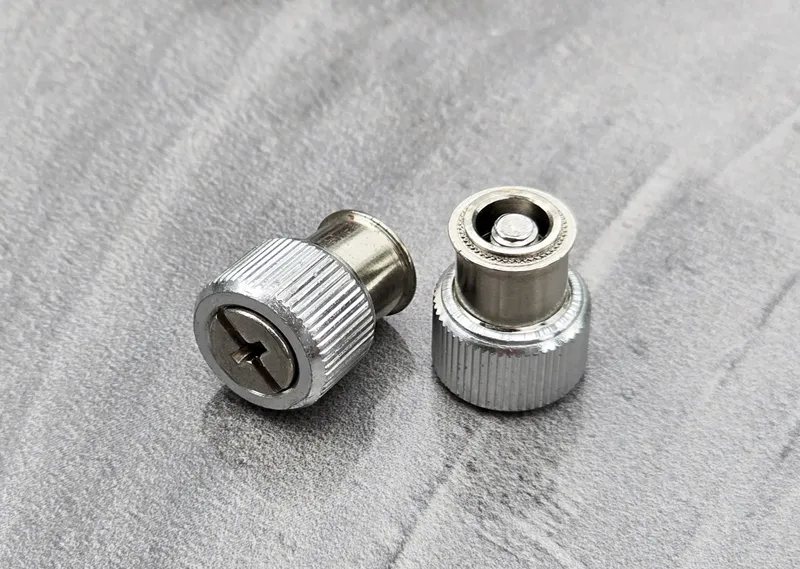
Captive panel fasteners are commonly selected for equipment that must be opened repeatedly during installation, inspection, maintenance, repair, or component replacement.
Unlike conventional loose screws, captive screws remain associated with the panel after disengagement. This improves serviceability and helps control loose hardware.
Product Specification
Captive panel fasteners are commonly selected for equipment that must be opened repeatedly during installation, inspection, maintenance, repair, or component replacement.
Unlike conventional loose screws, captive screws remain associated with the panel after disengagement. This improves serviceability and helps control loose hardware.
But captive hardware is not maintenance-free.
After years of service, repeated opening and closing, incorrect tool use, cross-threading, corrosion, impact, excessive tightening, contamination,
or panel damage can cause a captive fastener assembly to stop functioning correctly.
Typical field problems include:
stripped male threads
damaged mating threads
bent screw shanks
seized screws
worn drive recesses
damaged knobs
broken or fatigued springs
captive retainers that rotate in the panel
loose retaining sleeves
damaged mounting holes
insufficient screw retraction
corrosion
lost clamp function
misalignment between the panel and mating frame
At that point, the maintenance problem is no longer simply:
“Which screw should we buy?”
The more useful engineering question is:
“Is the failure limited to the captive fastener, or has the panel, mounting hole, mating thread, or surrounding assembly also been damaged?”
That distinction determines whether the equipment can accept a direct replacement captive screw,
requires a functional-equivalent assembly, needs a manufacturer-approved panel repair, or requires replacement of the panel itself.
Also searched as captive screw replacement, replacement captive screws, captive hardware maintenance, field replacement captive screws,
damaged captive fastener repair, panel hardware servicing, and OEM replacement captive fasteners, these requirements create an important aftermarket and MRO sourcing category for long-lifecycle industrial equipment.
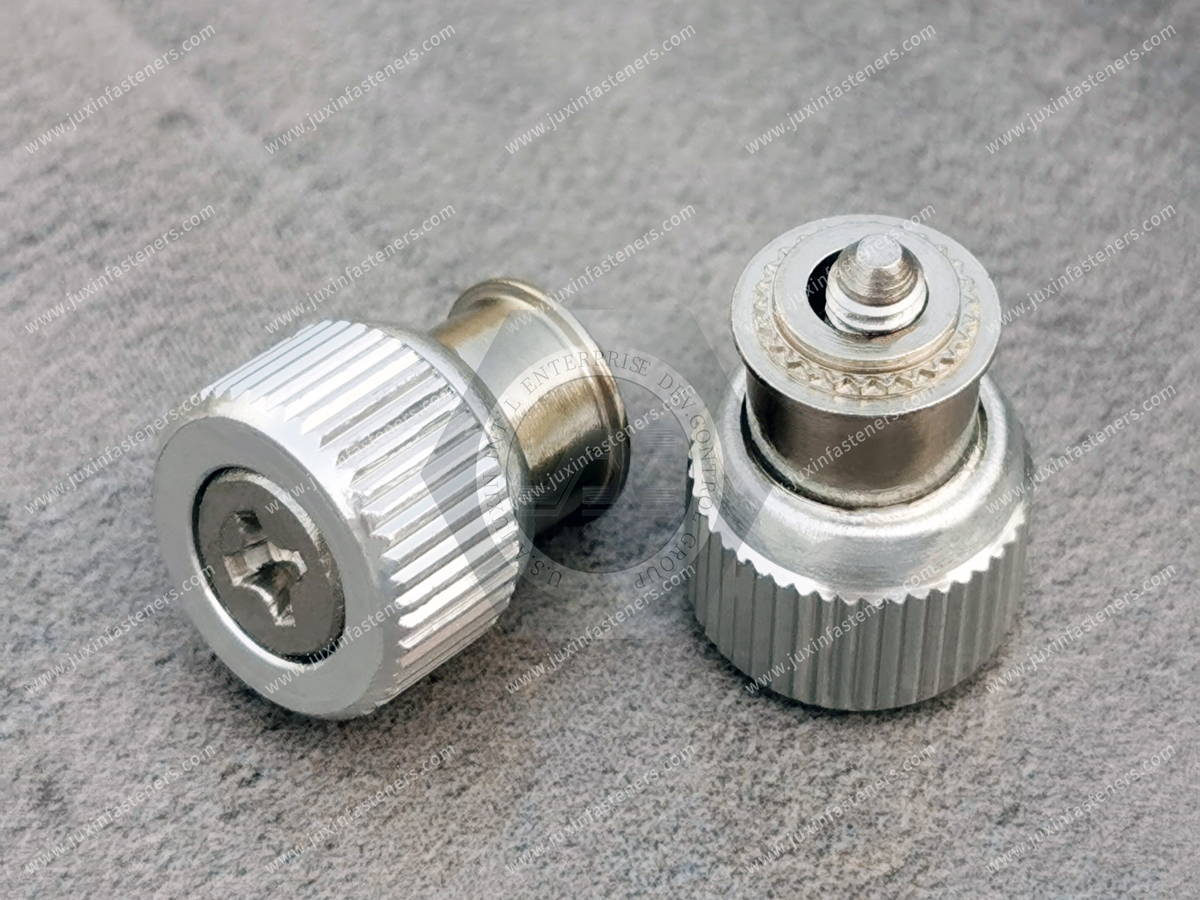
A damaged captive screw may appear to be a simple threaded component.
In reality, a captive panel assembly can include:
screw
retaining sleeve
ferrule
spring
knob
washer
retaining feature
panel-mounted retainer
mating nut or threaded frame component
A replacement therefore needs to reproduce the required assembly functions.
These may include:
thread engagement
panel retention
screw retraction
alignment
clamp load
service clearance
vibration resistance
environmental performance
electrical bonding
sealing or gasket compression
operator access
Matching only the nominal thread size can therefore produce a replacement that physically installs but does not function correctly.
A practical captive fastener replacement process should follow this sequence:
Failure symptom → fastener inspection → mating thread inspection → mounting-hole inspection → panel condition
→ original installation method → replacement strategy → sample validation → production or MRO sourcing
This prevents procurement from solving the wrong problem.
For example, a screw that spins without tightening may indicate:
stripped male threads
stripped female threads
rotating captive retainer
rotating mating nut
incorrect replacement thread
Each failure requires a different corrective action.
Before removing damaged hardware, determine how the captive assembly is attached to the panel.
Common architectures can include:
self-clinching captive retainers
flare-mounted retainers
swaged retainers
riveted retainers
threaded retainers
spring-loaded captive screw assemblies
manually retractable captive screws
low-profile captive screws
tool-actuated captive screws
custom retained panel hardware
The removal and replacement method depends on the architecture.
A procedure suitable for one design may damage another.
The first inspection should separate hardware failure from host-panel failure.
Potential examples include:
stripped screw thread
bent screw shank
damaged drive recess
damaged hand knob
broken spring
seized internal captive mechanism
corrosion localized to the hardware
If the panel mounting interface remains within specification, replacement may be comparatively straightforward.
Potential examples include:
enlarged mounting hole
ovalized hole
cracked sheet metal
distorted panel
damaged clinching area
torn hole edge
retainer spin
local material thinning
damaged coating around the hole
These conditions require additional engineering review.
Installing another identical fastener into a damaged mounting interface may not restore the original retention performance.
Male threads can be damaged through:
cross-threading
excessive tightening
incorrect mating thread
contamination
corrosion
impact
repeated service wear
Inspection should determine whether the damage is limited to the screw or has also affected the mating female thread.
Replacing the captive screw without checking the receiving thread can lead to immediate repeat failure.
The mating thread may be located in:
a tapped frame
weld nut
cage nut
self-clinching nut
floating nut
rivet nut
threaded insert
another captive nut system
If the female thread is damaged, the complete joint must be evaluated.
A new captive screw cannot compensate for an unusable mating thread.
Cross-threading is particularly common when:
the panel is misaligned
the screw enters the mating thread at an angle
operators use power tools before thread engagement is established
floating alignment capability is insufficient
the panel is distorted
Repeated cross-threading may indicate an assembly-alignment problem rather than simply poor screw quality.
For recurring failures, engineers should evaluate panel and mating-thread alignment.
Captive screw shanks may bend if the panel is moved while the screw remains partially engaged.
This can occur on:
sliding panels
rack-mounted equipment
service trays
access covers
hinged assemblies
A bent screw may:
jam inside the retaining sleeve
fail to retract
drag against the mating structure
damage the receiving thread
prevent panel removal
Replacement should include verification of the required retracted clearance.
Repeated servicing can damage:
hex sockets
Torx-style drives
cross recesses
slots
external hex features
Common causes include:
incorrect tool size
worn tools
excessive torque
tool misalignment
contamination
corrosion
If drive damage occurs repeatedly across a fleet of equipment, the maintenance team may need to review the drive system and service procedure rather than treating each failure independently.
Spring-loaded captive screws can lose proper operation if the spring becomes:
broken
permanently deformed
contaminated
corroded
jammed
Symptoms may include:
incomplete retraction
inconsistent screw positioning
poor panel handling
interference during removal
The replacement should match the required spring function, but spring force should not be confused with joint clamp load.
A captive retainer that rotates inside the panel can prevent normal tightening or removal.
Possible causes include:
damaged panel material
insufficient original installation
incorrect panel thickness
material hardness incompatibility
impact
vibration
excessive torque
repeated service damage
Retainer spin is an important warning because the problem may involve the host panel rather than only the fastener.
Captive hardware used outdoors or in aggressive environments can experience:
coating degradation
red rust on carbon steel
corrosion products inside threads
galvanic corrosion
stainless thread galling
contamination
loss of free movement
Before selecting a replacement, identify the actual service environment.
Relevant factors include:
humidity
salt exposure
cleaning chemicals
temperature
outdoor weather
dissimilar metals
washdown conditions
The replacement material and finish should be selected according to the actual equipment requirement.
A jammed captive assembly can tempt technicians to use:
locking pliers
pry bars
impact tools
chisels
uncontrolled drilling
excessive torque
These methods can transfer damage into the panel.
Potential consequences include:
distorted sheet metal
enlarged mounting holes
cracked coatings
damaged gasket surfaces
damaged mating threads
cosmetic damage
loss of panel flatness
The correct removal method depends on the captive hardware architecture and the equipment manufacturer's approved repair procedure.
There is no universal removal method for all captive panel fasteners.
A self-clinching retainer, flare-mounted retainer, swaged component, riveted assembly, and custom captive fastener may require different tooling.
Therefore, before removal, technicians should determine:
How was the original fastener installed?
Which part of the assembly mechanically retains it?
From which direction can removal force safely be applied?
Which panel surfaces require support?
Is drilling permitted by the equipment repair specification?
Can the panel coating be damaged?
Is the panel itself safety-critical?
This is safer than treating every captive retainer as a component that can simply be pressed out.
For some press-installed captive hardware, controlled axial removal may be possible when supported by the original hardware design and repair procedure.
A controlled process may use:
arbor press
hydraulic press
support fixture
guided punch
receiving die
The objective is to keep removal forces aligned while supporting the surrounding panel.
However, pressing out self-clinching hardware can alter the original mounting hole or surrounding material.
The hole must therefore be inspected before installing replacement hardware.
Some captive hardware architectures may require machining or drilling during removal.
If drilling is permitted, the process should control:
drill alignment
drill diameter
cutting depth
panel protection
chip contamination
heat
surrounding components
Unguided drilling can damage thin sheet because the drill may move from the harder fastener material into the softer host panel.
For sensitive equipment, an appropriate fixture or controlled repair process should be considered.
Field replacement often occurs on finished equipment.
Removal operations can damage:
powder coating
wet paint
anodized surfaces
conversion coatings
corrosion-protection systems
Damage around the mounting hole may require approved touch-up or corrosion protection.
This is particularly important for:
outdoor telecom equipment
rail equipment
BESS enclosures
solar inverters
industrial machinery
commercial vehicles
Fastener replacement should therefore include coating inspection where environmental durability matters.
After the original captive hardware is removed, the mounting hole becomes one of the most important inspection points.
Evaluate:
hole diameter
roundness
burrs
cracks
elongation
local deformation
sheet thickness
surrounding flatness
remaining clinching features
coating condition
If the original engineering drawing is available, compare the actual hole with the specified installation dimensions.
A hole can measure close to the original nominal diameter and still be unsuitable for direct replacement.
Potential problems include:
local material displacement
worn clinch region
cracking
loss of flatness
damaged hole edge
work-hardened or distorted material
Visual and dimensional inspection should therefore be combined.
If the mounting hole and surrounding panel remain within the requirements of the replacement fastener, a direct replacement may be possible.
However, this does not automatically mean the original push-out or torque-out performance has been restored.
Retention should be verified according to the replacement fastener design and application requirements.
A worn hole should not automatically be repaired by installing a longer shank or larger knurl.
Whether this is acceptable depends on:
panel material
sheet thickness
original hole geometry
degree of wear
replacement hardware design
available edge distance
installation method
structural requirements
A modified replacement should be treated as an engineering change and validated accordingly.
If the mounting hole is:
significantly enlarged
torn
cracked
elongated
distorted
a standard press-in replacement may no longer be appropriate.
Possible repair paths can include:
manufacturer-approved panel repair
controlled hole rework
alternative captive mounting architecture
backing hardware
flare-mounted solution
replacement panel
The correct choice depends on the equipment and panel design.
Increasing the mounting-hole diameter may appear to be an easy repair.
However, hole enlargement can affect:
edge distance
panel strength
local stiffness
coating protection
appearance
adjacent features
fastener retention
Any oversize repair should therefore be reviewed as an engineered modification rather than a universal maintenance technique.
A flare-mounted captive assembly may be useful in certain replacement or refurbishment situations.
Depending on the design, it may provide a mechanical retention method that does not rely on the same clinching mechanism as the original component.
Potential advantages can include:
compatibility with some panel materials
alternative retention geometry
suitability for selected repair architectures
However, flare-mounted hardware is not a universal solution for every damaged hole.
The panel geometry and installation method must still be compatible.
After inspection, procurement must determine whether the program requires:
exact replacement
dimensional replacement
functional equivalent
engineered replacement
These categories are not identical.
An exact replacement is intended to match the original specification as closely as required by the program.
Relevant characteristics may include:
dimensions
materials
finish
spring
drive
retainer
installation method
performance
A functional equivalent may use a different design detail while meeting the required assembly functions.
The engineering team must identify which characteristics are critical.
Where the original mounting condition has changed or the original component is unavailable, a new replacement architecture may be required.
This should be treated as an engineering change and validated before fleet-wide or production use.
Long-lifecycle equipment can remain in service after the original fastener:
becomes obsolete
changes supplier
becomes difficult to source
has excessive lead time
is no longer available in small quantities
Functional-equivalent sourcing can help maintain equipment without redesigning the complete enclosure.
But equivalence must be based on function, not appearance.
| Parameter | Why It Matters |
|---|---|
| Thread size | Must match the receiving thread |
| Thread pitch/TPI | Prevents cross-threading and incompatibility |
| Thread tolerance/class | Affects fit and engagement |
| Screw length | Determines engagement and clearance |
| Retainer diameter | Must match mounting interface |
| Panel thickness range | Affects retention |
| Installation method | Must suit the existing panel |
| Retracted clearance | Prevents interference during panel removal |
| Head geometry | Affects access and envelope |
| Drive type | Must suit maintenance tooling |
| Spring architecture | Controls retraction/positioning where required |
| Material | Affects strength and corrosion behavior |
| Surface finish | Affects corrosion and friction |
| Captive retention | Must maintain hardware retention |
| Electrical function | Relevant for conductive/bonding applications |
| Sealing function | Relevant for gasketed or environmental panels |
This matrix is more useful than comparing replacement parts by thread size alone.
Replacement hardware must match the receiving thread.
Common systems include:
ISO metric threads
Unified inch threads used in ASME/ANSI-based assemblies
customer-specific threads
The RFQ should define:
nominal thread size
pitch or threads per inch
thread tolerance or class
required engagement
If the original specification is unknown, the physical sample and mating component should be inspected before ordering production quantities.
One of the most frequently overlooked replacement dimensions is the screw's retracted position.
When disengaged, the captive screw may need to clear:
cabinet frame
slide rail
mating flange
gasket
adjacent electronics
drawer mechanism
A replacement screw with the correct thread but excessive rear projection can cause:
panel drag
frame interference
scratched coatings
damaged threads
inability to remove the panel
Therefore, retracted clearance should be treated as a functional dimension.
The extended screw position can also matter.
The screw must reach the mating thread while maintaining the required:
thread engagement
alignment
head position
spring behavior
panel fit
Both retracted and engaged positions should be reviewed during replacement qualification.
When replacing spring-loaded captive screws, compare:
free position
compressed position
spring geometry
screw travel
retraction distance
head height
installation envelope
Spring characteristics should be matched to the required function rather than assumed from visual appearance.
For replacement programs, procurement may need to maintain the original drive system so technicians can continue using existing service tools.
Common drive styles include:
Torx-style
internal hex
external hex
slotted
cross recess
hand-operated knob
combination designs
Changing the drive can affect:
maintenance tooling
torque capability
service procedures
access
tamper control
Any change should therefore be reviewed with the service team.
Replacement hardware should consider the existing environmental requirement.
Potential finishes may include:
zinc-based coatings
zinc-nickel coatings
zinc flake systems
passivated stainless steel
customer-specified finishes
The replacement does not necessarily need to reproduce a finish name merely for appearance.
The actual requirement may involve:
corrosion performance
friction
color
electrical conductivity
chemical compatibility
environmental compliance
Procurement should identify the functional requirement.
Do not assign universal corrosion performance based only on the finish name.
Actual performance depends on:
coating specification
thickness
passivation
topcoat
substrate
geometry
test method
acceptance criteria
Where salt-spray testing is required, the applicable ASTM, ISO, EN, or customer-specific test requirement should be stated in the RFQ.
Captive screws are frequently used on gasketed service panels.
Replacing the screw can influence:
gasket compression
panel flatness
clamp distribution
closure position
A replacement fastener does not automatically restore the enclosure's original environmental rating.
Where sealing performance is important, the repaired panel should be evaluated according to the equipment requirement.
A replacement part can fit physically while changing:
clamp load
friction
spring behavior
retraction
gasket compression
vibration response
electrical bonding
corrosion behavior
This is why “it screws in” is not a sufficient qualification criterion for industrial MRO hardware.
The complete required function must be reviewed.
High-density computing systems contain large numbers of serviceable panels, trays, power shelves, cooling modules, and chassis components.
Potential replacement applications include:
GPU server chassis covers
power shelf panels
cooling-system access covers
rack equipment
fan-wall panels
network equipment
Captive hardware helps control loose screws during maintenance.
Replacement programs can be particularly useful for data center operators, equipment refurbishers, and OEM service organizations maintaining large installed equipment populations.
Refurbishment programs may encounter:
damaged captive screws
worn drives
missing springs
bent shanks
corroded hardware
discontinued original parts
A standardized replacement kit can simplify repair across equipment families when compatibility has been verified.
Telecom equipment often remains deployed outdoors for long service periods.
Potential replacement applications include:
5G outdoor cabinets
remote radio units
fiber distribution equipment
microwave equipment
telecom power systems
base-station enclosures
Maintenance teams may need replacement captive hardware because of:
corrosion
repeated field access
tool damage
vandalism
environmental exposure
Material and coating selection should reflect the original environmental requirement.
Electrical cabinets use captive panel hardware for access to:
drives
busbars
control electronics
power supplies
protective devices
cooling equipment
Replacement qualification may need to consider electrical bonding as well as mechanical retention.
Where the original fastener contributes to grounding or bonding continuity, the replacement should preserve that function.
Containerized BESS equipment contains:
battery systems
power conversion
electrical distribution
HVAC
fire and monitoring systems
service compartments
Outdoor service life and repeated maintenance can create aftermarket demand for replacement panel hardware.
For exterior panels, corrosion and sealing requirements should be reviewed together with the captive fastener geometry.
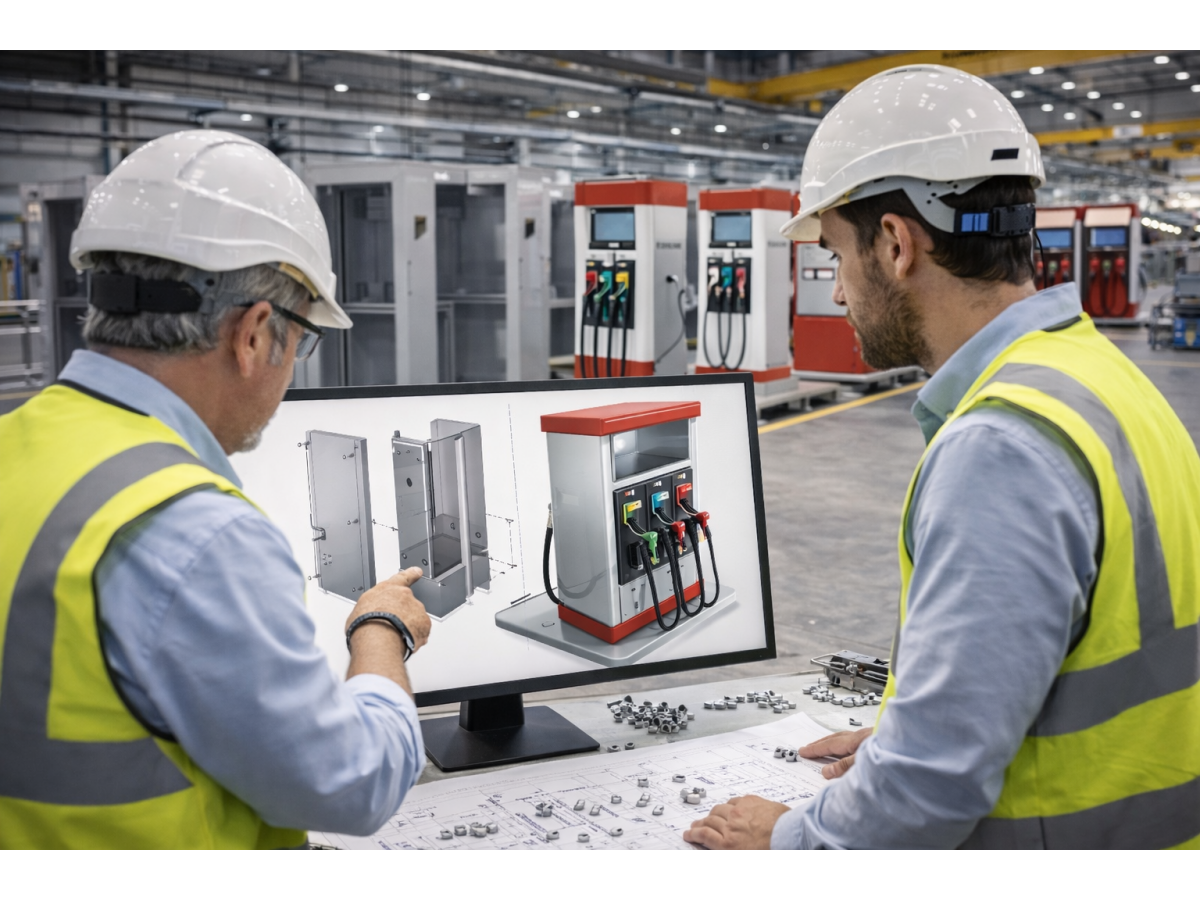
Central inverters, combiner equipment, power cabinets, and other solar infrastructure may remain outdoors for many years.
Replacement captive fasteners can be required during:
scheduled maintenance
electronics replacement
inverter refurbishment
corrosion repair
enclosure servicing
Replacement hardware should be evaluated against the existing cabinet material, finish, gasket, and environmental requirement.
Rail equipment can remain in service for decades and undergo repeated overhaul cycles.
Potential applications include:
propulsion cabinets
electrical equipment panels
passenger-system cabinets
HVAC equipment
battery compartments
control-system covers
Captive replacement hardware can support:
scheduled overhaul
fleet refurbishment
spare-parts programs
obsolete-part replacement
Rail programs may also require customer-specific documentation, traceability, materials, coatings, and validation.
Buses, trucks, specialty vehicles, and other commercial transportation equipment use serviceable panels throughout the vehicle.
Potential replacement applications include:
electrical compartments
battery boxes
engine access covers
auxiliary power systems
control panels
Vibration, corrosion, and repeated service should be considered during replacement qualification.
Industrial machinery frequently uses captive screws on:
safety guards
electrical cabinets
hydraulic access panels
motor covers
lubrication-system panels
control enclosures
Replacement hardware can reduce downtime when the original captive assembly is damaged during maintenance.
Commercial food-service equipment may use captive screws to retain service panels while preventing loose hardware.
Potential applications include:
ovens
refrigeration equipment
commercial cooking systems
beverage equipment
heated cabinets
Replacement material and finish should be selected according to the equipment environment and applicable customer requirements.
Vending machines, kiosks, and ATM cabinets use serviceable access panels for:
electronics
power systems
cash modules
communication equipment
refrigeration or cooling equipment
Long installed lifecycles can create recurring demand for replacement captive hardware.
Semiconductor manufacturing equipment often has long service lives and extensive preventive maintenance requirements.
Potential replacement applications include:
electronics cabinets
power-module covers
control-system panels
instrumentation enclosures
service hatches
Replacement hardware may need to satisfy dimensional, cleanliness, material, corrosion, and documentation requirements defined by the equipment manufacturer.
For equipment fleets, standardized replacement kits can simplify field servicing.
A kit may contain:
captive screw assemblies
mating nuts or inserts where applicable
washers
installation components
approved replacement instructions
identification labels
The exact kit should be based on the equipment's approved service architecture.
OEMs can reduce future service problems by maintaining replacement-fastener data during the original product lifecycle.
Useful records include:
supplier part number
OEM part number
2D drawing
material
finish
panel-hole requirement
installation method
thread
retracted clearance
qualification requirements
This information makes future second-source qualification much easier.
Aftermarket procurement teams may need a second source because of:
obsolete original components
long lead times
supply interruption
minimum order requirements
regional service requirements
lifecycle-extension programs
A second source should be qualified against the required function rather than selected solely by catalog appearance.
Provide whichever items are available:
OEM drawing
existing supplier part number
equipment part number
physical sample
photographs
panel dimensions
service manual
Document whether the problem involves:
thread
shank
spring
drive
retainer
mounting hole
mating thread
corrosion
alignment
Measure and record:
material
thickness
mounting-hole diameter
hole condition
surrounding deformation
coating condition
Determine whether the replacement must provide:
captive retention
automatic retraction
hand operation
tool operation
vibration resistance
electrical bonding
gasket compression
environmental resistance
Compare the critical dimensions and functions.
Use representative panels or actual service equipment where appropriate.
Verify:
fit
thread engagement
retention
retraction
clearance
drive access
panel closure
required environmental or electrical functions
After engineering approval, the replacement can be incorporated into the MRO or spare-parts supply program.
When drawings are unavailable, an original physical sample can provide valuable information.
A supplier can evaluate characteristics such as:
thread
screw length
head
drive
retainer dimensions
spring architecture
captive mechanism
material
surface finish
However, a physical sample may not reveal every original specification.
For example, it may not establish:
original material grade
coating specification
corrosion requirement
heat treatment
electrical requirement
acceptance criteria
Unknown requirements should therefore be identified rather than guessed.
For captive fastener replacement, replacement captive screws, field replacement captive screws,
OEM replacement captive fasteners, captive hardware maintenance, or custom MRO panel hardware, provide as much of the following information as possible:
2D drawing
3D STEP model where available
physical sample
original part number
equipment model
photographs of the installed assembly
panel material
panel thickness
mounting-hole diameter
mounting-hole condition
panel coating
mating-thread type
thread size
thread pitch or threads per inch
thread tolerance or class
screw length
retracted clearance
extended position
head geometry
drive profile
spring requirement
captive-retention method
installation method
fastener material
surface finish
corrosion requirement
vibration requirement where applicable
electrical bonding requirement where applicable
sealing requirement where applicable
service-cycle requirement
sample quantity
pilot refurbishment quantity
Estimated Annual Usage (EAU)
spare-parts kit quantity
inspection requirements
documentation requirements
production schedule
If the mounting hole is damaged, include photographs and measured dimensions rather than assuming the original replacement fastener will still fit correctly.
Useful questions include:
Can you evaluate our original physical sample?
Can you work from our existing 2D drawing?
Can you identify the captive retention architecture?
Which dimensions are critical for functional equivalence?
What panel thickness is required?
What mounting-hole condition is acceptable?
Can the original mounting hole be reused?
Does the proposed replacement require an engineering change?
What retracted clearance will the replacement provide?
Is the spring function equivalent?
Which materials and finishes are available?
Can samples be provided for equipment testing?
Can you support low-volume service parts before production scaling?
Can replacement kits be supplied?
Can you support recurring EAU requirements?
What inspection and material documentation can be provided?
These questions help turn an urgent field-maintenance problem into a controlled supplier-qualification process.
A single damaged captive screw may reveal a larger sourcing opportunity.
If an equipment family has thousands of installed units, the same captive hardware may be required for:
field repairs
refurbishment
warranty service
overhaul
lifecycle extension
regional spare-parts inventory
Instead of repeatedly purchasing individual emergency replacements, OEMs and MRO organizations can establish a controlled replacement-hardware program.
The workflow becomes:
Field failure → root-cause inspection → original part identification → functional-equivalent review → sample validation → approved replacement → spare-parts kit → recurring MRO supply
This converts reactive maintenance into structured lifecycle sourcing.
JUXIN FASTENERS supplies engineered captive panel hardware, replacement captive screws, spring-loaded captive assemblies, tool-actuated captive fasteners,
functional-equivalent panel hardware, and custom fastening components for OEM, MRO, refurbishment, and industrial service applications.
For projects involving captive fastener replacement, replacement captive screws, damaged captive hardware, OEM replacement captive fasteners,
field service hardware, or functional-equivalent captive assemblies, our team can review customer drawings, physical samples, panel information,
and application requirements to evaluate the appropriate manufacturing and sourcing path.
Technical review can begin from:
a customer 2D drawing
a 3D model
an original fastener specification
an OEM part number
a physical hardware sample
photographs of damaged hardware
mounting-hole measurements
panel material and thickness
an obsolete captive fastener
a functional-equivalent sourcing requirement
an MRO spare-parts program
Where the original panel or mounting hole has been damaged, repair feasibility should be evaluated before finalizing the replacement fastener.
Where the captive assembly contributes to vibration resistance, environmental sealing, electrical bonding, or another equipment-level function,
the replacement should preserve and validate that required function rather than merely matching the external dimensions.
For drawing review, physical sample evaluation, replacement captive fastener sourcing, functional-equivalent development, custom replacement hardware,
spare-parts kits, or production-volume quotation, send your technical requirements to JUXIN FASTENERS.
Email: info@juxinfasteners.com
Website: www.juxinfasteners.com
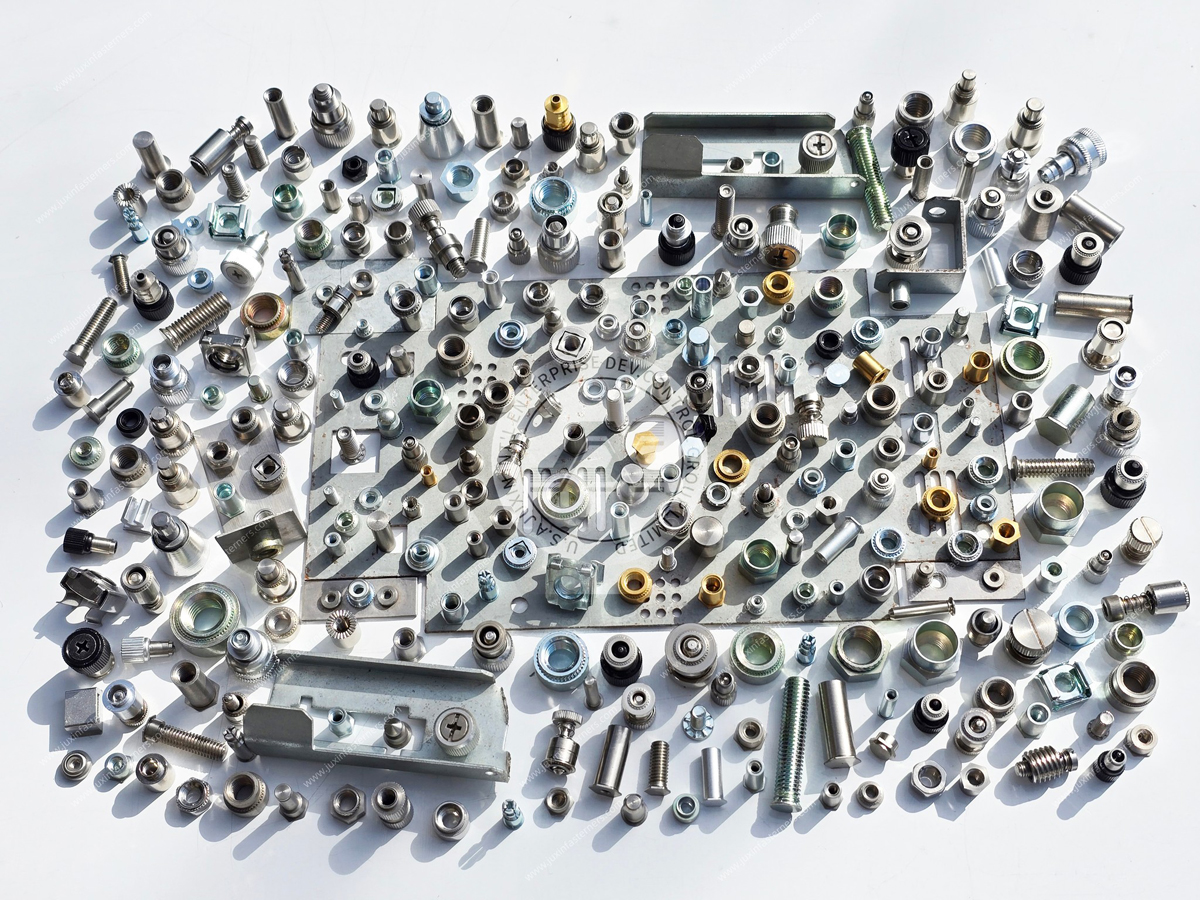
Product Packaging
Packaging Standard
At Juxin Fasteners, we apply standardized export packaging to ensure product protection, traceability, and compliance with international logistics requirements.
1. Standard Export Packaging
Unless otherwise specified, all products will be packed according to our factory standard export packaging, which includes:
Moisture-resistant inner protection
Poly bag or small box packing as required
Reinforced export cartons
Clear labeling with part number, specification, batch number, and quantity
Palletizing for sea or air shipment when necessary
Our standard packaging is designed to ensure safe transportation, efficient warehousing, and long-distance international shipping.
2. Customized Packaging Options
We also provide customized packaging solutions according to customer requirements, including but not limited to:
Private labeling
Customized barcodes
Specific carton dimensions
Retail packaging
Special pallet configuration
Customer-specific marking and identification
So that you know, customized packaging may involve additional costs and extended lead time depending on the complexity of the requirements.
3. Compliance & Quality Assurance
All packaging processes are controlled under our ISO 9001 quality management system to ensure consistency, traceability, and product integrity throughout the supply chain.
Product Pictures
Contact Us
Tel.:
+86 020 8621 0320
+86 020 3121 6067
E-mail:
Technical Support:
Navigation
SEND INQUIREY