
Call Us
+86 136 6007 9809
Call Us
+86 136 6007 9809

Aug. 25, 2026
Aluminum CNC Machining for Rail Transit Components
Precision CNC Machining for Railway and Rail Transit OEM Applications
Aluminum CNC machining provides a flexible manufacturing solution for railway equipment manufacturers, rail transit OEMs, and engineering teams requiring lightweight,
dimensionally accurate, and application-specific mechanical components.
Rail transit equipment operates under demanding conditions involving vibration, repeated mechanical loading, temperature variation, environmental exposure, and extended service requirements.
The performance of a precision-machined component depends not only on dimensional accuracy but also on material selection, structural design, surface condition, fastening compatibility, and manufacturing consistency.
JUXIN FASTENERS supplies custom CNC machined components and industrial fastening hardware for drawing-based OEM applications.
Depending on part geometry, dimensional requirements, and production quantities, suitable manufacturing processes may include CNC milling, CNC turning,
Swiss-type machining, drilling, tapping, pocketing, profiling, and turn-mill machining.
Our manufacturing solutions can support prototypes, engineering samples, low-volume production, repeat OEM orders, and volume manufacturing requirements, subject to technical and commercial evaluation.
Customers can submit 2D engineering drawings, 3D CAD models, physical samples, material specifications, surface treatment requirements, and inspection criteria for technical review and quotation.
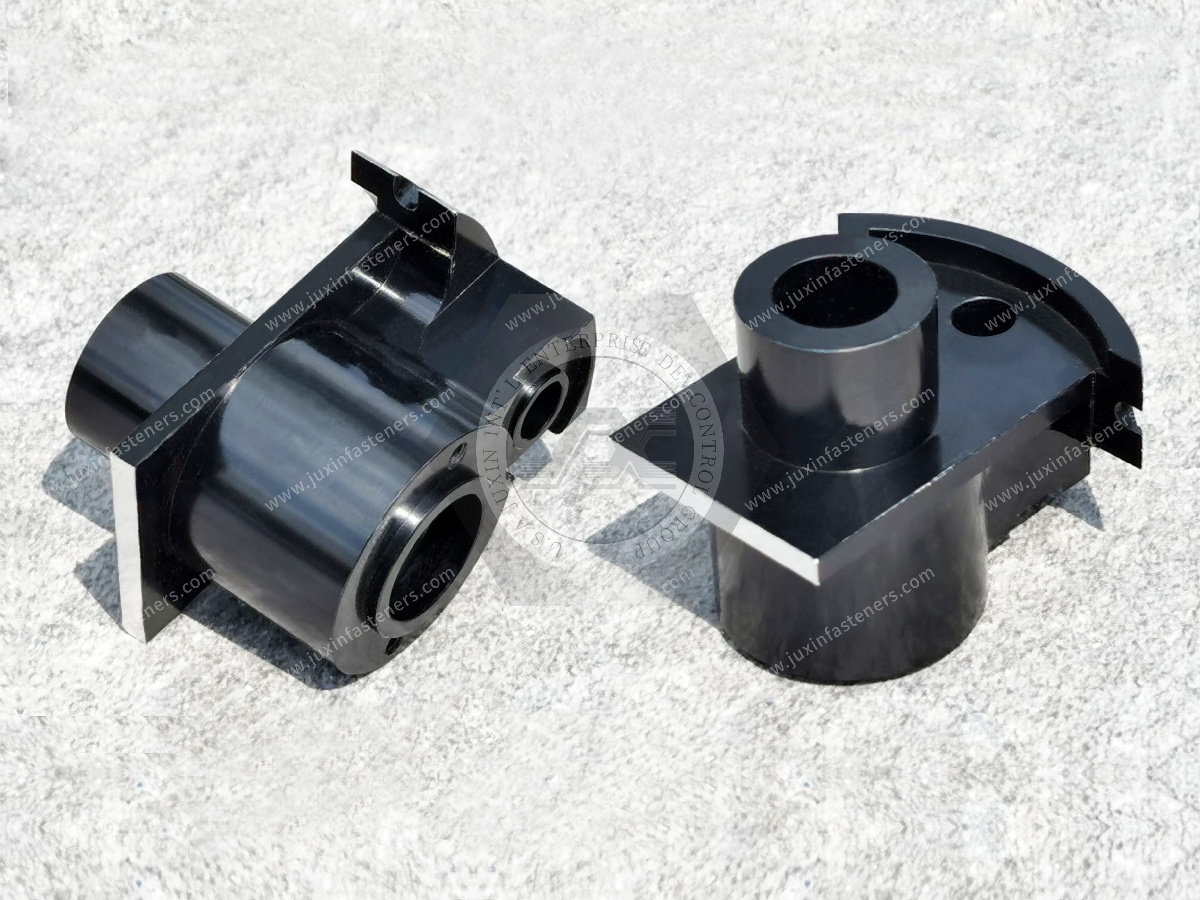
Why Aluminum Is Used in Rail Transit CNC Components
Aluminum alloys are widely considered for rail transit applications where weight reduction, corrosion resistance, machinability, and mechanical performance are important design considerations.
Reducing the mass of selected equipment components can support lightweight assembly design and simplify certain installation and handling operations.
However, weight reduction must not compromise the required structural strength, stiffness, fatigue resistance, or fastening reliability.
Rail transit equipment may incorporate aluminum components alongside steel fasteners, stainless steel hardware, polymer components, and other engineering materials.
These combinations require careful evaluation of mechanical loading, thermal expansion, corrosion exposure, and contact conditions.
For example, an aluminum mounting bracket used inside an electrical equipment enclosure has different engineering requirements from a component installed on an externally exposed underfloor equipment assembly.
The appropriate alloy and manufacturing process should therefore be selected according to the actual installation location, loading conditions, environmental exposure, and applicable customer specifications.
Common Aluminum Alloy Options for Rail Transit Machining
Commonly specified aluminum alloys for CNC machining include 6061, 6063, 6082, and 7075. Each material offers different mechanical and manufacturing characteristics.
6061 Aluminum: Often selected for general-purpose machined components requiring a practical balance of strength, corrosion resistance, and machinability.
Applications may include mounting blocks, brackets, spacers, and equipment interfaces.
6063 Aluminum: Frequently associated with extruded profiles and components where surface finish, corrosion resistance, and moderate mechanical properties are important.
Its suitability for machined rail components depends on the required geometry and loading conditions.
6082 Aluminum: Commonly considered for structural applications, particularly where European material specifications are used.
It may be appropriate for selected mounting and support components when its properties meet the engineering requirements.
7075 Aluminum: Provides higher strength in suitable tempers but requires additional consideration of corrosion behavior, environmental exposure, and material condition.
It should not be selected solely because its nominal strength exceeds that of common 6000-series alloys.
Material specifications should identify the required alloy, temper, product form, and applicable material standard.
For example, EN AW-6082-T6 and 6061-T6 should not automatically be treated as interchangeable.
Mechanical properties, material availability, corrosion behavior, and customer approval requirements must be reviewed before substitution.
For components subject to cyclic loading, material selection should also account for fatigue behavior, stress concentration, and the complete assembly configuration.
Typical CNC Machined Components for Rail Transit Equipment
Custom CNC machined aluminum components can support a range of mechanical, structural, and equipment-mounting functions in railway and rail transit assemblies.
Precision Aluminum Mounting Brackets
Machined aluminum brackets can provide mounting interfaces for electrical equipment, control units, interior systems, instrumentation, and auxiliary assemblies.
Important design considerations include mounting-hole positions, bracket stiffness, load direction, fastener access, and the interaction between the bracket and its supporting structure.
Where brackets experience repeated vibration or cyclic loading, engineers should evaluate fatigue performance and local stress concentrations around holes, corners, and transitions.
Aluminum Spacers and Standoffs
Precision aluminum spacers help establish controlled distances between mechanical components, maintain assembly clearances, and support consistent positioning.
Critical dimensions may include overall length, internal diameter, external diameter, parallelism, and contact-face flatness.
Spacers used in bolted assemblies should be evaluated for compressive loading, joint stiffness, and the possibility of settlement or deformation under installation loads.
Where electrical isolation is required, conductive aluminum spacers may not be appropriate without a separately validated insulation design.
CNC Machined Pins, Shafts, and Bushings
Custom pins, shafts, sleeves, and bushings may be used in positioning, alignment, or selected mechanical interfaces.
However, aluminum is not automatically suitable for every wear-bearing or heavily loaded shaft and bushing application.
Where components experience sliding contact, repeated rotation, impact, or significant bearing pressure, material selection should account for wear resistance, hardness, lubrication, and service loading.
Steel, stainless steel, engineered bearing materials, or other alternatives may be more appropriate for certain applications.
Threaded Aluminum Mounting Blocks
Custom threaded blocks can provide fastening points for equipment housings, covers, brackets, and auxiliary rail transit assemblies.
Thread design should consider the aluminum alloy, required engagement length, fastener strength, installation torque, and anticipated maintenance frequency.
For repeated assembly or demanding mechanical applications, threaded inserts or alternative fastening configurations may be considered after engineering evaluation.
Equipment Connectors and Mechanical Interfaces
CNC machined aluminum connectors, adapters, and interface components can support the installation of mechanical and electrical equipment.
Their function may depend on hole positioning, surface flatness, dimensional compatibility, sealing interfaces, and the relationship between connected parts.
The component design should reflect the actual equipment interface rather than relying only on nominal dimensions.
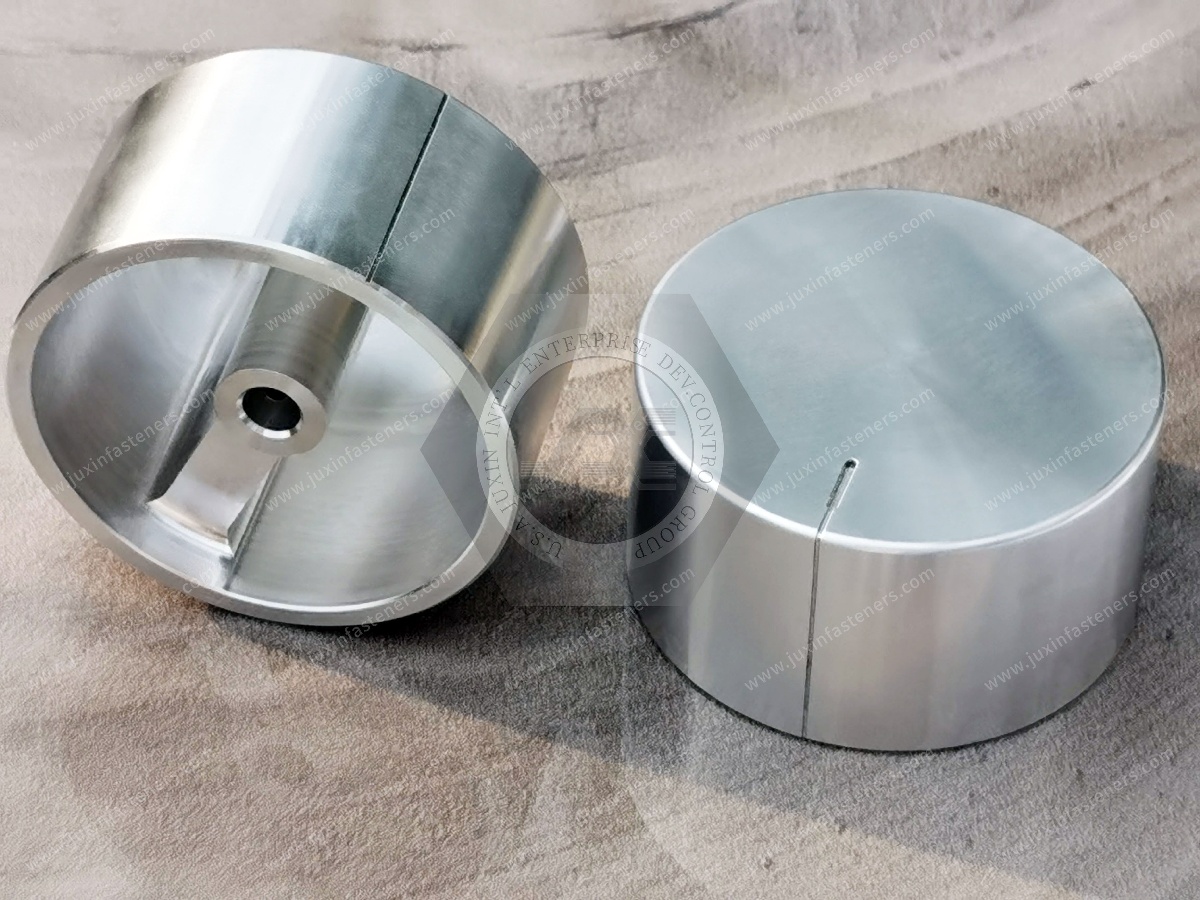
CNC Machining Processes for Custom Rail Transit Components
Selecting an appropriate machining process affects dimensional accuracy, material utilization, manufacturing efficiency, and total OEM component cost.
JUXIN FASTENERS can evaluate suitable manufacturing methods based on customer drawings, component geometry, material requirements, and production quantities.
CNC Milling for Brackets and Equipment Mounting Components
CNC milling is suitable for parts requiring multiple mounting surfaces, pockets, slots, bolt-hole patterns, and complex external profiles.
Typical applications include mounting brackets, equipment interface blocks, housings, and mechanical adapters.
For components requiring machining from several directions, datum planning and fixture design are important for maintaining the positional relationship between critical features.
Reducing unnecessary setups can improve manufacturing efficiency, but the machining strategy must still maintain the required dimensional accuracy.
CNC Turning for Shafts, Spacers, and Cylindrical Components
CNC turning is appropriate for many cylindrical components, including spacers, sleeves, bushings, pins, and threaded parts.
The process can provide controlled diameters, lengths, concentricity, and surface finishes according to the component design.
Swiss-type machining may be considered for certain small-diameter or slender components, depending on geometry and production requirements.
Turn-Mill Machining for Complex Precision Parts
Components combining cylindrical features with milled flats, cross-holes, slots, or other secondary features may benefit from turn-mill machining.
Combining operations can reduce part handling and improve the relationship between critical features when the process is appropriately designed.
However, the economic suitability of turn-mill machining depends on setup requirements, cycle time, equipment availability, and production volume.
Drilling, Tapping, and Secondary Machining
Rail transit mounting hardware frequently requires accurately positioned holes, internal threads, countersinks, counterbores, and finished contact surfaces.
Hole geometry and thread specifications should be selected according to the mating fastener, assembly method, and mechanical requirements.
Burr removal and edge finishing are important for safe handling, reliable assembly, and preventing interference with adjacent components.
Engineering Design Considerations for Rail Transit CNC Parts
Railway equipment components must be evaluated within their actual installation environment.
A component that performs adequately in a stationary industrial enclosure may require additional engineering assessment when installed on rolling stock exposed to continuous vibration,
acceleration, and repeated mechanical loading.
Vibration, Fatigue, and Mechanical Reliability
Rail transit equipment may experience vibration and dynamic loading during acceleration, braking, track interaction, and normal service.
These conditions can influence bolted joints, mounting brackets, locating features, and other mechanical interfaces.
Engineers should consider the direction and magnitude of applied loads, cyclic stress, component stiffness, and local stress concentrations.
Sharp internal corners, abrupt cross-section changes, and poorly positioned mounting holes can increase local stress and potentially reduce fatigue performance.
Where applicable to the complete equipment assembly, vibration and shock requirements may be defined under IEC/EN 61373.
This standard should not be interpreted as an automatic certification of individual CNC machined components.
Testing and acceptance requirements must be established according to the customer's application and qualification plan.
Thread Engagement and Fastening Reliability
Threaded connections in aluminum require careful evaluation because internal thread strength can limit the performance of the complete joint.
The appropriate thread engagement length depends on material properties, thread geometry, fastener strength, and applied loads.
Where high installation loads or repeated maintenance are expected, threaded inserts or alternative connection designs may be appropriate.
Metric threads should follow the applicable ISO metric thread system, while Unified UNC/UNF threads must be specified according to the corresponding Unified thread requirements.
Metric, UNC/UNF, and British Whitworth thread systems are not directly interchangeable.
Installation torque should be established from the complete joint design, including fastener material, surface condition, lubrication, and required preload.
Dimensional Tolerances and Assembly Fit
Not every machined feature requires the same tolerance.
Critical mounting holes, locating surfaces, threaded interfaces, and mating dimensions may require tighter control than nonfunctional exterior surfaces.
A practical engineering approach is to identify critical-to-function characteristics and assign tolerances based on their actual role in the assembly.
ISO 1101 or ASME Y14.5 may be relevant for defining geometric tolerances when required by the customer's drawing system.
Unnecessarily tight tolerances can increase machining time, inspection costs, and production complexity without improving equipment performance.
Thermal Expansion and Mixed-Material Assemblies
Rail transit equipment may operate across varying environmental temperatures.
Aluminum generally has a higher coefficient of thermal expansion than steel, meaning the two materials may expand or contract by different amounts under the same temperature change.
Where aluminum brackets or spacers are installed between steel components, this difference can influence dimensional relationships and joint loading.
Long mounting interfaces, constrained assemblies, and temperature-sensitive equipment should receive appropriate thermal compatibility assessment.
Surface Treatments and Corrosion Protection
Surface finishing is an important consideration for aluminum components exposed to moisture, cleaning agents, atmospheric contamination, or dissimilar-metal contact.
Potential surface treatment options may include anodizing, hard anodizing, conversion coatings, and other customer-specified finishes.
Anodizing may improve selected corrosion and surface characteristics, but it can also influence dimensional fit and electrical contact conditions.
Where coating thickness affects critical dimensions, the engineering drawing should clarify whether dimensions apply before or after finishing.
Galvanic corrosion should also be considered when aluminum is assembled with steel, stainless steel, or other dissimilar metals in the presence of moisture.
Suitable design measures may include protective coatings, isolation materials, drainage provisions, and appropriate material pairing.
For applicable anodic oxidation treatments, ISO 7599 may provide relevant specification guidance. The actual finishing requirement should be selected according to the intended process and customer approval criteria.
Railway Fire, Electrical, and Environmental Requirements
Railway equipment projects may impose additional requirements beyond dimensional and mechanical performance.
For example, EN 45545 addresses fire protection requirements for railway vehicles, with different provisions applying to relevant materials, components, and assemblies.
The applicability of these requirements depends on the component's function, installation location, material system, and the customer's qualification requirements.
A bare aluminum machined component should not automatically be described as certified to EN 45545 or any other railway standard.
Electrical insulation, protective coatings, polymer inserts, and assembled equipment may require separate evaluation.
Similarly, corrosion, vibration, and environmental qualification requirements must be defined for the actual application rather than assumed from the machining process alone.
Precision, Repeatability, and Production Stability
For rail transit OEM manufacturing, successful CNC machining requires more than producing a single accurate prototype.
The manufacturing process should be capable of maintaining acceptable dimensions and functional characteristics across repeat production batches.
Production consistency depends on machining programs, fixture repeatability, tooling condition, raw material variation, cutting parameters, and inspection methods.
For example, an aluminum equipment mounting block may require controlled mounting-face flatness, hole position, and overall height.
Inspecting only its external dimensions may not adequately verify its functional compatibility with the intended assembly.
Manufacturing engineers should establish appropriate datum strategies, workholding arrangements, and inspection access for critical features.
Production managers should also consider machining cycle time, tool replacement, setup changes, rework risk, and the impact of dimensional variation on downstream assembly operations.
Quality Control for Custom CNC Machined Rail Components
Quality planning should be based on the approved engineering drawing, component function, and customer-specific requirements.
Depending on the application, inspection may include:
Dimensional and geometric measurement
Thread size and functional gauge inspection
Hole diameter and positional verification
Surface roughness and flatness measurement
Material identification and documentation review
Hardness verification when specified
Visual inspection for burrs, damage, and surface defects
Functional fit or assembly verification where applicable
Critical characteristics should be identified before manufacturing so that suitable inspection methods can be established.
For repeat OEM production, drawing revision control and inspection records can help maintain consistency between production batches.
Railway customers may also request material traceability, first-article inspection, process documentation, or other project-specific quality records.
Where required, EN 15085, ISO 22163, or other railway-related requirements should be evaluated only for their actual scope and applicability.
CNC machining alone does not establish compliance with these standards.
Any certification, qualification, or documentation requirement must be separately confirmed before acceptance of the order.
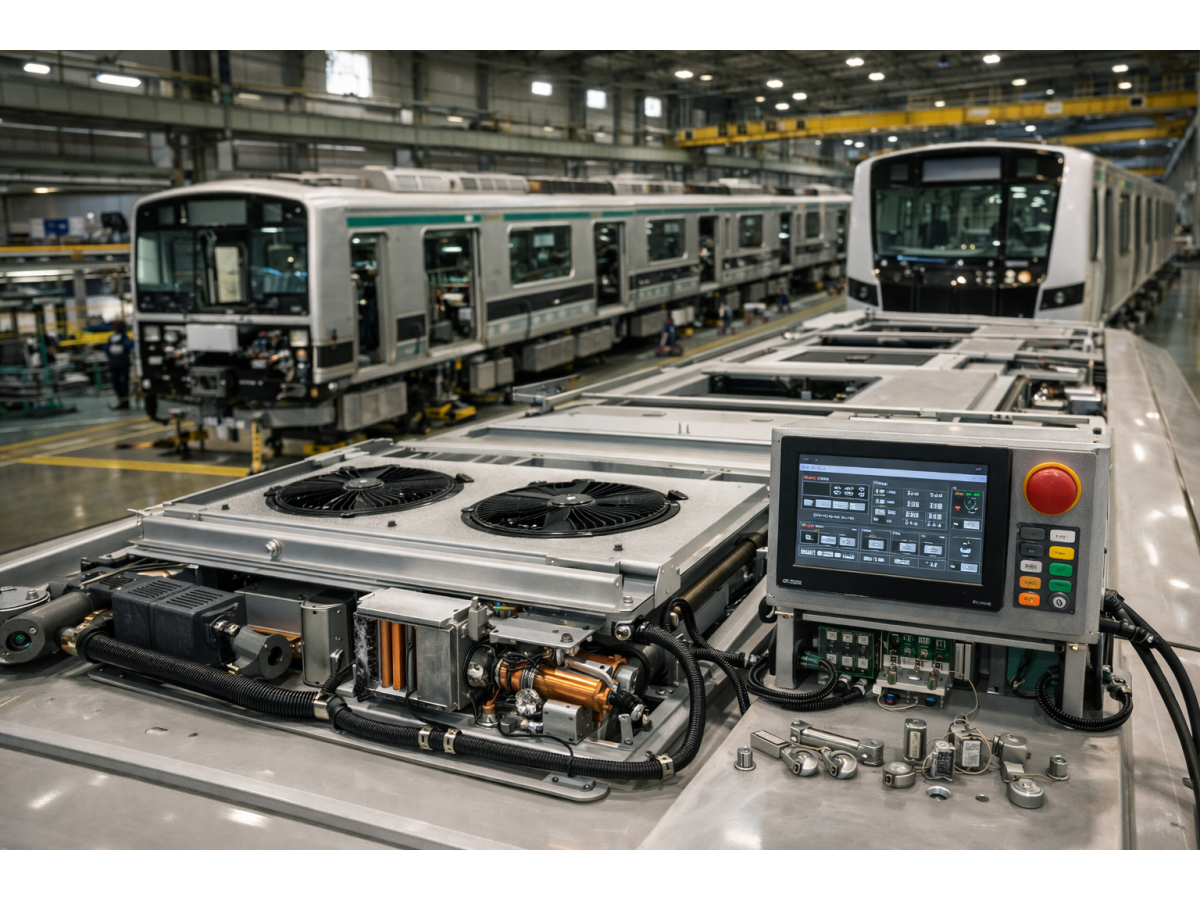
From Prototype Development to Repeat OEM Production
CNC machining is suitable for engineering development because component geometry and machining programs can often be revised without dedicated forming dies.
A typical drawing-based manufacturing workflow includes:
Engineering drawing and CAD review
Material and manufacturing process selection
CNC programming and process preparation
Prototype or first-article machining
Dimensional and functional inspection
Process optimization and production planning
Repeat production and final inspection
During prototype development, engineering teams may identify opportunities to simplify geometry, improve tool access, adjust noncritical tolerances, or standardize fastening interfaces.
These changes should be evaluated against the approved functional requirements before being incorporated into production drawings.
For higher-volume requirements, machining cost should be assessed alongside raw material utilization, fixture requirements, cycle time, finishing operations, inspection effort, and production scheduling.
Alternative manufacturing methods, including extrusion followed by CNC machining, may be economical for certain component geometries and production volumes.
However, any process substitution must be reviewed for dimensional capability, material properties, tooling investment, and customer approval requirements.
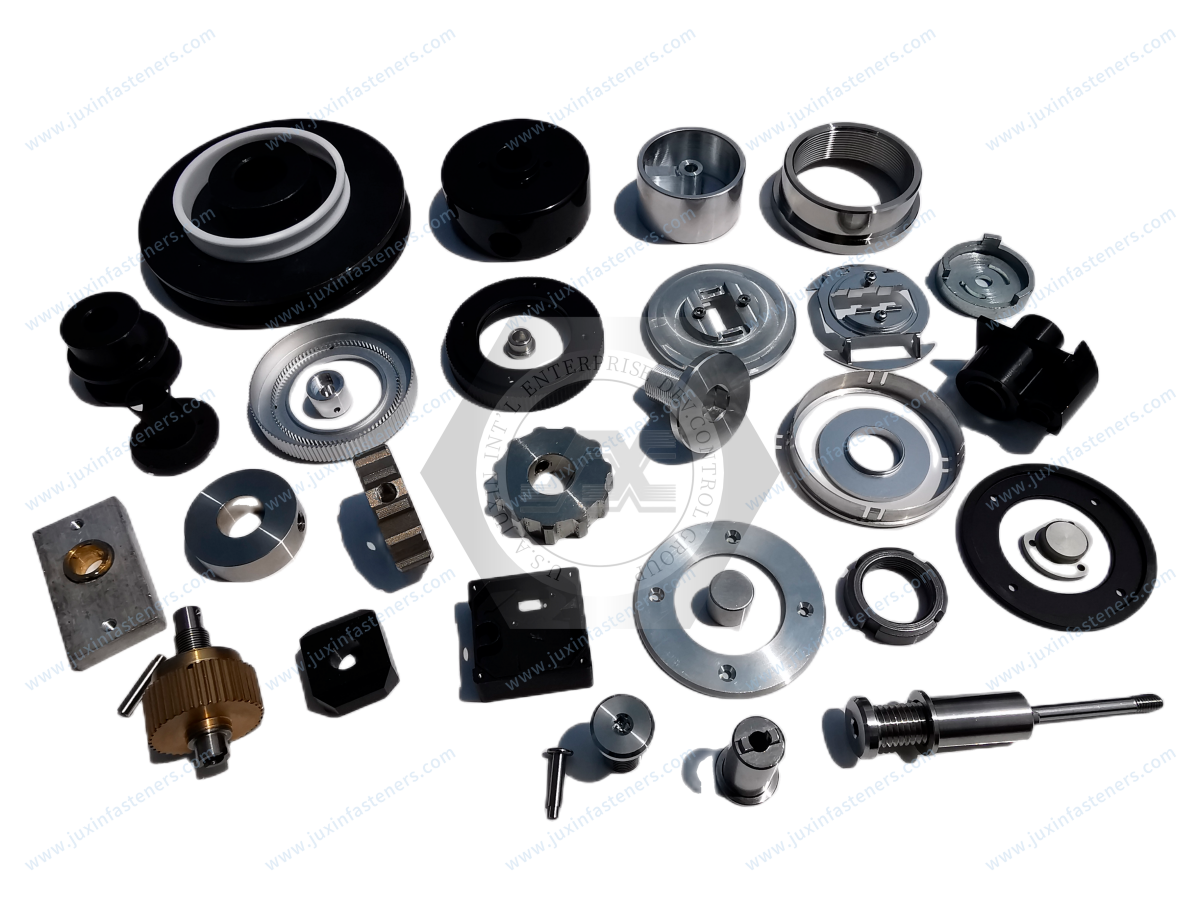
Reducing CNC Machining Costs for Rail Transit OEM Programs
Purchasing teams often evaluate custom CNC machined components using unit price, but total procurement cost also depends on production consistency, assembly efficiency, quality requirements, and supply continuity.
A lower quoted price may not represent the most economical solution if component variation causes installation difficulties, additional inspection, or assembly rework.
Several factors can influence the total manufacturing cost.
Functional Tolerance Allocation: Applying tighter tolerances only where required can reduce unnecessary machining and inspection effort.
Material Selection: Choosing the appropriate aluminum alloy and temper helps balance mechanical requirements, availability, machinability, and material cost.
Component Geometry: Simplifying deep pockets, complex internal features, and difficult machining access can reduce cycle time and tooling requirements.
Standardized Fastening Interfaces: Where permitted by the design, common thread sizes, mounting-hole arrangements, and compatible fastening hardware can simplify assembly and maintenance.
Production Quantity Planning: Realistic order quantities and forecast information help determine appropriate manufacturing and purchasing arrangements.
Drawing Revision Control: Maintaining clear drawing revisions reduces the risk of producing obsolete components and supports repeat-order consistency.
These considerations are particularly valuable when multiple brackets, spacers, mounting blocks, and fastening components are sourced for the same rail transit equipment platform.
OEM Supplier Evaluation and RFQ Requirements
For railway equipment manufacturers, procurement specialists, supplier development teams, and supply chain managers,
selecting a CNC machining supplier requires consideration of technical suitability, manufacturing consistency, and commercial requirements.
A complete RFQ package should include the information needed to evaluate both the component and its production requirements.
Recommended information includes:
2D engineering drawings and 3D CAD models
Aluminum alloy, temper, and applicable material specification
Critical dimensions and geometric tolerances
Surface treatment and corrosion protection requirements
Thread specifications and mating assembly information
Prototype quantity and expected production volume
Inspection, documentation, and traceability requirements
Packaging, delivery destination, and project schedule
For repeat OEM programs, anticipated annual demand and purchasing schedules can support production planning and commercial evaluation.
MOQ, manufacturing lead time, and production arrangements depend on component geometry, material availability, machining complexity, finishing requirements, and order quantity.
Supplier qualification and any railway-specific compliance requirements should be established according to the customer's project specifications.
Custom CNC Machining and Fastening Solutions for Global Railway OEMs
JUXIN FASTENERS supplies custom CNC machined parts and industrial fastening components for international OEM applications.
In rail transit equipment, precision-machined aluminum components frequently operate together with bolts, screws, nuts, threaded inserts, washers, spacers, bushings, and other mechanical connection hardware.
Evaluating these components as part of a complete assembly can help identify dimensional and fastening compatibility concerns before production.
For example, a custom aluminum mounting block should be evaluated together with its mating fastener, installation method, expected joint loading, and supporting structure.
This assembly-oriented approach can help engineering and manufacturing teams address practical installation requirements while supporting more consistent component sourcing.
Related applications may include railway electrical equipment enclosures, auxiliary equipment mounting, interior assemblies, industrial control cabinets, machinery, robotics,
HVAC equipment, and other engineered systems requiring precision mechanical components.
Components intended for safety-critical railway functions require separate engineering validation, customer qualification, and applicable regulatory or contractual approval.
Request an OEM Aluminum CNC Machining Quote
If your company is sourcing custom aluminum CNC machined components, railway equipment mounting brackets, precision spacers, bushings, threaded blocks,
or drawing-based rail transit hardware, contact JUXIN FASTENERS for technical evaluation and quotation.
Please send your 2D engineering drawings, 3D CAD files, sample information, material specifications, critical tolerances, surface treatment requirements, expected order quantities, and inspection criteria.
Our team can review the manufacturing requirements and discuss suitable CNC machining processes, component specifications, and commercial quotation details.
JUXIN FASTENERS
Website: https://www.juxinfasteners.com/
Email: info@juxinfasteners.com
Custom Aluminum CNC Machining | Rail Transit Components | Precision Fastening Hardware | Drawing-Based OEM RFQ Support
Contact Us
Tel.:
+86 020 8621 0320
+86 020 3121 6067
E-mail:
Technical Support:
Navigation
SEND INQUIREY



