
Call Us
+86 136 6007 9809
Call Us
+86 136 6007 9809

Jun. 14, 2026
Fastener surface treatment in automotive engineering is not simply a cosmetic finish.
For bolts, screws, nuts, studs, washers, rivet nuts and other metallic fastening components, the surface system can influence several functions simultaneously:
Corrosion protection
Thread fit
Coefficient of friction
Torque-preload relationship
Installation consistency
Electrical behavior
Appearance
Hydrogen-embrittlement risk
Compatibility with mating materials
This creates one of the most important principles in automotive fastening:
Coating Name ≠ Complete Coating Specification.
A technically controlled surface-treatment decision should follow:
Application → Environment → Fastener Material → Strength / Hardness → Mating Material → Coating Technology → Thickness
→ Passivation / Topcoat → Friction → Thread Fit → Installation → Corrosion Validation → Supplier Qualification
JUXIN FASTENERS supports drawing-based automotive fasteners, zinc-plated fasteners, zinc-nickel coated fasteners,
zinc-flake coated fasteners, phosphate-and-oil fasteners, stainless steel fasteners, high-strength bolts and nuts, weld fasteners,
rivet nuts and custom OEM fastening components according to customer-specific surface-treatment requirements.
A coating can affect more than corrosion.
Changing a surface treatment can change:
Thread friction
Under-head friction
Resulting preload
Installation torque
Thread dimensions
Electrical contact
Assembly behavior
Therefore:
Same Fastener + Different Coating ≠ Same Installed Joint.
This is why coating changes should not automatically be treated as purchasing substitutions.
Consider an M8 bolt that meets the same:
Drawing dimensions
Property class
Thread tolerance
before and after a coating change.
If its surface treatment changes from zinc to zinc-nickel or zinc-flake, the coefficient of friction may also change.
At the same tightening torque, the resulting preload can therefore change.
Same Torque + Different Friction ≠ Same Preload.
For controlled automotive joints, this can make a coating substitution an engineering change.
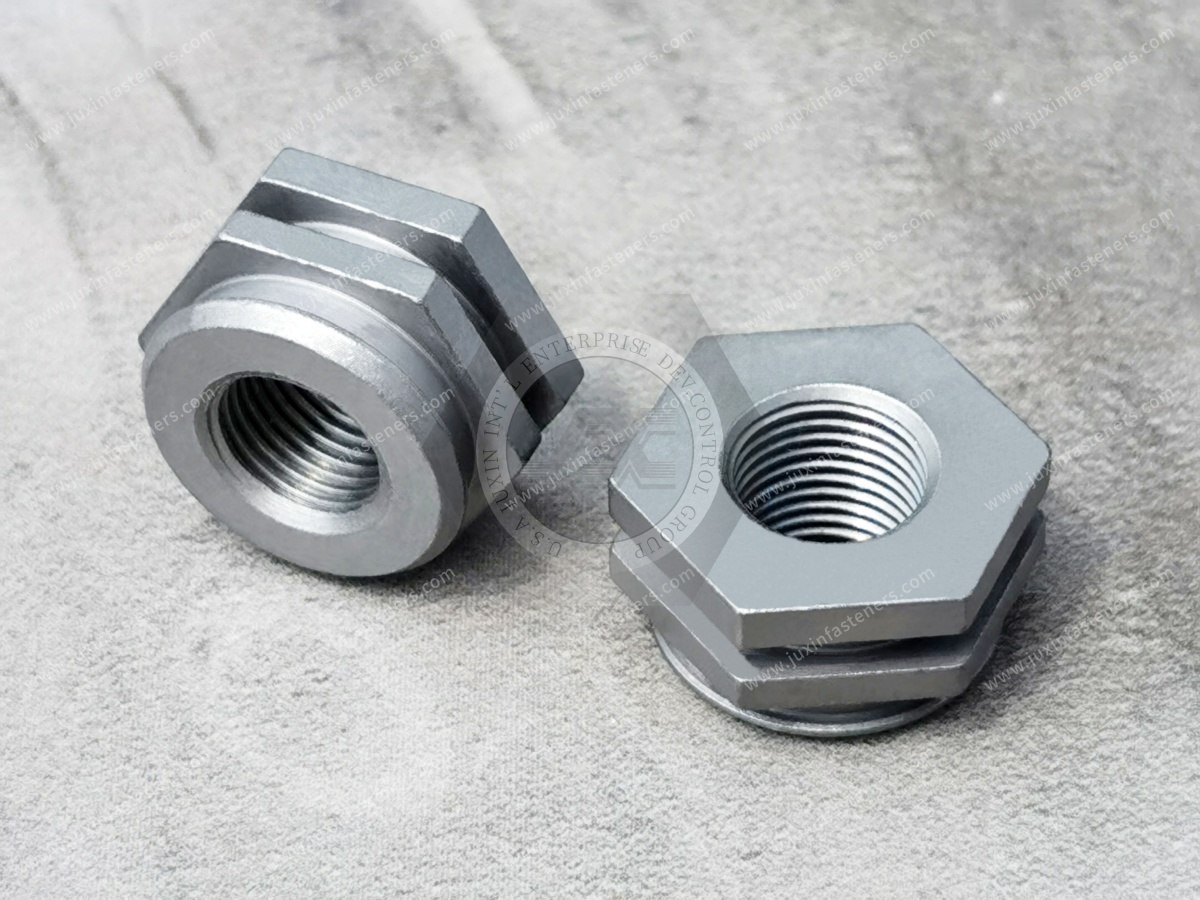
| Surface System | Typical Engineering Purpose | Key Design Questions |
|---|---|---|
| Oil / temporary protection | Storage / processing / weldability where applicable | Is permanent corrosion protection required? |
| Zinc electroplating | General corrosion protection | Corrosion, friction, hydrogen risk |
| Zinc-nickel electroplating | Higher corrosion-performance applications | Friction, hydrogen risk, mating materials |
| Zinc-flake coating | Corrosion protection, often selected for high-strength fasteners | Thickness, friction, thread fit |
| Phosphate + oil | Friction / assembly behavior and limited protection depending on system | Lubrication, environment, corrosion requirement |
| Black oxide | Appearance / limited protection with supplementary treatment | Is actual corrosion performance sufficient? |
| Stainless steel | Corrosion-resistant base material rather than coating | Galling, friction, galvanic compatibility |
No single system is universally best.
Electroplated zinc is widely used on carbon-steel fasteners.
Depending on the specified system, it can include:
Steel Fastener → Zinc Layer → Passivation → Optional Sealer / Topcoat / Lubricant
Applicable requirements may be specified using standards such as ISO 4042 together with OEM-specific requirements.
Potential applications include selected:
Interior assemblies
Electrical equipment
Brackets
General equipment
Industrial assemblies
Automotive hardware
depending on environment and OEM specification.
Simply writing “zinc plated” can leave important characteristics undefined.
The technical requirement may need to identify:
Coating designation
Thickness
Passivation
Sealer / topcoat
Color where relevant
Friction requirement
Corrosion requirement
Hydrogen-embrittlement controls where applicable
Therefore:
Zinc Plated ≠ Complete Surface-Treatment Specification.
Increasing coating thickness can improve some corrosion characteristics, but excessive thickness can affect:
Thread fit
Small recesses
Dimensional tolerance
Assembly
Surface protection must remain compatible with fastener geometry.
Zinc-nickel is widely considered where automotive programs require a higher-performance electroplated corrosion-protection system.
Potential applications can include selected:
Underbody equipment
Engine-compartment equipment
EV components
Brackets
Electrical equipment
Mixed-material structures
Exposed automotive fasteners
depending on the OEM specification.
Zinc-nickel may provide advantages in selected environments, but engineers still need to evaluate:
Fastener strength
Plating process
Hydrogen risk
Friction
Thread tolerance
Mating material
Electrical function
Cost
Therefore:
Higher Corrosion Performance ≠ Automatically Better Joint.
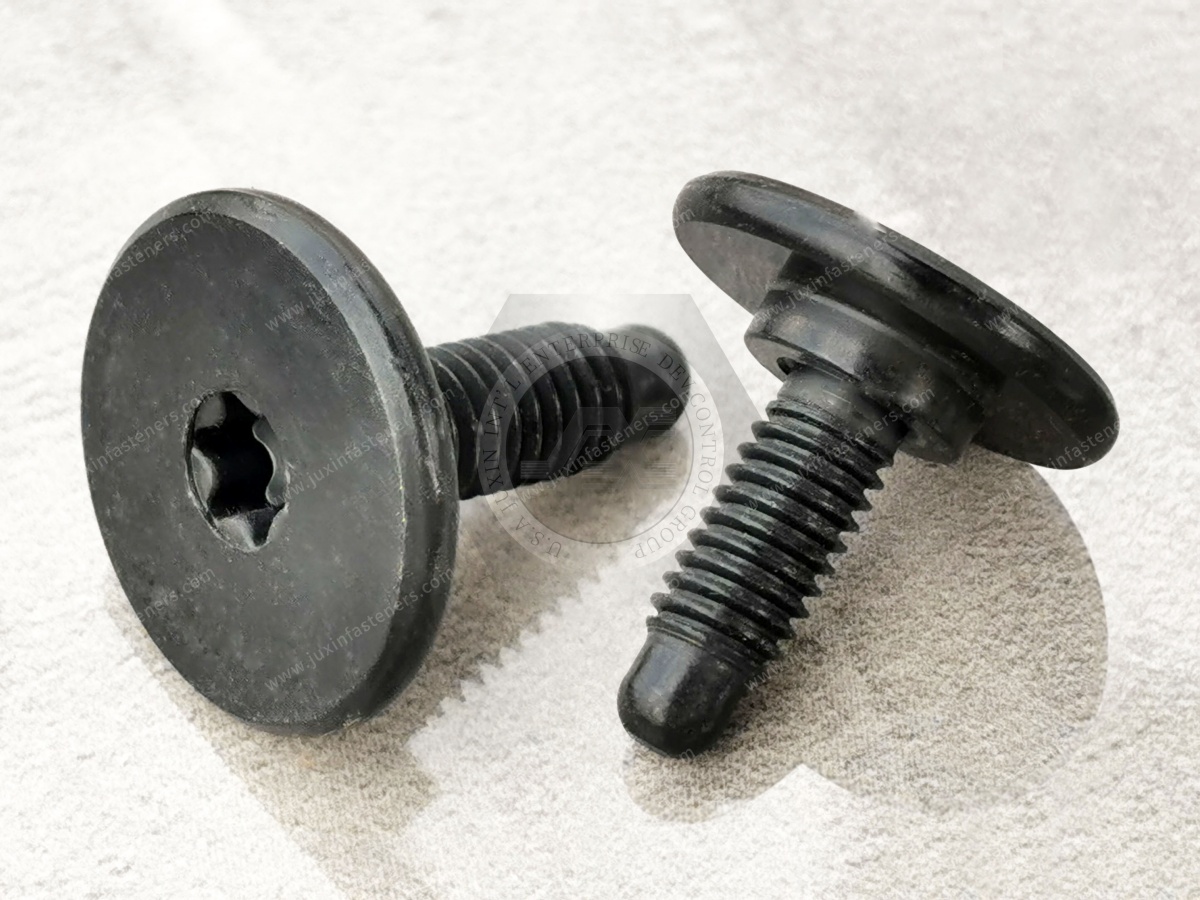
Color alone does not define engineering performance.
A black and a silver Zn-Ni fastener can differ in:
Passivation
Topcoat
Sealer
Friction
Corrosion behavior
Therefore:
Coating Color ≠ Coating Specification.
Procurement should not source an engineering coating primarily by appearance.
Non-electrolytically applied zinc-flake systems are widely used for automotive fasteners, particularly where corrosion performance and high-strength fastener processing are important.
Applicable requirements may reference ISO 10683 together with OEM specifications.
A zinc-flake system can include:
Basecoat
Additional basecoat layers
Topcoat
Lubricating topcoat
depending on the required performance.
“Dacromet” is a trade name historically associated with particular zinc-flake technologies.
It should not be used as a universal engineering term for every non-electrolytic zinc-flake coating.
A controlled drawing should define the actual coating specification rather than relying on a generic trade name.
Non-electrolytic zinc-flake systems can reduce some hydrogen-introduction concerns associated with electrolytic plating processes.
However, the complete manufacturing route still matters.
Fasteners can encounter hydrogen during:
Cleaning
Pickling
Plating
Other manufacturing operations
Therefore:
Non-Electrolytic Coating ≠ Zero Hydrogen-Embrittlement Risk From the Entire Process.
The correct question is not:
Which coating is better?
The better question is:
Which surface system satisfies the corrosion, friction, geometry, installation and process-risk requirements of this fastener?
| Engineering Factor | Zinc-Nickel | Zinc-Flake |
|---|---|---|
| Process family | Electrolytic | Typically non-electrolytic |
| Corrosion performance | High-performance systems available | High-performance systems available |
| Friction control | Can be engineered with topcoat | Can be engineered with topcoat |
| High-strength fasteners | Hydrogen-process controls important | Often considered to reduce electrolytic plating exposure |
| Thread buildup | Must be controlled | Must be controlled |
| Appearance | Multiple finishes possible | Commonly silver / black systems |
| Best application | Specification-dependent | Specification-dependent |
Neither technology should be selected from coating name alone.
Phosphate conversion coatings combined with oil or lubricant can be used where friction and assembly characteristics are important.
Potential applications can include selected:
Engine fasteners
Transmission fasteners
Internal mechanical assemblies
Industrial equipment
where the specified corrosion environment is compatible with the system.
Phosphate-and-oil systems should not automatically be treated as equivalent to engineered zinc-nickel or zinc-flake systems for severe exposed environments.
Phosphate surfaces can interact with lubricants and influence tightening behavior.
Therefore their engineering value may involve:
Friction control
lubricant retention
assembly repeatability
rather than maximum corrosion resistance.
Black oxide can provide a dark appearance and, with supplementary oil or treatment, limited corrosion protection for appropriate environments.
But:
Black Oxide ≠ Zinc-Nickel.
And:
Black Oxide ≠ Zinc-Flake.
A black fastener should never be assumed to provide high corrosion performance merely because its appearance resembles another black coating.
A black fastener may use:
Black oxide
Black zinc
Black zinc-nickel
Black zinc-flake
Organic topcoat
Other systems
These are not functionally interchangeable.
Some components can be supplied uncoated or with temporary oil protection where the application or subsequent process requires it.
Potential examples can include selected:
Weld nuts
Weld studs
Components receiving later finishing
Protected internal assemblies
But:
Temporary Rust Prevention ≠ Service-Life Corrosion Protection.
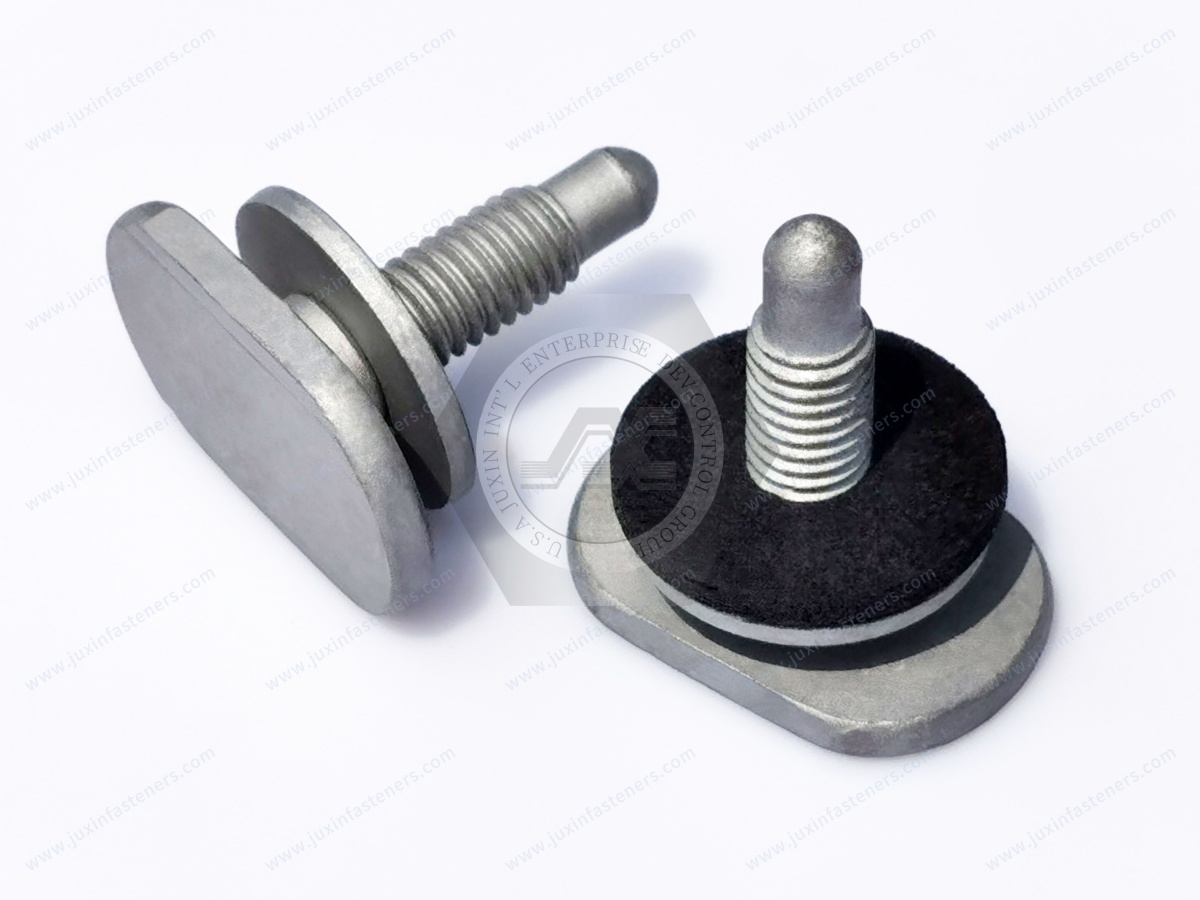
Weld nuts and weld studs should not automatically receive the same surface treatment as conventional finished bolts.
The coating can affect:
Electrical resistance
Weld formation
Projection behavior
Contamination
Weld quality
Therefore:
Best Corrosion Coating ≠ Best Pre-Weld Surface Condition.
The manufacturing sequence matters.
Depending on vehicle manufacturing architecture, weld fasteners may be attached before subsequent body coating processes.
Other applications may use differently prepared components.
The correct process must follow the OEM manufacturing sequence.
Surface condition is only one variable.
Installed weld performance also depends on:
Projection geometry
Parent sheet
Sheet thickness
Current
Time
Electrode force
Alignment
Excessive energy can damage:
Fastener
Parent sheet
Threads
Surface
Rivet nuts introduce another important coating challenge because the component is plastically deformed during installation.
The surface treatment must survive:
Feeding
Tool contact
Body deformation
Flange seating
without unacceptable loss of protection.
Therefore:
Coating Before Setting ≠ Coating Condition After Setting.
The installed joint also includes:
Hole edge
Parent sheet
Flange interface
Mating bolt
Environment
All of these influence corrosion behavior.
Stainless steel fasteners can provide corrosion resistance through the base material itself.
Common industrial grades include A2 / 304-type and A4 / 316-type stainless steels.
But:
Stainless Steel ≠ Corrosion-Proof.
A4/316-type stainless may provide improved resistance in selected chloride-containing environments, but selection should also consider:
Mechanical requirements
Mating materials
Galvanic interaction
Cost
Availability
Switching materials can change:
Strength
friction
galling behavior
magnetic behavior
galvanic interaction
assembly process
Therefore:
Material Substitution Can Be an Engineering Change.
Stainless threaded fasteners can experience adhesive wear or galling under certain assembly conditions.
Risk can be influenced by:
Material pairing
Thread finish
Speed
lubrication
preload
installation method
A stainless fastener that resists red rust can still create an assembly problem if galling is not controlled.
This is why fastener surface engineering must consider corrosion and installation together.
In torque-controlled assembly, a large portion of applied torque is consumed by friction at:
Threads
Under-head or nut-bearing surface
Only part contributes to bolt tension.
Therefore a small change in friction can significantly change resulting preload.
This is the central principle of automotive fastener tightening.
Torque is an installation input.
Preload is the resulting clamp force.
They are related through friction but are not identical.
If the coefficient of friction decreases, the same torque may generate higher preload.
If friction increases, the same torque may generate lower preload.
This is why surface treatment matters to structural assembly.
Very low friction can create excessive preload at a torque developed for a higher-friction surface.
Therefore:
Lower Friction ≠ Higher Reliability.
The target is a controlled friction window appropriate for the joint.
High friction can consume more installation torque before sufficient preload is achieved.
Therefore:
Higher Installation Torque ≠ Higher Clamp Load.
A sealer or topcoat may influence:
Corrosion
Friction
appearance
chemical resistance
Therefore:
Base Coating ≠ Complete Surface System.
A lubricant can significantly alter torque-preload behavior.
Therefore:
Same Coating + Different Lubricant ≠ Same Tightening Behavior.
A torque specification developed for a lubricated surface should not automatically be applied to a dry fastener.
These terms are sometimes used casually as though they are identical.
Actual tightening behavior involves thread and bearing friction, geometry and the complete joint.
Therefore:
One Friction Number ≠ Complete Torque-Preload Characterization.
Where friction-controlled assembly is important, torque-tension testing can help characterize the relationship between:
Applied torque
Thread friction
Bearing friction
Resulting preload
The exact test method and acceptance criteria should follow the customer specification and applicable standards.
Torque-angle methods can improve control for suitable joints.
But the initial torque stage and joint behavior remain influenced by friction.
Therefore:
Torque-Angle ≠ Friction-Free Tightening.
A calibrated tightening tool can apply torque accurately while preload still varies because of friction variation.
Tool calibration is necessary.
It does not replace validation of:
Fastener
coating
lubrication
mating component
joint stack
Hydrogen embrittlement is a critical concern for susceptible high-strength steel fasteners.
Hydrogen can be introduced during certain:
Cleaning
Pickling
Electroplating
Surface-treatment operations
Under tensile stress, susceptible fasteners can experience delayed brittle failure.
A fastener can appear visually acceptable and still be at risk.
The old practice of using one hardness number, such as 320 HV, as a universal boundary is too simplistic.
Risk depends on:
Material
Strength
Hardness
Microstructure
Stress
Manufacturing process
Hydrogen exposure
Therefore:
One Hardness Number ≠ Complete Hydrogen-Embrittlement Risk Assessment.
Post-plating baking can reduce hydrogen risk for applicable processes.
But:
Baking ≠ Absolute Elimination of Hydrogen-Embrittlement Risk.
Process prevention remains important.
Timing, temperature and duration should follow the applicable coating process, fastener material and customer specification.
Do not apply one generic baking schedule to every fastener.
Hydrogen risk must be assessed from the actual manufacturing route, including cleaning and pickling operations.
Generic rules can create incorrect process specifications.
ISO 4042 addresses electroplated coating systems for fasteners within its scope.
It can support requirements involving:
Coating designation
Dimensional considerations
Corrosion protection
Hydrogen-embrittlement considerations
Functional characteristics
where applicable.
But:
ISO 4042 Compliance ≠ Automotive Joint Qualification.
OEM requirements may add additional controls.
ISO 10683 covers non-electrolytically applied zinc-flake coating systems for fasteners within its scope.
It provides an important international framework.
But:
ISO 10683 Compliance ≠ Vehicle-Level Corrosion Qualification.
The OEM application still determines the required performance.
ISO 9227 defines salt-spray test methods within its scope.
Salt spray can help compare corrosion behavior under standardized laboratory exposure.
But:
Salt Spray Hours ≠ Field Service Life.
This is one of the most important corrections to conventional fastener marketing.
There is no universal conversion from neutral salt-spray hours to real automotive service years.
Actual service includes:
Wet/dry cycling
Temperature changes
Road salt
Humidity
mechanical damage
chemical exposure
A coating with very high laboratory corrosion resistance may still be unsuitable if it creates:
Wrong friction
Thread-fit problems
Installation damage
incompatible electrical behavior
excessive cost
OEMs can use additional cyclic corrosion and vehicle-specific tests.
The correct validation method should follow the project specification.
For zinc-based systems, corrosion evaluation can distinguish between:
Corrosion products associated with the protective coating
Corrosion of the steel substrate
The acceptance criteria should be clearly defined.
They should not be reported as though they represent the same failure stage.
Appearance requirements and structural corrosion requirements may differ.
Some automotive programs may evaluate surface treatment after thermal exposure where relevant.
But there is no universal rule that every automotive fastener must be aged at one fixed temperature and duration before corrosion testing.
Therefore:
One Thermal-Aging Condition ≠ Universal Automotive Requirement.
Coating thickness affects:
Corrosion protection
Thread fit
recess fill
assembly
But:
More Coating Thickness ≠ Automatically Better Performance.
Measurement location depends on:
Fastener geometry
Coating process
applicable standard
customer specification
It should not be assumed that every threaded fastener must be measured only on the thread flank.
Thread tolerances and coating allowance must be considered together.
An excessive coating build can interfere with:
Nut engagement
Go / no-go inspection
assembly torque
automated installation
Therefore:
Correct Pre-Coating Thread ≠ Correct Finished Thread.
The finished fastener must satisfy the specified dimensional and functional requirements.
Two coatings with the same thickness can perform differently because of:
Chemistry
passivation
topcoat
porosity
process control
The original approach of presenting S1 / S2 / C1 / C2 / N as a universal automotive classification should be avoided.
Automotive OEMs and Tier suppliers use their own systems to identify:
Safety characteristics
Special characteristics
Critical characteristics
Regulatory characteristics
Therefore:
One Supplier's Criticality Code ≠ Universal Automotive Standard.
Coating selection should follow:
Joint function
environment
fastener strength
friction requirement
OEM specification
rather than a generic safety label.
Potential surface-treatment considerations can include:
Temperature
humidity
automotive fluids
friction
galvanic interaction
Possible systems may include Zn-Ni, zinc-flake, phosphate-based systems or others depending on the OEM specification.
But:
Engine Compartment ≠ One Universal Coating.
These applications can face:
Road splash
deicing salts
gravel / mechanical damage
humidity
Coating durability and installation damage can therefore become important.
But:
Underbody ≠ Automatic Zinc-Flake Requirement.
The project specification governs.
EV platforms can create surface-treatment requirements around:
Battery enclosures
Cooling systems
Power electronics
Aluminum structures
Electrical equipment
Engineers may need to consider both mechanical and electrochemical compatibility.
A coating does not establish:
High-voltage safety
Battery sealing
Thermal-runaway performance
Crash qualification
These are system-level requirements.
Where a joint has a grounding or bonding function, the coating can affect electrical contact.
Mechanical and electrical requirements must be coordinated.
An insulating or highly resistive surface can be beneficial for corrosion isolation but undesirable at a required electrical bonding interface.
Therefore:
Best Corrosion Coating ≠ Best Electrical Contact Surface.
When coated steel fasteners are used with aluminum structures, the surface system can influence:
Galvanic coupling
friction
corrosion
bearing behavior
But:
Corrosion-Resistant Fastener ≠ Corrosion-Resistant Mixed-Material Joint.
The entire interface must be engineered.
Surface treatment can be damaged by:
Socket contact
Wrenching
Riveting
Pressing
Feeding
Handling
Therefore:
Coating Before Assembly ≠ Coating After Assembly.
For severe applications, evaluating loose fasteners alone may not represent the real joint.
A useful validation hierarchy is:
Coating Coupon → Finished Fastener → Installed Fastener → Representative Joint → Vehicle / System Validation
A coated bolt can pass salt spray while the assembled joint experiences:
Crevice corrosion
Galvanic corrosion
coating damage
trapped electrolyte
Surface-treatment validation should begin with the failure mode.
| Failure Risk | Engineering Requirement | Validation Focus |
|---|---|---|
| Red rust | Protect steel substrate | Corrosion test |
| Coating consumption | Maintain protective layer | Corrosion evaluation |
| Preload variation | Control friction | Torque-tension test |
| Thread interference | Maintain fit | Thread inspection / assembly |
| Installation damage | Maintain coating integrity | Installed-part inspection |
| Hydrogen failure | Control hydrogen risk | Process control / applicable testing |
| Galling | Maintain assembly function | Installation test |
| Galvanic attack | Control material interface | Representative joint test |
| Weldability problem | Maintain weld process | Weld validation |
This is more useful than asking for the coating with the highest salt-spray number.
Automotive, mechanical, materials and fastening engineers searching for automotive fastener coatings may be asking:
Zinc vs zinc-nickel: which should I use?
When should zinc-flake be specified?
How does coating affect bolt preload?
What friction coefficient should an automotive bolt have?
How do I reduce hydrogen-embrittlement risk?
Can I replace zinc-nickel with zinc-flake?
Why did torque change after a coating supplier change?
How thick can a coating be before thread fit is affected?
Which coating should be used with aluminum?
How should installed fasteners be corrosion tested?
These are engineering decisions, not appearance decisions.
Commercial searches can include:
Automotive fastener coating supplier
Zinc-plated fastener manufacturer
Zinc-nickel fastener manufacturer
Zn-Ni bolt supplier
Zinc-flake fastener manufacturer
Automotive bolt manufacturer
High-strength fastener supplier
Corrosion-resistant fastener supplier
OEM automotive fastener manufacturer
Custom coated fastener supplier
Second-source automotive fastener supplier
Procurement should convert these searches into a controlled surface-treatment specification.
A weak RFQ says:
M8 bolt, Grade 10.9, black zinc.
A stronger RFQ defines:
Drawing
Revision
Material
Mechanical properties
Thread
Surface-treatment specification
Coating thickness
Passivation
Topcoat
Color where functional
Friction requirement
Corrosion requirement
Hydrogen-control requirement where applicable
Installation condition
Test method
Acceptance criteria
Annual volume
This is particularly important for supplier development.
“Black” is an appearance description, not a complete engineering specification.
Two black fasteners may have completely different:
Corrosion performance
friction
coating thickness
process route
When qualifying a second source, compare:
Controlled Drawing + Revision + Material + Mechanical Properties + Heat Treatment + Thread + Geometry + Coating Specification
+ Coating Thickness + Passivation + Topcoat + Lubrication + Friction + Corrosion Requirement + Installation Behavior + Functional Testing + Documentation
The coating can change joint performance even when dimensions are identical.
A coating family does not define every performance variable.
Two systems may achieve similar corrosion-test results while producing different friction or installation behavior.
Appearance is an especially poor basis for coating substitution.
Correct base steel does not prove:
Heat treatment
thread
coating
friction
corrosion
of the finished fastener.
A fastener can meet dimensional requirements while producing the wrong preload in the actual assembly.
Traceability identifies production history.
It does not prove surface-system performance.
A qualified fastener supplier can still need separate approval for:
A new plating source
New coating chemistry
New topcoat
New lubricant
New process location
depending on customer change-control requirements.
Even when the nominal coating designation remains the same, a process-source change can affect:
Friction
appearance
corrosion
thickness distribution
Change control should follow the customer specification.
Procurement should evaluate more than plating price.
A useful equation is:
Total Installed Cost = Fastener + Surface Treatment + Installation + Tooling + Inspection + Rework + Scrap + Downtime + Warranty Risk + Logistics + Supply Risk
A lower-cost coating can become expensive if it creates:
Corrosion failure
Torque variation
Cross-threading
Assembly-tool problems
Rework
Warranty claims
Before selecting a coating, answer these questions in sequence.
Identify:
Carbon steel
Alloy steel
Stainless steel
Aluminum
Other material
Determine whether the manufacturing and surface-treatment route introduces hydrogen-related risk.
Examples:
Interior
Engine compartment
Underbody
Exterior
Battery equipment
Electrical cabinet
Define:
Humidity
Road salt
Condensation
Chemicals
Temperature
Examples:
Steel
Coated steel
Aluminum
Stainless steel
Polymer
If tightening preload matters, define the required friction behavior.
Grounding and bonding applications can require different interface engineering.
Consider:
Socket
press
rivet tool
feeder
thread engagement
Check:
Thread
recess
small features
mating hardware
Define:
Failure Mode → Requirement → Test → Acceptance Criteria
Provide:
2D drawing
3D model where available
Part number
Revision
Fastener type
Thread
Dimensions
Specify:
Material
Property class / mechanical requirement
Hardness where applicable
Heat treatment
Define:
Coating system
Applicable ISO / DIN / ASTM / SAE or OEM specification
Thickness
Passivation
Topcoat
Color where required
Lubricant where applicable
Define where applicable:
Friction requirement
Torque-tension test
Installation condition
Mating component
Specify:
Test method
Exposure requirement
Acceptance criteria
Red-rust / coating-corrosion criteria where applicable
For susceptible high-strength steel fasteners, define applicable:
Process restrictions
Hydrogen-control requirements
Testing requirements
Provide:
Installation location
Temperature
Humidity
Road salt
Chemicals
Automotive fluids
Provide:
Parent material
Mating fastener
Target preload where applicable
Installation torque / angle where applicable
Electrical contact requirement where applicable
Specify:
Inspection plan
Traceability
PPAP / customer-specific submission where applicable
Change control
Prototype quantity
Annual volume
Packaging
This page should serve as the dedicated Automotive Fastener Coatings / Surface Protection / Friction / Hydrogen-Embrittlement application resource.
Recommended internal links include:
Fastener Surface Treatment & Coating Selection → main coating technology hub
Zinc-Nickel Coated Fasteners → dedicated Zn-Ni engineering guide
Black Zinc-Nickel Fasteners → black Zn-Ni coating, friction and sourcing
Zinc vs Zinc-Nickel Plating → engineering comparison
High-Strength Bolts & Washers → preload, hardness and joint design
Automotive Threaded Fasteners → automotive preload and locking
Automotive Fastener Selection Guide → automotive fastening architecture
Automotive Fastener Quality Control → inspection and supplier qualification
Lightweight Automotive Fasteners → EV material selection
Aluminum Fasteners → aluminum joint engineering
Fasteners for Aluminum → inserts and lightweight attachment
Steel-Aluminum Automotive Joining → galvanic corrosion and mixed-material joints
Automotive Cooling Module Fasteners → engine-compartment and EV thermal-system fastening
Stainless Steel Fasteners → corrosion-resistant material selection
Custom Fastener Manufacturing → drawing-based OEM fastener development
Use the existing indexed JUXIN FASTENERS URL when implementing these internal links.
Common systems include zinc electroplating, zinc-nickel, zinc-flake and phosphate-based treatments.
The correct system depends on corrosion, friction, fastener strength, environment and OEM requirements.
It can provide higher corrosion performance in suitable systems, but it is not automatically the best choice for every application.
Neither is universally better. Process route, corrosion, friction, fastener strength, geometry and OEM requirements determine the choice.
Dacromet is a trade name associated with particular zinc-flake technology. It should not be used as a universal specification for every zinc-flake coating.
Yes. Coating and lubricant influence friction, which affects the relationship between torque and preload.
Not automatically. The friction characteristics should be reviewed.
No. Lower friction can produce excessive preload if the tightening specification was developed for a higher-friction surface.
No. Torque is an installation input; preload is the resulting clamp force.
No. Excessive thickness can create thread-fit and dimensional problems, and coating chemistry also affects performance.
Not necessarily. Salt-spray hours do not directly predict vehicle service life.
No. ISO 9227 defines laboratory salt-spray test methods within its scope.
Susceptibility depends on material, strength, hardness, stress and processing. The complete manufacturing route must be evaluated.
No. Baking can reduce risk in applicable processes but does not guarantee complete elimination.
The coating process can avoid electrolytic deposition, but hydrogen can potentially be introduced elsewhere in the manufacturing route.
It should not be assumed to provide performance equivalent to engineered Zn-Ni or zinc-flake systems.
Not universally. Strength, friction, galling, galvanic interaction, environment and cost must be considered.
Not automatically. Depending on OEM change-control requirements, the change can require validation because friction, thickness and corrosion performance may change.
JUXIN FASTENERS can evaluate drawing-based fasteners with zinc, zinc-nickel, zinc-flake and other specified surface systems according to material,
geometry, friction, corrosion and customer validation requirements.
The weak sourcing path is:
Automotive Bolt → Need Corrosion Protection → Choose the Coating With the Highest Salt-Spray Hours
The stronger engineering path is:
Application → Environment → Material → Strength → Mating Material → Coating → Thickness → Topcoat → Friction
→ Thread Fit → Installation → Corrosion Validation → Supplier Qualification
The key principles are:
Coating Name ≠ Complete Coating Specification
Same Fastener + Different Coating ≠ Same Installed Joint
Coating Substitution Can Be an Engineering Change
Same Torque + Different Friction ≠ Same Preload
Zinc Plating ≠ One Coating System
Zinc Plated ≠ Complete Surface-Treatment Specification
More Zinc Thickness ≠ Automatically Better Fastener
Zn-Ni ≠ Automatically Better for Every Application
Higher Corrosion Performance ≠ Automatically Better Joint
Coating Color ≠ Coating Specification
Zinc-Flake ≠ Dacromet
Zinc-Flake ≠ Universal High-Strength Fastener Solution
Non-Electrolytic Coating ≠ Zero Hydrogen-Embrittlement Risk From the Entire Process
Phosphate Coating ≠ High-Corrosion Exterior Coating
Black Oxide ≠ Zinc-Nickel
Black Oxide ≠ Zinc-Flake
Black Appearance ≠ Same Surface Treatment
Temporary Rust Prevention ≠ Service-Life Corrosion Protection
Best Corrosion Coating ≠ Best Pre-Weld Surface Condition
Strong Weld Nut ≠ Strong Welded Joint
More Welding Energy ≠ Better Weld
Coating Before Setting ≠ Coating Condition After Setting
Rivet Nut Coating ≠ Installed Joint Corrosion Performance
Stainless Steel ≠ Corrosion-Proof
316 ≠ Automatically Better Than 304
Stainless Steel ≠ Automatic Replacement for Coated Carbon Steel
Material Substitution Can Be an Engineering Change
Corrosion Resistance ≠ Assembly Reliability
Torque ≠ Preload
Same Torque + Different Friction ≠ Same Preload
Lower Friction ≠ Higher Reliability
Higher Installation Torque ≠ Higher Clamp Load
Base Coating ≠ Complete Surface System
Same Coating + Different Lubricant ≠ Same Tightening Behavior
Dry Fastener ≠ Lubricated Fastener
One Friction Number ≠ Complete Torque-Preload Characterization
Torque-Angle ≠ Friction-Free Tightening
Tool Accuracy ≠ Preload Accuracy
Calibration ≠ Assembly-Process Validation
Hydrogen Embrittlement ≠ Ordinary Corrosion
One Hardness Number ≠ Complete Hydrogen-Embrittlement Risk Assessment
Baking ≠ Absolute Elimination of Hydrogen-Embrittlement Risk
ISO 4042 Compliance ≠ Automotive Joint Qualification
ISO 10683 Compliance ≠ Vehicle-Level Corrosion Qualification
Salt Spray Hours ≠ Field Service Life
1,000 Salt Spray Hours ≠ X Years on a Vehicle
More Salt Spray Hours ≠ Automatically Better Fastener
Salt Spray Test ≠ Complete Automotive Corrosion Validation
White Corrosion ≠ Red Rust
Cosmetic Corrosion ≠ Structural Failure
One Thermal-Aging Condition ≠ Universal Automotive Requirement
More Coating Thickness ≠ Automatically Better Performance
Correct Pre-Coating Thread ≠ Correct Finished Thread
Coating Thickness ≠ Corrosion Performance Alone
One Supplier's Criticality Code ≠ Universal Automotive Standard
Safety-Critical Fastener ≠ One Universal Coating Requirement
Engine Compartment ≠ One Universal Coating
Underbody ≠ Automatic Zinc-Flake Requirement
Fastener ≠ Battery-System Safety Qualification
Coated Metal Fastener ≠ Qualified Electrical Bond
Best Corrosion Coating ≠ Best Electrical Contact Surface
Corrosion-Resistant Fastener ≠ Corrosion-Resistant Mixed-Material Joint
Coating Before Assembly ≠ Coating After Assembly
Fastener Test ≠ Joint Test
Failure Mode → Requirement → Test → Acceptance Criteria
Black Fastener ≠ Black Zinc Fastener
Same Appearance ≠ Same Coating
Same Dimensions ≠ Functional Equivalence
Same Coating Name ≠ Functional Equivalence
Same Salt Spray Hours ≠ Functional Equivalence
Same Color ≠ Functional Equivalence
Material Grade ≠ Finished Component Compliance
Drawing Compliance ≠ Joint Performance
Traceability ≠ Qualification
Supplier Qualification ≠ Coating Qualification
Coating Supplier Change Can Be an Engineering Change
Cheapest Coating ≠ Lowest Joint Cost
For design and structural engineers, the objective is to specify a surface system that works with the joint material, preload requirement, environment and service life.
For manufacturing engineers, the objective is to maintain friction, thread fit, coating integrity and installation repeatability through production.
For quality engineers, the objective is to connect each failure mode with an appropriate requirement, test and acceptance criterion.
For procurement and supplier-development teams, the objective is to source a controlled surface-treatment system, not a coating color or marketing name.
JUXIN FASTENERS supports selected automotive and industrial requirements with:
Zinc-plated bolts and screws
Zinc-plated nuts
Zinc-nickel coated fasteners
Black zinc-nickel fasteners
Zinc-flake coated fasteners
Phosphate-and-oil fasteners
High-strength bolts and nuts
Weld nuts
Weld studs
Rivet nuts
Stainless steel fasteners
Aluminum fasteners
Custom cold-formed fasteners
CNC precision components
Drawing-based OEM / ODM fasteners
Second-source fastener development
For an automotive fastener surface-treatment RFQ, provide:
2D Drawing + 3D Model + Part / Revision + Automotive Application + Fastener Type + Material + Mechanical Properties / Property Class
+ Hardness Where Applicable + Heat Treatment + Thread + Mating Component + Parent Material + Surface-Treatment Specification
+ Coating Thickness + Passivation + Topcoat + Lubrication + Color Where Required + Friction Requirement + Installation Torque / Preload Where Applicable
+ Corrosion Environment + Test Method + Acceptance Criteria + Hydrogen-Control Requirement Where Applicable
+ Electrical Contact Requirement Where Applicable + Prototype Quantity + Annual Volume + PPAP / Customer-Specific Requirements Where Applicable
For second-source or coating-source qualification, additionally provide the incumbent coating specification and approved functional requirements so corrosion,
friction, thread fit, installation behavior and finished-joint performance can be compared rather than appearance alone.
JUXIN FASTENERS
Automotive Fastener Coatings | Zinc Plating | Zinc-Nickel Fasteners | Zinc-Flake Fasteners | Surface Treatment | High-Strength Fasteners | OEM Fastener Solutions
Email: info@juxinfasteners.com
Website: www.juxinfasteners.com
Contact Us
Tel.:
+86 020 8621 0320
+86 020 3121 6067
E-mail:
Technical Support:
Navigation
SEND INQUIREY



