
Call Us
+86 136 6007 9809
Call Us
+86 136 6007 9809

Aug. 16, 2026
Automotive Self-Clinching Nuts for Reliable Sheet Metal Assembly
Automotive manufacturers require fastening systems that support reliable mechanical connections, efficient production, consistent installation quality, and competitive total assembly costs.
As vehicle designs incorporate increasingly complex sheet metal brackets, electronic housings, interior assemblies, and lightweight structural supports,
selecting the correct threaded fastening method becomes an important engineering and manufacturing decision.
Automotive self-clinching nuts provide permanent internal threads in suitable sheet metal components without relying on conventional tapping or a separate welded nut.
Also known as press-in nuts, clinch nuts, or self-clinching threaded fasteners, these components are installed into properly prepared holes using controlled compressive force.
During installation, the surrounding sheet material plastically flows into the fastener's undercut or retention features, creating a mechanical interlock.
When correctly selected and installed, a self-clinching nut can provide resistance to rotation and axial displacement while establishing a reusable threaded attachment point.
JUXIN FASTENERS supplies self-clinching nuts and related sheet metal fastening components for industrial and automotive-related applications, including drawing-based OEM requirements.
This engineering guide explains how automotive manufacturers, design engineers, production managers, manufacturing engineers, and purchasing teams can evaluate self-clinching nuts for material compatibility, installation reliability, production efficiency, and long-term sourcing.
What Is an Automotive Self-Clinching Nut?
A self-clinching nut is a mechanically retained threaded fastener designed to be installed into a suitable sheet metal panel.
Unlike a conventional loose nut, a self-clinching nut becomes mechanically retained in the sheet after installation.
Unlike a weld nut, it does not require a welding operation to establish its primary attachment to the sheet.
The retention mechanism generally relies on a specially designed clinching feature that causes the surrounding sheet material to flow into the fastener geometry during pressing.
This creates a mechanical connection between the nut and the panel.
The effectiveness of this connection depends on several factors:
Fastener geometry
Sheet material
Sheet hardness
Panel thickness
Mounting hole dimensions
Hole quality
Installation direction
Press tooling
Installation force
Surrounding sheet geometry
A self-clinching nut should not be selected solely by its thread diameter.
The complete fastener and sheet metal interface must be evaluated.
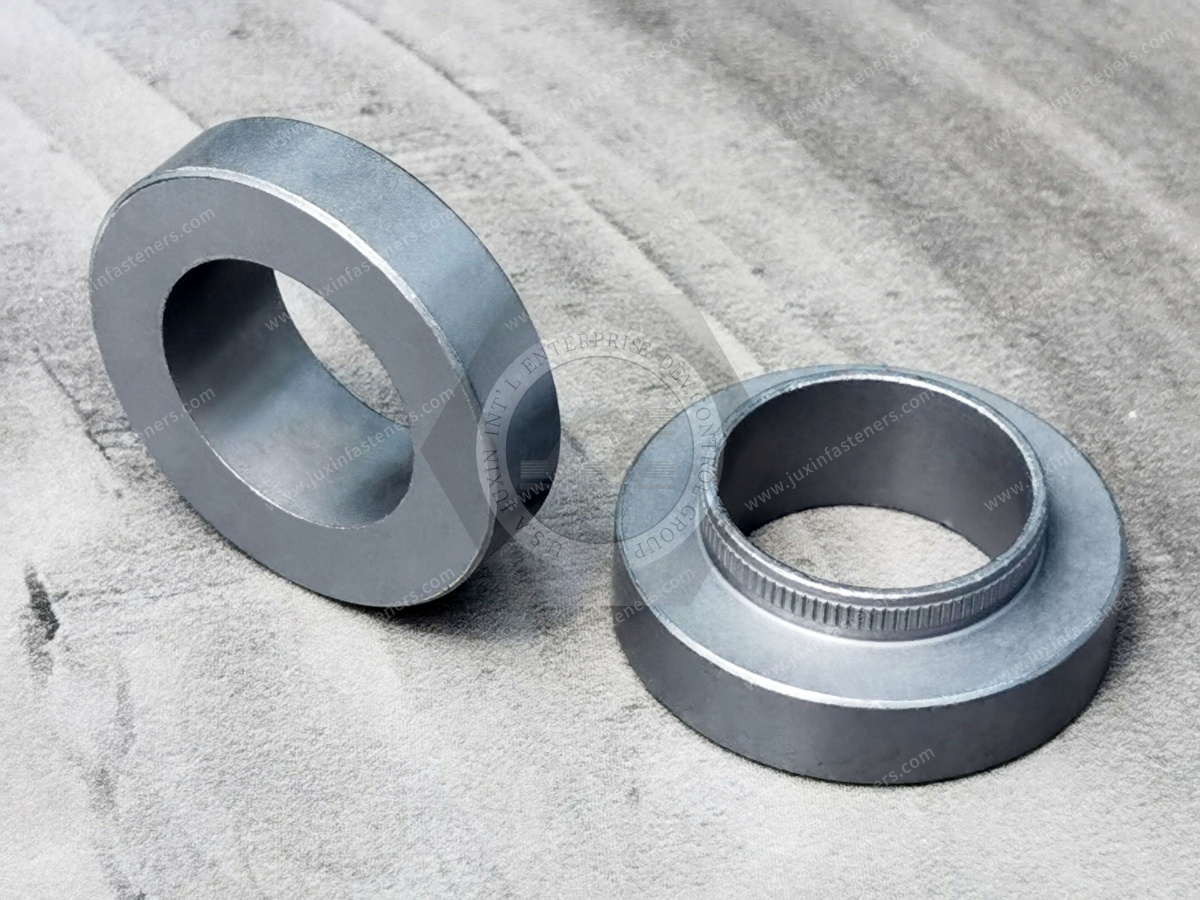
How Self-Clinching Nuts Work in Sheet Metal
The installation process begins with a correctly sized mounting hole in a compatible sheet metal panel.
The self-clinching nut is positioned in the hole and compressed using suitable press tooling.
As the press applies force, the fastener's clinching features displace the surrounding sheet material.
The displaced material flows into the fastener's retention geometry, establishing mechanical resistance to rotation and axial movement.
The result is a permanently retained threaded component that can accept a mating screw or bolt.
However, successful installation depends on the sheet material being sufficiently ductile and compatible with the fastener design.
If the sheet is too hard, too thin, incorrectly prepared, or unsuitable for the selected clinching geometry, the required material flow may not occur.
This can reduce retention performance or damage the sheet.
Mechanical Interlock vs. Thread Strength
A useful engineering distinction is that the self-clinching connection and the internal thread are two different functional interfaces.
The first interface is the mechanical retention between the nut and the sheet.
The second is the threaded connection between the nut and the mating screw.
A fastener may have sufficient internal thread strength but inadequate retention in the sheet.
Conversely, a well-retained nut may still experience thread damage if the mating screw, thread engagement, or assembly load is unsuitable.
Both interfaces must be considered when evaluating the complete joint.
Why Automotive Manufacturers Use Self-Clinching Nuts
Self-clinching nuts can provide an efficient fastening method for suitable automotive sheet metal assemblies.
Their potential benefits include reduced secondary operations, permanent fastener retention, controlled threaded attachment points, and compatibility with press-based production processes.
The actual benefits depend on the component design, production volume, equipment, and installation requirements.
Threaded Connections in Thin Sheet Metal
Thin sheet metal may not provide enough thickness for the required conventional tapped thread engagement.
A self-clinching nut introduces a separate threaded component with a suitable internal thread length.
This can provide a practical solution where the panel itself cannot accommodate the required threaded connection.
However, the joint must still be evaluated for the expected mechanical loads and service conditions.
Reduced Welding and Tapping Operations
For suitable applications, self-clinching nuts may eliminate the need for separate nut welding or direct sheet tapping.
Potential manufacturing advantages include:
Reduced secondary operations
Press-based installation
Repeatable fastener positioning
Suitability for automated assembly
Reduced handling of loose nuts
Simplified threaded attachment points
These benefits should be assessed against the cost of the fastener, installation tooling, press equipment, quality control, and any required panel preparation.
Permanent Retention During Assembly
A properly installed self-clinching nut remains attached to the sheet during subsequent handling and assembly.
This can simplify downstream operations because workers or automated equipment do not need to position a separate loose nut during screw installation.
For production managers, reducing component handling can help improve assembly efficiency and reduce opportunities for missing or incorrectly positioned hardware.
Automotive Applications for Self-Clinching Nuts
Automotive self-clinching nuts may be used in selected sheet metal components where the panel material, thickness, geometry, and operating loads are compatible with the fastening method.
Typical application categories include body-related brackets, interior assemblies, electronic housings, equipment mounting components, and supporting sheet metal structures.
Automotive Body and Mounting Brackets
Sheet metal brackets are used throughout vehicle assemblies to support equipment, panels, covers, and other components.
Self-clinching nuts may provide retained threaded attachment points in suitable bracket designs.
Potential applications include:
Equipment mounting brackets
Sheet metal support brackets
Cover mounting components
Noncritical reinforcement-related brackets
Accessory mounting structures
The suitability of the fastener must be evaluated according to the actual load path and component function.
Safety-critical body structures and crash-load-bearing joints require specific engineering validation and should not be assumed suitable for ordinary self-clinching nuts.
Automotive Interior Assemblies
Vehicle interiors contain numerous mechanical and electronic assemblies that require reliable fastening.
Potential applications include:
Interior mounting brackets
Instrument panel support components
HVAC equipment brackets
Interior electronic module mounts
Trim support structures
Selected sheet metal equipment supports
Self-clinching nuts can be useful where a permanent threaded attachment point is required and access to the opposite side of the sheet is limited during final assembly.
For interior applications, engineers should consider assembly accessibility, vibration, installation loads, and the surrounding sheet metal design.
Automotive Electronic Housings
Modern vehicles contain electronic control modules, sensors, communication equipment, and power management systems.
These assemblies often require compact fastening interfaces.
Suitable self-clinching nuts may be considered for selected sheet metal housings and mounting brackets associated with:
Electronic control units
Infotainment equipment
Communication modules
Sensor mounting brackets
Electrical distribution equipment
Selected power electronics enclosures
Cable management assemblies
The fastening solution must be evaluated against the specific enclosure material, operating temperature, vibration environment, electrical requirements, and assembly method.
A mechanical fastening connection should not automatically be treated as a verified electrical grounding or bonding path.
Electric Vehicle and Battery-Related Equipment
Electric vehicles contain a wide range of electrical and mechanical assemblies that require threaded fastening.
Potential applications for suitable self-clinching nuts include selected noncritical brackets, equipment covers, mounting supports, and sheet metal enclosures.
However, battery systems and high-voltage equipment can involve additional electrical, thermal, corrosion, vibration, and safety requirements.
Self-clinching nuts should not be assumed suitable for battery structural joints, high-voltage connections, busbar interfaces, or safety-critical applications without project-specific engineering validation.
The OEM must define the relevant functional and safety requirements.
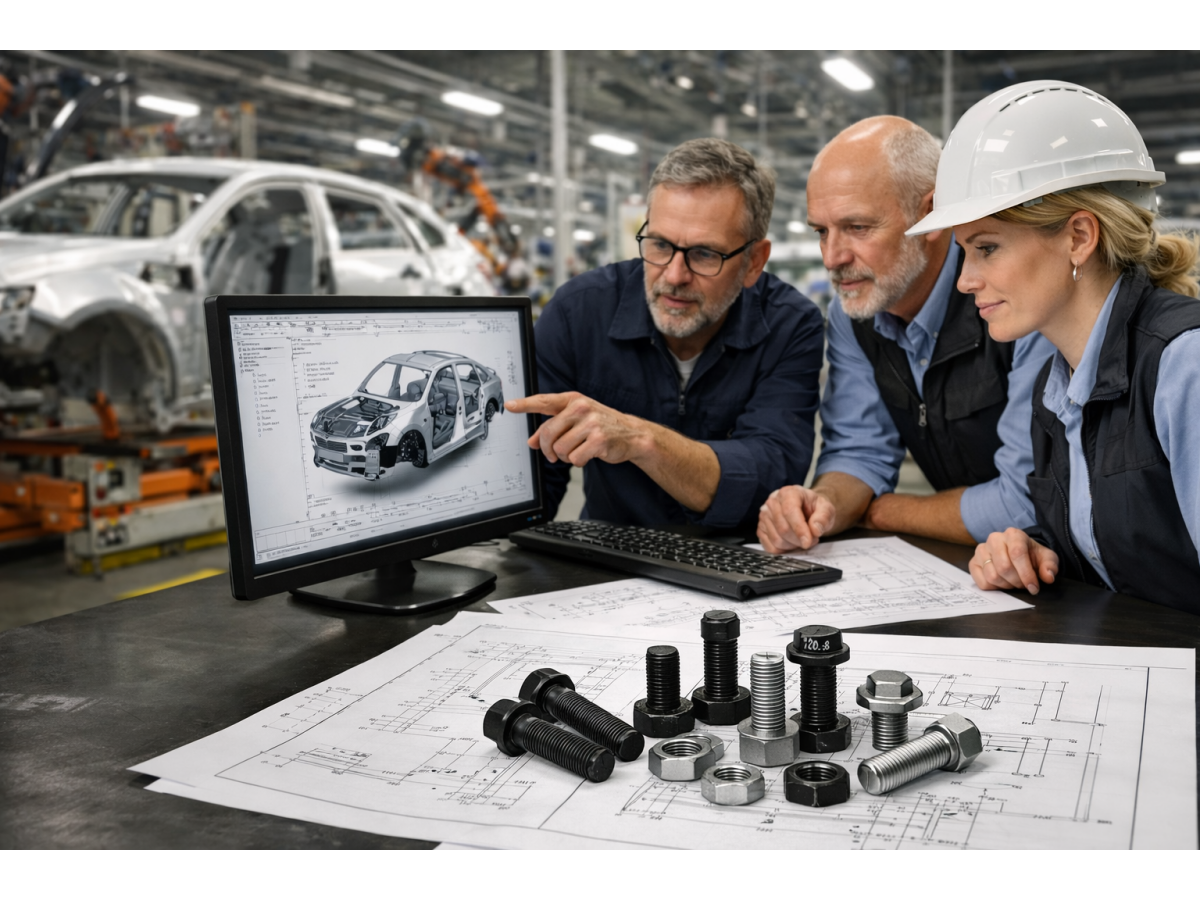
Sheet Metal Thickness: The First Selection Requirement
Panel thickness is one of the most important factors when selecting a self-clinching nut.
Each fastener design has a specified minimum compatible sheet thickness and may have additional installation limitations.
The required sheet thickness depends on the fastener geometry and the manufacturer's validated installation specifications.
A nut intended for one sheet thickness range should not automatically be used in a thinner panel.
What Happens When the Sheet Is Too Thin?
Insufficient sheet thickness may prevent the material from filling the fastener's retention features adequately.
Possible consequences include:
Reduced torque-out resistance
Reduced push-out resistance
Panel deformation
Poor seating
Inconsistent installation quality
Increased risk of fastener loosening or displacement
The correct fastener should be selected using its validated sheet thickness requirements.
What Happens When the Sheet Is Thicker?
A thicker panel does not automatically guarantee better clinching performance.
The fastener design, hole geometry, and installation conditions must still be compatible.
Certain self-clinching nut designs may be installed in panels thicker than their specified minimum, but the relevant product specification must be followed.
The required clinching geometry and installation process should never be inferred from sheet thickness alone.
Sheet Material Hardness and Ductility
Self-clinching technology relies on controlled deformation of the sheet material.
For many conventional self-clinching fasteners, the sheet must be softer than the fastener's clinching features and sufficiently ductile to flow into the retention geometry.
This requirement is especially important in automotive manufacturing because modern vehicles use a wide range of steel grades and aluminum alloys.
Mild Steel Sheet
Certain low-carbon steel sheets may be suitable for self-clinching nuts when their thickness, hardness, and ductility meet the fastener's installation requirements.
However, not all steel sheets have the same material properties.
The actual sheet grade and condition should be confirmed.
Stainless Steel Sheet
Stainless steel panels may require specially designed self-clinching fasteners.
A conventional clinch nut suitable for softer carbon steel sheet may not perform correctly in a harder stainless steel panel.
The fastener's material and clinching geometry must be compatible with the actual sheet hardness.
Aluminum Sheet
Aluminum sheet may be suitable for certain self-clinching fasteners.
However, aluminum alloy, temper, thickness, and surface condition influence installation performance.
A softer aluminum alloy and a high-strength heat-treated aluminum alloy may behave differently during clinching.
The correct fastener selection must be based on the actual material condition.
Advanced High-Strength Steel and Hardened Automotive Panels
Automotive manufacturers increasingly use advanced high-strength steels to achieve structural performance and weight reduction.
These materials may not be compatible with conventional self-clinching fasteners because their hardness and deformation behavior can prevent proper clinching.
Specialized fastening technologies may be required.
For example, certain applications may be better suited to welding, rivet nuts, flow-drill screws, specialized mechanical joining, or other validated methods.
The appropriate method depends on the actual panel design, material properties, load requirements, and production process.
A conventional self-clinching nut must not be specified for high-strength automotive sheet solely because it fits the nominal hole diameter.
Mounting Hole Design and Installation Accuracy
The mounting hole is a critical part of the self-clinching connection.
The hole must be manufactured according to the selected fastener's installation specification.
Important characteristics include:
Hole diameter
Hole position
Hole roundness
Burr condition
Edge distance
Panel flatness
Surrounding formed features
Installation accessibility
An incorrectly sized or damaged hole can compromise the mechanical interlock.
Hole Diameter and Tolerance
The correct hole diameter is specific to the fastener design.
An oversized hole may reduce the amount of sheet material available for clinching.
An undersized hole may interfere with proper seating or cause unwanted deformation.
The required hole size should be taken from the approved fastener specification or engineering drawing.
A universal mounting hole size should not be assumed for all self-clinching nuts with the same thread diameter.
Burrs and Hole Preparation
Hole quality can influence installation consistency.
Burrs, distortion, or irregular edges may prevent the fastener from seating correctly.
For many conventional self-clinching nut designs, the installation hole should be properly prepared without an unintended countersink or chamfer that removes material needed for clinching.
However, the exact hole preparation requirements depend on the selected fastener design.
The manufacturer's validated installation instructions should be followed.
Minimum Edge Distance
The distance between the installation hole and the sheet edge is important.
If the fastener is installed too close to an unsupported edge, the surrounding sheet may deform or fail to provide adequate retention.
The required minimum edge distance depends on the fastener geometry, sheet material, thickness, and installation conditions.
Engineers should verify the relevant product specification rather than use a generic edge-distance rule.
Distance from Bends and Formed Features
Automotive sheet metal parts often contain bends, flanges, embossed features, and other formed geometries.
These features can affect material deformation and press-tool access.
A self-clinching nut positioned too close to a bend may experience nonuniform sheet support or installation difficulties.
The component design should account for:
Available flat installation area
Press punch access
Anvil support
Adjacent bends
Panel stiffness
Fastener seating clearance
These requirements should be reviewed before the sheet metal tooling is finalized.
Installation Force and Press Tooling
Self-clinching nuts are generally installed using controlled compressive force.
The appropriate installation force depends on the fastener design, sheet material, thickness, and tooling arrangement.
Too little force may prevent complete clinching.
Excessive force may deform the sheet, damage the fastener, or create an unacceptable assembly condition.
The correct process should follow the validated installation instructions for the selected fastener.
Press Punch and Anvil Alignment
Proper alignment between the punch, fastener, sheet, and anvil is essential.
Misalignment may cause uneven seating or unwanted deformation.
The tooling should support the panel appropriately while allowing the intended material flow into the fastener's clinching features.
The installation arrangement must also provide sufficient clearance for the fastener geometry.
Fastener Orientation
Certain self-clinching nuts are designed for installation from a specific side of the sheet.
The required orientation must be confirmed from the fastener drawing and installation specification.
Incorrect orientation can prevent the intended mechanical interlock from forming.
Avoiding Impact Installation
Conventional self-clinching nuts are generally designed for controlled press installation rather than uncontrolled hammering or impact.
Impact installation may produce inconsistent material flow or damage the surrounding sheet.
The installation method must follow the selected fastener's approved process requirements.
Installing Before or After Surface Treatment
Automotive sheet metal components may undergo painting, plating, coating, or other surface treatments.
The sequence of fastener installation and surface treatment can influence both clinching performance and finished assembly requirements.
For many applications, installing the fastener before coating may be appropriate.
However, coating processes can affect threads, contact surfaces, dimensional fit, or corrosion protection.
Installing after coating may also introduce risks if the coating changes the sheet's surface condition or interferes with the intended clinching mechanism.
The correct manufacturing sequence must be established for the specific panel, fastener, coating, and quality requirements.
Mechanical Performance: Push-Out and Torque-Out Resistance
Two important performance characteristics of self-clinching nuts are push-out resistance and torque-out resistance.
These characteristics evaluate different aspects of the mechanical connection between the fastener and the sheet.
Push-Out Resistance
Push-out resistance describes the force required to displace an installed fastener axially from the sheet under a defined test arrangement.
The result depends on the fastener geometry, sheet material, sheet thickness, hole preparation, and installation quality.
A higher push-out value may be desirable for certain applications, but the required acceptance criterion must be based on the actual joint design.
Torque-Out Resistance
Torque-out resistance describes the resistance of the installed fastener to rotation relative to the sheet under a defined test arrangement.
This characteristic is important because a rotating nut can prevent proper screw tightening or removal.
However, torque-out resistance is not the same as the allowable tightening torque for the final bolted joint.
The final joint may have additional limitations involving thread strength, bolt properties, mating materials, or assembly geometry.
Pull-Through and Joint Loading
Depending on the application, engineers may also need to evaluate tensile loading, pull-through behavior, fatigue, vibration, or other joint performance characteristics.
A fastener with acceptable push-out and torque-out values is not automatically qualified for every structural load condition.
The complete assembly must be evaluated against the actual service loads.
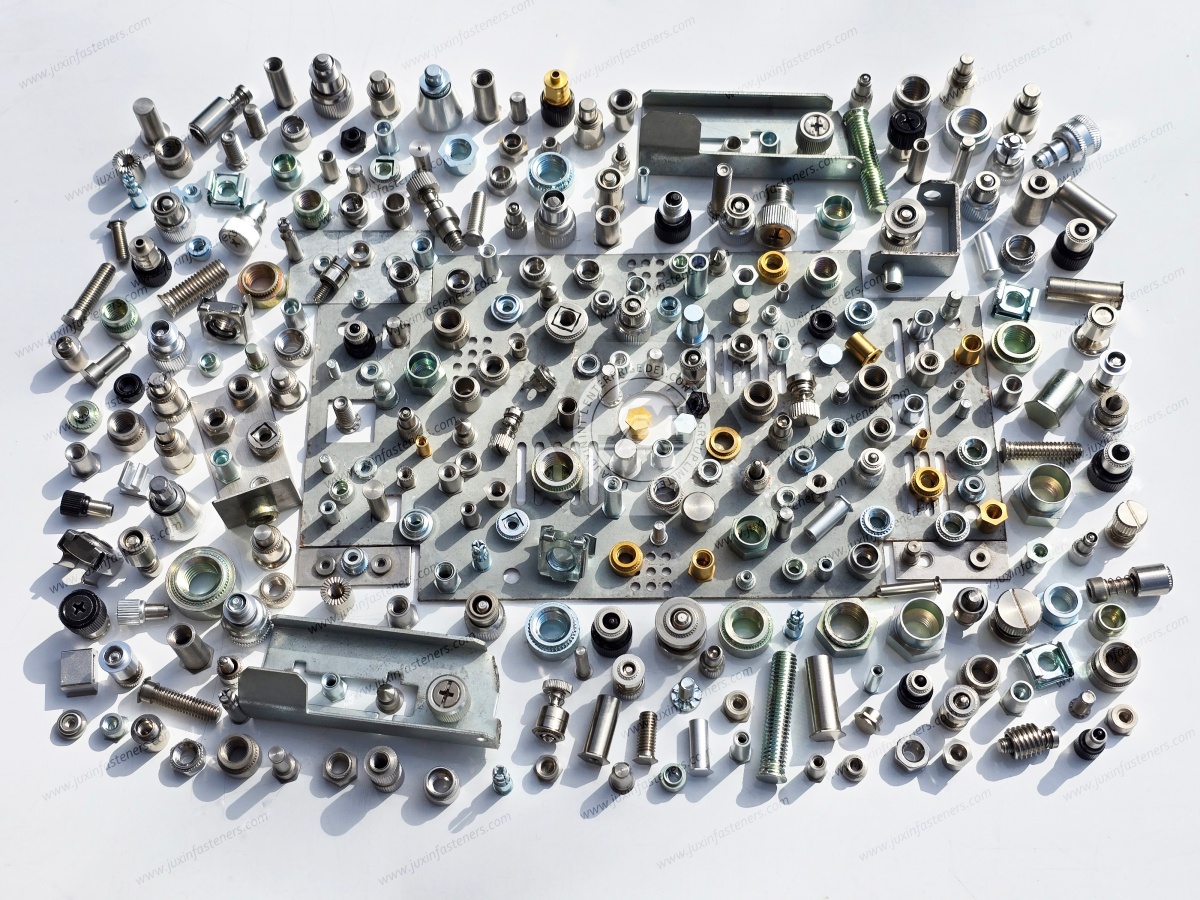
Why Test Results Cannot Be Transferred Between Different Sheets
An important engineering consideration is that retention performance measured in one sheet material cannot automatically be applied to another.
For example, a self-clinching nut installed in a particular low-carbon steel sheet may behave differently when installed in an aluminum alloy or a harder steel grade.
Even when the nominal thickness and hole diameter are identical, material hardness and ductility can influence the clinching mechanism.
For OEM projects, validation should use representative production materials and installation conditions.
Automotive Vibration and Joint Reliability
Automotive components may experience vibration, temperature variation, mechanical loading, and repeated service conditions.
These factors can influence the performance of threaded assemblies.
Self-clinching retention and screw-joint loosening are separate engineering considerations.
A properly retained nut does not automatically prevent the mating screw from loosening under vibration.
Where vibration resistance is required, the joint design may need appropriate preload control, suitable locking features, or other validated measures.
The selected solution should be evaluated according to the actual assembly and operating environment.
Corrosion Protection and Material Compatibility
Automotive components may be exposed to moisture, road contaminants, temperature changes, and other environmental conditions.
Material and surface treatment selection should consider the complete assembly.
Carbon Steel Self-Clinching Nuts
Carbon steel self-clinching nuts may be suitable for selected applications when the material and surface treatment meet the specified requirements.
The required corrosion protection depends on the exposure environment and customer specification.
Stainless Steel Self-Clinching Nuts
Stainless steel fasteners may be considered for applications requiring particular corrosion characteristics.
However, stainless steel grade and hardness must also be compatible with the sheet material and clinching process.
Stainless steel does not automatically provide the correct solution for every corrosion environment.
Dissimilar Metals and Galvanic Corrosion
Where different metals are in electrical contact and exposed to an electrolyte, galvanic corrosion may be a concern.
For example, a steel fastener installed in an aluminum panel may require evaluation of material compatibility and protective surface treatments.
The corrosion behavior depends on the complete material and environmental system.
Hydrogen Embrittlement Considerations
Certain high-strength steel fasteners may be susceptible to hydrogen embrittlement under particular manufacturing and service conditions.
Where applicable, the material strength, coating process, and relevant specifications must be evaluated.
This risk should not be generalized to every self-clinching nut, but it should be addressed when the selected material and processing conditions make it relevant.
Automotive Fastening Standards and Engineering Specifications
Self-clinching nuts should be selected according to their actual product specifications and customer drawings.
Not every self-clinching nut belongs to a single universal ISO or DIN product standard.
Many self-clinching designs use manufacturer-specific installation dimensions and performance requirements.
For threaded interfaces, applicable standards may include ISO 261 and ISO 965 for ISO metric threads.
For Unified inch threads, ASME B1.1 may apply.
The relevant thread standard must be clearly identified.
Metric and Inch Self-Clinching Nuts
Automotive manufacturers may require metric or inch-threaded fastening components depending on the design and market.
Metric thread sizes may include M3, M4, M5, M6, and other specified dimensions where available for the selected product design.
Unified inch-threaded products may use UNC or UNF specifications.
However, availability must be confirmed for each fastener type.
Metric, UNC, UNF, BSW, and BSF thread systems are not directly interchangeable.
For example, an M6 self-clinching nut must not be treated as a direct replacement for a 1/4-20 UNC clinch nut.
Even when the mounting geometry appears similar, the thread system and complete installation specifications must be verified.
Automotive Quality Requirements
Automotive OEM and Tier supplier programs may involve additional quality documentation, traceability, production approval, and process control requirements.
Depending on the customer and project, requirements may include:
Approved engineering drawings
Material specifications
Dimensional inspection
Installation validation
Mechanical performance testing
Lot identification
Surface treatment verification
Production process controls
Change management
Packaging specifications
Some automotive programs may require Production Part Approval Process (PPAP) documentation or other customer-specific quality submissions.
The availability of any such documentation or quality-system qualification must be confirmed during supplier evaluation.
JUXIN FASTENERS does not claim a particular automotive certification or PPAP capability without project-specific verification.
Design for Manufacturability of Clinch Nut Assemblies
Design for manufacturability should begin before the sheet metal component enters mass production.
Engineers should review the nut selection together with the sheet material, stamping process, hole preparation, press installation, and downstream assembly.
Selecting the Nut Before Finalizing the Sheet Metal Drawing
A common design risk is completing the sheet metal geometry before confirming the fastener's installation requirements.
If the hole is too close to a bend or the panel thickness is incompatible, correcting the design later may require tooling modifications.
Selecting the fastener early helps establish the correct hole geometry, edge distance, installation access, and panel requirements.
Coordinating with Stamping and Sheet Metal Production
For stamped components, hole geometry and burr direction can be influenced by the punching process.
These details may affect fastener installation.
Manufacturing engineers should coordinate the sheet metal process with the fastener installation specification.
The appropriate hole preparation should be verified using representative production parts.
Preventing Installation Damage
Installation tooling should support the panel without causing unwanted deformation.
Thin or flexible panels may require additional support.
Where several fasteners are installed close together, tooling access and installation sequence should also be reviewed.
Avoiding Unnecessary Customization
A standard self-clinching nut may provide a more economical solution when its geometry and performance meet the application requirements.
Custom dimensions should be considered when there is a genuine design, installation, or functional need.
For OEM projects, JUXIN FASTENERS can evaluate suitable standard and drawing-based self-clinching nut requirements according to the customer's technical specifications.
Production-Line Efficiency and Automated Installation
For automotive production managers, fastening performance must be evaluated together with assembly cycle time, equipment reliability, and defect prevention.
Self-clinching nuts may support automated installation when the fastener geometry, feeding system, press equipment, and panel design are compatible.
Potential manufacturing considerations include:
Fastener feeding orientation
Component positioning
Press alignment
Installation force control
Panel support
Fastener presence detection
Installation height verification
Reject handling
Equipment maintenance
Production traceability
The required level of automation depends on production volume, equipment design, and customer quality expectations.
Installation Force Monitoring
Where appropriate, production equipment may monitor force and displacement during installation.
This can help identify abnormal installation conditions.
However, force monitoring alone does not automatically establish acceptable mechanical retention.
The relationship between installation parameters and actual retention performance should be validated.
Fastener Presence and Position Verification
Missing or incorrectly installed nuts can cause problems during downstream assembly.
Depending on the production line, verification may involve visual inspection, sensors, automated detection, or other suitable methods.
The appropriate inspection method should be selected according to the assembly risk and production requirements.
Reducing Rework and Assembly Interruptions
Common production problems may include:
Incorrect fastener selection
Mixed thread sizes
Wrong installation orientation
Oversized mounting holes
Poor sheet support
Insufficient clinching
Fastener rotation
Panel deformation
Thread contamination
Coating interference
Identifying these risks during process planning can reduce rework and help improve production consistency.
Common Self-Clinching Nut Failures and Their Causes
Understanding potential failure mechanisms can help engineering and production teams identify appropriate corrective actions.
Fastener Spins During Screw Tightening
Possible causes include insufficient clinching, an oversized mounting hole, incompatible sheet hardness, incorrect installation force, or unsuitable fastener geometry.
The correct response is to investigate the installation interface rather than automatically increase screw torque.
Fastener Pushes Out of the Panel
Possible causes include inadequate material flow, insufficient sheet thickness, incorrect hole preparation, or loading beyond the validated retention capability.
The complete fastener and sheet design should be reviewed.
Sheet Metal Deforms During Installation
Possible causes include excessive press force, inadequate panel support, insufficient edge distance, or unsuitable sheet geometry.
Corrective action may involve tooling adjustments, fastener selection, or panel redesign.
Thread Damage During Assembly
Possible causes include incorrect mating thread, cross-threading, excessive tightening, contamination, or insufficient thread strength.
Thread damage should be evaluated separately from clinching retention.
Corrosion at the Fastener Interface
Possible causes include unsuitable coating selection, environmental exposure, damaged surface treatment, or dissimilar-metal compatibility issues.
The corrosion protection strategy should address the complete assembly.
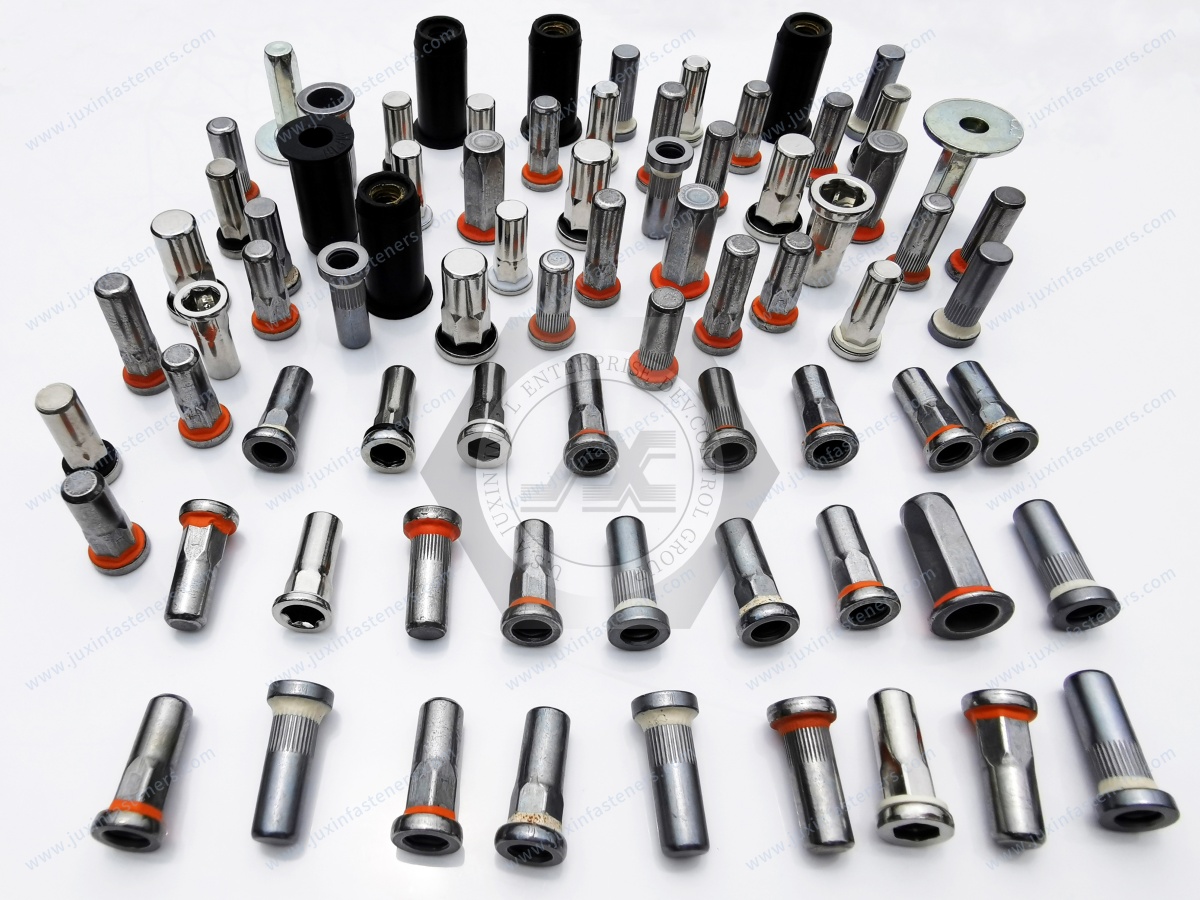
Self-Clinching Nuts vs. Weld Nuts, Rivet Nuts and Loose Nuts
Automotive manufacturers use several methods to create threaded attachment points in sheet metal.
Each method has different installation requirements and engineering advantages.
Self-Clinching Nuts
Self-clinching nuts are suitable for compatible ductile sheet materials where controlled pressing can create the required mechanical interlock.
They may offer an efficient solution for accessible sheet metal components and press-based manufacturing.
Weld Nuts
Weld nuts are attached using a welding process and may be appropriate for selected steel assemblies.
They require evaluation of welding access, material compatibility, weld quality, corrosion protection, and production equipment.
Weld nuts may be preferable in some applications where conventional self-clinching nuts are unsuitable.
Rivet Nuts
Rivet nuts, also called blind rivet nuts or threaded inserts for blind installation, can provide threaded attachment points in suitable materials.
They are particularly useful when installation access is available from only one side.
Unlike conventional self-clinching nuts, rivet nuts generally rely on deformation of the fastener body during installation.
Their installation equipment, hole requirements, and retention characteristics are different.
Loose Nuts
Conventional loose nuts may be suitable where both sides of the assembly are accessible and a permanently retained nut is unnecessary.
However, they may require additional handling or positioning during assembly.
Choosing the Correct Fastening Method
The best method depends on:
Sheet material
Sheet hardness
Panel thickness
Access to both sides
Joint loading
Vibration environment
Corrosion requirements
Production volume
Installation equipment
Maintenance requirements
Total assembly cost
No single fastening method is optimal for every automotive application.
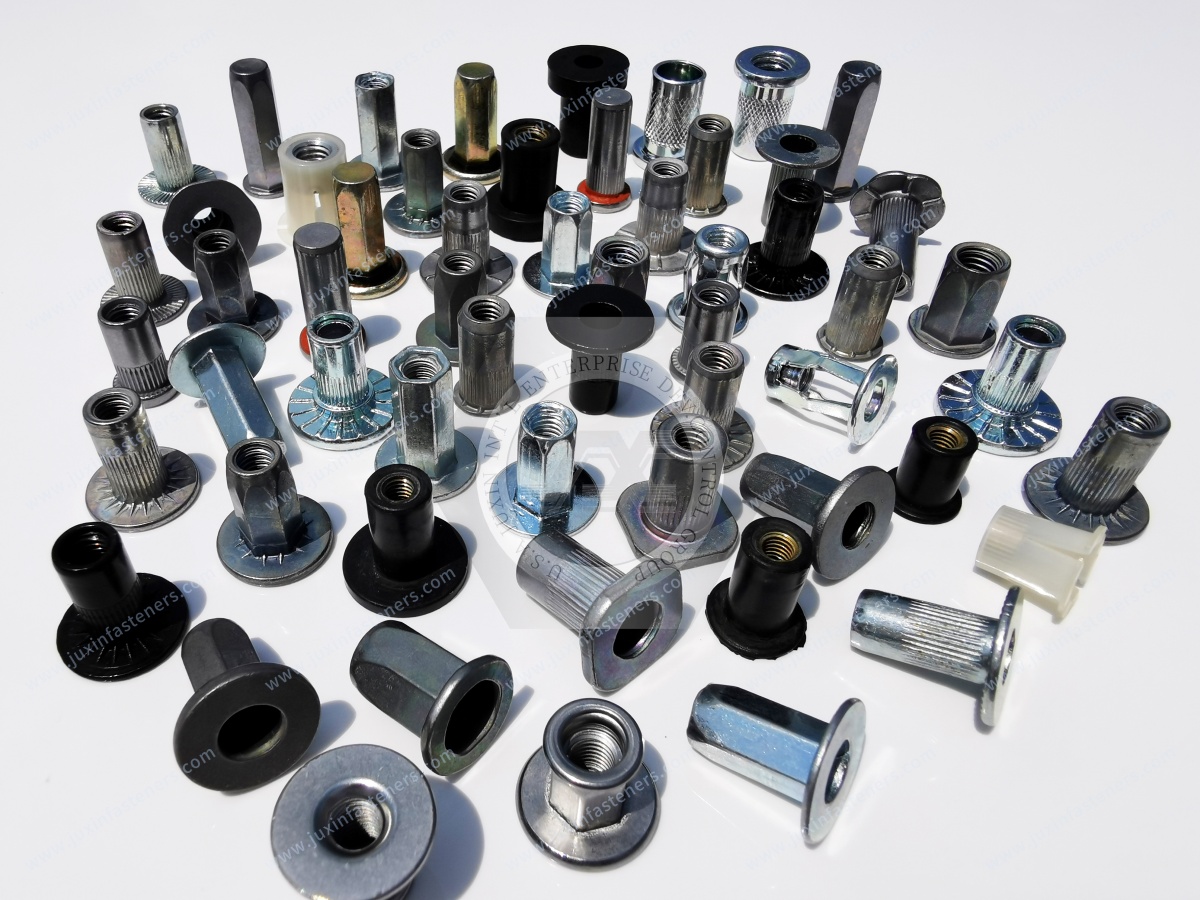
Cost Optimization for Automotive Self-Clinching Nuts
The total cost of a self-clinching fastening solution includes more than the purchase price of the nut.
Important cost factors include:
Fastener unit price
Sheet metal hole preparation
Installation equipment
Press tooling
Installation cycle time
Inspection
Reject and rework rates
Surface treatment
Packaging
Logistics
Long-term supply requirements
A lower-priced nut may not provide the lowest total cost if it creates installation defects or inconsistent production performance.
Standard vs. Custom Self-Clinching Nuts
Standard products may provide advantages in tooling availability, procurement flexibility, and repeat-order efficiency.
Custom self-clinching nuts may be appropriate when the application requires special dimensions, thread configurations, materials, or other functional features.
However, custom designs should be evaluated for installation feasibility, validation requirements, tooling cost, and order quantity.
MOQ and Production Planning
Minimum order quantity and lead time depend on product design, material, manufacturing method, surface treatment, and order quantity.
Prototype and mass-production requirements may differ.
JUXIN FASTENERS evaluates MOQ, production feasibility, and delivery requirements according to the actual RFQ.
Second-Source Development for Automotive Clinch Nuts
Automotive procurement teams may develop alternative suppliers to improve sourcing flexibility, cost competitiveness, and long-term supply continuity.
However, a replacement self-clinching nut should not be approved solely because it has the same thread size and similar external dimensions.
A meaningful comparison should include:
Approved drawing revision
Thread specification
Fastener material
Hardness requirements
Clinching geometry
Mounting hole requirements
Minimum sheet thickness
Compatible sheet material
Installation force
Push-out performance
Torque-out performance
Surface treatment
Inspection requirements
Packaging and traceability
Two clinch nuts with the same M6 thread may have different installation geometries and retention characteristics.
They should not be treated as directly interchangeable without technical evaluation.
Replacement Qualification and Production Validation
For automotive production programs, supplier changes may require customer approval or additional validation.
The relevant requirements should be confirmed before introducing an alternative fastener into an existing assembly.
Where applicable, representative installation samples should be evaluated using the actual production sheet material, hole preparation, and installation equipment.
This helps reduce the risk of approving a replacement based only on catalog dimensions.
Selecting an Automotive Self-Clinching Nut Supplier
A suitable supplier should be evaluated for engineering understanding, product compatibility, quality requirements, manufacturing feasibility, and commercial reliability.
Product and Application Review
Can the supplier understand the intended sheet material, thickness, thread size, installation method, and mechanical performance requirements?
Can potential compatibility issues be identified before quotation?
Material and Surface Treatment
Can the specified material and surface finish be confirmed?
Are corrosion, hardness, and coating requirements clearly defined?
Installation and Performance Requirements
Can the required installation geometry and validation criteria be reviewed?
Are push-out, torque-out, or other tests required?
Quality and Documentation
Does the project require material records, dimensional inspection, traceability, PPAP submissions, or other customer-specific documentation?
These requirements must be confirmed before production.
MOQ, Lead Time and Supply Continuity
Can the proposed supply arrangement support the required order quantities, delivery schedule, and repeat-order planning?
Are drawing revisions and engineering changes controlled according to the agreed requirements?
Automotive Self-Clinching Nuts from JUXIN FASTENERS
JUXIN FASTENERS supplies self-clinching nuts and related industrial sheet metal fastening components for suitable automotive and OEM manufacturing applications.
Relevant product inquiries may include:
Metric self-clinching nuts
Press-in threaded nuts
Sheet metal clinch nuts
Carbon steel clinch nuts
Stainless steel clinch nuts
Custom threaded fastening components
Drawing-based OEM press-in nuts
Precision sheet metal fastening hardware
For automotive projects, our team can review the requested thread specification, fastener dimensions, sheet material, panel thickness, installation conditions, surface treatment, quantity, and quality requirements.
Custom designs, specialized materials, inch-thread variants, and customer-specific validation requirements are subject to individual feasibility confirmation.
Our objective is to help engineering and procurement teams source suitable fastening components while balancing mechanical performance, installation efficiency, production consistency, cost, and long-term supply planning.
Frequently Asked Questions About Automotive Self-Clinching Nuts
What is a self-clinching nut used for in automotive manufacturing?
A self-clinching nut provides a permanently retained internal thread in suitable sheet metal.
Potential applications include mounting brackets, electronic housings, interior equipment supports, and other compatible sheet metal assemblies.
What is the difference between a self-clinching nut and a rivet nut?
A conventional self-clinching nut relies on sheet material flowing into the fastener's retention features during press installation.
A rivet nut generally relies on deformation of the fastener body and may be installed from one side. Their installation requirements and performance characteristics differ.
Can self-clinching nuts be used in thin sheet metal?
Yes, when the sheet meets the selected fastener's minimum thickness, hardness, and installation requirements. The correct product must be chosen for the actual panel.
Can self-clinching nuts be installed in high-strength automotive steel?
Not automatically. Many conventional self-clinching nuts require a sufficiently soft and ductile sheet.
Advanced high-strength steel may require specialized fastening technology or an alternative joining method.
What hole size is required for a self-clinching nut?
The mounting hole diameter depends on the specific fastener design.
It must be selected from the approved installation specification rather than estimated from the thread diameter.
Can self-clinching nuts be installed close to a sheet metal edge?
Only when the selected fastener's minimum edge-distance requirement is satisfied.
Insufficient edge distance may reduce retention performance or deform the sheet.
What is torque-out resistance?
Torque-out resistance describes the installed fastener's resistance to rotation relative to the sheet under defined test conditions.
It is different from the allowable tightening torque of the complete threaded joint.
What is push-out resistance?
Push-out resistance describes the force required to displace an installed fastener axially from the sheet under defined test conditions.
Are metric and inch self-clinching nuts interchangeable?
No. Metric and Unified inch threads have different specifications.
The thread system and complete installation geometry must be verified before substitution.
Can self-clinching nuts be used in electric vehicles?
They may be suitable for selected EV brackets, covers, and equipment enclosures.
Battery structural joints, high-voltage assemblies, and safety-critical applications require additional engineering validation.
Does JUXIN FASTENERS supply custom automotive clinch nuts?
JUXIN FASTENERS evaluates suitable drawing-based self-clinching nuts and related fastening components.
Custom manufacturing feasibility depends on the design, material, installation requirements, quantity, and quality specifications.
Can JUXIN FASTENERS support second-source development?
Suitable automotive clinch nut projects may be submitted for technical and commercial evaluation.
Replacement qualification must consider installation geometry, sheet compatibility, retention performance, and applicable customer approval requirements.
What information is needed for an automotive self-clinching nut quotation?
Customers should provide the fastener drawing, thread specification, sheet material, panel thickness, mounting hole requirements, quantity, surface treatment, and applicable quality or testing requirements.
Request a Quote for Automotive Self-Clinching Nuts
If you are sourcing automotive self-clinching nuts, press-in nuts, sheet metal clinch nuts, or custom threaded fastening components for OEM manufacturing, contact JUXIN FASTENERS for technical review and quotation.
To help our team evaluate your project, please provide:
2D engineering drawing, preferably PDF
3D CAD model, where available
Fastener part number and drawing revision
Thread size and thread standard
Fastener material
Sheet metal material and grade
Actual panel thickness
Sheet hardness or material condition, where available
Mounting hole diameter and tolerance
Minimum edge distance
Installation method and press equipment
Required push-out resistance
Required torque-out resistance
Additional mechanical or vibration requirements
Surface treatment and corrosion specifications
Inspection and documentation requirements
Prototype or production quantity
Estimated annual demand
Required delivery schedule
Packaging and traceability requirements
Existing sample or reference product for second-source evaluation, where available
Our team will review the available technical information and confirm whether the selected product or proposed custom design is suitable for further manufacturing evaluation and quotation.
For automotive OEM and Tier supplier projects, please identify any customer-specific quality, approval, or production documentation requirements at the inquiry stage.
JUXIN FASTENERS focuses on helping international automotive manufacturers, engineering teams, production managers,
and procurement professionals source reliable sheet metal fastening components that support real production and purchasing requirements.
JUXIN FASTENERS
Automotive Self-Clinching Nuts & OEM Sheet Metal Fastening Solutions
Website: www.juxinfasteners.com
Email: info@juxinfasteners.com
Send your engineering drawings and RFQ requirements to discuss your automotive self-clinching nut project.
Contact Us
Tel.:
+86 020 8621 0320
+86 020 3121 6067
E-mail:
Technical Support:
Navigation
SEND INQUIREY



