
Call Us
+86 136 6007 9809
Call Us
+86 136 6007 9809

Aug. 24, 2026
Carbon Steel CNC Machining for Rail Transit Components and Custom Railway OEM Parts
Rail transit equipment operates in demanding mechanical and environmental conditions. Rolling stock, onboard auxiliary equipment, maintenance systems, and railway-related machinery may experience vibration, cyclic loading, temperature variation, moisture, and long service periods.
These operating conditions create specific requirements for precision machined components and fastening hardware.
A successful railway mechanical component must do more than meet its nominal dimensions.
It must provide suitable material properties, reliable assembly interfaces, controlled manufacturing variation, and compatibility with the intended inspection and maintenance strategy.
For selected rail transit applications, carbon steel CNC machining offers a manufacturing solution for custom mechanical components requiring accurate geometry, appropriate strength, repeatable dimensions, and economical production.
Typical components include precision shafts, locating pins, bushings, sleeves, threaded adapters, mounting blocks, spacers, mechanical connectors, and custom equipment interfaces.
Carbon steel is not automatically suitable for every railway application. Material selection must reflect the component's actual loads, wear conditions, corrosion exposure, safety classification, and applicable customer requirements.
JUXIN FASTENERS supports drawing-based inquiries for custom carbon steel CNC machined parts and industrial fastening hardware used in railway equipment and rail transit OEM assemblies.
Depending on the geometry and production requirements, suitable manufacturing processes may include CNC turning, CNC milling, drilling, tapping, threading, grooving, and combined turning-milling operations.
Manufacturing feasibility, material specifications, achievable tolerances, inspection documentation, purchasing quantities, and delivery requirements are evaluated according to the specific project.
Applications of Carbon Steel CNC Machined Parts in Rail Transit
Railway equipment includes many mechanical interfaces that require controlled positioning, secure attachment, and repeatable assembly.
The component design should be based on its function rather than the industry name alone.
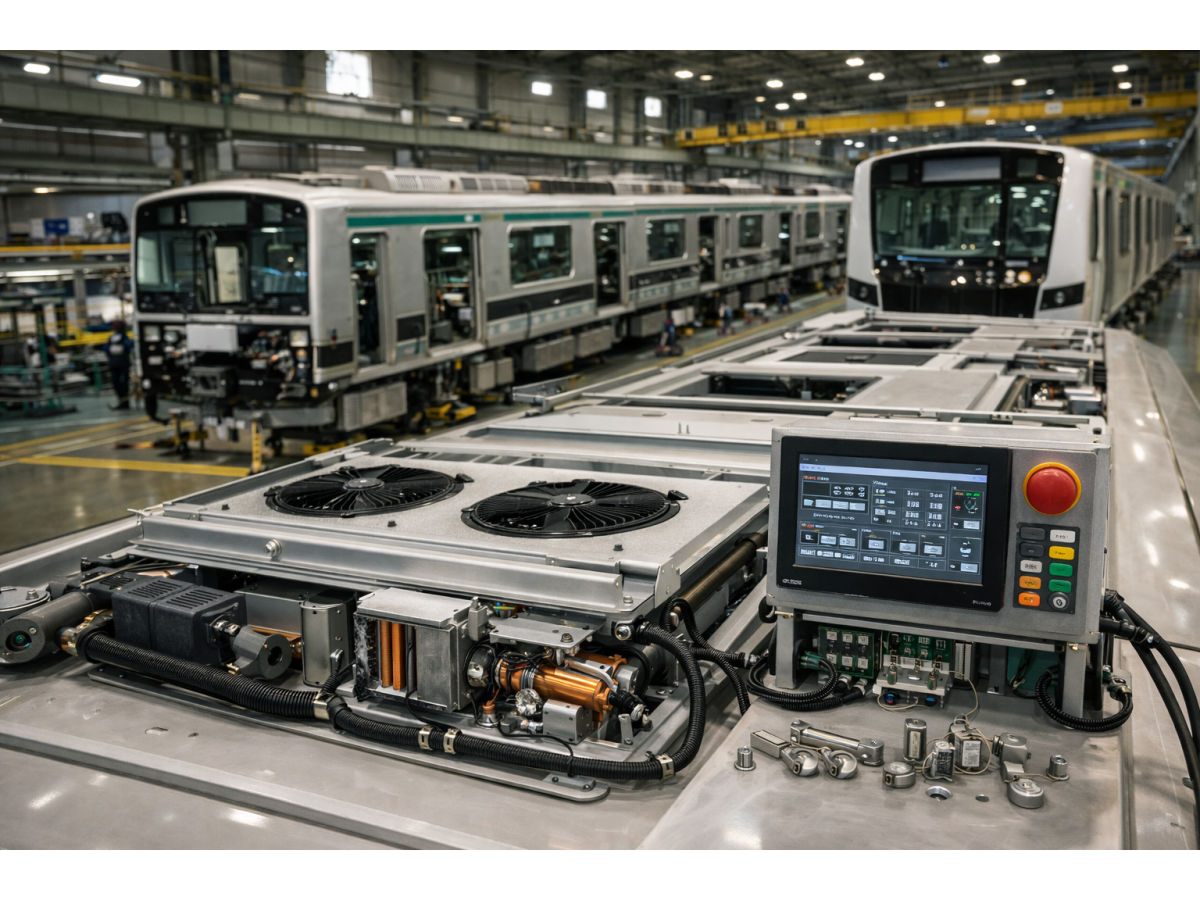
Rolling Stock Auxiliary Equipment
Rail vehicles contain auxiliary systems that may require machined spacers, mounting blocks, threaded adapters, pins, and mechanical connectors.
Depending on the equipment design, these parts may support controlled mounting distances, component positioning, or mechanical attachment.
The required material properties depend on vibration exposure, mechanical loading, temperature, installation access, and maintenance requirements.
Rail Vehicle Interior Mechanical Assemblies
Selected interior equipment assemblies may use custom machined mounting hardware, sleeves, spacers, and locating components.
These parts may provide repeatable positioning for mechanical fittings or equipment mounting interfaces.
Where interior components are subject to fire-safety requirements, the applicable requirements must be established for the complete material and assembly system.
A machined carbon steel component should not be described as meeting railway fire-safety requirements without the necessary project-specific evidence.
Electrical and Control Equipment Mounting
Rail vehicles and railway infrastructure may incorporate electrical cabinets, control equipment, sensors, and monitoring systems.
Custom machined mounting blocks, threaded adapters, locating pins, and spacers may be used to support selected mechanical interfaces.
The component must be evaluated for vibration, grounding or electrical isolation requirements, corrosion protection, and assembly access.
A conductive carbon steel component cannot be assumed to provide electrical insulation.
Mechanical Linkages and Equipment Interfaces
Selected auxiliary mechanical linkages may use shafts, pins, bushings, and threaded connectors.
For moving or heavily loaded interfaces, engineers should consider wear, fatigue, lubrication, contact pressure, and surface hardness.
A general-purpose carbon steel component is not automatically suitable for highly loaded railway mechanisms.
Railway Maintenance Equipment and Tooling
Railway maintenance equipment, fixtures, and inspection tooling may require precision machined locating pins, shafts, adapters, and mounting components.
These are equipment or tooling applications and should be distinguished from safety-critical parts installed on rolling stock.
Their qualification and documentation requirements may differ substantially.
Replacement Parts and Long-Term Maintenance
Railway equipment may remain in service for extended periods, creating demand for replacement mechanical components.
Custom CNC machining can be considered for selected drawing-based spare parts.
However, reproducing the dimensions of an existing component does not independently establish that the replacement meets the original material, heat-treatment, fatigue, or qualification requirements.
For controlled railway applications, replacement parts should follow the applicable approved design and change-control process.
Selecting Carbon Steel for Railway CNC Components
Carbon steel grades offer different combinations of strength, machinability, hardness, ductility, and heat-treatment response.
The appropriate material should be selected according to the component function and approved engineering specification.
SAE/AISI 1018 Steel
SAE/AISI 1018 is a low-carbon steel that may be considered for selected mounting components, spacers, threaded adapters, and other mechanical hardware.
Its suitability depends on the required strength, manufacturing condition, corrosion protection, and application requirements.
Where improved surface hardness is required, a suitable case-hardening treatment may be considered if permitted by the drawing.
SAE/AISI 1045 Steel
SAE/AISI 1045 is a medium-carbon steel that may be considered for selected shafts, pins, and mechanical components.
Its properties depend on the specified material condition and heat treatment.
For components requiring controlled hardness or strength, the drawing should define the applicable acceptance requirements.
Free-Machining Carbon Steels
Free-machining carbon steels may offer advantages for selected precision turned parts.
However, their mechanical properties, fatigue behavior, weldability, heat-treatment limitations, and material composition must be considered.
For example, leaded free-machining grades may be unsuitable where customer substance restrictions apply.
Machinability alone does not determine whether a steel grade is appropriate for railway equipment.
Carbon Steel vs. Alloy Steel
Carbon steel and alloy steel must be distinguished.
For example, SAE/AISI 4140 is a chromium-molybdenum alloy steel rather than a plain carbon steel.
Where a component requires particular hardenability, fatigue performance, or mechanical properties, an alloy steel may be more appropriate.
Material substitution requires engineering evaluation and customer approval.
Material Specifications and Documentation
The drawing should identify the required steel grade, material condition, and relevant mechanical property requirements.
Where applicable, material documentation, heat or lot traceability, and inspection requirements should be established before production.
A nominal steel designation alone may not completely define the properties required for a finished railway component.
Vibration and Fatigue in Rail Transit Mechanical Components
Railway equipment can experience repeated mechanical loading throughout its service life.
This creates an important distinction between static strength and fatigue performance.
A component that withstands a single applied load may still fail after repeated loading cycles.
Cyclic Loading
Cyclic loading can occur in equipment mounting interfaces, mechanical linkages, and other moving or vibration-exposed assemblies.
The magnitude, direction, frequency, and number of loading cycles influence fatigue behavior.
Stress Concentrations
Sharp corners, abrupt section changes, grooves, threads, and machining marks may create local stress concentrations.
Where fatigue performance is important, engineers should evaluate transitions, fillet radii, surface condition, and the location of critical features.
Material and Heat Treatment
Material strength alone does not establish fatigue performance.
The component geometry, surface condition, residual stresses, heat treatment, and service environment may also influence fatigue life.
Assembly Preload
For threaded connections, preload can influence the load distribution and resistance to joint separation.
However, the correct preload depends on the complete joint design, fastener properties, friction conditions, and installation method.
Vibration Loosening
Railway equipment may be exposed to vibration that can contribute to loosening of threaded connections under certain conditions.
The appropriate locking strategy depends on joint design, loading, installation process, and maintenance requirements.
A precision-machined thread alone does not prevent vibration loosening.
Engineering Qualification
Where fatigue performance is safety-related or otherwise critical, the necessary analysis, validation, and acceptance requirements must be established by the responsible engineering authority.
General CNC machining capability does not establish railway fatigue qualification.
Precision Shafts, Pins, and Bushings for Railway Equipment
Different machined components require different design and inspection approaches.
Precision Shafts
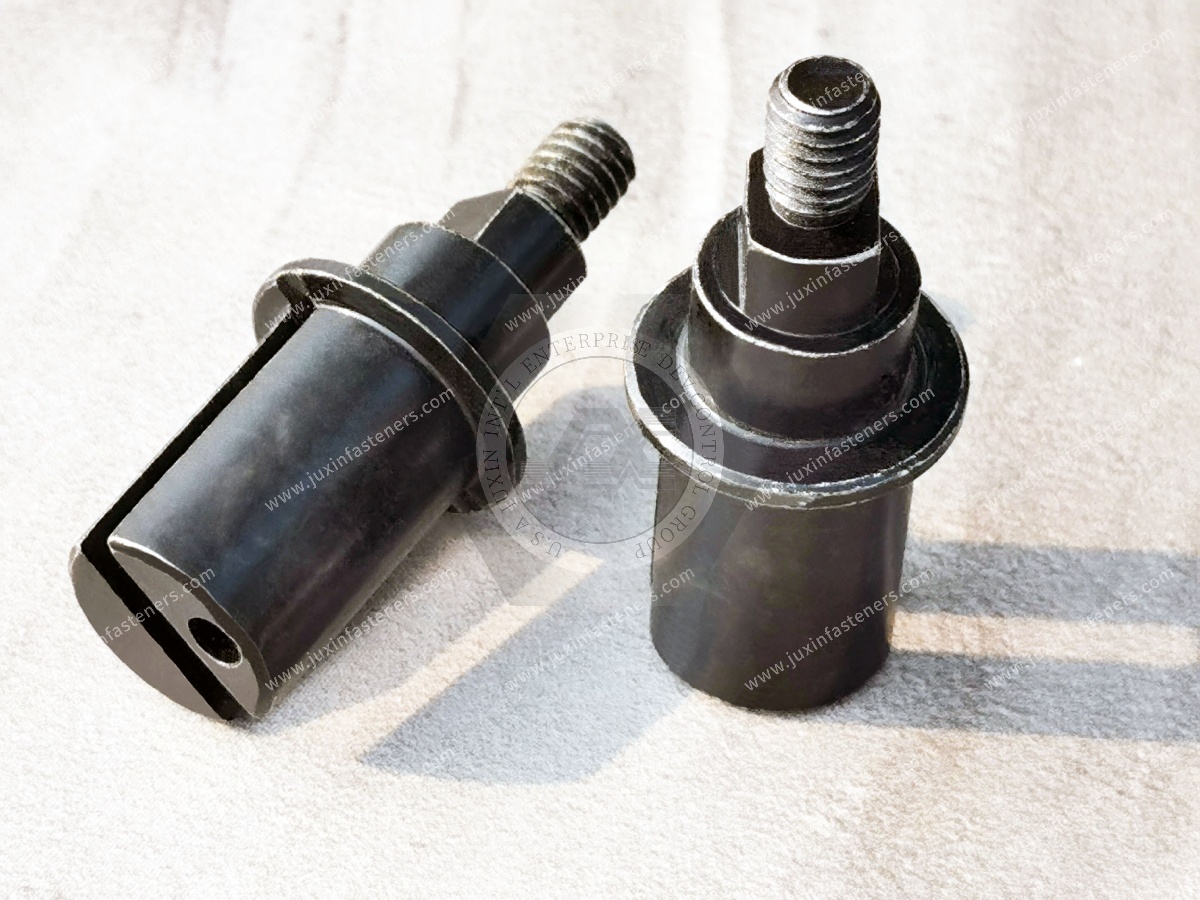
CNC turning may be suitable for shafts requiring controlled diameters, shoulders, grooves, threads, and surface finish.
Important characteristics may include straightness, runout, bearing-seat dimensions, and relationships between functional features.
For slender shafts, workpiece deflection during machining may affect dimensional accuracy.
For rotating or cyclically loaded shafts, fatigue, wear, and bearing-interface requirements must also be considered.
Locating Pins
Precision locating pins may establish repeatable positions in mechanical assemblies.
Critical dimensions may include diameter, length, shoulder geometry, and mating fit.
The required material condition depends on loading, installation method, and expected wear.
Bushings and Sleeves
Machined bushings and sleeves may provide controlled spacing, alignment, or mechanical interfaces.
Important characteristics include inner diameter, outer diameter, length, concentricity, and perpendicularity.
For sliding or rotating interfaces, the complete bearing arrangement must be evaluated.
Carbon steel alone does not guarantee suitable wear performance.
Threaded Adapters
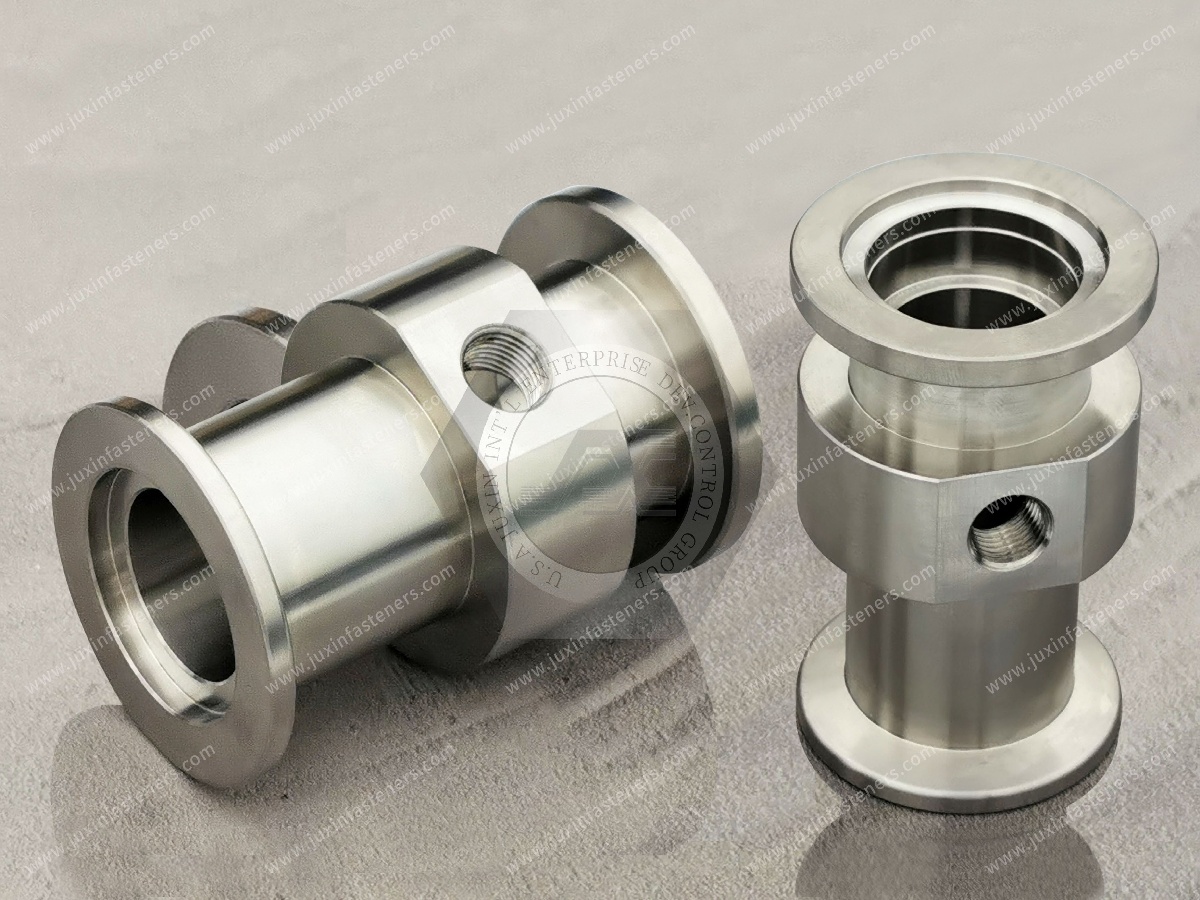
Custom threaded adapters may connect equipment interfaces where standard fasteners cannot provide the required geometry.
The design should consider thread engagement, joint loading, mating materials, installation access, and corrosion protection.
Mounting Blocks and Mechanical Connectors
Custom mounting blocks may provide accurate hole positions, threaded interfaces, and controlled mounting surfaces.
CNC milling can be appropriate where multiple functional features require precise geometric relationships.
Heat Treatment and Wear Resistance
Heat treatment may be used to modify the mechanical properties of selected carbon steel components.
The appropriate treatment depends on steel grade, geometry, and intended function.
Through-Hardening
Some medium-carbon steels may be suitable for through-hardening where the material and section size permit.
The achievable hardness and hardening response depend on composition, geometry, and process conditions.
Case Hardening
Case-hardening processes may be considered where a harder surface and different core properties are required.
The specified case depth, hardness, and acceptance criteria must be established by the engineering drawing.
Heat-Treatment Distortion
Heat treatment may introduce dimensional changes or distortion.
For shafts, pins, bushings, and precision interfaces, the manufacturing sequence should account for this risk.
Depending on the project, finishing operations after heat treatment may be necessary.
Wear and Contact Surfaces
Where components experience sliding or repeated contact, wear performance depends on material hardness, surface finish, lubrication, contact pressure, and mating materials.
A harder surface is not automatically the best solution for every interface.
The complete tribological system should be evaluated.
Corrosion Protection for Railway Carbon Steel Components
Railway equipment may operate in environments involving moisture, road or track contaminants, temperature variation, and outdoor exposure.
Carbon steel generally requires appropriate corrosion protection when exposed to corrosive conditions.
The coating system should follow the component's intended use and customer specification.
Zinc Plating
Zinc electroplating may be considered for selected carbon steel components.
However, coating thickness can influence threads, precision bores, and close-fitting interfaces.
The drawing should clarify whether critical dimensions apply before or after coating.
Zinc-Nickel Coatings
Zinc-nickel coatings may be considered where particular corrosion-protection requirements are specified.
Their suitability depends on the complete coating system, environmental conditions, and acceptance criteria.
Phosphate Treatments
Phosphate treatments and associated protective systems may be suitable for selected applications.
Their corrosion performance depends on the complete treatment system and service environment.
Coating Damage During Assembly
Protective coatings may be damaged during handling, tightening, or installation.
Where corrosion protection is important, engineers should consider tool contact, mating surfaces, and the possibility of localized coating damage.
Galvanic Corrosion
Where carbon steel is combined with stainless steel, aluminum, or other materials, galvanic corrosion may occur under suitable environmental conditions.
The risk depends on material combinations, moisture, protective coatings, and exposed surface areas.
Hydrogen Embrittlement
Electroplating and certain chemical processing operations can introduce hydrogen into susceptible steel components.
For higher-strength or hardened steel parts, hydrogen embrittlement may create delayed fracture risks.
Appropriate process controls, testing, and post-treatment requirements should be established according to the material condition and customer specification.
Corrosion Testing
Where required, corrosion testing may be specified according to applicable methods such as ISO 9227 or ASTM B117.
However, salt-spray test duration alone does not establish actual railway service life.
The coating system should be evaluated against the intended environment and customer acceptance criteria.
CNC Machining Processes for Rail Transit Carbon Steel Parts
Different machining processes provide advantages depending on component geometry, material, tolerance requirements, and production quantity.
CNC Turning
CNC turning is suitable for rotationally symmetric components such as shafts, pins, bushings, sleeves, spacers, and threaded adapters.
Typical operations include facing, external turning, boring, drilling, grooving, and threading.
Workholding, tool access, cutting conditions, and surface finish requirements influence the process plan.
CNC Milling
CNC milling may be suitable for mounting blocks, adapters, brackets, and components requiring flats, slots, pockets, or multiple mounting features.
Datum selection and fixture stability are important where positional relationships between features affect assembly.
Drilling, Tapping, and Threading
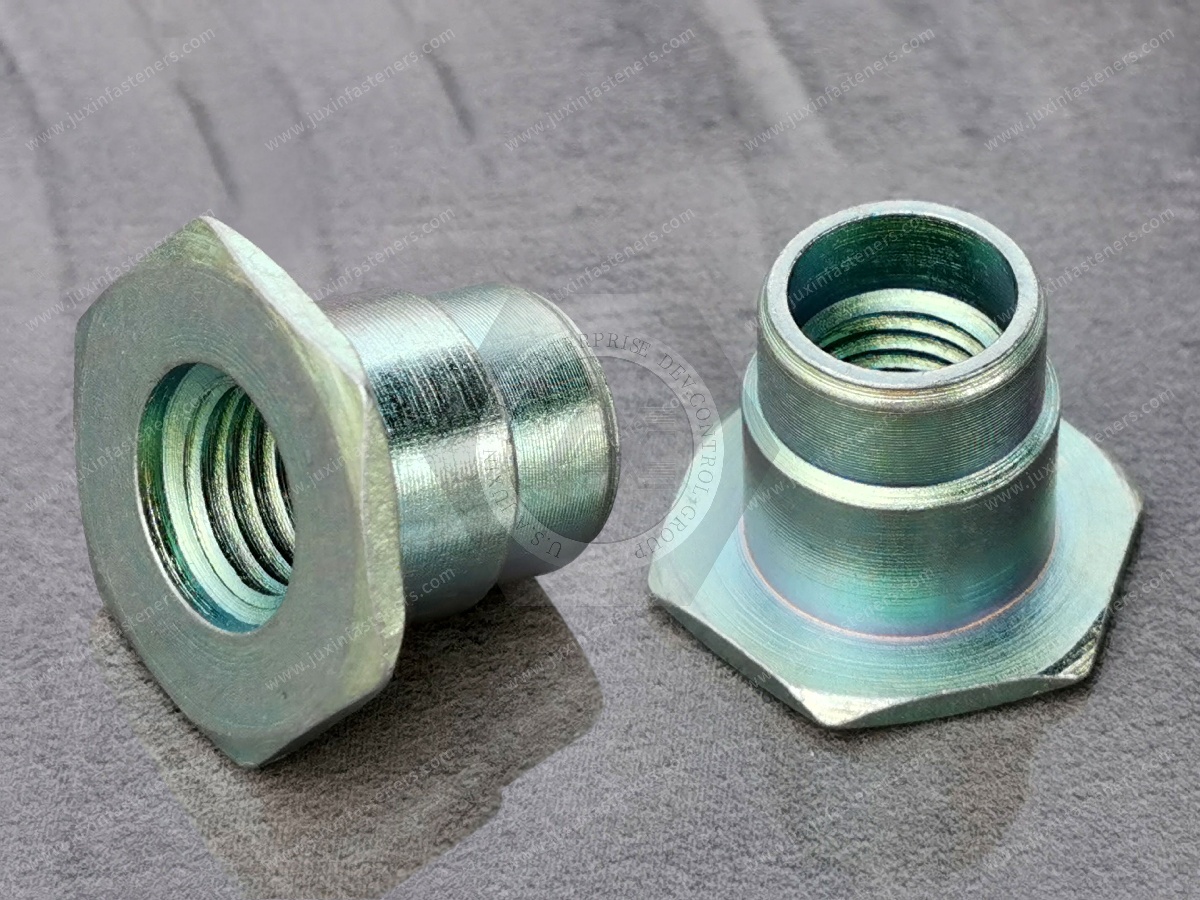
Machined components may require internal threads, external threads, precision holes, and mounting features.
Thread quality depends on material properties, tooling, cutting conditions, and inspection methods.
Combined Turning and Milling
Turn-mill machining can combine rotational and non-rotational operations.
For suitable components, reducing the number of setups may improve relationships between critical features and reduce handling.
The benefit depends on machine configuration, tooling, part complexity, and production volume.
Design for Manufacturability in Railway CNC Components
Design for Manufacturability (DFM) helps align engineering requirements with practical machining processes.
Early DFM evaluation can reduce unnecessary complexity, improve production repeatability, and lower total component cost.
Tolerance Allocation
Not every dimension requires the same tolerance.
Critical-to-function features should receive appropriate dimensional and geometric controls.
Non-critical dimensions may permit more economical tolerances.
Unnecessarily tight tolerances can increase machining time, inspection effort, scrap risk, and cost.
Thin Walls and Machining Stability
Thin-walled components may deform during machining due to cutting forces, clamping pressure, or residual stress.
Special workholding or controlled machining sequences may be required.
The achievable tolerance depends on material, geometry, tooling, and process stability.
Deep Holes and Tool Accessibility
Deep or narrow holes may require specialized tooling and additional machining time.
Engineers should consider tool reach, chip evacuation, coolant access, and measurement requirements.
Where design flexibility exists, simplifying difficult internal features may reduce cost.
Surface Finish
Surface finish should be specified according to component function.
A bearing interface, sealing surface, locating feature, and general mounting face may require different surface conditions.
Specifying unnecessarily fine surface finish across an entire component can increase machining cost without improving performance.
GD&T and Railway Assembly Requirements
Geometric Dimensioning and Tolerancing (GD&T) helps define relationships between critical features.
Depending on the drawing system, ASME Y14.5 or ISO 1101 may be applicable.
Relevant controls may include position, flatness, perpendicularity, parallelism, runout, and profile.
Datum selection should reflect how the component is located and assembled.
For example, a precision shaft may require controlled relationships between bearing seats, shoulders, and threaded features.
A mounting block may require accurate positional relationships between locating features and mounting holes.
GD&T should support functional assembly and inspection rather than introducing unnecessary manufacturing complexity.
Metric and Inch Thread Standards
Railway equipment may use metric or inch thread systems depending on the OEM design.
ISO 261 and ISO 965 may be relevant to ISO metric screw threads.
ASME B1.1 covers Unified inch screw threads, including UNC and UNF series.
Metric and Unified inch threads are not directly interchangeable.
Thread size, pitch, tolerance class, and mating component compatibility must be confirmed from the approved drawing.
Railway Equipment Quality Requirements and Supplier Qualification
Railway OEM and Tier 1 sourcing programs may require structured quality management, traceability, documentation, and supplier approval processes.
The applicable requirements depend on the customer, component function, and supply-chain program.
ISO 22163
ISO 22163 addresses railway quality management system requirements.
However, referencing ISO 22163 does not establish that JUXIN FASTENERS is certified to this standard.
Where certification is required, the supplier qualification requirements must be verified before project acceptance.
EN 15085
EN 15085 addresses welding of railway vehicles and components.
It is relevant to applicable welded railway assemblies, not automatically to every standalone CNC machined component.
A non-welded machined part should not be described as EN 15085 certified merely because it is used in railway equipment.
EN 61373
EN 61373 addresses shock and vibration testing for equipment used on rolling stock.
Its applicability depends on the equipment and customer requirements.
It should not be presented as a universal certification for all CNC machined parts.
Customer-Specific Railway Specifications
Railway manufacturers may impose additional requirements for materials, coatings, inspection, traceability, documentation, and production approval.
These requirements should be reviewed during the RFQ and supplier qualification stages.
Safety-Critical Applications
Components used in safety-critical railway systems require explicit engineering approval, validation, and applicable qualification.
General machining capability does not establish suitability for braking, running gear, axle systems, or other safety-critical applications.
Precision, Repeatability, and Production Stability
For rail transit OEM manufacturing, a successful CNC machining process must produce consistent results across the required production quantity.
A dimensionally accurate prototype does not automatically establish production capability.
Important process controls may include:
Approved CNC programs
Controlled workholding
Tool-life management
Material consistency
Cutting parameters
In-process inspection
Final dimensional verification
Documented drawing revisions
Appropriate handling and packaging
Production managers should evaluate machining cycle time, setup requirements, inspection frequency, scrap risk, and process consistency.
The appropriate manufacturing approach depends on component complexity, required tolerances, and purchasing volume.
Quality Control for Custom Railway CNC Parts
Inspection planning should follow the approved drawing and the component's functional requirements.
Depending on the project, inspection may include dimensional measurement, thread inspection, material verification, hardness testing, surface-finish measurement, and functional checks.
Dimensional Inspection
Critical dimensions may be verified using suitable micrometers, calipers, bore gauges, height gauges, or coordinate measuring equipment.
The measurement method should provide sufficient capability for the specified tolerance.
Thread Inspection
Threaded components may require appropriate thread gauges or other verification methods.
The inspection method should follow the specified thread standard and customer requirements.
Material Verification
Customers may require material documentation or additional verification of the specified carbon steel grade.
The required documentation should be agreed upon during quotation.
Hardness and Heat-Treatment Verification
Where hardness or heat-treatment condition is functionally important, the drawing should define the applicable requirements.
Any required testing or documentation should be confirmed before production.
Coating Inspection
Where corrosion protection is required, inspection may include coating thickness verification or other customer-defined checks.
The coating system and acceptance criteria should be established before production.
First-Article and Production Inspection
Railway OEM projects may require first-article inspection or other customer-defined approval activities before repeat production.
Inspection frequency, reporting, traceability, and approval requirements should be established according to the purchasing specification.
Any required certification, testing, or documentation must be confirmed for the specific project.
From Prototype Development to Repeat Railway OEM Production
CNC machining can support railway equipment development because geometry and machining programs can be revised as the design evolves.
However, transitioning from prototypes to repeated production requires additional process planning.
Engineering Drawing and CAD Review
The initial review should identify material, geometry, critical tolerances, functional interfaces, and inspection requirements.
Potential manufacturing risks should be clarified before machining begins.
Material and Process Selection
The material and machining process should be selected according to functional requirements, part geometry, quantity, and cost.
Alternative manufacturing approaches may be considered where technically appropriate.
Prototype and First-Article Machining
Initial parts can be evaluated for dimensional accuracy, assembly fit, surface condition, and manufacturing feasibility.
Any design or process changes should be documented.
Process Optimization
After design approval, machining operations may be optimized for cycle time, tooling, repeatability, and inspection efficiency.
The appropriate optimization depends on the required production quantity.
Repeat Production and Final Inspection
Repeat production should follow the approved drawing revision and agreed quality requirements.
Inspection, packaging, and delivery arrangements should be established according to the customer's purchasing specification.
Long-Term Spare Parts and Engineering Change Control
Railway equipment may remain in service for extended periods.
This creates additional requirements for replacement components, documentation, and revision management.
Drawing Revision Control
Suppliers should identify the applicable drawing revision before production.
Changes to material, dimensions, heat treatment, coatings, or manufacturing processes may require customer approval.
Replacement Component Compatibility
Replacement parts should be evaluated against the approved design and applicable service requirements.
Dimensional similarity alone does not establish functional equivalence.
Repeat Purchasing
For long-term railway programs, purchasing teams should consider documentation retention, material availability, supplier communication, and production planning.
These requirements should be agreed upon during supplier qualification and purchasing negotiations.
CNC Machining vs. Standard Railway Fasteners
Custom CNC machining provides flexibility for non-standard geometry and precision mechanical interfaces.
However, not every railway component requires CNC machining.
Standard bolts, nuts, washers, studs, pins, bushings, and other fastening components may offer a more economical solution for suitable applications.
When CNC Machining May Be Appropriate
CNC machining may be justified where the design requires:
Non-standard geometry
Precision concentric features
Special threaded interfaces
Controlled locating features
Custom mounting blocks
Specific material requirements
Multiple machined features
Drawing-based dimensional relationships
When Standard Fasteners May Be More Economical
Standard fastening components may be preferable where the required function can be achieved without custom machining.
For example, a standard threaded stud or precision dowel pin may provide an efficient solution for a compatible railway equipment assembly.
However, standard components must still meet the required material, dimensional, mechanical, and environmental specifications.
The appropriate solution should be selected according to engineering compatibility and total installed cost.
Railway OEM Supplier Development and Procurement Considerations
For railway manufacturers, sourcing custom machined components requires both technical qualification and commercial evaluation.
Supplier selection should consider drawing conformity, material compatibility, machining feasibility, process consistency, quality expectations, and supply planning.
Drawing-Based Supplier Evaluation
A technically complete RFQ should include the approved drawing, CAD model, material specification, tolerances, surface finish, and required quantity.
Where an existing component is being transferred from another supplier, the latest drawing revision and critical functional characteristics should be identified.
Alternative Material and Process Evaluation
A proposed alternative material or machining process should be reviewed against the original engineering requirements.
Material substitution should not be approved solely because two grades have similar nominal properties.
Strength, hardness, fatigue behavior, wear characteristics, corrosion resistance, and application requirements must be considered.
Any proposed change should be approved by the customer's engineering team.
MOQ, Lead Time, and Volume Purchasing
Purchasing teams should provide estimated order quantities, annual demand, target delivery schedules, and packaging requirements.
For custom CNC components, setup complexity, material availability, tooling, heat treatment, coating, inspection requirements, and production volume can influence MOQ and lead time.
Commercial feasibility should be confirmed for each project.
Total Cost Optimization
The total cost of a machined railway component depends on several factors:
Material grade and stock form
Part geometry
Machining cycle time
Number of setups
Tooling and tool wear
Heat-treatment requirements
Dimensional tolerances
Surface finish
Coating and secondary operations
Inspection and documentation requirements
Scrap and rework
Order quantity
Delivery schedule
Long-term spare-parts requirements
Early collaboration between engineering and procurement teams can help identify cost-saving opportunities without compromising functional requirements.
Practical RFQ Checklist for Rail Transit Carbon Steel CNC Components
A complete RFQ helps reduce technical clarification and supports accurate quotation.
Useful information includes:
2D engineering drawing
3D CAD model, if available
Component application and function
Carbon steel grade and material specification
Material condition and heat-treatment requirements
Critical dimensional tolerances
GD&T requirements
Thread specifications
Surface finish requirements
Coating or secondary processing requirements
Mechanical loading and fatigue requirements
Corrosion and operating environment
Inspection and documentation requirements
Railway-specific customer requirements
Supplier qualification requirements
Prototype or sample quantity
Estimated production order quantity
Annual demand forecast
Spare-parts purchasing expectations
Packaging requirements
Delivery destination and target schedule
Where the component is intended for a safety-critical railway application, the required qualification, validation, and approval procedures should be explicitly identified.
Why Work with JUXIN FASTENERS for Rail Transit CNC Machining Projects?
JUXIN FASTENERS supports drawing-based inquiries for precision machined components and industrial fastening hardware used in railway equipment manufacturing.
Relevant machining inquiries include:
Carbon steel CNC turned parts
Railway precision shafts and pins
CNC machined bushings and sleeves
Custom threaded adapters
Railway equipment mounting blocks
Precision mechanical connectors
Drawing-based rail transit mechanical components
OEM repeat purchasing requirements
Long-term replacement-part sourcing
Our approach emphasizes clear technical communication and evaluation of the customer's drawings, materials, tolerances, manufacturing requirements, and purchasing quantities.
For design and mechanical engineers, the priority is functional geometry, material suitability, fatigue considerations, and dimensional accuracy.
For manufacturing engineers and production managers, the priority includes process repeatability, machining efficiency, inspection stability, and consistent production quality.
For procurement and supply chain teams, the priority includes technical conformity, commercial feasibility, cost control, delivery planning, and long-term supplier evaluation.
Manufacturing feasibility, achievable tolerances, MOQ, lead time, testing, and documentation requirements are confirmed according to the specific inquiry.
Request a Quote for Carbon Steel CNC Machining and Rail Transit Components
Are you developing a new railway mechanical component, sourcing custom carbon steel CNC machined parts, or evaluating an alternative supplier for repeat OEM production?
JUXIN FASTENERS welcomes technical and commercial inquiries from railway equipment manufacturers, rolling stock OEMs, Tier 1 suppliers, engineering teams, production departments, and industrial procurement organizations.
Send us your 2D drawings, 3D CAD models, material specifications, heat-treatment requirements, critical tolerances, coating requirements, inspection criteria, and estimated purchasing quantities.
Where applicable, please also identify railway-specific qualification, traceability, fatigue, corrosion, or documentation requirements.
We can review your project requirements and discuss suitable machining approaches, technical clarification, and RFQ arrangements.
JUXIN FASTENERS
Website: https://www.juxinfasteners.com
Email: info@juxinfasteners.com
RFQ: Rail Transit Carbon Steel CNC Machining | Railway Precision Parts | OEM Custom Components
Contact Us
Tel.:
+86 020 8621 0320
+86 020 3121 6067
E-mail:
Technical Support:
Navigation
SEND INQUIREY



