
Call Us
+86 136 6007 9809
Call Us
+86 136 6007 9809

Aug. 28, 2026
Cleanroom Fasteners for Semiconductor Manufacturing: Materials, Cleanliness and OEM Requirements
Precision Fastening Solutions for Contamination-Sensitive Equipment
Cleanroom fasteners are screws, bolts, nuts, studs, washers, spacers, and other fastening components selected and controlled for use in environments where contamination must be managed.
In semiconductor manufacturing, electronics production, precision automation, and other controlled manufacturing environments, fastener selection involves more than mechanical strength and dimensional accuracy.
Particle generation, material composition, surface condition, cleaning compatibility, handling, packaging, and installation practices can influence the suitability of a fastening component.
A conventional industrial screw may provide adequate mechanical performance but may not satisfy the cleanliness or contamination-control requirements of a particular cleanroom application.
The correct specification depends on where the fastener is installed, whether it is exposed to the controlled environment, how frequently it is assembled or removed, and the equipment's operating conditions.
JUXIN FASTENERS supplies custom industrial fasteners and precision CNC machined components for drawing-based OEM applications,
including stainless steel screws, bolts, nuts, studs, washers, threaded pins, spacers, standoffs, and non-standard mechanical components.
For cleanroom-related projects, specialized cleaning, inspection, handling, packaging, and acceptance requirements must be defined and evaluated according to the customer's specifications.
A fastener is not automatically cleanroom-certified or suitable for semiconductor processing merely because it is manufactured from stainless steel.
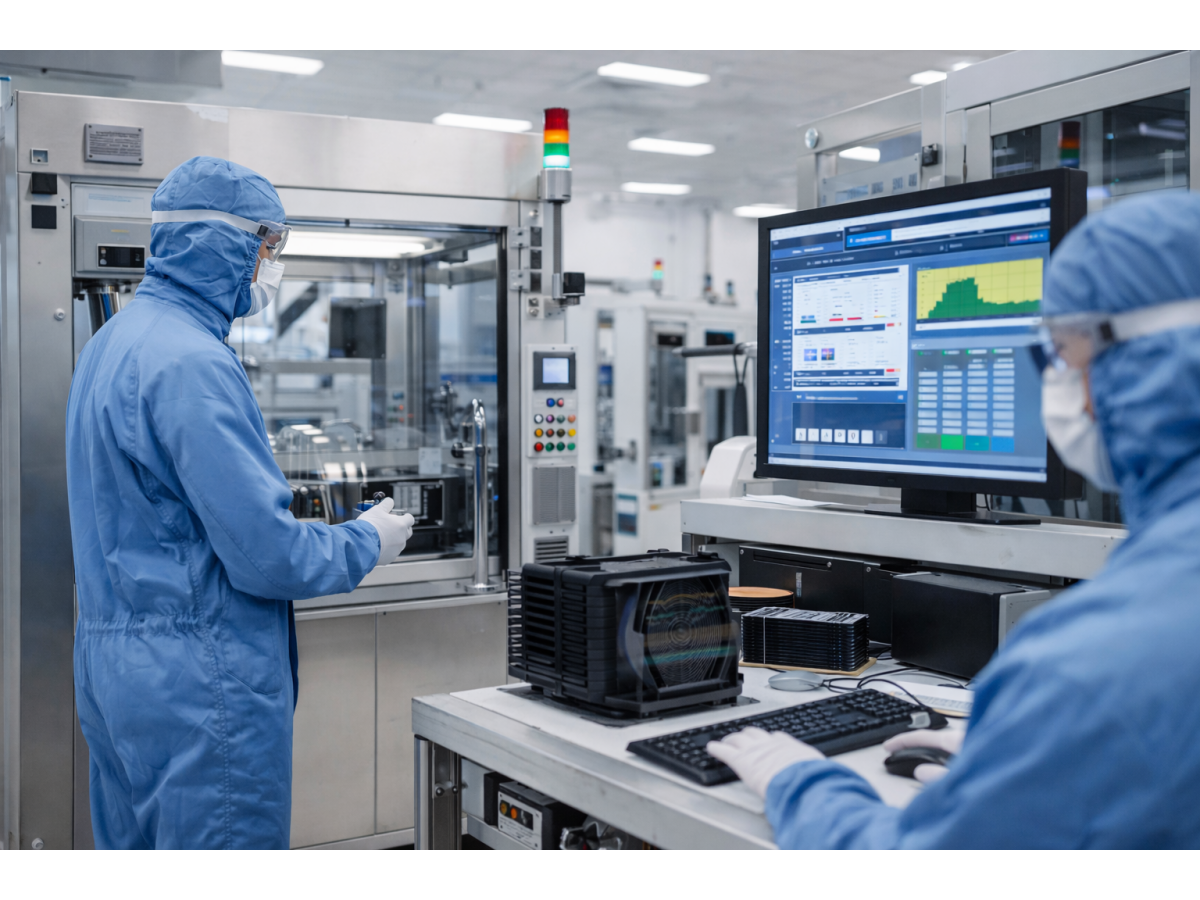
Why Cleanroom Fasteners Require Special Engineering Considerations
Cleanrooms are controlled environments designed to limit airborne particle contamination according to defined requirements.
ISO 14644-1 provides a framework for classifying air cleanliness by particle concentration.
However, cleanroom classification applies to the controlled environment. It does not automatically establish the cleanliness or suitability of an individual screw, nut, or machined component.
Fastener-related contamination risks may arise from:
Machining burrs and loose particles
Thread wear during installation or removal
Surface damage and metallic debris
Residual machining oils and cleaning chemicals
Corrosion products
Unsuitable coatings or surface treatments
Packaging materials that shed particles
Handling contamination
Friction between mating components
Maintenance activities and repeated assembly
These risks vary according to the component design and installation location.
For example, a screw installed on the outside of a semiconductor equipment enclosure may have different cleanliness requirements from a screw located inside a wafer-handling module.
Similarly, a fastener installed once and left undisturbed may present different particle-generation risks from a fastener repeatedly removed during equipment maintenance.
Cleanroom fastener selection should therefore form part of the equipment's overall contamination-control and assembly strategy.
Stainless Steel Fasteners for Cleanroom Equipment
Stainless steel is commonly considered for cleanroom equipment fasteners because of its corrosion resistance, mechanical properties, and suitability for precision manufacturing.
Depending on the application, materials such as 304, 316, and 316L stainless steel may be specified.
However, these grades have different properties and should not be considered universally interchangeable.
304 Stainless Steel Fasteners
304 stainless steel may be suitable for selected equipment frames, mounting brackets, covers, and mechanical assemblies where its corrosion resistance and mechanical characteristics satisfy the application.
Its suitability depends on the surrounding chemicals, moisture exposure, cleaning methods, and operating conditions.
316 and 316L Stainless Steel Fasteners
316 and 316L stainless steels may be considered where the specified corrosion behavior and material properties are appropriate.
316L has a lower specified carbon content than conventional 316, which can be relevant to certain manufacturing and corrosion considerations.
However, 316L stainless steel is not automatically particle-free, completely nonmagnetic, vacuum-compatible, or suitable for every semiconductor process chemical.
Cleanliness performance depends on the finished component, including machining, surface treatment, cleaning, handling, and packaging.
Material Condition and Magnetic Response
Austenitic stainless steels are often selected where relatively low magnetic response is desirable.
However, cold working and other manufacturing processes can influence magnetic behavior.
If magnetic permeability is a critical equipment requirement, the customer should specify an appropriate acceptance limit and verification method.
Mechanical Property Requirements
Where applicable, ISO 3506 may be used to specify relevant mechanical properties of corrosion-resistant stainless steel fasteners.
Material grade, property class, product form, and applicable requirements should be identified on the drawing or purchase specification.
A stainless steel material designation alone does not establish every mechanical, cleanliness, or environmental characteristic required by the finished fastener.
Custom Cleanroom Screws, Bolts, Nuts and Studs
Semiconductor equipment manufacturers frequently require fastening components with dimensions or features that differ from standard catalog products.
Custom designs may be necessary because of restricted assembly space, specific mounting interfaces, equipment architecture, or controlled installation requirements.
JUXIN FASTENERS supports drawing-based custom fastening components, including:
Precision stainless steel machine screws
Custom bolts and reduced-head screws
Special nuts and threaded studs
Threaded pins and locating components
Precision washers and spacers
Standoffs and sleeves
Custom threaded inserts and mounting parts
Non-standard CNC machined fastening components
Depending on the engineering requirements, custom features may include special head geometry, non-standard lengths, partial threading, precision diameters, slots, cross-holes, or other drawing-defined characteristics.
The value of customization should be evaluated against its manufacturing cost, inspection requirements, and future replacement availability.
Where a standard fastener satisfies the mechanical and cleanliness requirements, standardization may simplify sourcing and maintenance.
Particle Generation During Fastener Installation
Particle generation is an important consideration for contamination-sensitive assemblies.
Even a component that has been cleaned before delivery may generate particles during installation if its threads, bearing surfaces, or mating components are damaged or poorly matched.
Thread Friction and Metallic Wear
When screws and nuts are assembled, contact occurs between mating thread surfaces.
Excessive friction, thread damage, cross-threading, or inappropriate installation procedures can create wear particles.
This risk may be especially relevant where stainless steel components are repeatedly assembled.
For certain stainless steel combinations, galling can cause adhesive wear, surface damage, and thread seizure.
Engineers should evaluate thread geometry, material pairing, surface condition, installation speed, and assembly preload.
Lubricants or anti-galling treatments should only be used where they are compatible with the equipment's cleanliness, chemical, and process requirements.
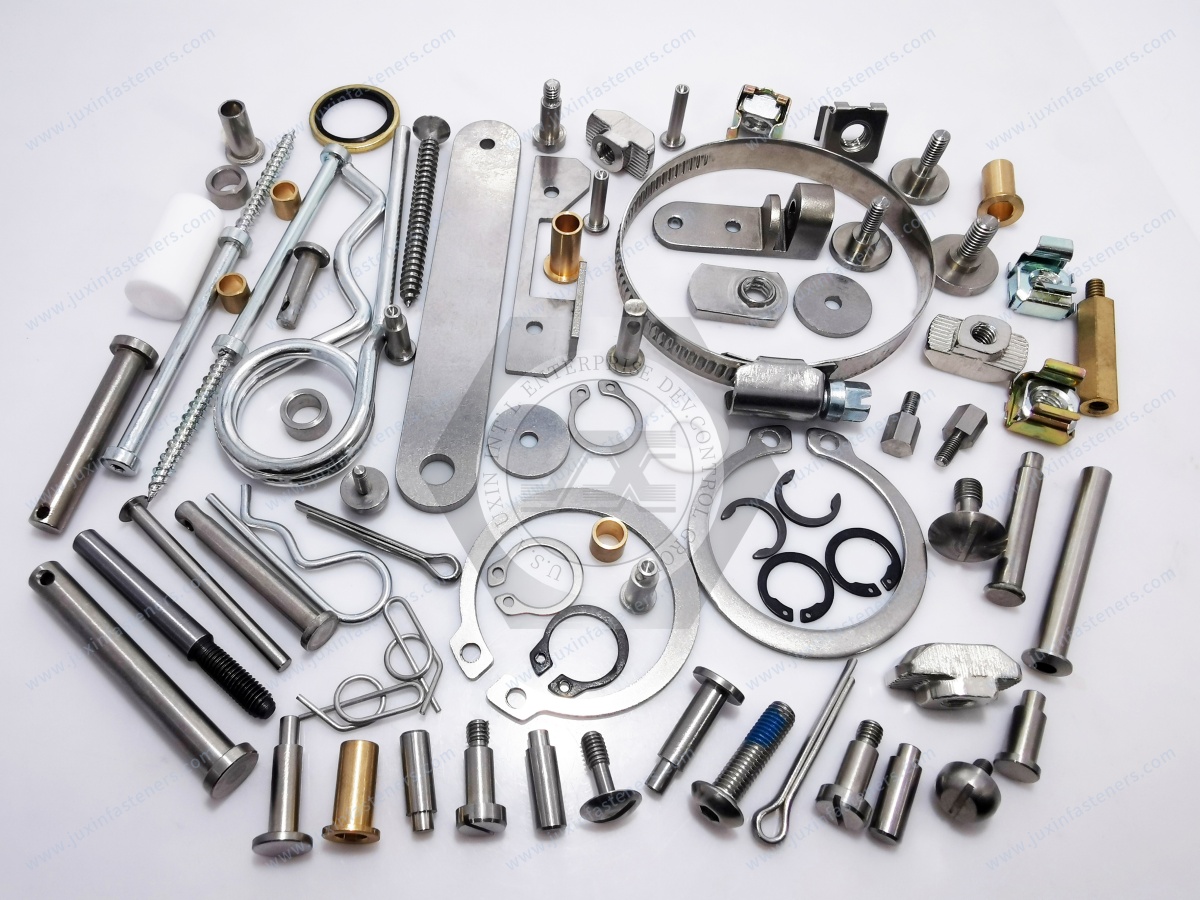
Burrs and Sharp Edges
Burrs may remain around machined holes, thread entrances, slots, cross-holes, and component edges if finishing is inadequate.
These features can interfere with assembly and may become sources of loose particles.
For contamination-sensitive components, drawings should identify any special burr-control, edge-condition, or surface requirements.
A generic instruction such as "remove burrs" may be insufficient when the application requires a specific acceptance method.
Repeated Maintenance and Component Replacement
Equipment maintenance can involve removing and reinstalling covers, brackets, fixtures, and other mechanical components.
Repeated assembly may increase the likelihood of thread wear, surface damage, and contamination.
Where frequent access is required, engineers may consider suitable captive screws, studs, threaded inserts, or alternative fastening arrangements.
These designs should be evaluated for mechanical reliability, cleaning accessibility, and contamination behavior.
Cleaning Requirements for Cleanroom Fasteners
Cleaning is a separate engineering and quality consideration from dimensional manufacturing.
A precisely machined fastener may still contain machining residues, oils, handling contamination, or loose particles.
The required cleaning process depends on the component material, surface condition, intended installation environment, and customer acceptance criteria.
Potential process considerations include:
Removal of machining oils and residues
Removal of loose particles
Compatibility of cleaning agents with the material
Rinsing requirements
Drying procedures
Prevention of recontamination
Post-cleaning handling
Inspection and documentation requirements
The appropriate cleaning method should be defined by the customer or established through an agreed qualification process.
No universal cleaning procedure can guarantee suitability for every semiconductor manufacturing application.
Defining Cleanliness Acceptance Criteria
Terms such as "cleanroom compatible," "ultra-clean," and "particle-free" are insufficient as standalone technical specifications.
A useful cleanliness specification should identify what contamination is being controlled and how compliance will be evaluated.
Depending on the application, this may involve particle limits, residue restrictions, approved cleaning methods, inspection procedures, or other customer-defined acceptance criteria.
The required test method, sampling plan, and acceptance limits should be agreed before manufacturing.
Where cleanliness verification is not specified or performed, the supplier should not claim that a component meets an undefined cleanliness grade.
Surface Finishing and Passivation
Surface finishing may influence corrosion behavior, surface condition, friction, and contamination risk.
For suitable stainless steel components, chemical passivation may be specified to improve the condition of the corrosion-resistant surface.
ASTM A967/A967M may be relevant where chemical passivation of stainless steel parts is required.
However, passivation is not the same as particle cleaning and does not automatically establish cleanroom suitability.
Other treatments, coatings, or polishing requirements should be selected according to the material, mechanical function, and contamination-control needs.
Where coatings are used, engineers should evaluate adhesion, wear behavior, dimensional effects, and compatibility with the operating environment.
Packaging and Handling for Contamination-Sensitive Fasteners
Cleaning requirements can lose much of their value if components become contaminated during handling, storage, transportation, or installation.
Packaging should therefore be considered as part of the complete component specification.
Packaging Material Selection
Packaging materials may generate particles or transfer contaminants to finished components.
The appropriate material depends on the cleanliness requirements, component geometry, transportation conditions, and intended unpacking environment.
A conventional bulk bag or cardboard package should not automatically be assumed suitable for a contamination-sensitive assembly.
Individual and Bulk Packaging
Small precision fasteners may be supplied in different packaging configurations depending on customer requirements.
For example, separating components may help reduce contact damage for selected parts, while controlled bulk packaging may be appropriate for other applications.
The correct approach depends on surface sensitivity, particle-control requirements, quantities, and assembly workflow.
Handling After Cleaning
Handling practices can influence the final cleanliness condition.
Where specified, controlled handling procedures, suitable gloves, designated work areas, and approved packaging methods may be necessary.
These controls must be established and verified according to the customer's requirements rather than assumed from ordinary manufacturing practice.
Packaging Verification
For specialized applications, customers may require defined packaging materials, labeling, lot identification, or evidence of an approved packaging process.
Such requirements should be included in the RFQ and confirmed before production.
Precision CNC Machined Components for Cleanroom Equipment
Cleanroom equipment requires more than screws and nuts.
Semiconductor manufacturing systems, automated handling equipment, and precision machinery may also use custom mechanical components that must maintain dimensional accuracy and reliable assembly.
Typical drawing-based components include precision pins, spacers, bushings, shafts, sleeves, brackets, threaded components, housings, and locating features.
Precision Locating Pins
Locating pins may establish repeatable mechanical positioning in equipment assemblies.
Their design should consider diameter, fit, surface finish, insertion method, and the relationship with mating holes.
Where contamination control is important, engineers should also consider particle generation during insertion and removal.
Spacers and Standoffs
Precision spacers can establish controlled distances between mechanical components.
Critical dimensions may include length, parallelism, contact-face flatness, and hole position.
Where several spacers support the same component, dimensional consistency can influence alignment and assembly stress.
Bushings and Sleeves
Custom bushings and sleeves may provide mechanical interfaces or alignment functions.
Where components experience sliding or rotating contact, engineers should evaluate wear resistance, lubrication restrictions, and material compatibility.
Stainless steel is not automatically the best material for every bearing or sliding application.
Threaded Mounting Blocks and Inserts
Custom threaded mounting blocks can provide fastening interfaces for equipment structures, fixtures, and auxiliary assemblies.
Their design should consider thread engagement, mating fastener material, repeated assembly, and dimensional positioning.
Evaluating the machined component together with its mating fastener can help identify compatibility issues before production.
Dimensional Tolerances and Thread Specifications
Cleanliness requirements do not replace conventional mechanical engineering requirements.
A clean fastener must still provide the correct fit, thread engagement, mechanical strength, and assembly function.
For custom components, critical dimensions should be specified according to their actual function.
ISO metric threads may be defined using relevant ISO thread specifications, including ISO 261 and ISO 965.
Unified UNC/UNF threads may be specified according to ASME B1.1.
Metric, UNC/UNF, and British Whitworth thread systems are not directly interchangeable.
For machined components requiring geometric tolerances, ISO 1101 or ASME Y14.5 may be relevant where specified by the customer.
Tolerances should be selected according to assembly requirements rather than unnecessarily restricting every dimension.
Fastening Reliability and Assembly Repeatability
For semiconductor equipment, installation consistency may be as important as individual component accuracy.
An appropriate fastening system should support reliable assembly without unnecessary damage to mating components.
Installation Torque and Preload
Installation torque influences joint preload, but the relationship depends on thread friction, material pairing, surface condition, and lubrication.
A universal torque value should not be applied to all stainless steel fasteners of the same diameter.
Where installation preload is critical, the equipment designer should define the appropriate assembly method and acceptance requirements.
Avoiding Thread Galling
Stainless steel threaded assemblies can be susceptible to galling under certain conditions.
Material pairing, thread quality, surface treatment, installation procedure, and permitted lubrication should be considered.
For cleanroom applications, any lubricant or anti-seize material must also be evaluated for contamination compatibility.
Separating Locating and Clamping Functions
In precision equipment, locating pins or machined reference features may establish alignment while screws provide clamping force.
Relying on clearance-fit screws alone for precision positioning can introduce assembly variation unless the design specifically accounts for it.
Separating these functions can improve repeatability and simplify maintenance.
Production Assembly Efficiency
Manufacturing engineers and production managers may evaluate fasteners according to installation access, tool compatibility, assembly time, and rework risk.
A custom screw with an unsuitable drive configuration may create installation difficulties even if it meets dimensional requirements.
Early evaluation of head geometry, tool access, thread engagement, and maintenance requirements can help reduce downstream assembly problems.
Cleanroom Fastener Manufacturing and Quality Control
For OEM production, successful fastener manufacturing requires consistent dimensions and defined acceptance criteria across repeat orders.
Quality planning should begin with the approved drawing and customer specification.
Depending on the application, inspection may include:
Thread dimensions and functional gauge verification
Overall dimensional measurement
Hole diameter and positional inspection
Geometric tolerance verification
Surface condition and burr inspection
Material identification and documentation review
Hardness verification when specified
Functional fit or assembly inspection
Customer-defined cleanliness verification
Packaging and labeling inspection
Specialized cleaning, particle testing, controlled packaging, or other contamination-related requirements must be agreed separately where applicable.
Inspection methods should be selected according to critical-to-function characteristics rather than applied indiscriminately to every feature.
Material Traceability and Drawing Revision Control
Semiconductor equipment OEMs may require material certificates, batch identification, drawing revision records, and other documentation.
The required level of traceability depends on the customer's quality system and the component's intended application.
For repeat orders, maintaining the correct drawing revision and material specification helps reduce the risk of receiving components that no longer match the equipment design.
Where a component's cleaning or packaging requirements change, the revised requirements should also be reflected in the approved purchase specification.
Applications for Cleanroom and Semiconductor Fasteners
Custom precision fasteners and CNC machined components may support several contamination-sensitive industrial applications.
Semiconductor Manufacturing Equipment
Mechanical fastening and positioning components for semiconductor processing equipment, equipment frames, wafer-handling modules, and auxiliary assemblies.
Requirements differ between external equipment structures and components exposed to controlled process environments.
Electronics Manufacturing Equipment
Custom screws, studs, spacers, and mounting components for electronics production machinery, automated assembly systems, and precision manufacturing equipment.
Industrial Automation and Robotics
Precision fastening components for robotic systems, automated handling equipment, and positioning assemblies.
Where repeated motion or vibration is present, mechanical retention and wear behavior should be evaluated.
Precision Machinery and Inspection Equipment
Custom mechanical components for equipment where dimensional consistency, alignment, and controlled surface conditions are important.
Laboratory and Clean Manufacturing Equipment
Specialized fastening components for laboratory instruments and equipment operating in controlled environments.
The required cleanliness and material specifications depend on the application.
Medical and Analytical Equipment
Precision mechanical components may be used in suitable medical and analytical equipment assemblies.
Any application-specific regulatory, biocompatibility, sterilization, or validation requirements must be separately established.
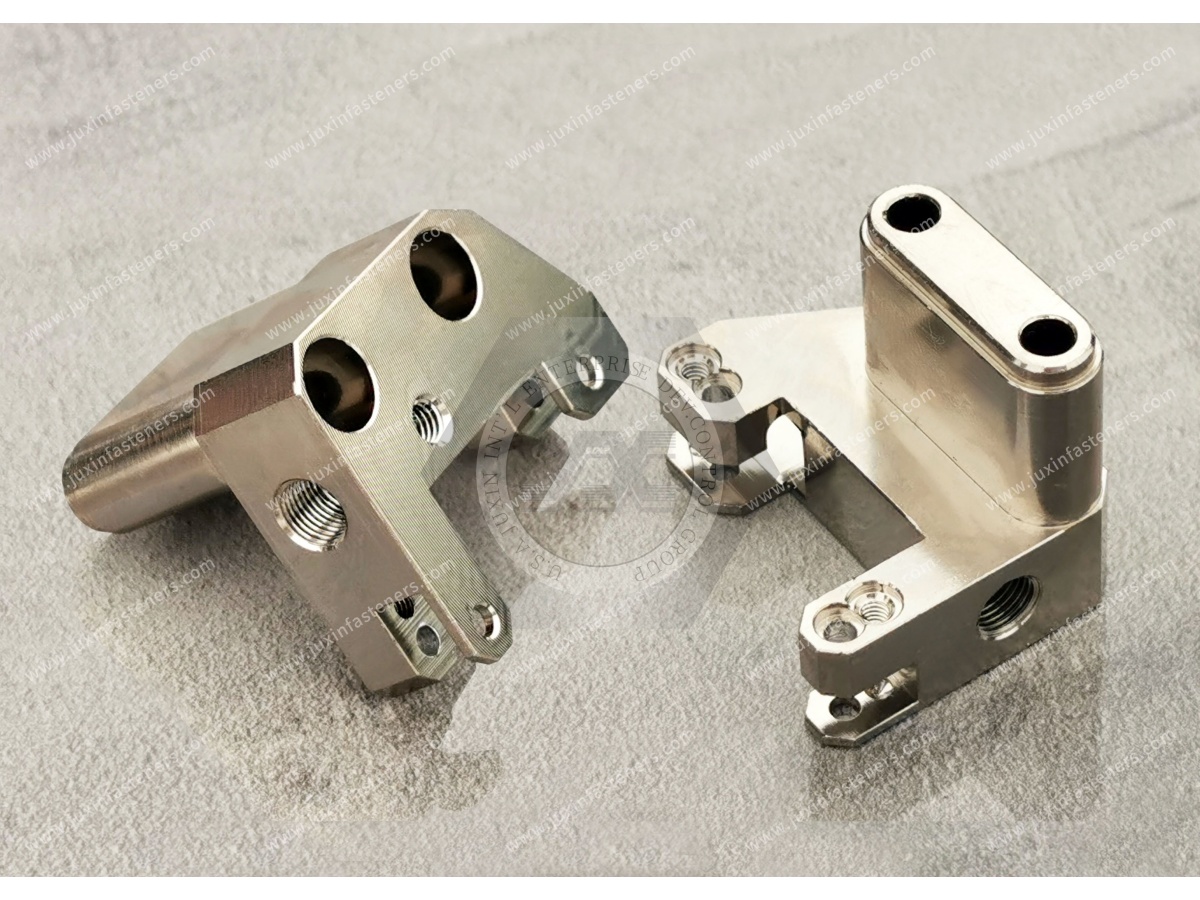
How to Specify Cleanroom Fasteners for an OEM RFQ
A complete RFQ helps engineering and procurement teams establish the correct manufacturing process, quality requirements, and commercial quotation.
For custom cleanroom fasteners or semiconductor equipment components, customers should provide:
Engineering drawing or 3D CAD model
Fastener type and required geometry
Material grade and applicable specification
Thread system, size, and tolerance
Critical dimensions and geometric requirements
Surface finish or treatment specification
Installation location and operating environment
Cleaning method and cleanliness acceptance criteria
Handling and packaging requirements
Inspection and traceability requirements
Prototype quantity and anticipated production volume
Delivery destination and project schedule
Where cleanliness specifications are not yet finalized, the equipment's intended application and contamination-control objectives should still be communicated during the RFQ process.
This information can help identify technical questions before manufacturing begins.
OEM Procurement and Supplier Development Considerations
For purchasing managers, supplier development teams, and supply chain professionals, cleanroom fastener sourcing requires coordination between mechanical engineering, manufacturing, quality, and procurement.
A low unit price does not necessarily represent the lowest total cost if a component requires additional cleaning, causes assembly damage, or fails to satisfy documentation requirements.
Supplier evaluation should consider manufacturing feasibility, material specifications, dimensional consistency, inspection planning, packaging requirements, and repeat-order control.
Standard Versus Custom Fasteners
Standard fasteners may offer advantages in availability, cost, and replacement simplicity.
Custom fasteners are appropriate where the application requires special geometry, material characteristics, controlled interfaces, or other features not available in a suitable standard product.
MOQ and Production Planning
Minimum order quantities depend on geometry, material, manufacturing process, finishing, cleaning, packaging, and order volume.
Accurate forecasts can help suppliers evaluate production planning and purchasing arrangements.
Cleanliness Requirements and Total Cost
Specialized cleaning, handling, verification, and packaging may influence the total component cost.
These requirements should be identified before quotation so that commercial comparisons are based on equivalent specifications.
Long-Term Supply Consistency
Repeat OEM production benefits from clear drawing revisions, material specifications, inspection criteria, and packaging instructions.
Supplier qualification should evaluate whether the proposed manufacturing and quality arrangements satisfy the actual project requirements.
Custom Cleanroom Fasteners and CNC Components from JUXIN FASTENERS
JUXIN FASTENERS supports industrial OEM customers with custom fastening hardware and precision CNC machined components manufactured according to customer drawings and technical requirements.
Our drawing-based product scope includes stainless steel screws, bolts, nuts, studs, threaded pins, washers, spacers, standoffs, and other custom mechanical components.
Related precision CNC machining requirements may include locating pins, sleeves, bushings, brackets, threaded mounting blocks, and mechanical interfaces.
For contamination-sensitive applications, the appropriate material, surface condition, cleaning, inspection, and packaging requirements must be reviewed for each project.
JUXIN FASTENERS does not claim that all supplied components are automatically cleanroom-certified, particle-free, or suitable for direct semiconductor process exposure.
Any specialized cleanliness or qualification requirement must be defined, evaluated, and confirmed before production.
Request a Quote for Cleanroom and Semiconductor Equipment Fasteners
If your company is sourcing custom cleanroom screws, stainless steel bolts and nuts, threaded studs, precision washers, spacers, standoffs,
or CNC machined semiconductor equipment components, contact JUXIN FASTENERS for technical evaluation and quotation.
Please send your engineering drawings, material specifications, thread requirements, critical tolerances, expected quantities, and inspection criteria.
Where applicable, please also identify the installation environment, cleaning requirements, contamination limits, handling procedures, packaging expectations, and project-specific documentation requirements.
Our team can review the manufacturing requirements and discuss suitable component specifications, production considerations, and commercial quotation details.
JUXIN FASTENERS
Website: https://www.juxinfasteners.com/
Email: info@juxinfasteners.com
Custom Cleanroom Fasteners | Semiconductor Equipment Screws | Precision Stainless Steel Hardware | CNC Machined OEM Components | Drawing-Based RFQ Support
Contact Us
Tel.:
+86 020 8621 0320
+86 020 3121 6067
E-mail:
Technical Support:
Navigation
SEND INQUIREY



