
Call Us
+86 136 6007 9809
Call Us
+86 136 6007 9809

Aug. 28, 2026
Semiconductor Equipment Fasteners: Precision Fastening Solutions for Wafer Processing Systems
Semiconductor manufacturing equipment requires precise mechanical positioning, stable fastening connections, controlled material selection, and reliable assembly performance.
In wafer processing systems, vacuum equipment, inspection machines, automation modules, and semiconductor manufacturing tools, fasteners are more than ordinary screws and nuts.
They form part of mechanical assemblies where dimensional consistency, material compatibility, contamination control, and maintenance requirements can influence equipment performance.
The appropriate fastening solution depends on the location and function of each component.
A screw installed in an external equipment frame has different requirements from a fastener located inside a vacuum chamber or near a contamination-sensitive process area.
JUXIN FASTENERS supplies custom industrial fasteners and precision CNC machined components for drawing-based OEM applications, including screws, bolts, nuts, studs,
threaded pins, spacers, standoffs, washers, and non-standard fastening hardware.
Customers can submit engineering drawings, 3D CAD models, material specifications, surface treatment requirements, and inspection criteria for manufacturing feasibility review and quotation.
For semiconductor applications requiring specialized cleanliness, vacuum compatibility, chemical resistance, or other controlled characteristics, the applicable requirements must be defined and evaluated before production.
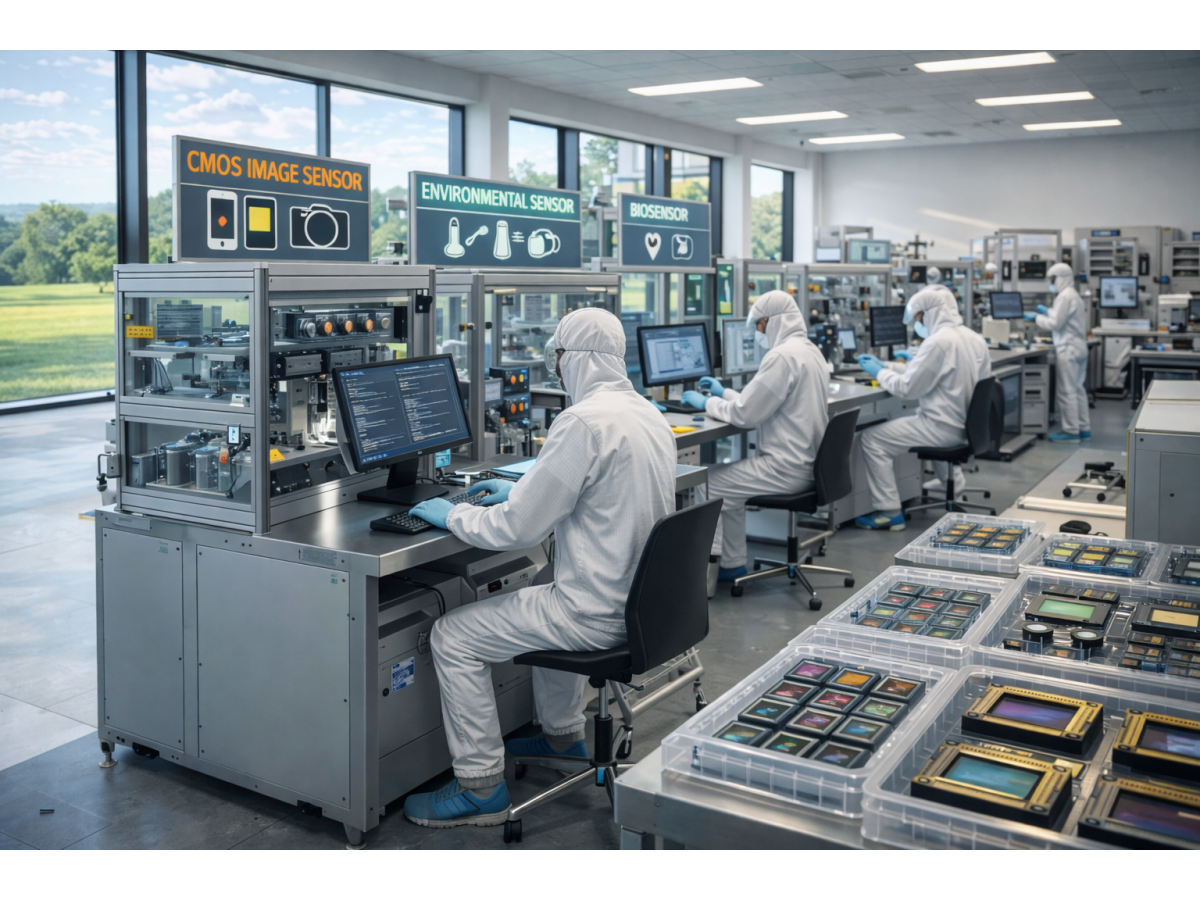
Fasteners for Semiconductor Manufacturing Equipment
Semiconductor manufacturing involves multiple equipment categories with different mechanical, environmental, and contamination-control requirements.
Fasteners may be used in wafer processing equipment, vacuum systems, semiconductor inspection machines, metrology tools, automation modules, material-handling systems, equipment enclosures, and auxiliary assemblies.
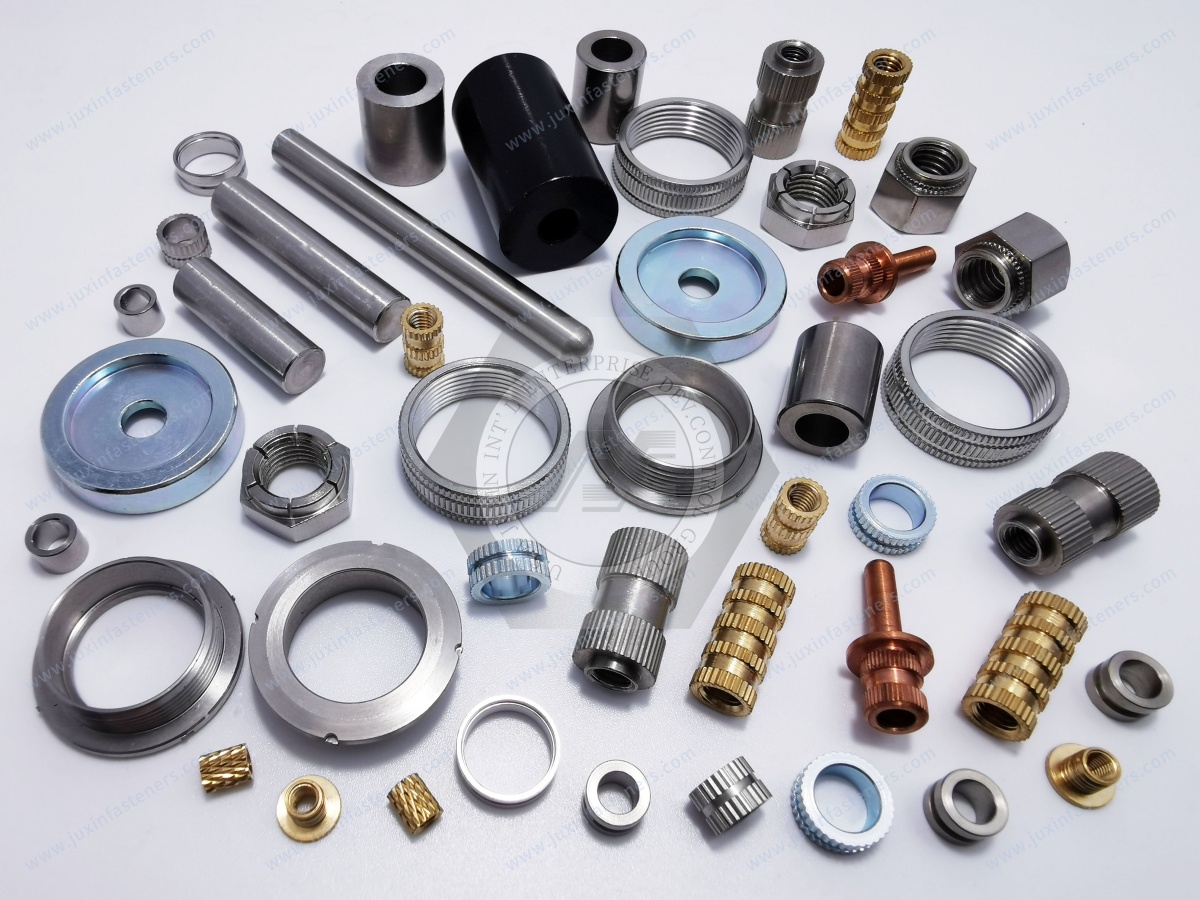
Common fastening and precision component categories include:
Precision machine screws and bolts
Custom stainless steel nuts
Threaded studs and locating pins
Precision spacers and standoffs
Special washers and retaining components
CNC turned shafts, pins, and bushings
Custom threaded inserts and mounting components
Drawing-based non-standard fastening parts
The correct fastener is determined by the equipment's mechanical function, installation environment, assembly method, and applicable customer specifications.
Precision Screws and Bolts for Semiconductor Equipment
Precision screws and bolts are used to secure brackets, equipment covers, structural frames, positioning assemblies, and other mechanical interfaces.
For semiconductor equipment, important design considerations may include thread accuracy, head geometry, under-head bearing surfaces, installation access, surface condition, and repeatable assembly preload.
Where fasteners are used near sensitive equipment, engineers may also need to evaluate magnetic behavior, particle generation, material compatibility, and cleaning requirements.
Custom screws may be specified with non-standard lengths, head profiles, drive configurations, threaded sections, or material requirements.
However, custom geometry should be introduced only where it provides a functional benefit, because non-standard designs may increase manufacturing complexity and future replacement costs.
Custom Nuts, Studs, and Threaded Components
Custom nuts, studs, and threaded components can support equipment mounting, mechanical adjustment, and assembly positioning.
Studs may be useful where repeated disassembly would otherwise cause wear in a tapped base material.
The design should consider thread engagement, joint loading, installation method, maintenance frequency, and the mechanical properties of the mating material.
For stainless steel threaded assemblies, engineers should also evaluate the risk of thread galling, particularly where similar stainless steel materials are assembled under high contact pressure.
Suitable material pairing, controlled surface condition, lubrication where permitted, and installation procedures can help address this risk.
In contamination-sensitive or vacuum applications, lubricants and thread-locking compounds must not be introduced without evaluating their suitability for the operating environment.
Precision Spacers and Standoffs
Precision spacers and standoffs establish controlled distances between components and help maintain mechanical alignment.
Typical applications may include equipment mounting, instrumentation supports, positioning assemblies, and mechanical separation between structural components.
Critical dimensions may include overall length, internal diameter, external diameter, parallelism, perpendicularity, and contact-face flatness.
Where multiple spacers are installed in the same assembly, variation in spacer height can influence the alignment of the supported component.
For bolted joints, spacer stiffness and compressive loading should also be evaluated.
Metal spacers are electrically conductive unless a separate insulating system is provided. Where electrical isolation is required, suitable insulating materials or alternative component designs must be considered.
Special Washers and Custom Mechanical Interfaces
Custom washers can provide specific bearing surfaces, controlled spacing, or other mechanical functions.
Depending on the application, washer geometry may influence load distribution, contact pressure, assembly height, and compatibility with the mating components.
Washers should not automatically be described as vibration-locking devices.
Where resistance to loosening is required, the complete joint design and an appropriate retention method should be evaluated.
Special washers and precision interfaces may be manufactured according to customer drawings when standard components do not satisfy the required dimensions or assembly function.
Material Selection for Semiconductor Equipment Fasteners
Material selection is particularly important because semiconductor equipment can involve vacuum environments, process chemicals, thermal cycling, magnetic sensitivity, and contamination-control requirements.
No single fastener material is suitable for every semiconductor manufacturing application.
Stainless Steel Fasteners
Stainless steel is commonly considered for precision equipment fasteners because of its mechanical properties, corrosion resistance, and availability in different grades.
Austenitic stainless steels such as 304 and 316 may be suitable for certain equipment applications, depending on the operating environment.
316L stainless steel may be specified where its material characteristics are appropriate for the equipment design.
However, the designation 316L alone does not establish vacuum compatibility, nonmagnetic behavior, or semiconductor cleanliness.
Magnetic response can vary with material condition and cold working, while contamination performance depends on manufacturing, finishing, cleaning, handling, and packaging.
For stainless steel screws and nuts, applicable standards may include ISO 3506 for relevant fastener mechanical properties, where the product and specification fall within its scope.
Customer-specific material and performance requirements take precedence where applicable.
Titanium Fasteners
Titanium may be considered for selected applications requiring a particular combination of strength-to-weight performance, corrosion behavior, and material characteristics.
However, titanium fasteners are not automatically superior to stainless steel in every semiconductor environment.
Thread galling, material compatibility, cost, and manufacturing considerations must be evaluated.
Titanium should be specified according to the actual engineering requirements rather than used as a general premium-material substitute.
Aluminum Fastening and Mounting Components
Aluminum may be appropriate for lightweight mounting blocks, spacers, brackets, and precision CNC machined mechanical interfaces.
However, aluminum threaded connections require evaluation of internal thread strength, engagement length, and repeated assembly requirements.
Where fasteners are installed into aluminum components, threaded inserts or alternative joint designs may be appropriate for certain applications.
Anodized aluminum surfaces can also affect electrical contact and dimensional fit.
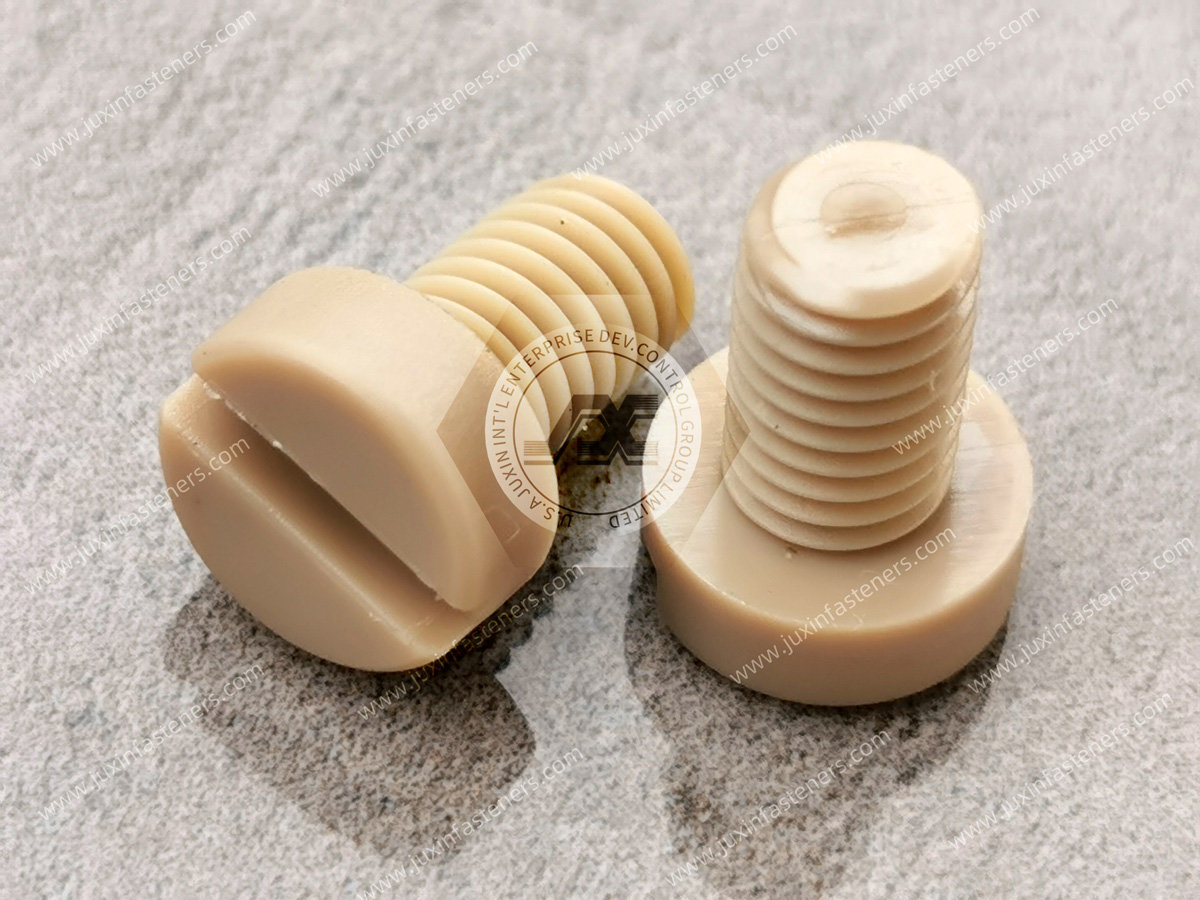
PEEK and Other Engineering Polymer Components
PEEK and other engineering polymers may be considered for selected insulating, lightweight, or chemically compatible components.
Their suitability depends on the specific material grade, operating temperature, mechanical loading, creep behavior, chemical exposure, and cleanliness requirements.
Polymer components should not automatically be considered vacuum-compatible or low-outgassing.
Where polymers are used inside vacuum or contamination-sensitive environments, the required material qualification and testing criteria must be established.
Vacuum Compatibility and Outgassing Considerations
Vacuum processing equipment can impose requirements that differ significantly from those of ordinary industrial machinery.
Fasteners used within vacuum chambers may be exposed to reduced pressure, elevated temperature, process gases, and repeated thermal cycling.
Material outgassing, trapped volumes, surface contamination, and cleaning residues can affect vacuum-system performance.
A fastener suitable for an external equipment frame may therefore be unsuitable for installation inside a controlled vacuum process environment.
Trapped Gas and Blind-Hole Design
Blind threaded holes and enclosed interfaces can create trapped volumes that may release gas slowly during pump-down.
Depending on the equipment design, engineers may consider vented fasteners, vented threaded holes, or alternative joint geometries.
A vented screw incorporates a passage intended to provide a gas escape path in suitable applications.
However, vented fasteners are not universally required, and their design must account for mechanical strength, thread engagement, manufacturing cleanliness, and the actual vacuum-system configuration.
Venting features should be specified by the equipment designer rather than added automatically to standard screws.
Material Outgassing and Surface Contamination
Outgassing behavior depends on material composition, manufacturing residues, coatings, lubricants, cleaning methods, and operating temperature.
A nominally compatible base material can still introduce contamination if its surface contains unsuitable oils, residues, or processing chemicals.
For vacuum-sensitive applications, customers should define the required material restrictions, cleaning procedures, acceptance criteria, and documentation.
Any low-outgassing claim must be supported by the applicable material and process evaluation.
Particle Contamination and Cleanliness Requirements
Particle control is a major consideration in semiconductor equipment manufacturing.
Particles may originate from machining burrs, thread damage, surface wear, handling, packaging, or assembly operations.
Fasteners intended for contamination-sensitive areas may require additional attention to surface condition, burr removal, cleanliness, and packaging.
Thread Burrs and Surface Damage
Thread crests, thread roots, under-head surfaces, and machined edges should be evaluated for burrs or damage that could interfere with assembly.
For custom threaded parts, appropriate finishing and inspection methods should be selected according to the drawing and cleanliness requirements.
A visually clean fastener should not automatically be described as meeting a specified particle cleanliness level.
Cleaning and Packaging Requirements
Customers may specify particular cleaning methods, handling controls, packaging materials, or acceptance criteria.
These requirements should be reviewed before quotation because they may influence manufacturing cost, subcontract processing, inspection, and delivery arrangements.
ISO 14644 may be relevant to cleanroom classification and associated controlled environments, but it does not automatically certify an individual fastener as cleanroom-compatible.
Cleanliness claims must be tied to defined procedures, acceptance criteria, and supporting verification.
Thermal Cycling, Mechanical Stability, and Fastener Preload
Semiconductor equipment may experience temperature changes during operation, maintenance, or process cycling.
These changes can affect fastener preload, joint dimensions, and the relative movement of connected materials.
Differential Thermal Expansion
When stainless steel fasteners are used with aluminum mounting components, the two materials may expand or contract at different rates.
This difference can influence joint loading, positioning accuracy, and contact conditions.
The effect depends on component geometry, joint stiffness, temperature range, and the complete assembly design.
For precision equipment, engineers should evaluate thermal expansion where dimensional stability or alignment is critical.
Preload Retention and Joint Reliability
A bolted joint depends on appropriate preload and the mechanical behavior of the connected components.
Insufficient preload can allow movement or loosening, while excessive preload can damage threads or deform sensitive components.
Installation torque should therefore be established according to the fastener material, thread geometry, surface condition, lubrication restrictions, and required joint performance.
A universal torque value should not be applied to all stainless steel screws of the same nominal diameter.
Where repeated maintenance is expected, the effects of thread wear, galling, and component replacement should also be considered.
Precision Alignment and Dimensional Control
Semiconductor equipment may incorporate mechanical assemblies where component positioning and repeatability are important.
In these applications, fastener dimensions can influence installation consistency, but the fastener should not be expected to compensate for an incorrectly designed locating system.
Separating Locating and Clamping Functions
A useful design principle is to distinguish between components that establish position and components that provide clamping force.
For example, precision dowel pins or machined locating features may establish alignment, while screws provide the required clamping force.
Relying solely on clearance-fit screws for precision positioning can introduce unnecessary variation unless the joint is specifically designed for that purpose.
This distinction can help improve assembly repeatability and simplify maintenance.
Thread and Geometric Specifications
Thread dimensions should be defined according to the applicable customer drawing and thread system.
ISO metric threads may be specified according to ISO 261, ISO 965, and other relevant metric thread requirements.
Unified UNC/UNF threads may be specified according to ASME B1.1.
Metric, UNC/UNF, and British Whitworth thread systems are not directly interchangeable.
For custom machined components, ISO 1101 or ASME Y14.5 may be relevant when geometric tolerances are specified.
Critical dimensions should be selected according to their actual mechanical function rather than applying unnecessarily tight tolerances to every feature.
Magnetic Properties and Electrical Requirements
Some semiconductor equipment applications require control of magnetic materials or electrical characteristics.
However, these requirements vary significantly between equipment types and installation locations.
Austenitic stainless steel is often considered where relatively low magnetic response is desirable, but its magnetic behavior depends on grade, processing, and material condition.
It should not automatically be described as completely nonmagnetic.
Where magnetic permeability is critical, the customer should specify the required limit and verification method.
Similarly, metal fasteners are electrically conductive and may require insulation or alternative materials in certain assemblies.
Electrical isolation requirements must be evaluated within the complete equipment design.
Chemical Compatibility and Corrosion Resistance
Semiconductor manufacturing may involve cleaning chemicals, process gases, moisture, and other environments that influence material compatibility.
Corrosion resistance cannot be determined solely from a general material designation.
The actual chemical species, concentration, temperature, exposure duration, and surface condition should be considered.
For example, stainless steel that performs well in one environment may not be suitable for another environment involving aggressive chemicals.
Material selection for process-exposed components should be based on the customer's defined chemical compatibility and qualification requirements.
Surface Finishing for Precision Semiconductor Fasteners
Surface finishing may be used to improve selected corrosion, cleanliness, friction, or appearance characteristics.
Potential processes for suitable components may include passivation, controlled surface finishing, and other customer-specified treatments.
For stainless steel components, ASTM A967/A967M may be relevant where chemical passivation is specified.
However, passivation does not automatically establish particle cleanliness, vacuum compatibility, or suitability for every semiconductor process.
Coatings and surface treatments can also influence thread fit, friction, installation torque, and contamination behavior.
Where surface treatment is required, the drawing should define the relevant specification and any critical dimensional or performance requirements.
Precision CNC Components for Semiconductor Equipment
Fasteners are only one part of a complete mechanical connection system.
Semiconductor equipment may also require precision CNC machined components such as locating pins, threaded shafts, bushings, spacers, standoffs, mounting blocks, brackets, and custom mechanical interfaces.
JUXIN FASTENERS supports drawing-based manufacturing requirements for these types of precision components.
Combining custom fastening hardware with CNC machined components can help OEM customers coordinate related mechanical parts through a common sourcing process.
For example, a custom threaded mounting block should be evaluated together with its mating screw, required thread engagement, mounting-hole pattern, and installation method.
This approach can help identify compatibility issues before production and reduce the risk of assembly difficulties.
Manufacturing Repeatability and Quality Control
For semiconductor equipment OEM production, a successful manufacturing process must provide more than a single dimensionally accurate sample.
Repeatability is important because small dimensional variations can influence assembly fit, installation time, and mechanical consistency.
Production planning should consider raw material variation, tooling condition, machining parameters, fixture repeatability, drawing revisions, and inspection methods.
Depending on customer requirements, inspection may include:
Thread dimensions and functional gauge verification
Overall dimensional measurement
Hole diameter and positional inspection
Geometric tolerance verification
Surface condition and burr inspection
Material identification and documentation review
Hardness verification when specified
Functional fit or assembly inspection
Project-specific cleanliness or surface verification
The inspection plan should focus on characteristics that influence the actual function of the component.
Where contamination-sensitive applications require specialized cleaning, testing, or packaging, the scope and acceptance criteria must be separately agreed.
Engineering Design and Production Assembly Considerations
Manufacturing engineers and production managers often evaluate fasteners according to assembly efficiency as well as component quality.
A technically suitable fastener may still create production difficulties if its drive geometry is difficult to access, its thread is vulnerable to galling, or its installation process is inconsistent.
Installation Access and Tool Compatibility
Fastener head geometry and drive type should be selected according to available assembly space and tool access.
Where equipment is assembled in confined spaces, installation clearance and the risk of tool interference should be evaluated during design.
Repeated Maintenance and Thread Durability
Semiconductor equipment may require scheduled maintenance, component replacement, or periodic disassembly.
Threaded joints should therefore be evaluated for repeated installation cycles, material pairing, and the possibility of wear or galling.
Where appropriate, captive fasteners, studs, or threaded inserts may simplify maintenance, subject to the equipment design.
Avoiding Unnecessary Customization
Non-standard fasteners can solve genuine engineering problems, but custom designs may increase manufacturing complexity, procurement cost, and replacement-part management.
Where a standard ISO or ASME fastener satisfies the requirements, it may offer advantages in availability and maintenance.
Custom components are most valuable when they address a specific dimensional, material, installation, cleanliness, or functional requirement that cannot be adequately met by a standard part.
OEM Supplier Evaluation and Procurement Requirements
For semiconductor equipment manufacturers, supplier development teams, purchasing managers, and supply chain decision-makers, sourcing precision fasteners involves more than comparing unit prices.
Supplier evaluation should consider manufacturing feasibility, material specifications, drawing control, inspection requirements, packaging expectations, production quantities, and long-term repeat-order consistency.
A complete RFQ package should include:
2D engineering drawings and available 3D CAD models
Fastener type, dimensions, and thread specification
Required material grade and applicable material standard
Mechanical and dimensional requirements
Surface treatment and cleaning requirements
Vacuum, chemical, magnetic, or temperature conditions where applicable
Critical inspection and documentation requirements
Packaging and contamination-control expectations
Prototype quantity, production volume, and delivery requirements
MOQ and lead time depend on product geometry, material availability, manufacturing process, finishing, inspection, packaging, and order quantity.
For repeat OEM projects, accurate forecasts and drawing revision control can support more consistent procurement planning.
Cost Optimization for Custom Semiconductor Fasteners
The lowest quoted unit price does not always represent the lowest total procurement cost.
A fastener that creates installation difficulties, additional cleaning requirements, inspection delays, or assembly rework may increase overall equipment manufacturing costs.
Several decisions can improve sourcing efficiency.
Standardize Where Practical: Use established thread systems and standard dimensions where they satisfy the engineering requirements.
Specify Functional Tolerances: Apply tight tolerances to critical features rather than unnecessarily restricting every dimension.
Define Cleanliness Requirements Early: Cleaning, handling, and packaging requirements should be included in the RFQ rather than introduced after manufacturing.
Coordinate Mating Components: Evaluate custom screws, threaded blocks, spacers, and washers together where their dimensions and functions are interdependent.
Maintain Drawing Revision Control: Clear revision management helps prevent obsolete components from entering repeat production.
Plan Production Quantities: Realistic forecasts can support material purchasing, production scheduling, and commercial evaluation.
These considerations help connect engineering requirements with manufacturing feasibility and long-term supply chain performance.
Custom Semiconductor Equipment Fasteners from JUXIN FASTENERS
JUXIN FASTENERS supplies custom industrial fasteners and precision CNC machined components for international OEM applications.
Our drawing-based product scope includes precision screws, bolts, nuts, studs, threaded pins, spacers, standoffs, washers, and other custom mechanical components.
For semiconductor equipment projects, the appropriate manufacturing approach depends on component geometry, material requirements, dimensional tolerances, operating conditions, and inspection specifications.
Specialized requirements involving vacuum compatibility, contamination control, material traceability, surface cleanliness, or controlled packaging must be evaluated and confirmed for the specific project.
JUXIN FASTENERS does not claim that all supplied fasteners are automatically semiconductor-grade, cleanroom-certified, or suitable for direct exposure to semiconductor process environments.
The intended installation location and customer-defined acceptance criteria should determine the final component specification.
Request a Semiconductor Equipment Fastener Quote
If your company is sourcing custom semiconductor equipment screws, precision stainless steel fasteners, non-standard nuts, threaded studs, spacers, standoffs, washers,
or CNC machined components, contact JUXIN FASTENERS for technical evaluation and quotation.
Please send your 2D engineering drawings, 3D CAD files, material requirements, thread specifications, surface treatment requirements, expected quantities, and inspection criteria.
For vacuum or contamination-sensitive applications, please also identify the installation environment, cleaning requirements, packaging expectations, and any project-specific qualification conditions.
Our team can review the component requirements and discuss suitable manufacturing processes, specifications, and commercial quotation details.
JUXIN FASTENERS
Website: https://www.juxinfasteners.com/
Email: info@juxinfasteners.com
Custom Semiconductor Equipment Fasteners | Precision Screws and Nuts | Stainless Steel Studs | CNC Machined OEM Components | Drawing-Based RFQ Support
Contact Us
Tel.:
+86 020 8621 0320
+86 020 3121 6067
E-mail:
Technical Support:
Navigation
SEND INQUIREY



