
Call Us
+86 136 6007 9809
Call Us
+86 136 6007 9809

Sep. 12, 2026
Global automotive original equipment manufacturers (OEMs), Tier-1 suppliers, sub-assembly manufacturers,
and specialized vehicle developers increasingly source components that are defined by customer drawings rather than standard catalogs.
These components can include custom threaded fasteners, non-standard bolts and screws, rivet nuts, weld nuts, precision pins and shafts,
stamped metal components, washers, retainers, plastic clips, and other application-specific fastening hardware.
The challenge is not simply finding a supplier that can manufacture a part.
The real challenge in custom automotive component sourcing is determining whether a supplier can consistently understand the engineering requirement,
select an appropriate manufacturing route, control material and dimensions, manage drawing revisions, document production quality, and maintain supply continuity throughout the program lifecycle.
For procurement managers, sourcing developers, supply chain managers, and supplier quality engineers, this changes the evaluation model.
A low quotation may be attractive at the beginning of a project, but a supplier that cannot correctly interpret the drawing, control material, manage revisions,
or maintain production consistency can create additional engineering, quality, and supply-chain costs later.
JUXIN FASTENERS is an OEM-oriented supplier of customer-specific, non-standard, and application-specific automotive fastening and component solutions.
Its automotive product scope includes plastic and polymer fastening components as well as metal fasteners and application-specific components manufactured according to customer drawings,
specifications, material requirements, mating interfaces, application conditions, and production requirements.
For procurement teams evaluating a new supplier, the objective should therefore be to connect engineering capability, manufacturing capability, quality control, communication,
and supply execution into one evaluation framework.
This guide provides a practical framework for doing that.
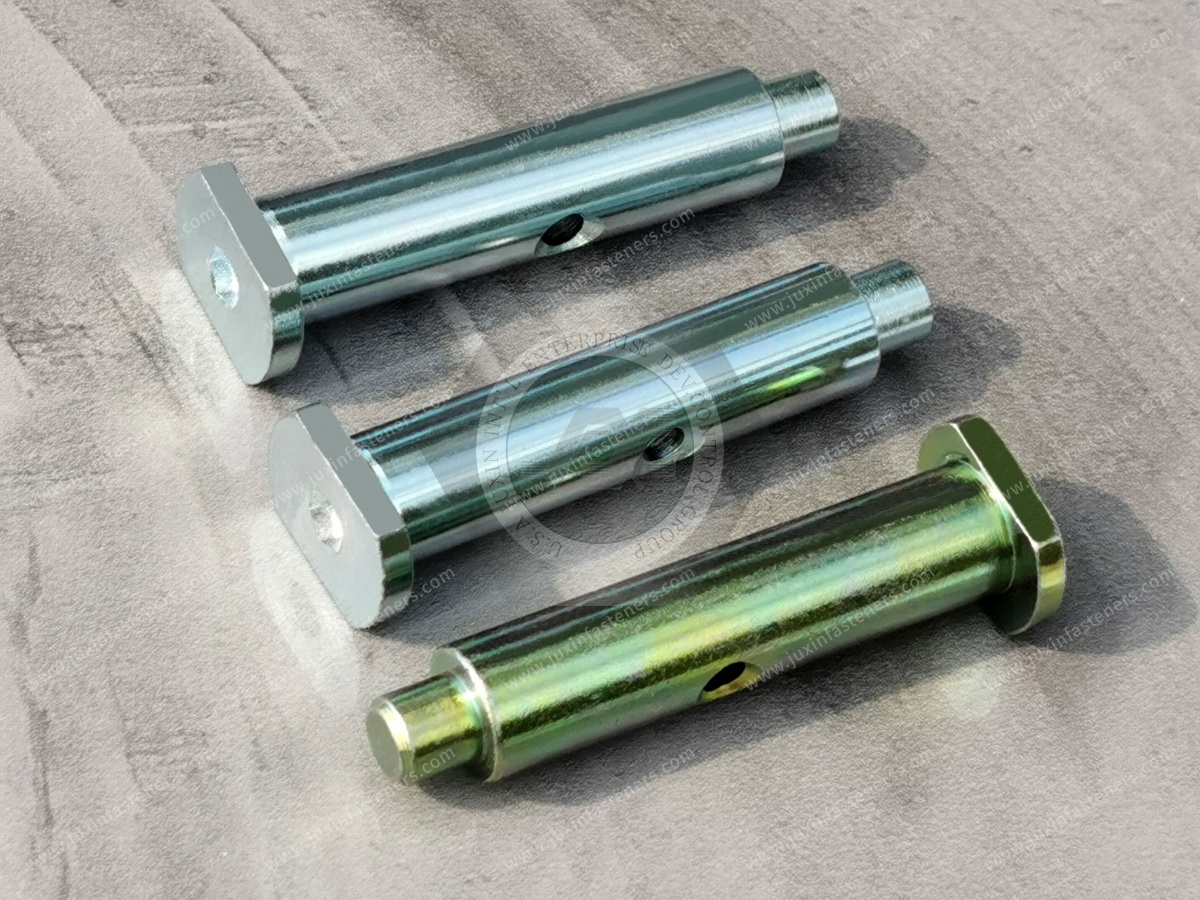
Custom automotive component sourcing is the process of identifying, evaluating, qualifying, and purchasing non-standard components that are manufactured
according to customer-specific drawings, specifications, application requirements, or mating interfaces.
Unlike standard commodity purchasing, the buyer is not simply selecting an existing catalog part.
The supplier may need to manufacture a component according to:
A 2D engineering drawing
A 3D CAD model
A customer-defined material
A specified thread
A mounting-hole or mounting-slot interface
A defined panel thickness or grip range
A particular surface treatment
A customer-specific head or retention geometry
An application-specific assembly method
A defined production quantity
Customer packaging and labeling requirements
The sourcing decision therefore includes both commercial evaluation and technical evaluation.
For example, an automotive program may require a standard-looking M6 fastener but with a special head geometry that engages a mounting channel.
A rear spoiler application may use an Automotive Spoiler Slide Bolt together with a customer-specific Nylon Rear Spoiler Clip. The thread size alone does not define the component.
Similarly, an interior trim assembly may require a push-type retainer, screw-type retainer, plastic clip, or custom screw depending on the mounting interface.
This is why custom automotive component sourcing should begin with the application and joint architecture, rather than only the product name.
For a broader view of automotive polymer fastening components, see the Automotive Plastic Fasteners Guide.
Treating a drawing-based automotive component as a commodity item can create risks that are not visible during the initial quotation stage.
The most common problems occur when supplier selection focuses almost entirely on unit price.
A supplier may quote a part without fully understanding which dimensions control the functional interface.
A drawing can contain:
Critical dimensions
General tolerances
Thread specifications
Surface requirements
Geometric relationships
Material requirements
Functional notes
Assembly requirements
Revision information
A dimension that appears relatively minor from a purchasing perspective may determine whether the component fits the mating assembly.
The supplier evaluation should therefore include a review of how the supplier interprets drawings and identifies functionally important dimensions.
Material should not be treated as a generic description such as “steel,” “stainless,” or “plastic.”
The customer may specify:
Material family
Alloy or material grade
Polymer family
Required mechanical properties
Surface treatment
Environmental requirements
Material compatibility with mating components
For polymer components, for example, Nylon/PA, POM/Acetal, and PP can behave differently depending on geometry, moisture condition, temperature, loading, and application.
Our Nylon vs Other Plastics for Automotive Retainers guide explains why polymer selection should be evaluated together with component geometry and application conditions.
A sourcing team should verify how the supplier controls material selection and whether substitutions require customer approval.
Custom components involve more communication than standard catalog parts.
Questions may arise around:
Drawing interpretation
Material
Surface treatment
Dimensions
Tooling
Sample requirements
Packaging
Production quantities
Drawing revisions
Engineering changes
A supplier that responds quickly to quotations but slowly to technical clarification may create problems later in the project.
Depending on the customer and program requirements, procurement or quality teams may require:
Material documentation
Dimensional inspection records
Production lot identification
Surface treatment documentation
Sample approval records
Inspection reports
Packaging information
Change records
The exact documentation should be established during supplier onboarding rather than assumed after production begins.
A practical supplier evaluation framework for custom automotive components should examine at least six areas.
Can the supplier understand the drawing, CAD data, functional dimensions, interfaces, and technical notes?
Can the supplier select a production method appropriate to the geometry, volume, material, and dimensional requirements?
Can the supplier maintain the specified material and provide documentation where required?
Can the supplier inspect the dimensions and functional characteristics that matter to the customer?
Can the supplier manage production quantities, lead times, packaging, and changes throughout the program?
Can the supplier provide clear quotations, technical clarification, revision control, and production communication?
These six pillars create a more useful evaluation model than simply comparing price per piece.
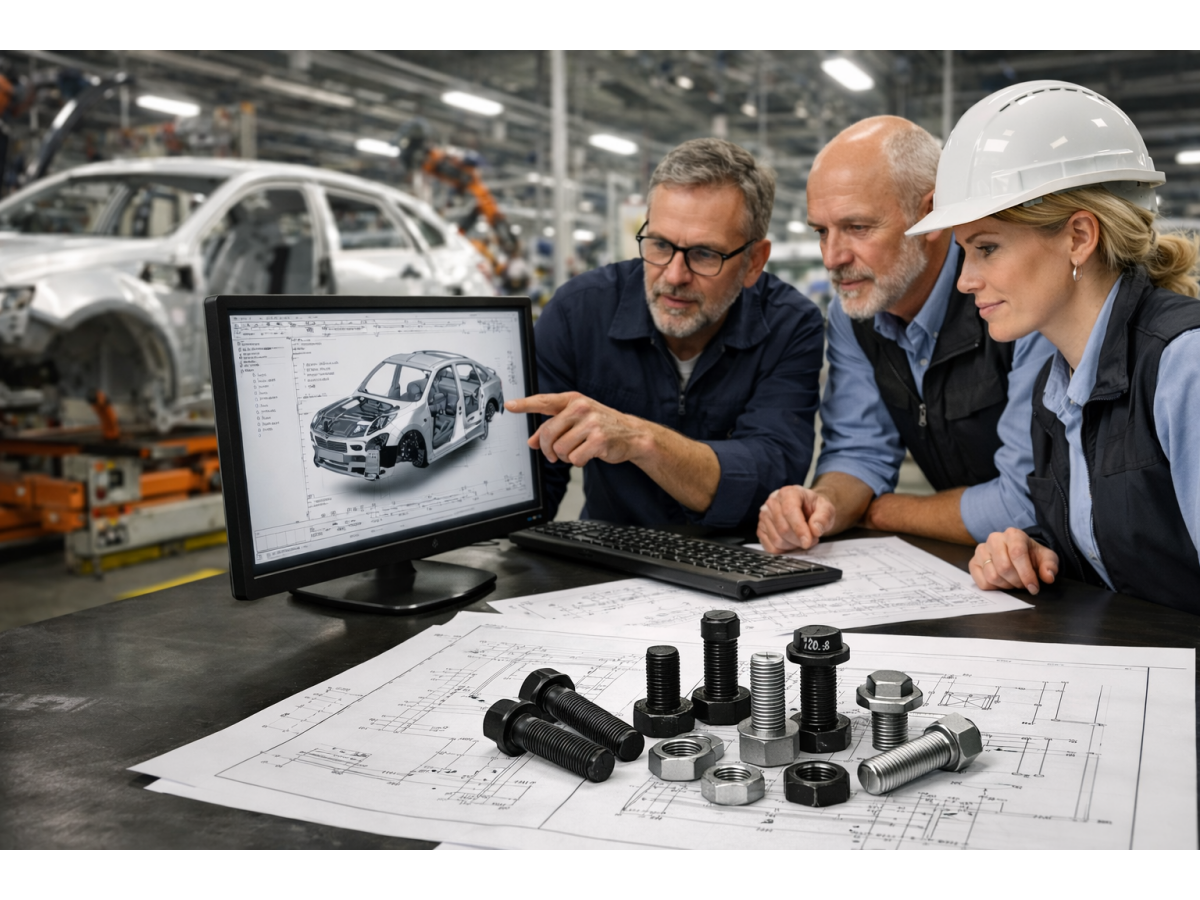
The first serious test of a custom-component supplier is often the technical review performed before production begins.
A supplier should not simply accept a drawing and immediately issue a quotation.
The supplier should first understand what the component actually does within the assembly.
Not every dimension on a drawing has the same functional importance.
A supplier review should consider:
Mounting-hole dimensions
Thread dimensions
Head geometry
Mating surfaces
Grip range
Component thickness
Locating features
Retention features
Functional clearances
For automotive plastic fasteners, for example, mounting-hole geometry, panel thickness, retention geometry, and material behavior can strongly influence component suitability.
The Automotive Plastic Fastener Design Guide provides a more detailed framework for evaluating mounting holes, retention mechanisms, tolerances, and mating geometry.
Thread specifications may reference international systems such as ISO, DIN, ASME/ANSI, SAE, or other customer-defined standards where applicable.
However, the thread itself is only one part of the joint.
The supplier should also understand:
Thread engagement
Mating material
Installation method
Clamping requirements
Surface condition
Assembly access
Service requirements
The supplier should determine whether the proposed geometry is compatible with the selected production route.
Depending on the component, this may involve:
Cold heading
Multi-stage forming
CNC machining
Stamping
Metal forming
Plastic component production
Secondary operations
Surface treatment
Assembly
The exact manufacturing route should be selected according to the component's material, geometry, quantity, dimensional requirements, and production conditions.
This is particularly important for non-standard automotive fasteners because the correct manufacturing route can influence both technical performance and commercial feasibility.
Different automotive components require different production approaches.
A supplier that attempts to manufacture every component using one process may not be the right partner for a diverse OEM component portfolio.
Cold heading and multi-stage forming can be appropriate for high-volume screws, bolts, rivets, and other formed fastening components where the geometry and material are suitable.
For example, customer-specific automotive bolts may require special head geometry, thread configuration, or other formed features.
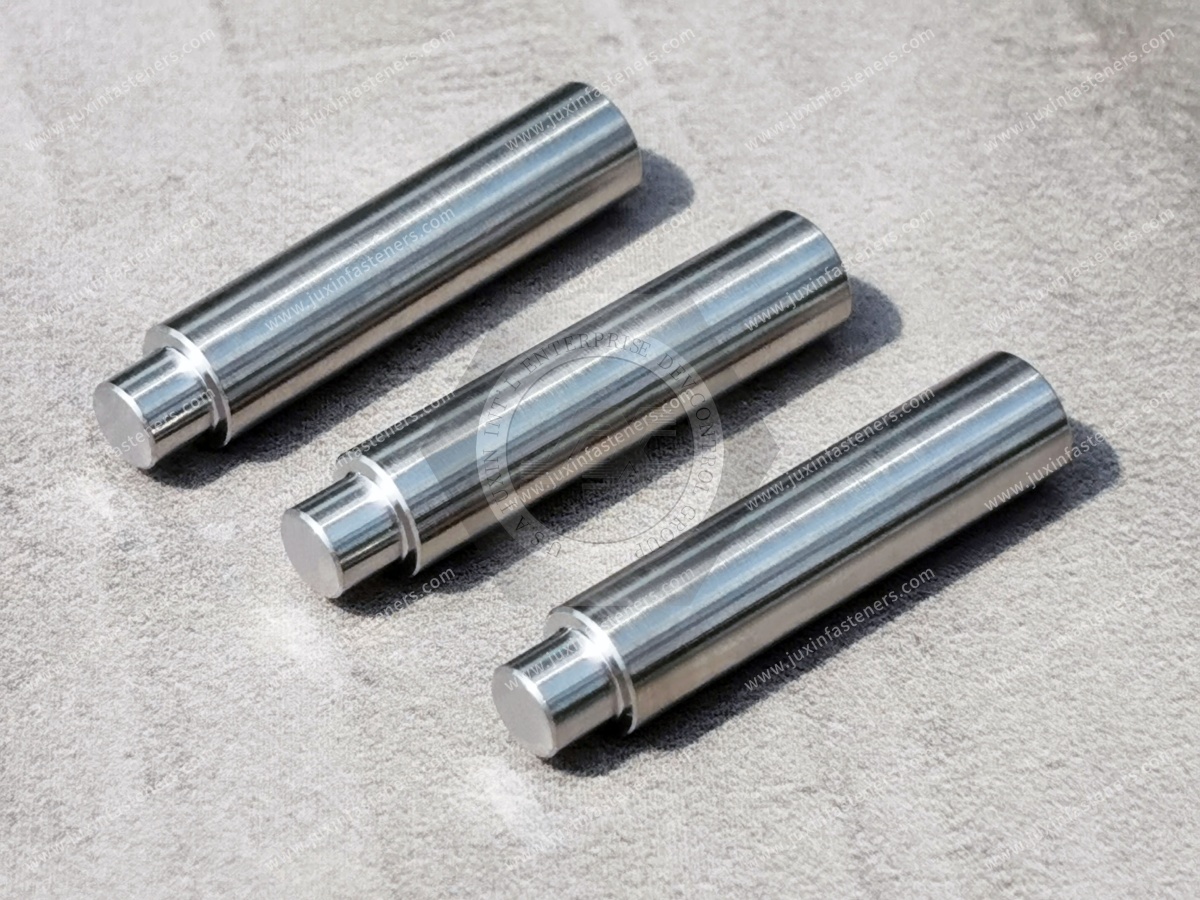
CNC machining can be suitable for complex drawing-based components, precision pins, shafts, special fasteners, and lower-volume or geometry-intensive parts where machining is appropriate.
Automotive applications may include:
Shift shafts
Pivot pins
Special shafts
Precision mechanical components
Customer-specific fasteners
Stamping and forming can be appropriate for certain:
Washers
Shims
Brackets
Clips
Retention components
Sheet-metal fastening components
The important sourcing question is not simply:
“Does the supplier have CNC?”
It is:
“Can the supplier match the manufacturing route to this specific component?”
That distinction is important when evaluating suppliers for a mixed automotive component portfolio.
For polymer fastening components, the same principle applies. Our How to Select Automotive Plastic Fasteners guide explains how application,
geometry, material, installation, and supply requirements should be considered together.
Material specification is one of the most important areas in custom component sourcing.
The procurement team should verify how a supplier controls customer-specified materials rather than relying on general statements such as “we use high-quality steel” or “we use engineering plastic.”
Depending on the application, customer specifications may define:
Carbon steel
Alloy steel
Stainless steel
Aluminum alloys
Other application-specific metals
For high-strength fasteners, the applicable property class and material requirements should come from the customer drawing or applicable specification.
JUXIN FASTENERS supplies application-specific automotive metal components including customer-specific fasteners, rivet nuts, weld nuts, bolts, screws,
rivets, pins, and other components according to customer requirements.
Automotive plastic fasteners can use different polymer families depending on the application.
Common engineering considerations include:
Nylon / PA6 / PA66
POM / Acetal
PP
Other customer-specified polymers
Material selection should consider the finished component rather than only the resin name.
The actual behavior can depend on:
Geometry
Wall thickness
Retention mechanism
Deflection
Mounting-hole condition
Panel thickness
Moisture
Temperature
Chemical exposure
Assembly method
Therefore, procurement should ask not only:
“What material do you use?”
but also:
“How is the specified material controlled from sourcing through production?”
Depending on customer requirements, supplier evaluation may include:
Material identification
Lot control
Material documentation
Production lot identification
Traceability records
The specific level of traceability should be defined by the customer's quality requirements and purchasing agreement.
Quality verification for custom automotive components should be based on the actual drawing and application requirements.
A supplier should be able to explain how important dimensions and characteristics are verified during production.
Depending on the component, inspection may address:
Overall dimensions
Thread dimensions
Hole dimensions
Head dimensions
Length
Diameter
Thickness
Functional interfaces
Customer-defined critical dimensions
The inspection method should be appropriate to the dimension and the required tolerance.
For metal components, the customer may specify:
Zinc plating
Zinc-Nickel Alloy
Zinc-aluminum coating
Stainless passivation
Other application-specific surface treatments
The surface treatment should be evaluated according to the customer's specification and intended environment.
For example, chassis and undercarriage components may require different corrosion-control considerations from interior trim components.
See our Automotive Chassis & Undercarriage Fastening guide for a more application-specific discussion.
Depending on the program, documentation may include:
Dimensional inspection reports
Material documentation
Surface treatment records
Lot identification
Sample inspection records
Customer-defined quality documents
The key question for procurement is whether the supplier can consistently provide the documentation required by the program.
Supplier qualification does not end when the first sample is approved.
The supplier must also be evaluated for the production phase.
Procurement teams should understand:
Expected annual volume
Order frequency
Production lead time
Capacity allocation
Peak demand requirements
Production scheduling
Capacity should be evaluated against the actual program requirements rather than a generic claim such as “large capacity.”
For components involving dedicated tooling, procurement teams should clarify:
Tooling ownership
Tooling maintenance responsibility
Tooling replacement conditions
Tooling storage
Tooling change procedures
What happens when the drawing changes
These questions become particularly important for long-running automotive programs.
Packaging is part of supply execution.
Depending on the component and customer requirements, sourcing teams may need to define:
Quantity per package
Inner packaging
Outer packaging
Labeling
Lot identification
Barcode requirements
Protection against damage or contamination
Packaging dimensions
For automated assembly environments, packaging can also influence handling and line-side feeding.
Automotive component programs rarely remain completely unchanged from prototype through production.
Engineering changes may affect:
Dimensions
Material
Surface treatment
Thread specification
Geometry
Packaging
Assembly method
Production quantity
A supplier evaluation should therefore include change-management capability.
The supplier should clearly identify:
Current drawing revision
Previous revision
Effective date
Production status
Sample status
Change implementation requirements
A supplier should not manufacture an old drawing simply because it remains in an old quotation or email thread.
The supplier should also have a clear process for resolving questions such as:
Which dimension is controlling?
Is this tolerance functional?
Is this surface treatment required before or after another process?
Does the mounting interface require a specific geometry?
Has the customer approved the proposed material?
Has the drawing changed?
Good communication reduces the possibility of technical assumptions becoming production problems.
To make supplier evaluation more objective, strategic sourcing teams can use a structured scorecard.
The following framework can be adapted to the specific automotive program.
| Evaluation Pillar | Primary Audit Focus | Key Verification Metrics |
|---|---|---|
| Engineering Competence | Technical drawing review and DFM feedback | Drawing interpretation, identification of functional dimensions, technical clarification quality |
| Manufacturing Depth | Production-route suitability | Appropriate use of forming, CNC machining, stamping, molding or other applicable processes |
| Material Control | Material sourcing and specification control | Material identification, lot control, documentation availability, grade compliance |
| Quality Verification | Inspection and documentation | Dimensional inspection, functional verification, customer-defined quality records |
| Supply Continuity | Capacity and production planning | Lead-time management, production scheduling, batch flexibility, continuity planning |
| Commercial Alignment | Quotation and communication | Quote clarity, technical response, revision handling, commercial transparency |
| Change Management | Engineering and production changes | Revision control, implementation communication, sample re-approval where required |
| Packaging & Logistics | Delivery execution | Packaging definition, labeling, lot identification, shipping coordination |
This scorecard is more useful when procurement defines the weighting according to the risk of the component.
For example, a safety-related structural component may require a different supplier evaluation emphasis from an interior trim clip.
A recurring problem in automotive sourcing is the difference between what engineering wants to evaluate and what procurement needs to control.
Dimensional accuracy
Functional interfaces
Material
Geometry
Tolerances
Assembly method
Prototype validation
Surface treatment
Mating components
Unit price
Tooling cost
MOQ
Lead time
Annual volume
Payment terms
Packaging
Delivery performance
Supplier stability
Commercial responsiveness
Capacity
Continuity
Inventory strategy
Logistics
Packaging
Change management
Delivery reliability
Supplier dependency
Long-term sourcing risk
The strongest supplier evaluation process connects all three perspectives.
A supplier that satisfies engineering but cannot support the commercial program is difficult to scale.
A supplier that offers an attractive price but cannot control engineering changes creates quality and supply risk.
A supplier that can produce the part but cannot communicate effectively can become difficult to manage over a long program lifecycle.
Once a supplier has passed the initial evaluation, the next step is a complete RFQ package.
A good RFQ package allows the supplier to quote the actual requirement instead of making assumptions.
A complete custom automotive component RFQ may include:
Complete 2D engineering drawing
3D CAD model where available
Current drawing revision
Engineering change information where applicable
Material specification
Surface treatment or coating requirement
Thread specification
Mounting-hole or mounting-slot information
Panel thickness or grip range where relevant
Critical-to-function dimensions
Inspection requirements
Prototype quantity
Pilot quantity
Expected annual volume
Production schedule
Packaging requirements
Labeling requirements
Documentation requirements
Customer-specific quality requirements
For plastic retainers and clips, additional information can include:
Mounting-hole geometry
Panel thickness
Mating component
Installation direction
Retention requirement
Material requirement
Serviceability requirement
For more information on automotive interior applications, see our Automotive Door Systems: Fastening Engineering, Retainers & OEM Sourcing Guide.
For broader plastic fastener applications, see the Automotive Trim & Moulding Clips Guide and Push-Type Retainers for Automotive Applications.
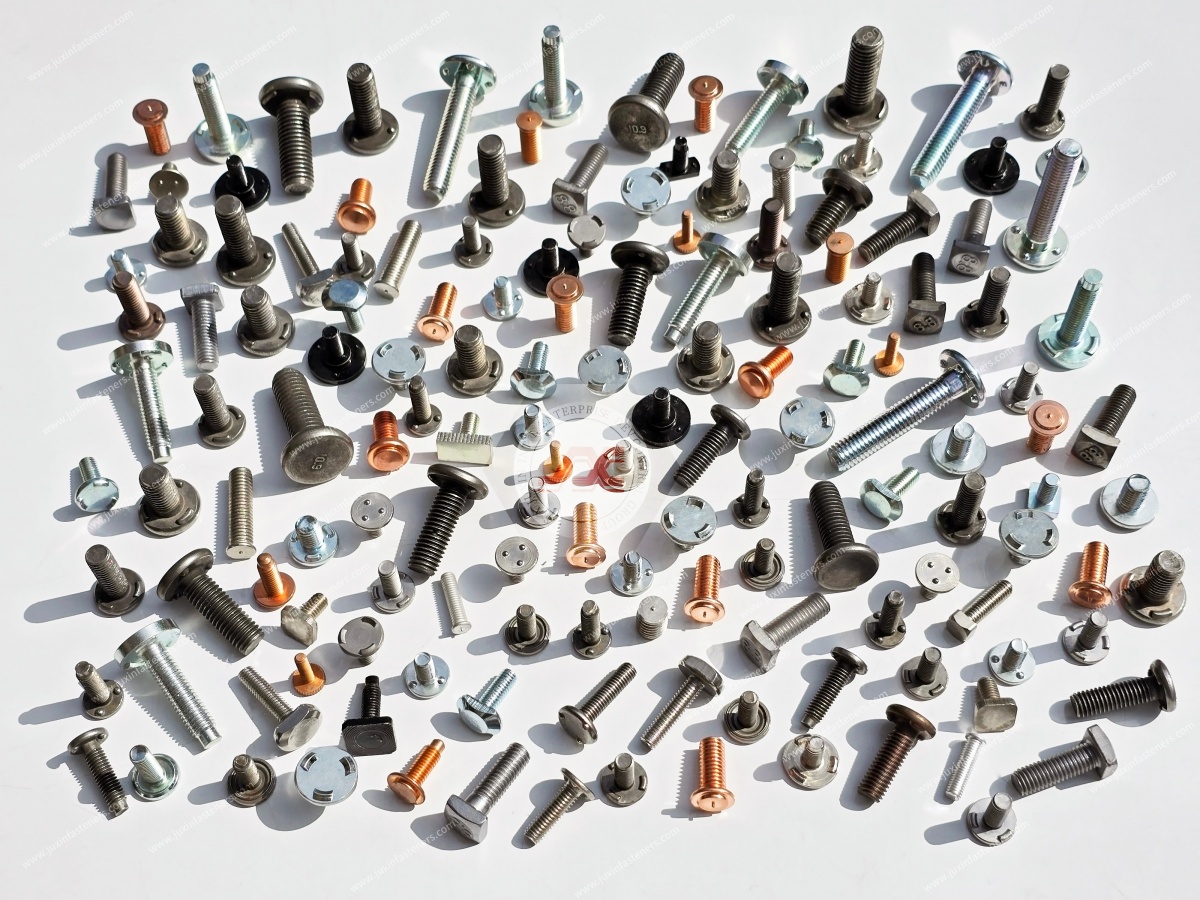
One of the most important distinctions in automotive procurement is the difference between standard hardware and customer-specific components.
A standard catalog fastener may be suitable when:
The geometry is already defined
The thread is standard
The dimensions are acceptable
The application does not require special interfaces
The required material and finish are available
A customer-specific component becomes more relevant when the application requires:
Special geometry
Customer-defined dimensions
Non-standard head design
Special mounting interface
Specific retention geometry
Customer-defined material
Application-specific surface treatment
Integrated functional features
Specific assembly requirements
This is particularly common in automotive assemblies where the fastener is designed around the mating components.
For example, an Automotive Spoiler Slide Bolt may use a special head geometry that engages a mounting slot, track, or channel.
Representative JUXIN configurations include M5 and M6 sizes, including M6 × 14 and M6 × 20 examples,
with applicable configurations in property classes 8.8 and 10.9 and finishes such as Color Zinc, Zinc-Nickel Alloy, and Black Zinc.
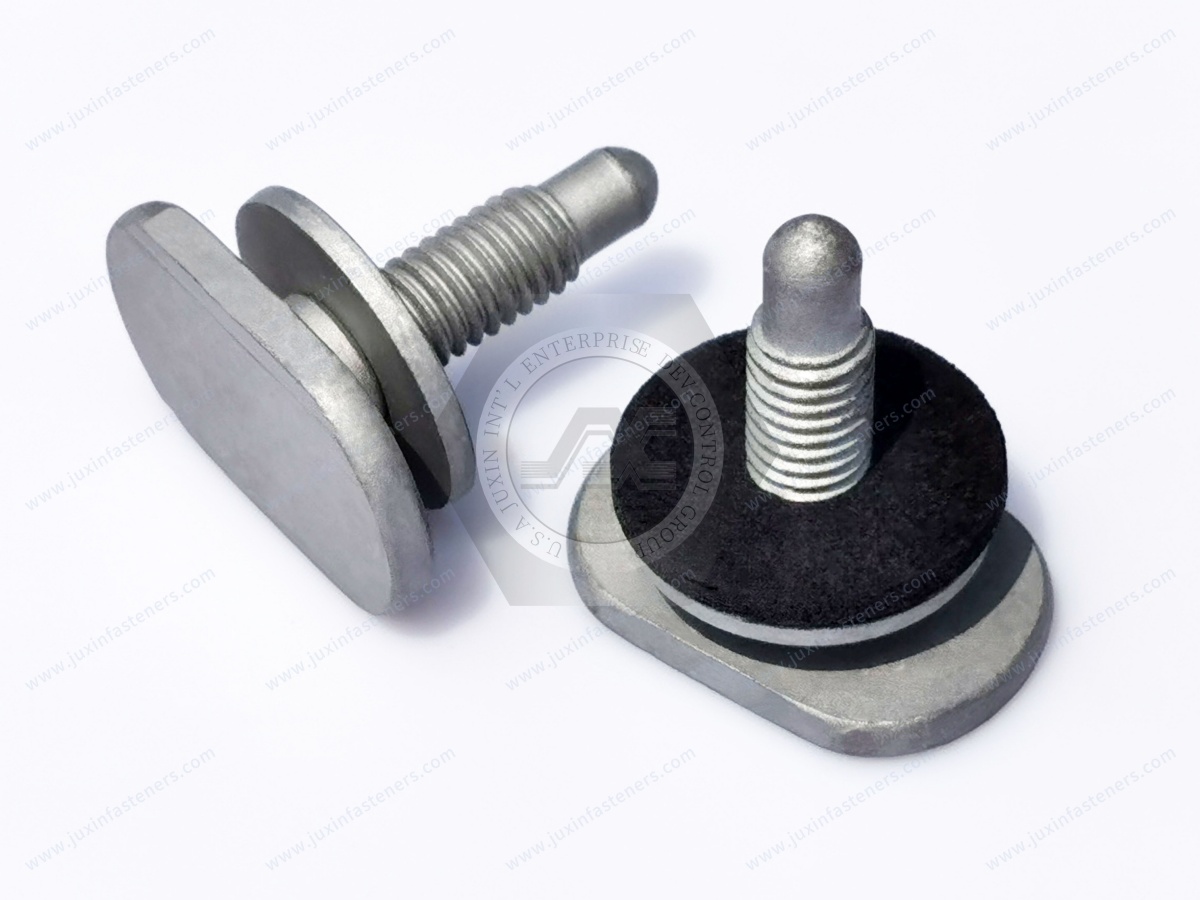
The component should still be evaluated according to the customer's drawing and application rather than assuming that one configuration fits every spoiler assembly.
The corresponding plastic component may be a Nylon Rear Spoiler Clip, whose geometry and material are also defined by the specific mounting interface.
This illustrates a broader sourcing principle:
The component is often defined by the system around it.
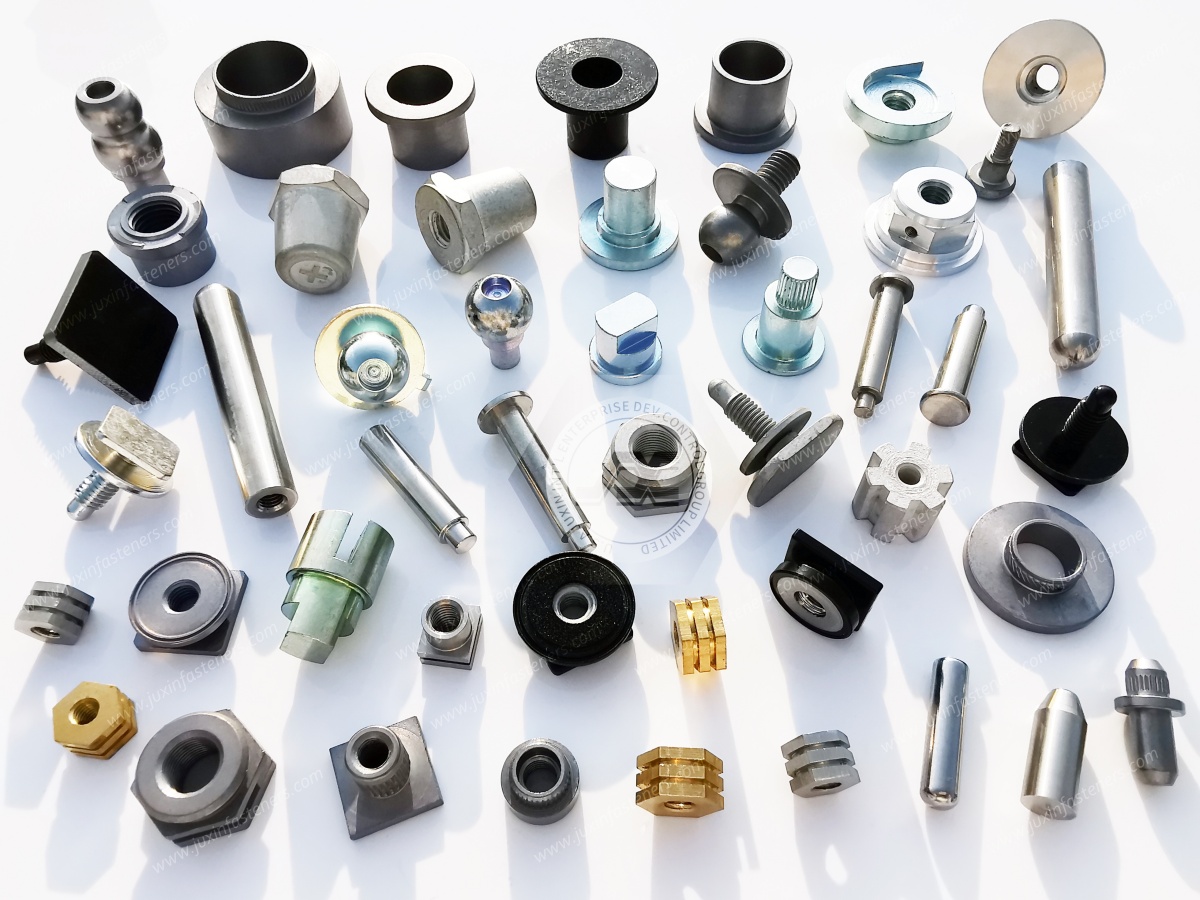
JUXIN FASTENERS supplies customer-specific and non-standard fastening components for automotive and industrial applications.
The product scope can include both metal and polymer components, such as:
Custom screws
Custom bolts
High-strength fasteners
Rivets
Rivet nuts
Weld nuts
Self-clinching fasteners
Plastic clips
Plastic retainers
Nylon fasteners
Precision pins
Shafts
Washers
Stamped components
CNC-machined components
Application-specific fastening components
The appropriate manufacturing route depends on the component.
Possible production routes may include cold forming, multi-stage forming, CNC machining, stamping, metal forming, plastic component production,
and applicable secondary processes according to the project requirements.
JUXIN FASTENERS evaluates customer requirements through the relationship between:
Customer Drawing → Mating Interface → Material → Geometry → Application → Assembly → Production Requirements
This approach is particularly relevant when sourcing non-standard automotive components where the product cannot be adequately defined by a catalog description alone.
For application-specific sourcing, JUXIN FASTENERS can work from customer drawings, CAD information, specifications, material requirements, surface treatment requirements,
application conditions, quantities, and packaging requirements.
Custom automotive component sourcing does not need to be limited to one product category.
Automotive programs may require different fastening architectures across different vehicle systems.
Automotive wiper systems can use application-specific fastening components such as:
Stainless steel solid rivets
Stainless steel shoulder rivets
Stainless steel step rivets
Customer-specific linkage fastening components
See our Automotive Wiper System Fastening Solutions guide for the engineering considerations around wiper linkage and pivot interfaces.
Possible components include:
Rivet nuts
Customer-specific aluminum alloy fasteners
Application-specific metal fastening components
Customer-defined surface-treated fasteners
Engineering considerations may include:
Moisture
Road contaminants
Salt exposure
Temperature cycling
Vibration
Mating materials
Thread dimensions
Friction and torque
Surface treatment
Application-specific mechanical components may include:
Shift shafts
Shift pins
Rolling shafts
Fixed pivot shafts
Swing or pivot shafts
Shift sliding columns
Rocker pivot shafts
Ball pins
These components are selected according to the movement, interface, dimensional requirements, and assembly architecture of the mechanism.
Sunroof and panoramic roof mechanisms may use:
Precision shafts
Pivot pins
Guide components
Application-specific fastening components
Other mechanical components
The selection process should consider movement type, mating interface, package space, functional dimensions, surface condition, material pairing, and assembly method.
Potential fastening components can include:
Weld nuts
Flange weld nuts
Rivet nuts
Metal self-locking nuts
Application-specific high-strength fasteners
Because rollover protection structures can be safety-related, the final component requirements and validation criteria must be defined by the applicable vehicle or customer engineering program.
See our Rollover Protection Systems: Fastening Engineering, Weld Nuts & OEM Sourcing Guide.
Seat systems may require:
Seat mounting hardware
Structural fasteners
Pins
Retainers
Pivot components
Customer-specific mechanical hardware
Structural applications require evaluation against the customer's engineering and validation requirements.
Rear spoiler systems demonstrate how polymer and metal components can work together.
A system may include:
Nylon Rear Spoiler Clip + Automotive Spoiler Slide Bolt → Rear Spoiler Mounting Interface
The slide bolt may engage a mounting slot, track, or channel through its specific head geometry.
The installation concept can be described as:
Slide → Position → Engage → Tighten
Anti-rotation behavior depends on the actual mating slot and head geometry.
For the system-level application, see Automotive Rear Spoiler Fastening Components.
For the metal component, see Automotive Spoiler Slide Bolts.
This application illustrates why supplier evaluation should consider the entire assembly rather than purchasing every component as an isolated commodity.
A supplier evaluation becomes more effective when engineering and procurement use a
 MORE NEWS
Sep. 14, 2026
Sep. 13, 2026
Contact Us
Tel.:
+86 020 8621 0320
+86 020 3121 6067
E-mail:
Technical Support:
Navigation
SEND INQUIREY