
Call Us
+86 136 6007 9809
Call Us
+86 136 6007 9809

May. 05, 2024
Electric vehicle battery enclosures are more than protective housings.
They form part of the mechanical architecture surrounding battery modules, thermal management components, electrical systems and vehicle mounting interfaces.
As EV platforms move toward lightweight aluminum structures, thin sheet-metal assemblies, extrusions and mixed-material designs, fastening becomes a system-level engineering decision.
A fastener suitable for a structural battery mounting point may not be appropriate for a thin aluminum enclosure wall.
A weld nut designed for a fabricated steel component solves a different problem from a blind rivet nut installed into a closed section.
A threaded insert used to reinforce an aluminum thread performs a different function from a high-strength bolt responsible for structural clamping.
For this reason, EV battery enclosure fasteners should be selected according to the joint function, parent material, installation process, structural requirements and service conditions.
JUXIN FASTENERS supplies standard and custom fastening components for lightweight EV battery enclosures, battery trays, structural assemblies and related automotive applications.
Battery enclosure design may involve a combination of:
Aluminum battery trays
Steel structural members
Aluminum extrusions
Sheet-metal brackets
Battery covers
Reinforcement members
Cooling-system components
Composite or polymer components
Electrical and electronic mounting structures
Each material and component introduces different fastening requirements.
Engineers may need to consider:
Parent-material strength
Available sheet or wall thickness
Thread engagement
Clamp load
Installation access
Joint stiffness
Vibration and cyclic loading
Thermal expansion
Corrosion exposure
Dissimilar-material interfaces
Sealing requirements
Assembly sequence
Repair and service access
The objective is therefore not simply to select the strongest available fastener.
The fastening method should match the mechanical function and manufacturing conditions of the actual battery enclosure joint.
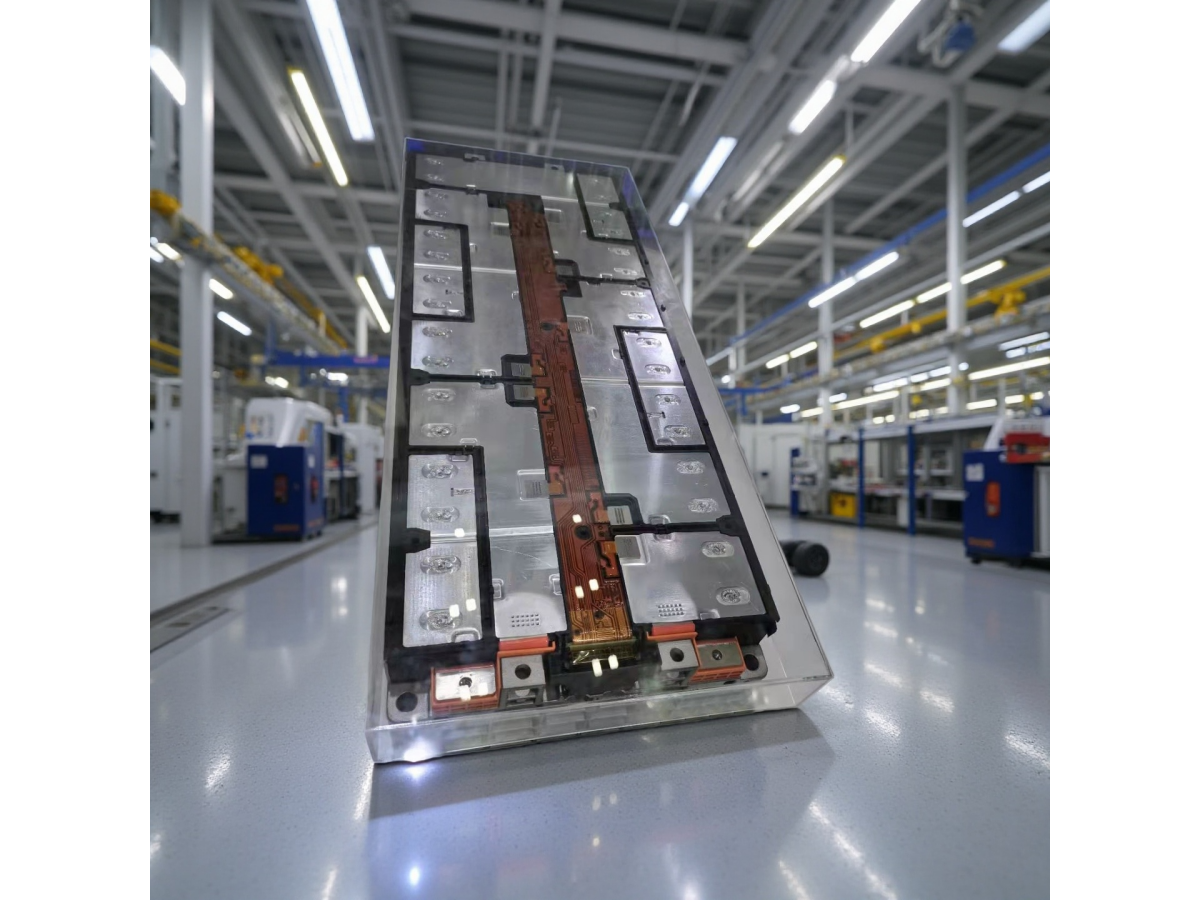
A useful starting point is to divide the enclosure into different joint functions.
These connections may transfer loads between the battery pack, enclosure structure and vehicle.
Potential solutions can include:
High-strength bolts
Flange bolts
Locking nuts
Application-specific washers
Custom structural fasteners
Fabricated structures may require permanent threaded attachment points before final vehicle assembly.
Potential solutions include:
Projection weld nuts
Weld studs
Self-clinching nuts
Self-clinching studs
Closed sections and assembled enclosure profiles may prevent access to the rear side of the joint.
Potential solutions include:
Blind rivet nuts
Blind threaded studs
Blind rivets
Application-specific blind fasteners
Direct threads in aluminum may not always provide the required durability or serviceability.
Potential solutions include:
Wire thread inserts
Self-tapping threaded inserts
Press-in inserts
Other application-specific threaded inserts
Battery covers and inspection or service panels may require repeated access.
Potential solutions can include:
Machine screws
Flange bolts
Captive screws
Rivet nuts
Threaded inserts
Locking fasteners
This functional mapping prevents the common mistake of attempting to use one fastening technology throughout the entire battery enclosure.
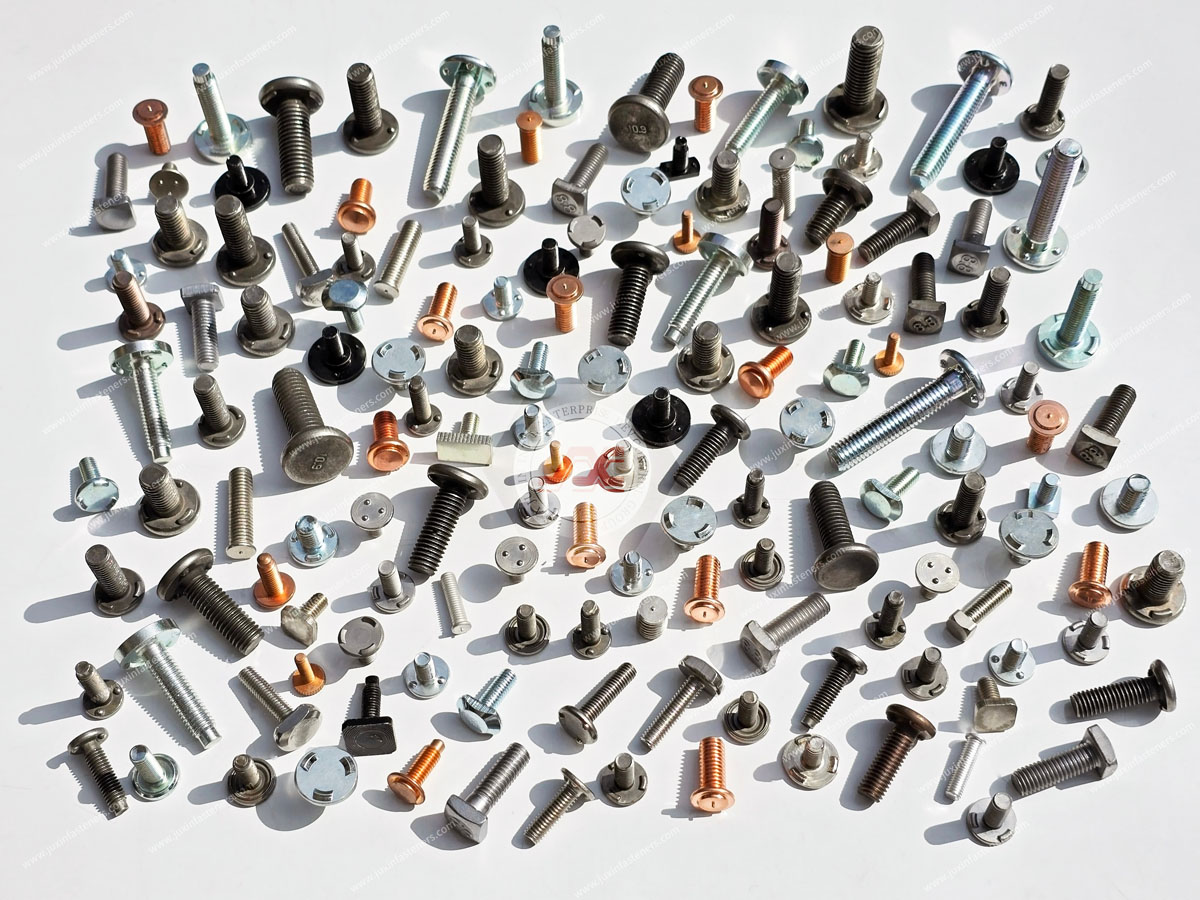
Bolted joints remain important where battery enclosure components require structural clamping or removable mechanical connections.
Depending on the design, these may include:
Hex bolts
Flange bolts
Long bolts
High-strength bolts
Custom shoulder bolts
Drawing-based automotive bolts
Potential applications include:
Battery-to-vehicle mounting
Enclosure reinforcement members
Cross-member connections
Structural brackets
Battery tray assemblies
Module-support structures
Property classes such as 8.8 or 10.9 may be specified for certain applications, but the correct property class depends on the joint design and customer specification.
Selecting a higher-strength bolt does not automatically produce a better connection.
Engineers should evaluate the complete joint, including:
Required clamp load
Joint stiffness
Parent material
Thread engagement
Bearing surfaces
Tightening method
Friction condition
Surface treatment
Repeated loading
Service requirements
In aluminum structures, for example, the bolt may have considerably greater strength than the mating thread or local bearing area.
The parent structure can therefore become the limiting element of the joint.
Some battery architectures require extended-length fasteners to pass through structural sections, modules, brackets or enclosure components.
JUXIN FASTENERS can support drawing-based long bolts and screws where standard lengths do not match the assembly.
Important RFQ information includes:
Thread specification
Overall length
Threaded length
Unthreaded shank length
Head geometry
Material
Property class
Surface treatment
Critical dimensions
Mating components
Required quantity
Long fasteners should be evaluated for the actual joint geometry and loading rather than selected solely by diameter and overall length.
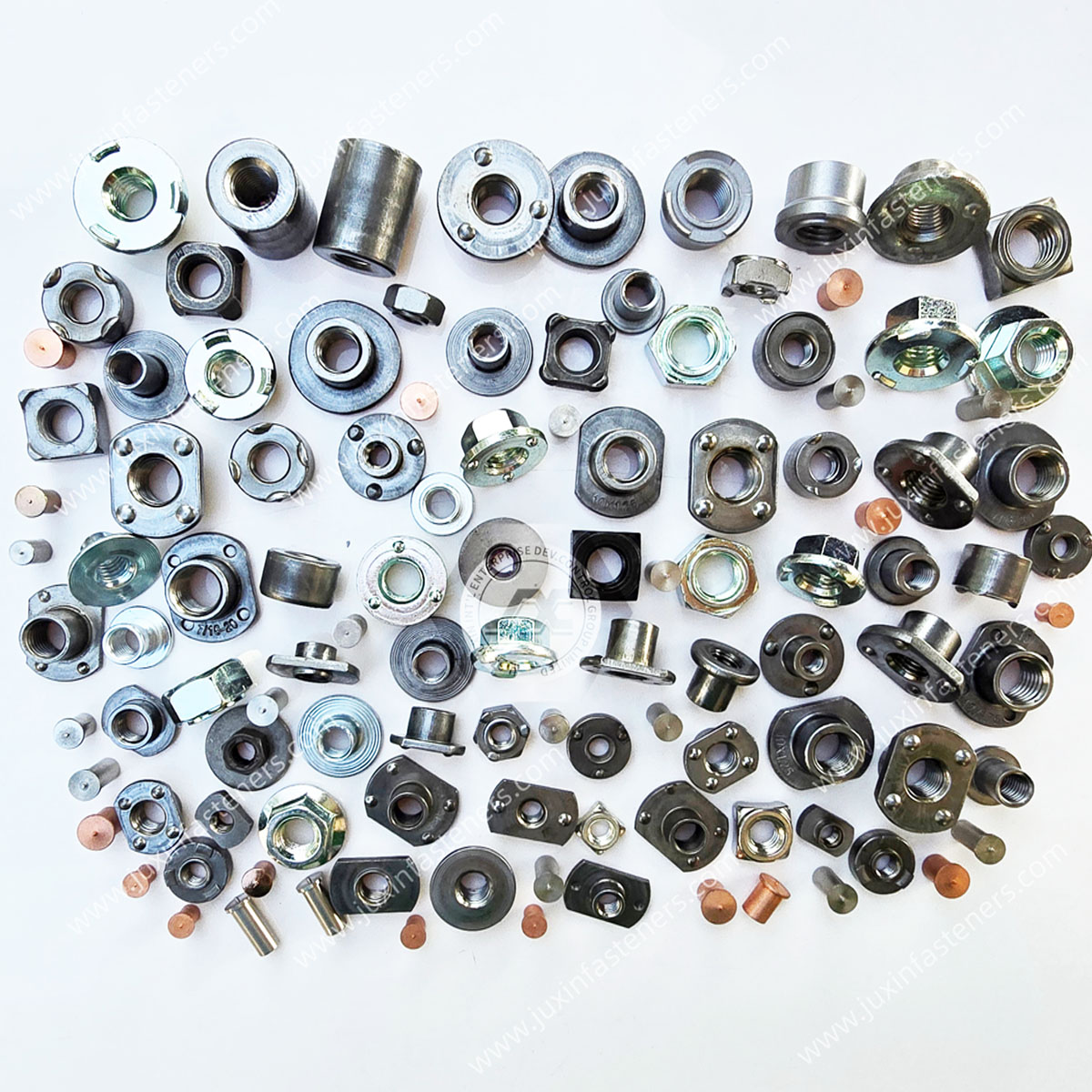
Projection weld nuts can provide permanent captive threads in suitable weldable battery enclosure structures.
Potential applications include:
Steel battery trays
Fabricated enclosure structures
Structural brackets
Reinforcement components
Mounting interfaces
Common product families may include:
Square weld nuts
Hex weld nuts
Flange weld nuts
Projection weld nuts
Application-specific weld nuts
Weld-nut performance depends on the interaction between the nut, projection geometry, parent sheet and welding process.
Important considerations include:
Sheet material
Sheet thickness
Nut geometry
Projection design
Electrode access
Welding parameters
Coating condition
Required resistance to rotation
Final assembly torque requirements
A weld nut should therefore be treated as part of a resistance-welding system rather than as an ordinary loose nut that happens to be welded onto sheet metal.
Weld studs can create fixed threaded mounting points on suitable fabricated metal components.
Depending on the enclosure architecture and manufacturing process, they may support:
Brackets
Electrical components
Cable-management hardware
Protective components
Internal mounting structures
Different welding processes, including projection welding, capacitor-discharge welding and arc stud welding, have different substrate, geometry and process requirements.
The welding process should therefore be specified together with the stud rather than selected after the fastener geometry has already been fixed.
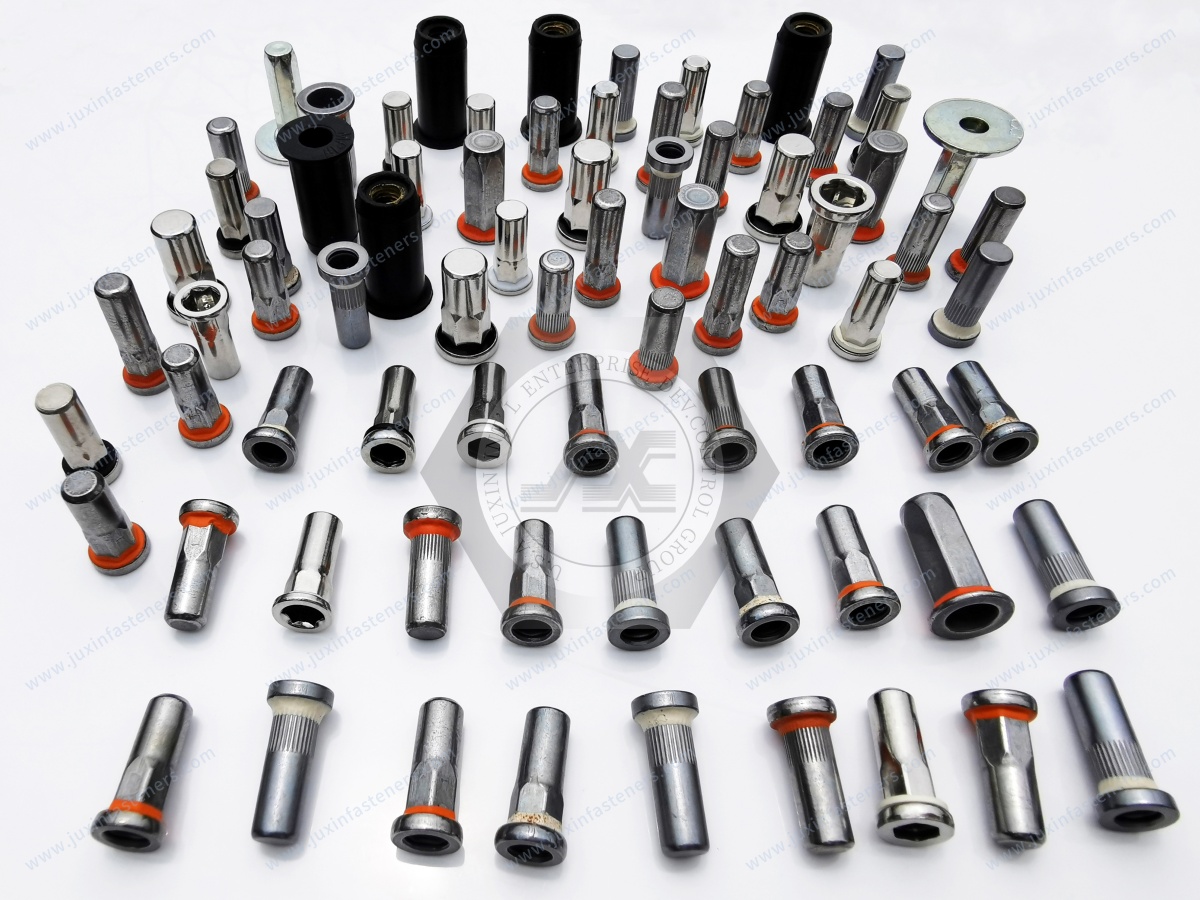
Blind rivet nuts are particularly useful where a reusable internal thread is required but the rear side of the enclosure is inaccessible during installation.
Potential applications include:
Aluminum battery trays
Extruded sections
Thin enclosure walls
Battery covers
Closed profiles
Service panels
Brackets
Electrical housings
Available configurations can include:
Round body
Knurled body
Half-hexagonal body
Full-hexagonal body
Open-end designs
Closed-end designs
Flat-head and reduced-head configurations
The correct design depends on the application.
Engineering teams should consider:
Parent material
Material thickness
Grip range
Hole geometry
Anti-rotation requirement
Axial loading
Installation access
Mating screw
Installation tooling
Service requirements
Closed-end or sealing-related rivet nut designs may be considered where the enclosure architecture requires additional control of the fastener opening.
However, the fastener alone should not automatically be treated as the complete environmental sealing system.
Final sealing performance depends on the fastener design, installation, hole condition, interfaces and overall enclosure sealing strategy.
Self-clinching fasteners can create captive threaded or mounting features in suitable sheet materials.
Product options can include:
Self-clinching nuts
Self-clinching studs
Self-clinching standoffs
Floating self-clinching fasteners
Captive panel fasteners
They can be useful when press installation can be integrated into the sheet-metal manufacturing process.
However, performance depends strongly on the parent sheet.
Selection should consider:
Sheet material
Sheet hardness
Sheet thickness
Hole preparation
Edge distance
Installation force
Fastener orientation
Push-out requirement
Torque resistance
A self-clinching fastener should not automatically replace a weld nut or rivet nut simply because all three can create a captive threaded point.
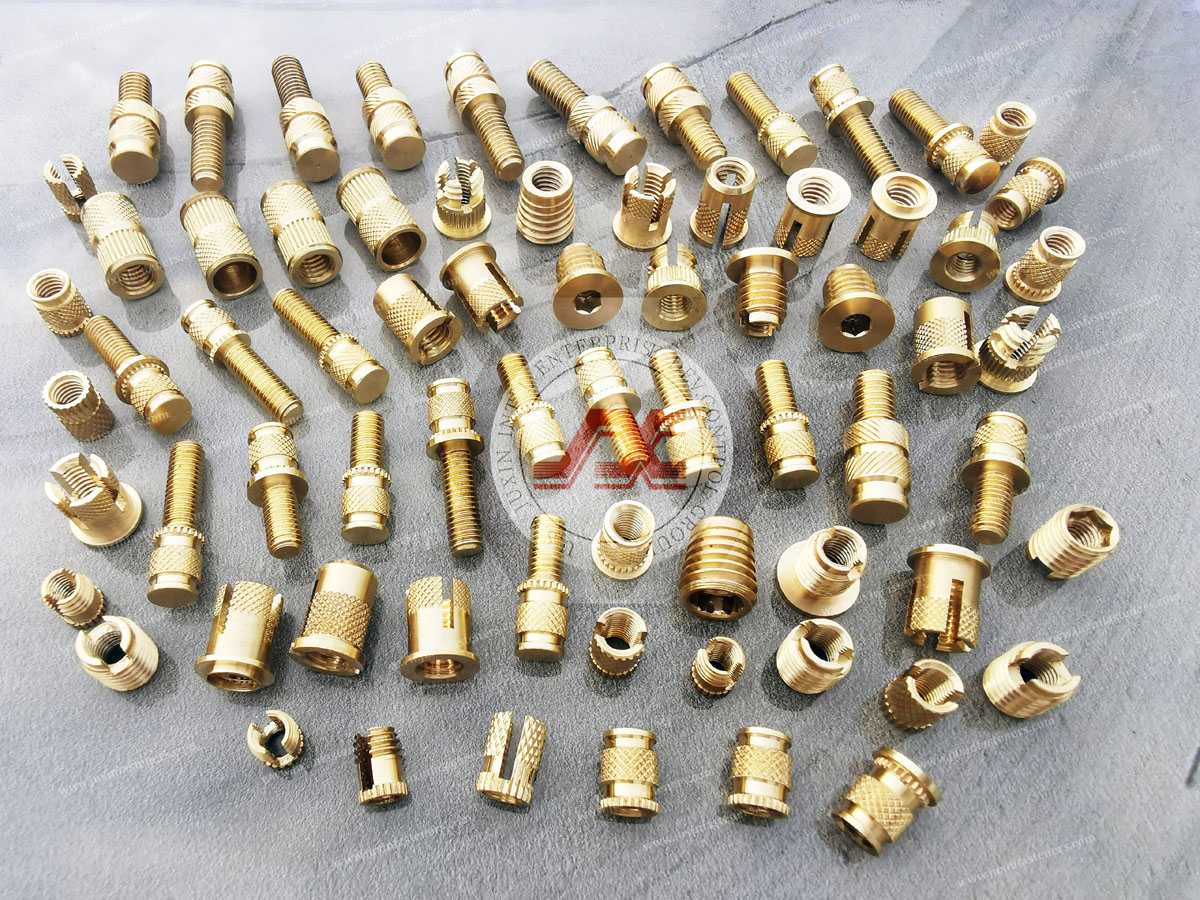
Aluminum is widely used in lightweight battery structures, but directly tapped aluminum threads are not ideal for every connection.
Where greater thread durability, repeated service or reinforced thread engagement is required, engineers may consider threaded inserts.
Options can include:
Wire thread inserts
Self-tapping inserts
Press-in inserts
Application-specific threaded inserts
Potential applications include:
Aluminum battery housings
Machined enclosure components
Structural mounting blocks
Thermal management components
Service interfaces
Selection depends on:
Aluminum alloy or parent material
Available wall thickness
Hole geometry
Thread size
Required thread engagement
Installation method
Pull-out requirements
Repeated assembly requirements
Mating fastener
The insert and surrounding parent material should be evaluated together.
Not every battery enclosure connection requires a threaded fastener.
Blind rivets may be suitable for permanent mechanical joining where access is available from only one side.
Depending on the application, options may include:
Open-end blind rivets
Closed-end blind rivets
Structural blind rivets
Multi-grip rivets
Application-specific rivets
Blind rivets and blind rivet nuts should not be confused.
A blind rivet creates a permanent mechanical joint.
A blind rivet nut creates a threaded attachment point for a removable mating screw or bolt.
The choice depends on whether future disassembly is required.
Battery enclosures experience vibration, cyclic loading and temperature changes during vehicle operation.
These conditions make preload retention an important engineering consideration, but there is no universal locking solution for every battery joint.
Potential options can include:
All-metal prevailing-torque nuts
Nylon-insert lock nuts where temperature and application conditions permit
Wedge-locking washer systems
Application-specific locking features
Customer-specified thread-locking systems
The correct approach depends on:
Joint stiffness
Required preload
Bolt length
Surface condition
Temperature
Vibration environment
Serviceability
Tightening method
A locking device should support a correctly designed bolted joint rather than compensate for insufficient preload, excessive settlement or an unsuitable joint geometry.
Reducing vehicle mass is an important objective in EV engineering, but lightweight fastening should be evaluated at the assembly level.
Possible approaches include:
Using thinner but appropriately reinforced structures
Creating captive threaded points
Reducing unnecessary loose hardware
Using one-sided fastening where access is restricted
Optimizing bolt diameter according to actual joint requirements
Integrating multiple functions into custom components
Reducing assembly steps
Selecting fasteners compatible with aluminum and mixed-material structures
Replacing a steel fastener with aluminum or another lightweight material without reviewing strength, stiffness, temperature, wear and corrosion can create additional problems.
The engineering objective is an efficient joint, not simply the lowest fastener mass.
Modern battery enclosures can combine:
Aluminum
Carbon steel
Stainless steel
Coated steel
Engineering plastics
Composite materials
Joining dissimilar materials requires attention to the interface between the fastener and surrounding structure.
Engineering considerations may include:
Galvanic compatibility
Moisture exposure
Coating compatibility
Differential thermal expansion
Electrical conductivity or isolation
Contact pressure
Joint stiffness
Long-term environmental exposure
There is no universal material or coating combination suitable for every mixed-material battery enclosure.
Material and surface-treatment selection should follow the specific joint environment and customer requirements.
Depending on fastener material and customer specifications, available surface treatments may include:
Zinc plating
Zinc-nickel plating
Zinc-flake coating systems
Black oxide
Nickel plating
PTFE-based coatings
Passivation for suitable stainless steel components
Other drawing-specified finishes
Surface treatment can affect more than corrosion resistance.
It may also influence:
Friction
Tightening behavior
Appearance
Electrical interaction
Dimensional fit
Compatibility with mating materials
For torque-controlled structural joints, coating and friction conditions should be reviewed together with the tightening strategy.
Corrosion performance should be specified according to the applicable customer requirement and validated using the agreed test method rather than assumed from the coating name alone.
Battery thermal management systems may contain cooling plates, channels, manifolds, brackets, sensors and mechanical interfaces.
Potential fastening components can include:
Machine screws
Flange bolts
Threaded inserts
Locking nuts
Studs
Custom machined components
Application-specific fasteners
Selection should consider:
Mating materials
Thermal expansion
Corrosion environment
Required clamp load
Service access
Sealing interfaces
Chemical exposure where applicable
Where a fastening joint is located near a coolant or sealing interface, the fastener should be evaluated as part of the complete thermal-management assembly.
Battery enclosure sealing is a system requirement.
A sealed or closed-end fastener may help control a potential leakage path, but enclosure sealing can also depend on:
Gaskets
Sealants
Joint geometry
Hole preparation
Surface condition
Clamp-load distribution
Fastener spacing
Installation consistency
Enclosure deformation
For this reason, terms such as “waterproof rivet nut” should not be interpreted as a guarantee that the complete battery enclosure will achieve a specific ingress-protection level.
The complete assembly requires appropriate design and validation.
| Enclosure Requirement | Potential Fastening Solution | Key Engineering Considerations |
|---|---|---|
| Structural clamping | High-strength bolts, flange bolts, nuts | Preload, joint stiffness, parent material, tightening |
| Captive thread in weldable sheet | Projection weld nut | Material, thickness, weld process, torque resistance |
| Fixed welded mounting point | Weld stud | Welding process, substrate, load, geometry |
| One-sided reusable thread | Blind rivet nut | Grip range, hole geometry, anti-rotation, installation |
| Captive thread in suitable sheet | Self-clinching nut | Sheet hardness, thickness, installation force |
| Reinforced aluminum thread | Threaded insert | Parent material, hole design, engagement, installation |
| Permanent one-sided joint | Blind rivet | Grip range, joint stack, load, access |
| Repeated-access panel | Captive screw, rivet nut, insert | Service frequency, thread durability, retention |
| Vibration-sensitive bolted joint | Appropriate locking system | Preload, stiffness, temperature, vibration |
This matrix is intended as an engineering starting point. Final selection depends on the actual assembly.
Standard fasteners are usually preferable when they meet the joint requirements.
Custom fasteners become relevant when the battery enclosure requires:
Non-standard length
Special head geometry
Reduced installation height
Special shoulder dimensions
Integrated locating features
Unique sealing-related geometry
Special anti-rotation features
Customer-controlled material
Drawing-specific surface treatment
Special thread-to-body relationships
Integration with proprietary enclosure geometry
A custom fastener should solve a defined engineering or assembly problem.
Customization without a functional reason can increase sourcing complexity and cost without improving the joint.
Before specifying a fastener, engineering teams should define:
What is the function of the joint?
Which materials are being joined?
What is the sheet or wall thickness?
Is the parent component sheet, extrusion, casting or machined material?
Is installation access available from one side or both sides?
Is the joint permanent or serviceable?
Is welding permitted?
Can press installation be integrated into production?
Is thread reinforcement required?
What clamp load or mechanical performance is required?
Is vibration or cyclic loading relevant?
Is thermal cycling relevant?
Are dissimilar materials in direct contact?
Is electrical isolation required?
Does the joint interact with a sealing system?
What surface treatment is required?
What installation tooling is available?
Is the fastener installed before or after coating?
What validation or inspection is required?
Can a standard fastener meet the requirement, or is a custom component necessary?
This information helps prevent fastener selection from becoming a late-stage purchasing decision after the surrounding structure has already been finalized.

For accurate engineering review and quotation, provide as much of the following information as available:
2D drawing
3D model
Part number and revision
Fastener type
Thread specification
Overall dimensions
Parent material
Sheet or wall thickness
Hole dimensions
Grip range where applicable
Mating fastener
Material specification
Property class or mechanical requirements
Heat-treatment requirement where applicable
Surface treatment
Joint function
Installation method
Installation access
Critical dimensions
Torque or preload requirements when controlled by the design
Corrosion or validation requirements
Prototype quantity
Production quantity
Estimated annual demand
Inspection requirements
Documentation requirements
Packaging requirements
For an early-stage project, engineers can also describe the assembly problem even when the final fastener has not yet been specified.
Battery enclosure projects can evolve through multiple design revisions before production.
A practical sourcing process may include:
Engineering review — confirm joint function, parent material, installation method and critical requirements.
Fastener selection or DFM review — determine whether an existing standard product can be used or whether customization is necessary.
Prototype or sample evaluation — verify installation and fit within the actual assembly.
Validation — perform customer-defined dimensional, mechanical, corrosion or functional testing where required.
Drawing release — freeze the approved specification and revision.
Production control — manufacture and inspect against the released requirements.
Recurring supply — maintain consistent specification, traceability and packaging according to the purchasing program.
This process is particularly important for drawing-based custom fasteners where small geometric changes can affect installation or joint performance.
Lightweight EV battery enclosures require more than one category of fastener.
Structural joints may use high-strength bolts and flange bolts.
Fabricated steel structures may use projection weld nuts or weld studs.
Aluminum and closed-section structures may require blind rivet nuts or threaded inserts.
Suitable sheet-metal assemblies may use self-clinching fasteners.
Permanent lightweight joints may use blind rivets.
Service interfaces may require reusable threaded or captive fastening systems.
JUXIN FASTENERS supports EV manufacturers, battery system suppliers, automotive Tier suppliers and engineering companies with standard and
custom fastening components for battery trays, lightweight enclosures, structural mounting interfaces and related battery assemblies.
Our product capabilities include weld nuts, weld studs, blind rivet nuts, blind threaded studs, self-clinching fasteners, threaded inserts, blind rivets,
locking nuts, bolts, screws, washers, plastic and nylon fasteners, and drawing-based custom components.
For an EV battery enclosure fastening project, send your drawing or specification together with the parent material, material thickness,
thread requirement, installation method, surface treatment, quantity and applicable inspection requirements.
Email: info@juxinfasteners.com
Website: www.juxinfasteners.com
 MORE NEWS
Sep. 27, 2026
Sep. 27, 2026
Sep. 27, 2026
Contact Us
Tel.:
+86 020 8621 0320
+86 020 3121 6067
E-mail:
Technical Support:
Navigation
SEND INQUIREY