
Call Us
+86 136 6007 9809
Call Us
+86 136 6007 9809

Sep. 10, 2026
Industrial original equipment manufacturers (OEMs) operating across automotive, electronics, electrical cabinets, communications equipment, renewable energy,
HVAC, machinery, and other industrial sectors frequently encounter applications where the base material or standard finish of a fastener does not fully address the assembly requirement.
A project may require controlled friction during installation, improved resistance to outdoor weathering, a pre-applied thread treatment, visual identification, or a specialized finish for a particular assembly environment.
For polymer hardware, however, the engineering question is more complex than simply selecting a coating from a catalog.
Some performance characteristics are built into the polymer formulation itself rather than added as a surface coating. Other requirements may be addressed through a secondary treatment applied after manufacturing.
Therefore, engineers and procurement teams should first determine whether the requirement is best addressed through material selection,
material modification, surface treatment, secondary finishing, or a combination of these approaches.
Specifying engineered fastener surface treatments and polymer coatings requires consideration of the substrate, geometry, thread design,
surface condition, application process, operating environment, and required performance.
For example, a UV-resistant polymer formulation and a UV-resistant surface coating are not necessarily the same engineering solution.
Similarly, a friction-modifying treatment may change assembly behavior, but its suitability depends on the fastener material, mating material, installation method, and required torque-tension relationship.
JUXIN FASTENERS is an engineering-oriented supplier of industrial fastening and custom component solutions, supporting OEM sourcing programs involving plastic and nylon fasteners, washers, spacers, threaded inserts, and related components.
This surface engineering guide examines the main finishing considerations for plastic and nylon hardware, explains where secondary treatments may add value, and provides a practical framework for engineering and procurement teams specifying treated or application-specific fasteners.
Design engineers and sourcing teams should consider secondary surface treatments, finishes, or material-level modifications when the base fastener specification does not fully address a defined application requirement.
Typical requirements may include:
Controlled installation friction: A friction-modifying treatment may be considered where installation torque, assembly consistency, or interaction between mating surfaces requires additional control.
Outdoor weathering performance: For polymer fasteners used outdoors, the polymer formulation and stabilization system may need to be evaluated for UV exposure, temperature, moisture, and service duration. A surface coating is not automatically the appropriate solution.
Thread treatment: Certain applications may use pre-applied thread-locking or thread-sealing systems where the treatment is chemically and mechanically compatible with the fastener and mating assembly.
Visual identification: Color or finish differences may be used for part identification, assembly differentiation, or product appearance where the selected pigment or finishing process is compatible with the required material performance.
Surface interaction: Specialized treatments may be considered where friction, wear, assembly feel, or contact behavior is an important part of the design.
The key engineering question is therefore not simply “Which coating should be used?”
It is:
“What functional requirement is the finishing process intended to achieve, and should that requirement instead be addressed through material selection, geometry, or assembly design?”
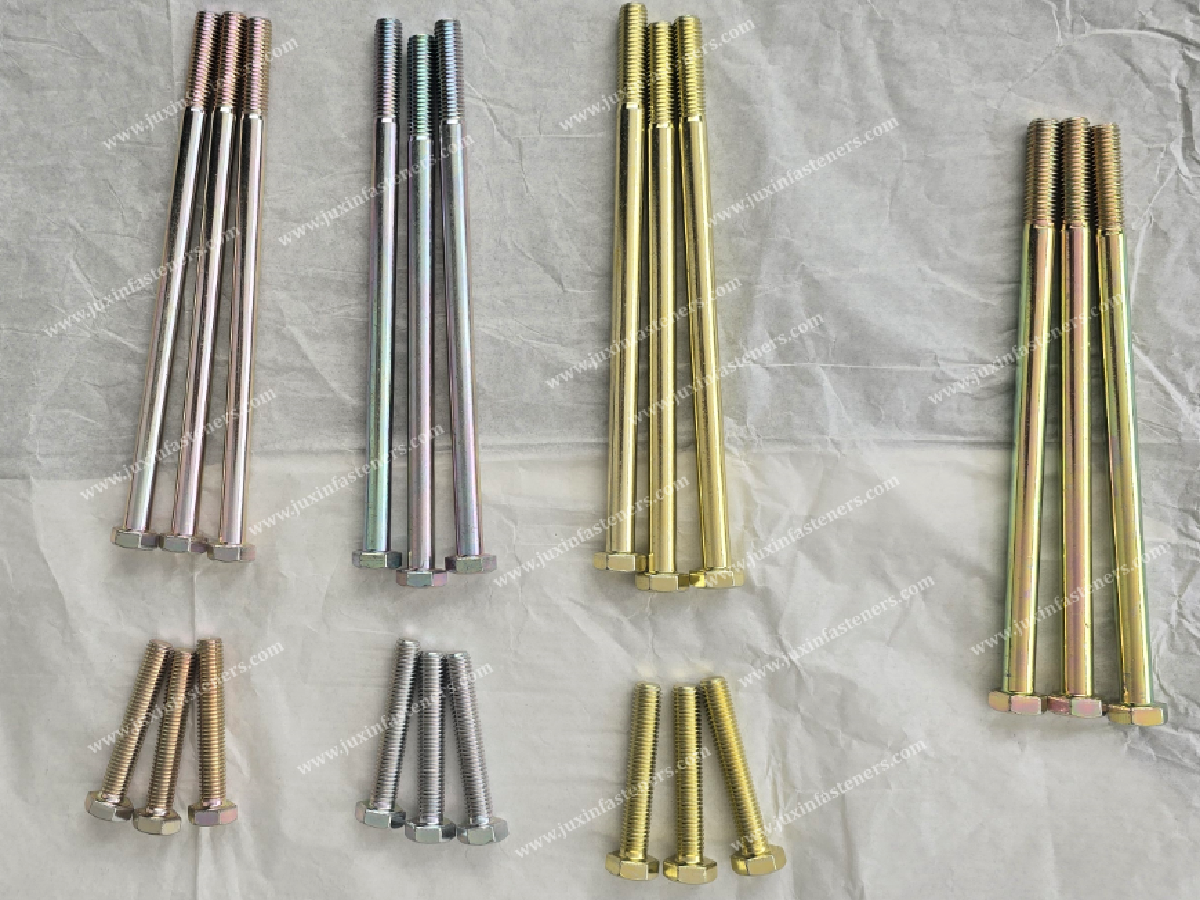
One of the most important considerations when specifying polymer hardware is distinguishing between a surface treatment and a material-level modification.
A surface treatment changes the outer surface of the finished component.
A material-level modification changes the polymer formulation or composition throughout the component.
For example, UV stabilization may be incorporated into the polymer formulation rather than applied as a thin external coating.
Likewise, adding a pigment or stabilizer during polymer processing is different from applying a post-production coating to the finished component.
This distinction matters because the engineering behavior, durability, dimensional effect, processing requirements, and qualification method may be different.
For OEM procurement teams, the RFQ should therefore identify the required functional performance whenever the exact finishing technology has not yet been established.
This gives the supplier and engineering team an opportunity to evaluate the appropriate technical route rather than forcing an unsuitable finishing process onto the component.
Applying a secondary treatment or finish to precision plastic hardware introduces technical variables that should be evaluated before production release.
Any surface process that adds measurable material to a precision feature can influence the final dimensions of the component.
For threaded fasteners, this can be particularly important.
If a coating or treatment creates dimensional build-up on a thread surface, it may influence:
Thread engagement
Assembly torque
Mating fit
Clearance
Prevailing torque
Installation consistency
The actual effect depends on the coating thickness, process uniformity, thread geometry, tolerance requirements, and mating component.
For this reason, drawings should clearly define the finished condition where the surface treatment is dimensionally relevant.
For standard threaded components, applicable ISO metric thread requirements or ASME/ANSI thread specifications should be identified according to the customer's design requirement.
Different polymers have different surface characteristics.
Nylon/PA6/PA66, POM/Acetal, PP, PC, PVDF, and PEEK do not necessarily respond to the same surface-treatment process in the same way.
Surface energy, chemical resistance, temperature sensitivity, moisture behavior, and processing history can all influence treatment compatibility.
Therefore, a treatment suitable for one polymer should not automatically be assumed to be suitable for another.
Where adhesion is important, the actual polymer grade, surface condition, treatment chemistry, processing conditions, and intended service environment should be evaluated together.
The finishing process must also be compatible with the intended operating environment.
Relevant factors may include:
Operating temperature
Temperature cycling
UV exposure
Humidity
Water exposure
Chemical contact
Cleaning agents
Lubricants
Oils
Fuels
Assembly chemicals
Mechanical wear
Storage conditions
A finish that performs adequately in an indoor electronics application may not provide the same result in an outdoor, high-temperature, chemically exposed, or mechanically demanding application.
Surface treatment and finishing requirements can apply across multiple categories within a plastic hardware BOM.
A coordinated sourcing program may include:
Potential requirements include:
Plastic machine screws
Nylon machine screws
Nylon bolts
Custom plastic screws
Custom nylon bolts
Application-specific head designs
Friction-modified surfaces
Color identification
Thread treatments where technically suitable
The treatment should be evaluated together with the polymer, thread specification, mating material, installation method, and service environment.
Related hardware may include:
Plastic hex nuts
Nylon hex nuts
Nylon flat washers
Plastic insulating washers
Shoulder washers
Spacers
PCB spacers
PCB standoffs
For these components, a finishing requirement may relate to friction, identification, appearance, surface interaction, or environmental exposure.
Threaded inserts represent a separate but related engineering category.
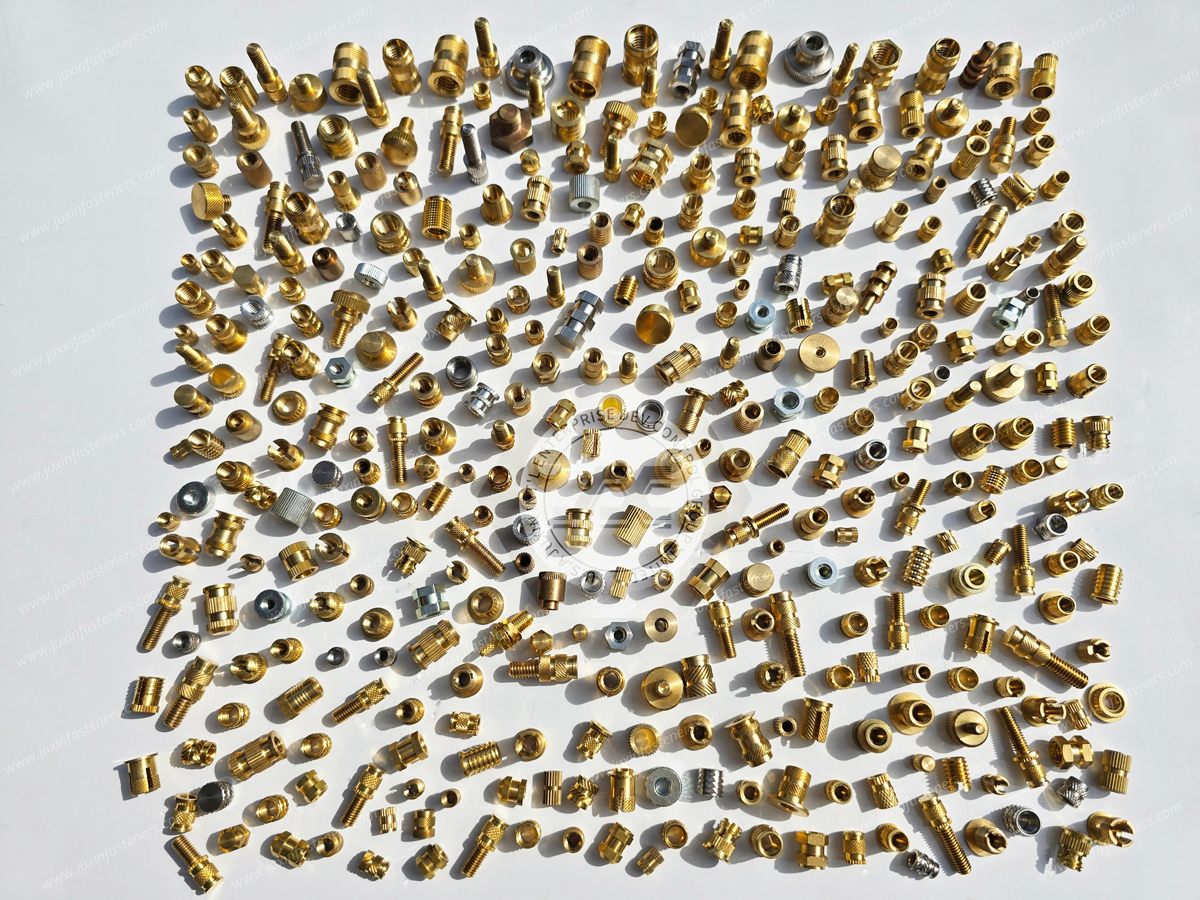
Brass threaded inserts may be used in polymer housings where a reinforced threaded connection is required.
Potential insert installation methods include:
Heat-set installation
Ultrasonic installation
Press-in installation
Molded-in installation
Where inserts are used with plastic housings, the insert material, installation process, boss geometry, thread requirement, and expected loading should be evaluated as a complete joint.
Metal insert surface finishes may also require separate consideration where corrosion resistance, appearance, solderability, conductivity, or other application-specific requirements are relevant.
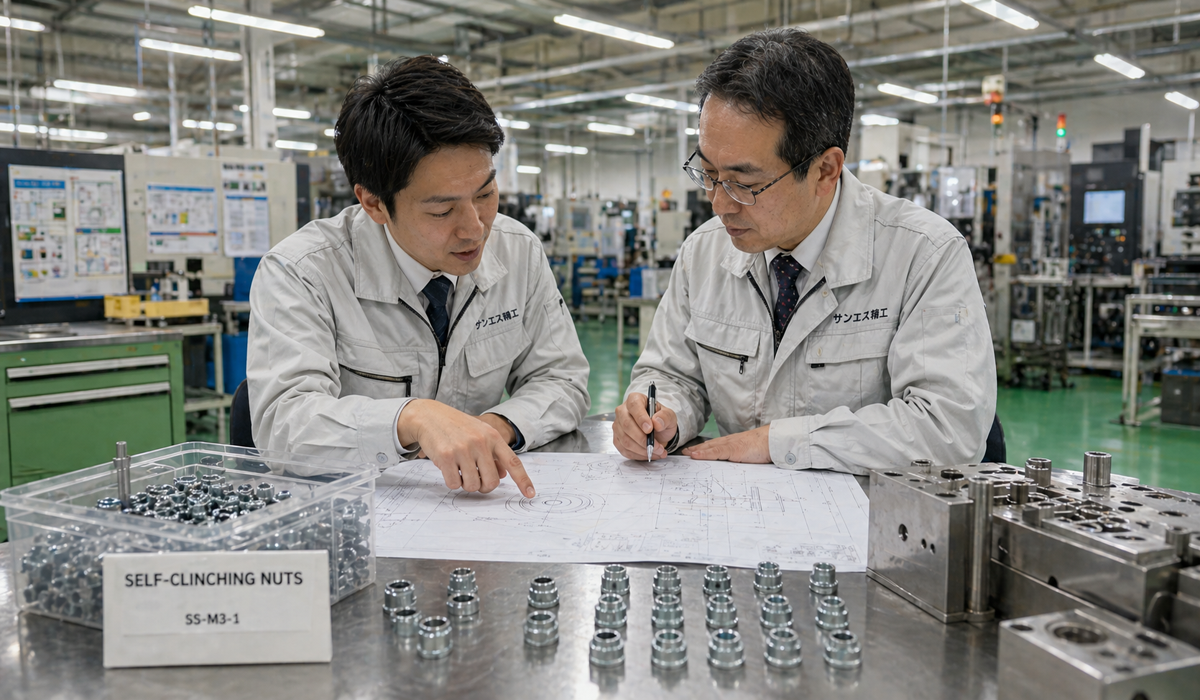
Different finishing approaches serve different functions. They should not be treated as interchangeable.
| Treatment / Finish Category | Primary Functional Purpose | Potential Engineering Benefit | Typical Industrial Applications | Strategic Sourcing Considerations |
|---|---|---|---|---|
| Friction-Modifying Treatment | Changes surface friction behavior | May influence installation torque and assembly consistency | Automated assembly, machinery, electronics, precision equipment | Evaluate torque-tension behavior, substrate compatibility, thickness, and mating materials |
| Dry-Film or Solid-Lubricant-Type Finish | Provides a controlled low-friction surface where appropriate | May reduce surface friction and support specific assembly processes | Mechanical assemblies, automated production, specialized equipment | Verify compatibility with polymer, temperature, chemicals, and required dimensional limits |
| UV-Stabilized Polymer Formulation | Improves polymer resistance to UV-related degradation | May improve suitability for outdoor exposure when correctly formulated | Outdoor electrical equipment, communications equipment, solar-related equipment, industrial enclosures | Usually a material-selection consideration rather than a simple post-production coating; specify required environmental exposure |
| Pre-Applied Thread Treatment | Modifies threaded-joint behavior | May provide prevailing torque or sealing characteristics in suitable applications | Automotive, machinery, robotics, vibrating equipment | Verify compatibility with the substrate, mating thread, installation process, storage period, and reuse requirements |
| Color / Pigment Selection | Visual identification or appearance | Supports part differentiation and assembly identification | Electrical equipment, electronics, industrial equipment, smart-home products | Confirm that pigment selection is compatible with the required polymer performance and appearance |
| Specialized Secondary Finish | Application-specific surface modification | May address a defined surface interaction or appearance requirement | Custom OEM assemblies | Requires evaluation of substrate, process, dimensional effect, and environmental exposure |
The most important point for engineering teams is that a finishing process should be selected according to the function it must perform.
A supplier should not recommend a coating simply because it is available. The treatment needs to be compatible with the polymer, geometry, assembly process, and operating environment.
Fastener installation torque is influenced by several factors, including thread geometry, friction, mating materials, lubrication, surface condition, installation speed, and joint configuration.
Therefore, changing the surface condition can change the relationship between applied torque and resulting clamp load.
This is particularly important when an OEM has a defined automated assembly process.
A friction-modifying treatment may be considered where repeatable installation behavior is required, but the treatment should not be described as automatically creating a predictable clamp load.
Instead, the finished fastener should be evaluated under the actual assembly conditions where torque-tension performance is important.
For plastic and nylon fasteners, this evaluation can be especially relevant because polymer deformation, creep, stress relaxation, temperature, and moisture can influence long-term joint behavior.
This is one reason why surface treatment should not be evaluated independently from the base material.
Outdoor polymer fasteners and components require a broader environmental assessment.
UV exposure can affect polymer properties over time, but the appropriate solution depends on:
Polymer family
Specific resin formulation
Stabilization system
Component geometry
Exposure intensity
Exposure duration
Temperature
Moisture
Required service life
For example, UV stabilization may be incorporated into the polymer formulation through appropriate additives or pigmentation rather than through a separate surface coating.
Carbon-black-based stabilization is one possible material strategy for certain polymers, but it should not be treated as a universal solution for every polymer family or application.
For outdoor telecommunications equipment, electrical enclosures, solar-related equipment, antennas, and other exposed industrial assemblies,
the RFQ should therefore specify the environmental requirement rather than simply requesting a generic “UV coating.”
Pre-applied thread-locking systems can be useful in selected threaded assemblies, particularly where automated application of liquid threadlocker is undesirable.
However, their suitability for plastic or nylon fasteners requires careful evaluation.
Engineers should consider:
Fastener polymer
Mating thread material
Thread geometry
Installation torque
Required prevailing torque
Chemical compatibility
Storage conditions
Shelf life
Assembly process
Reuse requirements
Temperature exposure
A thread treatment that is suitable for a metal fastener should not automatically be transferred to a nylon or other polymer fastener.
The treatment chemistry and application process must be compatible with the substrate and the intended joint.
Where vibration is the primary concern, the complete joint design should also be evaluated rather than relying solely on a surface treatment.
Color is often treated as an aesthetic requirement, but in industrial manufacturing it can also have an operational function.
OEMs may use different colors to distinguish:
Different part numbers
Different assembly stages
Different material families
Different product configurations
Service or maintenance components
Left-hand and right-hand variants
Different production lines
For electronics, electrical cabinets, communications equipment, smart-home products, and instrumentation, color can also form part of a visual product architecture.
However, pigment selection should be evaluated together with the polymer formulation.
A color requirement should therefore be specified clearly in the drawing or purchasing specification, particularly when appearance consistency is important across production batches.
Automotive and EV assemblies may contain plastic and nylon fasteners in areas where electrical insulation, low density, corrosion considerations, packaging, or material compatibility are important.
Potential applications include:
Electrical enclosures
Sensor assemblies
Cable-management systems
Interior components
Electronic modules
Battery-related assemblies
Brackets and housings
For these applications, the surface treatment should be evaluated together with vibration, temperature, moisture, chemical exposure, assembly method, and long-term material behavior.
Electrical cabinets can use plastic hardware for insulation, spacing, mounting, identification, and component separation.
Potential components include:
Nylon screws
Plastic nuts
Insulating washers
Shoulder washers
PCB standoffs
Spacers
Threaded inserts
Finishing requirements may involve color identification, friction control, appearance, or environmental exposure.
Electronic equipment frequently contains small hardware components where dimensional consistency and electrical insulation may be important.
Plastic and nylon hardware may be considered for:
PCB mounting
Enclosure assembly
Internal component spacing
Insulating interfaces
Cable routing
Small electronic housings
Surface treatments should be reviewed for compatibility with the electronics environment, including potential contamination, outgassing concerns where applicable, temperature, and cleaning processes.
Outdoor communications systems can expose polymer components to sunlight, temperature cycling, moisture, and weathering.
Applications may include:
Base-station equipment
Antenna assemblies
Outdoor electrical enclosures
Communications cabinets
Cable-management components
In these applications, UV and environmental requirements should be defined at the material and component level rather than assuming that a generic external coating will provide the required performance.
Plastic hardware may be used in HVAC equipment, industrial machinery, instrumentation, and control assemblies.
Potential requirements include:
Insulation
Corrosion considerations
Chemical compatibility
Low density
Assembly consistency
Component identification
The appropriate treatment depends on the operating environment and the function of the fastener.
Submitting a complete RFQ package allows engineering and procurement teams to evaluate the treatment requirement together with the underlying component.
Provide a clear description of:
Fastener type
Application
Mating component
Joint function
Assembly environment
Expected loading
Installation method
A statement such as “low-friction finish required” is useful, but identifying why the low-friction condition is required provides much more engineering information.
For custom components, provide:
2D engineering drawing
3D CAD file where available
Base material
Thread specification
Dimensions
Tolerances
Surface requirements
Color requirements
Finished-condition requirements
Where applicable, identify the relevant ISO, DIN, ASME/ANSI, EN, SAE, or ASTM specification.
Specify the functional requirement first.
Examples include:
Friction modification
UV exposure resistance
Color identification
Thread treatment
Surface appearance
Chemical resistance requirement
Special assembly behavior
If a specific coating technology is already qualified, provide its technical specification.
If the technology has not yet been selected, the supplier can evaluate potential options based on the application requirements.
Provide relevant information about:
Operating temperature
Temperature cycling
UV exposure
Humidity
Chemical exposure
Cleaning agents
Oils or lubricants
Mechanical wear
Installation torque
Assembly speed
Required service environment
This information can significantly affect the suitability of a surface treatment.
If the treatment can affect critical dimensions, the drawing should identify the required final condition.
This is particularly important for:
Threads
Press-fit areas
Holes
Mating surfaces
Sealing interfaces
Precision spacers
Tight-clearance components
Include:
Annual volume
Forecast
Batch release schedule
Delivery locations
Packaging quantity
Labeling
Lot identification
Barcode requirements
Special handling instructions
Treated components may require packaging considerations to protect the finished surface during transportation and storage.
Identify applicable requirements such as:
Dimensional inspection
Surface inspection
Color consistency
Treatment verification
Material documentation
Lot traceability
Sample approval
First-article requirements
Customer-specific inspection documentation
Where a specific coating or treatment requires a defined test method, that requirement should be identified in the RFQ or drawing.
A practical engineering decision process can be organized into six questions:
1. What problem are we trying to solve?
Is the issue friction, UV exposure, appearance, chemical compatibility, assembly consistency, thread retention, or identification?
2. Is the problem caused by the fastener material?
If the base polymer is unsuitable, a coating may not solve the underlying issue.
3. Can material selection solve the requirement more effectively?
A different polymer family may provide a more appropriate engineering solution than adding a secondary finish.
4. Can geometry or joint design solve the problem?
Thread design, washer configuration, insert selection, boss geometry, or assembly conditions may have a greater influence than the surface finish.
5. Will the treatment change dimensions or assembly behavior?
If yes, the finished component should be evaluated accordingly.
6. Can the treatment be consistently controlled in production?
A technically suitable finish still requires appropriate process control, inspection, packaging, and supplier qualification.
This six-question framework is useful because it prevents procurement teams from treating surface treatment as a purely cosmetic purchasing option.
Surface treatment can also become part of a broader multi-SKU BOM consolidation strategy.
An OEM may have multiple part numbers requiring:
Plastic screws
Nylon bolts
Plastic nuts
Washers
Spacers
PCB standoffs
Threaded inserts
Different colors
Different material families
Different surface requirements
Instead of evaluating every SKU independently, procurement teams can group related requirements into a consolidated sourcing review.
However, consolidation should not remove necessary engineering differentiation.
For example, a nylon screw used indoors may require a different material or finish strategy from a polymer fastener used in prolonged outdoor exposure.
Likewise, a color-coded electrical component may have a different specification from a mechanically loaded fastener.
The objective is coordinated sourcing with controlled technical specifications, not forcing every component into one universal finishing process.
Surface treatments or secondary finishing may be considered when a defined application requirement cannot be adequately addressed through the standard material and geometry alone.
Potential requirements include friction modification, visual identification, thread treatment, surface interaction, or specific environmental performance.
In some cases, however, material selection or polymer formulation is a more appropriate solution than a post-production coating.
They can, depending on the coating or treatment and the amount of material added to the thread surface.
Any treatment that changes critical thread dimensions should be evaluated against the specified thread requirements.
For precision threaded components, the finished condition should be clearly defined so that the mating fit remains appropriate.
Certain thread treatments may be technically suitable for selected plastic or nylon fasteners, but compatibility must be evaluated rather than assumed.
The fastener polymer, mating material, thread design, treatment chemistry, installation process, temperature, storage conditions, and reuse requirements can all influence suitability.
UV stabilization is generally a material-level consideration rather than simply a surface coating.
Appropriate polymer formulations and stabilizing systems may improve resistance to UV-related degradation, but performance depends on the specific polymer,
formulation, component geometry, exposure environment, and expected service conditions.
A generic UV coating should not be assumed to provide equivalent performance across different polymer families.
A friction-modifying treatment may influence installation behavior, but the result depends on the fastener material, mating materials, thread geometry, installation speed, applied torque, and joint design.
Where installation torque is critical, the treated fastener should be evaluated under representative assembly conditions.
Plastic and nylon fasteners are already non-metallic and may be selected for applications where electrical insulation is required.
A surface coating should not automatically be treated as the primary insulation strategy.
The polymer material, component geometry, electrical requirements, environmental conditions, and complete assembly should be evaluated together.
Multi-SKU BOM consolidation allows OEM procurement teams to evaluate multiple related fastener and hardware part numbers within a coordinated sourcing program.
This may include plastic screws, nylon bolts, washers, nuts, spacers, standoffs, threaded inserts, and components with different finishing requirements.
The commercial benefit should be evaluated against technical compatibility, annual volume, packaging, quality requirements, and supplier capability.
Procurement teams should provide the complete 2D/3D technical package where available, base material, thread specification, functional finishing requirement,
environmental conditions, annual volume, packaging requirements, and applicable quality standards.
If the exact treatment has not yet been selected, describing the engineering requirement can allow the supplier to evaluate the appropriate finishing approach.
For procurement and engineering teams, the following decision logic can simplify the initial review:
| Engineering Requirement | First Question | Potential Direction |
|---|---|---|
| Lower or controlled friction | Is assembly torque or surface friction causing a defined problem? | Evaluate friction-modifying treatment, lubrication strategy, geometry, and material |
| Outdoor UV exposure | Is the base polymer suitable for the expected environment? | Evaluate UV-stabilized material formulation and environmental suitability |
| Thread retention | Is vibration or loosening a verified joint-design concern? | Evaluate thread geometry, joint design, prevailing-torque features, or compatible thread treatment |
| Visual identification | Is color functional or purely cosmetic? | Evaluate polymer color/pigment specification and process consistency |
| Chemical exposure | Is the polymer itself chemically compatible? | Evaluate material family first; treatment alone may not solve substrate incompatibility |
| Dimensional precision | Can the treatment alter critical dimensions? | Define finished dimensions and evaluate treatment thickness/process variation |
| Assembly automation | Is the current installation process stable? | Evaluate friction, geometry, torque, feeding, and treatment compatibility |
| Surface wear | Is wear occurring at the fastener surface or mating interface? | Evaluate material, geometry, contact conditions, and appropriate surface modification |
This matrix helps separate a genuine surface-engineering requirement from a problem that should be solved through material or joint design.
A successful treated-fastener program should connect four stages:
Engineering requirement → Material selection → Surface/treatment selection → Production specification
This prevents a common procurement mistake: specifying a finishing technology before defining the engineering problem.
For example, an OEM may initially request a “UV-resistant coating,” but the actual requirement may be long-term outdoor performance of a nylon component.
The appropriate solution may therefore involve selecting a suitable stabilized polymer formulation rather than adding an external coating.
Similarly, an OEM requesting a “low-friction coating” may actually be trying to solve inconsistent automated assembly torque.
In that situation, the engineering review should consider the complete fastener, thread geometry, mating material, installation equipment, and friction behavior rather than treating the coating as an isolated solution.
This requirement-first approach creates better technical alignment between engineering, procurement, and manufacturing.
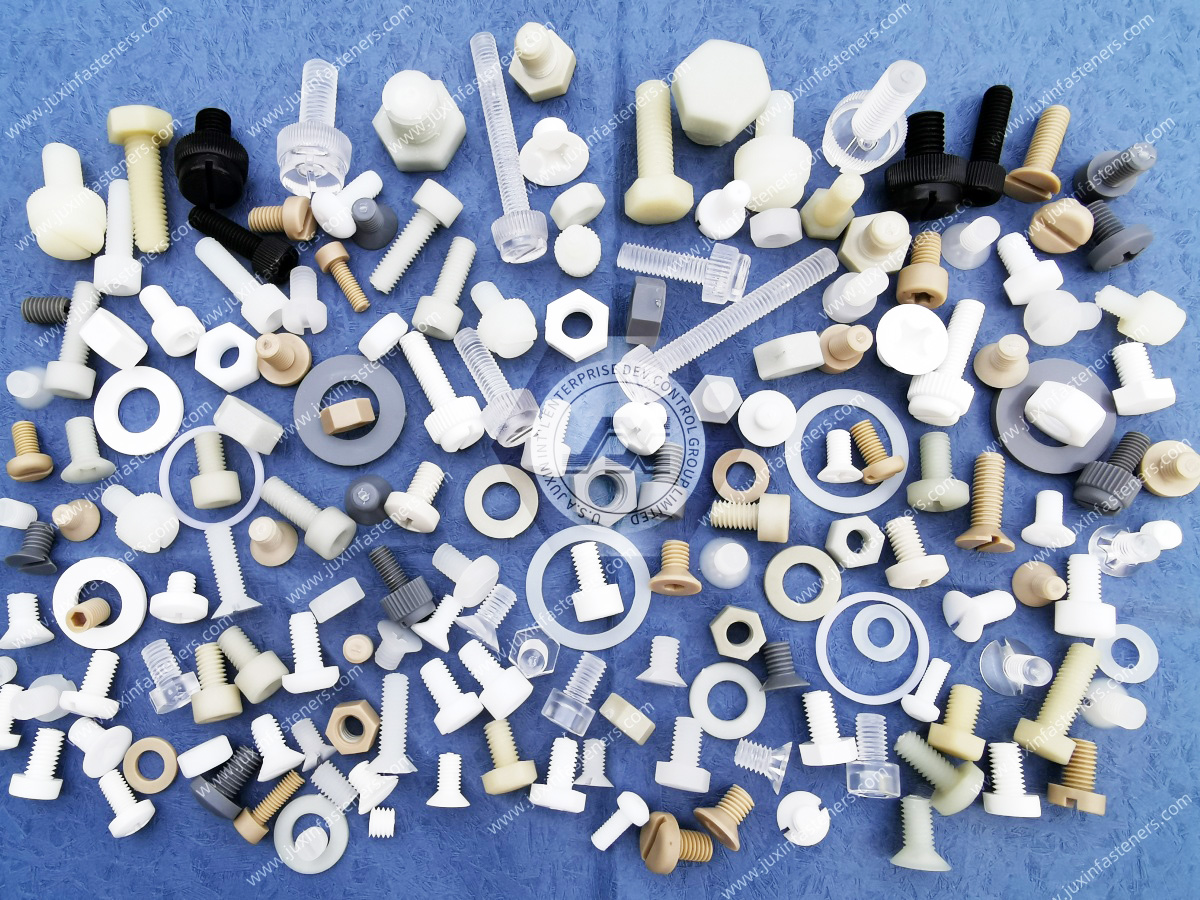
Optimizing industrial assemblies with fastener surface treatments and polymer coatings, application-specific finishes,
plastic hardware, and nylon fastening components requires the finishing process to be evaluated together with the underlying component design.
Whether your requirement involves:
Plastic machine screws
Nylon screws
Nylon bolts
Plastic nuts
Insulating washers
Spacers
PCB standoffs
Threaded inserts
Custom plastic components
Friction modification
UV exposure
Color identification
Thread treatment
OEM-specific finishing requirements
the starting point should be a clear engineering specification.
Provide JUXIN FASTENERS with your 2D engineering drawings, 3D CAD files where available, base material, thread requirements, finishing or treatment requirements,
application environment, annual volume, packaging requirements, and quality documentation requirements.
If the exact surface treatment has not yet been selected, describe the engineering problem or required function. This allows the applicable material and finishing options to be evaluated together.
Send your requirements to info@juxinfasteners.com for an engineering and OEM sourcing review.
JUXIN FASTENERS can then evaluate the applicable plastic or nylon fastener product, material requirements, surface or finishing considerations,
dimensional requirements, packaging structure, and commercial quotation approach for your project.
Contact Us
Tel.:
+86 020 8621 0320
+86 020 3121 6067
E-mail:
Technical Support:
Navigation
SEND INQUIREY


