
Call Us
+86 136 6007 9809
Call Us
+86 136 6007 9809

Aug. 28, 2026
Electrical equipment manufacturers depend on mechanical fastening systems to assemble cabinets, panels, enclosures, brackets and internal components.
Although these connections may appear simple, fastening design can directly affect equipment assembly, structural stability, maintenance and long-term reliability.
Modern electrical equipment frequently combines formed sheet metal, covers, mounting plates, internal brackets, rails and structural frames.
These components require fastening systems that are compatible with the base material while providing consistent and repeatable assembly.
For OEM manufacturers, important fastening requirements may include:
Stable mechanical connections
Corrosion resistance
Dimensional consistency
Repeatable assembly
Serviceability
Compatibility with sheet-metal structures
Efficient production assembly
Consistent supply quality
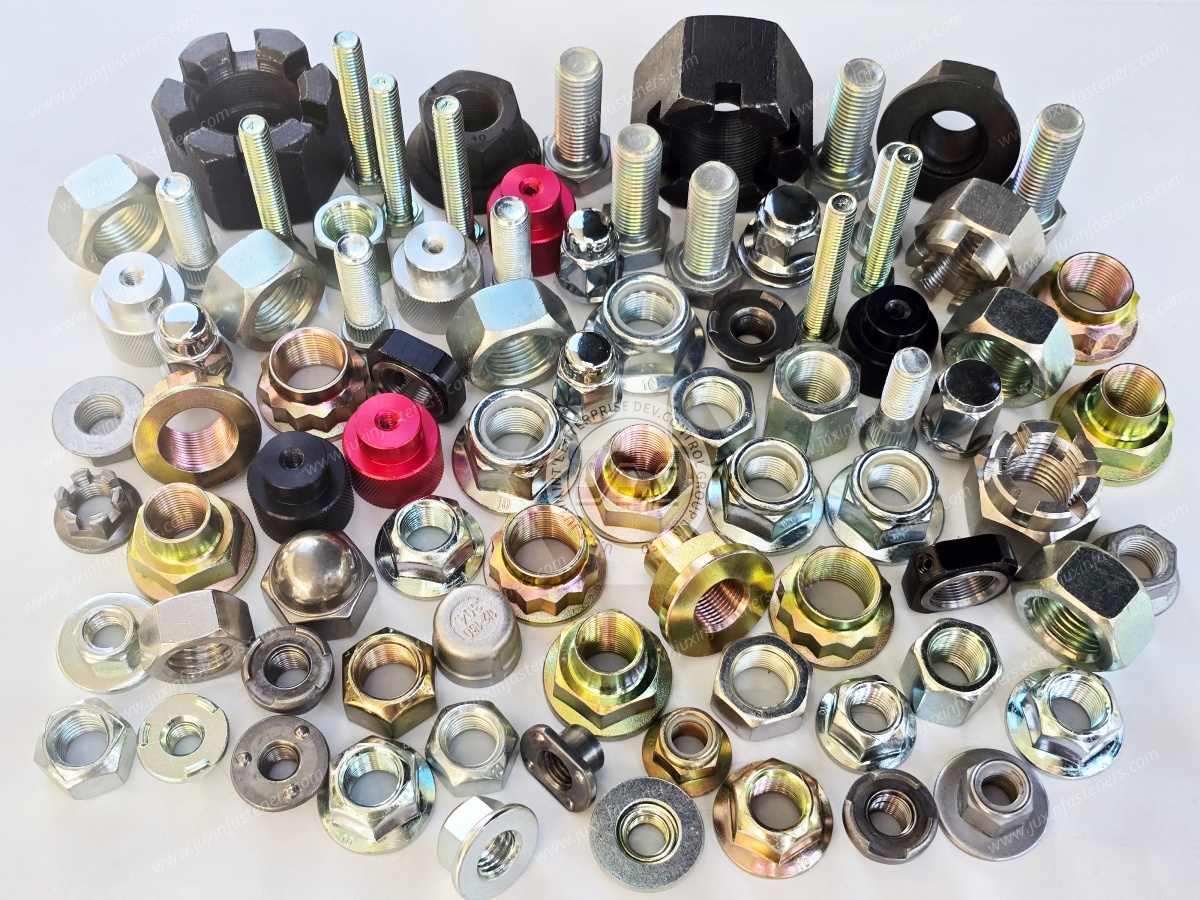
JUXIN supplies industrial fasteners for electrical equipment, including self-clinching fasteners, rivet nuts, weld nuts, weld studs, screws, high-strength bolts, stainless steel fasteners and CNC machined components.
Our fastening solutions can be customized according to customer drawings, specifications, materials, thread requirements and production requirements.
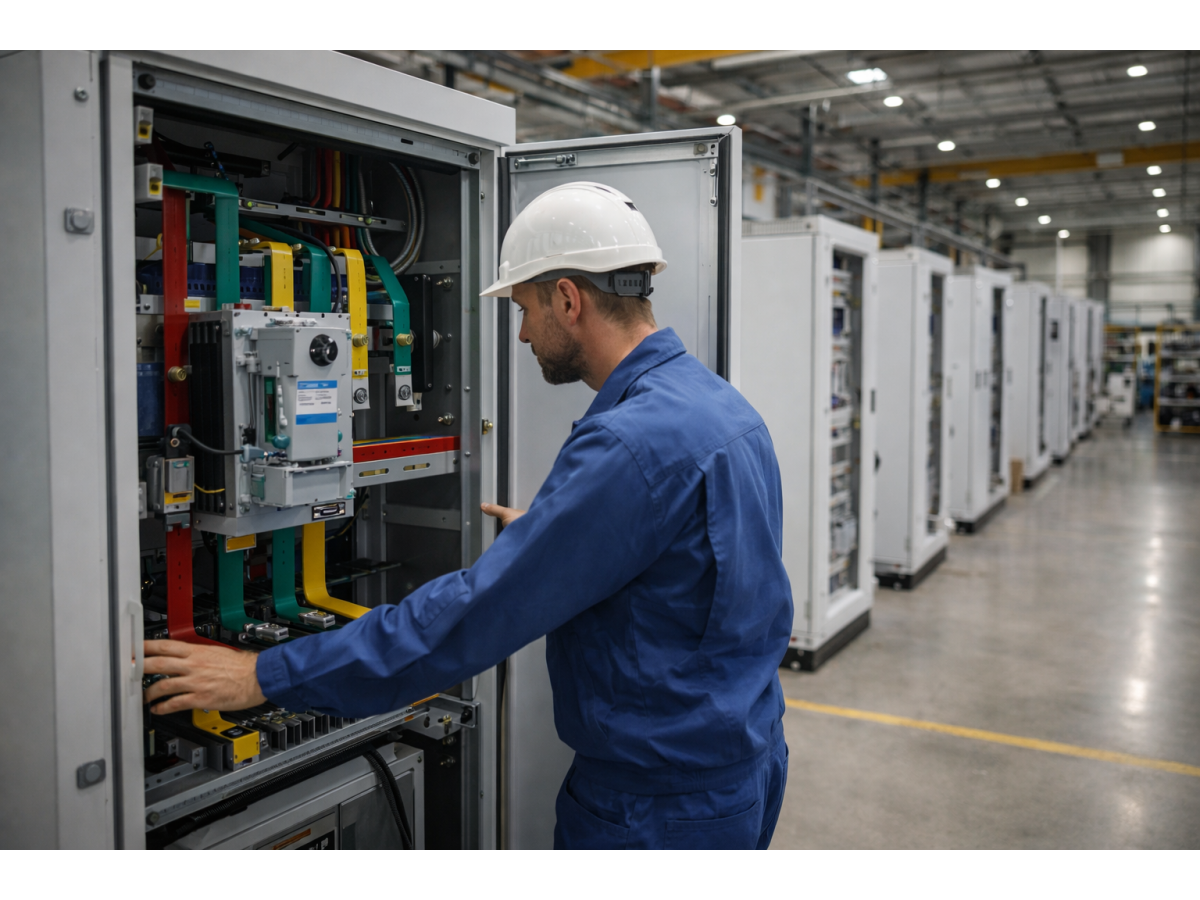
Electrical cabinets and enclosures often rely on sheet-metal structures to protect internal electrical components.
The fastening system must therefore work effectively with the enclosure material and manufacturing process.
Typical applications include:
Electrical control cabinets
Switchgear enclosures
Distribution cabinets
Power equipment enclosures
Control panels
Junction boxes
Industrial electrical housings
Automation equipment cabinets
Telecom equipment cabinets
Battery and power electronics enclosures
For these applications, sheet metal enclosure fasteners can provide reliable attachment points without significantly complicating the enclosure structure.
The appropriate fastening technology depends on sheet thickness, material, installation method, load requirements and whether the connection needs to be permanent or removable.
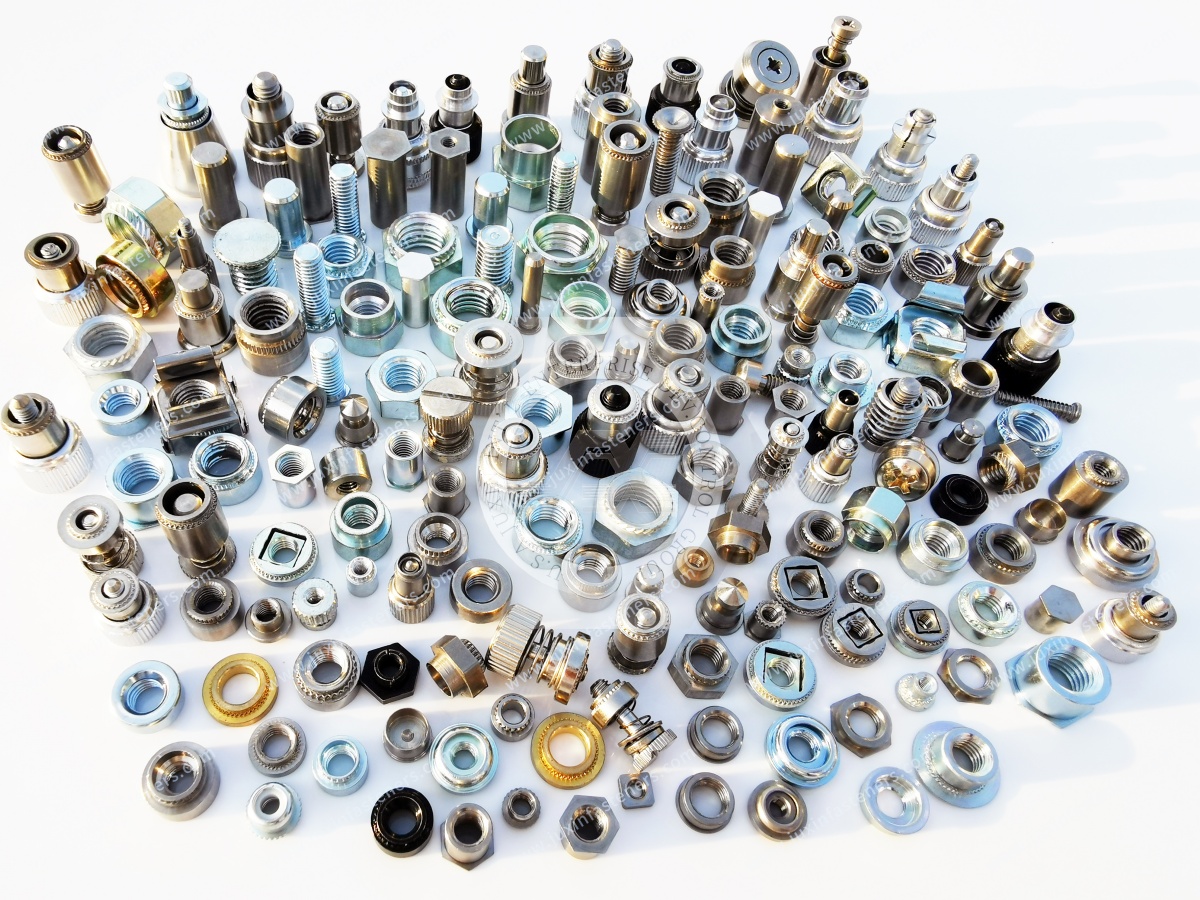
Self-clinching nuts and studs are particularly useful for sheet-metal electrical cabinets and panels.
Unlike conventional nuts that must be positioned separately during assembly, self-clinching fasteners are mechanically installed into a prepared hole in the sheet metal.
Once properly installed, the fastener becomes an integrated threaded attachment point.
Self-clinching nuts can be used for:
Electrical cabinet panels
Control panels
Equipment covers
Internal mounting brackets
PCB support structures
Cable management brackets
Fan mounting structures
Power supply brackets
Sheet-metal frames
For equipment designers, this approach can eliminate the need to hold a loose nut during final assembly.
This can be especially useful where the rear side of the panel is difficult to access.
Self-clinching studs provide a permanently installed threaded or projecting attachment point in sheet-metal structures.
Potential applications include:
Internal equipment brackets
Component mounting
Electrical panels
Protective covers
Cable management systems
Structural sheet-metal assemblies
Self-clinching studs can also help standardize assembly points across repeated equipment designs.
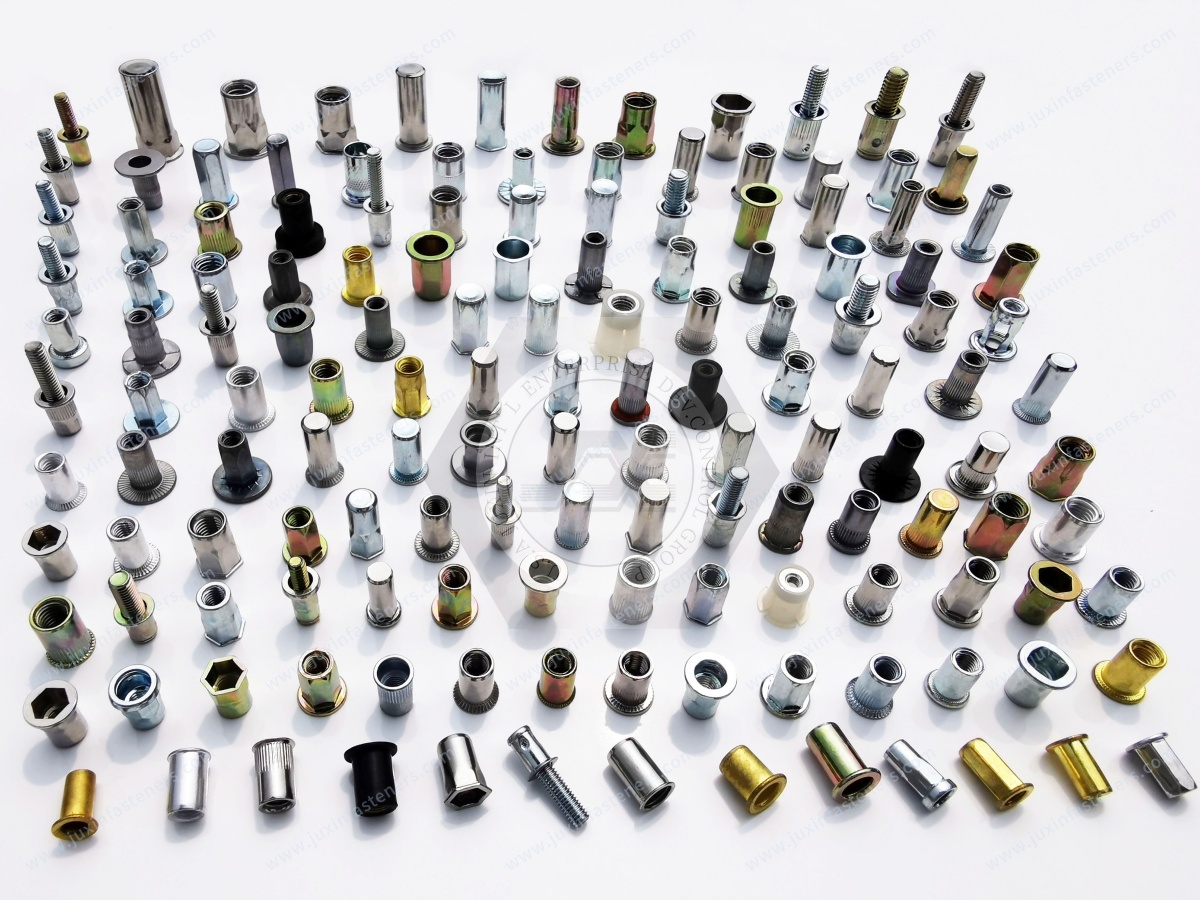
Many electrical enclosures use relatively thin sheet metal to reduce weight, material consumption and manufacturing cost.
In thin-wall structures where the base material cannot provide sufficient thread engagement, rivet nuts can create a usable internal thread.
Rivet nuts are particularly useful where components must be removable for service or maintenance.
Applications can include:
Thin-wall electrical enclosures
Removable access panels
Control cabinets
Equipment covers
Mounting brackets
Electrical equipment frames
Industrial control systems
Power electronics housings
Because rivet nuts can be installed from one side of the workpiece, they are suitable for enclosed or difficult-to-access structures.
For engineers, the selection of a rivet nut should consider:
Base-material thickness
Hole diameter
Thread size
Grip range
Installation method
Required pull-out and torque performance
Material compatibility
Environmental conditions
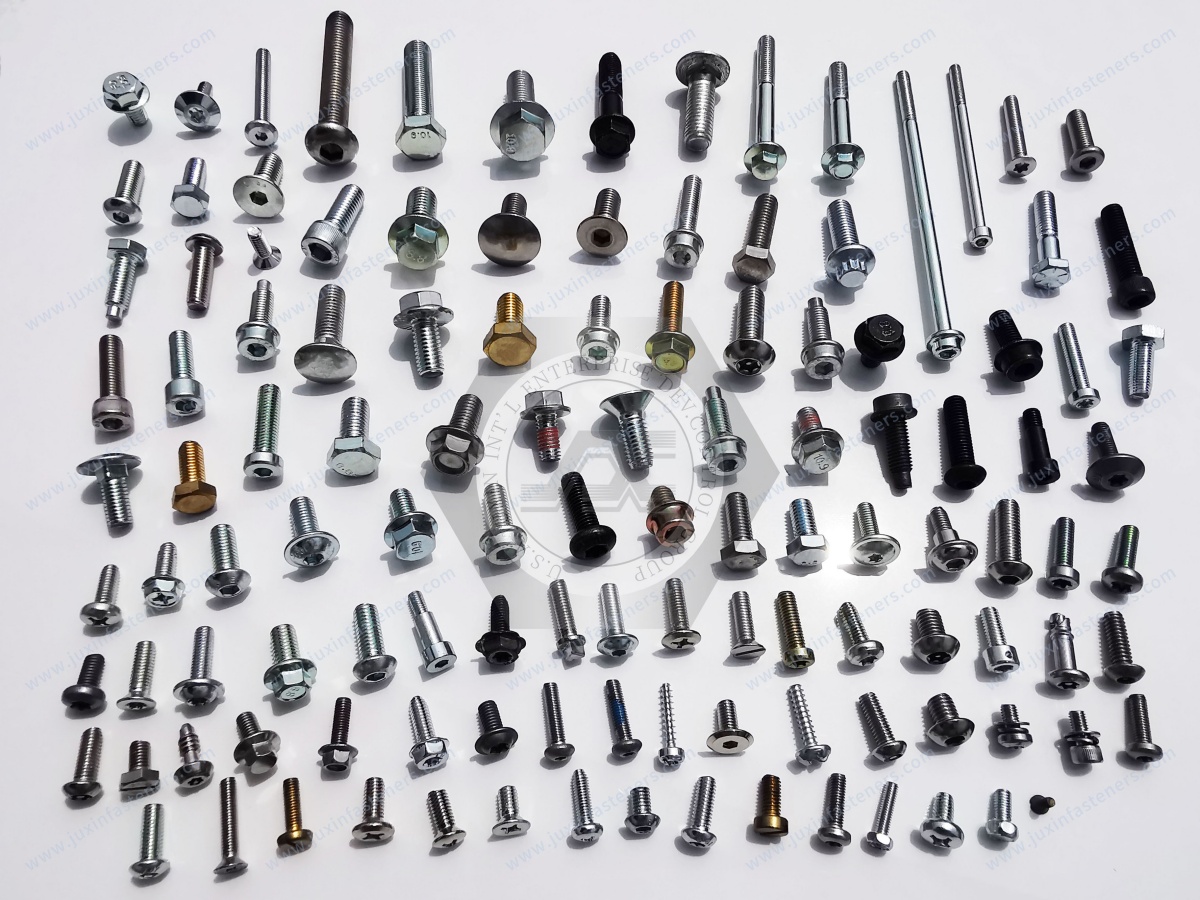
Screws and bolts remain fundamental components in electrical equipment manufacturing.
They can be used for both structural and serviceable connections.
Typical applications include:
Enclosure covers
Equipment brackets
Mounting structures
Internal frames
Electrical equipment assemblies
Power supply structures
Cooling brackets
Heavy-duty equipment mounting
JUXIN can supply custom screws and bolts according to application requirements.
For structural assemblies where higher mechanical strength is required, high-strength bolts can be selected according to the engineering specification.
For applications exposed to moisture, corrosive environments or demanding operating conditions, stainless steel fasteners may provide an appropriate material option depending on the design requirements.
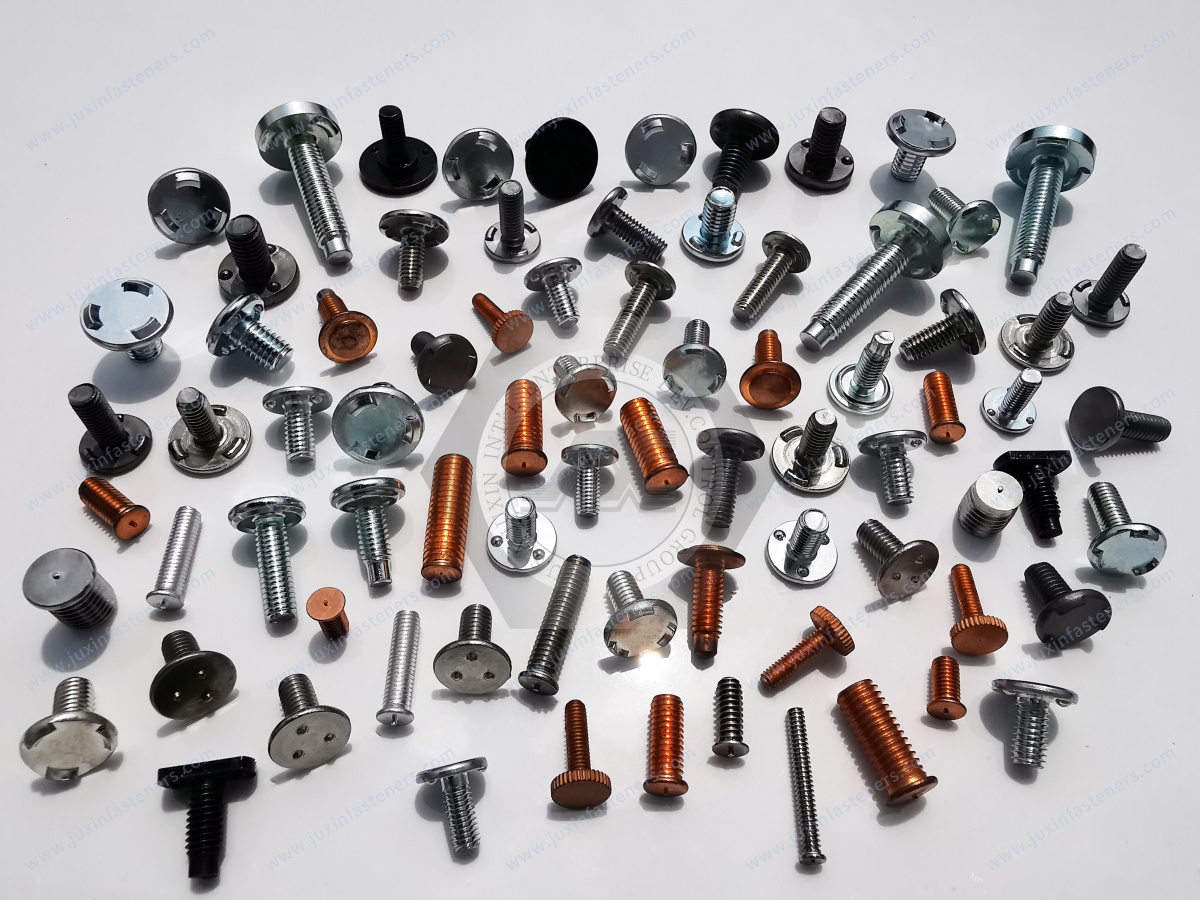
Weld fasteners can be integrated into sheet-metal structures during the fabrication process.
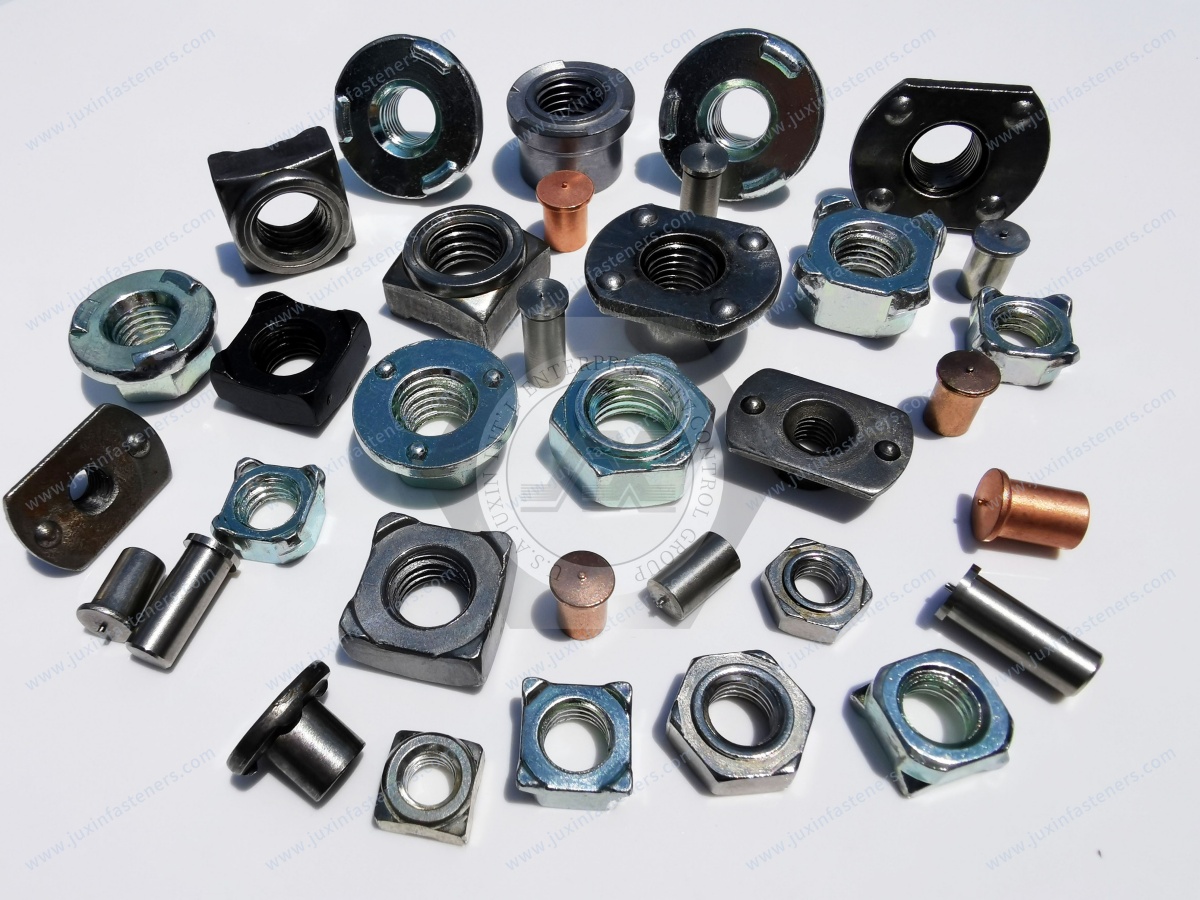
Weld nuts can provide permanent threaded attachment points in cabinets, panels and brackets.
They may be used for:
Electrical enclosures
Control cabinets
Mounting brackets
Sheet-metal frames
Power equipment
Industrial machinery
Electrical control systems
Weld studs provide projecting attachment points and can be integrated into fabricated sheet-metal components before final assembly.
For high-volume production, weld fasteners can be incorporated into the manufacturer's existing sheet-metal fabrication process.
The choice between weld fasteners, self-clinching fasteners and rivet nuts should be based on the enclosure material, sheet thickness,
production process, access conditions and required mechanical performance.
Material selection is an important consideration when designing fastening systems for electrical equipment.
Stainless steel fasteners may be considered where corrosion resistance is an important requirement.
Potential applications include:
Outdoor electrical cabinets
Industrial control equipment
Power equipment
HVAC electrical systems
Marine-related electrical equipment
Food processing equipment
Chemical processing equipment
Equipment exposed to humid environments
The appropriate stainless steel grade should be selected according to the operating environment and engineering specification.
Fastener material should also be considered together with the materials of the enclosure and mating components to reduce potential corrosion or compatibility issues.
Electrical equipment may operate in environments where moisture, humidity, temperature changes or industrial contaminants are present.
Corrosion resistance can therefore be an important part of fastening-system selection.
Depending on the product and application, JUXIN supports surface treatments including:
Zinc plating
Zinc-nickel plating
Zinc-aluminum flake coatings
Other specified surface finishes
Surface treatment can be selected according to the required corrosion resistance, application environment, material combination and customer specification.
For procurement teams, it is important to define the required finish and performance criteria before production rather than treating surface treatment as a purely cosmetic requirement.
Mechanical engineers should evaluate fastening systems together with the enclosure design.
Several factors can influence the appropriate solution.
The thickness of the base material is critical when selecting self-clinching fasteners, rivet nuts and weld fasteners.
The fastener should be compatible with the specified material thickness and installation method.
Permanent attachment points may favor:
Self-clinching nuts
Weld nuts
Weld studs
Self-clinching studs
Removable equipment structures may favor:
Rivet nuts
Threaded inserts
Screws
Bolts
If the rear side of a panel cannot be accessed during final assembly, one-sided fastening methods such as rivet nuts can provide an important design advantage.
For high-volume OEM production, the fastening process should be considered as part of the overall manufacturing workflow.
A fastening solution that reduces loose components, simplifies assembly or improves repeatability may provide benefits beyond the initial fastener cost.
Electrical equipment often requires inspection, repair or replacement of internal components.
Serviceable threaded connections allow covers, brackets and access panels to be removed and reinstalled without destroying the enclosure.
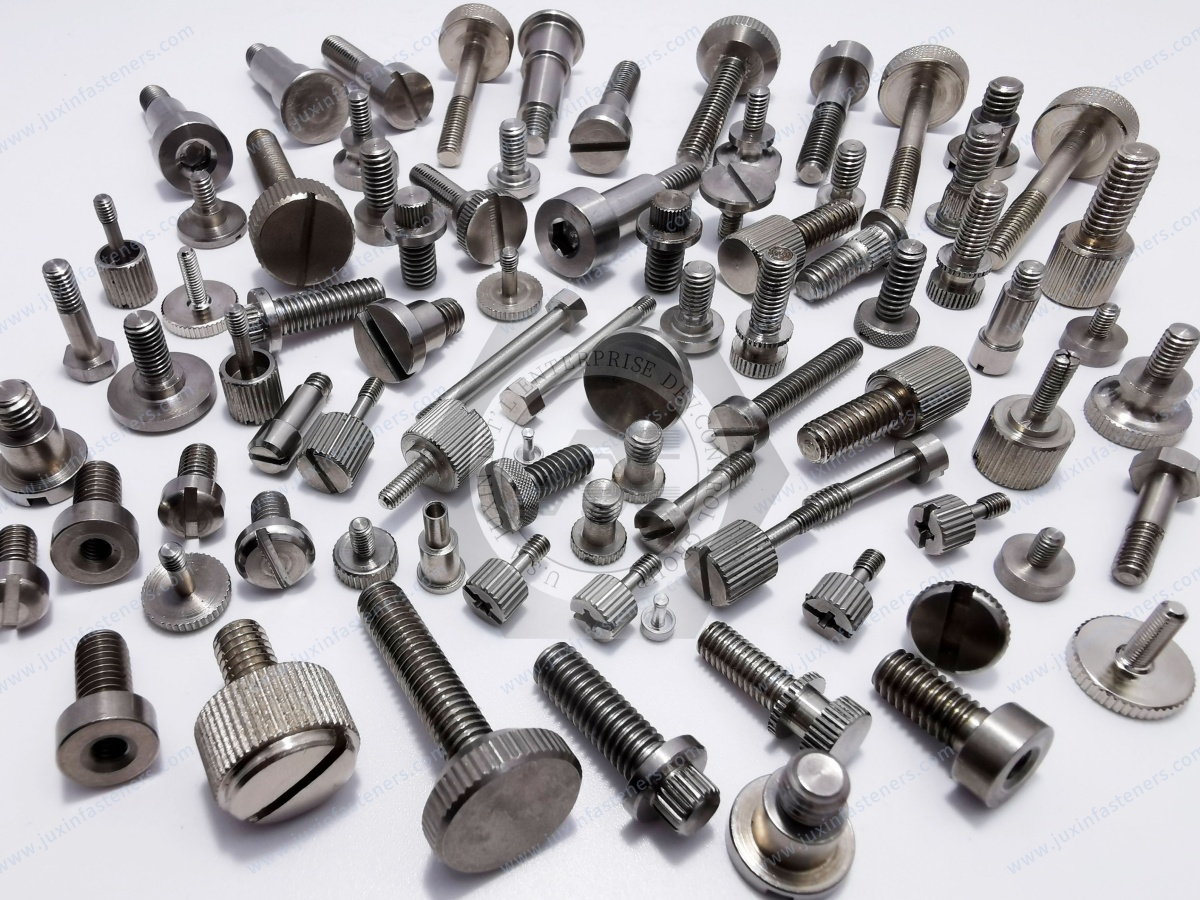
Electrical equipment manufacturers frequently have requirements that cannot be satisfied by a standard catalog component.
JUXIN supports custom electrical fasteners for OEM applications based on engineering drawings and specifications.
Custom requirements may include:
Non-standard dimensions
Special thread sizes
Customized lengths
Special head configurations
Specific materials
Corrosion-resistant finishes
Customized geometry
Drawing-based production
Inspection requirements
Special packaging
For procurement and supply-chain teams, drawing-based manufacturing can simplify sourcing when the fastener is part of a proprietary equipment design.
JUXIN can work with engineering and purchasing teams from initial technical evaluation through production and delivery.
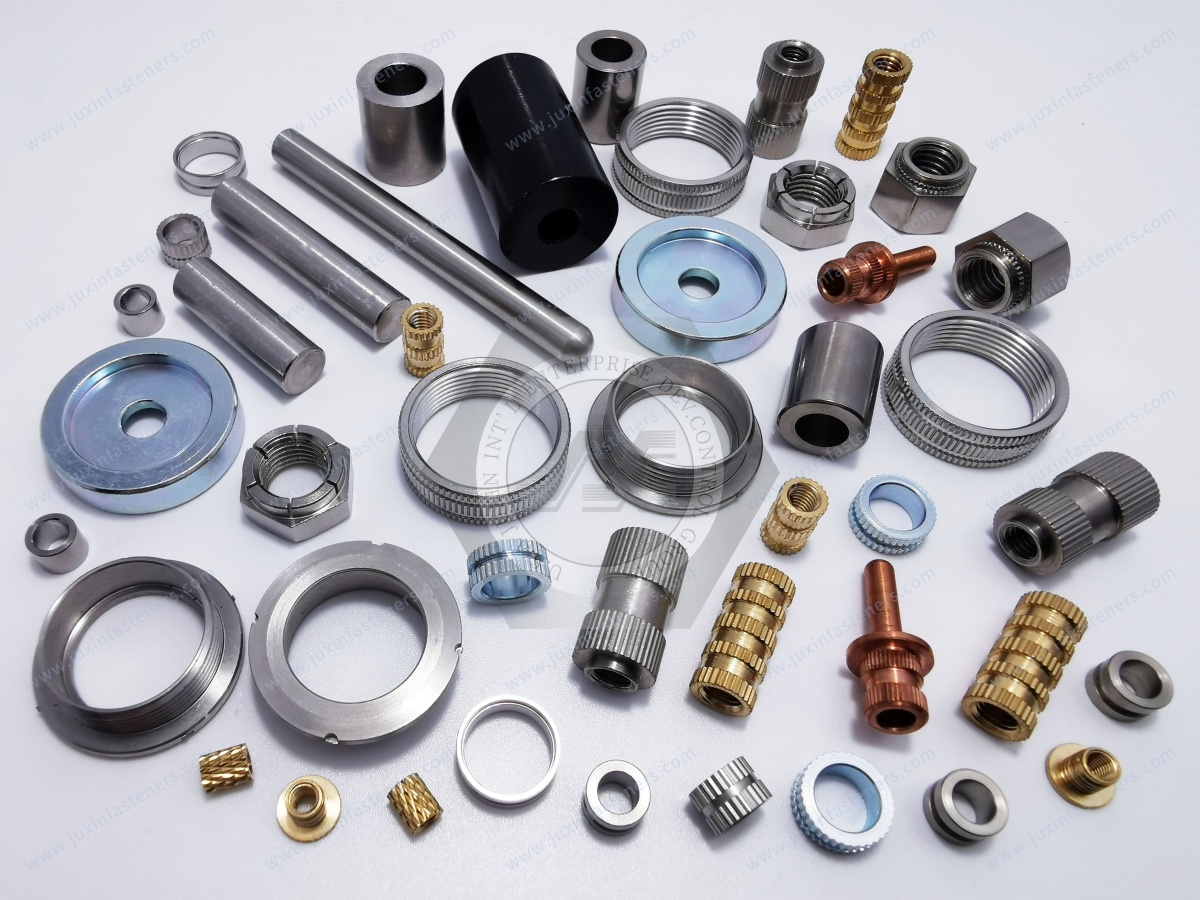
Not every mechanical connection requires a conventional catalog fastener.
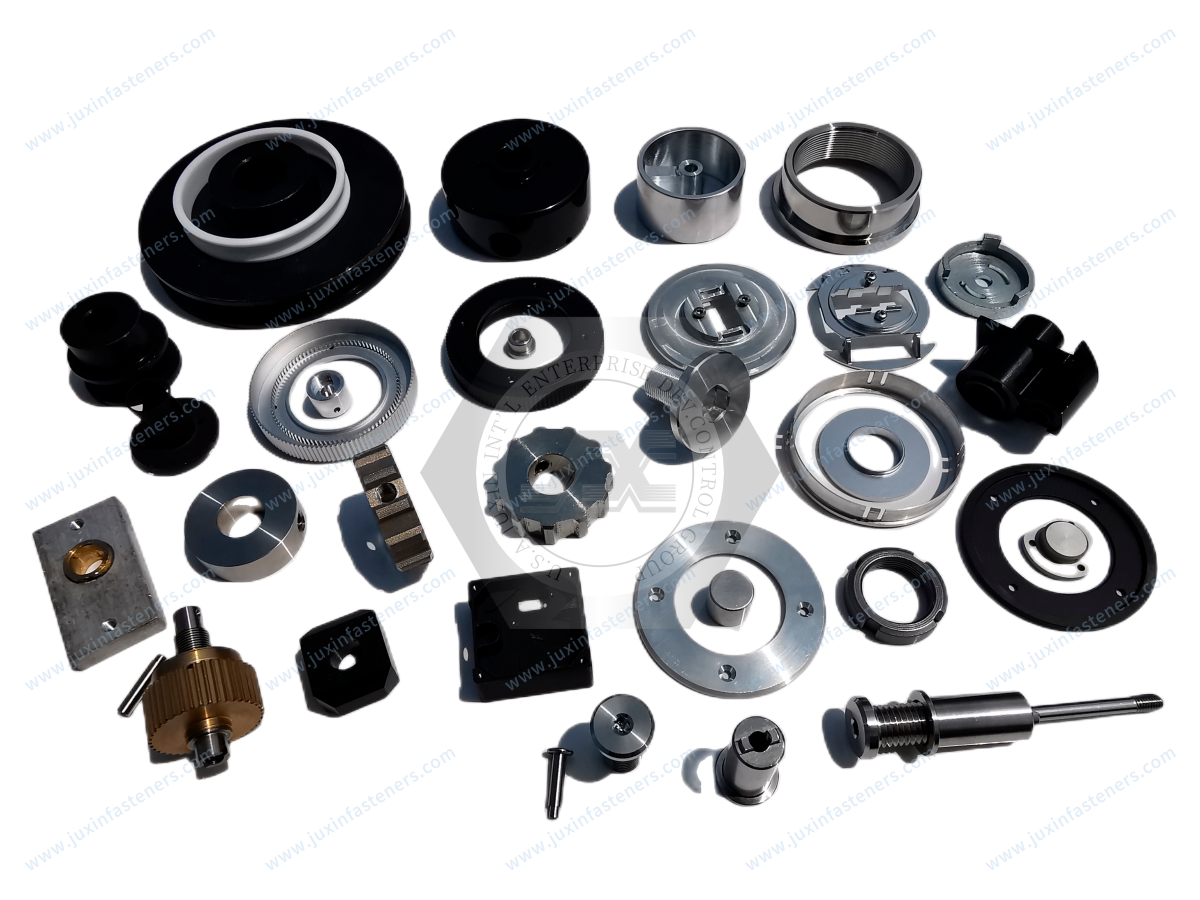
Electrical equipment may also require CNC machined components for mounting, positioning, spacing or mechanical integration.
CNC machined components can be used for:
Precision mounting parts
Spacers
Pins
Bushings
Shafts
Custom brackets
Mechanical interfaces
Equipment support components
These components can complement JUXIN's standard fastening products when an electrical equipment assembly requires both fastening hardware and precision-machined mechanical parts.
JUXIN fastening solutions can support a broad range of electrical and industrial equipment applications.
Fasteners can be used in power converters, power supplies, electrical cabinets and related sheet-metal structures.
Control cabinets, automation equipment, machine enclosures and internal brackets require repeatable mechanical connections.
Electrical cabinets and distribution equipment may require self-clinching fasteners, weld nuts, bolts and other enclosure hardware.
Solar power equipment, inverters, battery systems and related electrical enclosures can require corrosion-resistant and serviceable fastening solutions.
Control panels, electrical housings and sheet-metal assemblies can use integrated fastening systems for efficient production assembly.
Telecom cabinets and equipment enclosures frequently combine thin sheet-metal panels with removable internal structures, making rivet nuts and self-clinching fasteners practical options.
Electrical control systems are often integrated into larger industrial machines, creating requirements for cabinets, brackets, covers and structural fastening components.
JUXIN supplies a broad range of industrial fastening components for electrical equipment manufacturers:
| Product | Typical Application |
|---|---|
| Self-Clinching Nuts | Electrical cabinets, panels, sheet-metal enclosures |
| Self-Clinching Studs | Brackets, panels, internal equipment structures |
| Rivet Nuts | Thin-wall enclosures, removable panels |
| Weld Nuts | Cabinets, frames, sheet-metal assemblies |
| Weld Studs | Brackets, panels and structural sheet-metal components |
| Screws | Covers, brackets and equipment assemblies |
| High-Strength Bolts | Structural and heavy-duty equipment connections |
| Stainless Steel Fasteners | Corrosion-sensitive equipment |
| CNC Machined Components | Precision mechanical interfaces and custom assemblies |
This combination allows procurement teams to consolidate multiple fastening requirements with one experienced industrial supplier.
For electrical equipment manufacturers, fastening quality must remain consistent across production batches.
Dimensional variation in thread diameter, head geometry, length or installation features can affect automated assembly and component fit.
JUXIN supports OEM manufacturing through multiple production processes, including:
Cold forging
Screw heading
Stamping
CNC machining
Injection molding
Secondary machining
Surface treatment
Dimensional inspection
Depending on the product and customer requirements, quality control can include thread inspection, dimensional measurement, gauges and optical inspection.
JUXIN operates under an ISO 9001 quality management system and supports international OEM supply requirements.
For procurement and supply-chain managers, a fastening supplier needs to provide more than individual components.
The supplier should be able to support technical specifications, production consistency, quality requirements and long-term supply.
JUXIN provides:
OEM Manufacturing
Industrial fasteners and custom components manufactured according to customer drawings and specifications.
Engineering Support
Technical evaluation of materials, dimensions, threads, installation methods and application requirements.
Multiple Manufacturing Processes
Cold forging, screw heading, stamping and CNC machining capabilities for different component requirements.
Surface Treatment Options
Corrosion-resistant finishing options selected according to application requirements.
Quality Control
Dimensional and functional inspection according to product and customer specifications.
Flexible Product Coverage
Self-clinching fasteners, rivet nuts, weld fasteners, screws, bolts, stainless steel fasteners and precision components from one industrial supplier.
Whether you manufacture electrical cabinets, control panels, switchgear, power electronics, industrial automation equipment,
telecom enclosures or other sheet-metal electrical equipment, the fastening system should be considered as part of the overall mechanical design.
JUXIN can evaluate your drawings and recommend suitable fastening solutions based on:
Base material
Sheet-metal thickness
Thread requirements
Installation method
Mechanical loading
Corrosion requirements
Assembly process
Serviceability
Production volume
Inspection requirements
Send your drawings, specifications or RFQ requirements to our team.
Email: info@juxinfasteners.com
JUXIN — Industrial Fasteners and Custom Components for OEM Electrical Equipment
Common solutions include self-clinching nuts, self-clinching studs, rivet nuts, weld nuts, weld studs, screws and bolts.
The appropriate choice depends on sheet-metal thickness, material, assembly method and service requirements.
Self-clinching nuts and studs can create permanent attachment points in sheet-metal panels, cabinets, brackets and enclosures.
They are particularly useful when a secure threaded connection is required without using a loose nut during final assembly.
Yes. Rivet nuts are suitable for many thin-wall electrical enclosures where an internal thread is required and the connection needs to remain removable.
They can also be installed from one side of the panel.
Yes. JUXIN supports custom fastener manufacturing according to customer drawings, specifications, materials, dimensions, thread requirements and surface-treatment requirements.
Yes. Stainless steel fasteners are available for applications where corrosion resistance is an important design consideration.
Material selection should be based on the actual operating environment and engineering specification.
Yes. JUXIN supplies OEM fastening components for electrical cabinets, panels, enclosures, power equipment, industrial automation systems and other electrical equipment applications.
Yes. Customers can provide drawings, specifications, samples or RFQ requirements for technical evaluation and OEM production.
Contact JUXIN
For electrical equipment fasteners, electrical enclosure fasteners, electrical cabinet fasteners, self-clinching fasteners, rivet nuts, weld fasteners,
custom screws, high-strength bolts and CNC machined components, contact:
 MORE NEWS
Sep. 25, 2026
Sep. 25, 2026
Sep. 25, 2026
Contact Us
Tel.:
+86 020 8621 0320
+86 020 3121 6067
E-mail:
Technical Support:
Navigation
SEND INQUIREY