
Call Us
+86 136 6007 9809
Call Us
+86 136 6007 9809

May. 19, 2026
High-Performance Threaded Insert Nuts for Automotive Lightweighting and Intelligent Systems
As the global automotive industry undergoes a rapid shift toward lightweighting, electrification, and intelligent cockpits, the demand for high-reliability fastening technologies has never been more critical. Precision threaded insert nuts play a pivotal role in secure plastic component assembly, structural optimization, and electronic module integration.
Meeting the rigorous demands of modern automotive manufacturing—specifically regarding micro-precision, long-term fatigue resistance, and zero-defect batch consistency—requires a comprehensive engineering approach. This technical solution analyzes how advanced threaded insert nuts deliver structural integrity across material science, compound machining, design customization, and automated quality control.
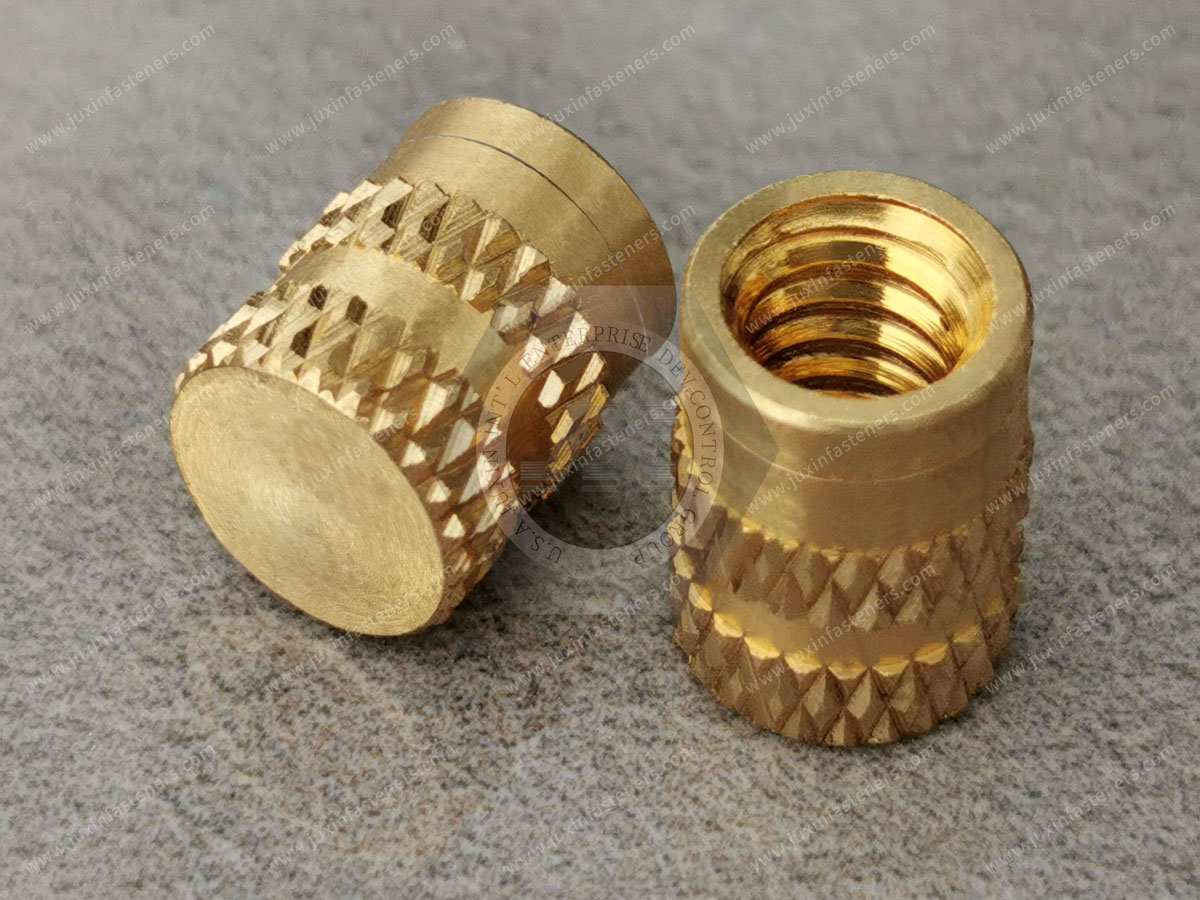
1. Automotive Applications and Core Engineering Requirements
Modern vehicles operate under harsh environmental and mechanical stress. Components must withstand high-frequency road vibrations, continuous alternating torques, extreme temperature fluctuations, and exposure to corrosive automotive fluids within the engine bay.
Threaded insert nuts are widely engineered into the following core automotive modules:
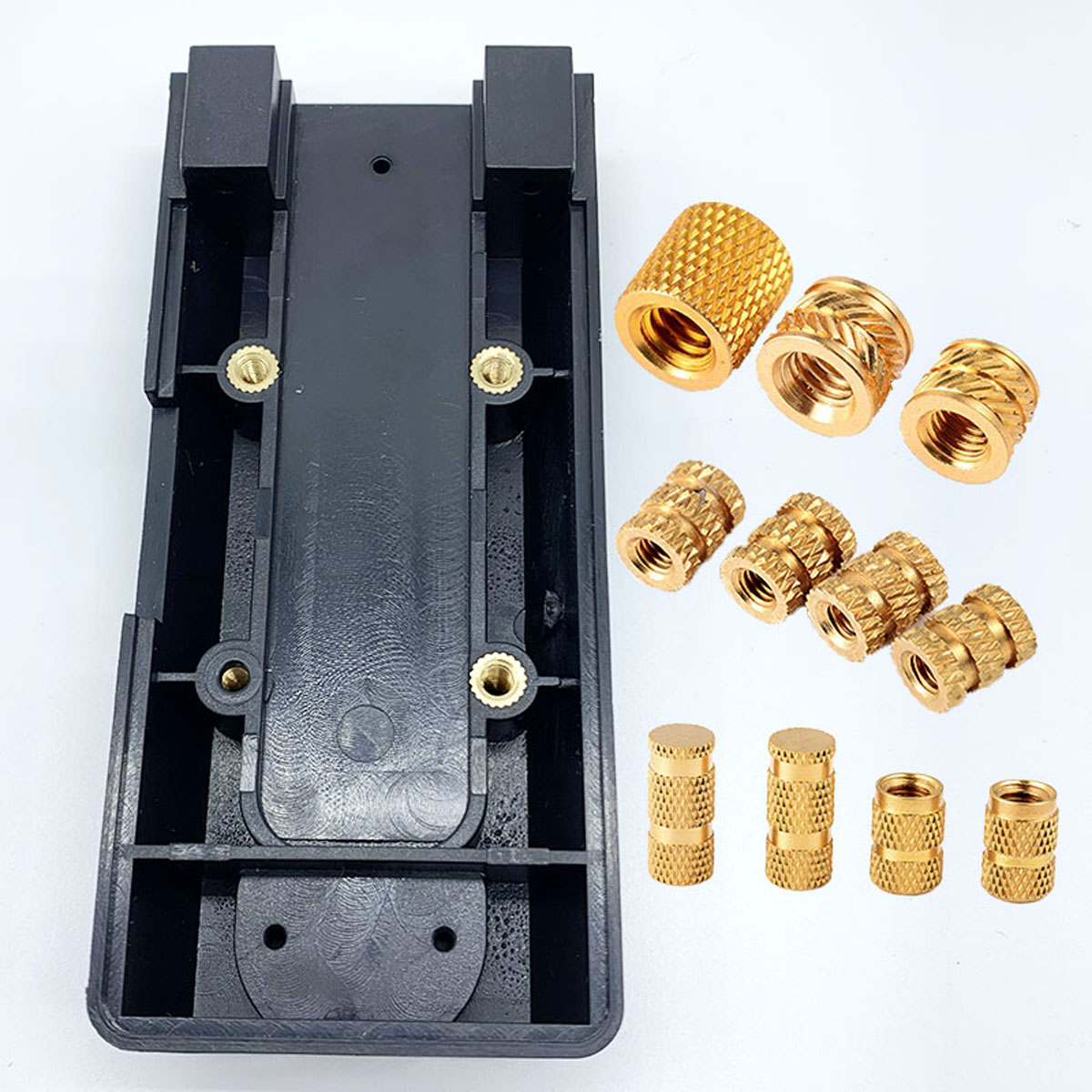
Lightweight Structural Assemblies: Pre-embedded and post-mold installation in advanced engineering plastics, composite panels, and carbon-fiber components.
Intelligent Cockpit & Infotainment Modules: Secure, vibration-proof mounting of instrument panels, display clusters, and interior trim housings.
EV "Three-Electric" & Electrical Enclosures: High-precision fastening inside Battery Management Systems (BMS), inverter housings, and electronic control units (ECUs).
To ensure high line-side efficiency and flawless vehicle safety, these threaded inserts for plastics must exhibit superior anti-loosening torque, exceptional pull-out resistance, and lifelong metal fatigue endurance.
2. Technical Challenges in Micro-Precision Manufacturing
Traditional, multi-step machining workflows often accumulate form and position tolerances. This leads to common industry defects such as uneven knurl profiles, concentricity errors, and thread deformation—frequently causing torque slippage, plastic boss cracking, or complete embedding failures during automated assembly.
The Countermeasure: Datum Unification
Our core technical solution centers on absolute process integration. By utilizing a unified positioning datum across the entire manufacturing sequence, we eliminate cumulative machining errors. This guarantees perfect concentricity between the internal threads and the external knurled geometry, virtually eliminating the risk of torsional or axial failure under extreme mechanical stress.
3. Advanced Manufacturing and Structural Optimization
To satisfy the demanding product lifecycles of global automotive OEMs, our production processes combine state-of-the-art CNC technology with optimized metallurgy.
[Simultaneous Tapping & Knurling]
│
├─► 100% Coaxiality Between Internal Threads & External Knurls
├─► Precision Guide Chamfering & Smooth Tapping
└─► Guaranteed 6H Thread Tolerance Class (ISO/DIN Compliant)
I. Multi-Axis Compound Machining Technology
Utilizing high-speed Swiss-type lathes and multi-axis CNC turning centers, we deploy a "simultaneous tapping and knurling" one-step forming process. This advanced technique synchronously executes guide chamfering, precision thread tapping, and external pattern forming. By keeping the workpiece on a single spindle, we ensure ultra-high coaxiality. Even after complex slot milling or slotting, internal thread precision remains stable to 6H tolerance.
II. Custom Knurl Patterns for Targeted Stress Loading
Knurling profiles are customized based on the exact polymer matrix and load-bearing requirements of the automotive component:
Straight & Helical Knurls: Ideal for heat-staking or ultrasonic installation, reducing residual stress in plastic bosses.
Diamond & Herringbone Knurls: Optimized for high-torque applications. Our dual-tool post configuration creates multi-directional diagonal patterns, deep grooves, and precise chamfers in a single pass, drastically increasing mechanical interlocking strength.
III. Compliant Material Selection
We prioritize eco-friendly C3604 brass, alongside H59 and H62 leaded brass alloys, ensuring full compliance with international environmental standards, including RoHS 2.0 and REACH. These materials offer the optimal balance of mechanical tensile strength, processing stability, and superior corrosion resistance, aligning perfectly with green manufacturing initiatives.
4. Assembly Integration and Quality Control Systems
The reliability of a threaded insert nut is determined by how flawlessly it integrates into the plastic substrate during tier-1 sub-assembly.
Embedding Process | Technical Control Mechanism | Automotive Target Benefit |
Insert Molding | Precision-machined holding pins; optimized knurl crests | Prevents plastic ingress into threads during high-pressure injection. |
Heat Staking / Thermal | Controlled pilot hole tolerances & outer diameter matching | Even plastic melt flow around knurls; eliminates molded-in stress. |
Ultrasonic Welding | Optimized frequency and amplitude parameters | Rapid, localized melting for high-speed, repeatable assembly lines. |
Precision and Reliability Verification
We enforce a zero-defect quality management framework. Internal threads are continuously monitored for concentricity, and external knurl crests are checked via high-definition optical imaging to ensure sharp, well-formed mechanical interlocking profiles. Destructive torque-to-yield and pull-out force testing guarantee that our embedded fasteners easily surpass automotive safety thresholds.
Automation and Flexible Manufacturing
From raw stock feeding and drilling to tapping and sorting, our production clusters operate on 100% automated cycles. This allows us to offer dual-track support: rapid, cost-effective prototyping for upcoming vehicle platforms, and high-volume, continuous stock supply for global mass production.
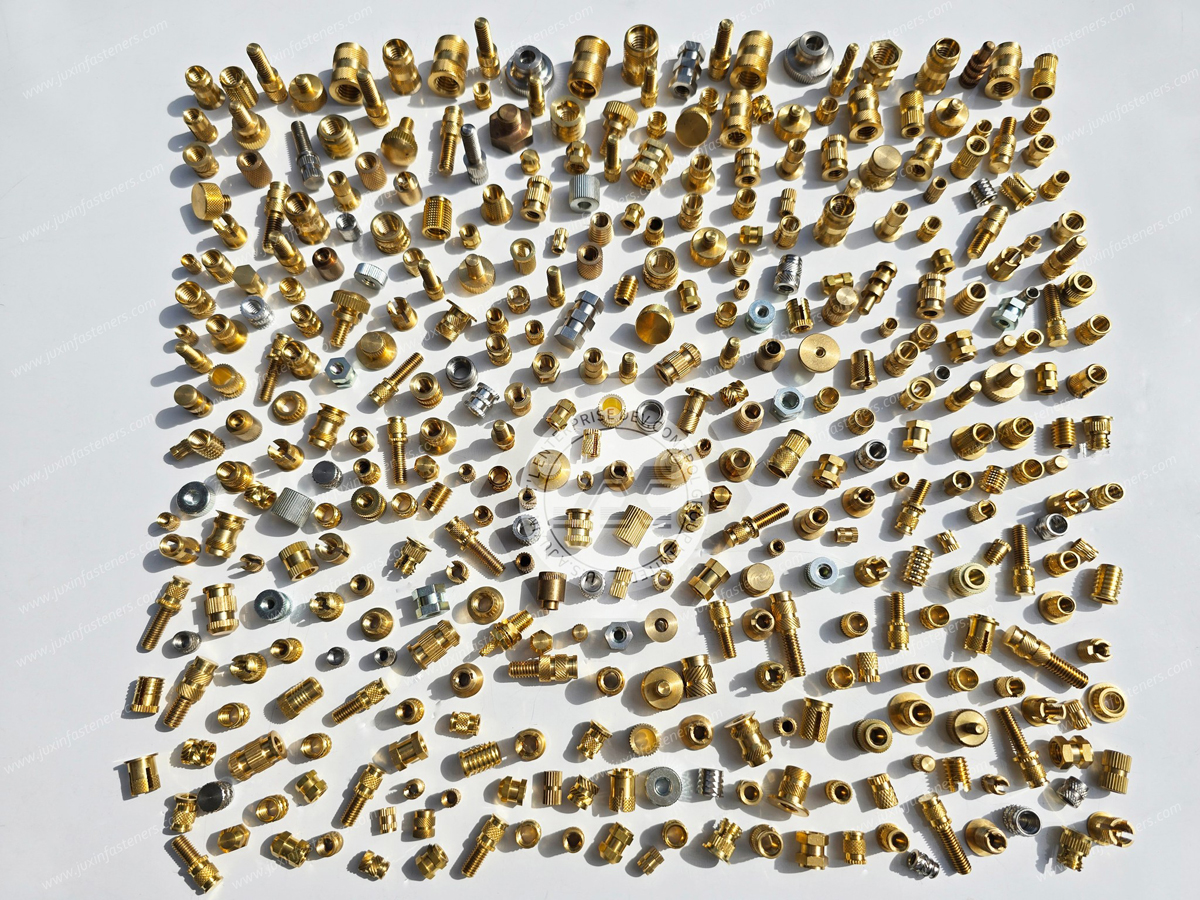
5. Supply Chain Collaboration and Future Automotive Trends
As global automotive supply chains demand leaner operations and localized risk management, the technology behind threaded insert nuts is evolving toward micro-miniaturization, lower carbon footprints, and tighter integration with autonomous driving hardware.
By upgrading to intelligent, fully automated CNC production, we reduce manufacturing overhead while consistently raising the quality ceiling. Whether supporting the high-voltage insulation requirements of Next-Generation EV "Three-Electric" architectures or the lightweight demands of structural composite parts, our customized fastening solutions provide tier-1 suppliers with the reliability they need to move forward.
Optimize your automotive assembly with industry-certified hardware.
 MORE NEWS
Sep. 27, 2026
Sep. 27, 2026
Sep. 27, 2026
Contact Us
Tel.:
+86 020 8621 0320
+86 020 3121 6067
E-mail:
Technical Support:
Navigation
SEND INQUIREY