
Call Us
+86 136 6007 9809
Call Us
+86 136 6007 9809

Nov. 18, 2026
Made-to-Drawing Fastener Manufacturing for Industrial OEMs
In advanced manufacturing sectors—such as automotive, aerospace, renewable energy, and heavy industrial machinery—standard catalog fasteners frequently fall short. When engineers push the boundaries of structural design, thermal management, and vibration resistance, they require fastening components tailored to exact geometric and metallurgical specifications. Relying on standard hardware in these high-stress environments can lead to catastrophic joint failure, assembly line downtime, and compromised product safety.
The solution is Made-to-Drawing Fastener Manufacturing. As a specialized Industrial Fastener Manufacturer, Juxin Fasteners partners with engineering and procurement teams globally to deliver Custom Fastener Manufacturing. We transform complex 2D technical drawings and 3D CAD models into high-precision physical components ready for Industrial Batch Production.
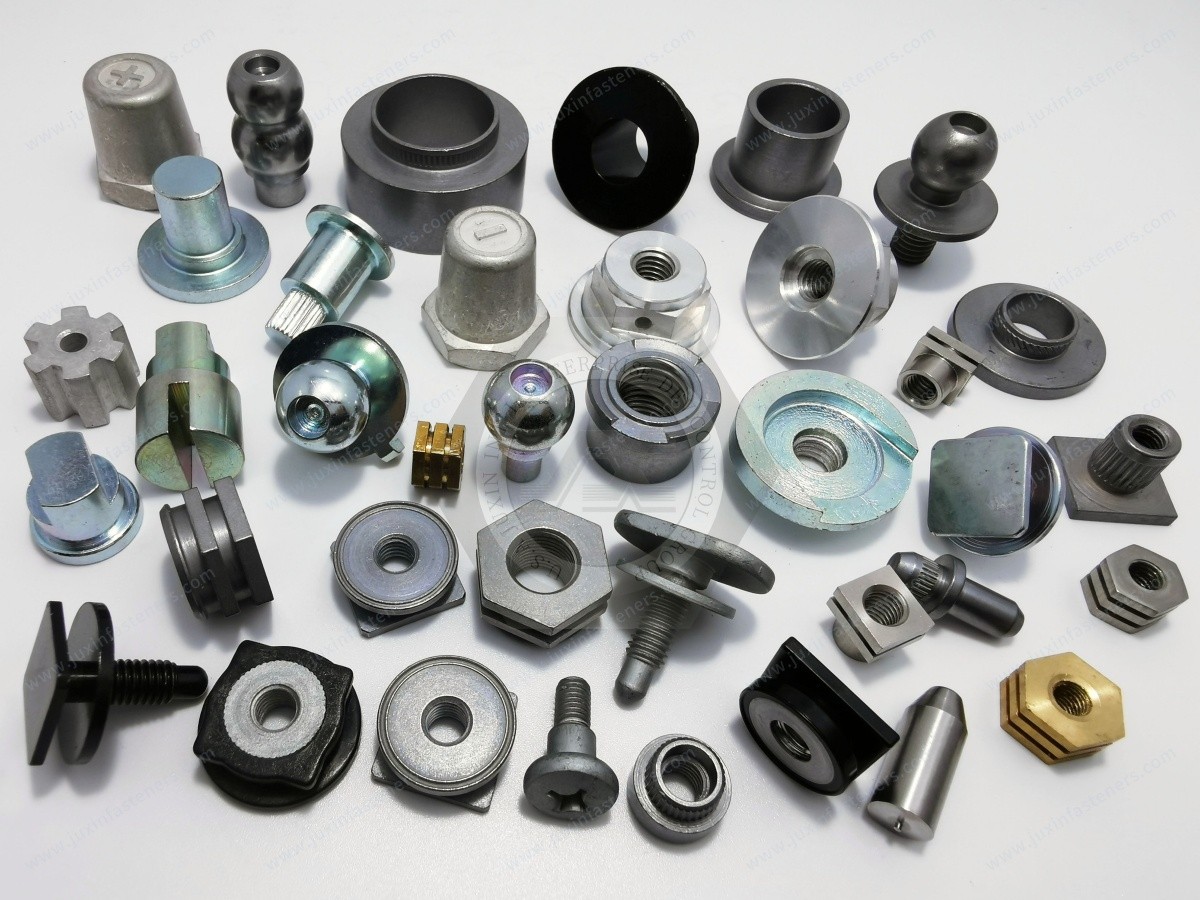
The Engineering Need for Custom Fasteners
Why do OEMs invest in custom-engineered fastening solutions rather than utilizing off-the-shelf DIN or ISO standard parts? The decision is usually driven by one or more of the following critical engineering requirements:
* Non-Standard Geometry: Applications often require unique head styles (to fit proprietary recesses or minimize clearance), specific shank diameters (for precise alignment in tight-tolerance holes), or custom thread lengths (to prevent bottoming out while maximizing thread engagement).
* Extreme Material Requirements: Standard fasteners are typically produced from common carbon or stainless steels. High-performance environments may require specialized alloys such as titanium or nickel-based grades in some industries, or specific brass alloys for electrical conductivity and non-magnetic properties.
* Vibration and Preload Retention: Heavy machinery applications may necessitate custom prevailing-torque features (like elliptical deformation or specialized locking elements) or integrated spring washers (SEMS screws) to maintain joint clamping force under severe dynamic loads where standard nuts would vibrate loose.
* Multi-Functionality and Part Consolidation: A custom fastener can often consolidate multiple parts into one. For example, a single CNC-turned component can serve as a structural standoff, a locating pin, and a threaded mounting point simultaneously, reducing overall assembly time, minimizing inventory complexity, and eliminating tolerance stack-up issues associated with multi-part assemblies.
* Specific Surface Treatments: Standard parts often come with generic plating. Made-to-drawing fasteners can specify high-performance coatings like zinc-nickel coatings to a specified corrosion test requirement, PTFE coatings for reduced friction and galling prevention, or specialized passivation for medical components.
Translating Drawings to Production: The Engineering Review Process (DFM)
The made-to-drawing process begins long before metal is cut or formed. When Juxin Fasteners receives a customer's CAD file or 2D drawing, our manufacturing engineers conduct a rigorous Design for Manufacturability (DFM) review. This critical step ensures that the theoretical design can be produced efficiently and reliably at scale.
Tolerance Analysis and GD&T Interpretation: We meticulously assess critical dimensions and Geometric Dimensioning and Tolerancing (GD&T) callouts. True position, concentricity, parallelism, and surface finish (Ra) requirements dictate the necessary manufacturing process. While standard cold heading can hold tight tolerances for many features, extreme precision (e.g., very tight diametric tolerances) may call for a separately evaluated finishing process, such as precision turning or grinding.
Material and Grade Verification: We review the specified material grade against the required mechanical properties (tensile strength, yield strength, hardness). We also evaluate the material's formability or machinability. For example, some high-strength aerospace alloys are difficult to cold form and may dictate a CNC machining approach, even for higher volumes.
Process Selection and Optimization: Based on the geometry, material, tolerances, and Estimated Annual Usage (EAU), we determine the most cost-effective production route. Often, minor, non-critical adjustments to the drawing (such as increasing a corner radius or altering an undercut) can allow a part originally designed for 100% CNC machining to be produced via much faster, less wasteful cold heading methods.
Our Multi-Process Manufacturing Capabilities
As an OEM/ODM Fastener Manufacturer, we do not rely on a single production method. We utilize Multi-Process Fastener Manufacturing to optimize both performance and piece-part cost.
* Cold Heading and Cold Forming: This is the most efficient process for high-volume Industrial Batch Production. Metal wire is sheared and forced into a series of dies under immense pressure at room temperature. Cold forming aligns the material's grain structure with the contour of the fastener, which can influence mechanical properties; the final result depends on alloy, deformation, heat treatment, and component geometry. It also produces near-net shapes with potentially lower material removal than machining from solid bar, driving down unit costs for large runs.
* CNC Machining: For complex geometries that cannot be cold-formed (like sharp internal corners, deep cross-holes, extremely thin walls, or extreme precision standoffs), we utilize CNC turning and milling processes selected for the drawing. This allows for the production of highly intricate Precision Metal Components with exceptional accuracy and surface finishes.
* Integrated Manufacturing (The Hybrid Approach): Our greatest strength lies in combining these processes. We can cold-head a fastener blank to maximize strength and minimize material waste, and then transfer that blank to a CNC machining center to add complex secondary features (like precision O-ring grooves, cross-drilling, or micro-threading). This hybrid approach provides OEMs with the best of both worlds: the cost-efficiency and strength of cold heading combined with the precision of CNC machining.
Secondary Operations and Finishing
A made-to-drawing fastener is rarely finished immediately after forming or machining. We offer a full suite of secondary operations to complete the component to the customer's exact specifications:
* Heat Treatment: Processes like case hardening, through hardening, or annealing are critical for achieving the specified mechanical properties. For example, self-clinching fasteners require specific hardness differentials relative to the host panel to function correctly.
* Thread Rolling and Tapping: While some threads can be cut, thread rolling (cold forming the threads) is preferred for exterior threads as it significantly increases thread strength and fatigue resistance. Internal threads are typically tapped or, for higher strength, roll-tapped.
* Surface Finishing: We manage the application of various coatings and platings, including standard Zinc, high-corrosion Zinc-Nickel, Geomet/Dacromet flakes, black oxide, anodizing (for aluminum), and passivation (for stainless steel).
* Patching and Locking Elements: We can apply nylon patches, pellets, or micro-encapsulated chemical adhesives directly to the threads to provide built-in vibration resistance or sealing capabilities.
Quality Control and Inspection Protocols
Made-to-drawing manufacturing requires absolute adherence to the customer's specifications. Our quality assurance protocols are integrated throughout the production cycle:
* First Article Inspection (FAI): Before full batch production begins, we produce and inspect initial samples. The scope and reporting format of first-article inspection should be agreed before production, including critical dimensions and any customer-specific requirements.
* In-Process Monitoring: Inspection equipment and monitoring plans are selected according to the project; these may include dimensional gages, thread gages, optical methods, coordinate measurement, or statistical monitoring where available and agreed.
* Final Inspection and Documentation: Documentation such as material certificates, dimensional results, coating reports, or PPAP submissions should be specified at RFQ stage and confirmed for feasibility, cost, and scope before an order is accepted.
Drawing Control, Datums, and Functional Dimensions
A manufacturable drawing should communicate the function of the part, not only a collection of nominal dimensions. Identify the datum structure that reflects how the component is located in the assembly. For a shoulder screw, the relationship between the bearing shoulder, head face, and thread axis may matter more than an unrestricted overall length. For a locating pin, the fit diameter, lead-in chamfer, straightness, and surface finish may control insertion force and positional repeatability.
Avoid assigning the tightest tolerance to every feature. Excessively restrictive dimensions can force additional machining and inspection without improving the joint. Conversely, a relaxed tolerance on a locating diameter or under-head bearing face can cause assembly failure. A useful DFM discussion separates safety-critical and fit-critical features from cosmetic or nonfunctional dimensions, while retaining the customer's approval authority over drawing changes.
Thread, Coating, and Heat-Treatment Interactions
Thread specification needs more than a diameter label. Include metric pitch or UNC/UNF designation, fit class, thread length, runout, and whether dimensions apply before or after coating. Coating thickness can affect thread fit; heat treatment can change dimensions or distortion. High-strength steel parts also require consideration of hydrogen-embrittlement risk when certain electroplating processes are proposed. Coating selection should therefore be reviewed together with material grade, hardness, intended service environment, and applicable process controls.
Corrosion test results must be interpreted carefully. A neutral salt-spray exposure target is a laboratory acceptance criterion, not a direct prediction of years of field service. The substrate, coating system, edges, contact materials, and assembly drainage all influence performance. Specify the exact test method, duration, acceptance threshold, and whether the result applies to the finished fastener or a representative coupon.
Prototype-to-Production Transfer
Early prototypes may be machined to validate fit before the final economical production route is established. A prototype made by CNC is not automatically representative of a future cold-formed part: grain condition, surface texture, hardness, and dimensional distribution can differ. If the production method changes, the OEM should agree on which functional tests need repeating. Production planning should cover tooling approval, initial samples, change control, lot traceability, packaging protection, and a realistic ramp-up schedule.
Commercial Evaluation Beyond Unit Price
A meaningful sourcing comparison separates tooling charges, sample costs, unit price at each volume tier, inspection or documentation costs, packaging, and logistics. Estimate annual usage and release quantities rather than quoting only a lifetime forecast. For low-volume complex parts, machining may avoid tooling investment. For recurring high-volume parts, forming may reduce recurring cost if geometry and material support it. A good quotation states assumptions openly so purchasing can compare offers on equivalent technical terms.
OEM RFQ and Production Planning
To ensure an accurate quotation and seamless production launch, procurement teams should provide:
* Comprehensive 2D engineering drawings (PDF format preferred) detailing all dimensions, tolerances, and GD&T requirements.
* 3D CAD models (STEP or IGES format) for complex geometries to aid in tooling design and CNC programming.
* Exact material specifications and desired surface finish/plating.
* Required mechanical properties or testing standards (e.g., proof load, torque-out, salt spray hours).
* Initial batch quantity and Estimated Annual Usage (EAU).
For Custom Engineered Fastening Solutions, submit your engineering drawings to the manufacturing experts at Juxin Fasteners via info@juxinfasteners.com. We are ready to be your dedicated partner for made-to-drawing industrial fastener production.
 MORE NEWS
Nov. 18, 2026
Contact Us
Tel.:
+86 020 8621 0320
+86 020 3121 6067
E-mail:
Technical Support:
Navigation
SEND INQUIREY