
Call Us
+86 136 6007 9809
Call Us
+86 136 6007 9809

Jun. 14, 2026
Metal Fasteners Surface Protection Requirements in Automotive Engineering Solutions
(ISO / DIN Standard-Based Engineering Guide for Corrosion Protection, Coating Performance and Reliability Design)
In modern automotive manufacturing and industrial assembly systems, the surface treatment of metal fasteners is not optional—it is a core engineering requirement that directly determines service life, safety performance, and long-term reliability.
Nearly all industrial fasteners, including bolts, screws, nuts, rivets and rivet nuts, must undergo a controlled surface protection process before final application. The primary objective is to ensure corrosion resistance, controlled friction coefficient, assembly stability, and compatibility with high-volume automated installation systems.
This article provides a structured engineering overview of surface treatment solutions for metal fasteners, aligned with international standards such as ISO and DIN, to support procurement engineers, fastening system designers, and OEM quality teams.
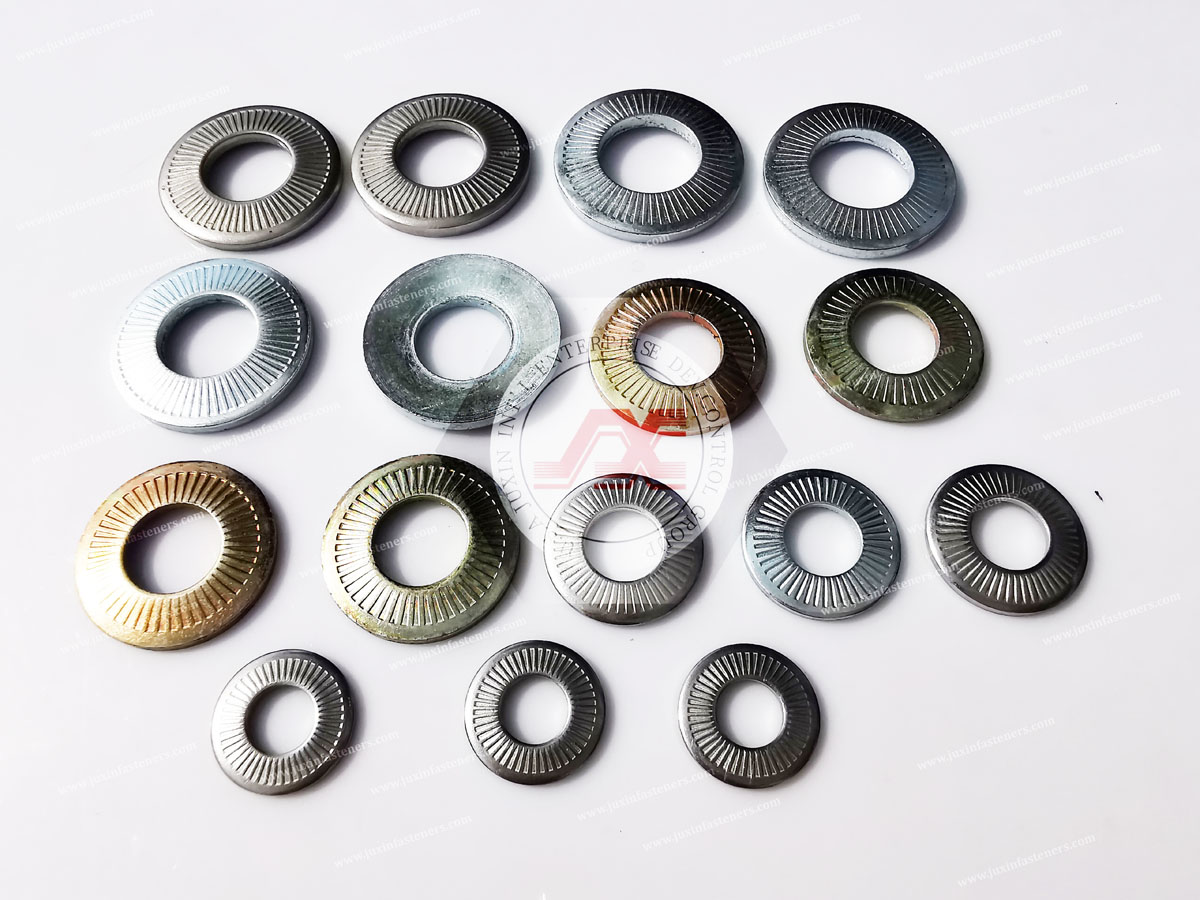
1. Classification of Fasteners Surface Treatment Technologies
Fastener surface protection systems can be categorized into four major engineering solutions based on performance, cost, and application environment.
1.1 Uncoated or Oiled Fasteners
This is the simplest protection method, typically used for components that require weldability or temporary protection during storage and transport.
No permanent coating layer
Light anti-rust oil protection
Suitable for welding studs, weld nuts, and temporary assembly parts
Limited corrosion resistance
This solution is not suitable for long-term automotive exposure environments.
1.2 Electroplated Coatings (Zinc / Zinc-Nickel)
Electroplating is widely used in automotive fastener surface protection systems based on ISO 4042 and related DIN standards.
Common coatings:
Zinc plating (Zn)
Zinc-Nickel alloy plating (Zn-Ni)
Typical coating thickness:
6–12 μm
Key engineering requirements:
No pores, cracks, blistering or delamination
Uniform color: blue-white, black, or rainbow passivation
Strong adhesion under torque and installation stress
Corrosion Performance (Neutral Salt Spray Test)
After thermal aging at 120°C for 24 hours, fasteners must still meet ISO-defined salt spray requirements for their application class.
Electroplating is widely used in:
Interior automotive assemblies
Medium corrosion environments
Cost-sensitive structural fasteners
1.3 Zinc-Aluminum Flake Coating (Dacromet / Geomet Type Systems)
Zinc-aluminum flake coating is a high-performance corrosion protection system for automotive bolts and high-strength fasteners, widely used in chassis and safety-critical applications.
Standards reference: ISO 10683 (non-electrolytic zinc flake coatings)
Typical coating thickness:
8–25 μm
Temperature resistance:
-50°C to 120°C
Engineering characteristics:
Uniform, continuous coating layer
No blistering, cracking, or excessive buildup
Controlled friction coefficient stability
Minor color variation allowed (silver/black)
Salt Spray Performance
High-grade zinc-aluminum-coated industrial fasteners can achieve significantly greater corrosion resistance, depending on system design, often exceeding that of traditional electroplated coatings.
1.4 Phosphate Coating (Phosphating + Oil System)
Phosphating is a chemical conversion coating widely used for torque-controlled assembly fasteners.
Coating thickness:
5–20 μm
Key advantages:
Excellent lubricant absorption
Stable torque–tension relationship
Ideal for controlled tightening processes
Phosphate coatings are commonly used in:
Engine fasteners
Transmission assemblies
Precision torque-controlled joints
2. Hydrogen Embrittlement Control and Friction Coefficient Management
Hydrogen embrittlement is one of the most critical risks in high-strength fastener surface treatment processes.
2.1 Electroplating Risk Control
For fasteners with hardness ≥ 320 HV:
Electroplating is not recommended unless necessary
Mandatory hydrogen relief baking is required
Compliance testing must follow ISO 15330
2.2 Process Control Requirements
To prevent hydrogen embrittlement:
Avoid acid cleaning for hardened components
Control heat treatment and work hardening exposure
Ensure immediate post-process baking after phosphating or plating
2.3 Post-Coating Hydrogen Relief Treatment
For phosphate-coated high-strength fasteners:
Immediate baking after drying
Followed by oiling or sealing treatment
Final verification via ISO 15330 testing
2.4 Friction Coefficient Stability
Additional coatings such as dry film lubricants or sealing layers:
Must NOT alter friction coefficient range
Must NOT degrade corrosion resistance
Must maintain torque–tension consistency for assembly systems
This is critical for automated automotive tightening systems using torque-angle control.
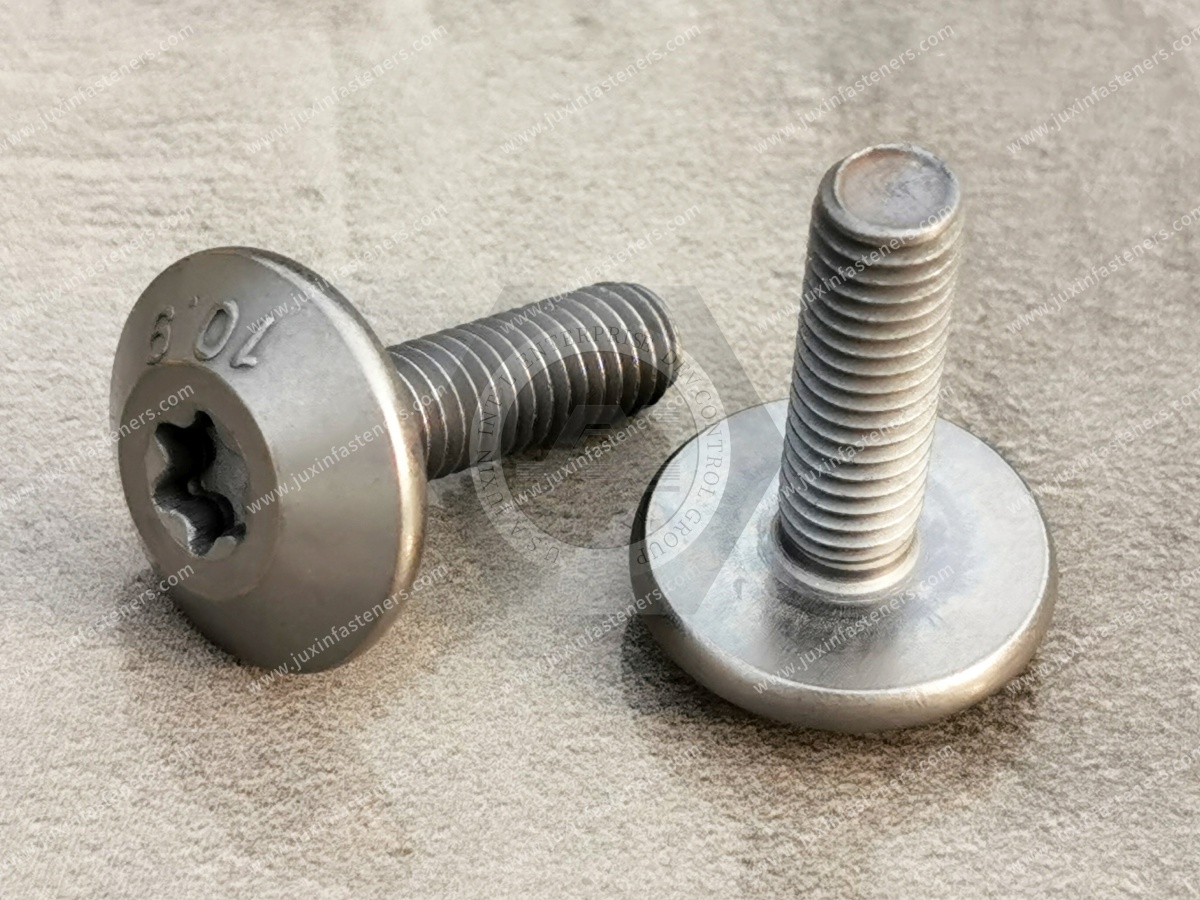
3. Automotive Fasteners Surface Protection Classification by Criticality
Automotive OEMs typically classify fasteners into functional safety levels:
S1 / S2 – Safety critical (chassis, engine, suspension)
C1 / C2 – Structural or functional
N – Non-critical / interior applications
Each category defines:
Required coating type
Minimum salt spray resistance hours
Friction coefficient range
Inspection frequency
This classification ensures consistent quality across automotive fastening systems.
4. Salt Spray Test Evaluation Criteria
Fastener corrosion resistance is validated through neutral salt spray testing (ISO 9227).
Evaluation parameters include:
Time to red rust formation
Coating integrity
Adhesion after thermal cycling
Corrosion propagation behavior
Acceptance criteria vary depending on:
Coating system (electroplated / flake/phosphate)
Automotive application class (S1–N)
Environmental exposure severity
5. Coating Thickness Measurement Standards
Coating thickness control is essential for both corrosion protection and thread functionality.
Measurement Locations:
For threaded fasteners:
Thread flank surface (primary measurement zone)
Head bearing surface (secondary zone)
For non-threaded fasteners:
Uniform external surface area
Critical load-bearing regions
Accurate thickness control ensures:
Proper thread engagement (DIN ISO compatibility)
Stable torque coefficient
Consistent assembly performance
6. Engineering Summary: Why Surface Treatment Defines Fastener Reliability
In modern automotive and industrial fastening systems, surface treatment is not a cosmetic process—it is a functional engineering layer that determines:
Corrosion lifetime (salt spray resistance)
Assembly torque stability
Hydrogen embrittlement resistance
Friction coefficient consistency
Long-term fatigue performance
A properly engineered metal fastener's surface protection system ensures that bolts, screws, nuts, and rivet nuts perform reliably under vibration, thermal cycling, humidity, and mechanical loading.
Conclusion
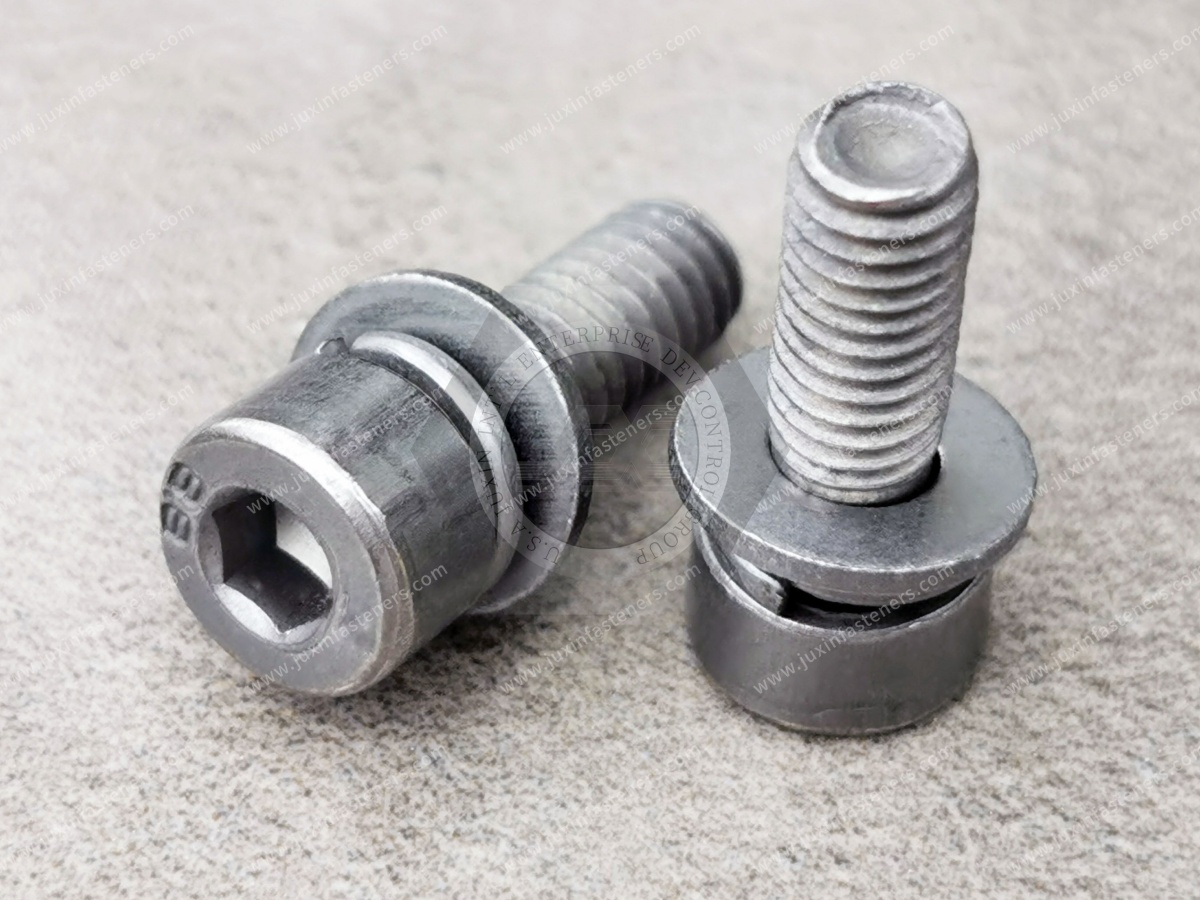
Selecting the correct fastener surface treatment solution (ISO/DIN-compliant) is essential to ensuring the durability and safety of automotive assemblies. From electroplated zinc systems to zinc-aluminum flake coatings and phosphate-based lubrication systems, each technology serves a specific engineering purpose.
By aligning coating selection with application severity, hydrogen embrittlement control requirements, and torque–tension performance, manufacturers can achieve a fully optimized, high-reliability fastening system that meets global automotive standards.
 MORE NEWS
Sep. 27, 2026
Sep. 27, 2026
Sep. 27, 2026
Contact Us
Tel.:
+86 020 8621 0320
+86 020 3121 6067
E-mail:
Technical Support:
Navigation
SEND INQUIREY