Call Us
+86 136 6007 9809
Call Us
+86 136 6007 9809

Aug. 30, 2026
Threaded components are fundamental to semiconductor equipment, precision machinery and industrial automation.
They are used for fastening, positioning, adjustment, alignment and mechanical connection throughout complex equipment assemblies.
However, proprietary equipment designs often require threaded components that are not available as standard catalog fasteners.
A custom part may require a specific thread pitch, non-standard length, special shoulder, controlled concentricity, integrated machining feature or application-specific material.
JUXIN manufactures precision threaded components and custom fasteners for semiconductor equipment and automation, based on customer engineering drawings, CAD files and technical specifications.
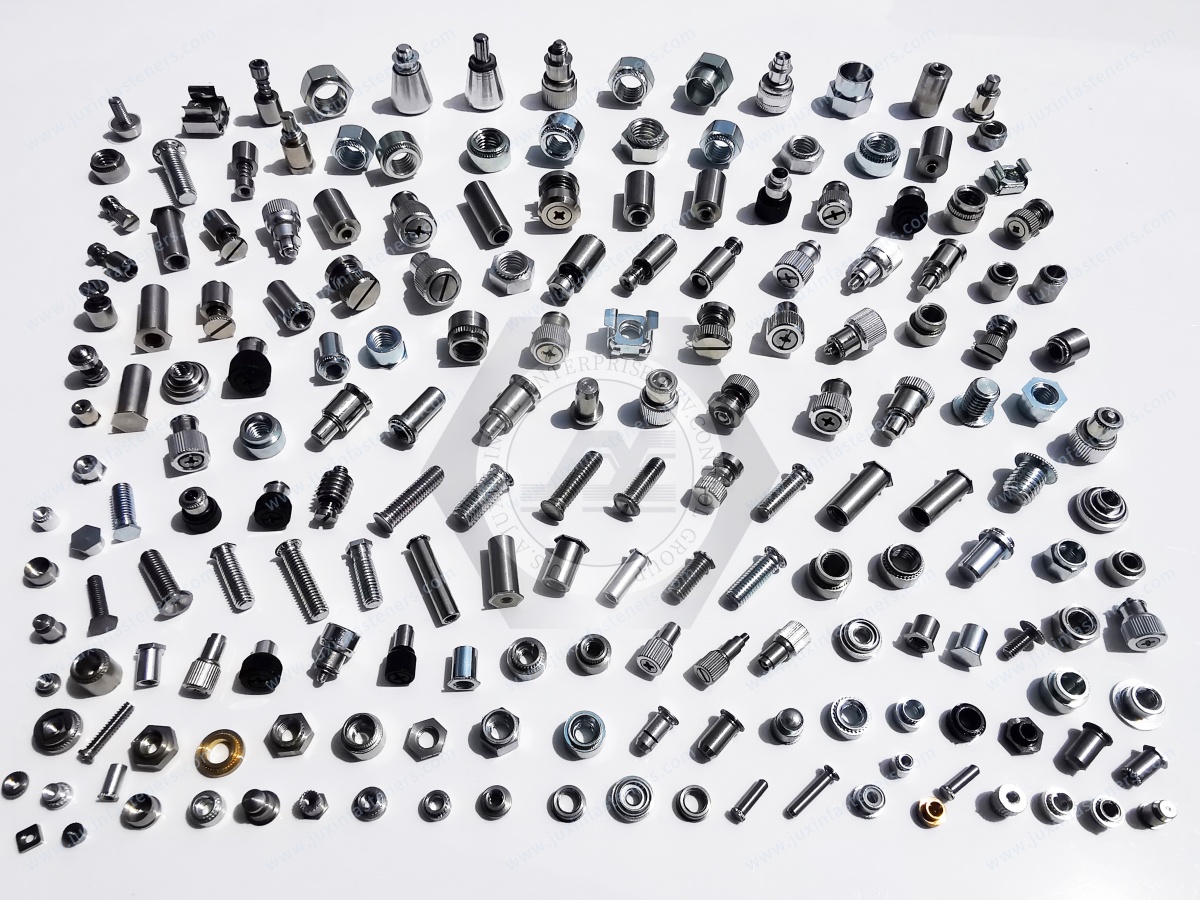
Our capabilities include threaded pins, studs, special screws, threaded shafts, standoffs, bushings, custom nuts, threaded inserts and CNC machined threaded components.
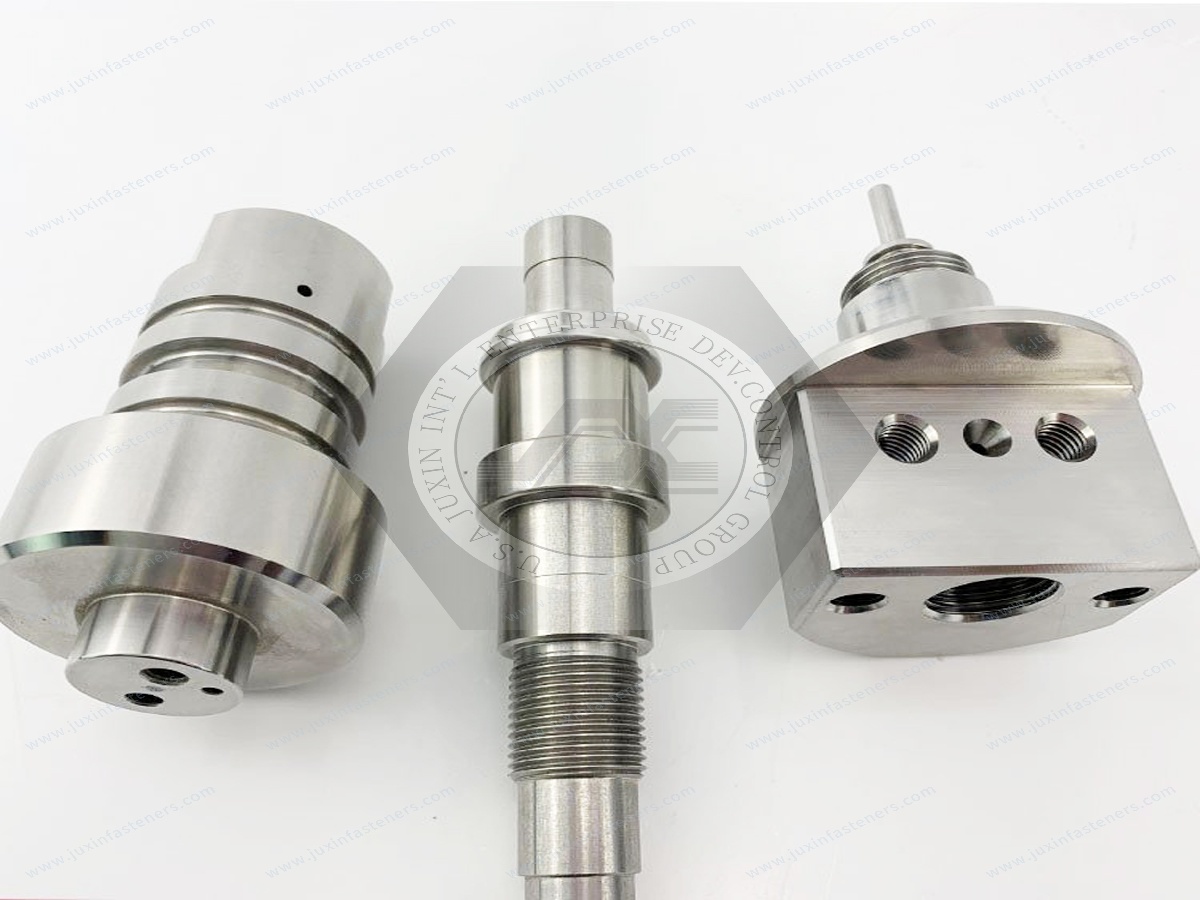
A threaded component is not simply a screw with a thread.
In precision equipment, the threaded interface can form part of the mechanical positioning and structural system.
Its performance can depend on:
Thread standard
Thread pitch
Major diameter
Minor diameter
Thread engagement
Thread tolerance
Runout
Concentricity
Shoulder location
Surface finish
Material
Surface treatment
For semiconductor equipment and automation systems, these characteristics can influence assembly consistency, positioning accuracy and mechanical repeatability.
This is why the thread should be considered as part of the complete component design.
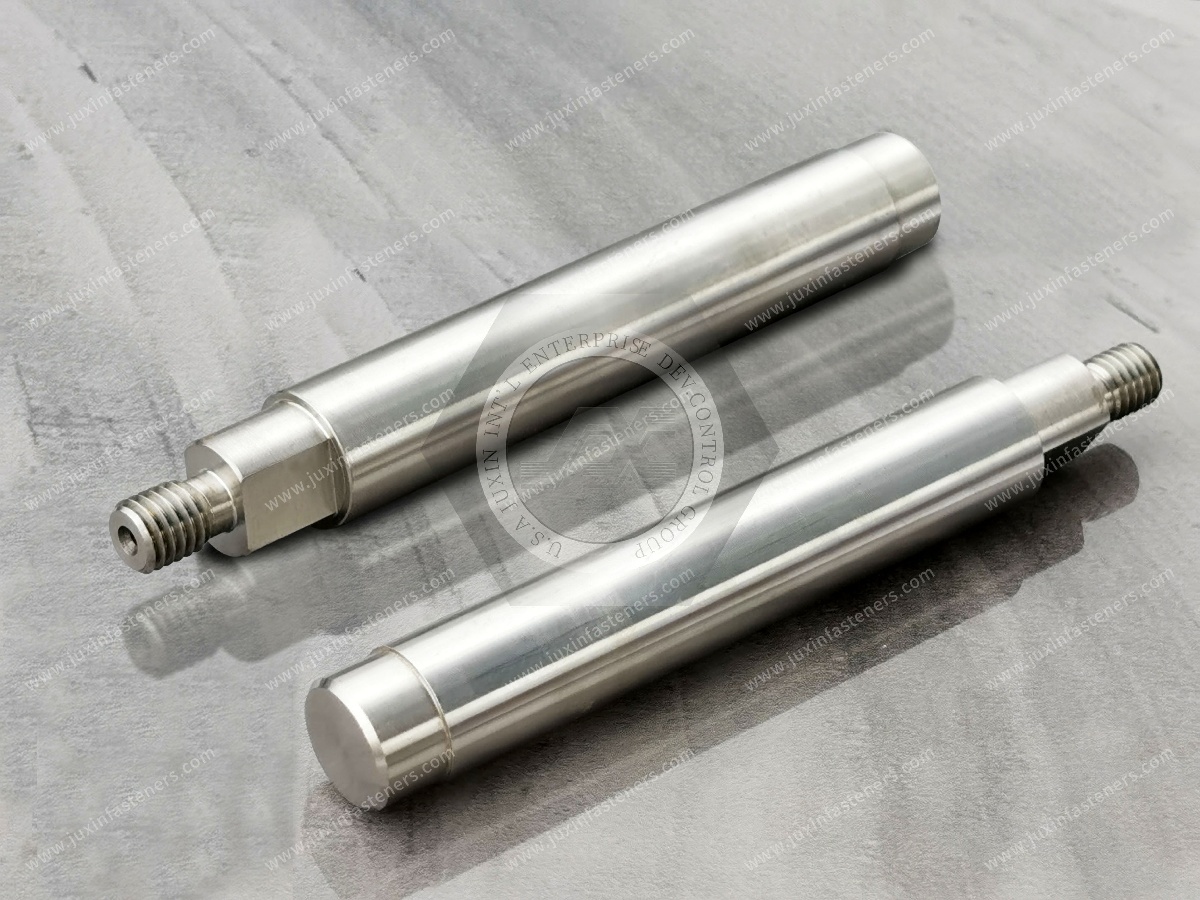
Semiconductor equipment manufacturers frequently develop proprietary mechanical assemblies.
These systems can require threaded components with geometries designed around specific equipment interfaces.
JUXIN can manufacture custom threaded components such as:
Threaded pins
Threaded studs
Special screws
Threaded shafts
Threaded spacers
Standoffs
Custom nuts
Threaded inserts
Threaded sleeves
CNC machined threaded parts
Components can be manufactured according to approved engineering drawings and customer specifications.
Threaded pins can combine positioning and fastening functions in selected mechanical assemblies.
Depending on the design, a threaded pin may incorporate:
External threads
Internal threads
Precision locating diameter
Shoulder
Chamfer
Flat
Custom end geometry
These components can be used in:
Wafer handling equipment
Automation mechanisms
Inspection systems
Precision fixtures
Mechanical positioning assemblies
Semiconductor equipment frames
The locating and threaded features can be manufactured as an integrated component where required by the equipment design.
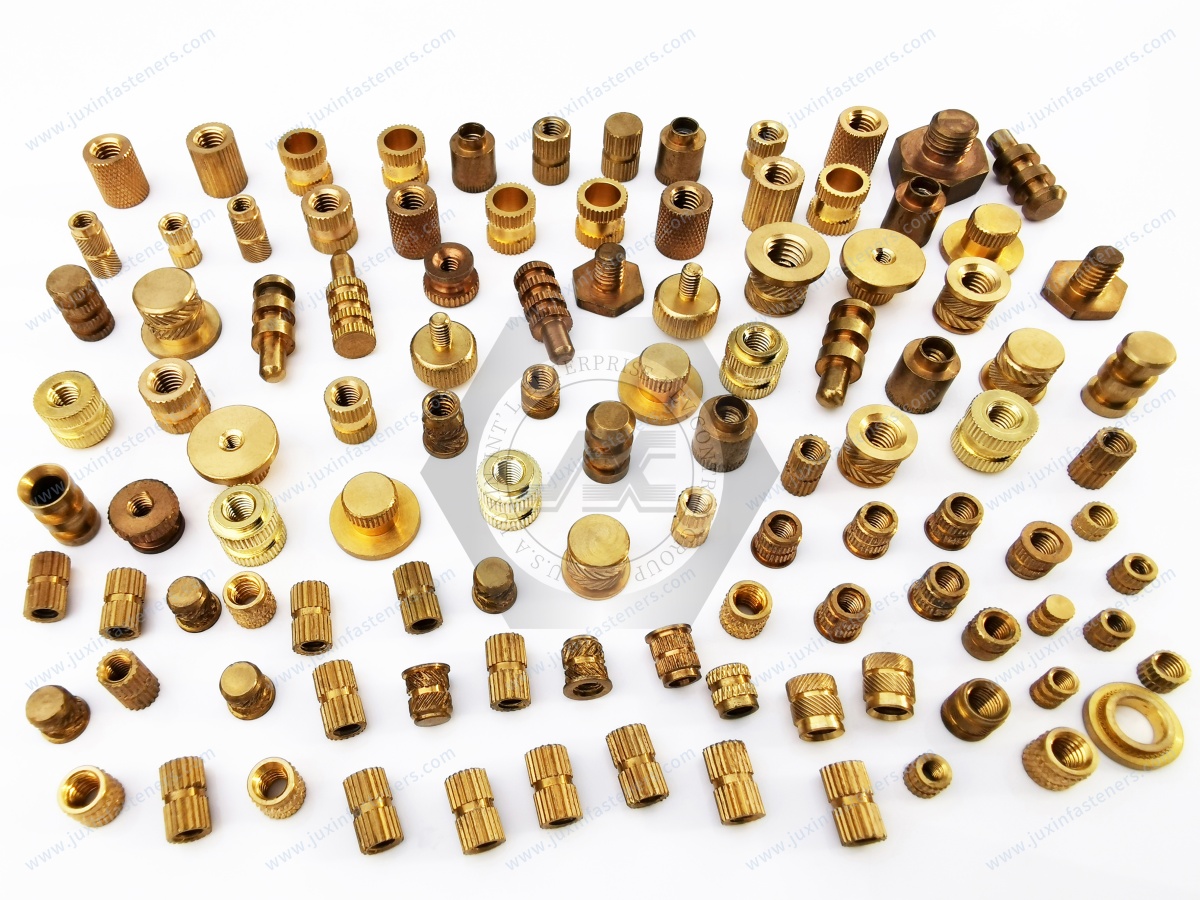
Studs can be useful where repeated assembly or specific clamping arrangements are required.
Custom studs may be manufactured with different thread configurations on each end or with additional machined features.
Potential requirements include:
Double-ended studs
Unequal thread lengths
Special thread combinations
Reduced shank sections
Shoulders
Custom lengths
Controlled thread runout
For OEM equipment, the stud geometry should be matched to the actual mating components and assembly process.
JUXIN manufactures custom studs according to engineering drawings rather than limiting production to standard catalog dimensions.
Standard screws are suitable for many industrial assemblies, but proprietary semiconductor equipment can require specialized screw geometries.
JUXIN can support custom screw requirements involving:
Non-standard lengths
Special head designs
Fine threads
Custom threads
Reduced shanks
Shoulders
Special drive configurations
Internal or external features
For vacuum-related applications, vented screw designs may also be considered where the equipment architecture requires a pathway for trapped gas to escape.
The appropriate screw geometry should be established from the equipment design and application requirements.
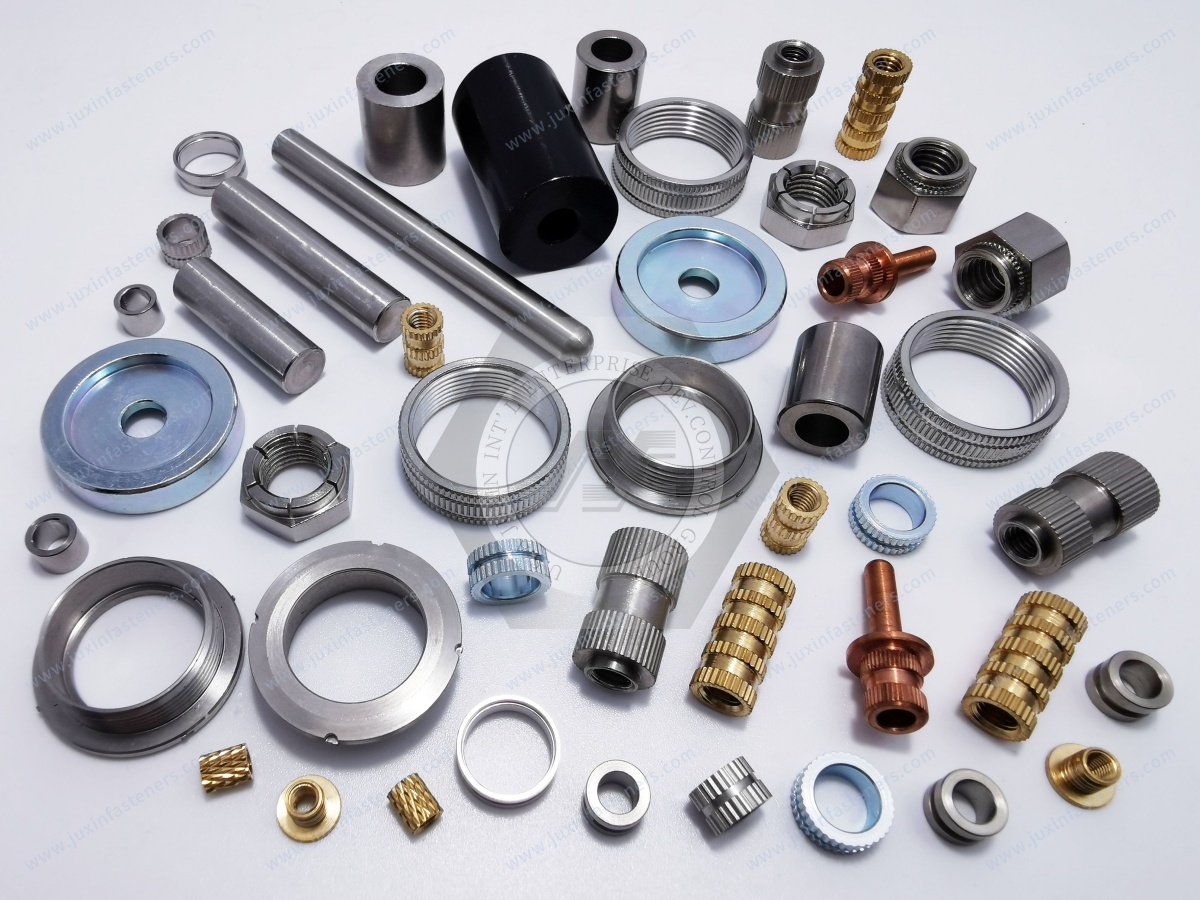
Threaded shafts are particularly suited to CNC turning when the component contains multiple cylindrical and threaded features.
A single CNC turned component may incorporate:
Thread + Shaft + Shoulder + Groove + Bore + Chamfer
Depending on the design, JUXIN can manufacture these features as an integrated precision component.
Potential applications include:
Automation mechanisms
Adjustment systems
Linear positioning assemblies
Sensor mechanisms
Semiconductor handling equipment
Precision machinery
CNC turning provides controlled production of cylindrical surfaces, external threads, internal bores and concentric features.
Industrial automation systems frequently use threaded mechanical components for positioning, adjustment and structural connections.
Custom threaded parts can be used in:
Robotic mechanisms
Wafer handling systems
Pick-and-place equipment
Automated inspection systems
Motion-control assemblies
Precision fixtures
Sensor mounting systems
Automated production equipment
Automation equipment may require repeatable mechanical interfaces because components are assembled and adjusted repeatedly during production, maintenance or equipment servicing.
For these applications, thread consistency and dimensional control can be as important as basic fastener strength.
The first step in manufacturing a precision threaded component is establishing the correct thread specification.
Depending on the customer requirement, this may involve:
Metric threads
Unified threads
Fine threads
Special thread profiles
Internal threads
External threads
Multi-feature threaded components
Thread pitch can influence engagement, adjustment characteristics and component geometry.
For custom parts, the engineering drawing should clearly define the thread designation, tolerance and functional requirements.
JUXIN reviews the thread specification before production to ensure the manufacturing process is aligned with the customer's requirements.
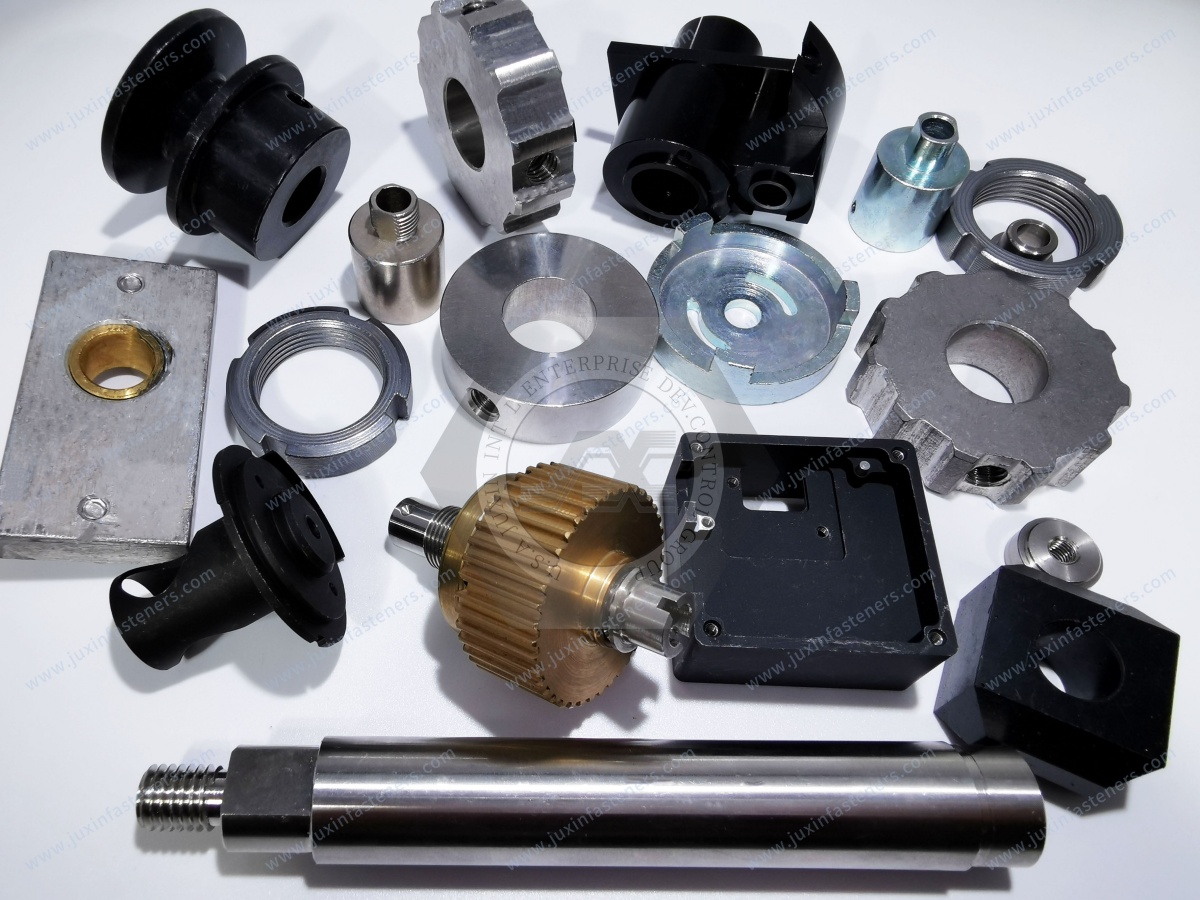
Thread engagement determines how much of the mating thread participates in the mechanical connection.
Insufficient engagement may reduce the effectiveness of the joint, while unnecessarily long engagement may increase component size or interfere with surrounding equipment.
For precision assemblies, engineers should consider:
Thread Diameter + Pitch + Engagement Length + Material + Applied Load
The required engagement should be established according to the actual joint design and mechanical requirements.
JUXIN manufactures threaded components to customer-defined dimensions and thread specifications.
For custom threaded components, the end of a thread may need to transition into a shoulder, locating diameter or other functional feature.
Thread runout can therefore become an important design consideration.
A component may require a controlled relationship between:
Thread end
Shoulder
Locating diameter
Chamfer
Mating surface
This is particularly relevant when the component must seat against another precision-machined part.
Where these features are functionally critical, the drawing should define the required dimensions and tolerances.
Some threaded components perform more than a simple fastening function.
For example, a threaded shaft may simultaneously act as:
A locating component
An adjustment element
A rotating shaft
A sensor support
A precision mechanical interface
In these cases, the relationship between the thread and other cylindrical features can become important.
Engineers may therefore specify requirements related to:
Concentricity
Runout
Diameter
Straightness
Shoulder location
Surface finish
The appropriate tolerance should be based on the actual function of the component.
Material selection depends on the mechanical, environmental and dimensional requirements of the application.
JUXIN can manufacture custom threaded components from materials such as:
Stainless steel
316L stainless steel
Carbon steel
Alloy steel
Aluminum
Copper
Titanium
Engineering plastics
Different materials provide different combinations of:
Strength
Corrosion resistance
Weight
Machinability
Thermal characteristics
Electrical properties
For semiconductor and automation equipment, material selection should consider the complete operating environment rather than simply selecting the strongest available material.
Surface treatment can affect both performance and dimensional characteristics.
Depending on the material and application, requirements may include:
Passivation
Zinc plating
Zinc-nickel plating
PTFE-based coatings
Zinc-aluminum flake coatings
Mechanical polishing
Other customer-specified finishes
For precision threaded components, coating thickness should be considered because surface treatment can influence thread fit and assembly characteristics.
For semiconductor or vacuum applications, the suitability of a particular surface treatment should be evaluated against the actual environment, cleaning requirements and equipment specifications.
CNC machining is particularly useful when a threaded component contains several integrated features.
JUXIN can manufacture components involving:
External threads
Internal threads
Precision diameters
Bores
Shoulders
Grooves
Chamfers
Flats
Cross holes
Custom profiles
The manufacturing process can combine CNC turning and CNC milling where required by the component geometry.
This allows a custom threaded part to be manufactured as one integrated component instead of assembling multiple standard parts.
For proprietary semiconductor equipment, the engineering drawing is the foundation of production.
JUXIN reviews customer drawings for:
Material
Dimensions
Thread specification
Tolerances
GD&T requirements
Critical features
Surface finish
Surface treatment
Inspection requirements
Quantity
This drawing-based approach helps translate the equipment engineer's requirements into a repeatable manufacturing process.
For revised equipment designs, maintaining control over drawing revisions is also important for repeat production.
Some semiconductor equipment incorporates vacuum systems where threaded components may have additional requirements.
Depending on the application, engineers may consider:
Material compatibility
Surface condition
Cleaning
Outgassing
Trapped volumes
Thread geometry
Vented designs
For selected vacuum applications, vented screws and vented threaded components can provide a pathway for trapped gas to escape during evacuation.
However, not every vacuum application requires vented fasteners.
The appropriate solution should be established according to the vacuum-system design and customer specification.
Metrology and inspection equipment requires stable mechanical assemblies and repeatable positioning.
Custom threaded components may be used for:
Precision fixtures
Sensor mounting
Alignment mechanisms
Adjustment systems
Standoffs
Bushings
Positioning assemblies
Engineers may need to consider thread fit, concentricity, surface finish and dimensional stability when specifying these components.
JUXIN can manufacture custom threaded components together with other precision CNC parts required for the same equipment assembly.
Wafer handling systems can contain numerous small mechanical components.
Custom threaded components may support:
End-effector assemblies
Guide mechanisms
Alignment systems
Sensor mounts
Adjustment mechanisms
Structural brackets
Precision fixtures
Depending on the equipment design, components may require corrosion resistance, controlled surface finish, low particle considerations or specific material requirements.
The final specification should be determined according to the location and function of each component.
Semiconductor equipment assemblies often contain both standard fasteners and custom mechanical components.
For example:
Custom Screw + Threaded Pin + Precision Shaft + Spacer + Bushing + Special Nut
Instead of sourcing every component from a different supplier, OEM procurement teams can evaluate a supplier capable of manufacturing multiple component categories.
JUXIN supports:
Screws
Bolts
Nuts
Studs
Washers
Threaded pins
Rivet nuts
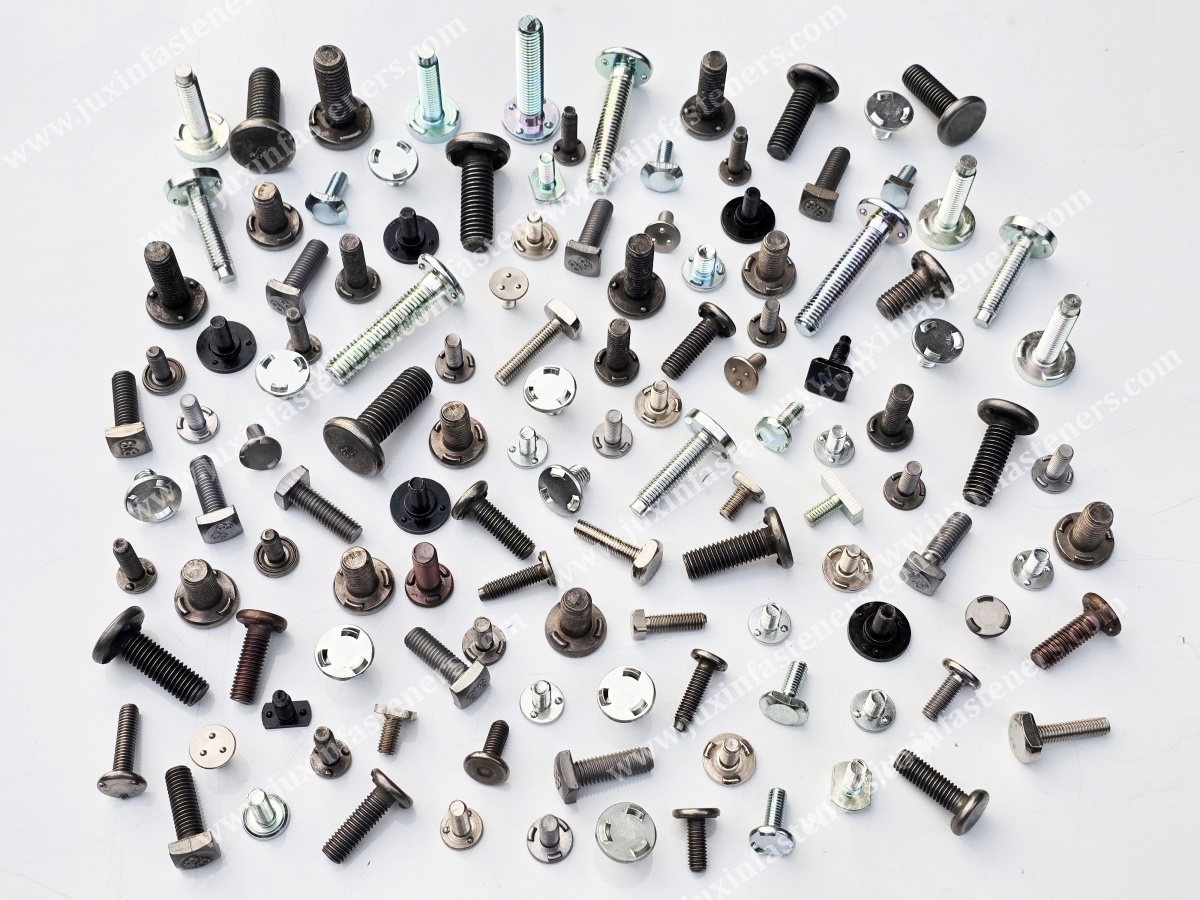
Weld fasteners
Self-clinching fasteners
Pins
Shafts
Bushings
Spacers
Standoffs
Sleeves
Brackets
Fixtures
Custom mechanical parts
This combined capability can simplify RFQ management, technical communication and repeat sourcing.
For procurement managers and supply-chain teams, precision threaded components require more than a competitive unit price.
Supplier evaluation can include:
Manufacturing capability
Drawing interpretation
Material sourcing
Thread control
Dimensional consistency
Inspection capability
Surface-treatment coordination
Production repeatability
Packaging
Technical communication
A reliable supply program should maintain the approved specification across repeat production batches.
This is particularly important when a threaded component becomes part of a long-term semiconductor equipment platform.
For structural and mechanical design engineers, the key question is not simply:
“What size thread do we need?”
A more complete engineering review considers:
Thread + Geometry + Material + Tolerance + Surface + Load + Assembly + Environment
The component should be designed around its actual mechanical function.
For example, a threaded pin used primarily for alignment may have very different dimensional requirements from a threaded stud used for structural clamping.
Defining the functional characteristics early helps the manufacturer understand which dimensions require tighter control.
Although semiconductor equipment is a key application, precision threaded components can also support:
Industrial automation
Robotics
Automotive equipment
EV manufacturing equipment
Electronics manufacturing
Medical equipment
Optical equipment
Inspection systems
Industrial machinery
Telecommunications equipment
HVAC equipment
Renewable-energy equipment
Rail transit equipment
The appropriate material, thread and manufacturing process depend on the actual application.
A custom threaded component project can follow a structured process:
Engineering Drawing → Technical Review → Material Confirmation → Manufacturing Process → Prototype/Sample → Inspection → Approval → Production → Repeat Supply
During the technical review, JUXIN can identify:
Critical dimensions
Thread requirements
Machining features
Material requirements
Surface-treatment requirements
Inspection points
This process helps convert a custom engineering concept into a repeatable production component.
JUXIN has more than 23 years of experience in the fastener industry and supports international OEM customers requiring custom fasteners and precision mechanical components.
Our manufacturing capabilities combine:
Fastener Manufacturing + CNC Turning + CNC Machining + Custom Production
We can support customers requiring:
Precision threaded components
Custom threaded parts
Threaded pins
Precision studs
Custom screws
Threaded shafts
Custom nuts
Threaded inserts
CNC turned components
Precision pins
Bushings
Spacers
Other custom mechanical components
Our objective is to manufacture each component according to the customer's approved engineering requirements and functional specifications.
If you are sourcing precision threaded components for semiconductor equipment, automation systems or precision machinery, JUXIN can review your engineering drawings, CAD files or samples.
Please provide:
Engineering drawing
CAD file, if available
Thread standard
Thread pitch
Material
Dimensions
Tolerance requirements
GD&T requirements
Surface finish
Surface treatment
Application
Inspection requirements
Prototype or production quantity
Packaging requirements
Our team can review the requirements and determine a suitable manufacturing approach before quotation.
Contact JUXIN FASTENERS
Email: info@juxinfasteners.com
Website: www.juxinfasteners.com
JUXIN FASTENERS — Precision Threaded Components and Custom Fasteners for Semiconductor Equipment, Automation and Industrial OEMs.
Contact Us
Tel.:
+86 020 8621 0320
+86 020 3121 6067
E-mail:
Technical Support:
Navigation
SEND INQUIREY