
Call Us
+86 136 6007 9809
Call Us
+86 136 6007 9809

Aug. 15, 2026
Insert Nuts for Plastic Components and High-Performance Threaded Connections
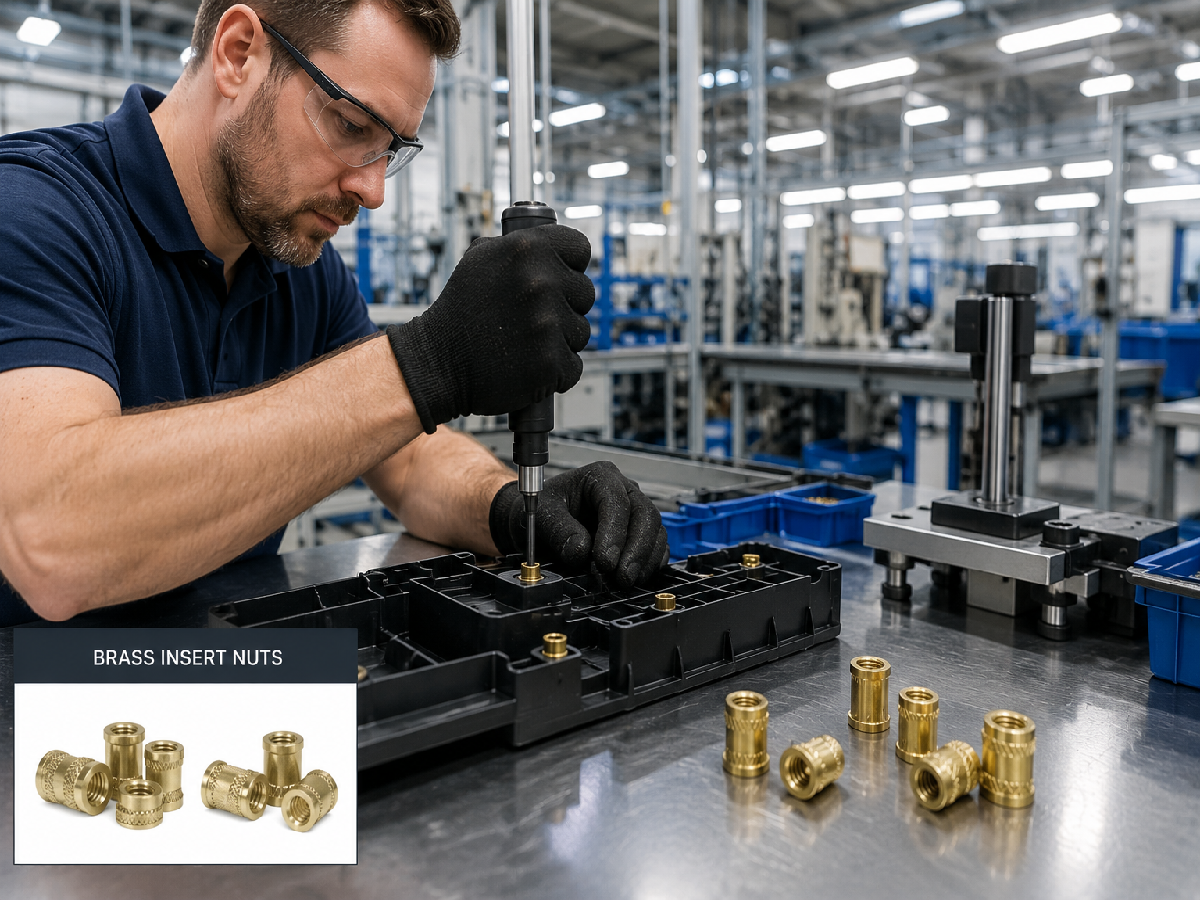
When plastic components require a reliable threaded connection, insert nuts for plastic provide an efficient alternative to directly tapping threads into the base material.
By integrating a metal threaded insert into a plastic component, manufacturers can create a durable connection while maintaining the lightweight and design flexibility of plastic.
Insert nuts are widely used in automotive components, consumer electronics, medical equipment, home appliances, industrial automation, electrical equipment, and other engineered plastic applications.
Compared with conventional fastening methods, properly designed threaded inserts for plastic can improve assembly efficiency, support repeated disassembly and reassembly,
reduce component weight, and provide reliable torque and pull-out resistance.
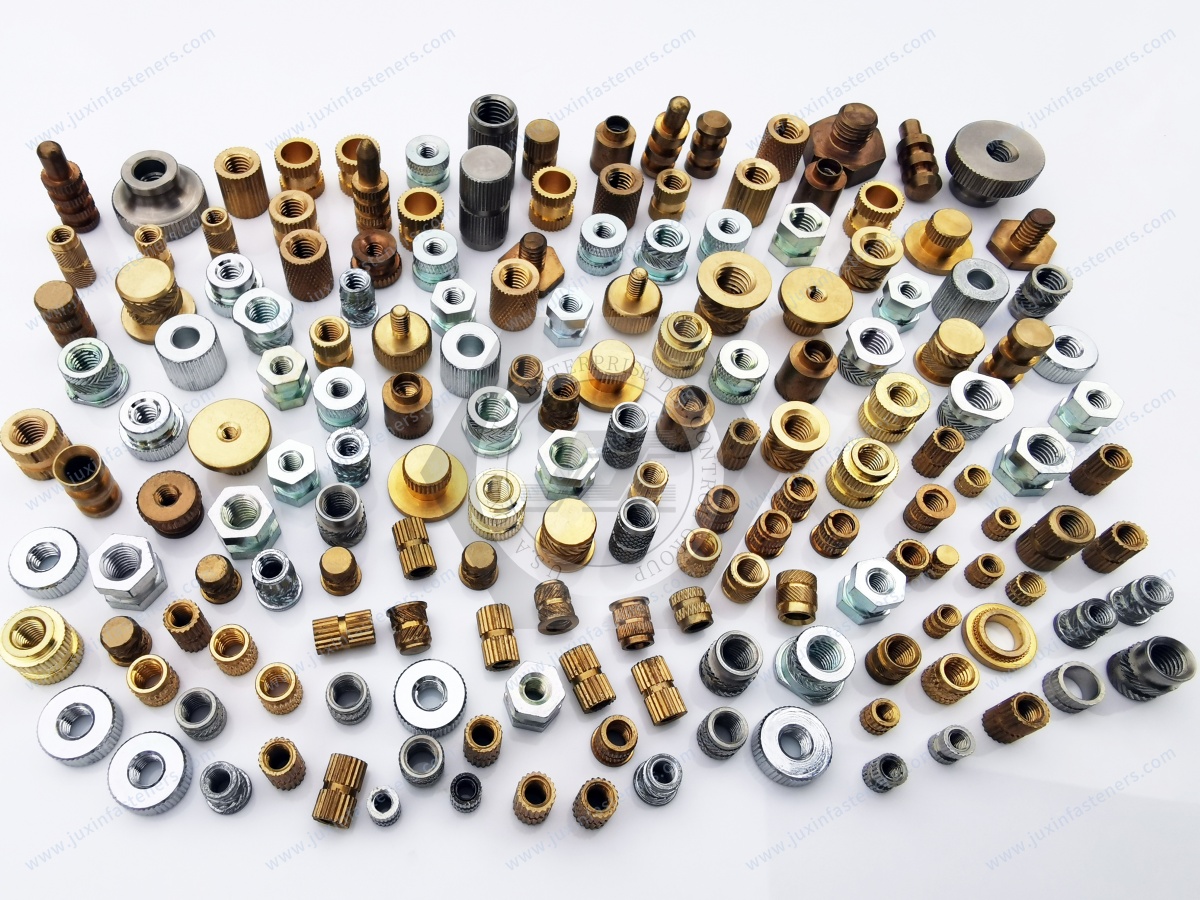
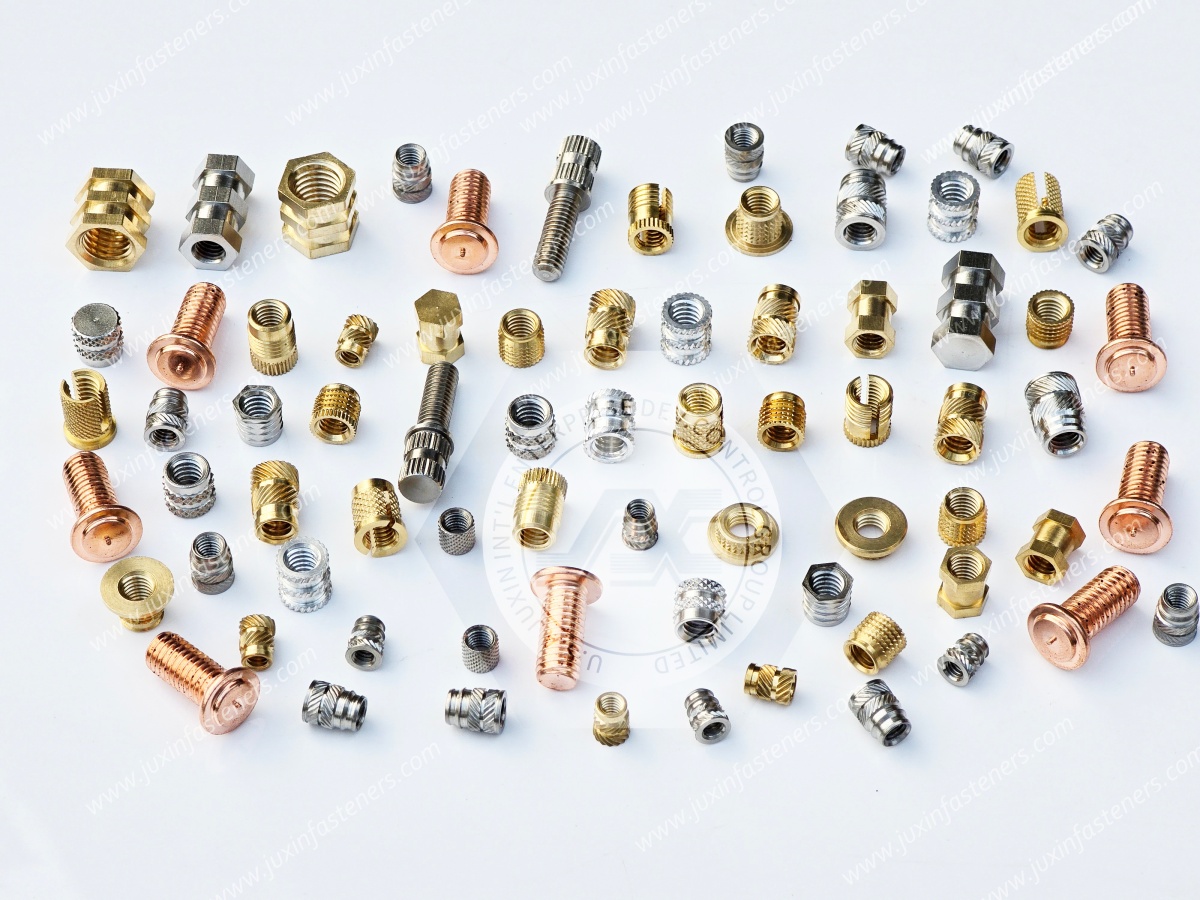
JUXIN FASTENERS supplies brass insert nuts, threaded inserts, heat-set inserts, ultrasonic inserts, press-fit inserts, and customized insert nuts for OEM and industrial applications.
Why Use Insert Nuts in Plastic Components?
Directly forming a thread in plastic can be suitable for simple applications, but the connection may become damaged when screws are repeatedly removed and installed.
This is especially important for products that require:
Repeated maintenance
Component replacement
Service access
Higher tightening torque
Reliable thread engagement
Long-term assembly durability
A metal insert nut for plastic creates a stronger and more durable threaded interface.
The surrounding plastic provides the structural body, while the metal insert provides the functional thread.
This combination allows engineers to achieve a balance between lightweight construction and reliable mechanical fastening.
Key Benefits of Insert Nuts
1. Supports Thinner Plastic Wall Sections
A properly designed insert can allow manufacturers to create threaded mounting points without making the entire plastic component significantly thicker.
This can support:
Compact product designs
Reduced material consumption
Lower component weight
Greater design flexibility
Smaller equipment housings
For thin-wall applications, insert geometry must be carefully matched to the plastic material and component design.
2. Fast Heat-Set and Ultrasonic Installation
Heat-set inserts can be rapidly installed into compatible thermoplastics.
Controlled heat softens the surrounding plastic, allowing the insert to penetrate the component. As the plastic cools, it forms mechanical retention around the external profile of the insert.
Ultrasonic insertion provides another high-speed installation method.
Ultrasonic energy generates localized heat, allowing the insert to be embedded efficiently into suitable thermoplastic components.
Both methods can be integrated into automated production processes.
Typical Advantages
Fast installation
Consistent positioning
High production efficiency
Suitable for automated assembly
Reduced secondary operations
Repeatable threaded connections
3. Rounded Pilot Tip for Accurate Positioning
The insert can feature a rounded pilot tip designed to improve positioning during installation.
This geometry helps guide the insert into the prepared hole and can reduce the risk of misalignment during automated or manual insertion.
Accurate positioning is particularly important for:
Thin-wall plastic parts
Small electronic housings
Automotive components
Precision assemblies
Automated insertion processes
A controlled pilot geometry can help the insert enter the plastic more smoothly and consistently.
4. Stepped Outside Diameter for Controlled Insertion
The stepped outside diameter design allows the insert to enter the plastic progressively rather than applying the full interference load at once.
This gradual insertion can help reduce stress concentration in the surrounding plastic.
It is particularly beneficial for applications where the plastic component has:
Thin walls
Limited installation space
Brittle material characteristics
Tight dimensional requirements
By controlling how the insert enters the plastic, engineers can reduce the potential for cracking or deformation of the base material.
5. Double-Diagonal Knurl for High Torque Resistance
The external knurl design plays an important role in the performance of an insert nut.
A double-diagonal knurl pattern creates mechanical interlocking between the insert and the surrounding plastic.
This helps resist rotational movement when the mating screw is tightened or removed.
The knurl can also contribute to improved resistance against axial pull-out forces.
Key Performance Advantages
High torque resistance
Improved pull-out resistance
Strong mechanical interlocking
Reliable insert retention
Suitable for repeated assembly
The final retention performance depends on the plastic material, hole dimensions, insert geometry, installation method, and application loads.
Insert Nuts Improve Assembly Efficiency
One of the major advantages of using threaded inserts for plastic is improved assembly efficiency.
Traditional manufacturing methods may require additional operations such as:
Welding
Riveting
Mechanical fastening
Separate metal brackets
Additional reinforcement components
An embedded insert can integrate the threaded connection directly into the plastic component.
This can simplify the assembly structure and reduce the number of separate components.
Repeated Assembly and Disassembly
Many industrial products require service or maintenance during their operating life.
Examples include:
Electronic equipment
Automotive components
Industrial controllers
Medical equipment
Home appliances
Communication equipment
Electrical enclosures
Direct plastic threads can wear when screws are repeatedly removed and installed.
A metal insert provides a more durable thread interface and can support repeated assembly cycles.
This makes insert nuts for plastic housings particularly valuable for serviceable products.
Lightweighting with Insert Nuts
Lightweighting is an important design objective across modern industries.
Instead of manufacturing an entire component from metal, engineers can use an engineered plastic body and strategically integrate metal insert nuts where threaded connections are required.
This design approach can help:
Reduce component weight
Reduce material consumption
Simplify product architecture
Improve design flexibility
Maintain reliable threaded connections
Support compact product designs
The result is a plastic component with localized metal fastening points, combining the advantages of both materials.
Electrical Conductivity
Metal insert nuts can also provide electrical conductivity when required by the application.
This can be useful for selected:
Electronic housings
Electrical enclosures
Industrial communication equipment
Sensor assemblies
Grounding structures
Shielding components
Brass insert nuts are commonly considered for applications where both mechanical threading and electrical conductivity are required.
Electrical performance should be evaluated according to the complete assembly design and applicable requirements.
High-Strength Insert Nut Solutions
Insert performance depends on more than the strength of the metal itself.
The complete connection consists of:
Insert + Plastic Material + Hole Geometry + Installation Process + Mating Screw
For this reason, engineers should evaluate the complete system when specifying a high-strength threaded insert.
Important performance parameters include:
Pull-Out Resistance
The force required to remove the insert axially from the plastic.
Torque Resistance
The torque required to rotate the insert inside the plastic.
Installation Force
The force or energy required to correctly install the insert.
Thread Strength
The ability of the internal thread to withstand tightening and repeated assembly.
Plastic Retention
The ability of the surrounding plastic to maintain the insert securely during service.
Insert Nut Installation Methods
Heat-Set Insert Installation
Heat-set installation is commonly used for thermoplastic components.
The insert is heated and pressed into the prepared hole. The surrounding plastic softens and flows around the external knurl.
After cooling, the plastic solidifies and mechanically locks the insert into position.
This process is suitable for many plastic housing and component applications.
Ultrasonic Insert Installation
Ultrasonic insertion uses high-frequency mechanical energy to generate localized heat.
The insert can then be embedded into the plastic component.
This method can provide:
Fast cycle times
Accurate positioning
Automated production capability
Consistent installation
Low localized thermal exposure
Press-Fit Insert Installation
Some insert nuts can be installed mechanically through controlled press fitting.
This method may be suitable where:
The plastic material supports interference fitting
Heating is undesirable
Post-molding installation is preferred
Mechanical insertion equipment is available
The insert and hole tolerances must be correctly matched.
Insert Nut Design for Plastic Materials
Insert selection should consider the specific plastic.
Common engineering plastics include:
ABS
PC
PA
POM
Glass-filled polymers
Other thermoplastic materials
Different plastics have different levels of hardness, elasticity, shrinkage, and resistance to cracking.
Therefore, the same insert geometry may not provide identical performance across different materials.
Engineers should validate:
Hole diameter
Insert outside diameter
Wall thickness
Installation temperature
Insertion force
Pull-out resistance
Torque resistance
Insert Nut Applications Across Industries
Automotive
Used in interior components, sensor housings, electronic modules, EV components, brackets, and plastic assemblies.
Consumer Electronics
Used in compact housings, routers, wearable devices, smart devices, electronic equipment, and thin-wall plastic components.
Medical Devices
Used in equipment housings, monitoring systems, diagnostic equipment, laboratory equipment, and serviceable medical assemblies.
Home Appliances
Used in air conditioners, refrigerators, robot vacuum cleaners, kitchen equipment, control panels, and plastic housings.
Industrial Automation
Used in PLC housings, sensors, industrial switches, controllers, communication equipment, and electrical enclosures.
Insert Nut Selection Guide for Engineers
Before selecting an insert nut, engineers should define the following:
Engineering Requirement | Key Consideration |
Plastic Material | ABS, PC, PA, POM, etc. |
Thread | Metric or inch |
Insert Length | Based on wall and engagement requirements |
Outside Diameter | Matched to hole and retention requirements |
Knurl | Torque and pull-out resistance |
Installation | Heat-set, ultrasonic, press-fit, or in-mold |
Wall Thickness | Determines suitable insert geometry |
Load | Axial and rotational loads |
Environment | Temperature, humidity, chemicals, vibration |
Material | Brass, stainless steel, aluminum, etc. |
Surface Finish | According to corrosion and application requirements |
Tolerance | Based on component and assembly requirements |
Customized Insert Nuts for OEM Applications
Standard insert nuts may not always meet the requirements of a specialized plastic component.
JUXIN FASTENERS can support customized insert nut requirements involving:
Custom outside diameters
Custom lengths
Metric threads
Inch threads
Special thread specifications
Double-diagonal knurling
Anti-rotation profiles
Stepped outside diameters
Rounded pilot tips
Brass
Stainless steel
Aluminum
Nickel-plated surfaces
OEM packaging
For engineering evaluation, customers can provide a drawing, sample, plastic material, thread specification, hole size, wall thickness, and expected loading conditions.
Insert Nuts vs. Direct Plastic Threads
Feature | Insert Nut | Direct Plastic Thread |
Thread Material | Metal | Plastic |
Repeated Assembly | Excellent potential | More limited |
Torque Resistance | High potential | Application dependent |
Pull-Out Resistance | High potential | Application dependent |
Lightweight Design | Excellent | Excellent |
Automated Installation | Yes | Yes |
Serviceability | Excellent potential | More limited |
Design Flexibility | High | Moderate |
The appropriate solution depends on the product design and performance requirements.
Procurement Considerations for Insert Nuts
For purchasing teams, the lowest unit price is not necessarily the lowest total cost.
A complete procurement evaluation should consider:
Unit cost
Installation efficiency
Production yield
Dimensional consistency
Scrap rate
Pull-out performance
Torque performance
Packaging
Delivery capability
Quality control
Technical support
A stable insert design and consistent manufacturing process can help reduce production interruptions and assembly defects.
Why Choose JUXIN FASTENERS?
JUXIN FASTENERS provides precision insert nuts and threaded fastening solutions for plastic components across multiple industrial sectors.
Our product capabilities include:
Brass insert nuts
Threaded inserts for plastic
Heat-set inserts
Ultrasonic inserts
Press-fit inserts
Injection molding inserts
Knurled inserts
Anti-rotation inserts
Stainless steel inserts
Aluminum inserts
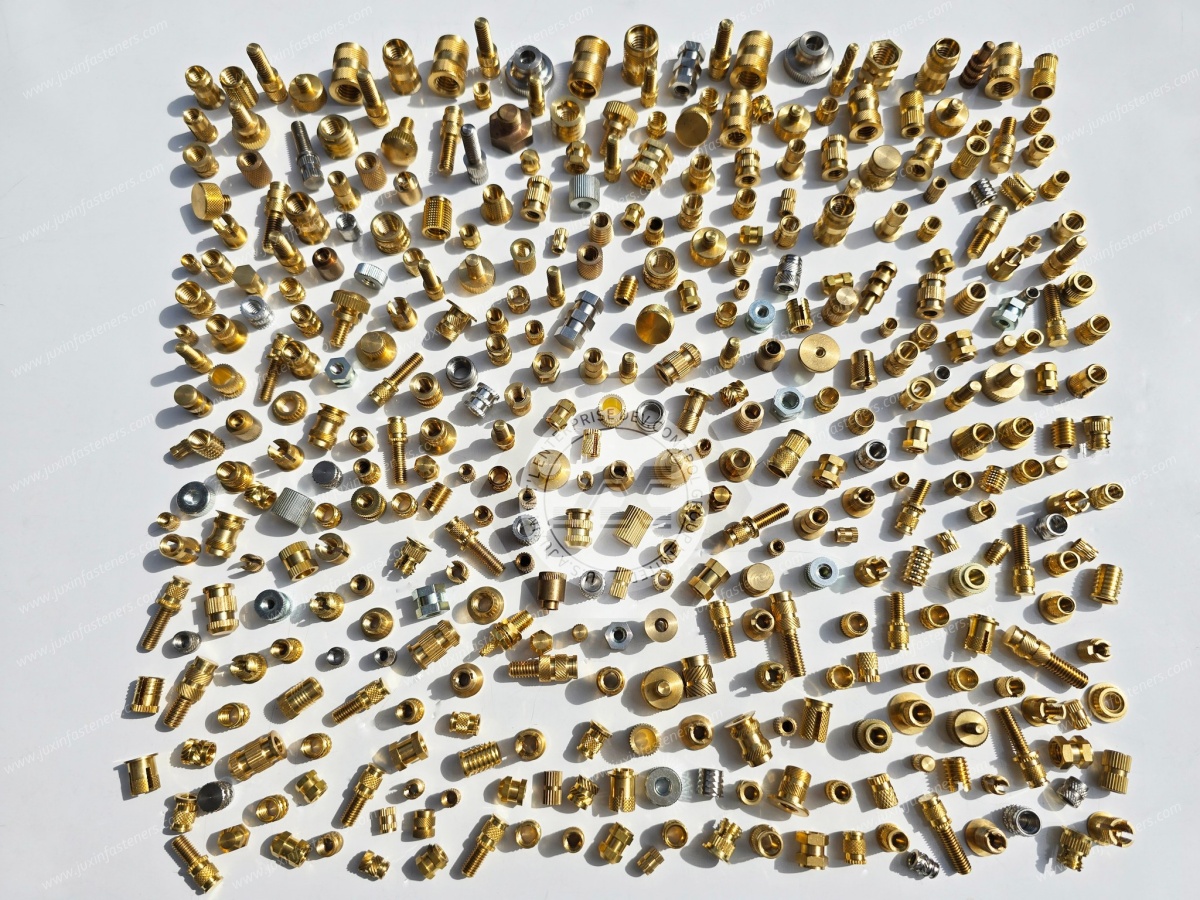
Customized threaded inserts
We support OEM manufacturers, engineers, product designers, sourcing teams, and industrial procurement professionals with application-specific fastening solutions.
Frequently Asked Questions
What is an insert nut?
An insert nut is a metal threaded component installed into plastic or another substrate to create a durable threaded connection.
Why are insert nuts better than plastic threads?
For applications requiring repeated assembly, higher torque, or improved thread durability, a metal insert can provide a more robust threaded interface than a directly molded or tapped plastic thread.
What is a heat-set insert?
A heat-set insert is installed into compatible thermoplastic material using controlled heat. The softened plastic flows around the insert and forms mechanical retention after cooling.
What is a double-diagonal knurl?
A double-diagonal knurl is an external insert pattern designed to create mechanical interlocking with the surrounding plastic and improve resistance to rotation and pull-out.
Can insert nuts be used in thin-wall plastic?
Yes. Specialized insert designs can support thin-wall applications, but the insert dimensions, plastic material, hole size, and installation process must be carefully matched.
Can insert nuts be customized?
Yes. Insert nuts can be customized by thread, length, outside diameter, knurl profile, material, surface finish, and other engineering specifications.
High-Performance Insert Nut Solutions for Plastic Components
From automotive and consumer electronics to medical devices, home appliances, and industrial automation, insert nuts provide an efficient way to integrate durable metal threads into lightweight plastic components.
With features such as a rounded pilot tip, stepped outside diameter, and double-diagonal knurl, application-specific insert designs can improve positioning accuracy, installation consistency, torque resistance, and pull-out performance.
JUXIN FASTENERS provides high-quality insert nuts, threaded inserts for plastic, heat-set inserts, press-fit inserts, and customized fastening solutions for engineers and procurement teams worldwide.
Technical Inquiries & RFQ:
Email: info@juxinfasteners.com
Website: www.juxinfasteners.com
JUXIN FASTENERS — Precision Insert Nut Solutions for Lightweight, Reliable and Efficient Plastic Assemblies.
 MORE NEWS
Contact Us
Tel.:
+86 020 8621 0320
+86 020 3121 6067
E-mail:
Technical Support:
Navigation
SEND INQUIREY