
Call Us
+86 136 6007 9809
Call Us
+86 136 6007 9809

Aug. 01, 2026
PTFE coated fasteners are often selected when conventional fastener finishes cannot adequately address a combination of corrosion,
chemical exposure, thread friction, galling, seizure, or maintenance requirements.
But specifying "PTFE coating" alone is not enough.
The performance of a PTFE coated bolt, screw, nut, stud, or washer depends on the complete coating system, including substrate material,
surface preparation, primer or bonding system where applicable, coating formulation, thickness, curing, thread fit, friction behavior, operating environment, and installation conditions.
For design engineers, mechanical engineers, procurement managers, supplier-development teams, and OEM sourcing professionals, the correct question is therefore not simply:
"Is PTFE a good coating?"
The more useful question is:
"Which PTFE coating system, on which fastener substrate, under which environmental and installation conditions, provides the required functional performance?"
This distinction is critical when PTFE coated fasteners are used in chemical processing equipment, marine and coastal equipment,
industrial machinery, food-processing machinery, semiconductor equipment, electrical equipment, automotive systems, pumps, valves, pipelines, and other demanding industrial applications.
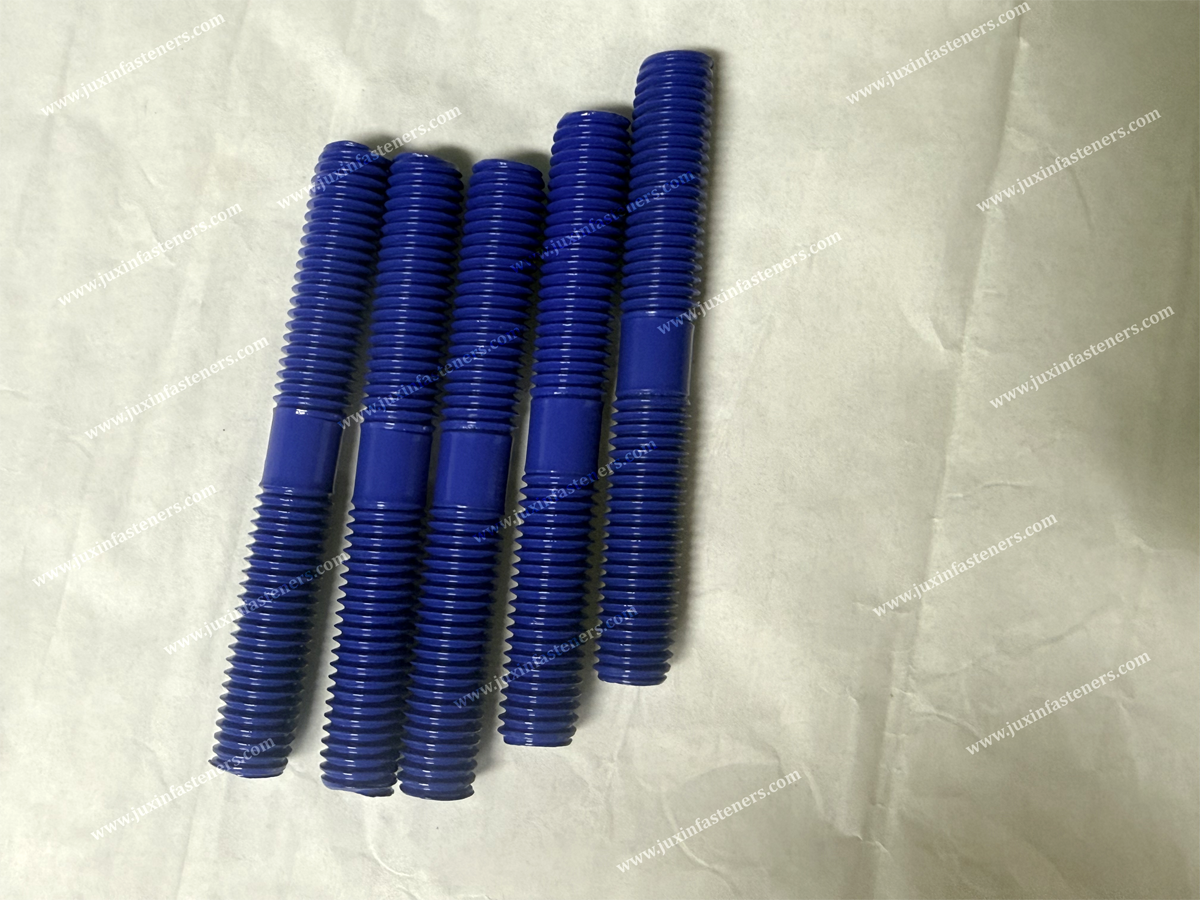
PTFE coated fasteners are metal fasteners whose surfaces incorporate a coating system containing polytetrafluoroethylene
(PTFE) to provide selected surface properties such as low friction, release behavior, chemical resistance, and environmental protection.
Typical products include:
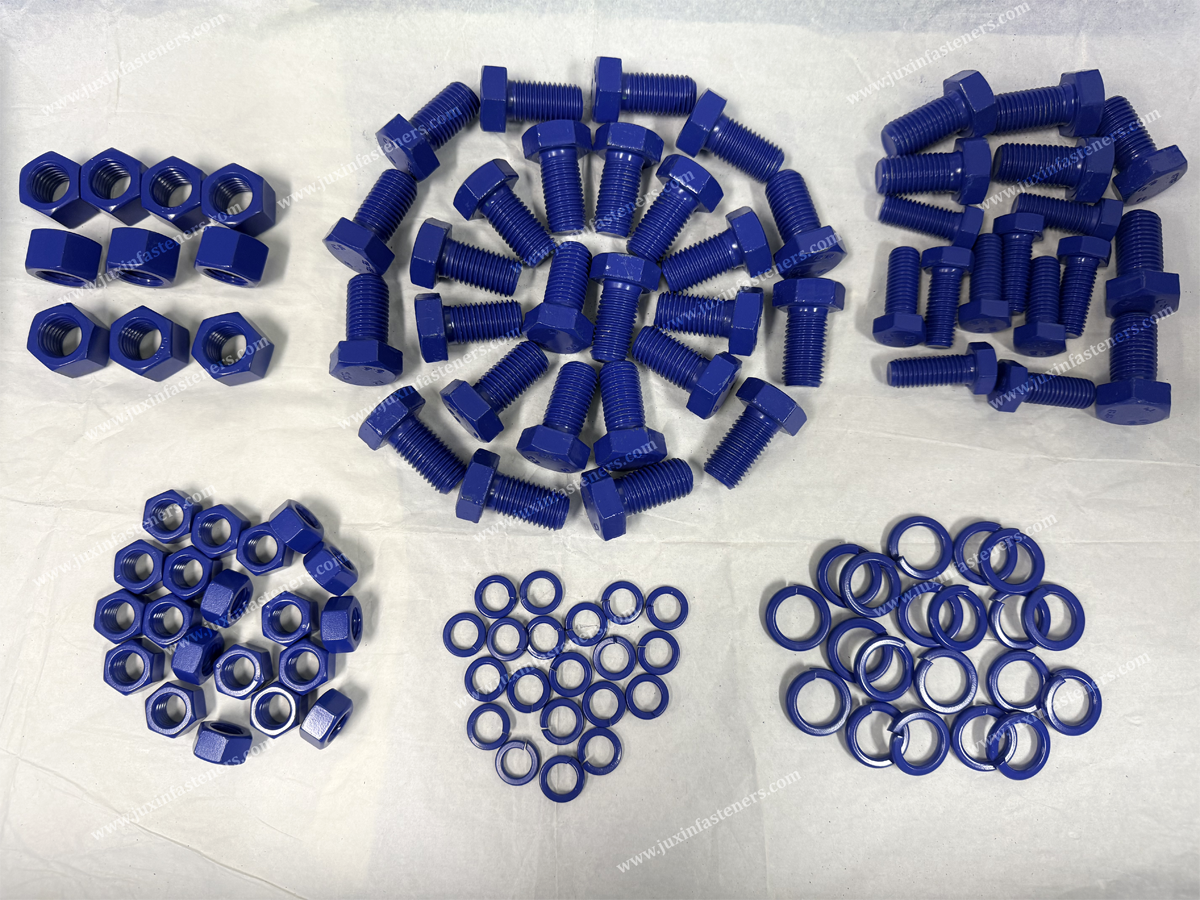
PTFE coated bolts
PTFE coated screws
PTFE coated nuts
PTFE coated studs
PTFE coated washers
PTFE coated threaded components
Custom PTFE coated fasteners
Depending on the coating system and substrate, PTFE can help address several engineering problems simultaneously.
However:
PTFE coating ≠ one universal coating specification.
Different commercial PTFE-based coating systems can use different binders, primers, pigments, fillers, curing conditions, thicknesses, and application processes.
Their corrosion, friction, adhesion, temperature, chemical, and wear performance should therefore be evaluated against the actual application specification.
PTFE-based coatings may be considered when a fastener needs one or more of the following surface functions:
Reduced thread friction
Reduced galling tendency
Improved release during disassembly
Corrosion protection
Chemical resistance
Non-stick surface behavior
Reduced adhesion of process contamination
Controlled installation behavior
Protection in humid or salt-containing environments
The important word is may.
The presence of PTFE does not automatically guarantee all of these properties at the same performance level.
A coating system optimized for friction may not provide the same corrosion performance as one engineered around a multi-layer corrosion-protection system.
This is why engineers should specify required performance rather than only a coating name.
PTFE coating changes the fastener surface.
It does not automatically increase the tensile strength, yield strength, proof load, fatigue strength, or thread stripping capacity of the underlying fastener.
Those properties depend primarily on factors such as:
Base material
Material grade
Heat treatment
Fastener geometry
Thread geometry
Mechanical property class
Manufacturing process
Mating component
Joint design
Therefore:
Coating performance ≠ fastener mechanical strength.
A high-strength structural application still requires the correct bolt or stud material and mechanical properties independently of the PTFE coating.
Low friction is one of the reasons engineers consider PTFE-based coatings.
It is also one of the reasons they must be specified carefully.
In a torque-controlled bolted joint, applied tightening torque is consumed largely by friction in the threads and at the bearing interface, with only part of the input contributing to useful bolt tension.
If the friction condition changes, the relationship between tightening torque and preload also changes.
Therefore:
Torque ≠ Preload.
And more importantly:
Same torque + different friction ≠ same preload.
If an existing fastener is replaced with a lower-friction PTFE coated version while the original tightening torque remains unchanged, the resulting preload may change substantially.
This can create an over-preload risk even though the torque wrench displays the same value.
It is tempting to publish one coefficient of friction for all PTFE coated fasteners.
That is not a reliable engineering approach.
The actual friction behavior of a coated fastener can depend on:
PTFE coating formulation
Primer or basecoat
Coating thickness
Curing condition
Thread geometry
Mating material
Mating coating
Bearing surface
Tightening speed
Temperature
Number of installation cycles
Surface contamination
For OEM applications where preload matters, the required friction range should be defined and verified using an appropriate torque-tension or friction test method.
A generic statement such as "PTFE has a low coefficient of friction" is useful for material understanding.
It is not sufficient to define the tightening behavior of a production fastener.
Thread galling is particularly important in stainless steel fastening systems.
During tightening, high local contact pressure and sliding can cause material transfer between mating thread surfaces. Severe galling may lead to:
Increased tightening torque
Unstable preload
Thread damage
Seizure
Difficulty during disassembly
Damaged mating components
A suitable low-friction coating can reduce direct metal-to-metal interaction and may reduce galling tendency.
This can be useful for:
Stainless steel bolts
Stainless steel screws
Stainless steel nuts
Stainless steel studs
Frequently serviced threaded assemblies
However:
PTFE coating ≠ guaranteed galling elimination.
Galling behavior also depends on material combination, thread condition, fit, preload, tightening speed, temperature, surface finish, and installation procedure.
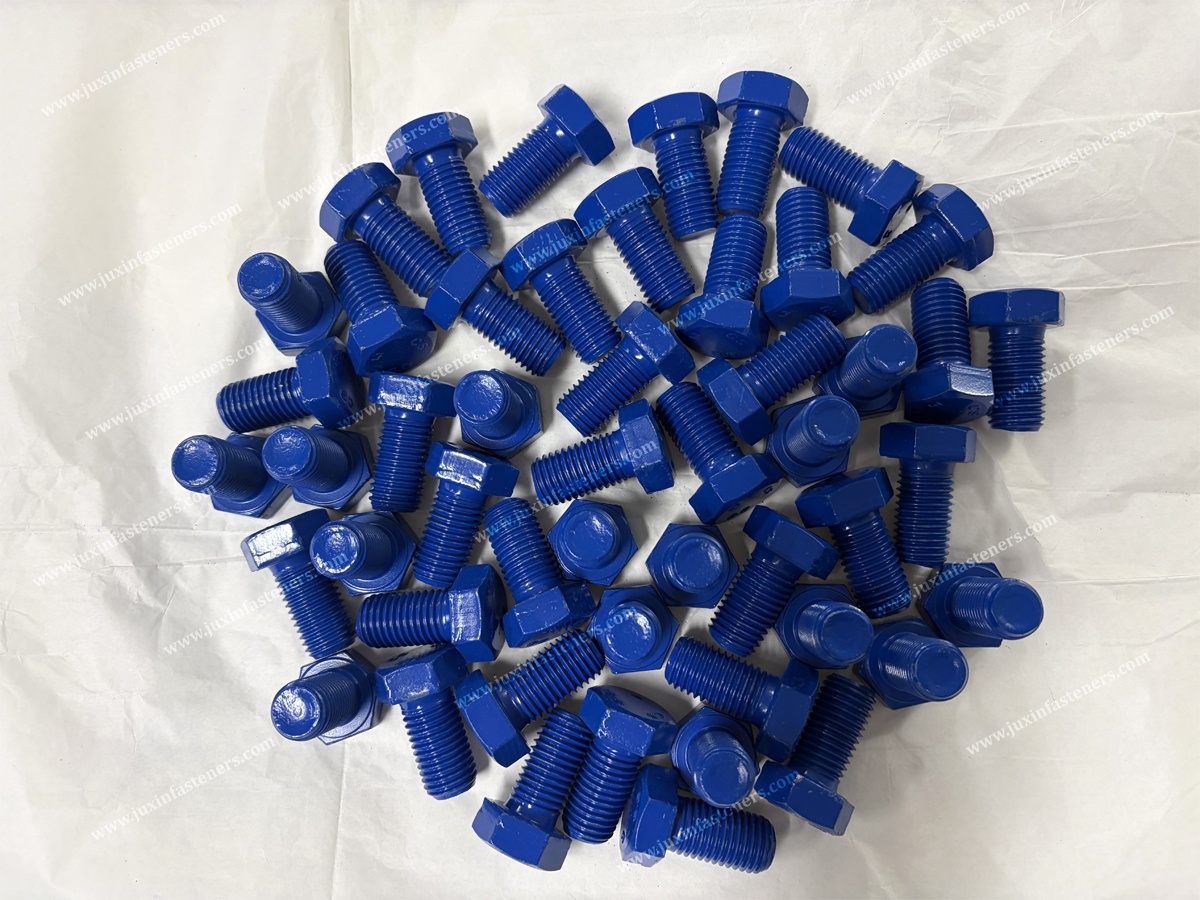
The original article positioned PTFE itself as an impermeable universal corrosion barrier. In engineering practice,
corrosion performance should instead be evaluated as a property of the complete coating and substrate system.
A PTFE-based coating system can provide useful environmental protection by limiting exposure of the metallic substrate to corrosive media.
But corrosion resistance depends on:
Substrate material
Surface preparation
Pretreatment
Primer
PTFE coating formulation
Coating thickness
Porosity
Adhesion
Edge coverage
Thread coverage
Curing
Installation damage
Service environment
Damage during wrenching or repeated assembly can expose the underlying substrate and change field performance.
Therefore:
PTFE name ≠ complete corrosion specification.
Salt spray testing can be useful for comparing coating systems under controlled laboratory conditions.
However:
Salt spray hours ≠ field service life.
A coating achieving a specified result in a salt spray test does not automatically provide a predictable number of years in:
Offshore equipment
Coastal infrastructure
Chemical plants
Wastewater systems
Automotive service
Industrial machinery
Real environments can include wet/dry cycling, UV exposure, temperature cycling, chemicals, abrasion, installation damage, crevices, deposits, and galvanic interaction.
Procurement specifications should therefore state the required corrosion test method and acceptance criteria rather than asking only for a generic "corrosion-resistant PTFE coating."
PTFE is known for broad chemical resistance, which makes PTFE-based coatings attractive for chemical-processing applications.
However, the chemical resistance of the PTFE polymer should not automatically be treated as the chemical resistance of the complete coated fastener.
The finished system may include:
PTFE
Binders
Pigments
Fillers
Primers
Pretreatments
Metallic substrate
Chemical exposure may also occur through scratches, damaged edges, threaded contact surfaces, or coating defects.
For chemical-service fasteners, specify:
Chemical or process media
Concentration
Operating temperature
Exposure duration
Continuous or intermittent exposure
Cleaning chemicals
Pressure where relevant
Required coating validation
This produces a much more useful specification than simply requesting "acid-resistant PTFE bolts."
PTFE polymer itself is associated with a broad useful temperature range,
but the allowable service temperature of a PTFE coated fastener should be based on the complete coating system and application.
The original article assigned approximately -200°C to +260°C to PTFE coated fasteners as a general operating range.
For production engineering, this should not be used as a universal coated-fastener specification.
Temperature capability may be limited by:
Binder
Primer
Pigment
Substrate
Fastener mechanical properties
Thermal cycling
Chemical exposure
Required adhesion
Long-term coating stability
For high-temperature or cryogenic equipment, confirm the qualified operating range of the actual coating system.
Coating thickness is not only a corrosion issue.
On threaded fasteners, excessive coating thickness can influence:
Thread fit
Assembly torque
Nut engagement
Gauge acceptance
Thread interference
Installation damage
This becomes especially important for small thread sizes or tightly controlled thread tolerances.
Engineers should consider the complete dimensional strategy:
Thread Before Coating → Coating Thickness → Final Thread Fit → Installation Behavior
For custom OEM components, coating allowance may need to be considered during manufacturing rather than treated as an afterthought.
PTFE itself is electrically insulating.
But this does not mean a PTFE coated metal bolt should automatically be treated as a qualified electrical insulator.
A real fastener coating may be:
Thin
Locally damaged
Interrupted at threads
Penetrated during tightening
Worn during service
Incomplete at contact points
Therefore:
PTFE coated fastener ≠ qualified electrical insulation system.
And:
Plastic or fluoropolymer coating ≠ system electrical compliance.
If electrical isolation is a functional requirement, the complete assembly should be designed and validated for the required voltage,
creepage, clearance, dielectric, grounding, and safety requirements.
A coating may reduce direct metallic contact in some areas and may help isolate the substrate from the environment.
But PTFE coating should not automatically be described as a complete galvanic-corrosion solution.
Galvanic behavior depends on:
Dissimilar metals
Electrolyte
Contact area
Coating continuity
Coating damage
Fastener installation
Exposed edges
Cathode-to-anode area ratio
For mixed-metal assemblies, galvanic compatibility should be evaluated at the assembly level.
The correct substrate depends on the required mechanical, environmental, and commercial performance.
| Selection Factor | PTFE Coated Carbon / Alloy Steel | PTFE Coated Stainless Steel |
|---|---|---|
| Mechanical strength options | Broad range, including high-strength fasteners | Depends on stainless grade and product specification |
| Substrate corrosion resistance | Relies more heavily on coating system | Inherent corrosion resistance varies by stainless grade |
| Galling concern | Generally different from stainless-to-stainless systems | Can be important in stainless threaded assemblies |
| Coating damage | Exposed steel may corrode depending on environment | Exposed stainless may retain useful corrosion resistance depending on grade and environment |
| Cost | Often lower depending on specification | Typically higher material cost |
| Selection basis | Strength + coating + environment | Environment + material compatibility + mechanical requirements |
Neither option is universally better.
The substrate should be selected before the coating system is finalized.
When stainless steel is required, engineers may compare 304 and 316 grades.
316 can provide improved resistance in some chloride-containing environments because of its alloy composition.
However:
316 ≠ automatically better than 304 for every application.
Selection should consider:
Chloride exposure
Chemical environment
Temperature
Mechanical requirements
Fabrication
Cost
Galling
Coating purpose
PTFE coating does not remove the need to select an appropriate substrate.
PTFE coated bolts, screws, nuts, and studs may be evaluated for:
Pumps
Valves
Piping equipment
Process machinery
Chemical handling equipment
Storage equipment
Maintenance-intensive assemblies
The engineering specification should identify the actual chemical exposure instead of relying on the generic term "chemical resistant."
For pressure-containing or safety-critical equipment, the fastener substrate, mechanical properties,
applicable pressure-equipment requirements, and joint design remain independently important.
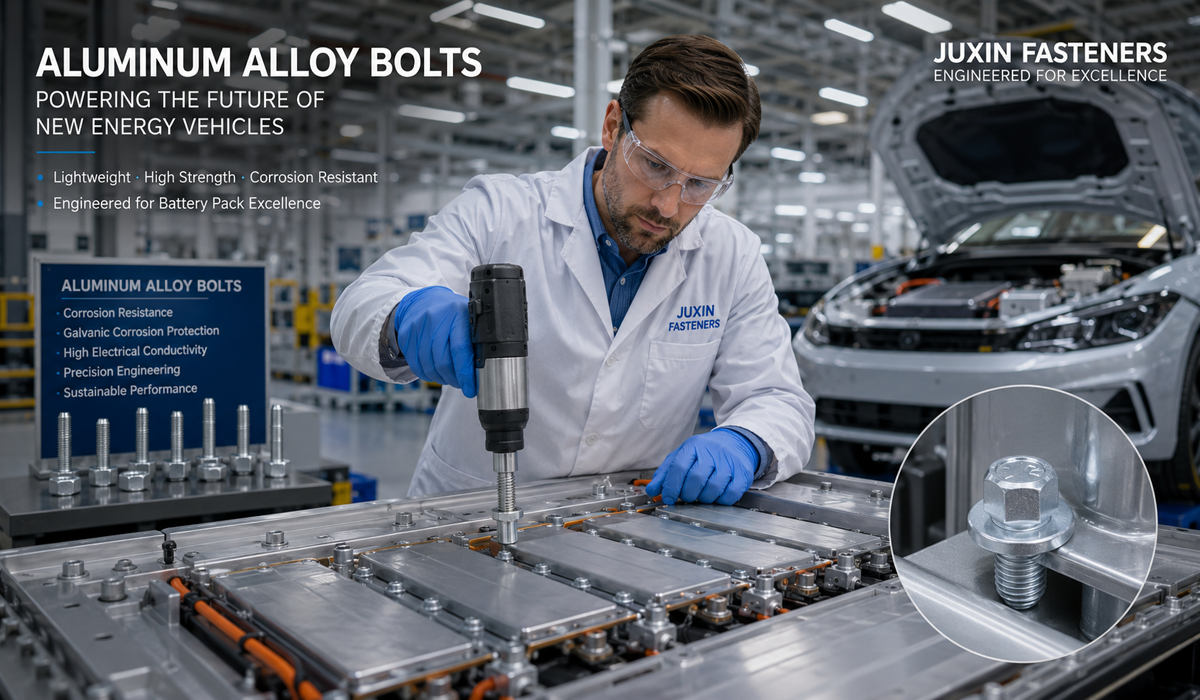
Marine and coastal environments can expose fasteners to:
Chlorides
Salt deposits
High humidity
Wet/dry cycles
Temperature variation
Galvanic interaction
PTFE-based coatings may form part of a corrosion-management strategy for:
Marine equipment
Coastal machinery
Desalination equipment
Water-treatment systems
External industrial equipment
However, material selection, coating damage, stainless grade, galvanic compatibility, and maintenance access must still be evaluated.
Corrosion-resistant fastener ≠ corrosion-resistant assembly.
The low surface energy and release characteristics associated with PTFE can be useful in equipment where residue adhesion and cleaning are engineering concerns.
Potential applications include:
Packaging machinery
Conveyors
Mixing equipment
Filling equipment
Processing machinery
But an important distinction must be made:
PTFE material properties ≠ automatic food-contact compliance.
If the fastener or coating is in direct or indirect food-contact service, the actual coating formulation and application must meet the applicable regulatory and customer requirements.
Do not qualify a coating as "food grade" based solely on the presence of PTFE.
PTFE coated fasteners may be considered for certain pharmaceutical machinery, laboratory equipment,
and process equipment where chemical exposure, cleaning, or release behavior is important.
However:
PTFE coating ≠ medical-device qualification.
For regulated environments, material declarations, cleanliness, extractables, process controls, regulatory requirements,
and customer specifications may be relevant depending on the application.
Semiconductor equipment can involve demanding chemical, cleanliness, vacuum, particle, and contamination requirements.
PTFE-based coatings may be technically useful in selected components,
but standard industrial PTFE coated fasteners should not automatically be described as semiconductor-cleanroom or vacuum-qualified.
Engineers may need to evaluate:
Particle generation
Outgassing
Cleanliness
Chemical compatibility
Vacuum compatibility
Coating wear
Contamination requirements
The application specification determines whether a particular coating system is suitable.
PTFE-based coatings can be useful where controlled friction, corrosion resistance, or release behavior is required.
Potential applications depend on the OEM design and may include selected:
Threaded assemblies
Underbody components
Equipment mounting
Maintenance fasteners
Special-purpose automotive fasteners
However, the lower-friction behavior of a coating must be incorporated into the validated tightening strategy.
A generic PTFE coated bolt should not be substituted into an existing automotive joint solely because its corrosion resistance appears better.
Coating substitution can be an engineering change.
Industrial machinery is one of the strongest application areas for PTFE coated fasteners because equipment may combine:
Humidity
Chemical cleaning
Repeated maintenance
Stainless steel components
Thread galling
Difficult disassembly
A correctly selected PTFE coating can help improve serviceability while protecting threaded components.
The commercial benefit may therefore come not only from corrosion resistance but from reduced maintenance complexity and lower replacement risk.
There is no single coating that is best for every fastener.
| Surface Treatment | Typical Engineering Reason for Selection | Important Limitation to Evaluate |
|---|---|---|
| PTFE-based coating | Low friction, release, chemical resistance, selected corrosion protection | Complete coating system and friction must be specified |
| Zinc plating | Common general-purpose corrosion protection | Environmental exposure and high-strength fastener process risk |
| Zinc-nickel | Enhanced corrosion protection for many engineered applications | Friction/topcoat and application specification |
| Zinc flake | Corrosion protection, often used in automotive and high-strength applications | Friction system, thickness and application requirements |
| Phosphate | Assembly aid, oil retention, pretreatment | Limited standalone corrosion protection |
| Stainless steel substrate | Inherent material corrosion resistance | Galling, chloride environment and galvanic interaction |
The correct decision should be based on the required function rather than coating popularity.
Before specifying PTFE coated fasteners, engineers should answer five groups of questions.
Define:
Bolt, screw, nut, stud, or washer
Thread
Dimensions
Material
Property class
Mechanical load
Fatigue requirements
Define:
Indoor or outdoor
Humidity
Salt
Chemical exposure
Temperature
UV exposure where relevant
Cleaning processes
Immersion or splash exposure
Determine whether the primary requirement is:
Corrosion protection
Low friction
Galling reduction
Chemical resistance
Release behavior
Appearance
Combination of functions
Specify:
Tightening method
Target preload
Torque specification
Mating material
Mating coating
Reuse requirement
Automated or manual installation
Possible requirements include:
Coating thickness
Adhesion
Corrosion testing
Torque-tension testing
Friction verification
Chemical exposure testing
Temperature testing
Functional assembly testing
This decision path prevents coating selection from being separated from joint engineering.
A typical PTFE-based coating route may involve:
Fastener inspection
Cleaning and degreasing
Surface preparation
Pretreatment or primer where required
Coating application
Controlled curing
Coating-thickness inspection
Thread and dimensional verification
Adhesion or coating-performance verification where specified
Functional or friction testing where required
Final inspection
The exact process depends on the coating system.
For high-strength steel fasteners, surface preparation and coating-process selection should also consider hydrogen embrittlement risk where applicable.
PTFE-based coatings can be supplied in different appearances depending on the commercial coating system.
But specifying:
Blue PTFE
Green PTFE
Black PTFE
Gray PTFE
does not fully define performance.
Coating color ≠ coating specification.
Two coatings of similar color may have different:
Friction
Thickness
Corrosion performance
Chemical resistance
Temperature capability
Adhesion
Curing requirements
For repeat OEM supply, the technical coating specification should be controlled independently from visual appearance.
| Observed Problem | Possible Engineering Causes |
|---|---|
| Unexpected over-tightening | Friction lower than assumed; original torque retained after coating change |
| High torque scatter | Coating variation, mating-surface variation, thread condition |
| Difficult thread engagement | Excessive coating thickness or thread-fit issue |
| Coating peeling | Surface preparation, adhesion, curing, installation damage |
| Early corrosion | Coating damage, insufficient coverage, environment beyond specification |
| Galling still occurs | Coating wear, installation speed, material combination, preload, damaged threads |
| Poor chemical performance | Complete coating system incompatible with actual media |
| Difficult disassembly after service | Corrosion, coating degradation, deposits, excessive preload or thread damage |
This type of failure analysis is more useful than assuming every PTFE-related problem is caused by "poor coating quality."
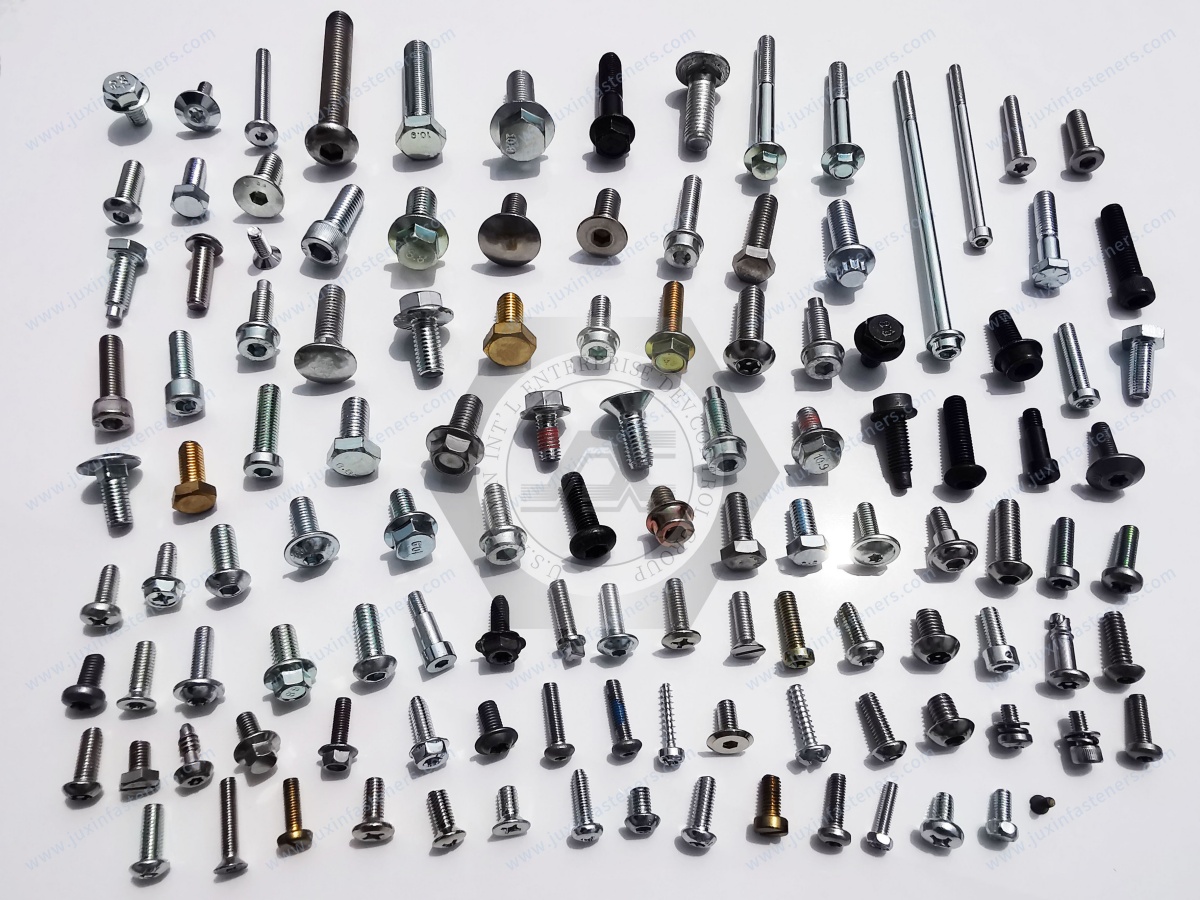
For OEM and Tier supplier development, procurement should qualify the complete component rather than simply approve a coating name.
A robust sourcing specification should consider:
Drawing + Revision + Base Material + Mechanical Properties + Heat Treatment + Thread + Geometry + Surface Preparation + Coating System
+ Coating Thickness + Friction + Corrosion Requirement + Chemical Exposure + Installation Behavior + Functional Testing + Documentation + Change Control
This is especially important when qualifying a second source.
Same dimensions ≠ functional equivalence.
And for coated fasteners:
Same coating color ≠ functional equivalence.
Suppose an existing supplier provides a blue PTFE coated bolt.
A second supplier offers a bolt with:
Same thread
Same dimensions
Same blue appearance
Same base material
That still does not prove equivalence.
The new component may differ in:
Pretreatment
Primer
Coating chemistry
Thickness
Cure condition
Friction
Adhesion
Corrosion performance
Chemical resistance
Torque-preload behavior
Second-source development should therefore begin with the controlled technical specification, drawing, approved sample,
and required functional performance—not color matching alone.
A PTFE coated fastener may have a higher unit cost than a conventional plated fastener.
But unit price alone does not determine commercial value.
For maintenance-intensive or corrosion-sensitive equipment, procurement can evaluate:
Total Installed Cost = Part Price + Installation + Tooling + Inspection + Rework + Scrap + Downtime + Maintenance + Logistics + Warranty Risk + Supply Risk
If a correctly specified coating reduces seizure, difficult disassembly, damaged mating components, or maintenance downtime,
the commercial benefit may exceed the difference in fastener price.
Conversely, an unnecessarily complex coating system can add cost without providing useful application value.
The correct decision is application-specific.
JUXIN FASTENERS supports drawing-based and specification-based industrial fastener requirements including:
PTFE coated bolts
PTFE coated screws
PTFE coated nuts
PTFE coated studs
PTFE coated washers
Stainless steel PTFE coated fasteners
Carbon steel PTFE coated fasteners
Alloy steel PTFE coated fasteners
Custom threaded components
Custom cold-formed fasteners
CNC secondary-machined components
Drawing-based OEM fasteners
Second-source fastener development
Base fastener selection can be evaluated according to the required material, mechanical properties, geometry, thread system, coating performance, and application conditions.
The original article correctly identified PTFE coated bolts, screws, nuts, studs, washers and drawing-based custom components as the core product family for this page.
No. PTFE coating primarily modifies surface behavior. Mechanical strength is determined by the base fastener material,
geometry, heat treatment, mechanical properties, and manufacturing condition.
Not automatically. A lower-friction coating can change the torque-to-preload relationship,
but the correct torque must be established for the actual fastener, mating component, coating system, and target preload.
Do not assume so. The friction condition may change, meaning the same torque may generate a different preload.
Treat a significant coating change as an engineering change when preload matters.
No. It can reduce galling tendency by changing the contact and friction conditions, but material combination,
installation speed, thread fit, preload, temperature, and coating durability also matter.
They may be suitable depending on the substrate, coating system, thickness, damage resistance, joint geometry, galvanic conditions,
and required service life. "PTFE coated" alone is not enough to qualify a marine application.
PTFE is electrically insulating, but a thin coating on a metal fastener should not automatically be treated as a qualified electrical insulation system.
Yes, appropriate PTFE-based coating systems can be used on stainless steel components.
Surface preparation and coating adhesion must be compatible with the substrate and coating process.
Yes. Threaded components have limited dimensional clearance, so coating thickness and thread tolerance must be considered together.
Specify the base fastener, drawing revision, material, mechanical properties, thread, coating system or required coating performance,
thickness where applicable, friction requirement, corrosion requirement, chemical exposure, operating temperature, installation condition, and annual volume.
Color can be an appearance requirement, but it should not replace the technical coating specification.
Provide the current drawing and revision, coating specification, approved sample where available, material and mechanical requirements,
friction requirements, corrosion or chemical tests, installation conditions, annual demand, and customer-specific qualification requirements.
JUXIN FASTENERS can evaluate standard and drawing-based bolts, screws, nuts, studs, washers, cold-formed components,
and secondary-machined fasteners with application-specific coating requirements.
For technical and commercial evaluation, provide as much of the following information as possible:
2D drawing
3D model if available
Part number
Drawing revision
Application
Fastener type
Thread diameter and pitch
Critical dimensions
Base material
Material grade
Mechanical property class
Heat-treatment requirement
Mating material
Mating coating
PTFE coating specification if already defined
Required coating thickness
Required coating color if applicable
Friction requirement
Installation torque
Target preload where applicable
Corrosion requirement
Corrosion test method and acceptance criteria
Chemical exposure
Chemical concentration where relevant
Operating temperature
Repeated assembly requirement
Adhesion requirement
Functional test requirements
Customer-specific documentation requirements
Annual volume
Existing sample for second-source development where available
If the coating has not yet been selected, provide the application conditions instead of simply requesting "the best PTFE coating."
This allows the coating requirement to be evaluated against the actual engineering problem.
This page should connect internally with existing JUXIN FASTENERS resources covering:
Fastener coatings and surface treatments
Stainless steel fasteners and galling
Torque, friction and preload
Zinc-nickel coated fasteners
Zinc flake coated fasteners
Corrosion-resistant fasteners
Hydrogen embrittlement in high-strength fasteners
Chemical-processing fasteners
Marine and outdoor fastener selection
Custom OEM fasteners
Second-source fastener qualification
Use the existing indexed JUXIN FASTENERS URL when implementing each internal link.
The intended content path is:
Surface Engineering → PTFE Coating Selection → Friction & Preload → Corrosion / Chemical Compatibility → Fastener Selection → Supplier Qualification → RFQ
PTFE coated fasteners can provide valuable surface functionality in demanding industrial applications.
But successful selection requires more than adding PTFE to a bolt.
The engineering chain is:
Application Environment → Base Fastener → Mechanical Requirement → Surface Preparation → Coating System
→ Thickness → Friction → Thread Fit → Installation → Functional Validation
For design engineers, this means evaluating how the coating interacts with the complete threaded joint.
For procurement and supplier-development teams, it means buying a controlled functional specification rather than a coating name or color.
JUXIN FASTENERS supports OEM, Tier-1, Tier-2, equipment manufacturers, and industrial sourcing teams with
PTFE coated bolts, screws, nuts, studs, washers, custom fasteners, drawing-based components, and second-source fastener development.
For a new PTFE coated fastener project or alternative-source evaluation, send your drawing, coating or performance specification,
application environment, installation requirements, and expected annual volume for technical review.
JUXIN FASTENERS
Email: info@juxinfasteners.com
Website: www.juxinfasteners.com
Contact Us
Tel.:
+86 020 8621 0320
+86 020 3121 6067
E-mail:
Technical Support:
Navigation
SEND INQUIREY



